
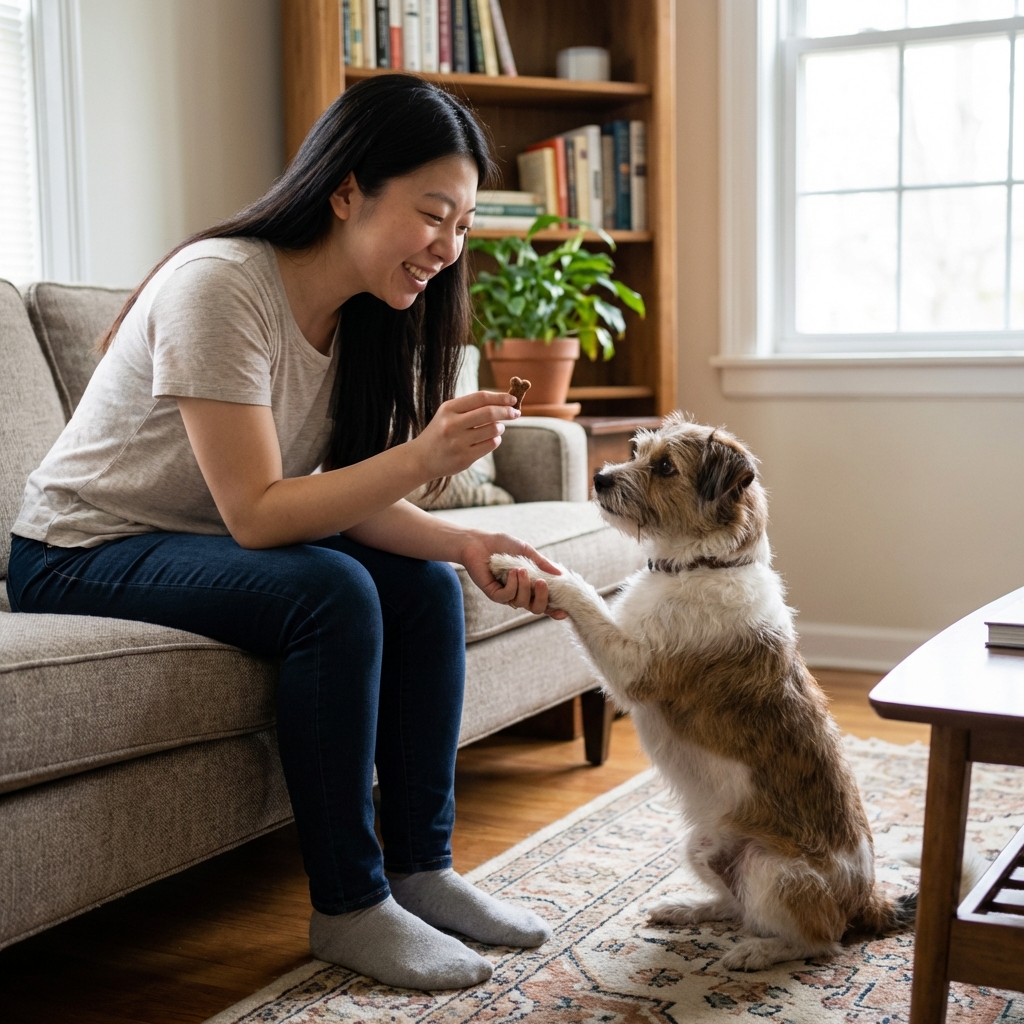
Teach “paw” (shake) with kind, reward-based training. Choose the best setup, try capturing or a closed-fist lure, add the cue, fix common mistakes, and f...
Article
•
Designer Mixes
How to Teach a Dog to Shake Hands

Shari Shidate
Designer Mixes contributor
Teaching “shake” is one of my favorite family-friendly tricks because it is simple, builds confidence, and gives kids a safe way to interact with a dog using calm, predictable steps. As a veterinary assistant, I also love it because it encourages gentle handling and helps dogs practice self-control.
The goal is not a perfect paw. The goal is a relaxed dog who enjoys the game and a family that can repeat it the same way every time.
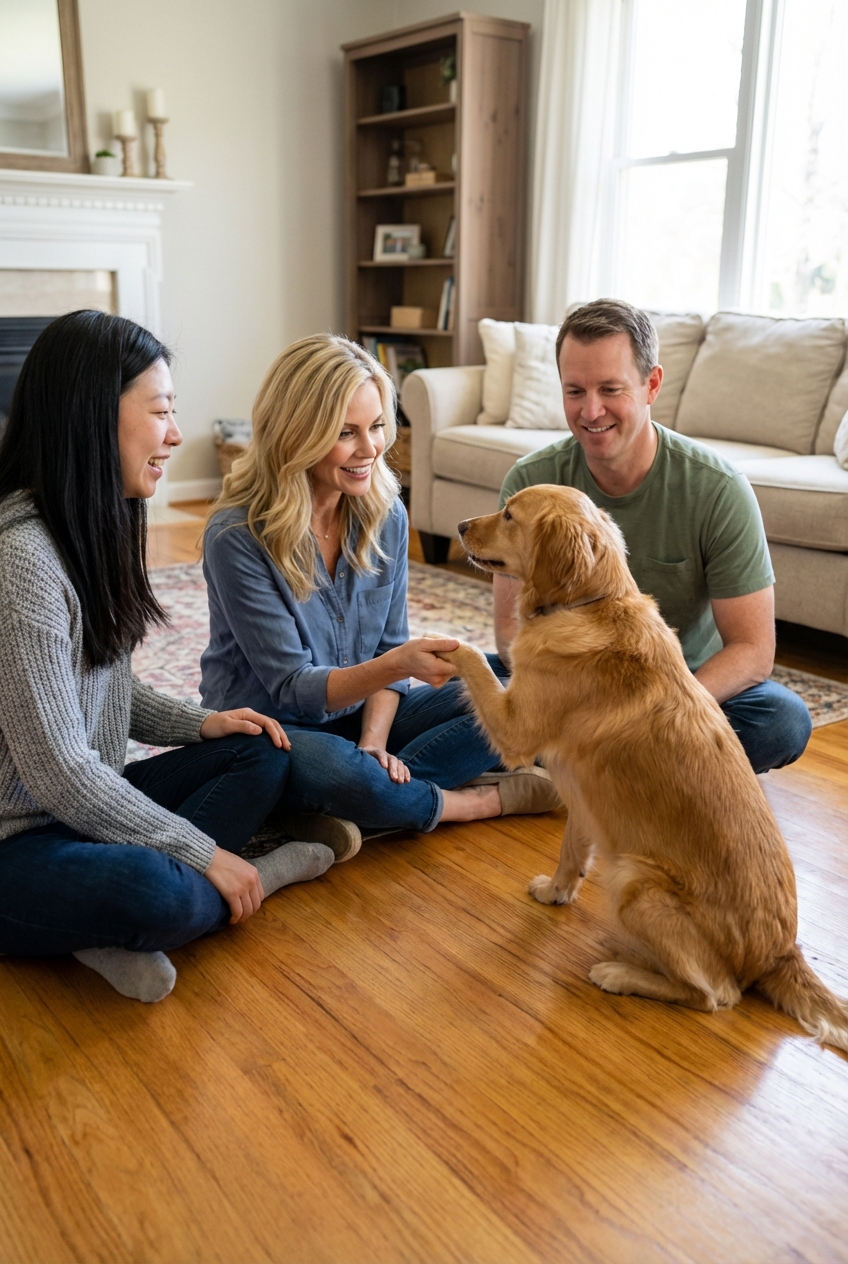
Before you start: set your dog up for success
Pick the right time and place
- Quiet space: Start in a low-distraction room before trying it in the yard or at the park.
- Short sessions: 2 to 5 minutes is plenty. End while your dog still wants more.
- Soft surface: Carpet or a rug may help some dogs feel steadier when shifting weight to lift a paw.
Use the right rewards
Most dogs learn fastest with tiny, soft treats they can swallow quickly. Think pea-sized pieces. You can also use kibble, a favorite toy, or enthusiastic praise, but food is usually the clearest teacher in early training.
Safety and comfort checks
- If your dog avoids paw handling, has cracked nails, limps, or pulls away when you touch the leg, pause training and consider a vet check.
- Watch for stress signals like lip licking, whale eye (showing the whites of the eyes), a tucked tail, or a sudden “freeze.” If you see them, take a break and make the next step easier.
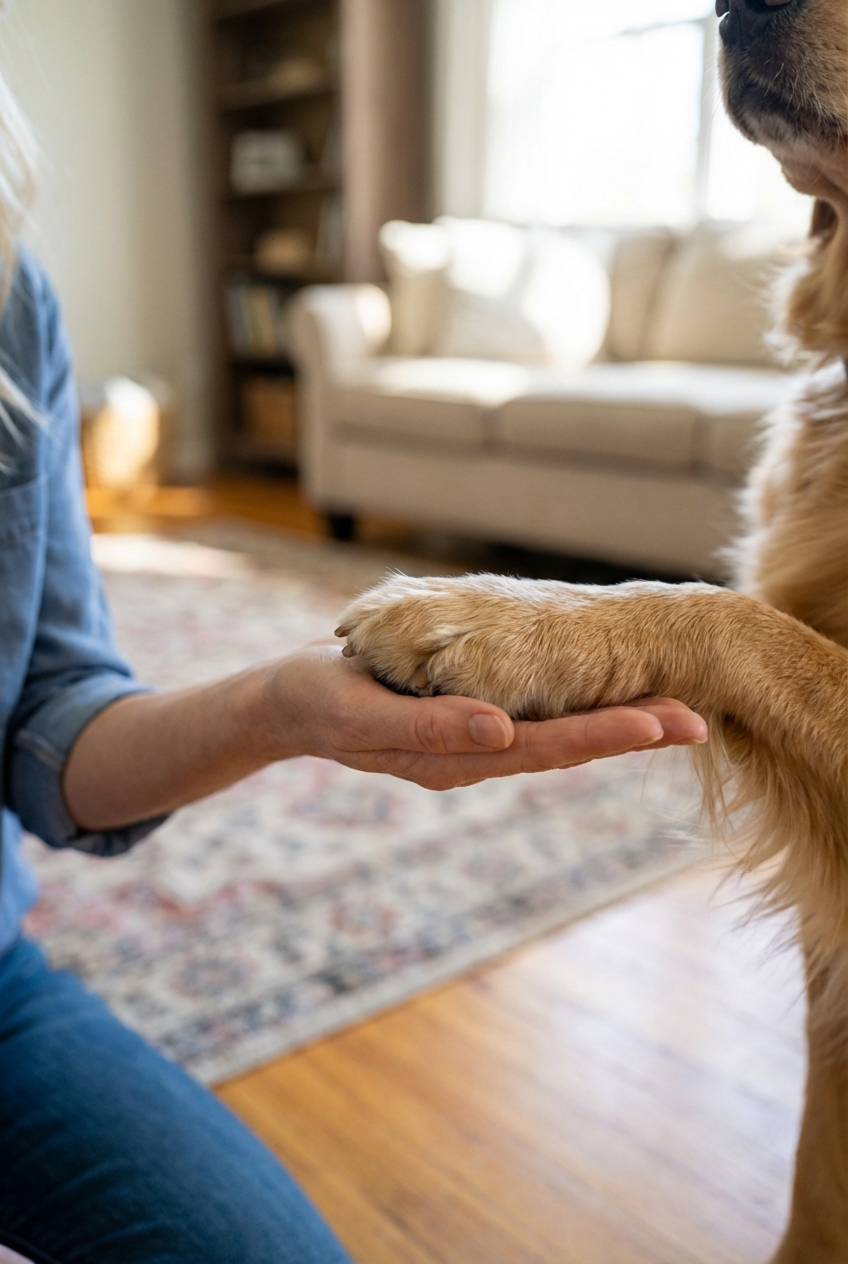
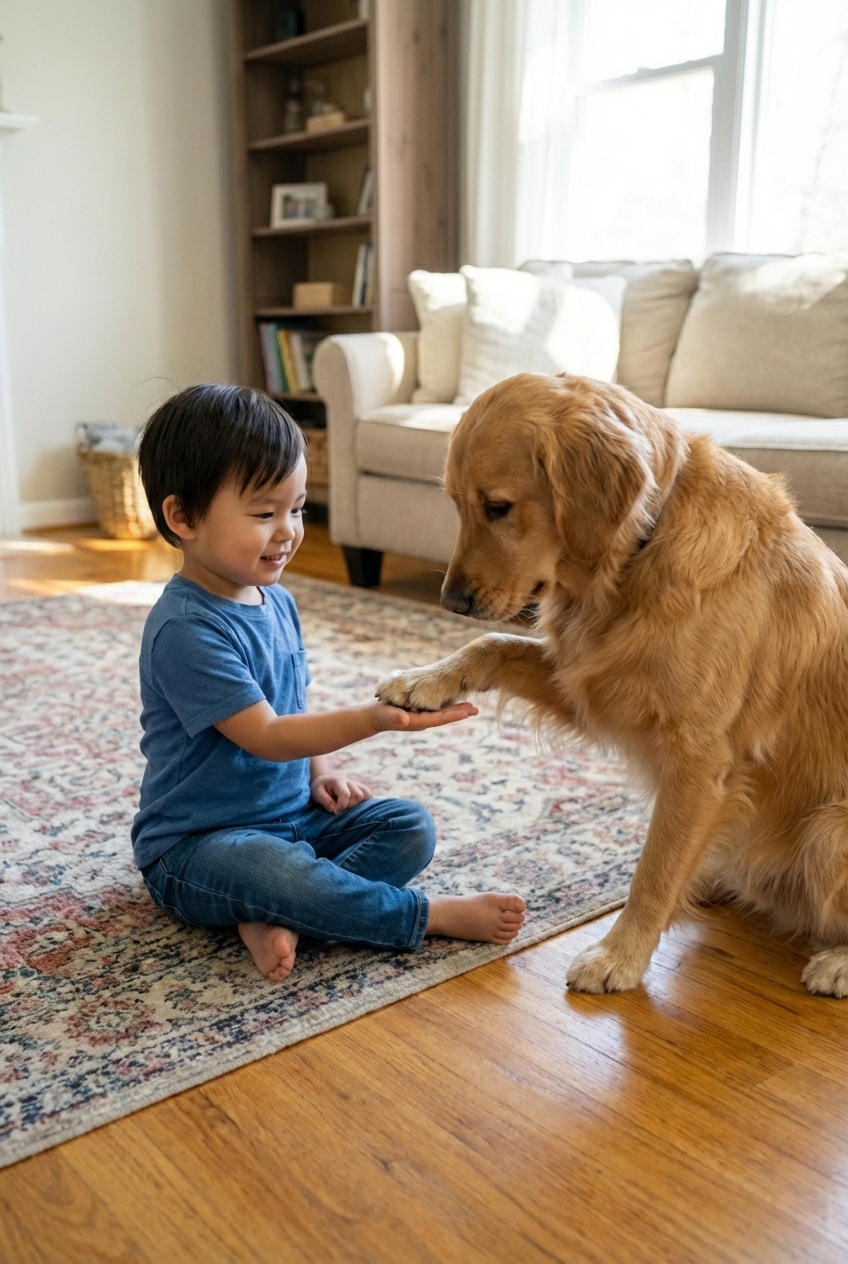
- For kids, the safest “hand” position is a flat palm under the paw, not grabbing from above.
- With unfamiliar dogs: Kids should always ask the owner first and skip “shake” entirely if the dog is unknown or seems nervous.
The easiest method: capture the paw lift
This method works well for many family dogs because it stays gentle and avoids any tugging on the leg.
Step-by-step
- Ask for a sit. Sitting makes paw lifts easier and reduces bouncing.
- Wait for a paw movement. Many dogs will shift, lift a paw, or paw at your hand when they notice treats.
- Mark it instantly. Say “Yes!” (or click a clicker) the moment the paw lifts.
- Reward. Give the treat right away.
- Add your hand. Present your open palm slightly in front of your dog’s chest. Mark and reward when the paw makes contact with your hand.
- Add the cue. Once your dog is reliably placing their paw in your hand, say “Shake” right before you offer your palm.
- Add a finish. Teach a simple “All done” so kids know when to stop asking. Say “All done,” then toss a treat away so your dog resets and everyone gets space.
Plan B: the treat-in-fist method
If capturing is slow, this approach gives your dog a clear puzzle to solve, which often leads to a quick paw tap.
Steps
- Ask for a sit.
- Show your dog a treat, then close it in your fist.
- Hold your fist still near your dog’s chest, not over their head.
- Wait. The moment your dog paws at your fist, say “Yes!” and use the other hand to deliver the treat.
- Repeat until the paw tap happens quickly.
- Switch from fist to open palm. Cue “Shake,” then present your palm.
Important: Keep your fist still. If you move it around, you teach chasing and grabbing instead of polite pawing.
How to teach kids to do it safely
Dogs learn faster when everyone uses the same cue and the same hand position. Here is a simple family plan.
Kid-friendly rules
- One cue: Choose “Shake” or “Paw” and stick with it.
- Open palm only: Palm up, fingers together, under the paw.
- No pulling: The dog places the paw. The child supports it briefly, then lets go.
- Count to one: A shake is a quick touch, not a long hold.
- One paw at a time: Reward the paw you want. If your dog offers both paws, lower your hand, keep it still, and only reward a single, gentle touch.
- Use “All done”: One shake, then “All done” and toss a treat away to reset.
Common questions and quick fixes
“My dog is slapping hard.”
Hard pawing usually means your dog is overexcited or has learned that force works. Reward only gentle touches and keep treats small so arousal stays lower. You can also practice after a short walk when your dog is calmer.
“My dog won’t lift a paw at all.”
Start easier. Reward any weight shift or tiny paw movement. Some dogs need a few sessions to understand the game. Keep your timing tight: mark the instant the paw moves.
“My dog mouths my hand.”
Use a flatter hand position and deliver treats with the opposite hand. If mouthing continues, stop and switch to a calmer behavior like “touch” (nose to hand) for a day or two, then revisit shake.
“Should I physically pick up my dog’s paw?”
I avoid it as a first choice. Some dogs tolerate it, but many find it uncomfortable and it can create paw sensitivity. Let your dog volunteer the paw whenever possible.
“How long will it take?”
Some dogs learn the basics in a few short sessions over a week, but timing varies a lot by age, motivation, past training, and distractions. Gentle, kid-proof shakes usually take longer. That is normal.
Make it reliable: practice for real life
Dogs do not automatically generalize skills. “Shake” in the kitchen can look brand new in the front yard.
A simple 7-day plan
- Days 1 to 2: Quiet room, sit then shake, 5 reps, then “All done.”
- Days 3 to 4: Add a different room and one family member at a time.
- Days 5 to 6: Practice near mild distractions like a window or backyard door.
- Day 7: Practice with the leash on, then try it outside for 2 to 3 reps.
Pro tip: Reward intermittently once your dog understands the cue. Praise every time, treat sometimes. This helps “shake” hold up when you do not have snacks in your pocket.
When to skip shake for now
There are times when I recommend choosing a different trick first, especially if it protects comfort and confidence.
- Puppies still growing: Keep sessions short and avoid lots of repetitive pawing if your puppy is getting frantic or starts bouncing.
- Senior dogs with arthritis: Consider “touch” or “chin rest” instead. If your dog enjoys shake, do fewer reps and reward gentle lifts.
- Dogs who are fearful of handling: Build trust with treat tosses, “look,” and “touch” before working on paws.
Warm reminder: A trick should make your dog feel successful. If your dog looks stressed, slow down and make the next step easier.