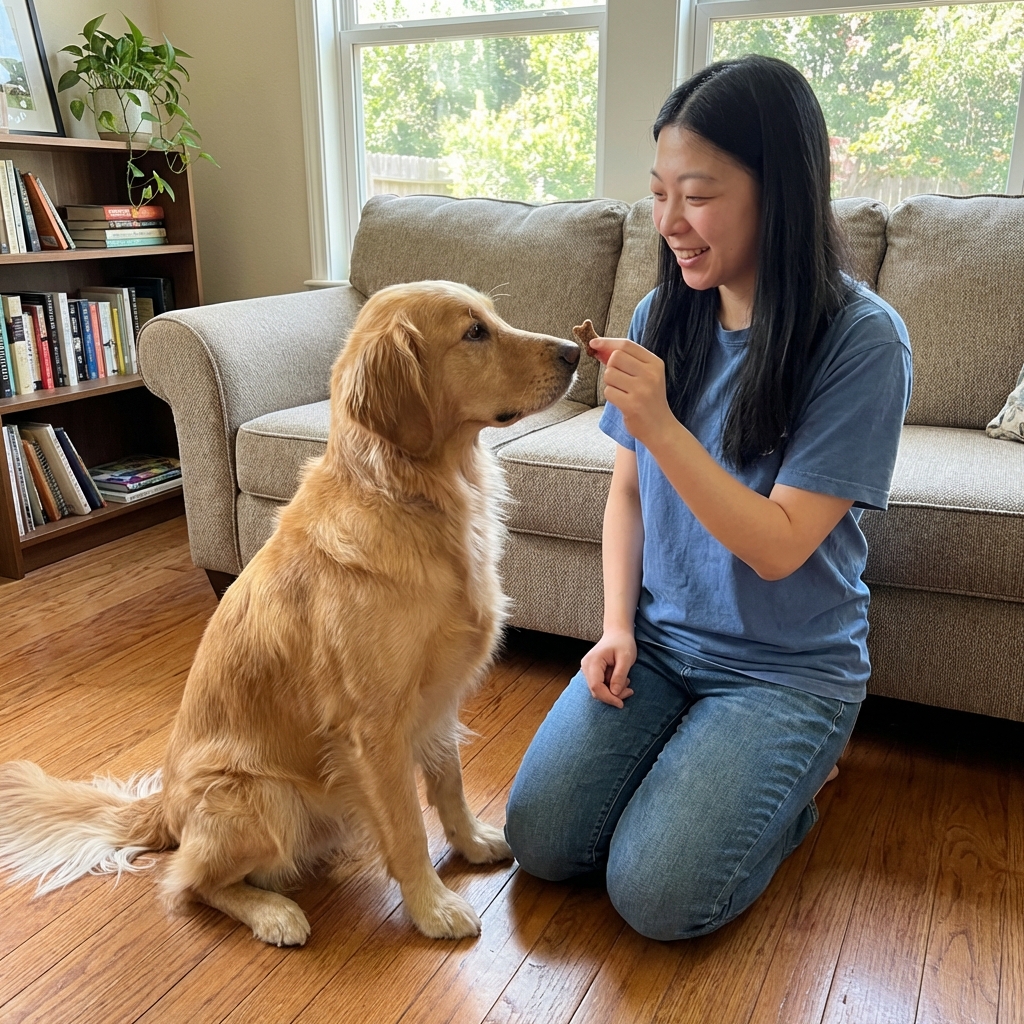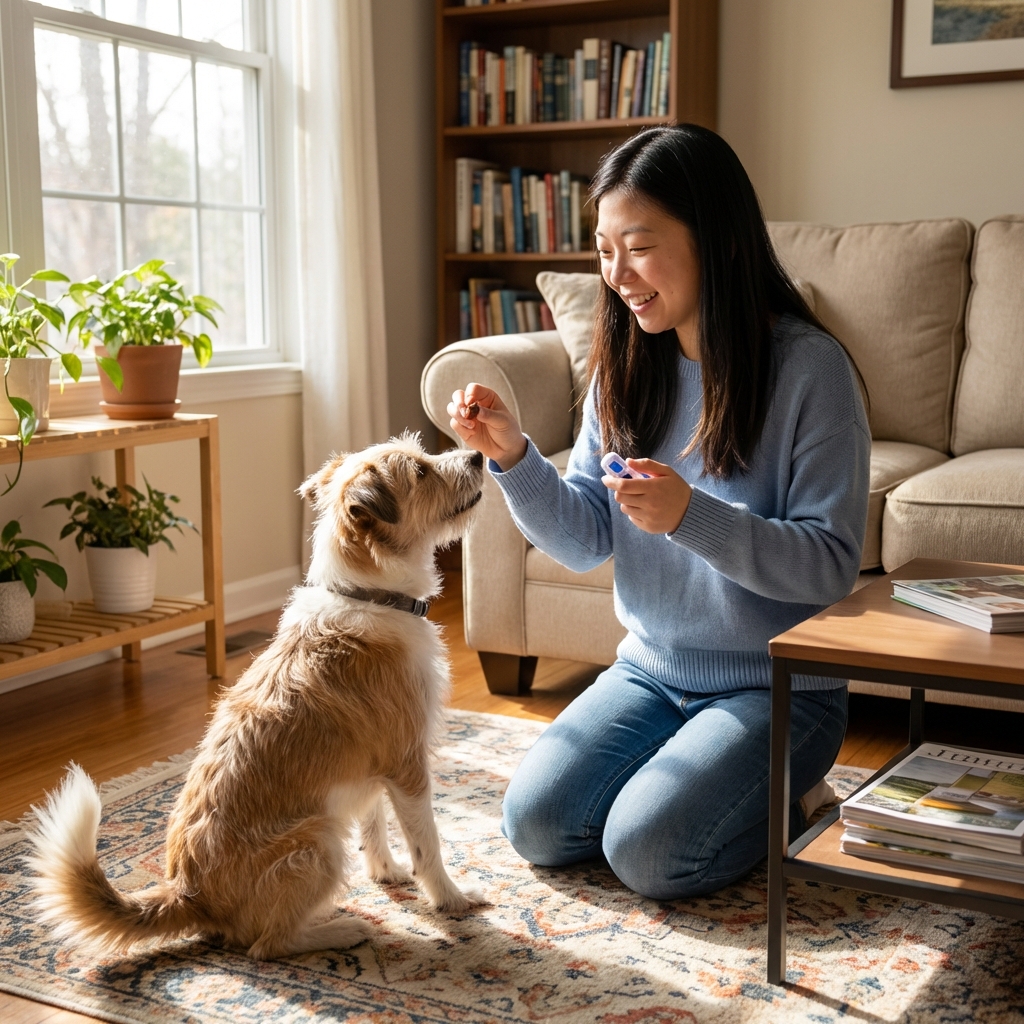
Create a calmer home with a predictable routine and reward-based training. Learn mat settle, no-jumping four paws, wait at doors/food, and leave it—plus a ...
Article
•
Designer Mixes
How to Teach a Dog to Lay Down

Shari Shidate
Designer Mixes contributor
Teaching “down” is one of the most useful skills you can give your dog. It helps with calm behavior at home, polite greetings, and safe handling at the vet or groomer. As a veterinary assistant in Frisco, Texas, I also love this cue because it can reduce stress in new environments when it is trained gently and clearly.
The key is simple: make it easy, reward the right moment, and build the behavior in small steps.
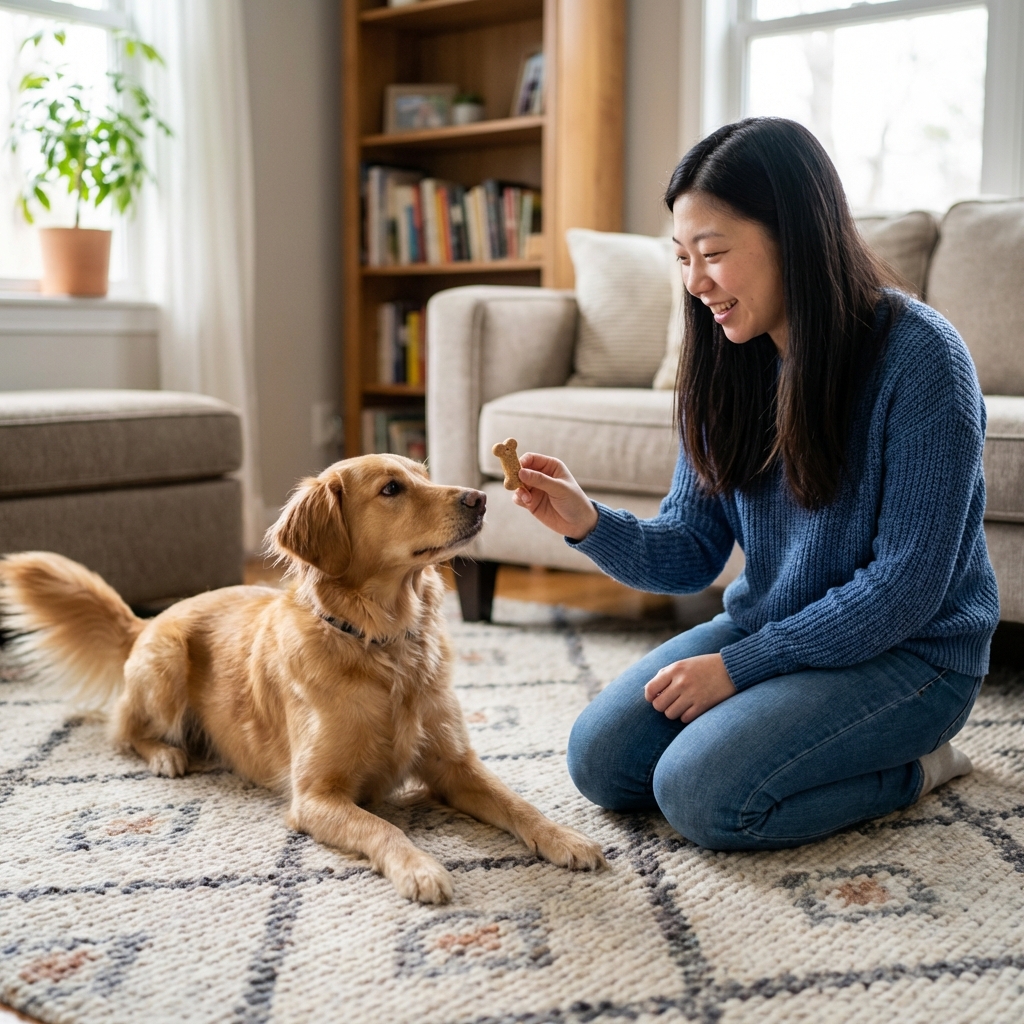
What you need before you start
- Soft, pea-sized treats (something your dog truly likes)
- A quiet space with minimal distractions
- A non-slip surface like carpet, a yoga mat, or a rug
- A marker such as a clicker or a consistent word like “Yes”
- Short sessions (1 to 3 minutes is perfect)
Evidence-based tip: Reward-based training is widely supported by veterinary behavior experts because it improves learning while reducing fear and stress. Avoid forcing your dog into classic “alpha” positions. We want your dog choosing the down, not bracing against it.
Choose your “down” cue: verbal or hand signal
You can teach a word cue (“down” or “lie down”) and a hand signal. Many dogs respond faster to hand signals at the start of training, so I often start with a lure and then add the word after the behavior is reliable.
Pick one word and stick to it. “Down” can sometimes be confused with “off” (like getting off the couch), so if that is an issue in your home, consider “lie down” instead.
Method 1: Lure from a sit (best for many beginners)
This is the most common approach and works well for dogs who will follow food in a calm environment.
Step-by-step
- Start with your dog sitting. If they do not know “sit,” you can still try this from standing, but sit can make it easier.
- Bring a treat to your dog’s nose. Let them sniff it.
- Move the treat slowly down and forward toward the floor, between their front paws. Many dogs will naturally lower their elbows to follow.
- The moment elbows touch the ground, mark and reward. Say “Yes” or click, then give the treat.
- Reset and repeat 3 to 6 times, then stop while it is still fun.
If your dog pops up: You are probably moving the treat too far forward. Try keeping the lure closer to their chest, moving down first, then slightly out.
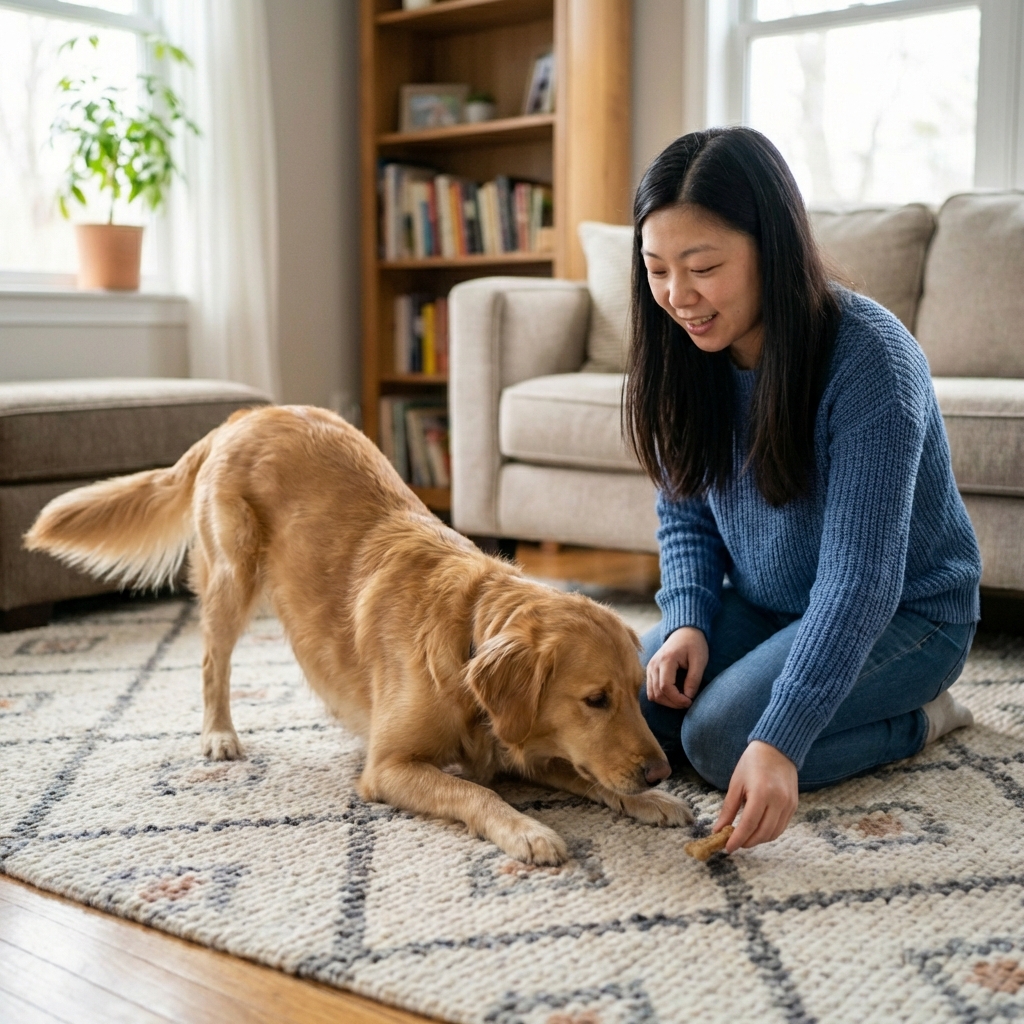
Method 2: From standing using the “tunnel” trick
If your dog refuses to lie down from a sit, this method can help. It encourages a natural crouch without pressure.
How to do it
- Sit on the floor with one knee up to create a small “tunnel” space under your leg.
- Show your dog a treat and slowly lure them under your raised leg.
- As they duck and fold into a down, mark and reward immediately.
- Repeat a few times, then gradually remove the leg tunnel and use the same lure motion to the floor.
Some dogs find this more comfortable than a straight-down lure, especially dogs with long legs or deep chests.
Method 3: Capture the down (great for shy or sensitive dogs)
Capturing means you wait for your dog to offer the behavior naturally, then reward it. This is especially helpful if your dog gets frustrated with lures or has a history of being physically manipulated.
How to capture
- Keep treats nearby.
- When your dog lies down on their own, mark (“Yes”) and calmly deliver a treat to them on the floor.
- Repeat throughout the day. Your dog will start lying down more often because it pays off.
- Once you see the pattern, add your cue right before you think they will lie down, then reward.
This method can take longer, but it builds a very relaxed down. For many families, that is exactly the goal.
When to add the verbal cue
Add the cue when your dog is successfully lying down on purpose, not when they are still guessing.
- Say “Down” once.
- Immediately do your hand signal or lure.
- When the dog lies down, mark and reward.
After a few sessions, begin fading the lure by making the same hand motion with an empty hand, then rewarding from the other hand.
How to build duration: teaching your dog to stay down
Many dogs learn to hit the ground, then bounce right back up. That is normal. We just need to teach that staying down is what earns the reward.
Simple duration plan
- Ask for “down.”
- Count one second, mark, then treat while your dog is still down.
- Next repetition, count two seconds, mark, treat.
- Work up gradually to 5, 10, then 20 seconds.
Important: Treat low, between the paws, so your dog does not have to stand up to get it.
Proofing: getting “down” to work in real life
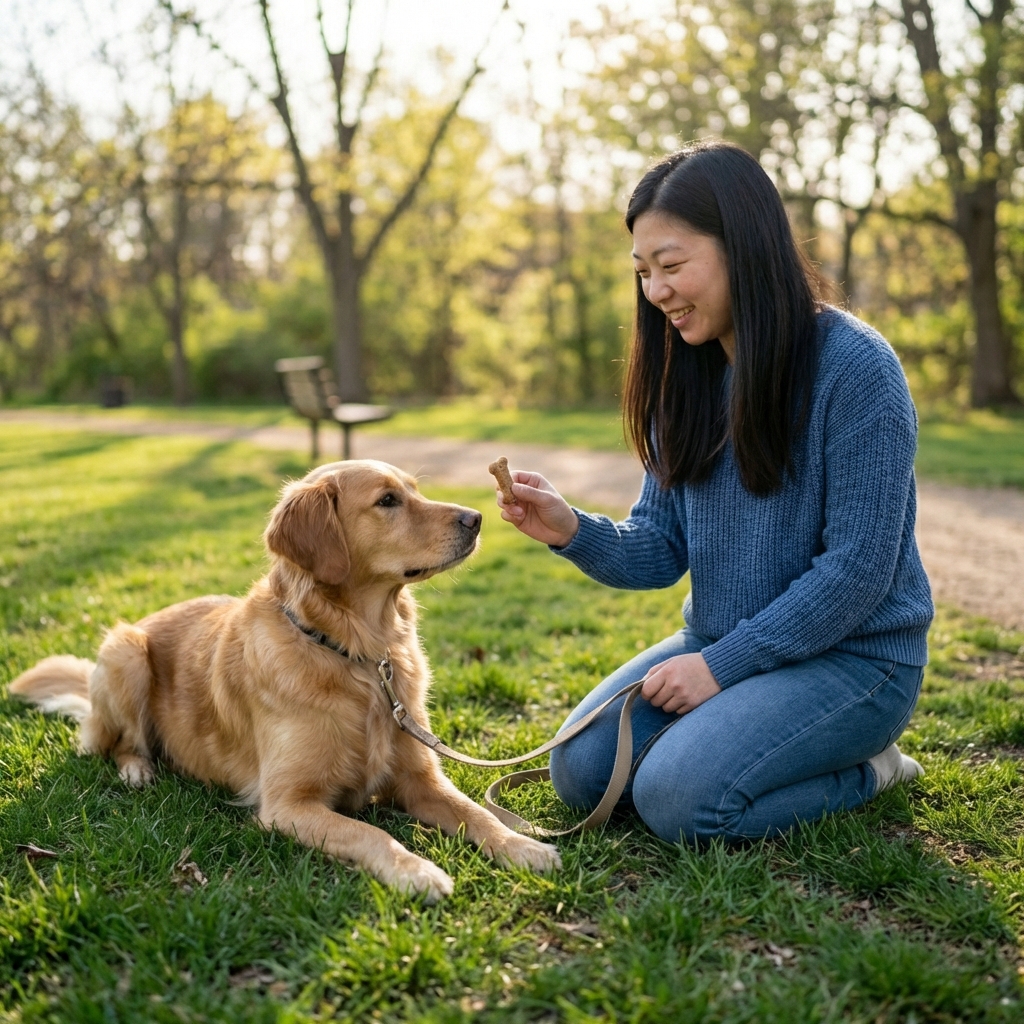
Dogs do not automatically generalize skills. “Down” in the kitchen does not always mean “down” at the park.
Practice in different places
- Different rooms of the house
- Backyard
- Front yard on leash
- Quiet park corner
- Near the doorbell or when guests arrive (once your dog is ready)
Lower the difficulty when you change locations. Use better treats, shorten duration, and build back up slowly.
Troubleshooting common problems
My dog will not lie down at all
- Try a softer surface. Some dogs dislike lying on slippery floors.
- Use higher-value treats like chicken or cheese (tiny pieces).
- Switch to capturing or the tunnel method.
- Check for discomfort. If your dog seems stiff, reluctant to bend, or yelps, contact your veterinarian to rule out pain.
My dog crawls forward instead of lowering
- Keep the lure closer to the chest, moving down first.
- Reward partial progress at first, like elbows bending, then raise criteria.
My dog lies down, then immediately stands up
- Feed treats while the dog is still down.
- Build duration slowly. One second is a win.
- Practice when your dog is not overly excited.
My dog gets frustrated or starts barking
- End the session and take a break. Training should feel easy.
- Lower the criteria. Reward smaller steps toward the down.
- Keep sessions shorter and increase rewards.
How often should you practice?
Two to four micro-sessions per day is plenty. Think of training like brushing teeth. Consistency beats marathon sessions.
A great starter goal is: 10 successful downs per day sprinkled throughout your normal routine.
Safety and comfort tips from a veterinary assistant
- Avoid pushing your dog’s shoulders or hips into position. It can create fear or even soreness.
- Watch for signs of discomfort like lip licking, yawning, whale eye, trembling, or sudden avoidance.
- Senior dogs and dogs with arthritis may do better with a “down” on a soft bed or mat. Talk with your vet if you suspect joint pain.
Progress is not about perfection. It is about helping your dog feel safe, successful, and understood.
Quick plan you can follow today
- Pick your method (lure, tunnel, or capture).
- Do 1 to 3 minutes of training.
- Mark and reward the exact moment elbows hit the floor.
- Stop early, while your dog still wants more.
- Repeat later and build duration one second at a time.
If you stay gentle and consistent, most dogs learn a reliable “down” within a week or two, and many pick up the basics even faster.