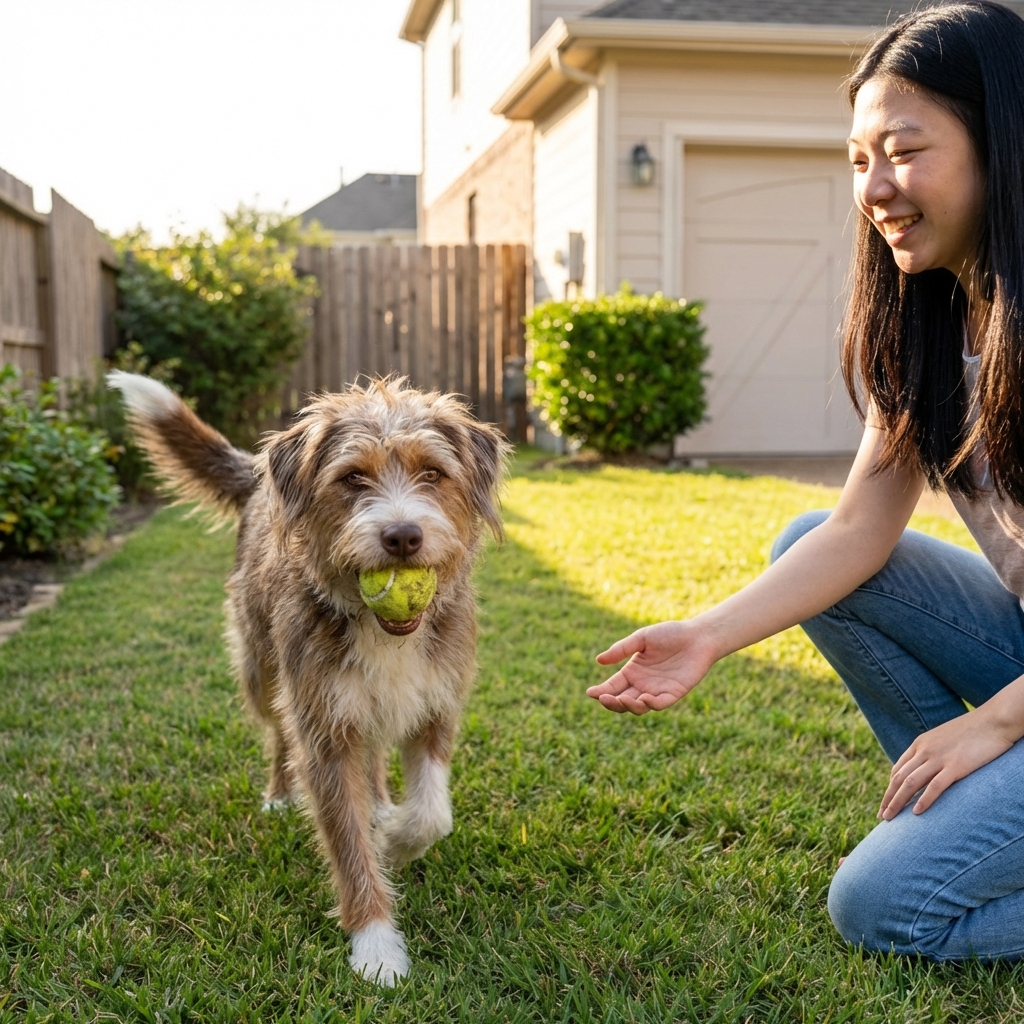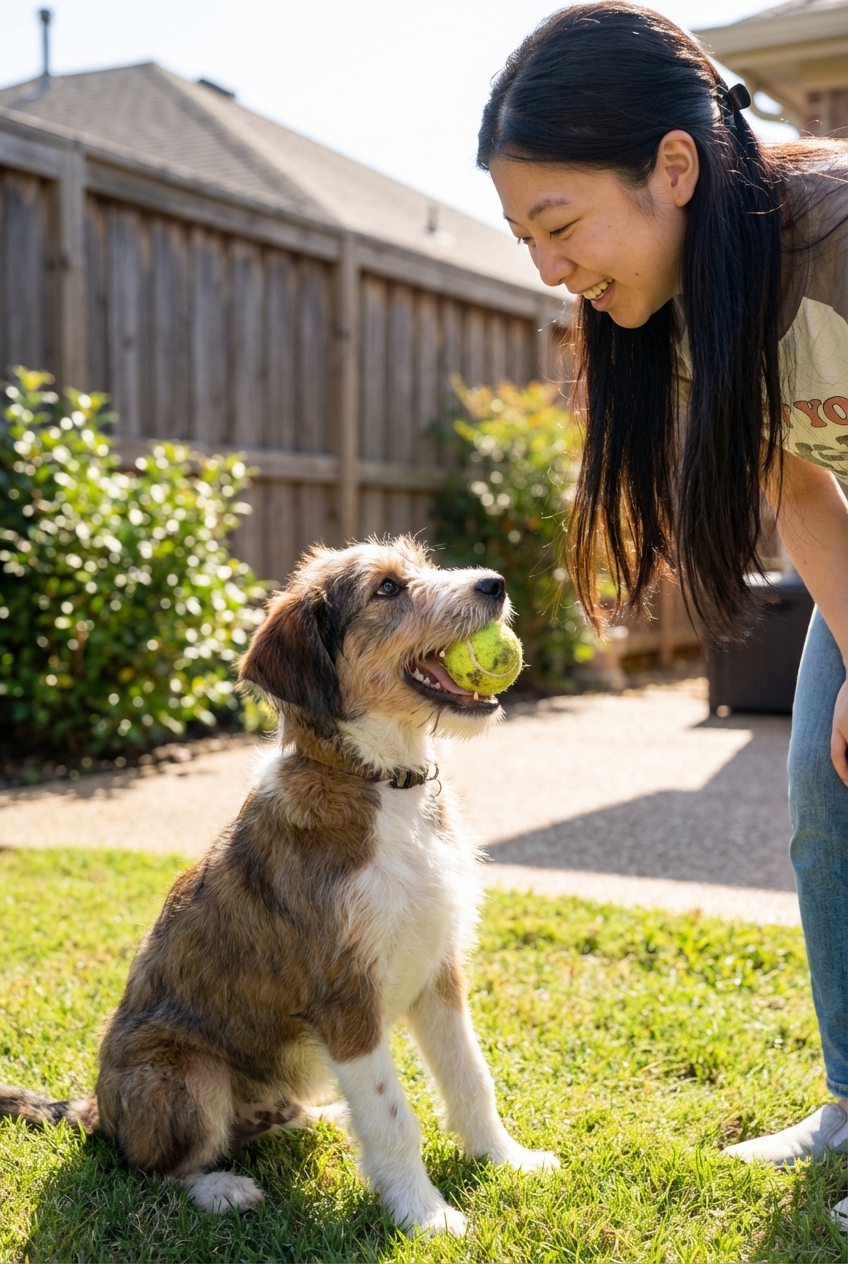
Fetch is a chain of skills. Learn how to teach take it, a reliable return, and drop it with reward-based steps, plus fixes for keep-away and safety tips.
Article
•
Designer Mixes
How to Teach a Dog to Fetch

Shari Shidate
Designer Mixes contributor
Fetch looks simple, but from a dog’s point of view it is a chain of skills: notice the toy, pick it up, hold it, come back, and let go. The best way to teach it is to train the pieces on purpose, keep sessions short, and reward generously.
As a veterinary assistant here in Frisco, Texas, I also want you to keep it safe. Repetitive sprinting, sharp turns, and jumping can stress joints, especially in puppies, senior dogs, and long-backed or heavy-bodied mixes. Done thoughtfully, fetch can be wonderful enrichment and exercise.
Before you start
Pick the right toy
- Soft toy or fleece tug: Great for beginners and dogs who do not love balls.
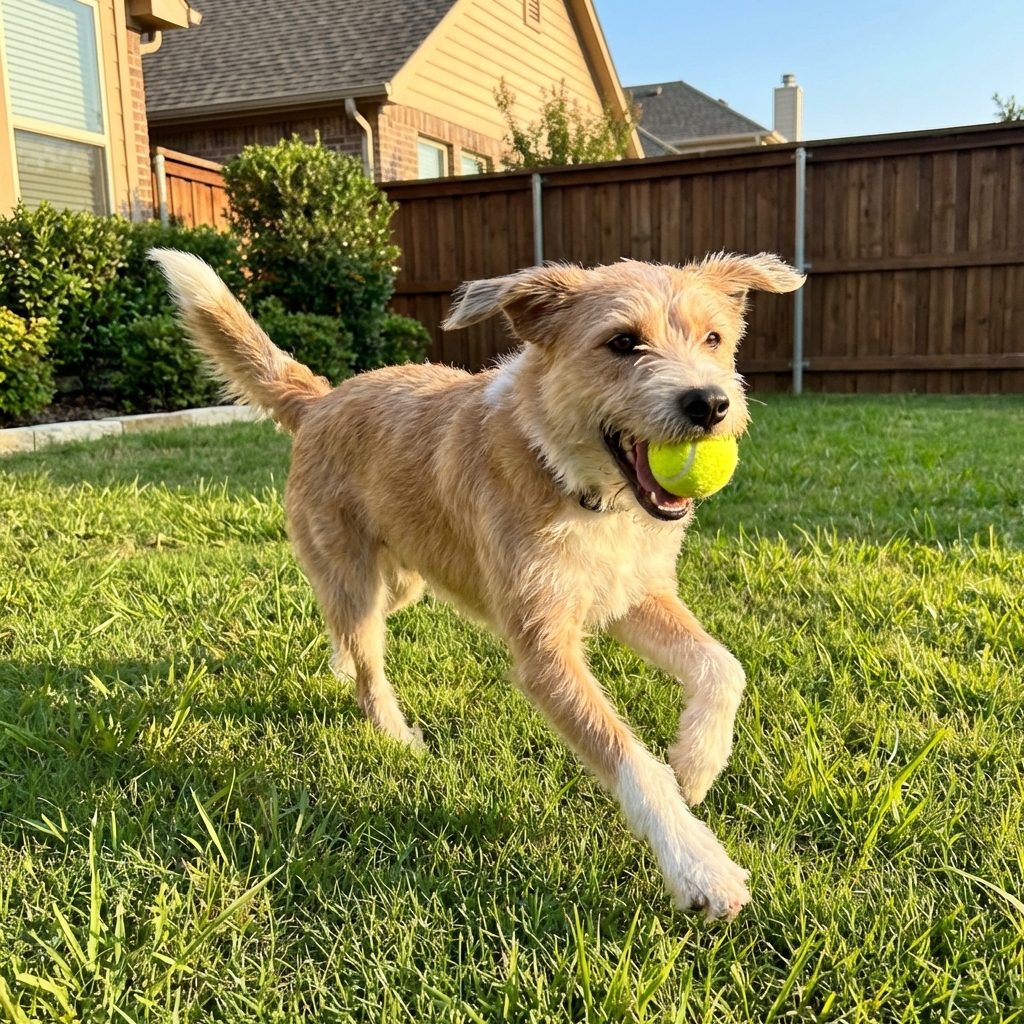
- Ball: Choose a size that cannot be swallowed. For many medium dogs, a standard tennis ball is fine, but avoid tiny balls for large mouths. If your dog is a heavy chewer, consider a dog-specific rubber ball instead.
- Rubber retrieving dummy: Easy to grip and less likely to roll under furniture.
Set up the environment
- Start indoors or in a fenced yard with minimal distractions.
- Use a hallway or narrow space if your dog tends to run victory laps.
- Have tiny, high-value treats ready (think pea-sized), plus a second toy if your dog prefers play over food.
Keep sessions joint-friendly
For young puppies, avoid long throws and high jumps. While your dog is still growing, it is smart to limit repetitive, high-impact fetching and keep things low to the ground, short distance, and brief. If you are not sure what is appropriate for your dog’s age and breed, ask your veterinarian for specific guidance.
Who needs a modified game
Choose shorter, slower games (or skip fetch altogether for now) if your dog struggles with heat, breathing, or pain. That includes many flat-faced (brachycephalic) breeds in warm weather and dogs with known orthopedic disease. If your dog is not reliably safe off-leash, stick to a fenced area or use a long line.
The fetch skill chain
We will teach fetch in five mini skills. Some dogs fly through these, and others need a few days per step. That is normal.
1) Build desire for the toy
Make the toy come alive for 5 to 10 seconds: wiggle it, drag it, make it “escape.” The moment your dog engages, praise warmly.
- If your dog loves chasing: toss the toy only 3 to 6 feet.
- If your dog loves tug: play a gentle tug game as the reward.
Goal: Your dog thinks the toy is worth going after.
2) Teach “take it” (pick up)
Hold the toy still. When your dog’s mouth touches it, say “Yes” and reward. Then raise your criteria: reward only when they actually grab it.
Tip: If your dog is hesitant, add a tiny smear of something tasty like canned dog food, or a little peanut butter that does not contain xylitol. Avoid human broths unless you know they are dog-safe and do not contain onion or garlic.
3) Teach “hold” (keep it in the mouth)
Once your dog can grab the toy, reward for holding it for one second, then two, then three. Keep it calm and easy.
- If the toy drops: simply reset without scolding.
- Reward while the toy is still in the mouth.
4) Teach “come” with the toy
This is the part most people skip, and it is why dogs run away with the ball.
- Toss the toy a short distance.
- When your dog picks it up, cheerfully run backward and say “Come!”
- When they reach you, reward generously (for many dogs, that is 3 to 5 treats in a row or 2 to 3 seconds of tug).
If your dog stops short, use a happy voice and keep backing up. The motion invites chasing you.
5) Teach the release
Many dogs love grabbing and running, but do not understand that bringing it back and letting go is what makes the game continue. We can teach that clearly.
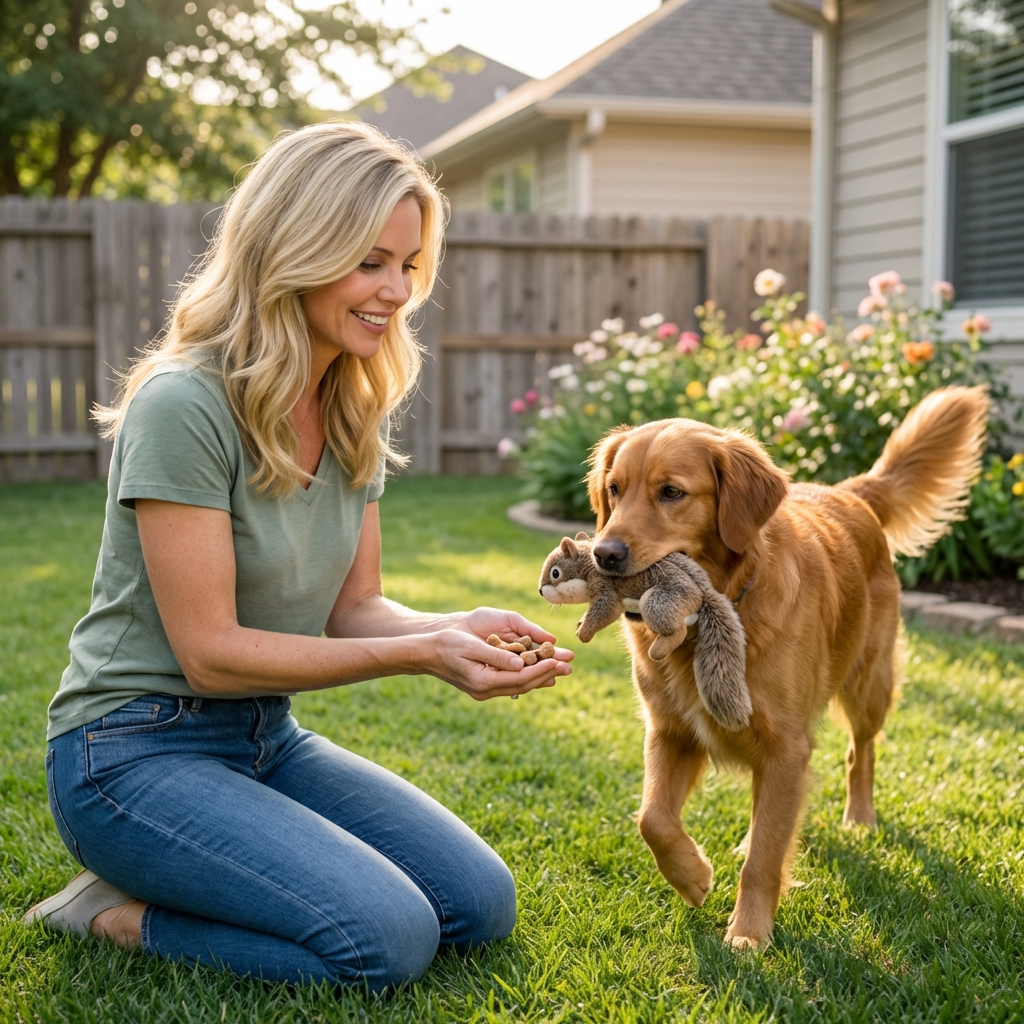
Option A: Trade for a treat
- Hold a treat at your dog’s nose.
- Say “Drop it” once.
- When the toy falls, say “Yes”, give the treat, then immediately toss the toy again.
That last part matters. The throw is a powerful reward for many dogs, so your dog learns: dropping does not end the fun.
Option B: Two-toy method
Have two identical toys. Your dog returns with Toy A. Show Toy B and make it exciting. When they drop Toy A, throw Toy B. Rotate.
Common mistake: Reaching toward the toy too soon can trigger keep-away. Instead, wait for the drop, then pick it up.
Put it together
Week 1: Easy wins
- 2 to 5 minutes per session, 1 to 2 sessions per day.
- Throws: 3 to 10 feet.
- Reward: treat for return and drop, plus the next throw.
Week 2: Add distance
- Increase distance gradually, but keep the dog successful.
- Start asking for a sit before the next throw if your dog gets overly amped.
- Mix in a few “find it” treat tosses to calm and reset.
Week 3 and beyond: New places
Practice in new places like a quiet park or a friend’s fenced yard. Lower your expectations in new environments and pay more at first.
Troubleshooting
If you hit a snag, use the fixes below before you increase distance or speed.
Chases but will not pick it up
- Switch to a softer toy that is easier to grip.
- Teach “take it” separately, then reintroduce the toss.
- Try rolling the toy instead of throwing it. Some dogs prefer movement along the ground.
Grabs it and runs away
- Use a hallway or a long line in a yard to prevent rehearsing keep-away.
- Run backward and reward heavily when they follow you.
- Play the two-toy game to make returning the fastest way to get the next chase.
Returns but will not drop it
- Stop pulling on the toy. Tug can accidentally reward clamping down.
- Go back to treat trades for a few days.
- Reward the drop, then throw again immediately.
Loses interest quickly
- End the session while they still want more. That is the secret sauce.
- Try higher-value rewards or a more exciting toy.
- Keep throws short. Long throws can be tiring and frustrating for beginners.
Gets too intense
Some dogs find fetch so rewarding that it becomes hard to stop. Add structure: a sit, a hand target, or a short sniff break between throws. If your dog cannot disengage, choose other enrichment games (sniffing and food puzzles are wonderful) and limit fetch to a few reps.
Safety notes
- Watch the footing. Slippery floors and uneven holes in the yard can cause sprains.
- Avoid repeated high jumps. Leaping and twisting for a midair catch can increase the risk of strain, especially in dogs with existing neck, back, or shoulder issues.
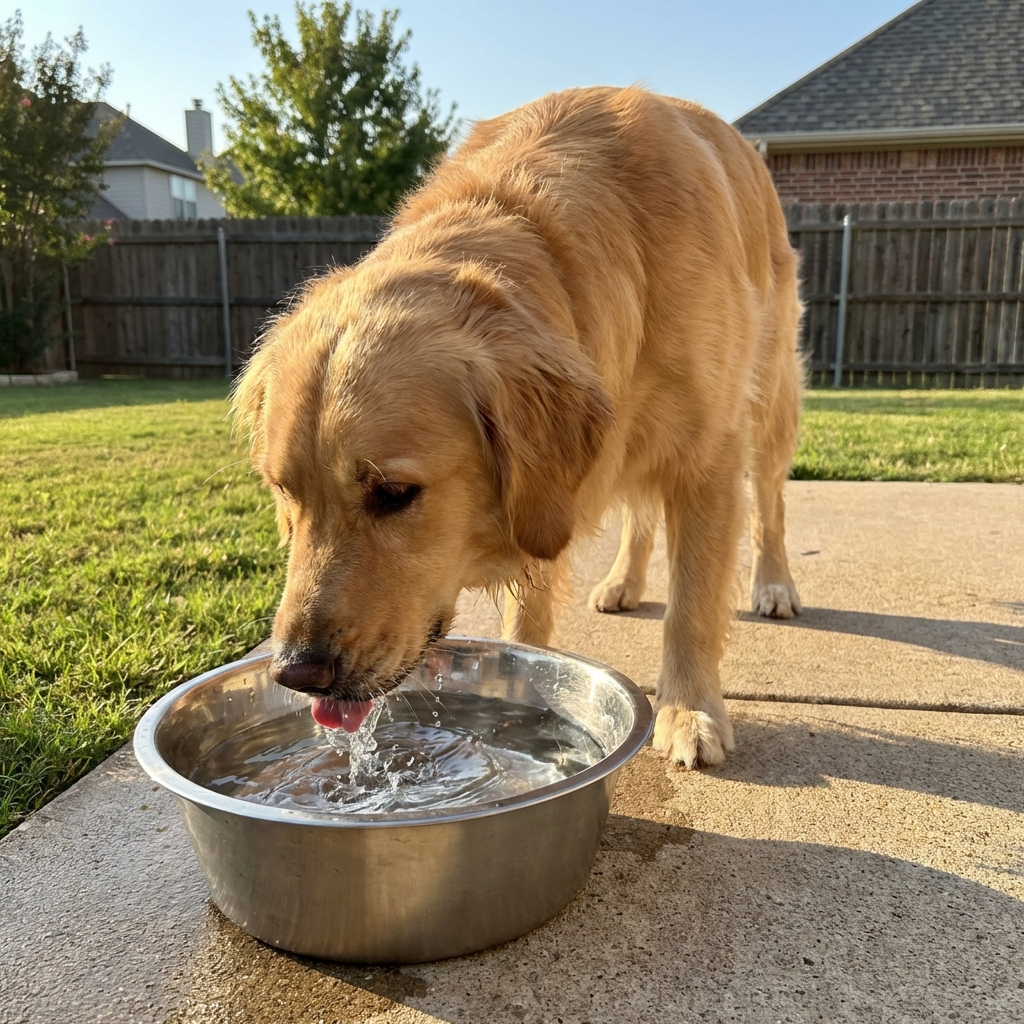
- Hydrate and take breaks. Overheating is a real risk in Texas heat.
- Check the mouth. Split tennis balls and damaged toys can cut gums. In some dogs, heavy chewing on abrasive felt may contribute to tooth wear, so replace worn balls and consider dog-specific rubber options.
- Do not throw sticks. Sticks can splinter and, in worst cases, cause serious mouth injuries.
- Talk to your veterinarian if your dog limps, slows down, or seems sore after play.
Make fetch even better
Once your dog understands the game, you can use fetch as a training tool and a confidence builder.
- Add cues: “Get it,” “Come,” “Drop it,” and “All done.”
- Practice manners: Ask for a sit before each throw.
- Use variety: Mix balls, bumpers, and soft toys to prevent boredom.
- Keep it joyful: Fetch should feel like teamwork, not a test.
Teach “all done”
- Say “All done” in a calm voice.
- Trade the toy for a treat, then put the toy out of sight.
- Immediately cue a simple, calming follow-up like a scatter of “find it” treats, a chew, or a short sniff walk.
If you remember one thing, make it this: reward the return, reward the drop, and keep sessions short enough that your dog finishes happy and eager for next time.