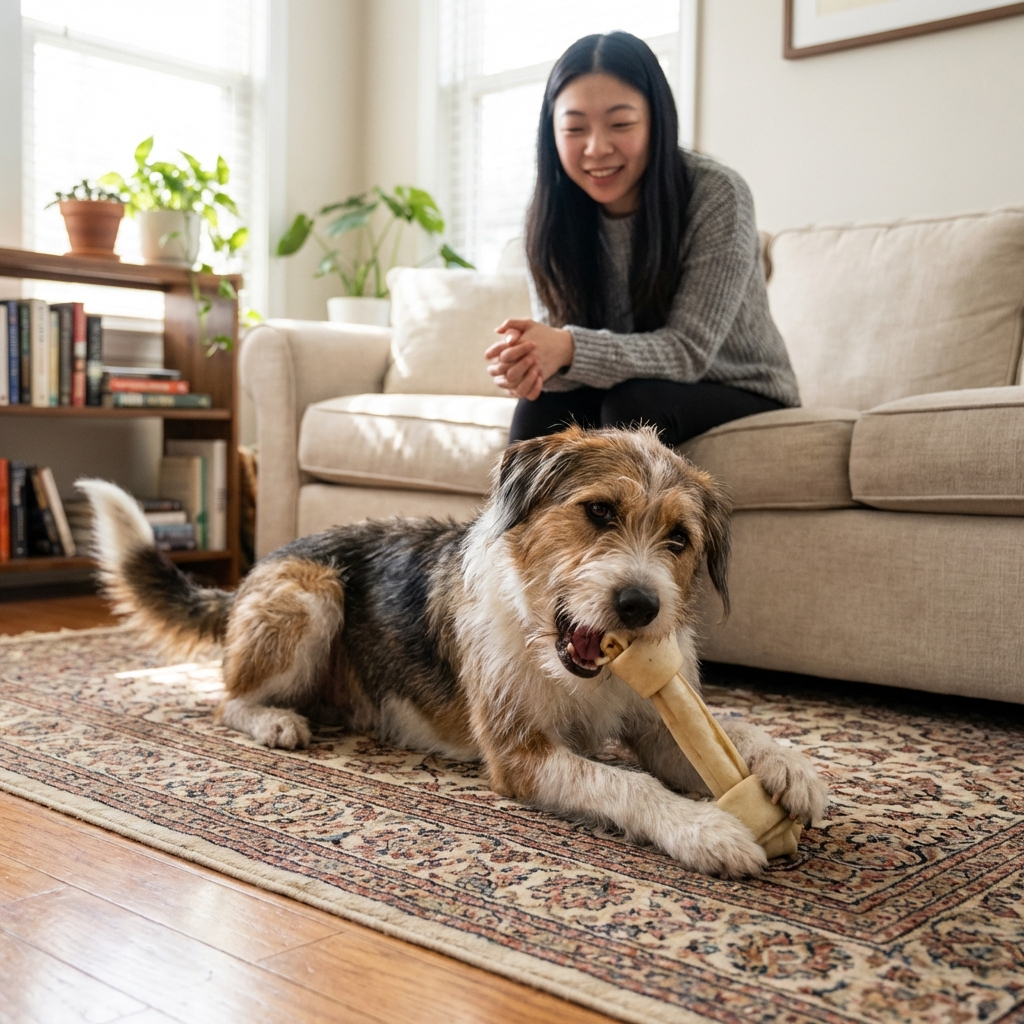
Learn a vet-approved, force-free way to teach “drop it” using trades, rewards, and simple games. Prevent resource guarding, gulping hazards, and make the...
Article
•
Designer Mixes
How to Teach a Dog to Drop It

Shari Shidate
Designer Mixes contributor
As a veterinary assistant in Frisco, Texas, I see one cue save the day again and again: “Drop it.” It keeps dogs safer around choking hazards, helps prevent resource guarding from escalating, and makes everyday life calmer. The best part is you can teach it in a way that feels like a game, not a battle.
In this guide, you’ll learn exactly how to teach “drop it,” what to do when it fails, and fun ways to practice so your dog actually wants to let go.
What “drop it” means
“Drop it” is a cue that asks your dog to release an item from their mouth. It is different from:
- “Leave it”: Do not take the item in the first place.
- “Give”: Often used as a casual synonym, but “drop it” tends to be clearer and more consistent.
- “Trade”: A training strategy, not a cue. You trade what they have for something better.
For safety and reliability, teach “drop it” as a positive, predictable exchange. Dogs that trust you will give things up more readily.
Why dogs hold on
If your dog refuses to drop items, they are not being stubborn. Usually one of these is happening:
- The item is highly rewarding: A sock, food wrapper, or bone can beat a boring treat.
- You have accidentally taught “keep away”: Chasing, grabbing, and scolding often turns it into a game.
- They worry you will take it forever: If every “drop it” ends with the fun item disappearing, many dogs learn to clamp down.
- Resource guarding is brewing: Stiff body, freezing, whale eye, growling, snapping, or rushing to swallow are red flags.
If you see signs of guarding, skip the tug-of-war over the item and focus on calm trading and prevention. For intense or worsening guarding, work with a credentialed professional who uses positive reinforcement (for example, an IAABC or CCPDT trainer, or a board-certified veterinary behaviorist).
Before you start
- 2 types of treats: one “everyday” and one “jackpot” (tiny chicken, freeze-dried liver, or cheese if your dog tolerates dairy).
- Low-value objects: a boring toy, a rope toy, or a rubber chew that is safe and larger than your dog can swallow.
- A quiet area: reduce distractions at first.
- Short sessions: 2 to 5 minutes, one to three times daily.
Important: Practice in controlled sessions. Do not “train” with stolen dangerous items. Set your dog up to succeed with safe objects you can control.
Step-by-step: teach “drop it”
Step 1: Teach the trade
Give your dog a low-value toy. Let them hold it for a second.
- Bring a treat to their nose.
- When they release the toy, say “Yes”, then give the treat.
- Immediately give the toy back or restart the game.
Why this works: Your dog learns that letting go does not end the fun. It starts a reward and often a return of the item.
Step 2: Add the cue
After several successful reps, say “Drop it” a half-second before you present the treat. The treat is still a prompt, but now the words start predicting the reward.
Step 3: Fade the lure
Once your dog is releasing quickly, try this:
- Say “Drop it.”
- Pause 1 second.
- If they drop it, mark the moment with “Yes” and then deliver the treat.
- If they do not drop it, bring the treat back to the nose to help, then make the next rep easier.
Step 4: Practice with new objects
Dogs do not automatically generalize cues. Practice “drop it” with:
- Different toys (soft, rubber, rope)
- Chews that are safe and supervised
- Low-value household items you can control (like a cardboard tube)
Step 5: Take it outside
When it is solid indoors, practice in the backyard, then on walks. Use a leash for safety and bring higher-value treats for the real world.
Play version: tug
Tug can be a great way to teach impulse control, as long as you keep it structured. If your dog shows guarding, gets overly amped, or has a history of aggression around toys, skip tug and work with calm trades or ask a qualified professional for a plan.
- Start tug.
- Freeze your hands and stop pulling. Go still.
- Say “Drop it.”
- Hold the toy calmly. Do not yank and do not talk too much.
- The instant your dog releases, say “Yes” and feed a treat or restart tug as the reward.
Tip: Restarting tug can be the reward for dogs who love toys more than treats. This is especially useful for high-energy mixes.
Common mistakes
- Chasing your dog: It turns into a thrilling game and increases swallowing risk.
- Grabbing at the item: Many dogs clamp down harder when hands reach in.
- Only using “drop it” to end fun: If “drop it” always means “I take it away,” compliance drops fast.
- Repeating the cue: Saying “drop it, drop it, drop it” teaches your dog they can wait you out. Say it once, then help or reset.
- Starting with too valuable an item: Begin easy and work up gradually.
Troubleshooting
If they ignore you
- Use a better treat and increase distance from distractions.
- Practice after a short walk when your dog is not bursting with energy.
- Go back to easier objects and rebuild success.
If they run away
- Stay calm and do not chase.
- Grab treats and cheerfully call them to you.
- Offer a trade and reward the drop.
- For repeat offenders, practice with a leash indoors and use baby gates to limit “victory laps.”
If they try to swallow fast
This can be dangerous. Manage first, train second.
- Use a leash on walks in scavenger-heavy areas.
- Muzzle-train with a basket muzzle if your dog routinely eats unsafe items, with guidance from your vet or trainer.
- Train “leave it” alongside “drop it” for prevention.
If you see guarding signals
If your dog stiffens, freezes, growls, snaps, or you see the whites of their eyes, stop reaching in. Toss high-value treats away from the item to create space, then pick the item up only after your dog has moved away. A forceful “take it” approach can escalate guarding.
Quick notes on letting go
- Chewing can help some dogs relax. It can be soothing and self-regulating, which is one reason dogs may cling to chews.
- Retrievers were bred to release gently, but any mix can learn a soft, reliable drop with practice.
- Your timing matters more than your volume. A calm cue plus fast reinforcement beats loud repetition.
- Dogs learn patterns quickly. If “drop it” predicts a great trade most of the time, your dog starts offering the behavior.
Safety notes
Some situations call for extra caution:
- Choking risk: If your dog is actively choking (pawing at mouth, distress, blue or gray gums), this is an emergency. Call an emergency veterinarian right away. If you have been trained in canine choking first aid, use it while someone else calls or while you are en route. Seconds matter.
- Toxic items: Common dangers include xylitol, chocolate, grapes and raisins, nicotine, medications, and rodent poison. If you suspect ingestion, contact your veterinarian or a pet poison hotline immediately.
- Hands in the mouth: Do not pry the mouth open unless a veterinary professional has instructed you to. One exception is when a known toxin or sharp object is clearly visible and you can safely remove it without getting bitten. If you are unsure, prioritize safety and call a vet or poison control while you manage your dog.
On a walk with something dangerous: Do not chase. Use a rapid trade (jackpot treats right to the nose) or scatter several treats on the ground to interrupt and create an opening, then leash up and call your vet or poison control as needed.
7-day practice plan
- Days 1 to 2: Low-value toy, treat at nose, mark “Yes” as they release. Add “drop it” after a few reps. 10 to 15 reps total per day.
- Days 3 to 4: Say “drop it” first, then show treat. Start giving the toy back after the treat.
- Days 5 to 6: Mix in tug pauses if appropriate for your dog. Reward with treats and with restarting the game.
- Day 7: Practice with 3 different objects in 2 different rooms. Keep it easy and upbeat.
Keep sessions short, end on a win, and celebrate progress. Reliable “drop it” is built through repetition, not pressure.
Quick takeaway
Teach “drop it” by making it a positive trade, then practice in tiny steps until your dog can succeed anywhere. When in doubt, go back to an easier item and a better reward. Consistency and calm handling go a long way toward a safer, happier dog.