Yes, many cats can learn fetch. Follow this vet-assistant-approved, step-by-step plan with safe toy choices, reward timing, troubleshooting, and wellness-foc...
Article
•
Designer Mixes
How to Teach a Cat to Fetch

Shari Shidate
Designer Mixes contributor
Yes, many cats can learn to fetch, and when it clicks, it is one of the sweetest little games you can share. As a veterinary assistant, I love fetch because it can add healthy activity, mental enrichment, and confidence-building to a cat’s day. The key is working with your cat’s natural hunting sequence, keeping sessions short, and paying attention to body language so the game stays fun.
Can cats really learn fetch?
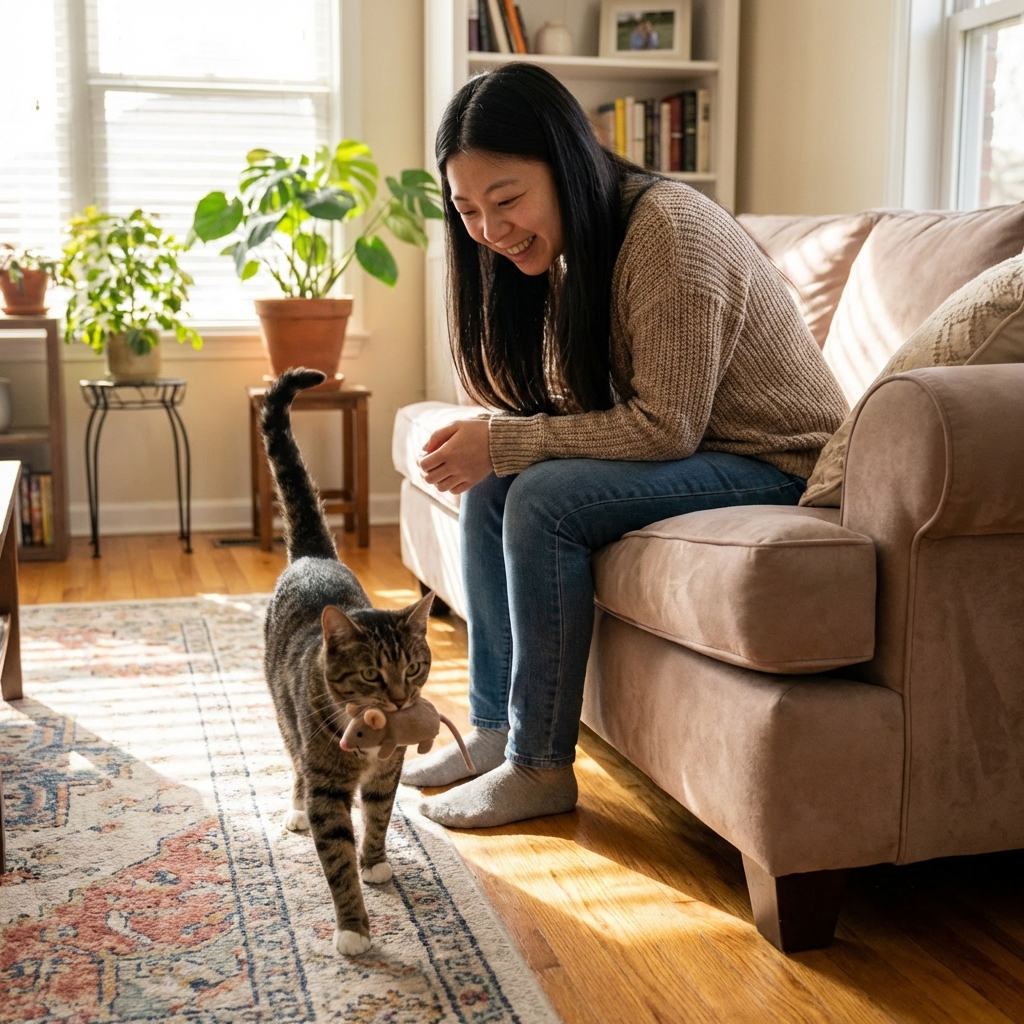
Many can. Fetch is not about “obedience” the way it often is with dogs. For cats, it is usually an extension of prey play: chase, catch, and sometimes return the “prey” to you. Some cats do it naturally, especially younger cats and confident adults with high toy drive, but not every cat will take to it, and that is okay.
Good candidates for fetch training include cats who love to chase, pounce, carry toys, or “present” a toy at your feet. Cats who are very shy, easily overstimulated, in pain, very low in toy interest, or experiencing cognitive decline may need a slower approach, different enrichment, or a vet check first.
If fetch never becomes your cat’s thing, you are not failing. Try wand play, food puzzles, or simple scent games (like hiding a few treats in a snuffle mat or cardboard boxes) for the same enrichment benefits.
Before you start
Pick the right toy
Choose a toy your cat already loves and can comfortably carry. Think small and light.
- Soft mice, crinkle balls, pom-poms, or small kicker toys (for larger cats)
- Avoid anything with long strings or pieces that easily tear off
- If your cat loves treat toys, a very lightweight toy with a tiny rattle can help
Choose the right space
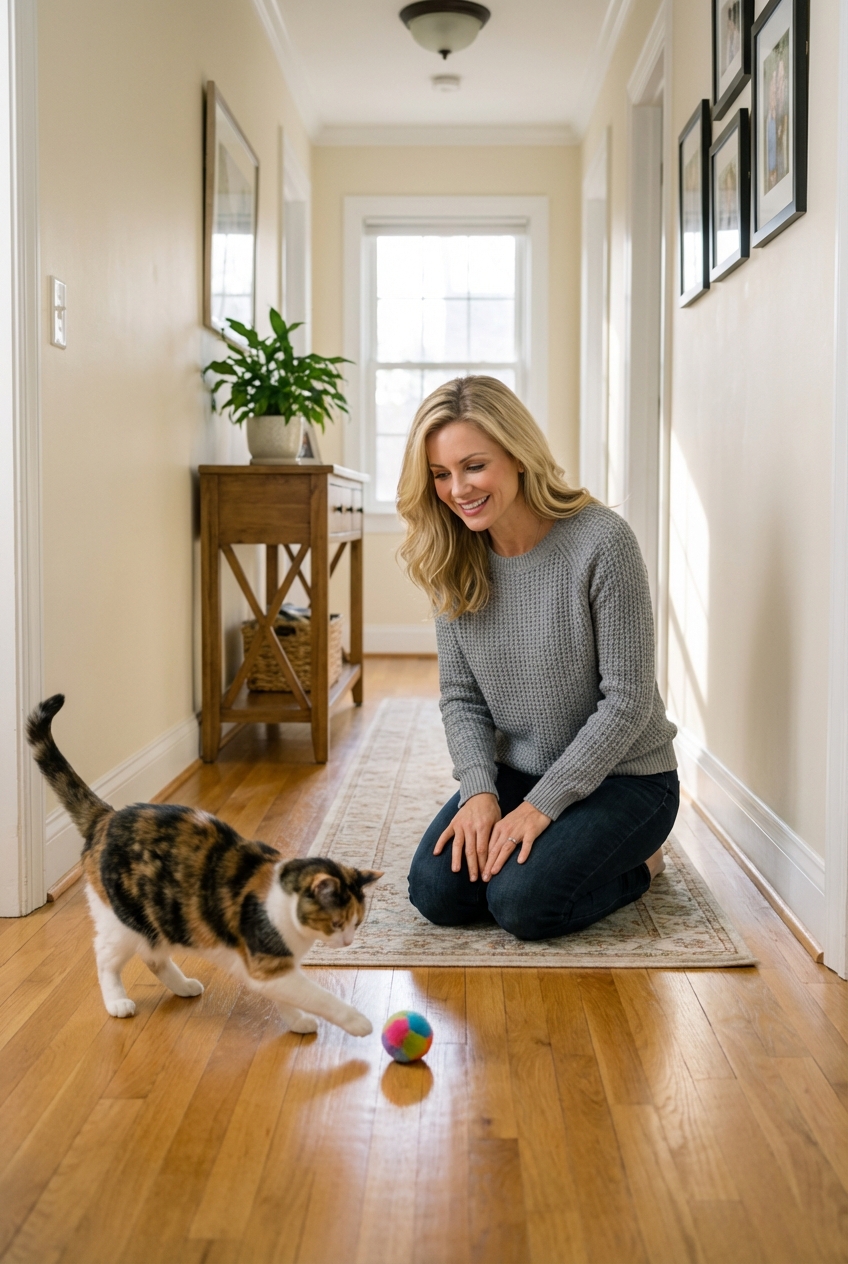
Start in a quiet, low-distraction area like a hallway, bedroom, or living room with the doors closed. A hallway often helps because it “funnels” the toy and makes it easier for some cats to bring it back.
Use rewards your cat values
Fetch becomes more reliable when returning the toy predicts something good. For many cats, that is a tiny treat, a lickable puree, or a few seconds of their favorite wand play.
- Use pea-sized treats so you can do multiple reps without overfeeding
- Keep rewards consistent at first, then fade them slowly
Keep sessions short
Think 2 to 5 minutes, once or twice a day. For many cats, that is about 3 to 8 tosses. Stop while your cat is still interested. A short, successful session beats a long one that ends in frustration.
Step-by-step
Step 1: Make the toy exciting
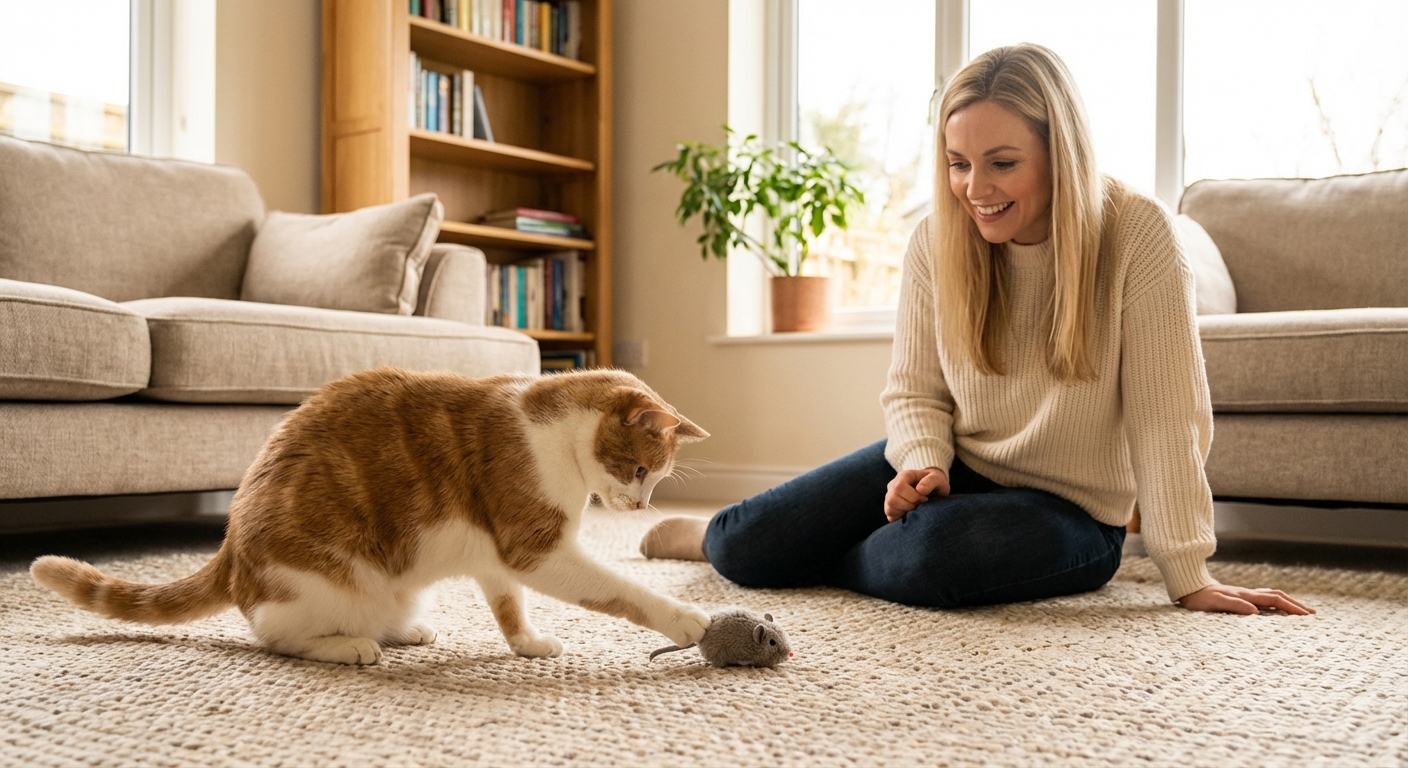
Wiggle or roll the toy just enough to trigger a chase. Let your cat win. If your cat catches it, calmly praise and offer a reward right there. This teaches: “Interacting with this object pays off.”
Step 2: Toss short and easy
Roll the toy a short distance, just a few feet. Many cats prefer a low, skittering motion that looks like prey. Reward the chase and any contact with the toy. If your cat picks it up, make that a bigger win.
Step 3: Shape the return
The biggest training leap is the return. At first, reward tiny steps in the right direction:
- Your cat picks up the toy: reward
- Your cat turns toward you with the toy: reward
- Your cat takes one step toward you: reward
If you use a clicker or a marker word like “yes,” this is a perfect time to use it. For beginners: first “load” the marker by doing 10 to 15 reps of click (or say “yes”), then immediately give a treat, so your cat learns the sound predicts a reward.
Step 4: Make returning easy
Many cats will drop the toy halfway back. That is normal. Avoid chasing your cat for the toy, which can turn it into keep-away. Instead:
- Sit on the floor and stay calm
- Call your cat in a friendly voice
- Show the treat, then wait
When your cat comes closer, reward and gently toss the toy again. The message becomes: bringing it near you keeps the game going.
Step 5: Add a cue (optional)
Once your cat is reliably chasing and often bringing the toy back, you can add a cue like “fetch” right before you roll the toy. Keep it consistent and upbeat.
Step 6: Teach a drop
If your cat brings the toy but will not release it, trade. Offer a treat right at their nose, and when they drop the toy to eat, pick it up and immediately toss again. This keeps the game moving and prevents tugging or grabbing, which some cats dislike.
If your cat runs off with the toy
This is common, especially in the beginning. Your cat is saying, “I caught prey and I want to keep it safe.” Try these adjustments:
- Use a second identical toy. Toss toy #2 as soon as your cat grabs toy #1. Many cats will drop the first and chase the second.
- Train in a smaller space. Start in a closed room or hallway so hiding spots are limited.
- Increase the reward for returning. Make the treat better or use a lickable treat only for returns.
- End on a win. If your cat keeps running away, do one easy roll, reward the chase, and stop the session before it becomes a habit.

Troubleshooting
Your cat loses interest quickly
- Try a different toy texture or sound
- Play before meals when your cat is often more motivated
- Shorten sessions to 60 to 90 seconds and do two mini sessions instead
Your cat gets overstimulated
Some cats go from excited to stressed fast. Signs include sudden tail lashing, ears back, skin twitching, growling, or biting. If you see these, pause and let your cat reset. Overstimulation is not “bad behavior,” it is your cat’s nervous system saying it has had enough. When in doubt, stop early and try again later.
Your cat will chase but not pick up
- Try a softer toy that is easier to grab
- Reward any mouth contact with the toy
- Use a toy your cat already carries around the house
Your cat only fetches at 2 a.m.
Very real. Build a predictable evening routine: 5 minutes of play, a few fetch reps, then a small meal. This can help shift your cat’s “hunt and eat” cycle to a more human-friendly schedule for many households.
Safety and wellness notes
- Skip unsafe items: hair ties, rubber bands, yarn, ribbon, and anything your cat can swallow.
- Supervise stringy or feathery toys: if a toy has feathers, strings, or dangling parts, keep it for supervised play and store it afterward.
- Consider choking and pica risks: avoid tiny hard balls or small parts if they can fit fully in your cat’s mouth. If your cat is prone to eating non-food items (pica), skip small swallowable toys entirely and ask your vet for safer enrichment options.
- Watch for dental pain: if a cat suddenly stops carrying toys or seems reluctant to bite, schedule a vet visit. Oral pain is common and easy to miss.
- Support healthy joints: for seniors or arthritic cats, keep throws short and on non-slip surfaces. Fetch can be low impact if you keep it gentle.
- Keep it positive: never punish your cat for “not returning.” We want the toy to predict fun, not pressure.
A simple 7-day plan
If you like structure, here is a gentle progression you can follow.
- Days 1 to 2: Reward chasing and touching the toy.
- Days 3 to 4: Reward picking up and turning toward you.
- Days 5 to 6: Reward any return within a few feet of you. Use a hallway.
- Day 7: Start trading for a clean drop and add the cue “fetch.”
Some cats move faster, some slower. The win is consistency, not speed.
When to talk to your veterinarian
Reach out to your vet if your cat used to play and suddenly stops, seems painful when running or jumping, has bad breath or drools, or if play triggers aggression that feels intense or unpredictable. Sudden changes in play can also be a clue that something else is going on, not just dental discomfort, so it is always worth checking in.
Fetch should leave your cat feeling confident and satisfied, not frantic or stressed. If you keep it short, safe, and rewarding, many cats will surprise you with what they can learn.