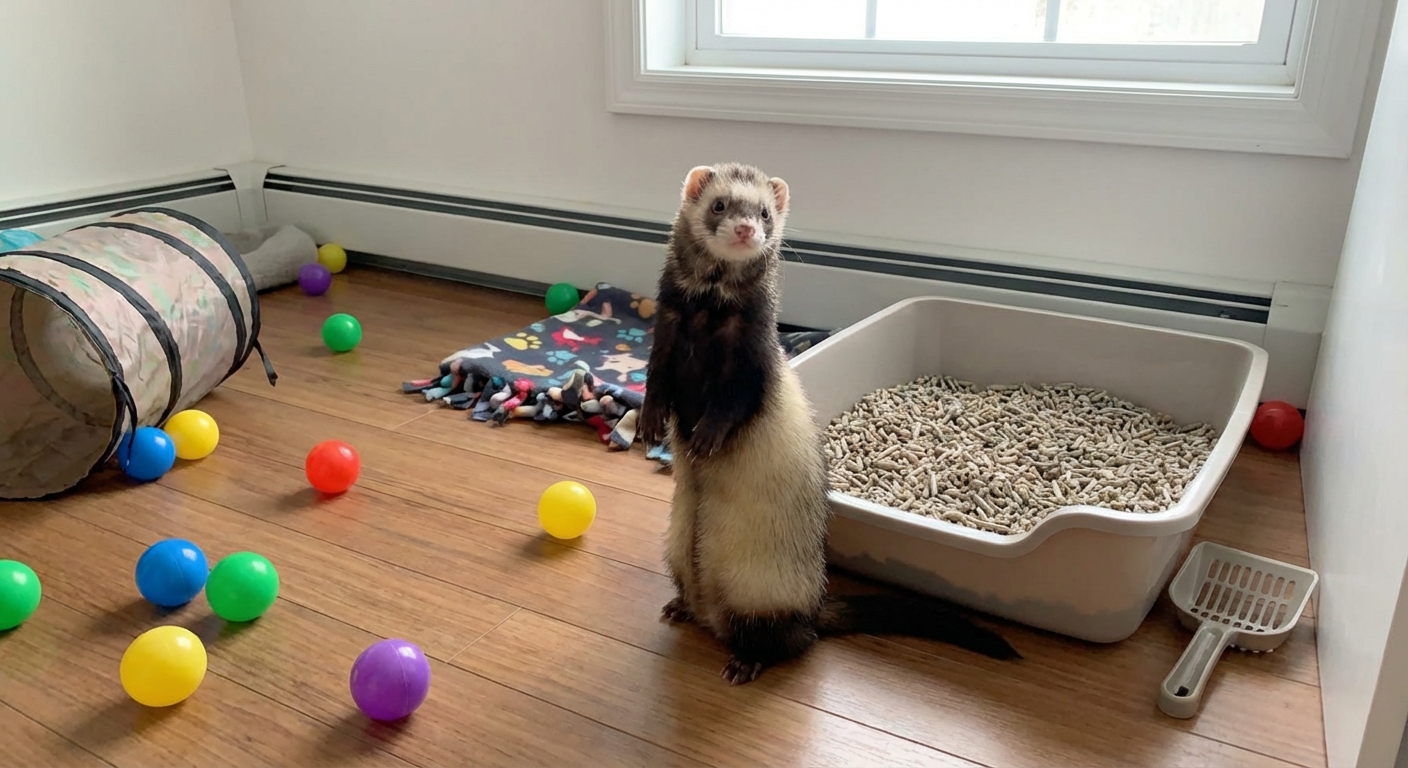
Learn how to litter train a ferret using their natural corner habits. Get a quick-start setup, ferret-safe litter picks, step-by-step training, and common mi...
Article
•
Designer Mixes
How to Take Care of Ferrets

Shari Shidate
Designer Mixes contributor
Ferrets are tiny comedians with big needs. They sleep hard, play harder, and depend on you for the right diet, safe housing, enrichment, and veterinary care at every life stage. As a veterinary assistant in Frisco, Texas, I have seen how the “little stuff” like the wrong litter, a tempting chew toy, or an unferret-proofed recliner can quickly turn into an emergency.
This step-by-step guide walks you through ferret care for kits (babies), adults, and seniors with practical routines you can start today.

First: Is a ferret right for your home?
Ferrets can be wonderful, but they are not “low maintenance.” Before you commit, make sure you can provide:
- Daily out-of-cage time (many ferrets do best with 2 to 4+ hours total, and more when you can manage it)
- Ferret-proofed space (they squeeze into gaps, chew rubber, and climb)
- Species-appropriate diet (they are strict carnivores)
- Vet care with an exotics-savvy veterinarian (many general clinics do not treat ferrets routinely)
- Long-term planning (lifespan is often 5 to 8 years, and some reach 9 to 10+ with excellent care)
Companionship matters: Many ferrets are social and do best with a compatible ferret friend. A single ferret can still thrive, but you will need to provide a lot of daily interaction and supervised play. If you add a second ferret, plan for slow introductions and separate housing at first until you are confident they are safe together.
If you are on the fence, spend time with ferrets first. Many rescues and experienced owners are happy to talk honestly about the daily realities.
Step 1: Build a safe, comfortable home
Choose the right enclosure
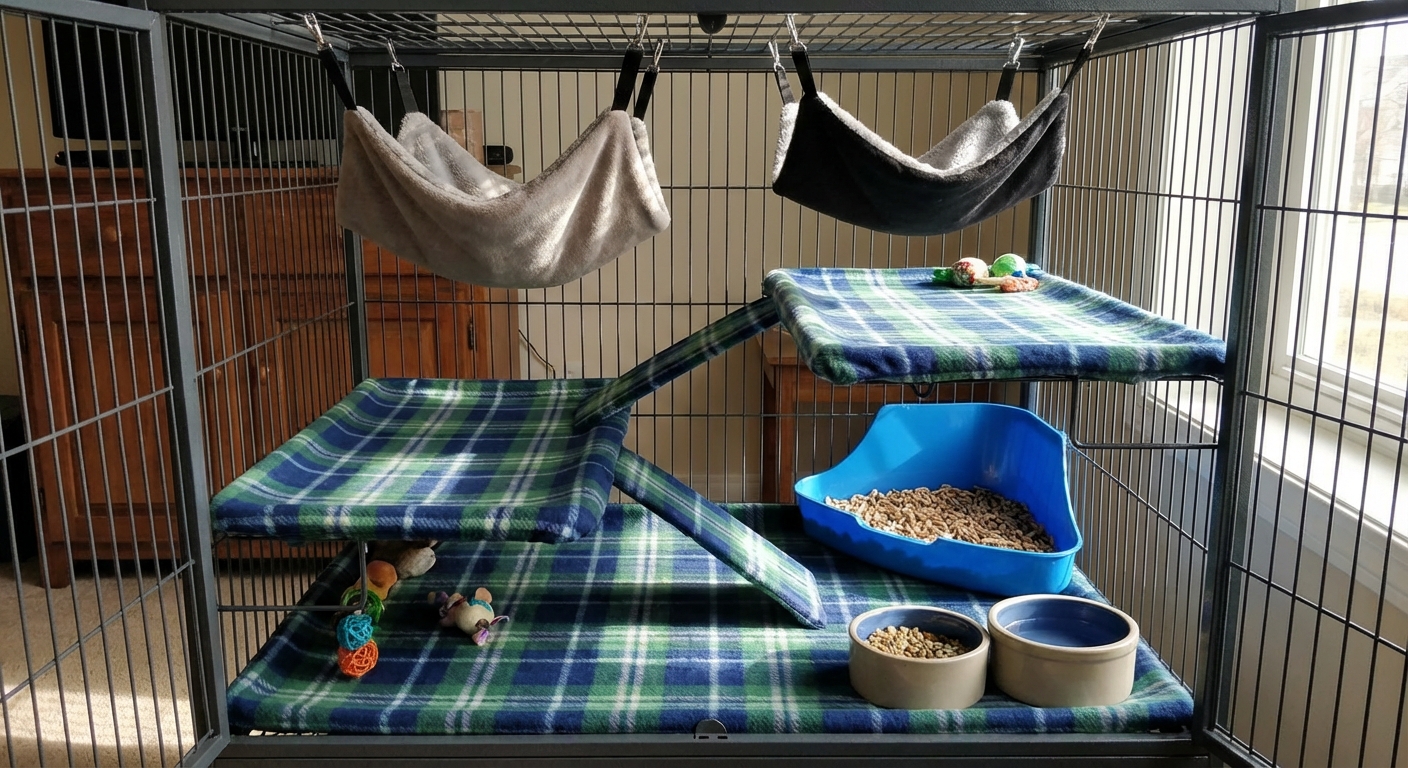
A ferret’s cage is a home base, not a full-time living space. Bigger is better, and extra space makes daily life easier for both of you. Look for:
- Sturdy construction with secure latches
- Multiple levels with safe ramps and solid footing
- Bar spacing small enough to prevent escapes (especially for young ferrets)
- Easy-to-clean surfaces
Avoid wire floors as the primary walking surface because they can irritate feet. Use solid shelves, mats, or safe coverings.
Set up zones
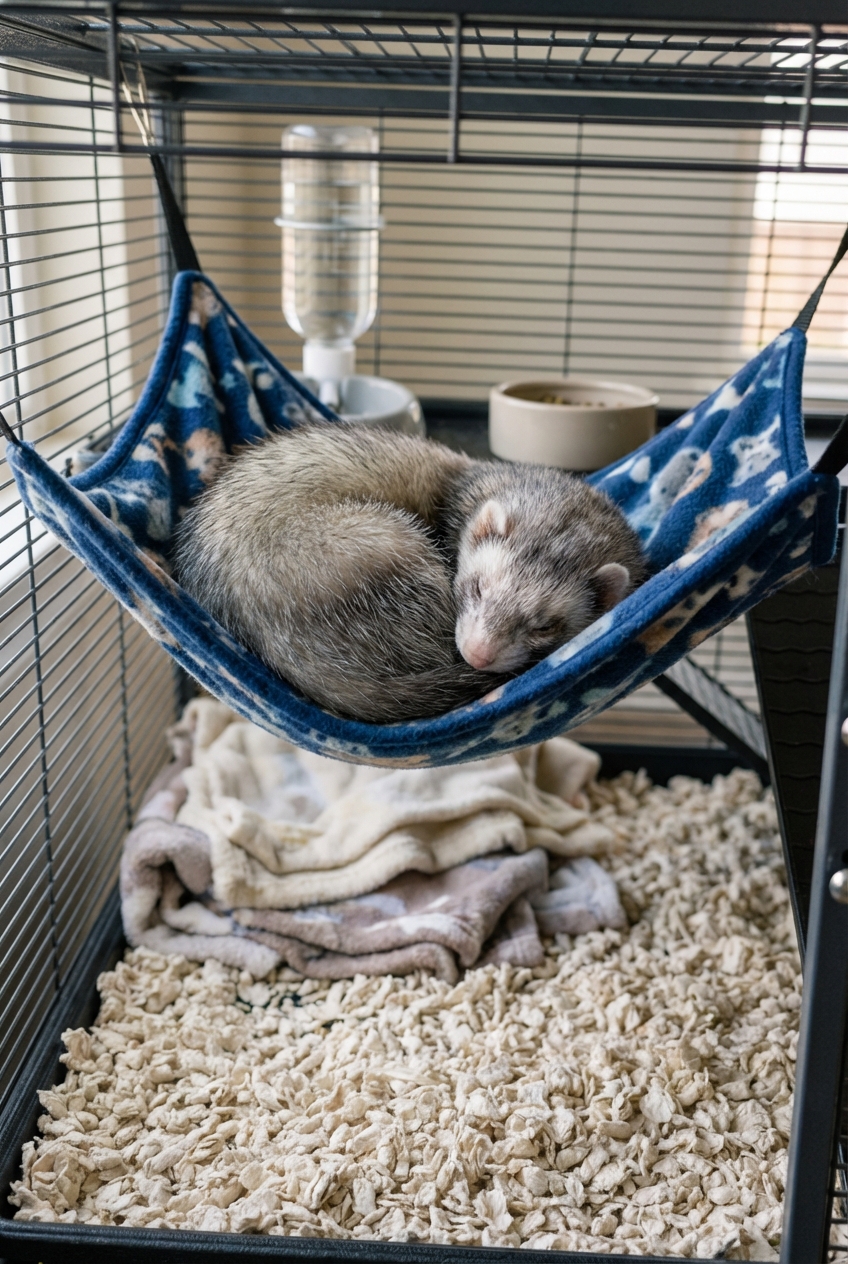
- Sleep zone: hammocks, fleece blankets, and enclosed sleep sacks
- Bathroom zone: litter pan or puppy pad placed in a corner away from food
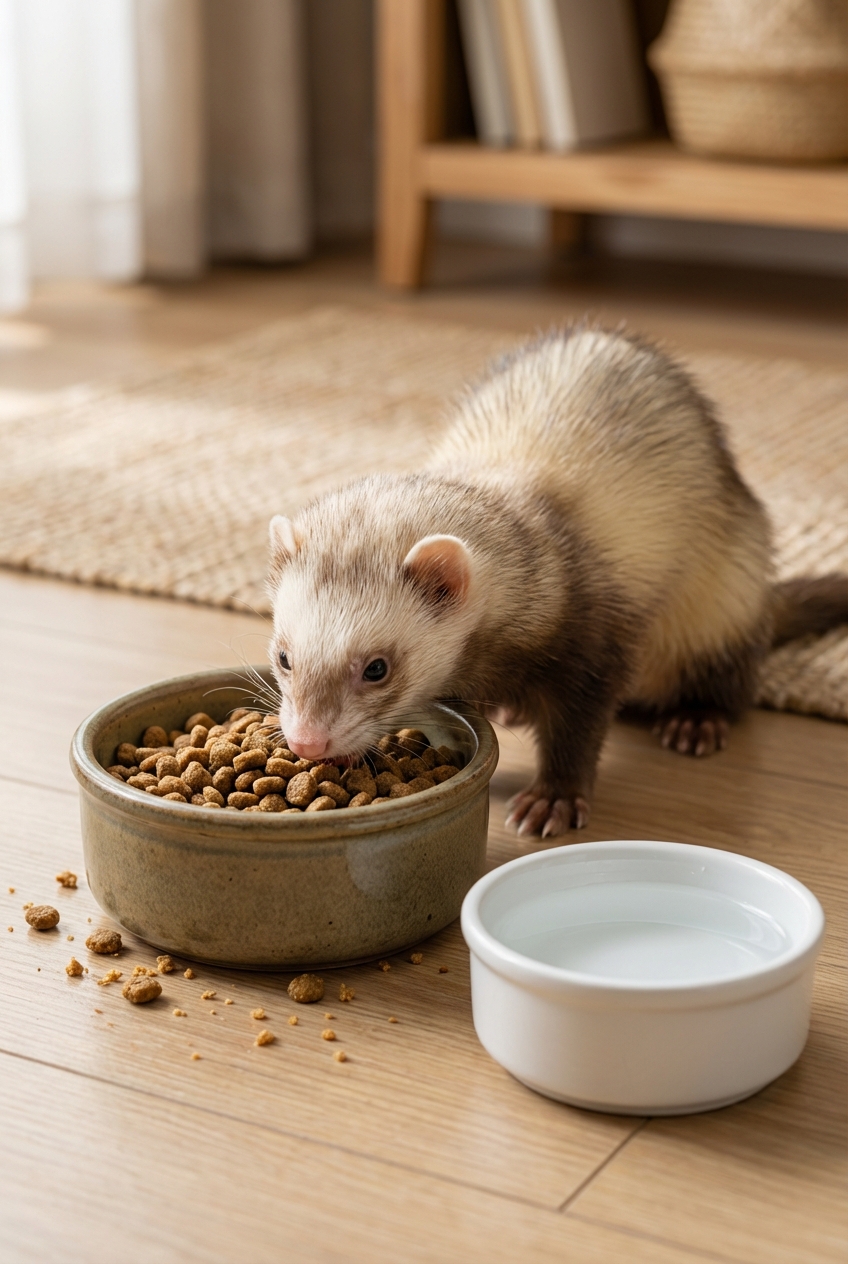
- Food and water zone: heavy crocks and fresh water. Many ferrets drink better from bowls. Bottles can be fine, but some ferrets do not drink enough from them, so I like a heavy bowl as the main option when possible.
Temperature and placement
Ferrets can struggle in heat. Keep their environment comfortably cool and well ventilated. Place the cage:
- Out of direct sunlight
- Away from vents blasting hot air
- In a calm area where they can still see and interact with the family
Practical heat prevention: keep AC on during hot months, offer cooling tiles or chilled ceramic dishes to lie against, and never leave a ferret in a parked car, even “just for a minute.”
Step 2: Ferret-proof your home
Ferrets are experts at finding hazards. A good ferret-proofing routine prevents most emergencies.
Common dangers
- Rubber and soft plastic (erasers, foam, silicone, shoe soles, remote buttons). These can cause intestinal blockages.
- Recliners and sleeper sofas. Ferrets can crawl inside and get crushed when furniture moves.
- Small gaps behind appliances, under cabinets, and around doors. If their head fits, the rest often follows.
- Open toilets and buckets (drowning risk).
- Stringy items like yarn, ribbons, and some cat toys.
- Toxic substances including many cleaners, nicotine products, fragrances, essential oils, and insecticides. If you use any scented product, assume it could be a problem and ask your veterinarian before using it around ferrets.
Quick checklist
- Get down to ferret level and scan every room.
- Block access behind washer and dryer.
- Cover vents and holes, secure cabinets, and manage cords.
- Pick one “ferret room” first if your whole home is not ready yet.
If your ferret suddenly stops eating, is pawing at the mouth, drooling, vomiting, has diarrhea, or seems painful, treat it as urgent and call a veterinarian right away. If you suspect a blockage or heat stress, do not wait. Same-day care is the safest choice.
Step 3: Feed the right diet
Ferrets are obligate carnivores. Their digestive tract is short and designed for animal-based protein and fat, not grains or high-fiber foods.
What to feed
Most pet ferrets do well on a high-quality, ferret-appropriate commercial diet. In general, look for:
- High animal-based protein
- Moderate to high fat
- Very low fiber
- Minimal fillers like corn, wheat, and sugary ingredients
If you are considering raw or homemade feeding, it is extra important to work with an exotics veterinarian or qualified nutrition professional. Ferrets can develop serious deficiencies if the diet is not balanced.
Feeding schedule
Many ferrets do best with food available most of the day because they have fast metabolisms. Fresh water should always be available. Monitor body condition and weight regularly, especially in seniors.
Treats
- Limit: sugary treats, dairy, fruit, and high-carb items (these can upset the gut and are not ideal for long-term health)
- Avoid: anything rubbery, gummy, or chewy that can break into pieces and be swallowed
Step 4: Create a simple routine
Ferrets thrive on predictable care. Here is a practical routine you can copy and paste into your day.
Daily
- Morning: refresh food and water, quick litter cleanup, 15 to 30 minutes of play
- Afternoon or evening: 2 to 4+ hours out-of-cage time with supervision, rotate toys
- Night: final litter cleanup, quick health check, settle them into bedding
Weekly
- Wash bedding (unscented detergent is best)
- Wipe cage surfaces and shelves
- Clean food and water bowls thoroughly
Monthly
- Deep clean the enclosure
- Inspect toys for wear and chewing damage
- Weigh your ferret and note trends
Step 5: Litter training and hygiene
Most ferrets can learn reliable litter habits with the right setup and patience.
Litter training basics
- Use corners. Ferrets naturally choose corners to eliminate.
- Place multiple boxes in common potty spots during training.
- Reward good choices with gentle praise and a safe, tiny treat.
- Clean accidents quickly with an enzyme cleaner to reduce repeat marking.
Choose safe litter
Avoid dusty, clumping cat litters. Many ferret owners do better with paper-based pellets or puppy pads. The goal is low dust and low ingestion risk.
Bathing and odor
Ferrets have a natural musky smell. Frequent baths can actually make odor worse by drying skin and triggering more oil production. Instead:
- Wash bedding regularly
- Keep the litter area clean
- Use gentle grooming like brushing and occasional nail trims
Step 6: Enrichment
Ferrets need to climb, tunnel, chase, and explore. Enrichment is not optional. It is how you prevent boredom behaviors like nipping, cage rage, and destructive chewing.
Safe ideas
- Tunnels made for pets
- Dig boxes using safe materials (ask your exotics vet what is appropriate for your ferret’s habits)
- Interactive play with wand toys designed for small pets (supervised)
- Hide-and-seek with paper bags or boxes with safe entry holes
- Rotate toys weekly to keep novelty high
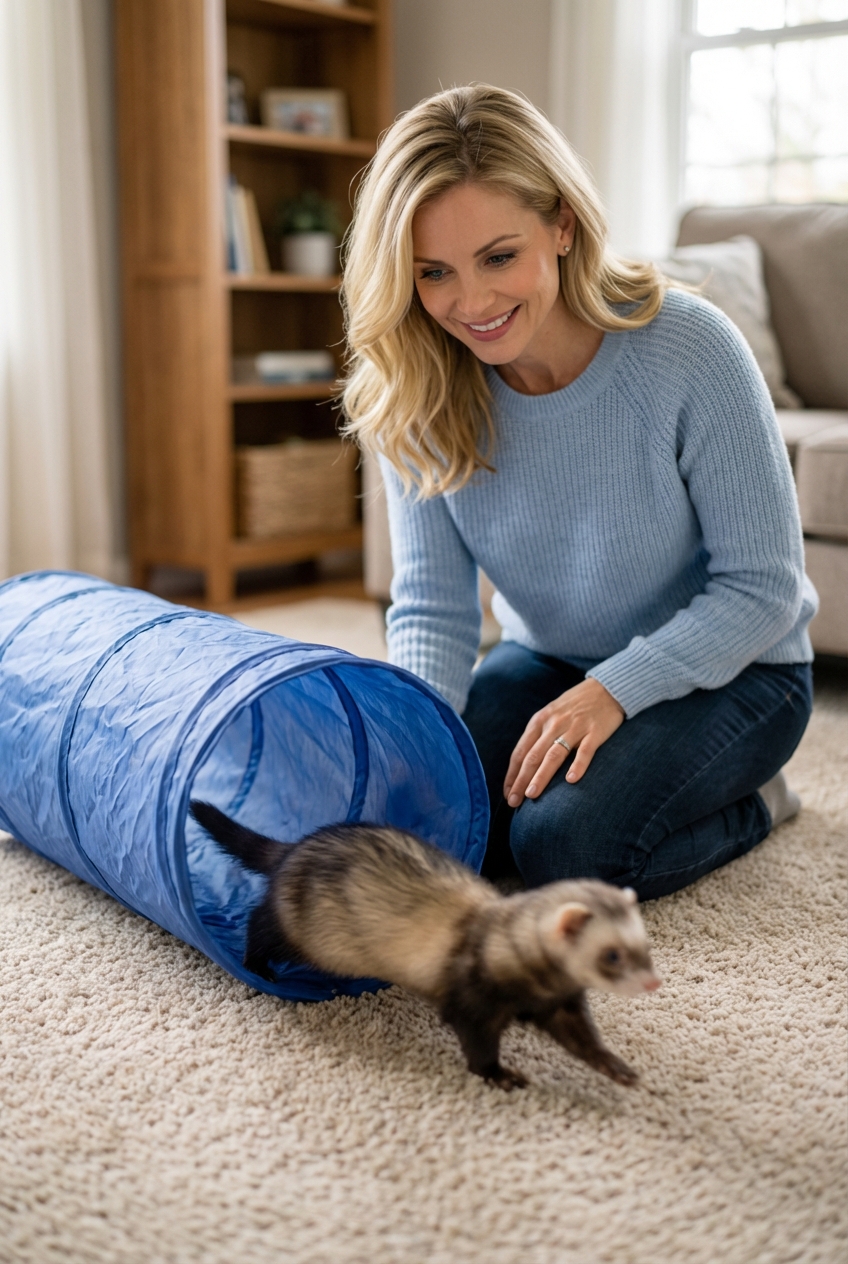
Safety note: If a toy can be chewed into pieces, swallowed, or wrapped around the body, skip it or use only under direct supervision.
Step 7: Grooming and basic care
Nail trimming
Most ferrets need nail trims every few weeks. Use small pet nail trimmers and take off tiny tips at a time. Aim to avoid the quick, and keep styptic powder (or a similar product your vet recommends) on hand just in case. If you are nervous, ask your veterinary team to demonstrate. Many clinics can do quick nail trims for a small fee.
Ear care
Some ferrets accumulate wax. Only clean ears if your veterinarian recommends it and shows you how. Over-cleaning can irritate the ear canal.
Dental health
Dental disease can occur in ferrets. Ask your veterinarian about vet-approved toothbrushing, safe dental products, and whether professional dental cleanings are appropriate for your ferret’s age and health. Avoid hard or brittle chew items that could crack teeth.
Step 8: Vet care and prevention
Ferrets need routine veterinary care with an exotics-experienced veterinarian. A good baseline plan includes:
- New ferret exam soon after adoption
- Regular wellness checks (often annually for adults, and more frequently for seniors)
- Parasite prevention if recommended based on lifestyle and local risks
Vaccines
Vaccine recommendations can vary by region, lifestyle, and your veterinarian’s protocol. Two core vaccines commonly discussed for ferrets are canine distemper and rabies. Your vet will advise what is appropriate for your ferret and when to give them.
Spay, neuter, and adrenal
Many ferrets in the United States are already altered before you bring them home. If you have an intact ferret, talk with an exotics veterinarian about reproductive health, behavior, and long-term disease risk. Your vet can also discuss adrenal disease risk, monitoring, and preventive options where appropriate.
Care by age
Kits
- Priorities: gentle handling, safe chewing options, consistent litter setup
- Watch for: diarrhea, poor appetite, and rapid weight changes
- Training tip: keep play sessions short and frequent, and end on a calm note
Adults
- Priorities: daily exercise, stable diet, mental stimulation
- Watch for: weight fluctuations, hair coat changes, itching, and recurring GI upset
Seniors
- Priorities: more frequent wellness checks, easy-access bedding, ramps with good grip
- Watch for: decreased stamina, weakness in the back legs, appetite changes, or new lumps
For seniors, small changes can be a big deal. Common ferret health issues in adulthood and older age include adrenal disease and insulinoma (low blood sugar). Signs can be subtle at first, like staring off, weakness, drooling, pawing at the mouth, “just acting weird,” or sudden sleepiness. Many seniors benefit from routine weight tracking and vet-recommended baseline bloodwork so you can catch trends early instead of chasing a crisis.
Emergency signs
Ferrets can go downhill quickly. Contact a veterinarian urgently if you notice:
- Repeated vomiting or retching
- Not eating or drinking
- Straining to poop or very small stools
- Sudden lethargy, collapse, or trouble breathing
- Swollen abdomen or signs of pain
- Suspected ingestion of rubber, foam, or foreign objects
- Heat stress signs like open-mouth breathing, drooling, weakness, or bright red gums
If you ever feel unsure, trust that instinct and call. It is always better to check early than to wait until it becomes an emergency.
Quick care checklist
- Clean, secure cage with soft bedding and a bathroom corner
- Ferret-proofed play area and daily supervised out-of-cage time
- High-protein, meat-based diet and constant access to water
- Regular litter cleanup and bedding laundry
- Enrichment: tunnels, exploration, interactive play, toy rotation
- Routine veterinary care with an exotics-savvy clinic
- Fast action if appetite, stools, or behavior changes suddenly
When you meet their needs, ferrets are pure joy. They are curious, social, and surprisingly affectionate. Start with the basics, keep things consistent, and your ferret will tell you, loud and clear, when life feels good.