Make homemade cat food realistic with freezer meal prep. Learn how to pick a complete feline recipe, batch cook, portion by weight, freeze flat, label, thaw ...
Article
•
Designer Mixes
How to Store Homemade Cat Food Safely

Shari Shidate
Designer Mixes contributor
Homemade cat food can be a wonderful way to support your cat’s health, especially when it’s balanced and made with safe ingredients. But once the cooking is done, the real make-or-break factor is storage. Cats can be vulnerable to foodborne illness, and spoiled food can also lead to vomiting, diarrhea, and in sensitive cats, may be associated with pancreatitis flare-ups.
Below is a vet-informed, safety-forward guide to storing homemade cat food properly, so you can feel confident every time you open the fridge or freezer.
At a glance
- Cool: Refrigerate within 2 hours (within 1 hour if the room is hot).
- Fridge: Use within 2 to 3 days.
- Freezer: Best quality within 2 to 3 months (can remain safe longer if consistently frozen).
- After serving: Pick up leftovers within 30 to 60 minutes.
Start with perishable-meat rules
Most homemade cat food contains animal proteins, so handle it with the same caution you would use for cooked chicken or ground turkey for your family.
Two practical rules prevent most problems:
- Cool it fast. Do not let cooked food linger at room temperature.
- Store it cold. Refrigerate for short-term use and freeze anything beyond a couple days.
Safety reminder: If your cat is a kitten, a senior, pregnant, immunocompromised, or has conditions like kidney disease or diabetes, ask your veterinarian about stricter food safety steps. These cats have less room for error.
Cooling: the 2-hour rule
Bacteria multiply quickly between about 40°F and 140°F. In food safety, this is often called the “danger zone.”
A reliable home guideline is:
- Get homemade cat food into the refrigerator within 2 hours of cooking.
- If the room is hot (summer kitchen, outdoor gathering), aim for within 1 hour.
Cool big batches faster
Large pots of food can stay warm in the middle for a long time. These steps help it cool evenly:
- Portion into shallow containers (more surface area cools faster).
- Use an ice bath: place the pot in a larger bowl or sink filled with ice water and stir.
- Cover loosely while cooling (for example, a clean lid not fully sealed) in a clean area, then seal and refrigerate. Do not leave it out longer just to “stop steaming.”
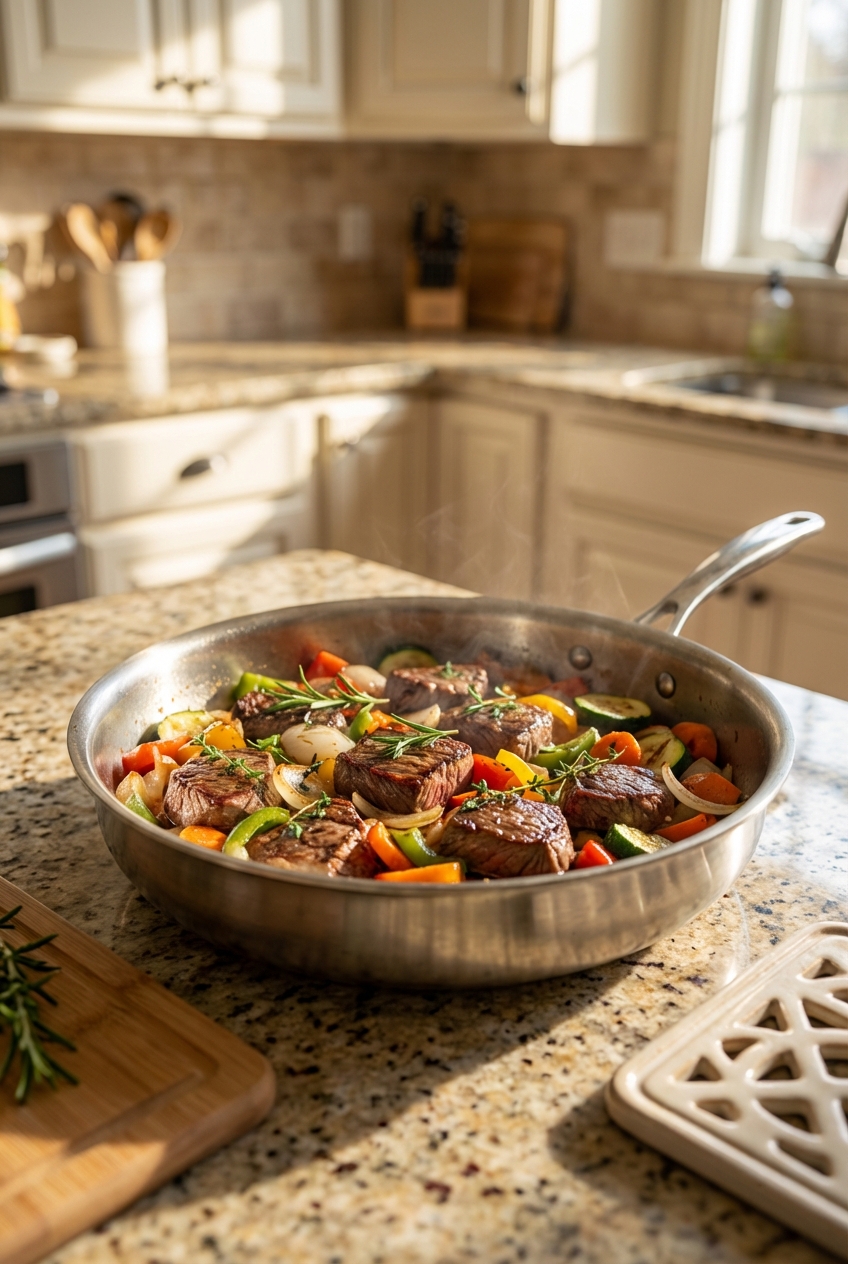
Fridge storage: how long is it safe?
For most cooked homemade cat food recipes, a conservative, safety-forward window is:
- Refrigerator: use within 2 to 3 days.
- Freezer: best quality within 2 to 3 months. It can often remain safe longer if kept consistently frozen, but freezer burn can reduce palatability.
Why so strict? Homemade recipes usually do not contain preservatives that extend shelf life in commercial foods. Also, repeated opening and temperature changes can speed up spoilage.
Keep your fridge cold
Aim for 40°F (4°C) or below. If you make homemade food often, a simple fridge thermometer is a smart investment.
Freezer storage: the easiest way to stay safe
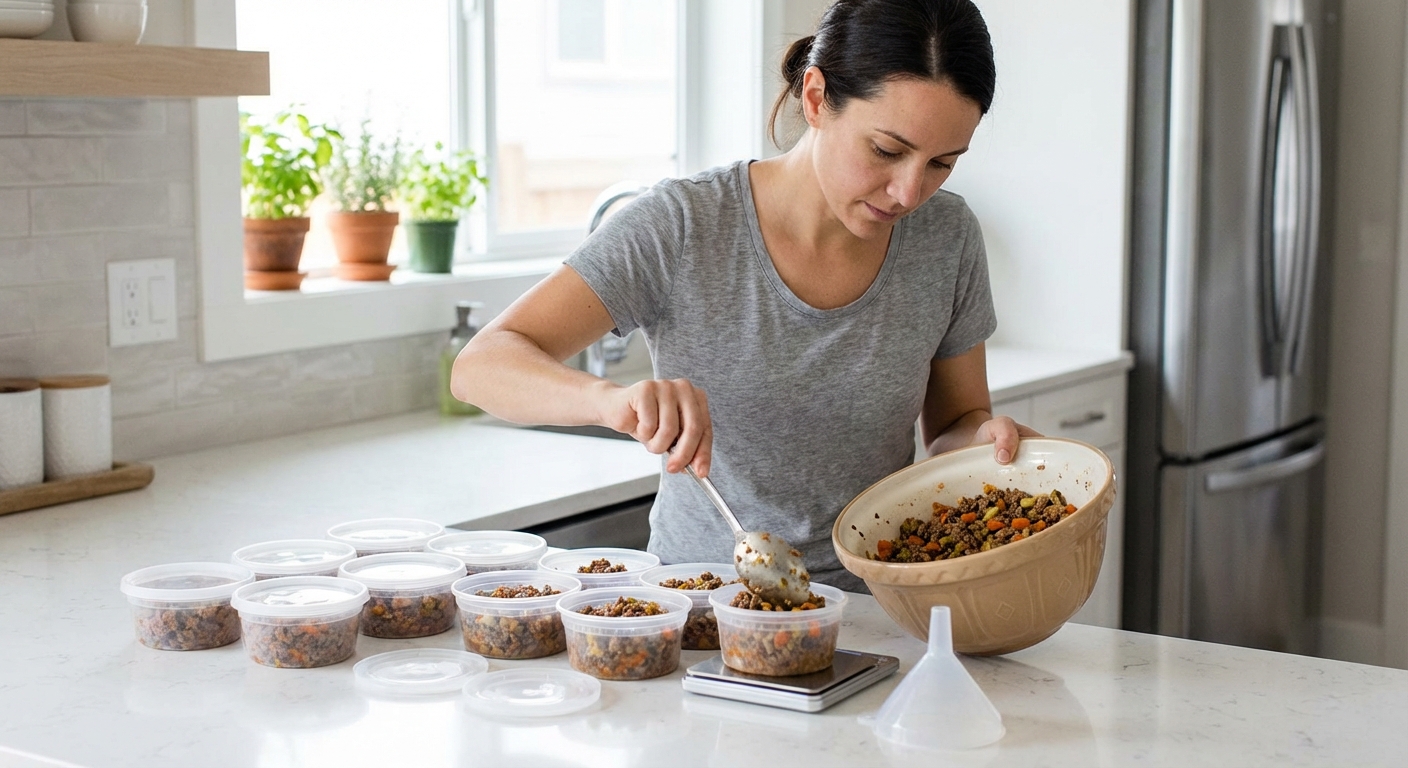
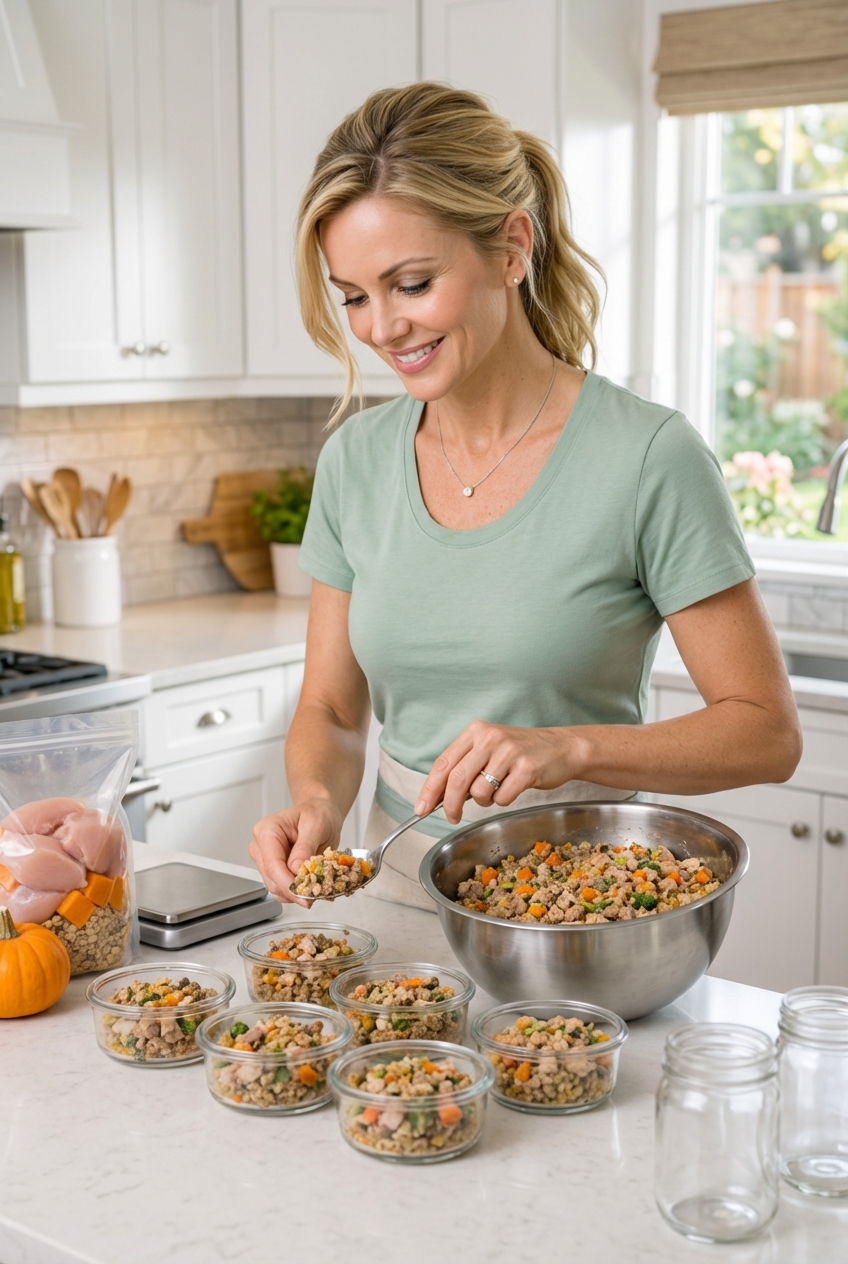
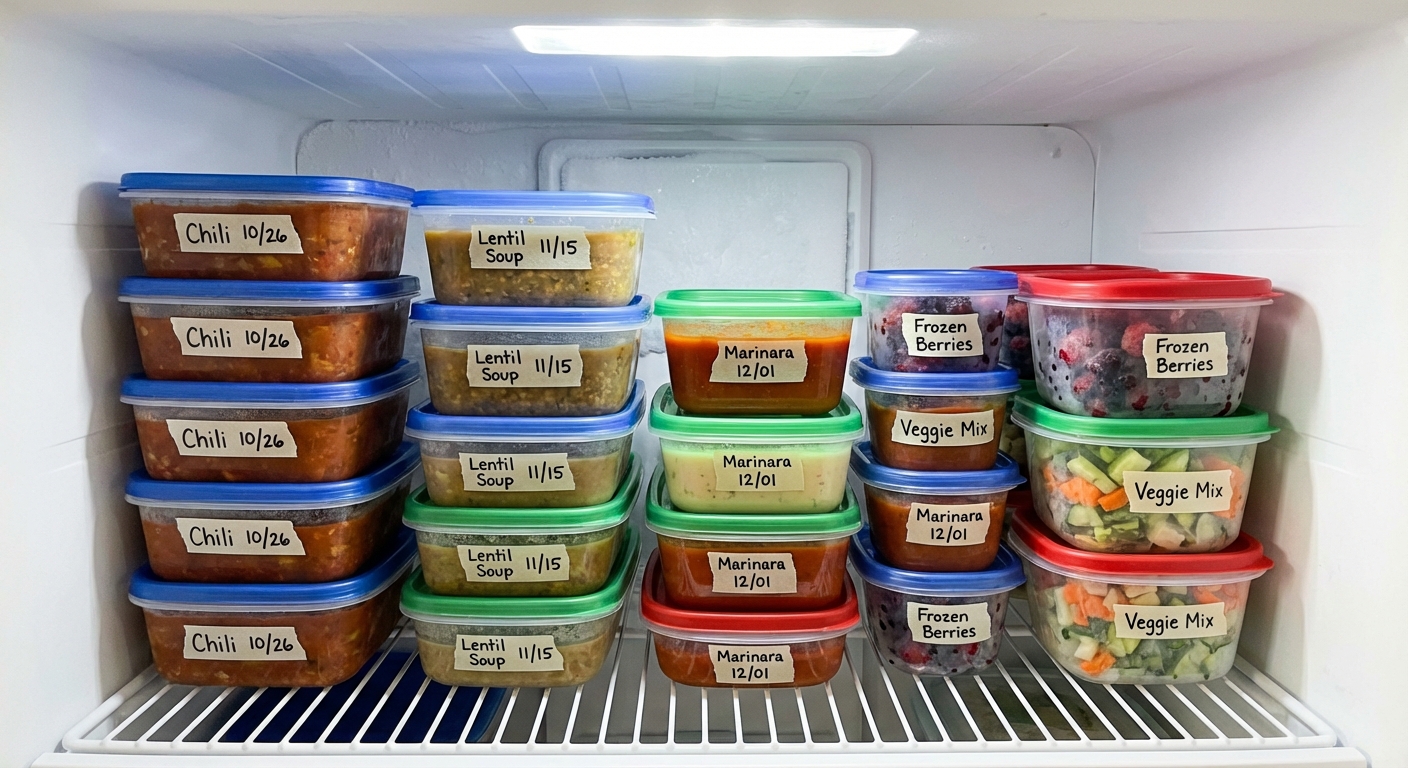
Freezing is the simplest way to reduce waste while keeping portions safe. My favorite system in a busy household is to freeze in meal-sized portions, so you are only thawing what you need and avoiding repeated warming and cooling.
What to freeze in
- Glass containers (leave headspace so they do not crack as food expands).
- BPA-free freezer-safe plastic containers.
- Freezer bags laid flat to save space.
- Silicone molds for “puck” portions, then transfer pucks to a freezer bag.
Label each container with:
- Protein type (chicken, turkey, rabbit, etc.)
- Date made
- Any supplements added (so you do not accidentally double-dose later)
Thawing and warming
Best thawing methods
- Overnight in the refrigerator (safest).
- Cold water thaw for a sealed container or bag, changing the water every 30 minutes, then feed promptly.
Avoid thawing on the counter. Room-temperature thawing keeps the outer layers in the danger zone too long.
Can you refreeze it?
As a general rule, do not refreeze thawed food. If you thawed it in the refrigerator and it stayed cold the whole time, refreezing is sometimes considered acceptable from a human food safety standpoint, but quality drops and it is still an unnecessary risk for many cats. When possible, thaw only what you will use within 24 hours.
Warm it up the cat-friendly way
Many cats prefer food slightly warm because it smells more appealing. You can:
- Place the sealed container in warm water for a few minutes.
- Microwave briefly, then stir extremely well and test temperature with your finger.
Microwaves create hot spots. Cats can burn their mouths, and some will refuse food that is unevenly heated.
How long can it sit out once served?
For homemade moist food:
- Pick up leftovers within 30 to 60 minutes.
If your cat is a slow grazer, offer smaller portions more often.
Prevent cross-contamination
Even perfectly cooked food can be re-contaminated during prep. A few habits dramatically reduce risk:
- Wash hands with soap before portioning and after touching raw meat.
- Use separate cutting boards for raw meat and produce, or wash thoroughly between steps.
- Clean countertops and utensils with hot soapy water. If you want to sanitize, use an appropriate food-safe disinfectant (follow the label), then let surfaces air dry.
- Do not “double dip” a tasting spoon into the storage container.
One small thing that makes a big difference: portion food with a clean spoon each time. Do not feed directly from the storage container if you can avoid it.
How to tell if it has gone bad
Please do not rely on “my cat will know.” Cats sometimes eat spoiled food and pay the price later.
Discard the food if you notice:
- Sour, rancid, or “off” odor
- Visible mold
- Slimy texture
- Gas bubbles or a container that looks pressurized
- Color changes that are not normal for your recipe
When in doubt, throw it out. Vet visits for GI illness cost far more than a replaced batch of food.
Supplements and storage
Many homemade cat food recipes rely on specific supplements (like taurine and a complete vitamin-mineral mix) to stay nutritionally balanced. Storage can affect potency, especially with heat and moisture.
- Do not bake supplements into food unless your recipe is designed for it.
- If you add supplements after cooking, mix thoroughly and freeze promptly.
- Store supplement powders in a cool, dry place with the lid tightly closed.
If you are following a veterinary nutritionist recipe, stick to their storage instructions, especially if it includes fish oil or other delicate fats.
A simple routine
If you want a low-stress system, here is a routine I recommend to friends and clients:
- Cook your batch.
- Cool quickly using shallow containers.
- Refrigerate 2 days worth.
- Freeze the rest in single-meal portions.
- Move one portion from freezer to fridge each evening for the next day.
That is it. You will reduce waste, keep food fresher, and lower the risk of foodborne illness.
Raw diets: a quick note
This guide assumes cooked homemade food. Raw homemade diets can carry additional pathogen risks for cats and humans and require stricter handling and hygiene. If you are feeding raw, work with your veterinarian or a board-certified veterinary nutritionist to follow a protocol designed for safety.
When to call your vet
If your cat eats homemade food and then develops vomiting, diarrhea, lethargy, refusal to eat, or seems painful, call your veterinarian promptly. Cats can become dehydrated quickly, and GI upset or pancreatitis can escalate fast.
If you are new to homemade cat food, I always encourage you to work with your veterinarian or a board-certified veterinary nutritionist to ensure the recipe is complete and appropriate for your cat’s life stage and health needs.
Sources for food safety basics
For general cooling, refrigeration, and freezing guidance, you can also review consumer food safety resources from the USDA and FDA. While they are written for people, the core temperature and time principles apply well to homemade pet food handling.