Stop kitten biting without punishment. Learn why kittens bite, how to freeze and disengage, redirect to toys, prevent ankle attacks, and build a daily play r...
Article
•
Designer Mixes
How to Stop Your Kitten From Biting

Shari Shidate
Designer Mixes contributor
Kittens bite for the same reason toddlers grab and mouth things: they are learning how the world works. A little nibbling during play can be normal, but hard bites, repeated attacks on hands and feet, or bites that break skin need a clear, consistent plan.
As a veterinary assistant, I want you to know two encouraging truths: most kitten biting is fixable, and it is best addressed early. The goal is not to punish. The goal is to teach your kitten what is OK to bite (toys) and what is never OK to bite (people).
Why kittens bite
Understanding the why helps you choose the right solution.
Play and hunting practice
Kittens are wired to stalk, pounce, grab, and bite. If hands are used as toys, your kitten learns that skin is part of the game.
Teething and oral discomfort
Kittens do teethe. Baby teeth are replaced by adult teeth roughly between 3 and 6 months, and chewing can feel soothing during that time.
Overstimulation during petting
Some kittens get overwhelmed quickly. The bite is their way of saying “I’m done.”
Fear, stress, or pain
Sudden biting, hiding, growling, or biting when touched in a specific area can signal discomfort or fear. If your kitten’s behavior changes rapidly, it is worth a vet check.
First rule: stop using hands as toys
If you take only one tip from this article, make it this: hands do not wrestle, tap, or “tease” kittens. Even gentle play with fingers teaches biting as a normal interaction.
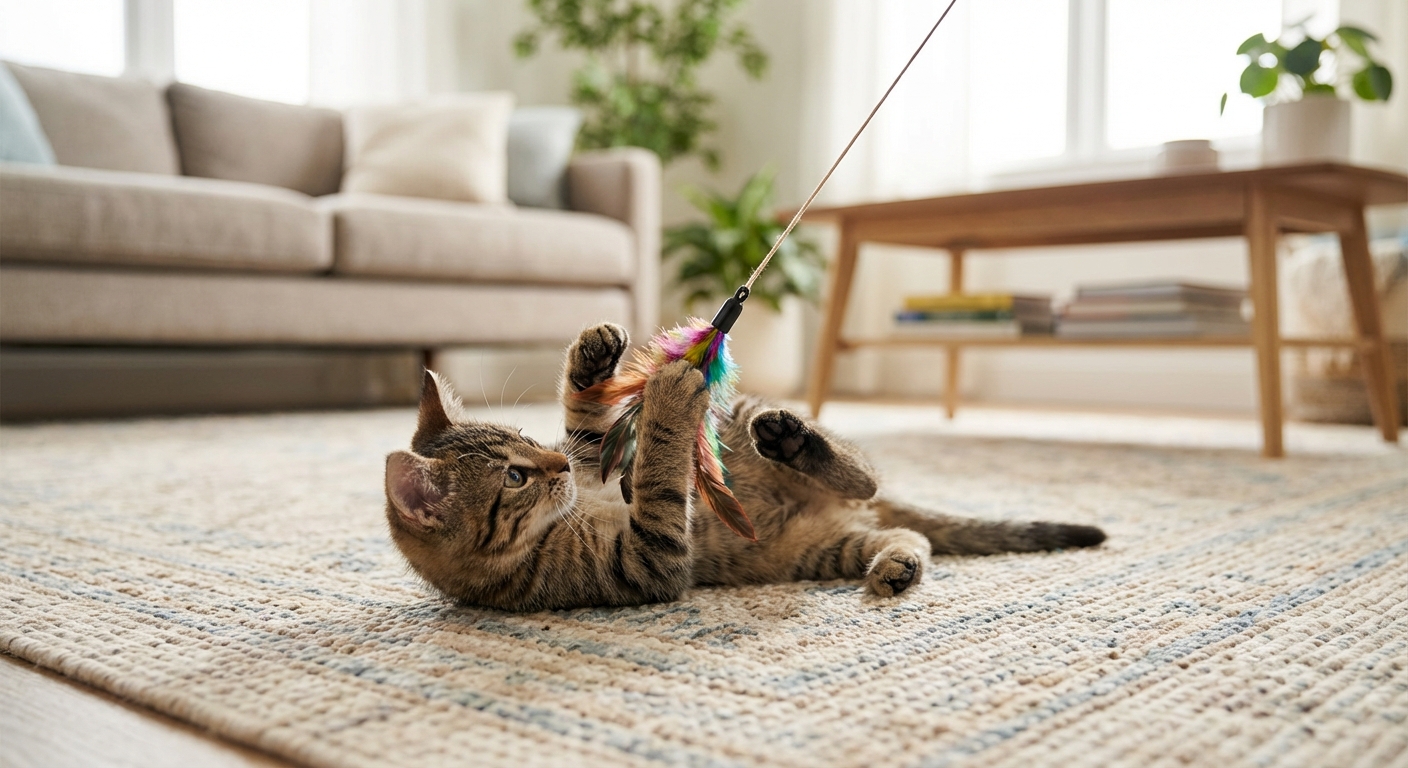
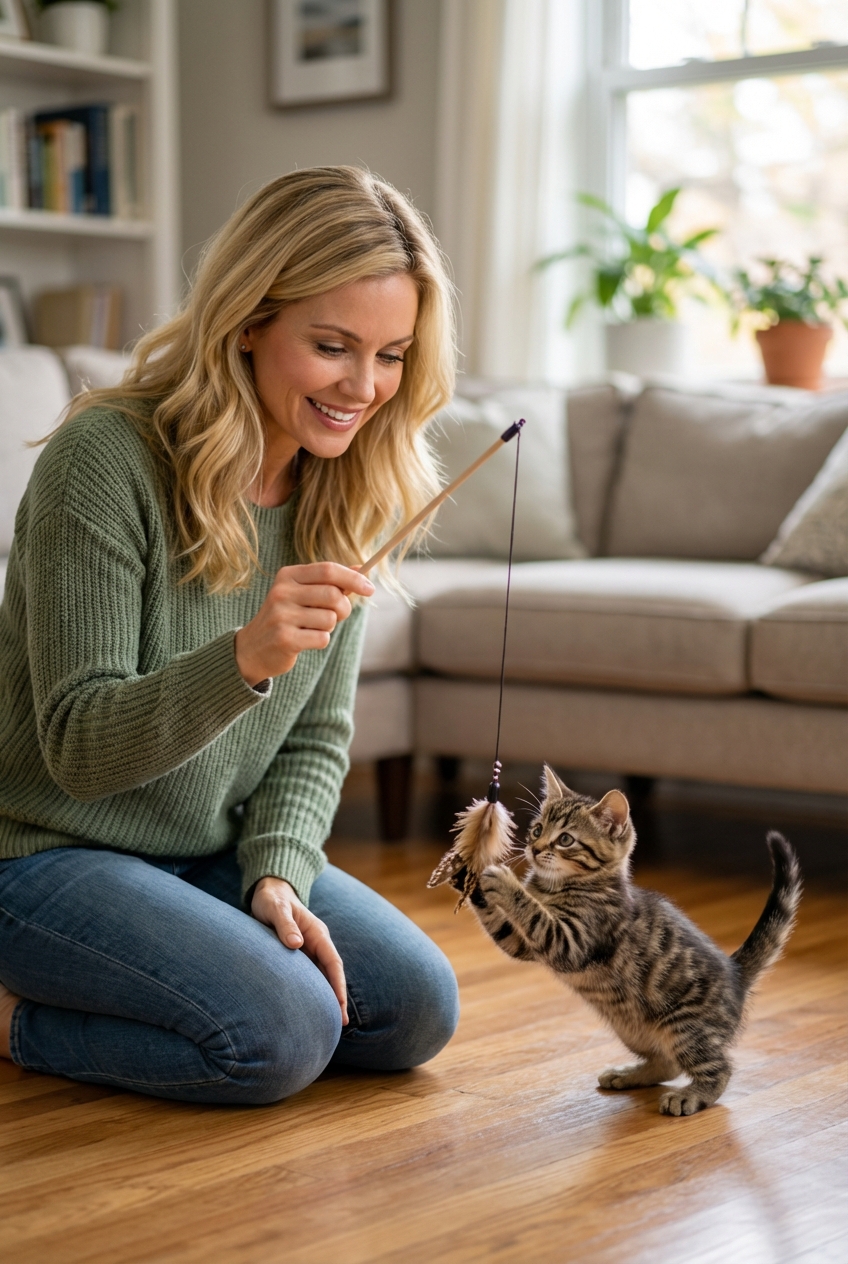
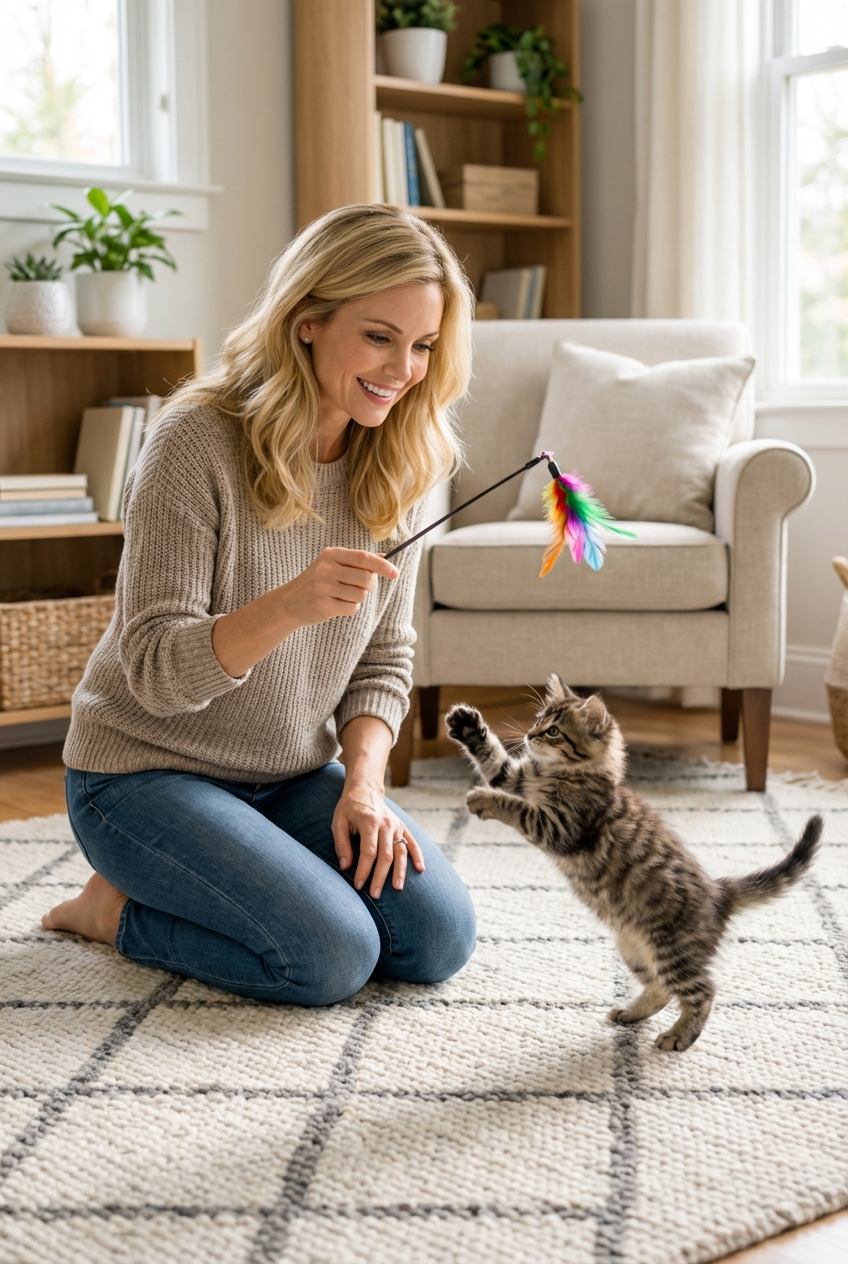
- Use wand toys to keep teeth and claws away from skin.
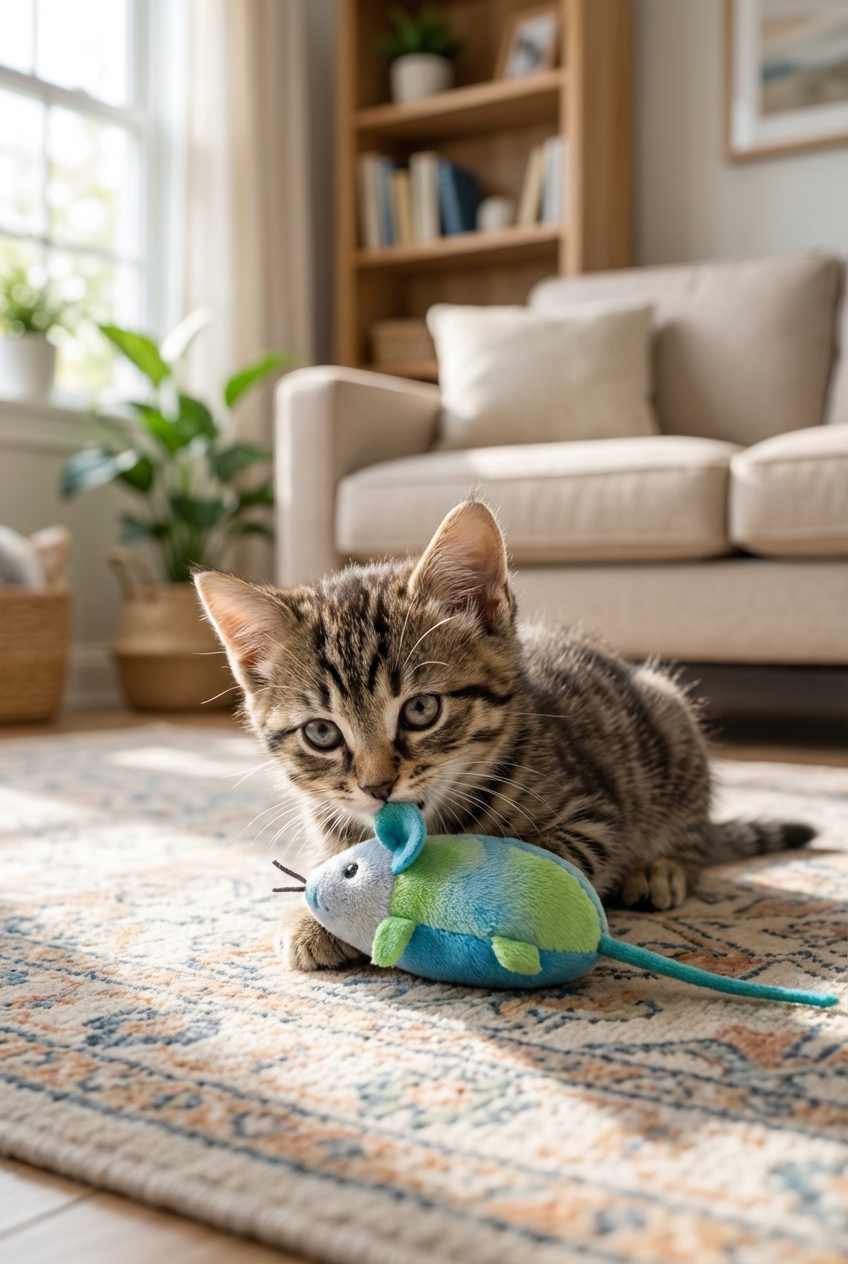
- Toss toys like soft mice or crinkle balls for chasing.
- End play before your kitten gets frantic. Short, frequent sessions work best.
What to do when biting happens
Kittens typically learn best from immediate, consistent feedback. Pick one primary response and use it the same way every time.
Step 1: Freeze, then remove attention
- Do not yank your hand away quickly. Fast movement can trigger more chasing, pouncing, or grabbing.
- Go still for one to two seconds.
- Calmly disengage. Stand up, fold arms, and walk away.
This “attention turns off” message is powerful, because play is what the kitten wanted.
Step 2: Redirect to a toy
When your kitten is in hunting mode, give them something safe to bite.
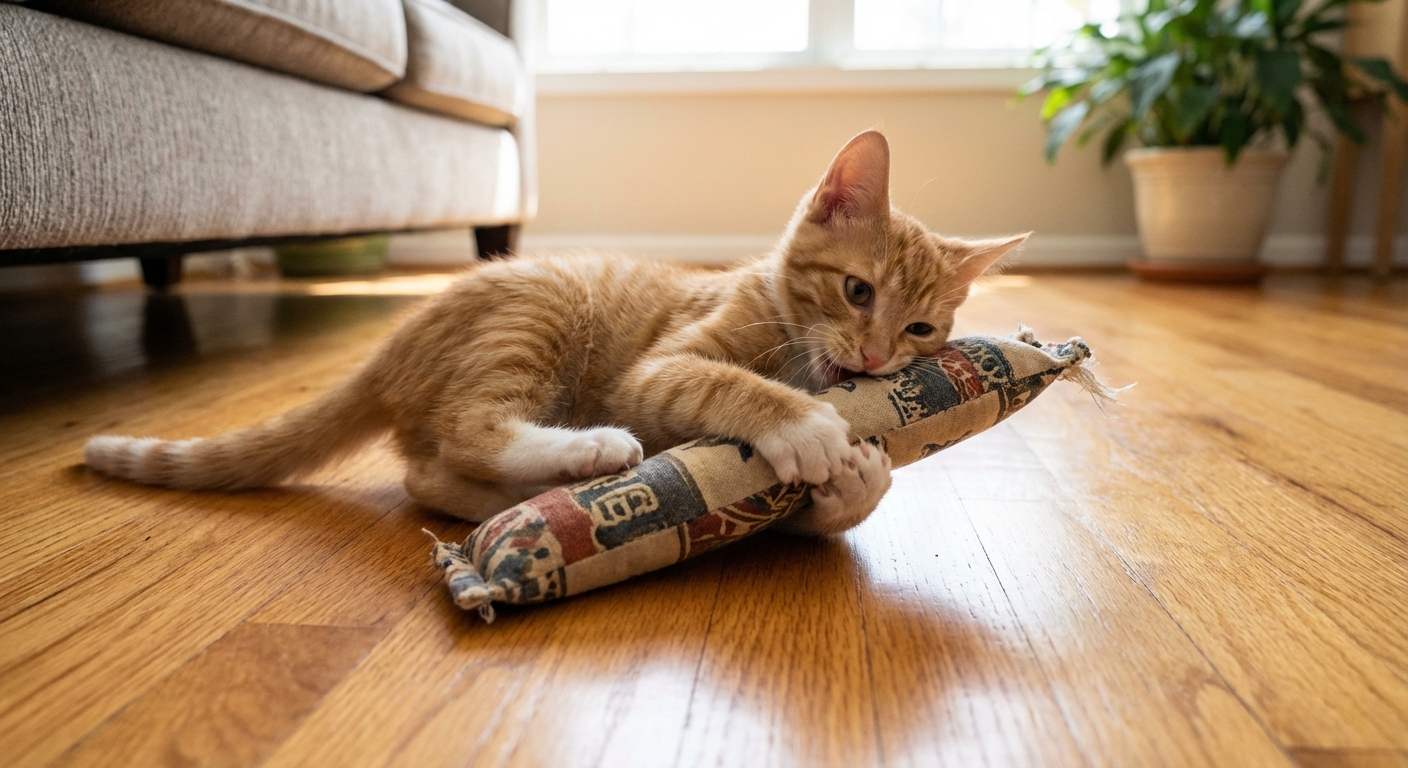
- Keep a kicker toy, plush, or chew-safe toy nearby.
- Offer the toy and use calm praise when they bite it instead. A soft “good” plus a tiny treat can help if your kitten is food-motivated.
Step 3: Do a short cooldown if needed
If your kitten is repeatedly attacking, a brief cooldown helps them settle so the habit is not rehearsed.
- Place them in a kitten-proof room or playpen with water, a litter box, and a toy for 2 to 5 minutes.
- This is not “jail.” It is a reset.
Skip yelling, hitting, scruffing, or spray bottles. These approaches can increase fear and make biting worse, especially as your kitten matures.
Prevent biting with better play
Most biting improves dramatically when kittens get the right kind of daily outlet.
Follow the hunt sequence
Try to mimic how cats naturally hunt: stalk, chase, pounce, catch, then eat.
- Play 2 to 4 times daily for 5 to 10 minutes.
- End with a small meal or treat to satisfy the “catch and eat” feeling.
- Let your kitten “win” sometimes by catching the toy.
Choose hand-safe toys
- Wand toys with a long handle
- Soft kicker toys they can bunny-kick
- Crinkle balls or lightweight chase toys
- Puzzle feeders to burn mental energy
Petting bites
Some kittens enjoy affection, but only in small doses. Watch for early warning signs:
- Tail flicking or thumping
- Skin rippling along the back
- Ears turning sideways or back
- Sudden freeze, then a quick head turn toward your hand
What to do: Stop petting before the bite happens, give your kitten space, and offer a toy if they still want interaction.
Where to pet
Many cats tolerate gentle strokes on the cheeks and under the chin better than full-body petting. Start there and keep sessions short.
Teething help
If your kitten is in a chewy phase, you can set them up for success:
- Offer a soft kicker toy they can bite and wrestle.
- Some kittens find cool chew toys soothing. If a product is made for chilling, you can refrigerate it (not freeze it) and offer it under supervision.
- Use food puzzles and wet food to reduce frustration and excess energy.
Avoid: string, yarn, ribbon, hair ties, and small rubber items that can be swallowed. If your kitten plays with string toys, do it only with direct supervision and put them away afterward.
Single kittens and bite limits
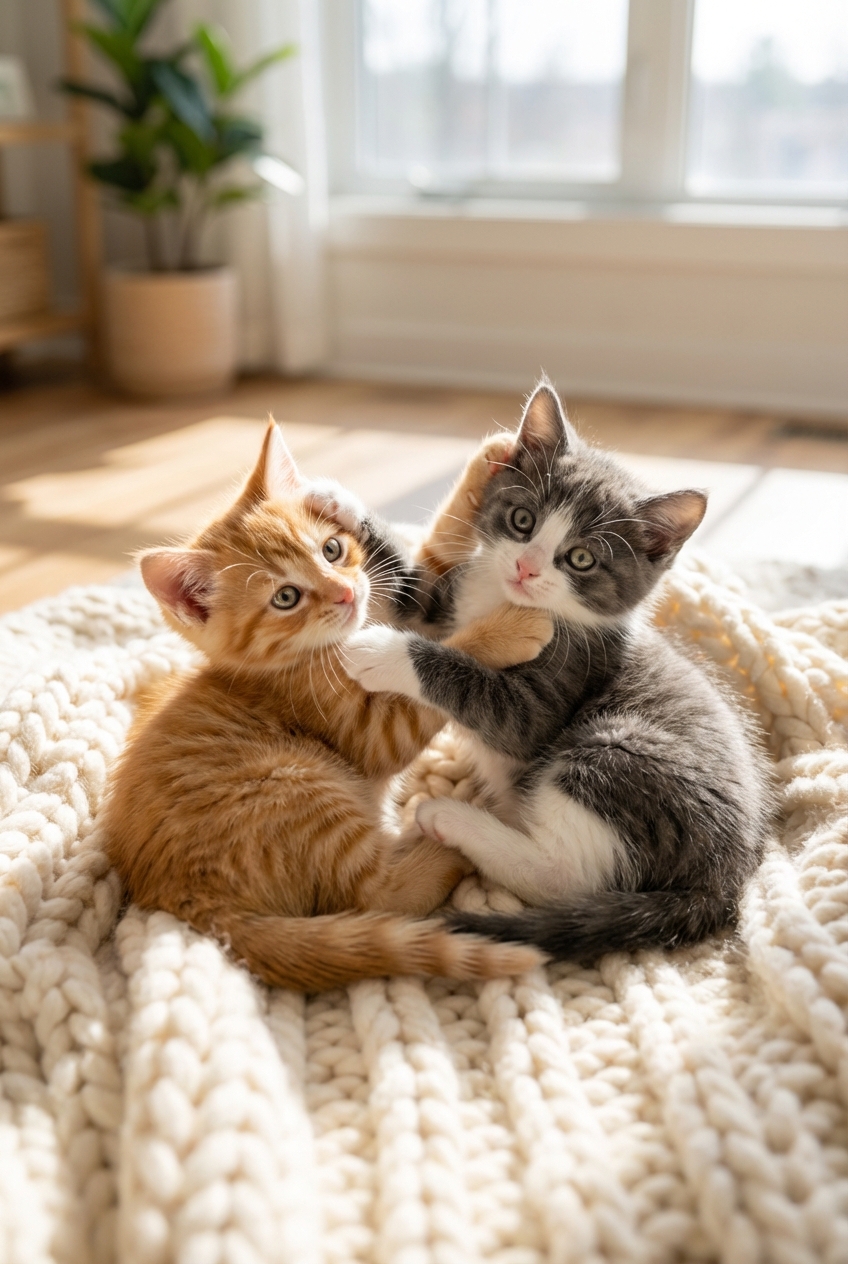
Kittens often learn bite inhibition from other kittens. If a kitten bites too hard, the other kitten squeals and stops playing. That social feedback is hard for humans to replicate perfectly.
In some homes, adopting a second, compatible kitten can reduce rough play biting and provide a healthy outlet, especially for very energetic kittens. It is not a guarantee, and it is not right for every situation. If adding a second kitten is not an option, you can still make excellent progress with interactive play, enrichment, and consistent boundaries.
Extra management tips
Training works faster when you also reduce opportunities for ambush bites.
- Trim nails regularly to reduce scratches when play gets too intense.
- Protect ankles and hands during training with slippers, socks, or long sleeves, especially during evening zoomies.
- Create “yes zones” like a cat tree, window perch, and a few approved toys in each room so your kitten has places to climb, pounce, and wrestle appropriately.
Kids and kittens
If you have children, keep interactions supervised and set simple rules:
- No running, squealing, or hand-waving in front of the kitten.
- Kids should use wand toys, not hands, for play.
- If the kitten gets wound up, end the session and give the kitten a short break in a safe space.
14-day plan
Days 1 to 3
- No hand play, ever.
- Schedule 2 to 4 short wand-toy play sessions daily.
- Keep a kicker toy in each room where you spend time.
Days 4 to 7
- When biting happens: freeze, disengage, redirect.
- Start noticing triggers like fast petting, noisy rooms, or evening zoomies.
Days 8 to 14
- Praise calm play and gentle behavior. Use a calm voice, and add a small treat if helpful.
- Reward “four paws on the floor” instead of ambushing ankles.
- Use a 2 to 5 minute cooldown for repeated attacks.
Most families see clear improvement by week two, especially when everyone in the home responds the same way.
When to call your veterinarian
Please reach out for guidance if you notice any of the following:
- Biting that is new, intense, or out of character
- Biting when touched in a specific spot (possible pain)
- Limping, hiding, decreased appetite, or lethargy
- Swollen gums, bad breath, drooling, or trouble eating
- Any bite that breaks skin, especially in children or immunocompromised adults
If you are ever unsure, it is better to ask early. Many medical issues are much easier to treat when caught at the beginning.
If a bite breaks skin
Cat bites can cause infection. Wash the area right away with soap and running water. Contact a human healthcare professional promptly for bites to the hand, deep punctures, increasing redness or swelling, drainage, fever, or if the person bitten is high-risk (for example immunocompromised).
Quick do and do not
Do
- Redirect to toys and reward appropriate play
- Use wand toys and kicker toys
- Keep play sessions short and frequent
- Watch for overstimulation signs during petting
- Use brief cooldowns instead of punishment
Do not
- Wiggle fingers or toes to “invite” pouncing
- Yell, hit, scruff, or use spray bottles
- Pull your hand away fast when bitten
- Leave string toys out unsupervised
With consistent boundaries and the right kind of play, most kittens grow into adults who keep their teeth to themselves. You are not “failing” if your kitten bites. You are simply in the training phase.