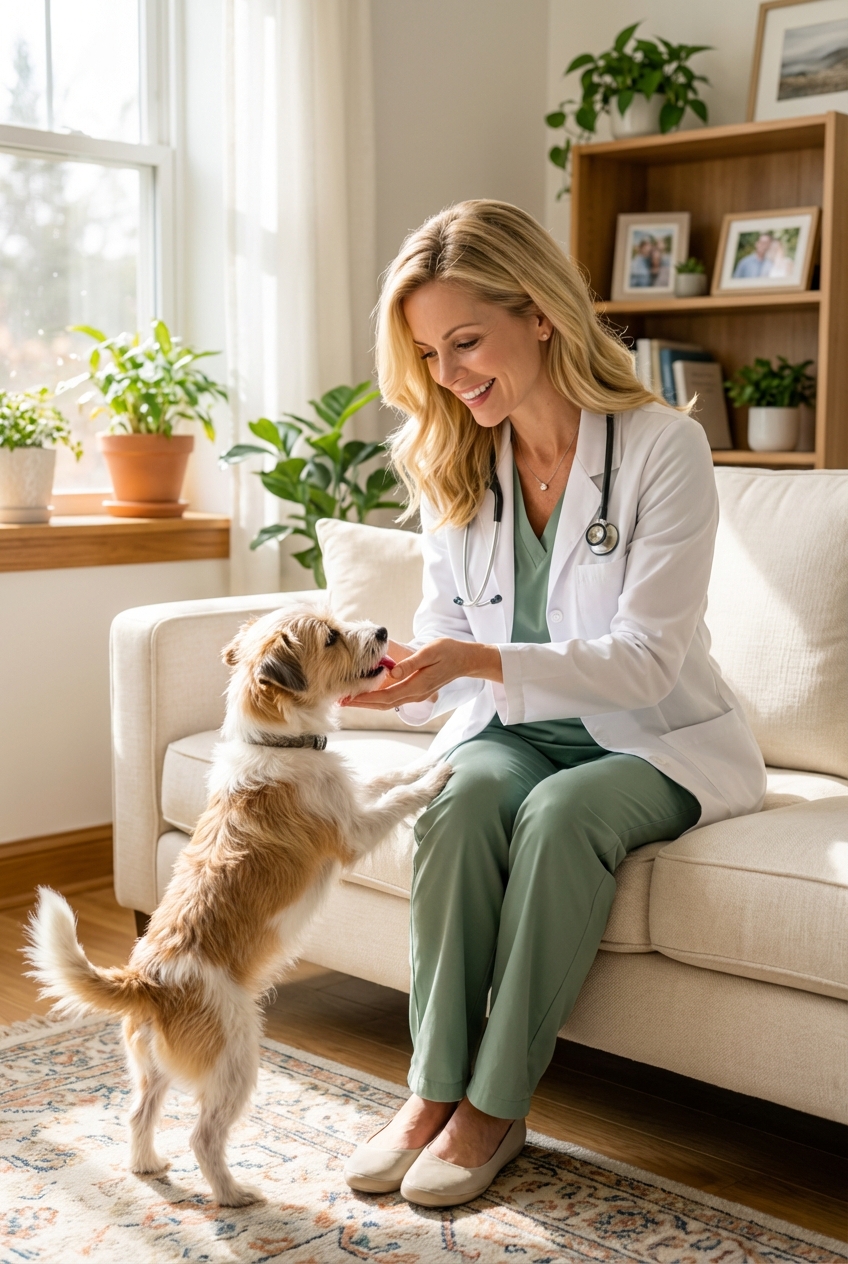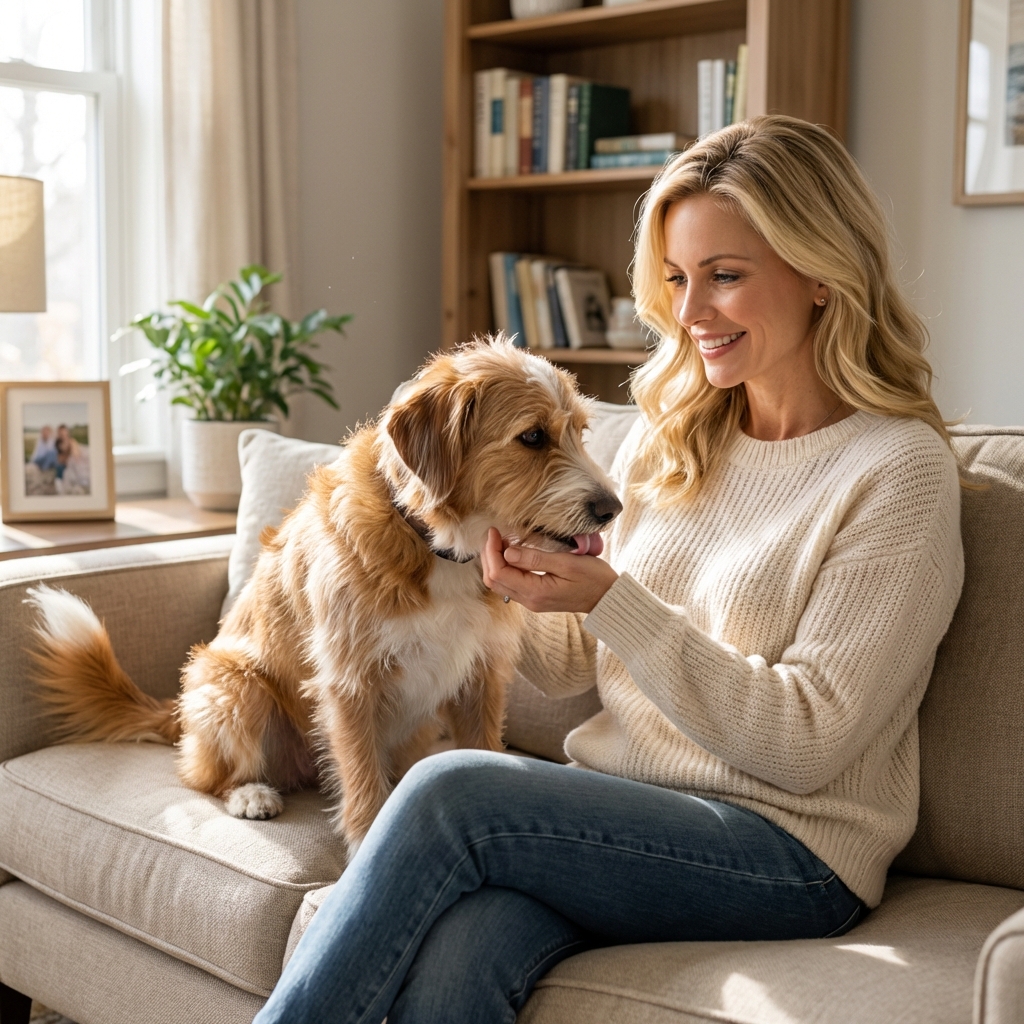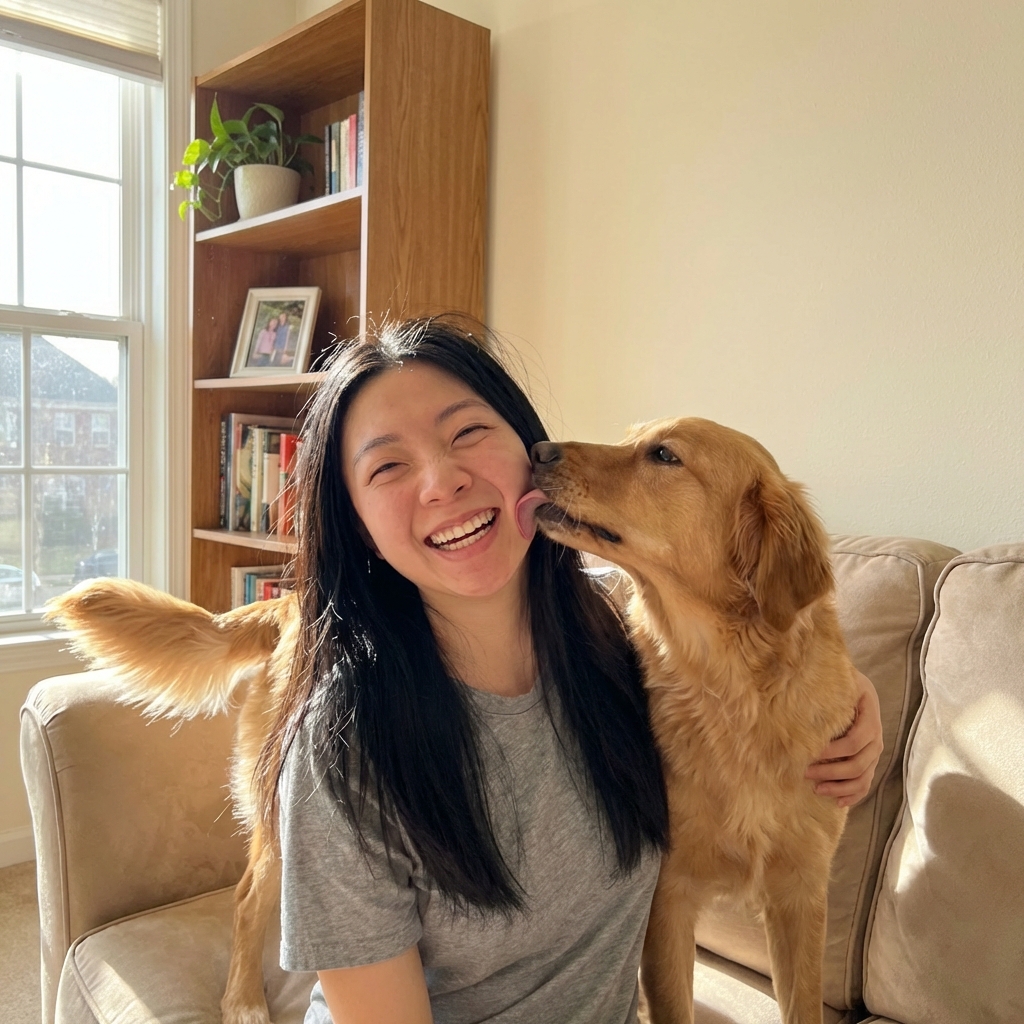
Dogs lick faces for bonding, communication, taste, attention, and stress relief. Learn when it’s normal, when to be cautious, and how to set kind “no kis...
Article
•
Designer Mixes
How to Stop Your Dog From Licking You

Shari Shidate
Designer Mixes contributor
Dog kisses can feel sweet, but constant licking can turn into something that is stressful, unsanitary, or even unsafe for kids and guests. The good news is that licking is a behavior with a cause, and when you address the why, it gets much easier to change the habit in a kind, family-friendly way.
As a veterinary assistant, I see this all the time. Most dogs are not being “bad” when they lick. They are communicating, self-soothing, or trying to meet a need. Let’s break down what’s normal, what’s not, and what you can do starting today.
Why dogs lick people
Licking is a normal canine behavior. Puppies lick their mom, dogs lick each other, and many dogs lick people as part of social bonding. But when licking is frequent, intense, or hard to interrupt, it usually falls into a few common categories.
Affection and social bonding
Some dogs lick because it has become part of their greeting ritual. Humans often laugh, talk, pet, or make eye contact, and that attention can reinforce the behavior.
Seeking attention
If licking reliably makes you respond, your dog learns that licking is a powerful way to get interaction. This is especially true in busy households where the dog is competing with phones, chores, and children.
Stress or self-soothing
For many dogs, licking can be a self-soothing habit. A dog that licks excessively may be trying to regulate after excitement, conflict, or overstimulation.
Salt, smells, and leftovers
Skin tastes salty. Lotion, sunscreen, and food residue can make hands and faces extra interesting. Kids are often magnets because they are more likely to have food on their hands and faces.
Medical issues
In veterinary settings, we also consider underlying problems such as nausea, reflux, dental discomfort, skin allergies, and pain. Some dogs increase licking when they feel unwell.
If your dog’s licking suddenly increases, seems frantic, or comes with other changes like appetite loss, vomiting, diarrhea, bad breath, or restlessness, talk with your veterinarian.
Is licking risky?
For most healthy adults, an occasional lick is usually low risk. That said, germs can be transmitted between dogs and people in rare cases, and the risk varies based on the person, the dog, and where the lick happens.
- Kids and babies: Young children may not like it, may squeal and reinforce it, or may be more vulnerable to germs.
- Open cuts or irritated skin: Avoid allowing licking on broken or inflamed skin, including popped pimples or raw spots.
- Immunocompromised family members: Extra caution is wise.
- Face, mouth, eyes: Not everyone wants mouth-to-mouth contact with a dog who explores the world with their tongue.
Simple hygiene helps. Wash hands after play, avoid letting dogs lick faces, and keep licking away from any wounds.
Also, if your dog is licking due to anxiety or nausea, it is a welfare issue. Stopping the licking without addressing the root cause will not help long-term.
Set a house rule
Families do best when the rules are simple and consistent. Pick a household standard and teach it clearly.
Common options
- No licking people: Easiest for guests and kids to follow.
- Licking is okay only on hands: You control access, and faces stay off-limits.
- One lick then done: You allow a quick greeting but prevent the licking loop.
Whatever you choose, consistency matters more than perfection. If one person allows face licking and another doesn’t, your dog will keep testing.
How to stop licking kindly
Many dogs lick more when people squeal, push them away, or talk to them excitedly. Instead, think in terms of removing the reward, teaching an alternative, and reinforcing calm behavior.
1) Freeze and remove attention
When your dog starts licking, do this:
- Turn your head away and gently close your hands.
- Stand up or step back if needed.
- Stay quiet for 3 to 5 seconds.
This is not scolding. It is simply “licking makes the fun stop.”
Then re-engage by cueing your alternative behavior, like “Sit” or “Touch,” and reward it.
2) Teach a clear alternative
Dogs need to do something. Pick one alternative and practice it often:
- Sit: Great for greetings.
- Touch (nose to hand): Gives your dog a job that replaces licking.
- Go to mat: Perfect for excited moments at the door or after school pickup.
The moment your dog sits or touches, reward with a treat, calm praise, or gentle petting. You are teaching: “This is how you get attention.”
3) Make “one lick then done” clear
If you use the one-lick rule, allow one lick, then calmly remove attention and cue your alternative. For example: one lick, hands close, quiet pause, then “Sit,” then treat. Over time, your dog learns that the greeting ends quickly unless they switch to the polite behavior.
4) Reward calm, dry moments
Most people only react when licking happens. Flip that. Catch your dog being calm near you and reward that behavior. Over time, you build a dog who chooses calm because calm pays.
5) Manage the situation
- Use a leash during greetings if your dog gets overly excited.
- Keep treats near the door and couch.
- Give your dog a chew or food puzzle during high-energy family times.
What not to do
- Do not punish or yell: Harsh responses often increase stress and can make licking and other attention-seeking behaviors worse.
- Do not let kids push the dog away: It can turn into a game or create unsafe moments. Teach kids to “be boring” and call an adult.
- Do not use bitter sprays on skin without guidance: Many products are not meant for human skin and can cause irritation. Training and management are safer first steps.
Tips for kids
Kids can absolutely help, but they need a simple script. A predictable routine keeps everyone safe and prevents accidental reinforcement.
Hands to yourself
- Hands tucked under armpits or behind back when the dog is excited.
- No squealing, jumping, or running away if the dog starts licking.
- Call an adult if the dog will not stop.
One job: ask for a sit
Have your child say “Sit,” then toss a treat on the floor once the dog sits. Tossing, instead of hand-feeding, is often easier for young kids and reduces mouthy behavior.
Practice when calm
Do mini sessions when your dog is already relaxed. Training in the middle of chaos is hard for everyone.
Help your dog with stress
If licking ramps up during exciting moments, strangers entering the home, loud noises, or when you sit down at night, your dog may be using licking to cope.
Support the nervous system
- More predictable routine: Regular meal times, walks, and quiet rest.
- More enrichment: Sniff walks, puzzle feeders, safe chews, training games.
- Better rest: Many dogs in busy homes are overtired, just like kids.
Consider professional help
A certified trainer who uses reward-based methods can help you build a plan that fits your household. If anxiety is significant, your veterinarian can also discuss behavioral medications or supplements that may help alongside training.
When to call the vet sooner
Sometimes licking is not just habit. If your dog’s licking is intense, new, or paired with other symptoms, it is worth a vet visit.
Possible medical contributors
- GI upset: nausea, reflux, food intolerance
- Dental disease: gum inflammation, painful teeth
- Skin allergies: itchiness can generalize into more licking
- Pain: discomfort can increase clingy behaviors
Possible compulsive patterns
If your dog seems unable to stop licking, starts licking floors or walls, licks the air, or cannot disengage even when redirected, talk with your veterinarian or a veterinary behavior professional. These cases can need a deeper medical and behavior plan.
Bring notes to your appointment: when the licking happens, what it looks like, and any changes in diet or routine.
Guests and visitors
Licking often spikes with visitors, so it helps to plan ahead.
- Pre-visit reset: A walk, sniff time, or a short training game before guests arrive.
- Use barriers: Baby gates, a leash, or a mat in a quiet corner so your dog can settle.
- Give guests a script: Ask them to ignore licking, avoid face contact, and reward a sit with a treat you provide.
Quick plan to start today
- Pick your household rule: no licking, hands only, or one lick then done.
- Remove attention when licking starts: quiet, turn away, step back.
- Cue an alternative: sit, touch, or go to mat, then reward immediately.
- Manage greetings: leash, treats by the door, short calm hellos.
- Add enrichment daily: sniff time, chews, food puzzles.
- Call your veterinarian if licking is sudden, extreme, or paired with other symptoms.
With consistency, many families see improvement in a few weeks, though some dogs take longer. The goal is not to shut your dog down. It is to teach a polite way to connect that works for everyone in the home.