
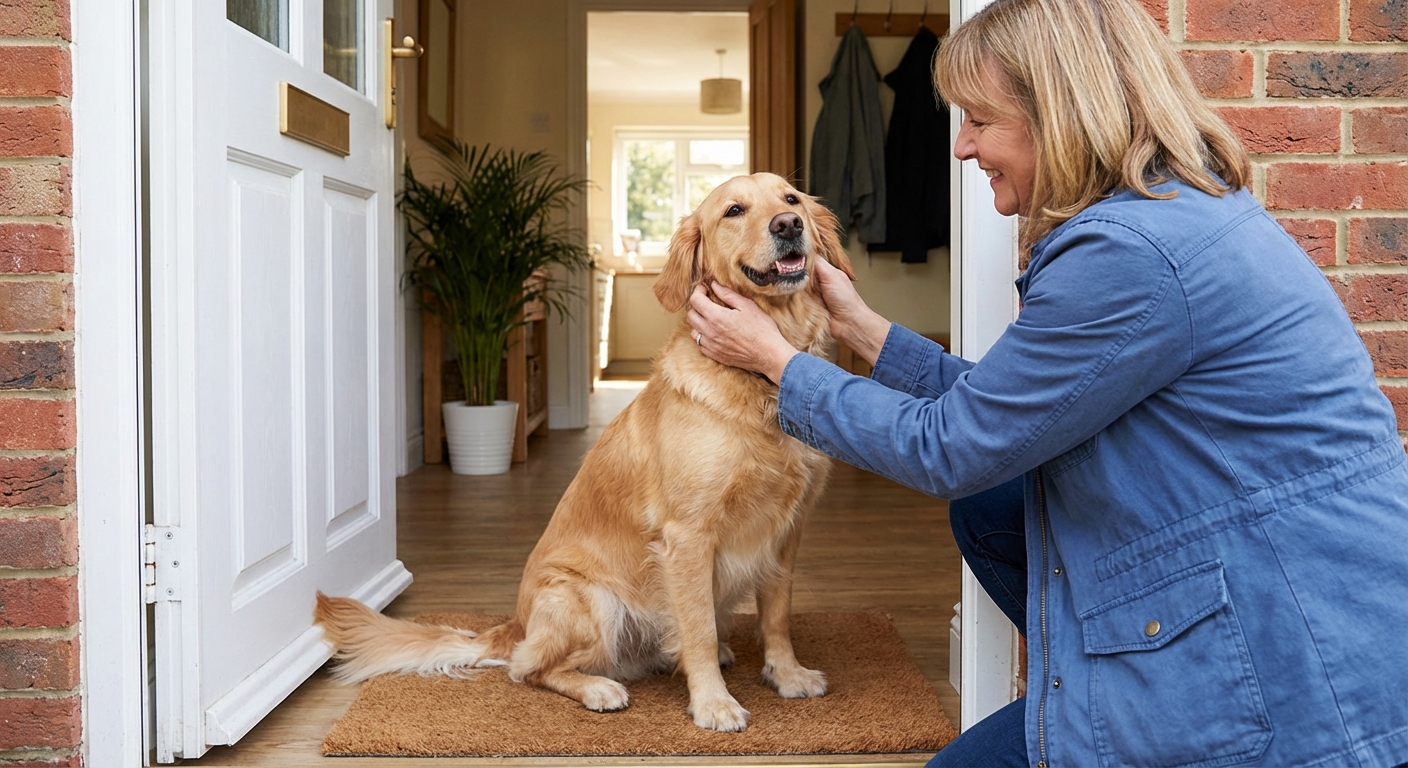
Jumping isn’t dominance—it’s a rewarded greeting habit. Learn vet-approved, positive steps to stop it: ignore jumps, reward four paws down, teach sit/m...
Article
•
Designer Mixes
How to Stop Your Dog From Jumping on People

Shari Shidate
Designer Mixes contributor
Jumping is one of the most common reasons families tell me, “My dog is sweet… but guests are nervous.” The good news is that jumping is not “bad dog” behavior. It is usually normal, rewarded behavior that can be changed with a clear plan, a little management, and consistent practice.
As a veterinary assistant in Frisco, Texas, I see this pattern all the time: a dog jumps because they are excited, people react (even by pushing the dog away), and that reaction becomes the reward. Let’s turn that around and teach your dog that four paws on the floor is what makes people say hello.
Note: This article is educational and is not a substitute for hands-on training support. If your dog’s behavior involves fear, aggression, or injuries, loop in your veterinarian and a qualified force-free trainer.
Why dogs jump
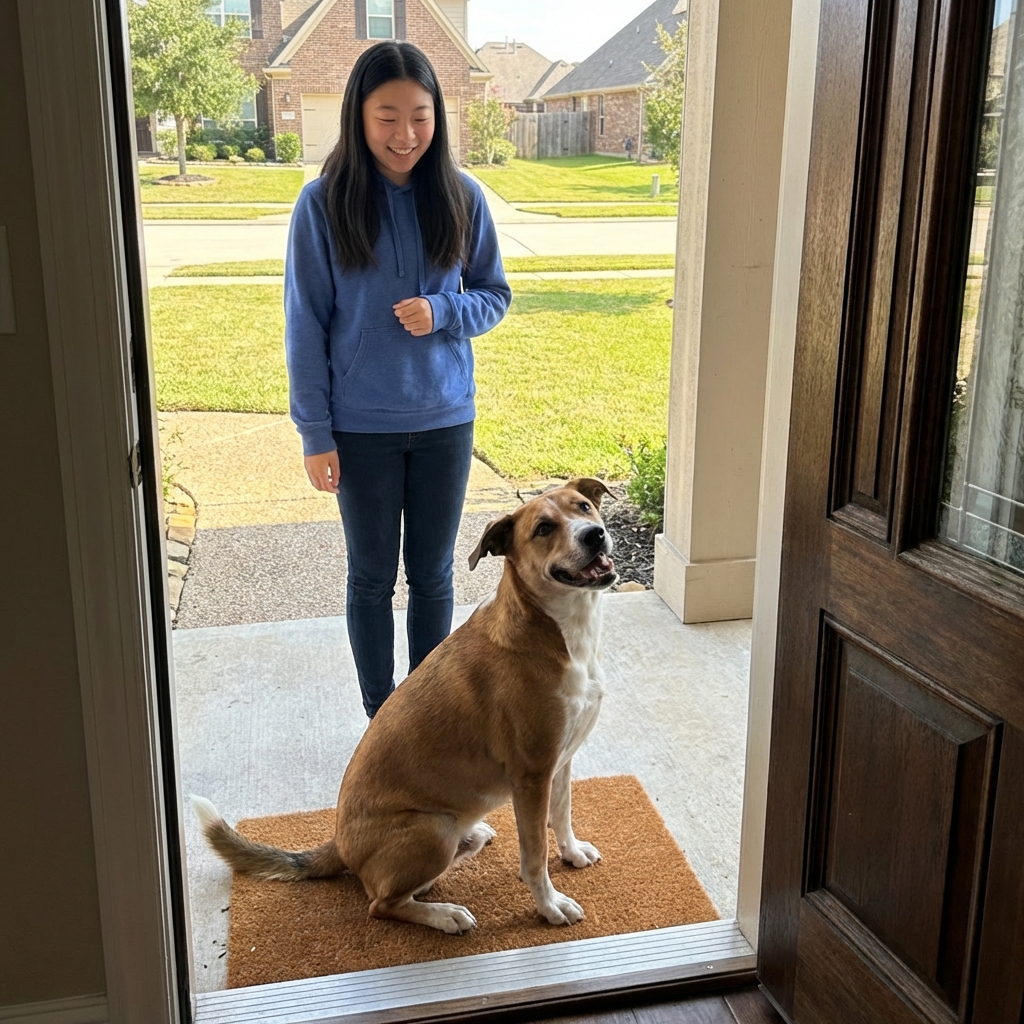
Many dogs jump for a simple reason: at some point, it worked. The jump got attention, eye contact, touch, or movement. Even negative attention can feel rewarding to an excited dog.
That said, not all jumping is happy excitement. Some dogs jump as a stress response or a “what do I do with my body right now?” moment. If that might be your dog, you will see signs of discomfort too (more on that in troubleshooting).
Common reasons
- Greeting behavior: Many dogs try to greet closer to our hands and faces, even though polite dog-to-dog greetings are often more side-by-side and sniff-first.
- Excitement and arousal: A busy doorway, kids running, or a friend squealing “Hi!” can push your dog over their self-control limit.
- Accidental reinforcement: Petting, laughing, talking, or pushing the dog off often teaches: “Jumping makes humans interact with me.”
- Needs not met: Under-exercised or under-enriched dogs often have more energy to explode at the door.
Key insight: Your dog is not being dominant. They are being rewarded, overwhelmed, or both.
First priority: safety
Training takes time, but guests need protection right now. Management prevents rehearsal of the jumping habit. That often helps right away by stopping practice, while training builds the new habit.
Simple management options
- Leash at the door: Clip a leash on before you open it. For many dogs, a front-clip harness is more comfortable and safer than a collar. If you step on the leash, leave enough slack for your dog to stand or sit comfortably without pressure on the neck, and never jerk the leash.
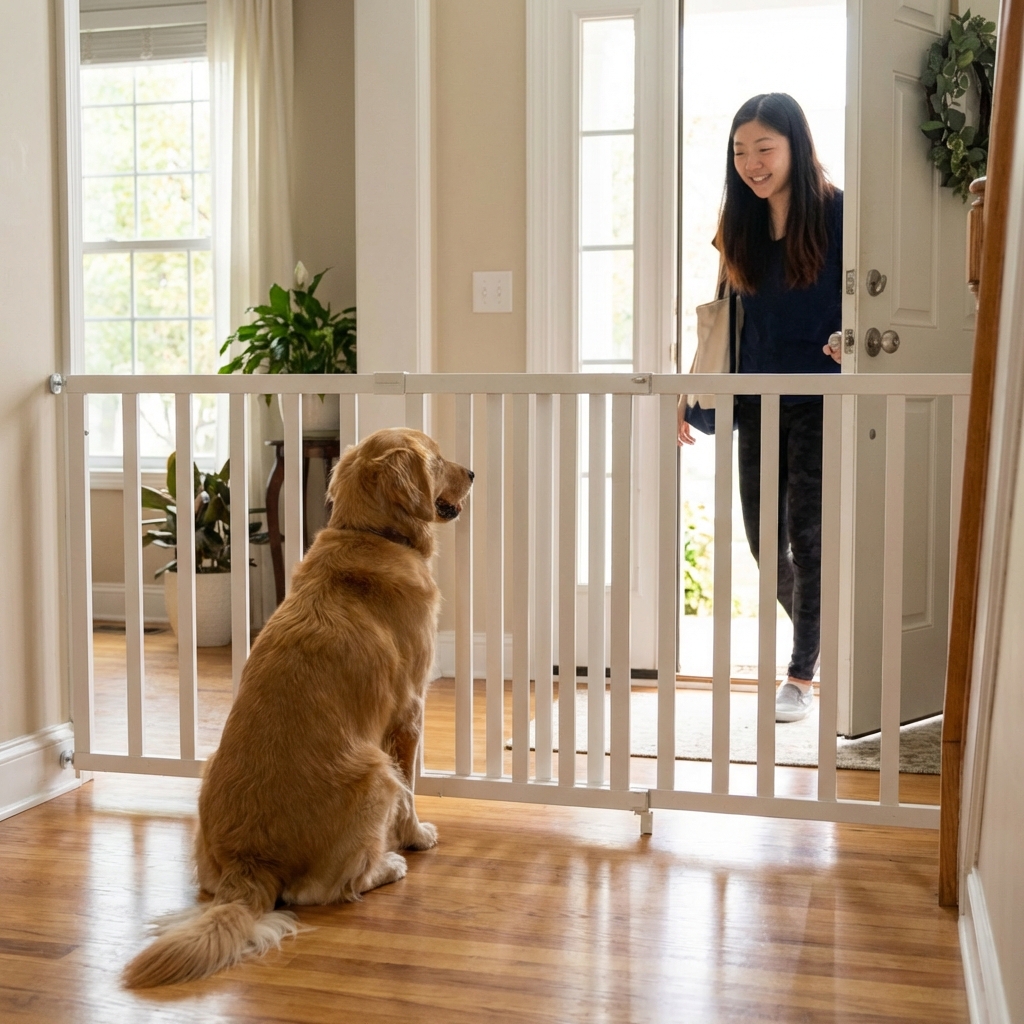
- Baby gate or exercise pen: Give your dog a clear boundary while guests enter calmly.
- Crate or separate room: Use a food-stuffed toy or chew to make it a positive “settle spot.”
- Meet outdoors first: Some dogs do better greeting in the yard or on a walk rather than the tight energy of an entryway.
If your dog has ever knocked someone down, scratched skin, or frightened a child, use management every time while you train. This is not failure. It is good judgment.
What to teach instead
To stop a behavior reliably, you need a replacement behavior that is easier and more rewarding. The best replacements are:
- Sit to say hello
- Four paws on the floor
- Go to mat (a calm station behavior)
How to choose
- Start with four paws if your dog struggles to hold a sit, gets bouncy, or you want the simplest option.
- Choose sit if your dog already sits easily and your household wants a clear “polite greeting” picture.
- Prioritize mat if you host often, have a busy doorway, or your dog gets overstimulated by doorbells and visitors.
Pick one as your primary plan for 1 to 2 weeks. You can add the others later.
Plan A: Four paws
This is my go-to for families because it is simple. You are not asking your dog to be perfect. You are reinforcing what you want.
How to train it
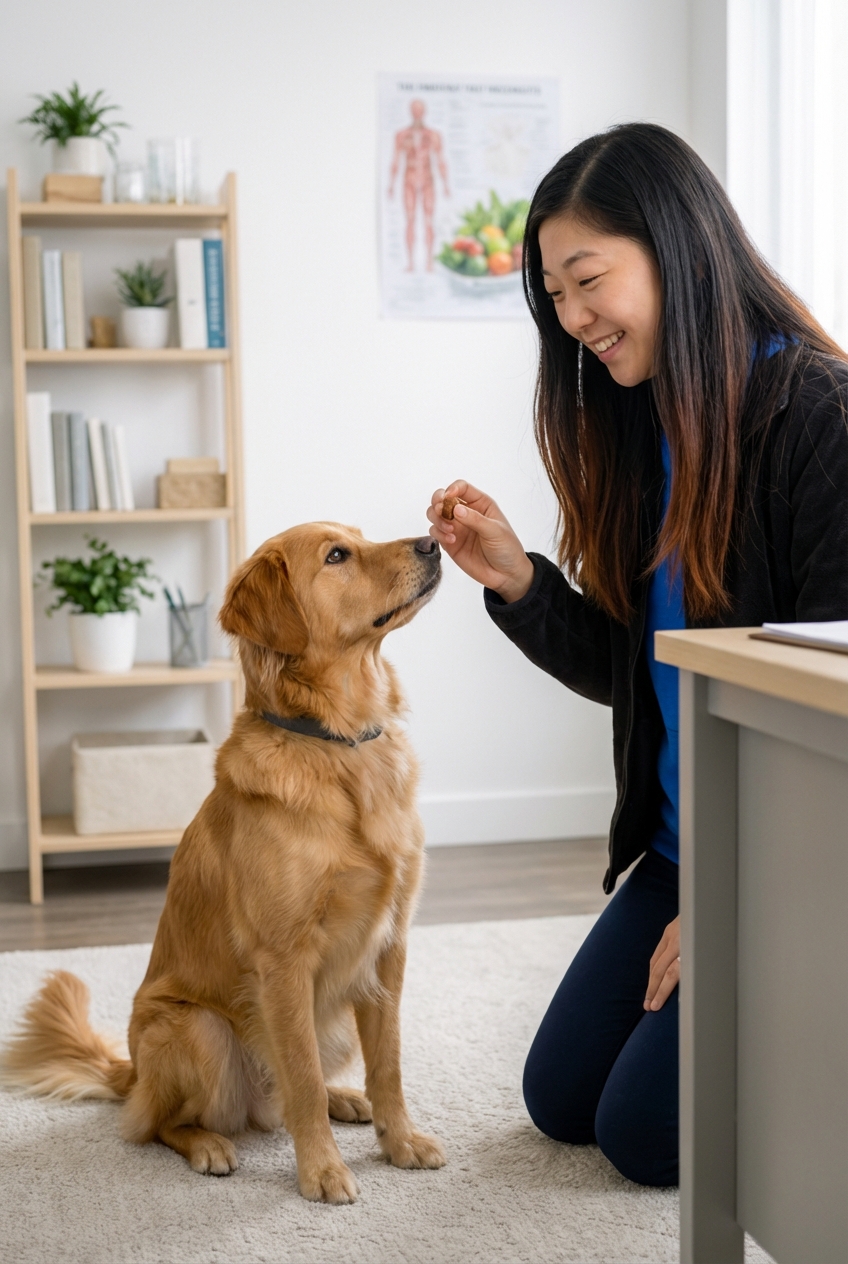
- Start with you only: Approach your dog. The moment all four paws are down, calmly say “Yes” and drop a treat on the floor.
- If your dog jumps: Turn your body slightly away and go still. No talking, no eye contact, no pushing. Wait.
- Reward the instant paws are down: “Yes” and treat on the floor again.
- Create reps: Take one step away, then approach again so your dog gets lots of chances to earn rewards.
- Repeat in short sessions: 1 to 3 minutes, several times daily.
Why treat on the floor? It keeps the dog’s head and body down, which is the opposite of jumping. It also prevents accidentally luring your dog upward.
Treat delivery tip: Keep your hands low and calm. Fast hand movements, high treats, or excited praise can rev some dogs up.
Common mistake
People reward too late. Timing matters. You are paying your dog for the moment they are not jumping.
Plan B: Sit to greet
A sit is clear and easy for many dogs. The trick is that your dog must learn: sitting makes the greeting happen.
Training steps
- Practice without guests first: Walk toward your dog. Ask for “Sit.” When they sit, “Yes” and treat.
- Add the greeting: Once your dog can sit reliably, reward with both a treat and gentle petting for 1 to 2 seconds.
- If they pop up: Petting stops immediately. Ask for sit again. Reward calm sitting.
- Generalize: Practice with different household members, then with a friend who can follow instructions.
For jumpy dogs, a sit can turn into a “sit-bounce.” If that happens, go back to four paws on the floor, add a mat plan, and use a leash or gate for stability.
Plan C: Go to mat
This is my favorite for homes with frequent visitors. Your dog learns to run to a mat or bed when the doorbell rings, then stays there to earn rewards.
Quick start
- Place a mat a few feet from the door.
- Toss a treat onto the mat. When your dog steps on it, say “Yes.”
- Repeat until your dog runs to the mat eagerly.
- Add a cue like “Mat” or “Place.”
- Gradually increase duration by giving multiple treats while your dog stays on the mat.
- Practice with a door knock sound, then with you touching the doorknob, then opening the door.
- Add the hard part last: Start with a calm helper outside. Use a leash or gate at first so your dog cannot rush the doorway. Reward on the mat while the helper comes in and stands still.
For busy events, keep a bowl of treats near the mat so you can reward frequently. Calm is a skill, and it grows with repetition.
Doorbell and trigger tips
For many dogs, the doorbell is the rocket launcher, not the person. You can make the sound less explosive with a little practice.
- Change the doorbell temporarily: Lower the volume, switch to a softer chime, or use a phone text to announce arrivals while you train.
- Pair sound with calm: Play a doorbell sound quietly on your phone. Immediately toss treats on the floor or onto the mat. Repeat until the sound makes your dog look for treats instead of launching at the door.
- Build slowly: Increase volume and realism in small steps. If your dog explodes, the step was too big. Go easier.
What guests should do
Many dogs jump because guests accidentally encourage it. I recommend posting a quick note by the door or texting visitors before they arrive.
Guest script
- Enter calmly and stand still.
- Keep hands and face away until the dog is calm.
- Pet only when the dog is sitting or has four paws down.
- If the dog jumps, turn slightly away and ignore for a moment.
If you have kids visiting, consider keeping the dog behind a gate until everyone is settled. Children move unpredictably, and even a friendly jump can cause a fall.
What not to do
- Do not knee your dog in the chest.
- Do not yell, scold, or use intimidation at the door.
- Do not grab paws or “hold them down.”
- Do not push your dog off (many dogs find this exciting and rewarding).
These approaches may suppress behavior temporarily, but they often increase stress around guests and can make greetings worse over time.
Training facts that help
1) “Off” is often misunderstood
Many people teach “Off” by pushing the dog down. To a lot of dogs, that feels like play and attention. Instead, focus on rewarding the behavior you want: paws down, sit, or mat.
2) Exercise helps, but it is not the whole answer
A tired dog can still jump if jumping has been highly rewarded. Think of exercise as lowering the volume, while training changes the habit.
3) Consistency beats intensity
Ten calm repetitions a day will beat one long, frustrating training session. Keep it short and winnable.
Troubleshooting
My dog jumps even when I ignore them
Two likely reasons: the dog is still being rewarded (talking, touching, eye contact), or the environment is too exciting. Use a leash, harness, or gate so your dog cannot rehearse jumping while you reward calm behavior.
My dog only jumps on certain people
Those people may move faster, squeal, or pet the dog while they are jumping. Ask them to follow the guest script. If they cannot, manage the situation with a gate or leash.
My dog is anxious with strangers
Some dogs jump out of stress, not friendliness. If your dog also barks, backs up, lip-licks, growls, freezes, or seems conflicted, consult a positive-reinforcement trainer or a veterinary behavior professional. Anxiety needs a different plan than simple over-excitement.
My dog is big and powerful
For large dogs, start with management and mat training. A front-clip harness can help reduce pulling and lunging at the door. Safety first, then repetition.
A simple 7-day routine
- Days 1 to 2: Practice four paws on the floor with family. 3 mini-sessions daily.
- Days 3 to 4: Add the leash-at-the-door drill. Knock on a wall, reward calm, repeat.
- Days 5 to 6: Invite one calm friend to practice. Keep greetings short, reward heavily.
- Day 7: Combine: leash or gate + sit or mat + guest script.
Many families notice improvement within a week, especially with consistent practice and good management. Long-term reliability often takes a few weeks (or longer for adolescent dogs or long-standing habits). That is normal.
When to talk to your vet
If jumping is paired with extreme hyperactivity, inability to settle, sudden behavior changes, pain signs, or if your dog is injuring people, it is worth looping in your veterinarian. Pain, discomfort, and anxiety can all affect impulse control. Your vet can also recommend qualified trainers in your area.
Polite greetings are a trainable life skill. With the right management and rewards, most dogs can learn that calm behavior is what opens the door to attention.