Coprophagia is common and usually manageable. Learn behavioral and medical causes, why dogs eat cat poop, and a step-by-step plan with cleanup, training, and...
Article
•
Designer Mixes
How to Stop Your Dog From Eating Cat Poop

Shari Shidate
Designer Mixes contributor
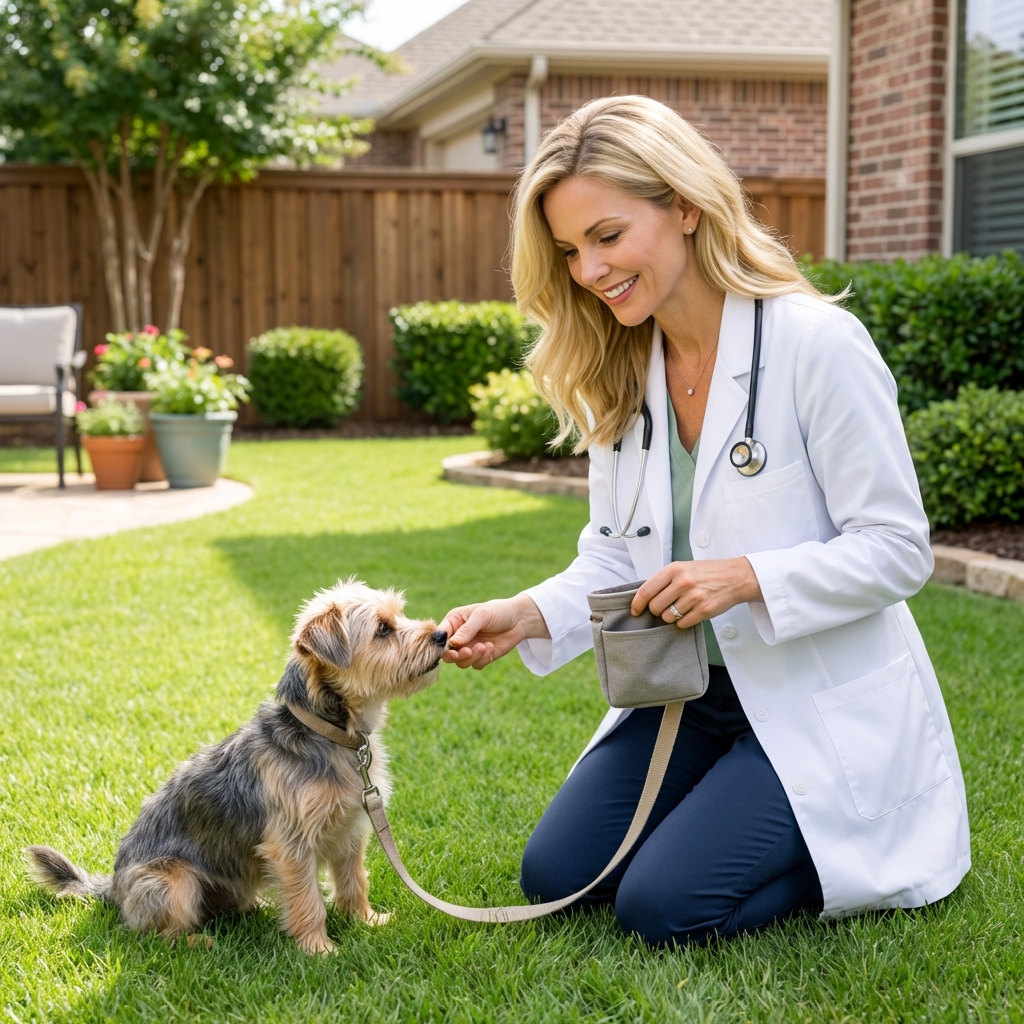
As a veterinary assistant, I can tell you this is one of the most common questions I hear, and it is also one of the most common and frustrating behaviors to deal with. If your dog is sneaking snacks from the litter box, you are not a bad pet parent. You are dealing with a behavior that is surprisingly normal in dogs and very trainable with the right setup.
Eating feces is called coprophagia. The goal is to stop access, reduce motivation, and build a reliable “leave it” habit. Along the way, we also want to rule out any health issues that might be increasing your dog’s drive to seek it out.
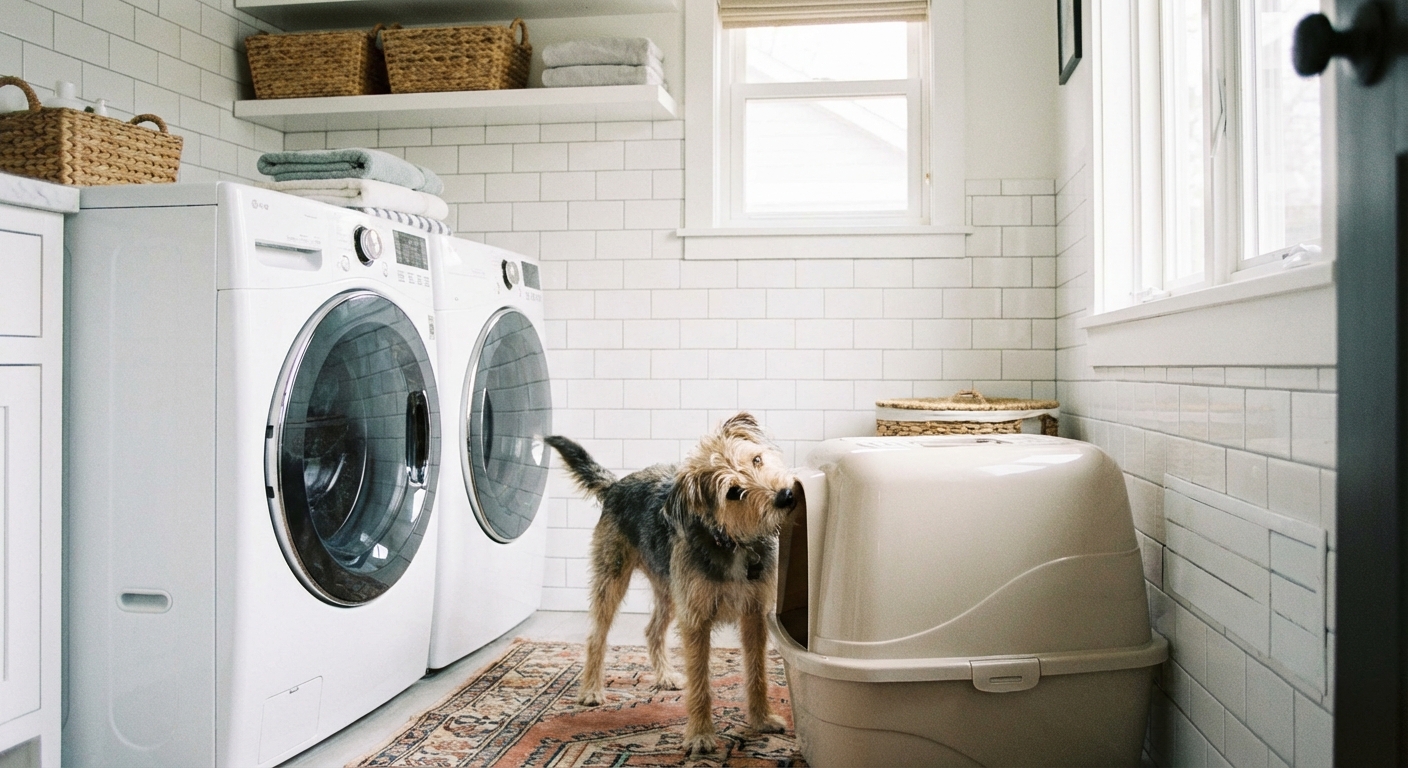
Why dogs eat cat poop
Cat feces can smell like a high-protein treat to a dog, especially if your cat eats a rich diet. Most dogs are opportunistic scavengers by nature, so if they find something “interesting” and it tastes rewarding, they will repeat the behavior.
Common reasons
- Easy access and habit: The litter box becomes a self-rewarding snack bar.
- Hunger or food motivation: Dogs on calorie-restricted diets, inconsistent feeding schedules, or lower-satiety diets may be more motivated to forage.
- Boredom or stress: Some dogs seek out intense smells or oral stimulation when under-stimulated.
- Learned behavior: If it has worked before, your dog will keep checking.
- Medical issues: Intestinal parasites, malabsorption, endocrine disease, or certain medications can increase appetite and scavenging.
Important note: Dogs rarely eat cat poop because they are “missing nutrients.” That said, appetite, poor satiety, underfeeding, and some medical or GI issues can increase scavenging. In most households, the biggest drivers are access and reward.
Is it dangerous?
It can be. Cat feces can carry parasites and pathogens that are risky for dogs and people. The actual risk varies based on your cat’s lifestyle (indoor versus outdoor), deworming status, and diet (raw diets increase certain bacterial risks).
Main risks veterinarians worry about
- Intestinal parasites: Roundworms and hookworms are common concerns.
- Protozoa: Giardia can spread through contaminated feces.
- Bacteria: Salmonella and Campylobacter are possible, especially with raw diets.
- Litter ingestion: Clumping litters (often sodium bentonite) can cause GI upset and, rarely, intestinal blockage if a dog eats enough. If you suspect your dog ate a large amount of clumping litter, treat it like an urgent situation and call your veterinarian.
- Toxoplasma: Most healthy dogs do not get sick from it, but it is a bigger concern in pregnancy and immunocompromised households because human exposure is the main issue. People are most commonly exposed through cat feces or undercooked meat. Dogs can also mechanically carry contaminated litter on paws or fur.
If your dog is eating cat poop, keep your dog and cat on vet-recommended parasite prevention, and talk with your veterinarian about a fecal test schedule that matches your household. Many pets are tested at least yearly, and more often if exposure risk is high or symptoms appear.
Hygiene tip: Scoop with gloves if possible, wash hands after litter duty, and keep kids away from litter areas. If your dog got into the box, wipe paws and consider cleaning any toys they mouthed afterward.
Step-by-step: Stop the behavior
The most effective plan uses three layers at once: environment, training, and health and routine. When you stack them, success comes faster and lasts longer.
1) Lock down access first
If your dog cannot practice the behavior, it cannot be reinforced, and improvement happens faster. Training still matters for long-term reliability, especially when a gate gets left open.
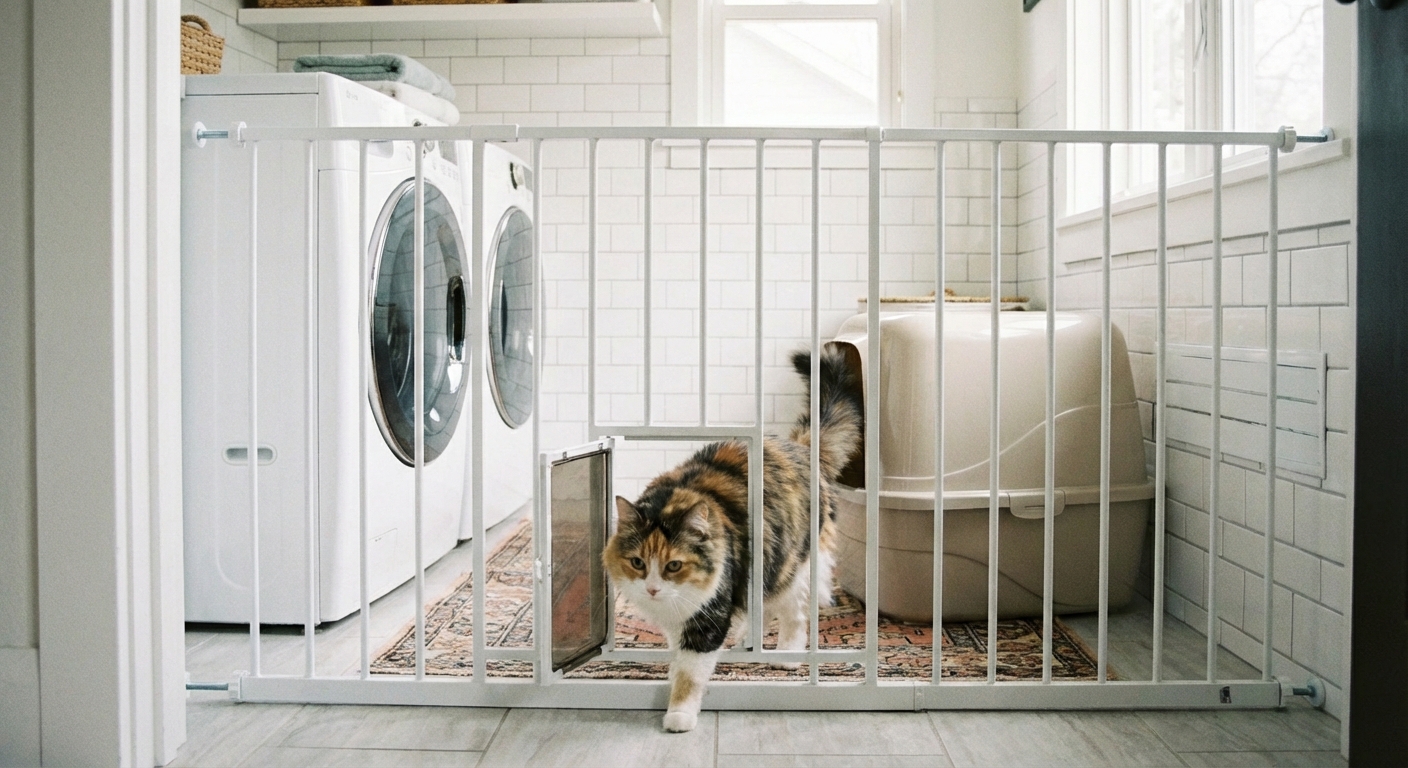
- Use a physical barrier: Put the litter box behind a baby gate with a small cat door opening, or use a door strap that allows the cat through but blocks the dog.
- Switch to a top-entry litter box: Many dogs cannot comfortably access it.
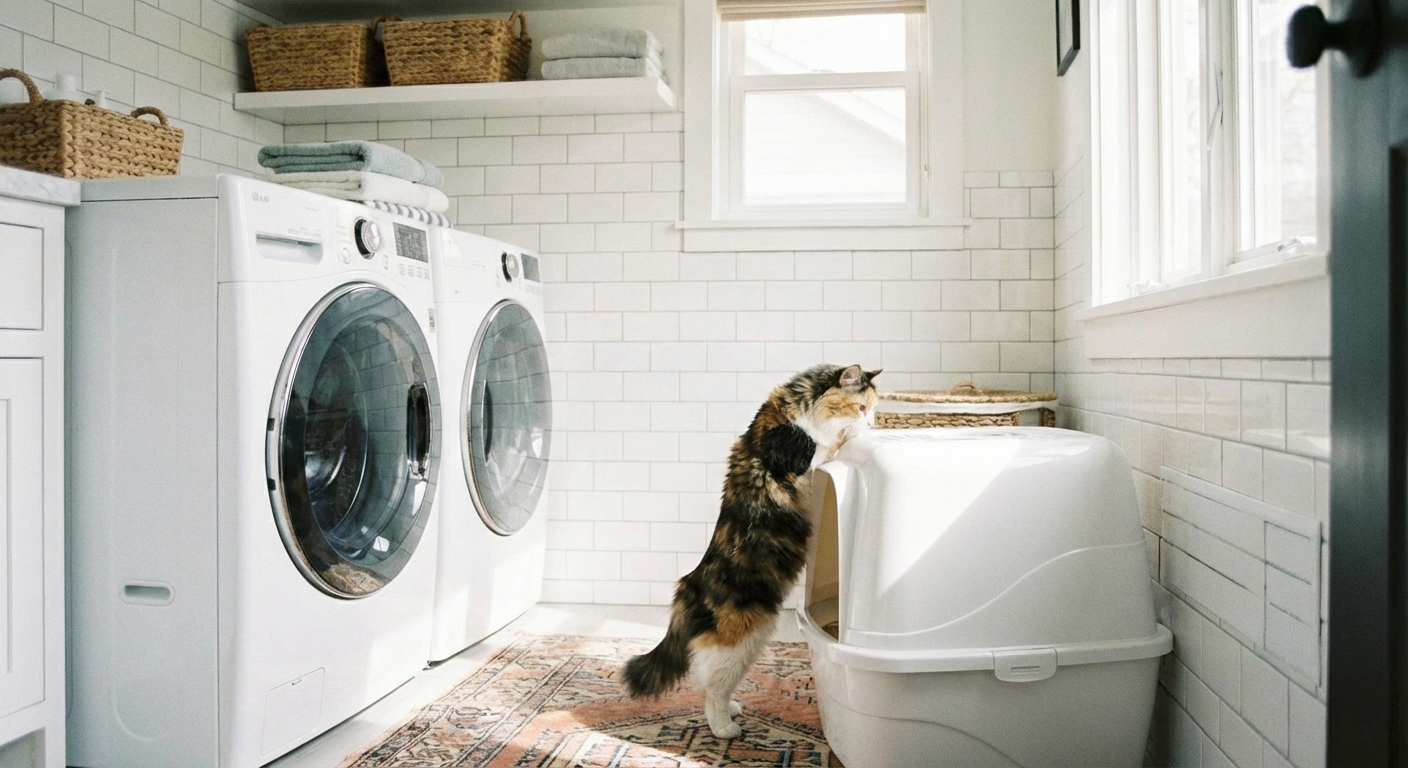
- Try a covered litter box: Works for some dogs, but determined dogs may still get in. Ventilation and your cat’s comfort matter.
- Elevate the box: Place it on a sturdy shelf or inside a large tote with a cat-sized entry cut-out, as long as your cat can safely jump and use it comfortably.
- Relocate to a dog-free room: Laundry room, bathroom, or a spare bedroom is ideal.
Cat comfort note: Some cats dislike covered or top-entry boxes and may avoid them. If your cat seems hesitant, stressed, or starts eliminating outside the box, switch styles or offer a second box in a more comfortable setup while you dog-proof the area.
2) Tighten the litter box routine
The fresher the box, the less opportunity and smell-based temptation.
- Scoop 1 to 2 times daily if possible.
- Use a lidded trash can for waste, and take it out regularly.
- Keep the area clean: Any spilled litter or smears can become a “search game” for your dog.
Multi-cat tip: In multi-cat homes, many veterinarians and cat behavior pros recommend having enough boxes (often cats + 1) and spreading them out. This can reduce accidents and traffic jams, which also reduces opportunity for your dog.
3) Teach “leave it” like a pro
Training is what protects you when management fails, like when a guest forgets to close the gate. Skip punishment and yelling. It often increases stress and can create sneaky behavior. Instead, reward the choice you want and make access boring and difficult.
“Leave it” mini-plan
- Start easy: Hold a treat in your closed fist. The moment your dog stops sniffing or pawing, mark with “yes” and give a different treat from the other hand.
- Add the cue: Say “leave it,” present the closed fist, reward disengagement.
- Progress to open-hand: Only reward if your dog resists grabbing.
- Move to floor practice: Treat on the floor covered by your foot. Reward from your hand when they disengage.
- Generalize: Practice near the litter box area with the box blocked off. Reward heavily for choosing you.
Tip: Practice short sessions daily. Consistency beats long sessions.
4) Use a leash and supervision during retraining
For a couple of weeks, treat the litter box zone like a training hotspot. If your dog is still sneaking in, keep them leashed indoors during high-risk times (morning, after work, when cooking dinner) and redirect calmly. Only use an indoor leash when you are actively supervising, since leash tangles can be a safety hazard.
- If your dog approaches the area, cue “leave it”, then guide them away and reward.
- If your dog already has poop in their mouth, avoid chasing. Instead, cue “drop it” and trade for something high-value.
How to trade effectively: Stay calm, show a high-value treat right at your dog’s nose, and the moment they drop the item to take the treat, say “yes,” give the treat, and then guide them away from the litter area. You want your dog to learn that dropping makes good things happen.
5) Meet the need driving the behavior
Many dogs are more “snacky” when they are under-exercised or under-enriched.
- Add food enrichment: Stuffed Kongs, lick mats, snuffle mats, puzzle feeders.
- Increase sniffing walks: Sniffing is calming and mentally tiring.
- Build predictable routines: Stress and chaos can increase scavenging.
6) Ask your veterinarian about health checks
If your dog seems unusually hungry, is losing weight, has frequent diarrhea, or is suddenly obsessed with the litter box, schedule a vet visit. Sudden, intense fixation can be a clue that something medical is contributing, and it is worth checking early.
Your veterinarian may recommend:
- Fecal test for parasites
- Diet review and calorie check
- Bloodwork if symptoms suggest endocrine or GI disease
Do taste deterrents work?
Sometimes, but they are rarely enough by themselves.
What to know
- Cat stool additives (that claim to make poop taste bad) have mixed results and may cause digestive upset in some cats.
- Sprays around the litter box are not recommended. Many are irritating to cats and can cause litter box avoidance, which creates bigger problems.
- The most veterinarian-approved deterrent is management: barriers, routine scooping, and training.
If you want to try a product, ask your veterinarian first, especially if your cat has a sensitive stomach or urinary issues.
Real-life setups
Here are simple, realistic setups I have seen succeed in busy homes. (These are examples of the access-control ideas from Step 1, just put into real rooms and routines.)
- Baby gate with cat door plus a standard open litter box inside the room.
- Top-entry box placed in a bathroom, with the door kept closed and a cat door latch installed.
- Large storage tote “litter station” with a cat-sized entry cut-out, placed behind a gate.
When to call the vet
Contact your veterinarian promptly if you notice any of the following:
- Vomiting, diarrhea, lethargy, or blood in stool
- Sudden increase in appetite or weight loss
- Your dog ate a large amount of clumping litter
- Your cat has parasites or diarrhea and your dog has been eating from the box
The bottom line
You can stop your dog from eating cat poop, and you do not have to rely on willpower alone. Start by preventing access, scoop consistently, and teach a strong “leave it.” If anything about your dog’s appetite or stool seems off, get your veterinarian involved early. A few smart changes now can protect your dog’s gut, your cat’s space, and your peace of mind.