
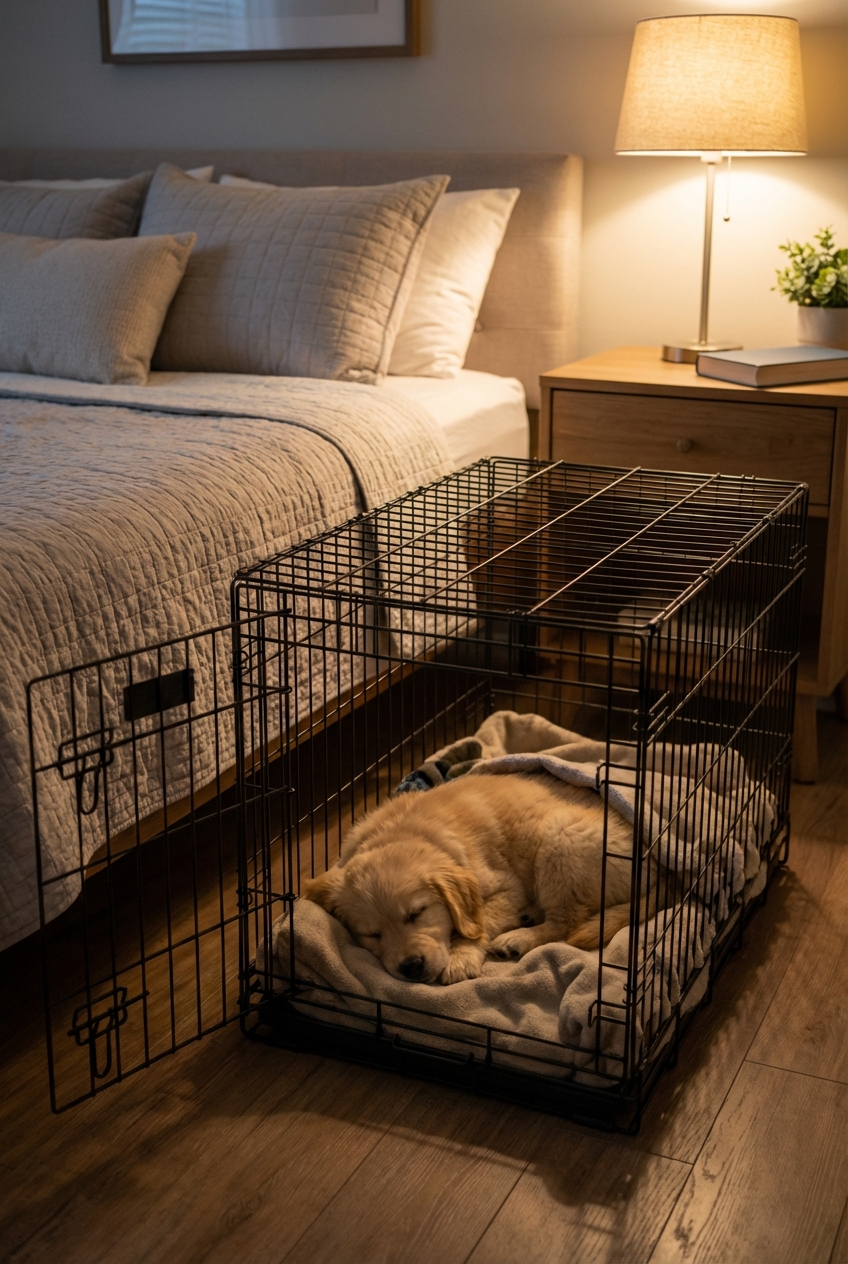
A vet-assistant guide to getting puppies to sleep at night: ideal sleep setup, step-by-step bedtime routine, what to do when they cry, potty timing, naps, an...
Article
•
Designer Mixes
How to Stop Puppy Whining at Night

Shari Shidate
Designer Mixes contributor
Bringing home a puppy is pure joy, until night one hits and the whining starts. If you are losing sleep (and feeling a little guilty), you are not alone. Nighttime whining is one of the most common “new puppy” challenges, and in most cases it is fixable with a few calm, consistent habits.
As a veterinary assistant, I like to look at whining through two lenses: normal puppy development (they are babies) and basic health and safety. Your goal is to teach your puppy that nighttime is predictable and safe, while also making sure you are not missing a medical or comfort issue.
Why puppies whine at night
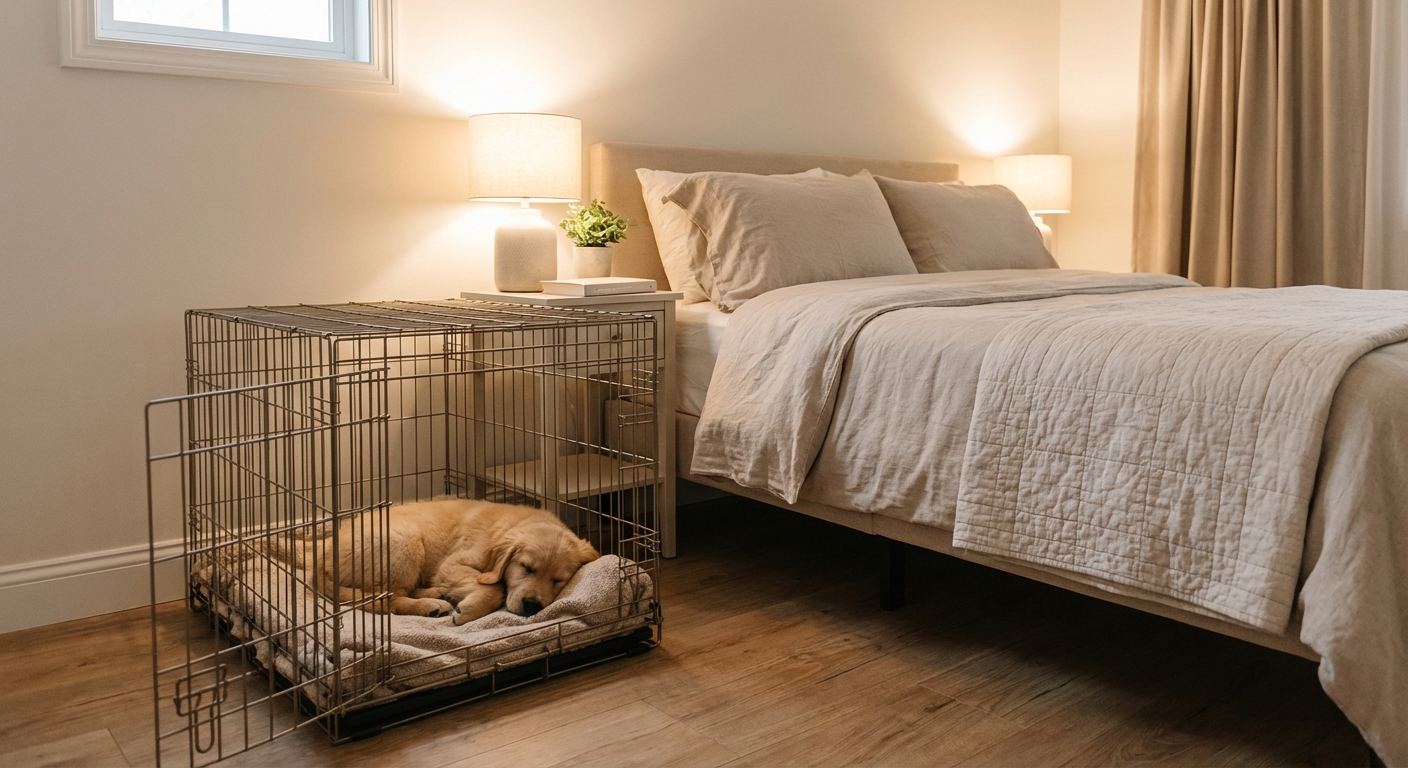
Puppies whine at night for a simple reason: they have been separated from everything familiar. In their previous home or litter, they slept with warm bodies, steady breathing, and constant company. Your quiet house and a crate can feel like a big change.
Common causes include:
- Loneliness and anxiety: Often in the first few nights to two weeks.
- Needing to potty: Young puppies cannot “hold it” very long.
- Overtired or overstimulated: Too much activity or too little nap time can backfire at bedtime.
- Hunger or thirst: Less common, but possible depending on schedule and age.
- Discomfort: Too hot, too cold, collar snagging on crate bars, noisy location.
- Medical issues: Diarrhea, vomiting, urinary tract infection, parasites, pain, or respiratory trouble.
Rule one: check health first
If your puppy is whining and also showing any of these signs, pause the training plan and call your veterinarian:
- Diarrhea, vomiting, or refusing food
- Straining to urinate, frequent small urination, blood in urine
- Coughing, wheezing, or labored breathing
- Swollen belly, repeated pacing, or crying when touched
- Sudden whining that is new after several quiet nights
Most nighttime whining is behavioral, but pain and tummy trouble can sound very similar in a young puppy. When in doubt, it is always okay to check.
Bedtime routine
Puppies thrive on predictable patterns. A simple routine helps their nervous system settle down and reduces the “what is happening?” stress that fuels whining.
60 minutes before bed
- Calm play: A short sniff walk, gentle tug, or a few minutes of training can take the edge off.
- Last meal timing: Many families do best feeding dinner about 3 to 4 hours before bedtime. Very young puppies or certain medical situations may need a different schedule, so follow your vet’s guidance if you are unsure.
- Water plan: Do not restrict water all day. If your puppy is healthy and your veterinarian agrees, some families pick up the water bowl about 1 to 2 hours before bedtime to reduce overnight accidents. If your puppy is thirsty, very young, a toy breed, ill, or you live in a hot climate, do not push this. Ask your vet for age-specific guidance.
15 minutes before bed
- Small sip (optional): If you are offering any last water, do it before the final potty break, not after.
- Final potty break: Go to the same spot, stand still, and keep it boring. Praise softly and head right back inside.
- Bedtime cue: Use one phrase like “bedtime” every night so your puppy learns what comes next.
Crate placement
For most puppies, the fastest path to quiet nights is starting with the crate close to you.
- Best starter setup: Crate next to your bed where your puppy can see and smell you.
- Why it helps: It reduces panic and helps your puppy learn to self-settle.
- Long-term plan: Once your puppy is sleeping well, you can gradually move the crate farther away over several nights if you prefer.
Crate comfort and safety
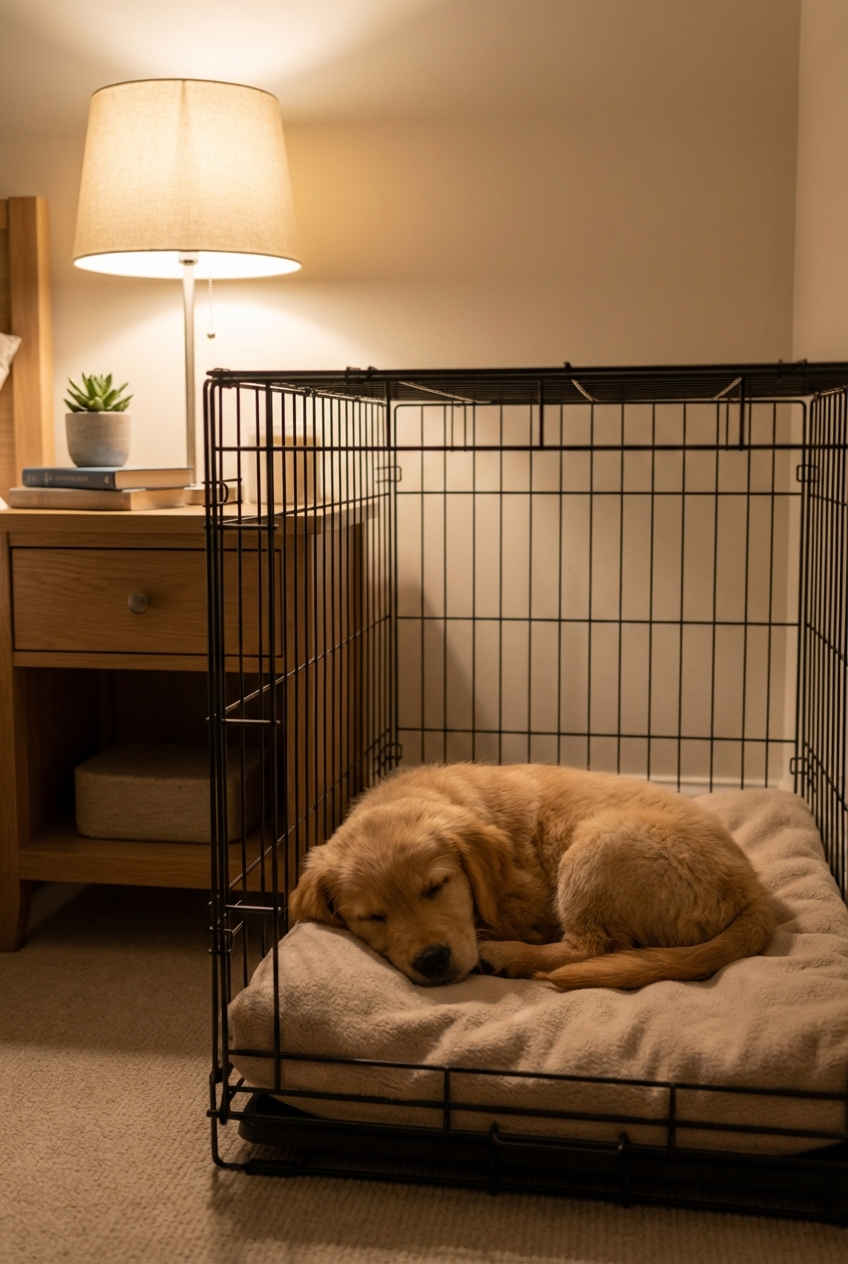
Think of the crate like a cozy bedroom, not a punishment zone.
- Right size: Your puppy should be able to stand up, turn around, and lie down comfortably. If the crate is large, use a divider so they do not potty on one end and sleep on the other.
- No collar or harness: For safety, remove collars, harnesses, and dangling tags in the crate to prevent snagging.
- Soft bedding: Use washable bedding that is not so fluffy it overheats. If your puppy chews fabric, use a safer crate mat or vet-approved alternative.
- Temperature and airflow: Puppies can whine if they are too hot. Keep the room comfortable and well ventilated.
- Cover (optional): Some pups relax with a light crate cover that blocks visual stimulation. Make sure air can flow and the puppy cannot pull it into the crate.
- Safe comfort item: A plush toy can help, but supervise first to ensure your puppy does not shred and swallow pieces.
A “snuggle” style heartbeat toy can be helpful for some puppies, especially during the first week, but it is not required.
Potty needs at night
Many puppies whine because they truly have to go. If you ignore real potty signals, you can accidentally teach your puppy that the crate is a place to soil, which makes training harder for everyone.
How often might they need to go?
Every puppy is different, but here are practical ranges many families see:
- 8 to 10 weeks: Often 1 to 2 nighttime potty breaks
- 10 to 12 weeks: Often 1 nighttime potty break
- 12 to 16 weeks: Often 0 to 1 nighttime potty break
These are not rules. Smaller breeds, puppies with tummy trouble, and puppies who drink a lot in the evening may need more frequent trips.
Nighttime potty without a “party”
- Keep lights low.
- No play, no excitement, no wandering.
- Carry small puppies if needed to prevent an accident on the way out.
- Go to the potty spot, wait quietly, praise softly, then straight back to the crate.
Sample night plan
If you want a simple starting point, try something like:
- 10:00 pm: Last call potty, then into the crate
- 2:00 am: Quick potty break (set an alarm so you beat the whining)
- 6:00 am: Potty break, then breakfast
If your puppy wakes at the same time nightly, set your alarm 15 minutes earlier for a quiet potty trip, then slowly push it later as they mature.
What to do when they whine
This is the part families worry about most. The goal is to comfort your puppy without teaching that whining equals freedom and fun.
Step 1: pause and listen
Ask yourself: is this “panic whining” or “I have to potty” whining? If your puppy just went out and is safe, clean, and comfortable, you can work on soothing and settling.
Step 2: offer calm reassurance
- Use a soft voice: “Good night.”
- Place your fingers near the crate (without opening the door) for a minute or two.
- Try gentle white noise to mask house sounds.
Step 3: avoid the accidental reward
If you open the crate every time your puppy whines, many puppies learn to escalate. Instead, wait for a brief pause in whining, even 2 seconds, then reward the quiet with your calm attention or a quick potty trip if needed.
Tip from the clinic: reward the quiet, not the noise. Your timing matters more than perfection.
Daytime crate practice
Night training goes faster when your puppy already likes the crate during the day.
Simple crate games
- Treat toss: Toss a treat into the crate, let your puppy walk in and eat it, then walk out. Repeat.
- Meals in the crate: Feed with the door open at first. Gradually close for short periods.
- Short naps: After play and potty, encourage a nap in the crate for 10 to 30 minutes.
These little reps build a strong association: crate equals calm and good things.
If you do not use a crate
You can still use the same principles. Choose a small, puppy-proofed space like an exercise pen or blocked-off laundry room.
- Keep the sleep area close to you at first.
- Make it boring and safe (no cords, no choking hazards).
- Use a consistent bedtime routine and a calm nighttime potty plan.
Do’s and don’ts
Do
- Keep bedtime consistent, even on weekends.
- Use one plan as a family so your puppy gets the same message from everyone.
- Be patient for the first two weeks. Many puppies improve quickly with consistency.
- Track potty times and accidents. Patterns help you adjust the schedule.
Don’t
- Scold whining. It adds stress and can increase the noise.
- Use the crate for punishment.
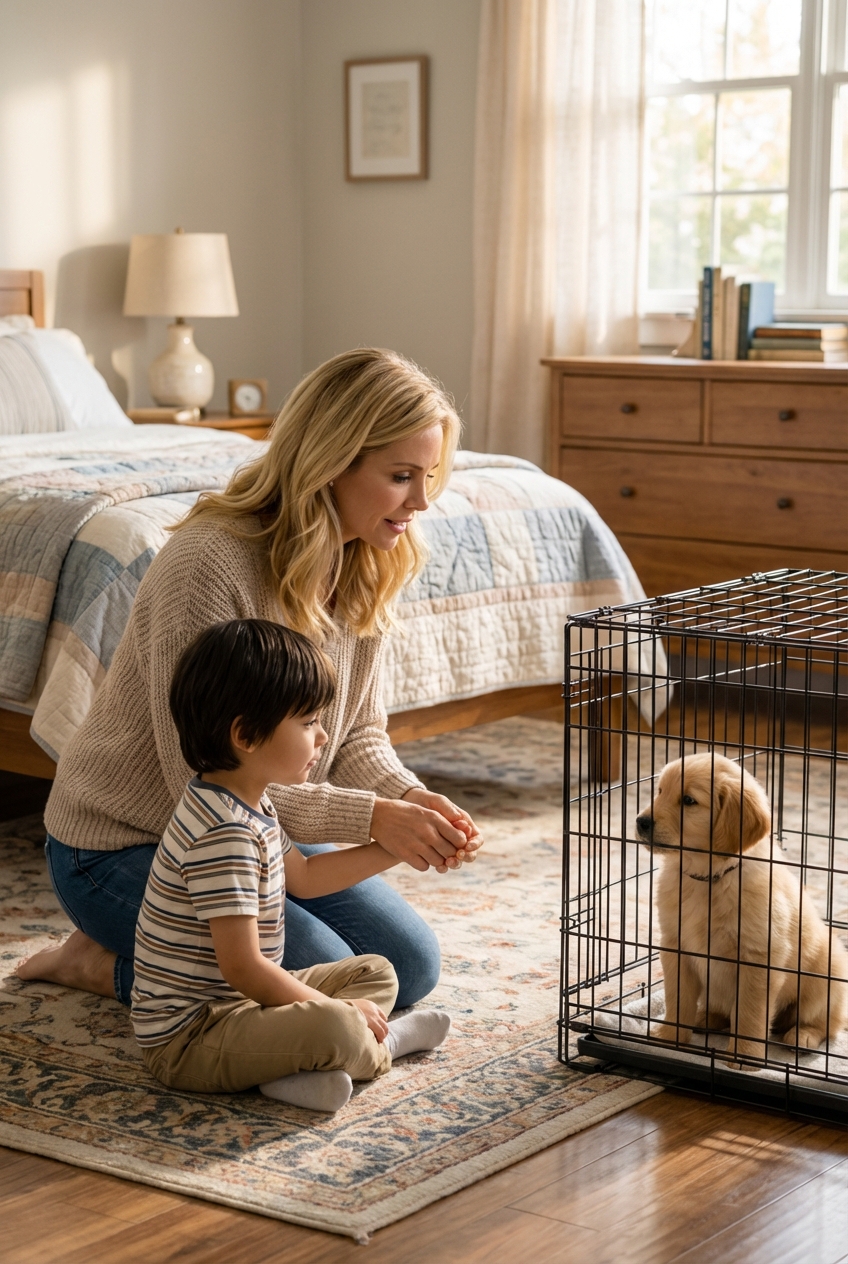
- Let kids “visit” the puppy during nighttime whining. That turns whining into a successful strategy.
- Assume it is behavioral if your puppy has diarrhea or seems unwell.
Mistakes that keep it going
- Too much freedom too soon: Letting a brand-new puppy roam the bedroom can lead to accidents and more anxiety.
- Bedtime is too late: An overtired puppy can act like a toddler who missed a nap.
- Inconsistent responses: If one night whining gets a cuddle and the next night it does not, your puppy may try harder.
- Missing potty signals: A puppy that is uncomfortable will not “learn through it.”
When to get extra help
If you have tried a consistent routine for 10 to 14 nights and your puppy is still whining intensely, or if you see anxiety signs during the day, consider extra support.
Normal adjustment vs separation anxiety
Many puppies just need time. Separation anxiety is more than a few rough nights. Consider professional help if you notice:
- Panic that escalates quickly when left alone (not just mild fussing)
- Drooling, self-injury attempts, or trying to break out of the crate or pen
- Destruction focused on exits (doors, windows)
- Intense distress even after plenty of exercise and potty breaks
- Ask your veterinarian to rule out medical causes.
- Work with a qualified, reward-based trainer.
- For severe anxiety, ask about a referral to a veterinary behaviorist. Medication can be discussed after a medical workup and as part of a complete behavior plan, not as a stand-alone fix.
You do not have to white-knuckle this. The right plan can bring relief fast for both you and your puppy.
Bottom line
Your puppy is not trying to be difficult. They are learning a brand-new world, and nighttime is the hardest part at first. With a cozy setup, a predictable routine, and calm consistency, most puppies learn to sleep through the night sooner than you think.
If you take it one night at a time, you will get there, and so will your pup.
