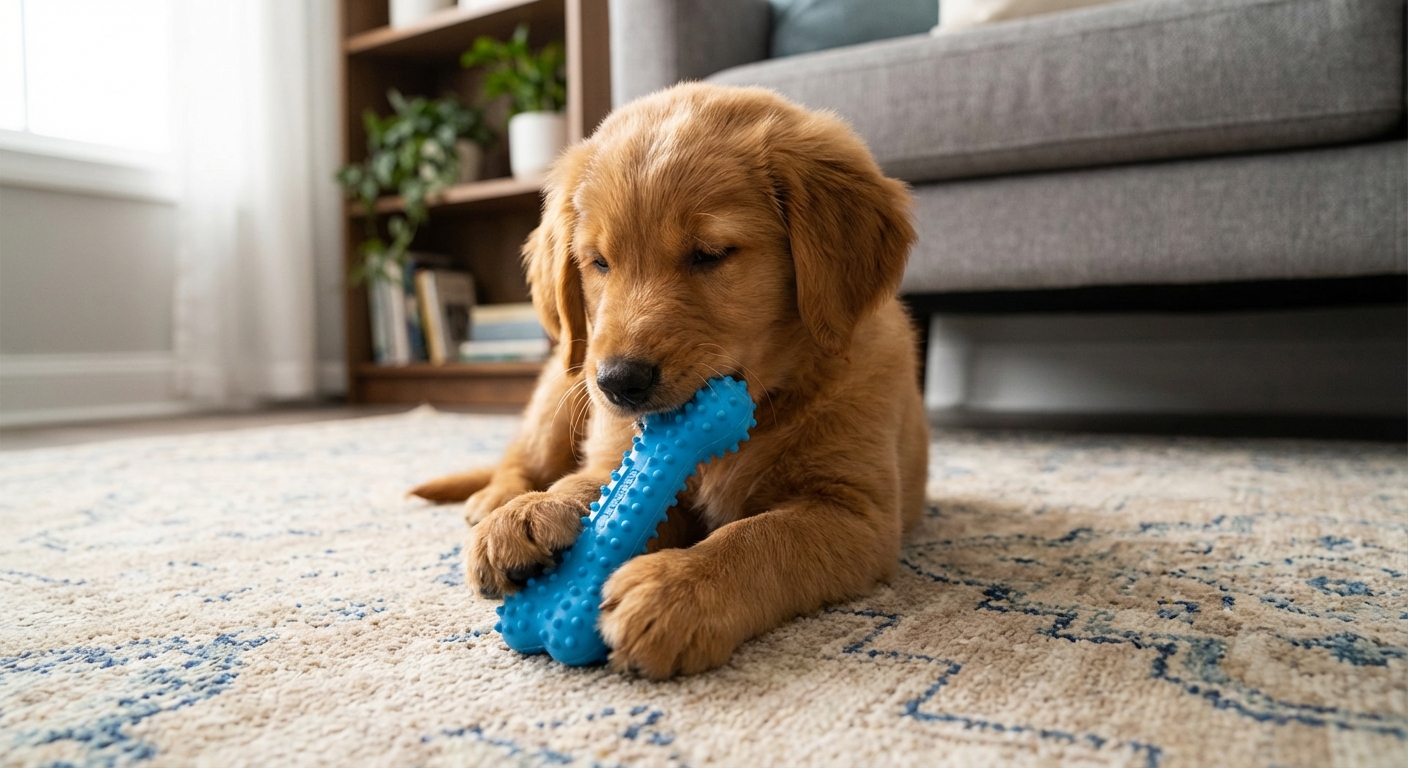
Puppy biting is usually normal. Learn why it happens and how to reduce it fast with redirects, reverse time-outs, calm breaks, naps, enrichment, and teething...
Article
•
Designer Mixes
How to Stop Puppy From Nipping

Shari Shidate
Designer Mixes contributor
Puppy nipping is one of the most common concerns I hear, and I get it. Those little teeth feel sharp, and it can start to feel like your sweet puppy turns into a tiny land shark the second you try to pet them.
The good news is that nipping is normal puppy development, and it is also very teachable. Puppies explore with their mouths, they are teething, and they have not learned human skin is delicate. Your job is to calmly teach bite inhibition, provide safe outlets, and prevent the situations that make nipping worse.
Why puppies nip
When we understand the “why,” it is much easier to respond consistently. The most common reasons include:
- Teething and oral exploration: Puppies mouth the world the way human babies do. Teething typically peaks between about 3 to 6 months as adult teeth come in.
- Play behavior: Puppies play with littermates by biting, grabbing, and wrestling. They are practicing dog social skills.
- Overtired or overstimulated: Nipping often spikes when puppies have been awake too long or when play escalates.
- Attention seeking: If nipping makes you squeal, wave your hands, or chase, your puppy may think the game is on.
- Herding instincts in some mixes: Some designer mixes with herding lineage may be more prone to ankle and pant-leg nips, especially during exciting movement.
Nipping vs aggression
Most puppy nipping is not aggression. Aggression concerns usually include multiple red flags like stiff body posture, hard staring, growling that escalates, guarding resources, or bites that break skin repeatedly without any playful body language.
If you are seeing intense fear, repeated unprovoked bites, or you feel unsafe, please involve your veterinarian and a qualified trainer early. Early help is kind help.
The goal: teach bite inhibition
“Bite inhibition” means your puppy learns to control the strength of their mouth. We are not just trying to stop biting today. We are teaching your puppy how to be safe with their mouth for life.
Puppies learn bite inhibition best through consistent feedback and calm consequences. When teeth touch skin, the fun stops, and a better option appears.
Step-by-step: what to do when your puppy nips
1) Freeze, then redirect
The moment you feel teeth on skin, stop moving your hands and body for one to two seconds. Movement can trigger more chasing and biting.
Then offer an appropriate item immediately:
- A stuffed chew
- A tug toy
- A soft rope toy
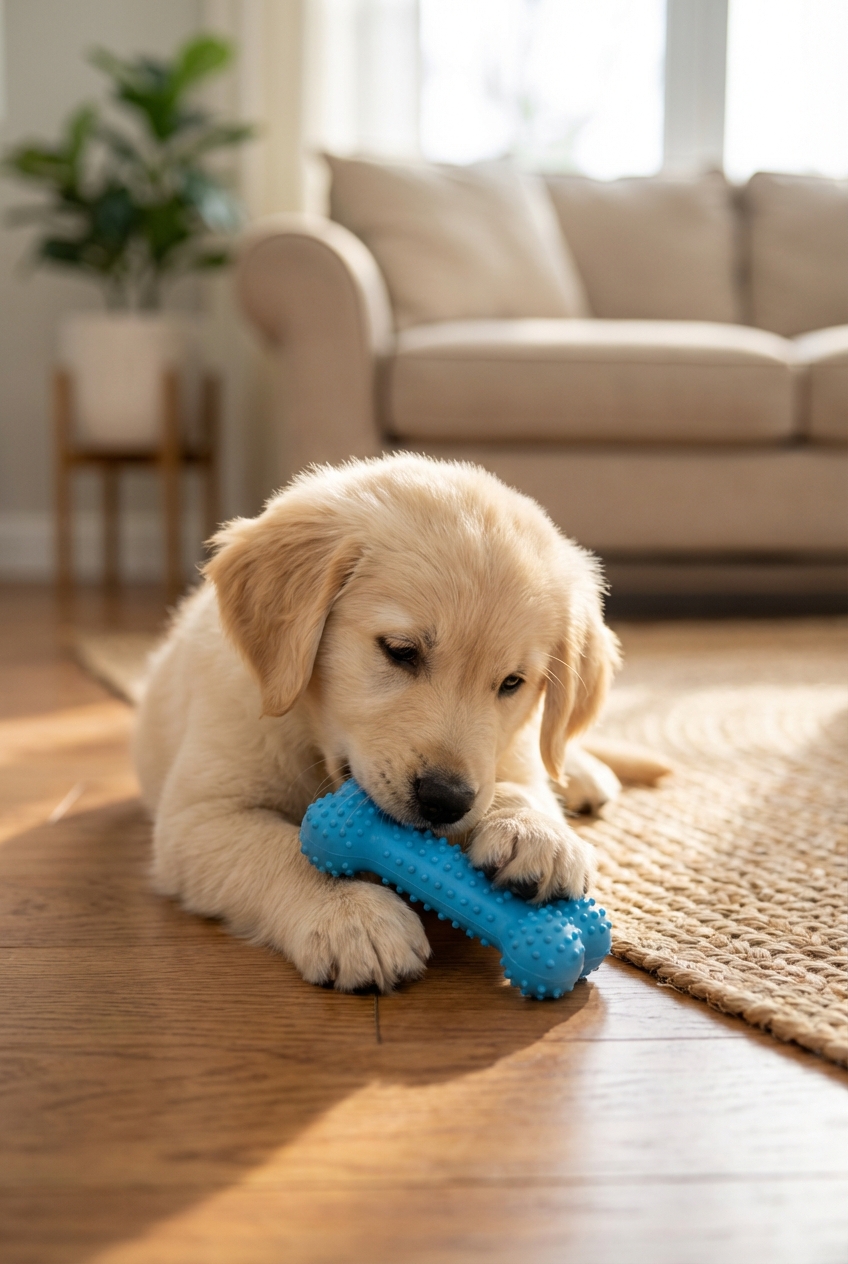
- A rubber chew designed for puppies
When your puppy bites the toy instead of you, praise warmly. You are reinforcing the right choice.
2) If they re-bite, end play briefly
If your puppy keeps coming back to skin, calmly end the interaction for 20 to 60 seconds. This is not punishment. It is clear communication.
- Stand up and step over a baby gate.
- Or place the puppy behind a gate or in a pen with a chew.
- Keep your face neutral and your voice calm.
Then return and try again. Puppies learn through repetition.
3) Teach a simple replacement cue
Many families do well with a cue like “Toy” or “Get it”. Say the cue, present the toy, and praise when your puppy grabs it. Over time, your puppy will start searching for a toy when excited.

What not to do (it often backfires)
- Do not hit, tap the nose, or use physical corrections: This can increase fear and can create defensive biting.
- Do not play hand games: Wrestling with hands teaches puppies that hands are toys.
- Do not yell: Loud reactions can add excitement, which increases nipping in many puppies.
- Avoid “alpha” techniques: Pinning and intimidation are outdated and can worsen behavior.
Use management to prevent nipping practice
Behavior that gets rehearsed gets stronger. Management simply means setting your puppy up to succeed.
Helpful tools
- Baby gates and exercise pens: Create a safe puppy zone so you can step away for short breaks.
- Leash indoors: A lightweight leash can help prevent frantic chasing games.
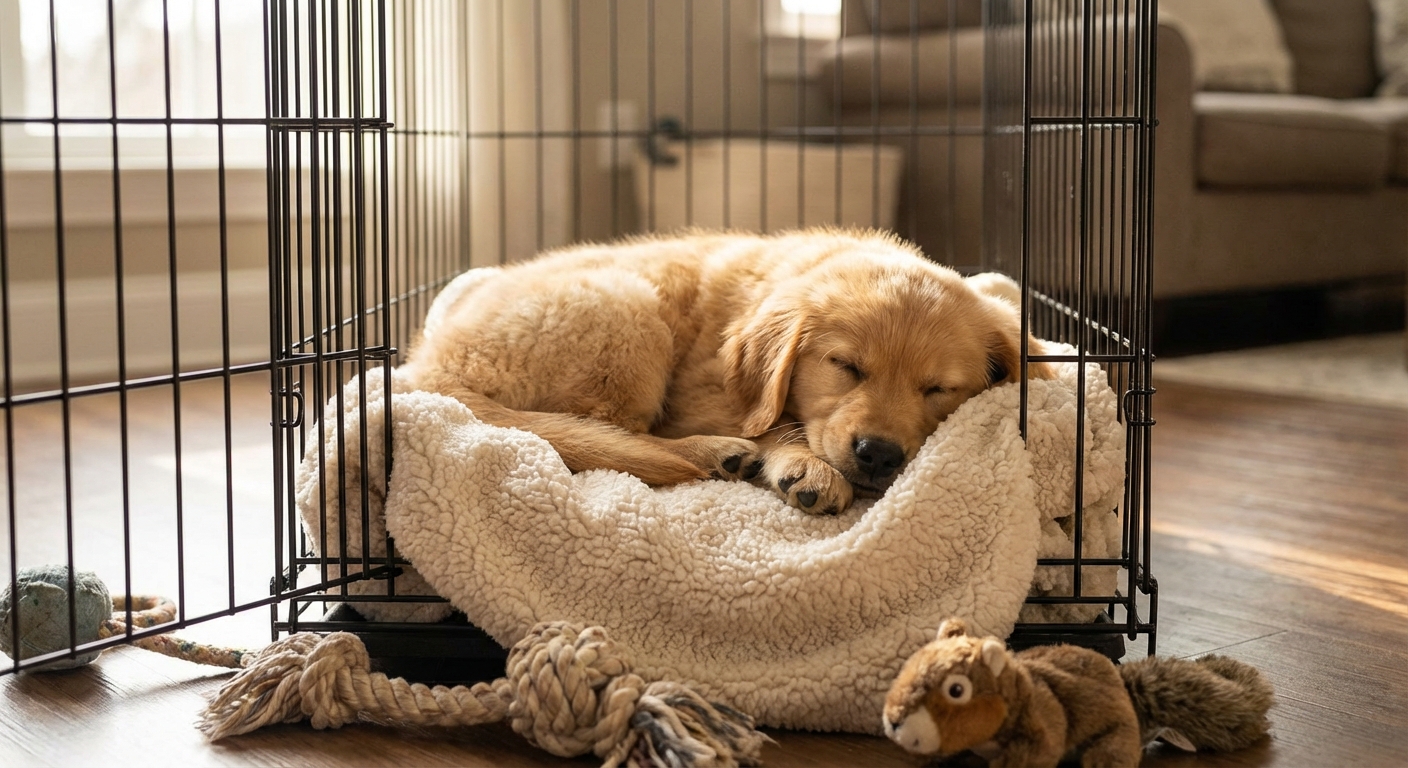
- Crate (introduced positively): Great for naps and calm downtime.
Kid safety
Children move quickly and squeal, which can trigger nipping. Supervise closely and separate when the puppy is wound up. Teach kids to be “a tree” if nipping starts: stand still, arms folded, eyes up, then an adult redirects the puppy.
Meet your puppy’s needs: tired puppies bite more
One of the most evidence-based ways to reduce nipping is to improve your puppy’s daily rhythm: sleep, enrichment, and appropriate exercise.
Sleep matters
Most puppies need 18 to 20 hours of sleep per day. An overtired puppy is a nippy puppy. If your puppy gets bitey in the evening, try a calm chew and a scheduled nap before the witching hour.
Swap chaos for enrichment
- Stuffed frozen food toy (use puppy-safe ingredients)
- Snuffle mat meals
- Scatter feeding in grass
- Short training sessions (1 to 3 minutes)
Train these skills to reduce nipping fast
1) Hand targeting
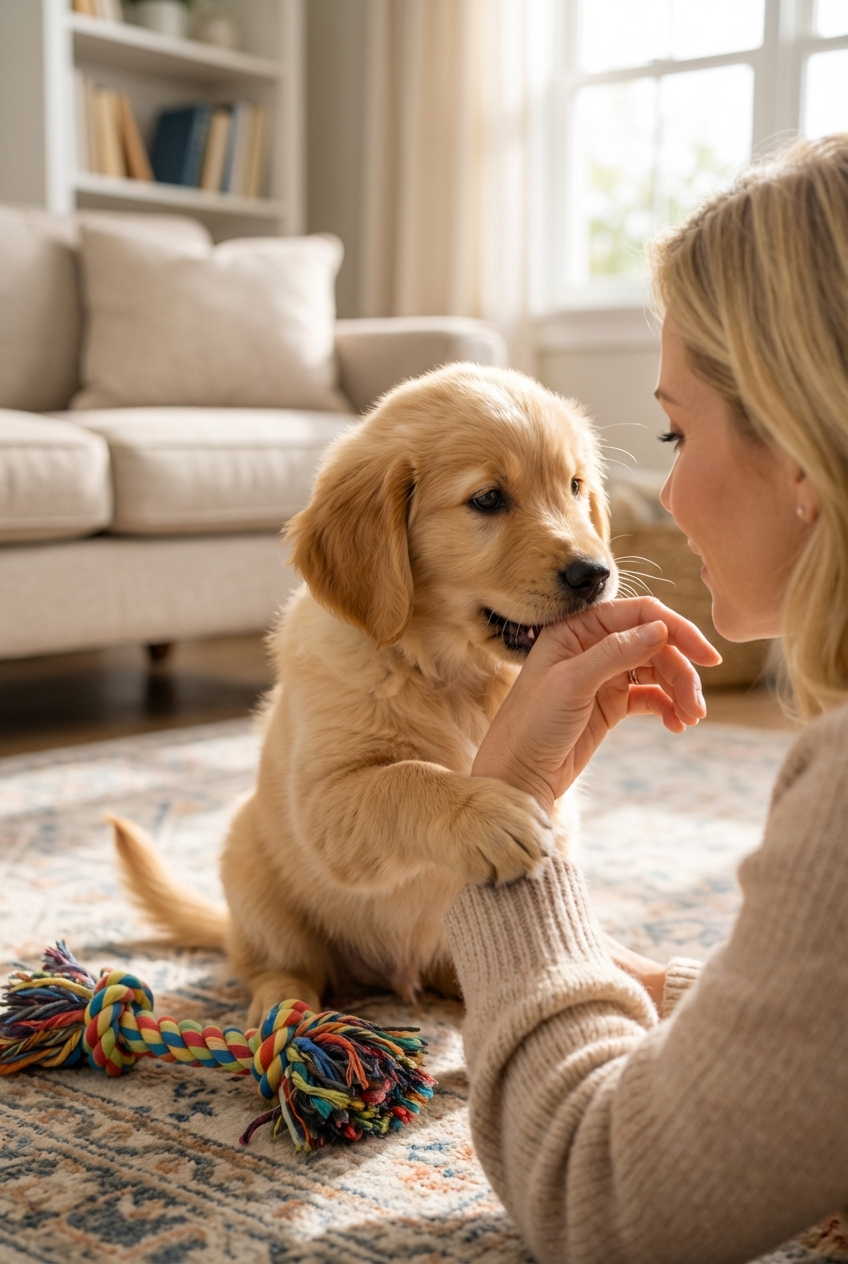
Teach your puppy to touch your palm with their nose instead of their mouth. Present your open hand a few inches away and mark and reward when they boop it with their nose. This gives them a job that does not involve biting.
2) Drop it and leave it
These cues prevent grabbing hands, sleeves, and pant legs. Trade for treats and keep it positive. A reliable “drop it” keeps play safe, especially for tug.
3) Calm greetings
If your puppy bites when excited, practice greeting with a toy already in their mouth. You can also ask for a sit and reward, but keep expectations realistic for young puppies.
Teething comfort: safe ways to soothe gums
During teething, puppies genuinely need appropriate chewing outlets. Choose chews that are designed for puppies and match your pup’s size and chewing style.
- Chilled rubber chews (refrigerator, not freezer if your puppy is sensitive)
- Frozen stuffed food toys for longer-lasting chewing
- Soft puppy teething chews that bend slightly under pressure
A general safety tip I share as a veterinary assistant: if you cannot indent it with a fingernail or it feels rock-hard, it may be too hard for puppy teeth and can risk fractures. When in doubt, ask your veterinarian what is safest for your specific puppy.
Troubleshooting common nipping scenarios
Nipping during petting
Many puppies get overstimulated by fast, repetitive petting. Try shorter petting bursts, pause often, and give a chew during cuddles. If your puppy starts mouthing, redirect to the chew and keep your hands still.
Ankle biting on walks
This is common in young puppies and in herding-type mixes. Keep a tug toy in your pocket, reward attention to you, and practice short, calm sessions. If your puppy starts biting feet, stop moving, ask for a simple cue like sit, then reward and move on.
Evening bitey zoomies
This usually means your puppy is overtired or overstimulated. Try: potty break, a drink of water, a stuffed chew, and a nap in the crate or pen.
When to call your vet or a trainer
Please reach out for professional support if you notice:
- Bites that frequently break skin
- Growling, freezing, or guarding that accompanies biting
- Sudden behavior changes, pain, or reluctance to be touched
- Persistent nipping that is not improving after 2 to 3 weeks of consistent training
Sometimes pain, gastrointestinal discomfort, or frustration can raise arousal. A quick veterinary check and a positive reinforcement trainer can make a huge difference.
A realistic timeline
With consistency, most families see improvement within 1 to 2 weeks, and major improvement over 4 to 8 weeks. Full maturity takes time. Your puppy is learning impulse control, and that is a developmental process.
Progress is not “never nips again.” Progress is “recovers faster, redirects sooner, and bites softer until the habit fades.”
Quick checklist
- Keep toys within reach in every room.
- Freeze when teeth touch skin, then redirect.
- End play briefly if nipping continues.
- Schedule naps and reduce evening chaos.
- Use gates and pens to prevent rehearsal.
- Reward calm behavior and toy chewing.