
Puppy biting is usually normal. Learn why it happens and how to reduce it fast with redirects, reverse time-outs, calm breaks, naps, enrichment, and teething...
Article
•
Designer Mixes
How to Stop Puppy Biting

Shari Shidate
Designer Mixes contributor
Puppies explore the world with their mouths. That is normal. Less fun: when those tiny teeth start landing on your hands, ankles, and sleeves every day. The good news is that puppy biting is highly trainable, as long as you respond the same way every single time.
As a veterinary assistant, I also want to reassure you that biting is not a sign your puppy is “bad” or “dominant.” Most of the time it is teething, overstimulation, playful practice, or a puppy who needs more sleep.
Quick note: This is general guidance. If your puppy’s behavior worries you, or you have kids or vulnerable adults in the home, loop in your veterinarian and a qualified reward-based trainer for a plan tailored to your situation.
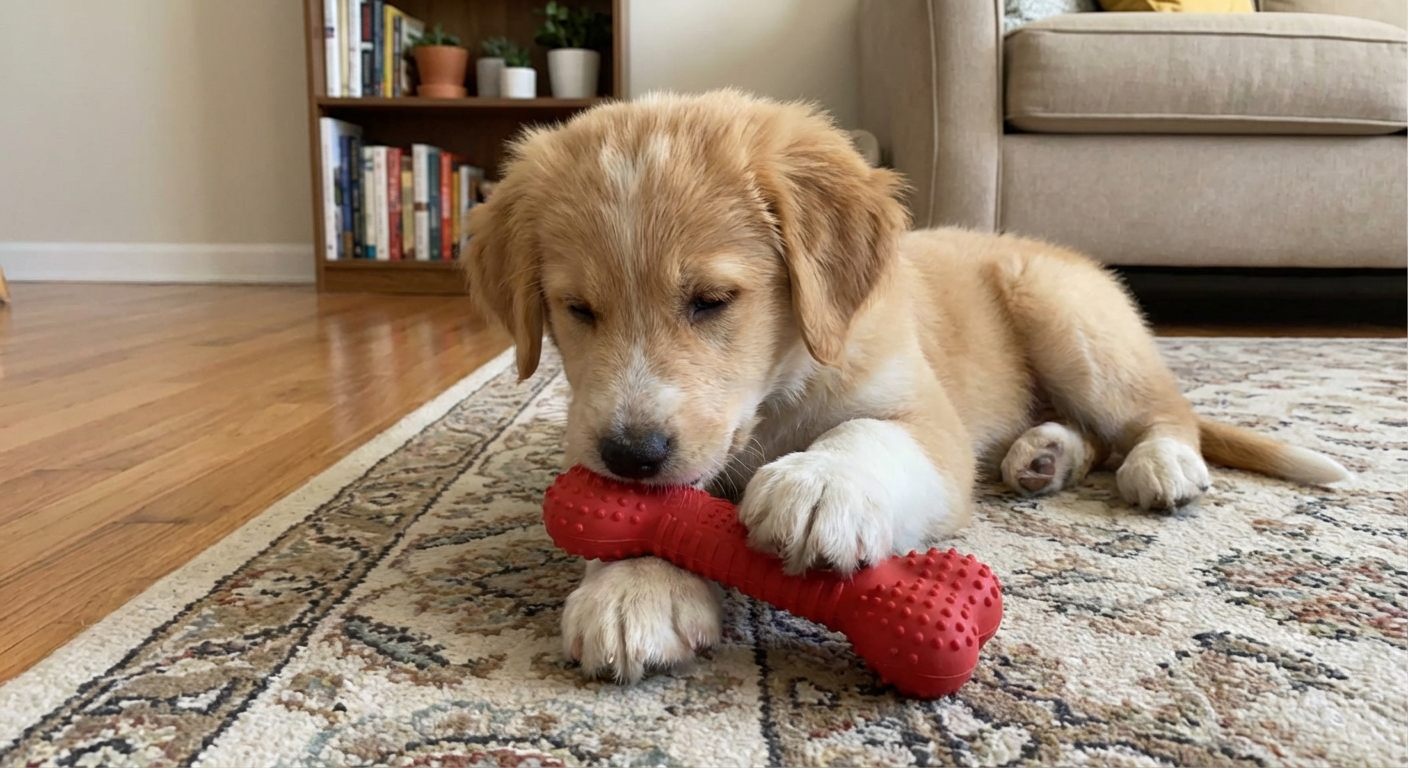
Why puppies bite (and when to worry)
Common, normal reasons
- Teething discomfort: Many puppies start losing baby teeth around 3 to 4 months. Adult teeth are typically in by about 6 months, sometimes a bit later depending on the puppy.
- Play and social learning: Puppies learn bite pressure by playing with littermates. Humans have to teach that same skill.
- Overtired or overstimulated: A bitey puppy is often a sleepy puppy.
- Attention-seeking: If biting makes you squeal, wave your hands, or chase, it can become a game.
- Breed tendencies: Some herding breeds and mixes are extra likely to nip at moving feet and pant legs. It is common, and it is trainable, but it often needs more management.
Call your veterinarian if you notice
- Sudden biting plus pain signs like yelping when touched, limping, or guarding
- Swollen gums, foul mouth odor, broken teeth, or heavy drooling
- Growling or biting when approached around food, toys, or resting spots (possible guarding that needs early support)
- Any bite that breaks skin, especially punctures, multiple bites, face or hand bites, or anything that needs medical care (for people: wash the wound, seek medical advice, and watch closely for infection)
The daily plan that stops biting fastest
Consistency beats intensity. You do not need harsh corrections. You need a simple routine your whole household can follow.
Step 1: Set up your environment
- Keep a toy within reach in every main room: soft tug, rubber chew, and a food-stuffed toy option.
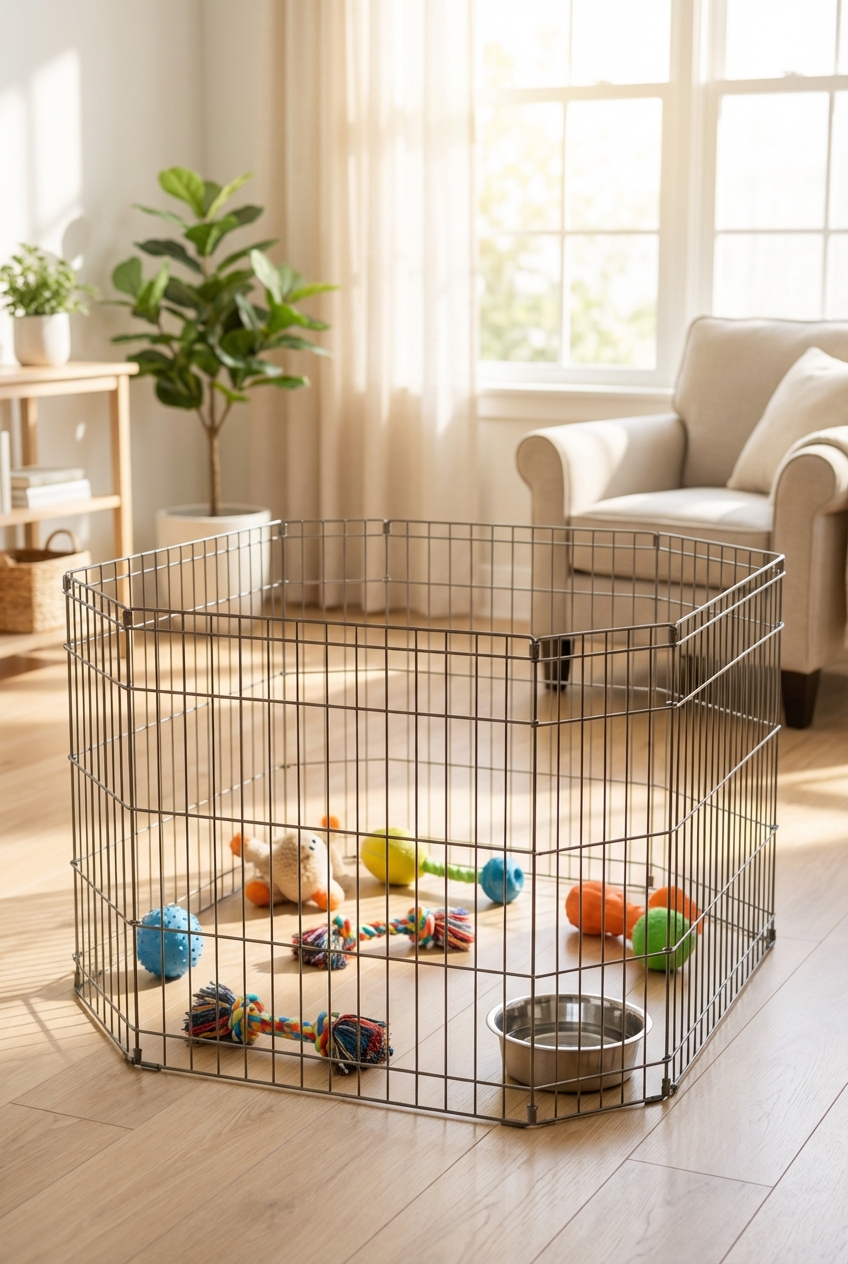
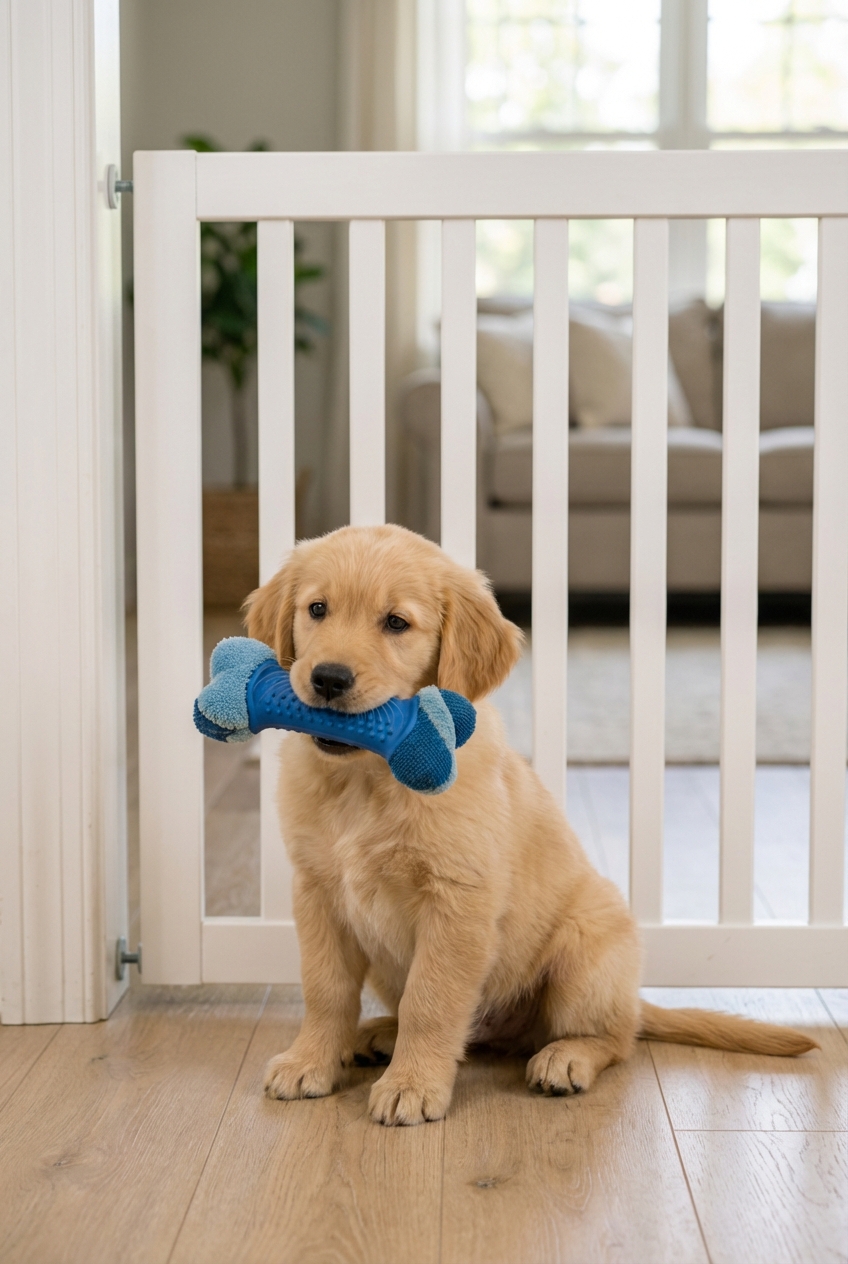
- Use baby gates or a playpen so you can step away without drama.
- Leash indoors (optional) for very mouthy puppies. It helps you guide without grabbing their collar.
Step 2: Teach “bite equals game pauses”
This is the core lesson: gentle play continues, teeth on skin makes all fun stop. Do it the same way every time.
- Play calmly. Keep your hands low-key, not wiggling like prey.
- If teeth touch skin: freeze your hands and get boring for 2 seconds. You can look away, turn your shoulders slightly, and go quiet.
- Redirect to a toy immediately. Put the toy in their mouth, then praise.
- If they come right back to bite skin: do a brief time-out, 10 to 30 seconds behind a gate or in the pen. No scolding. Just “oops, play ended.”
- Try again when your puppy is calm. Many short reps teach faster than one long struggle.
Time-out tip: Keep it calm and short, and use a neutral space like a gated area or pen. If you crate your puppy, aim for the crate to stay a relaxing sleep spot, not the place where “fun goes to die.”
Tip: Avoid squealing “ouch!” if it revs your puppy up. For many pups, a calm “too bad” and quick reset works better.
Step 3: Add a daily chewing routine
Chewing is a legitimate need. If you plan for it, your hands will be a lot safer.
- Morning: 10 minutes with a food-stuffed rubber toy
- Afternoon: a safe chew (your vet can help you pick the right hardness for your puppy’s teeth)
- Evening: a calm lick activity like a lick mat or a frozen, puppy-safe spread
Safety note: Skip very hard chews that can crack teeth. A common rule of thumb is: if you cannot indent it with a fingernail, it may be too hard for many dogs. Individual dogs vary, so ask your vet if you are unsure.
Step 4: Protect naps like they are training
Many puppies need 18 to 20 hours of sleep in a day, and very young puppies may need even more. When they miss naps, biting skyrockets.
- Watch for the “witching hour” signs: zoomies, grabbing clothes, ignoring cues, frantic chewing.
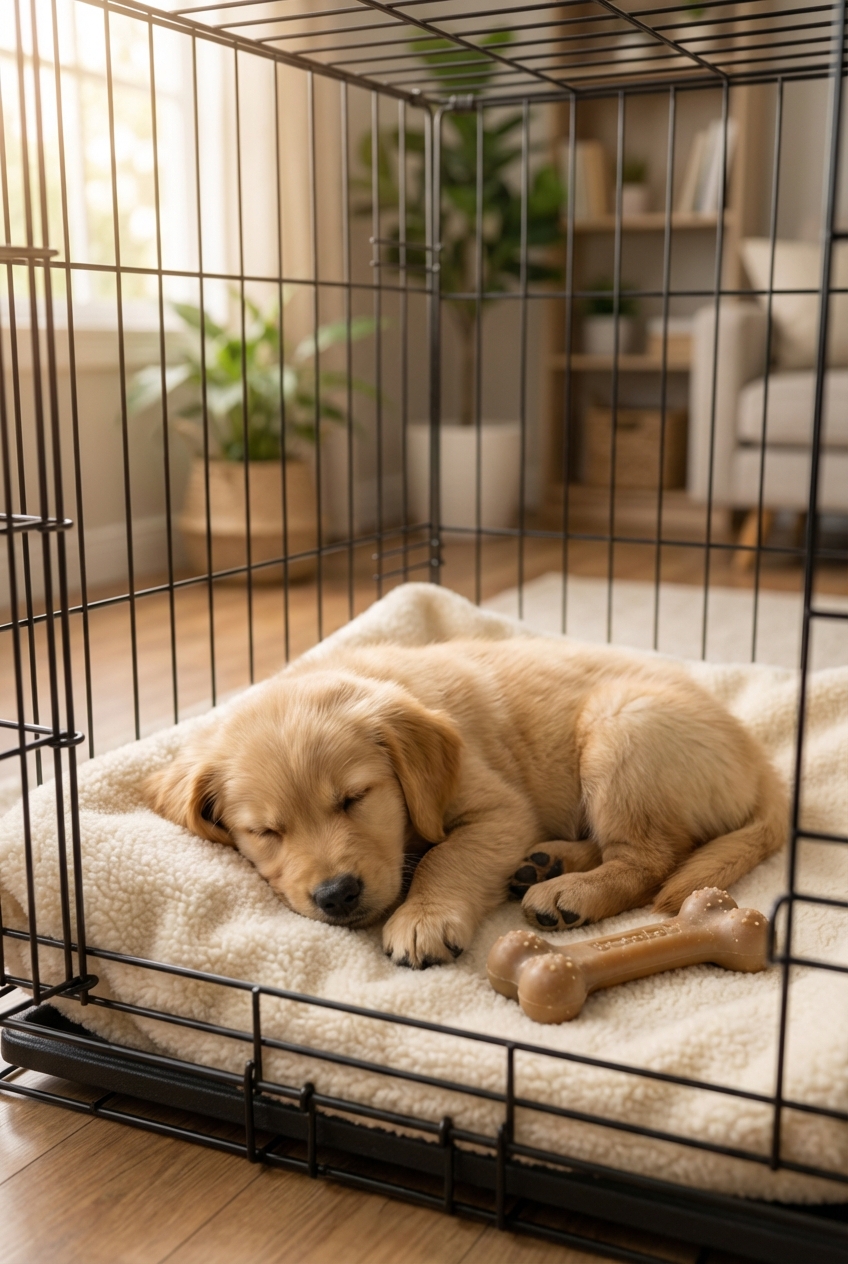
- Use a scheduled nap in a crate or pen with a safe chew.
- Keep naps short and frequent, especially for younger pups.
Exercise and enrichment (without overdoing it)
Biting can show up when a puppy is under-stimulated or over-tired from too much activity. Aim for small doses of age-appropriate exercise plus lots of sniffing and learning.
- Choose sniffing over speed: Short sniff walks, exploring the yard, and “find it” treat scatters are great brain work.
- Keep training short: 3 to 5 minutes of sit, touch, name game, and leash practice can take the edge off without winding them up.
- Avoid marathon workouts: Long runs and repetitive high-impact exercise are not ideal for growing joints. When in doubt, ask your veterinarian what fits your puppy’s age and breed.
Teach gentle mouth in 5 minutes a day
Bite inhibition means your puppy learns how to control jaw pressure. Even if you never plan to allow mouthing as an adult, bite inhibition is a safety skill that reduces injury risk if your dog is startled later in life.
Simple game
- Hold a toy and let your puppy mouth it.
- Occasionally offer a treat from your other hand.
- If teeth touch your skin, pause and remove attention for a moment.
- Resume when they are gentle.
Think: calm, repetitive, and rewarding. Puppies do not need you to “win.” They need you to be predictable.
What not to do
- No hitting, muzzle-grabbing, or “alpha” techniques. These increase fear and can create defensive biting.
- Do not push your hand into their mouth to “show them.” That can intensify mouthing.
- Avoid rough wrestling with hands until your puppy has solid mouth manners.
- Do not chase if they grab your pants or socks. Use the pause, redirect, and time-out routine instead.
How to handle the hardest moments
Ankles and pant-leg attacks
- Stand still like a tree for 2 seconds.
- Toss a toy a few feet away to redirect.
- If they keep coming, step behind a gate for a brief reset.
Puppy biting kids
- Supervise closely and keep interactions short.
- Teach kids: no running, no squealing, no hand-waving near the puppy.
- Use gates and pens to create separation when your puppy is excited.
- Reward calm behavior around kids with treats delivered by an adult.
Overexcited evening biting
- Do a sniff walk or short training session earlier, not right at bedtime.
- Offer a lick or chew activity.
- Put down for a nap or quiet time before the “crazy” starts.
Daily schedule example
This sample routine prevents the bitey spiral by alternating activity and rest.
- 7:00 AM: potty, breakfast, 5 minutes basic training (sit, name game)
- 7:30 AM: chew toy or stuffed rubber toy
- 8:00 AM: nap
- 10:00 AM: potty, gentle play with toys, short sniff walk
- 11:00 AM: nap
- 1:00 PM: potty, lunch (if feeding 3 meals), chew time
- 2:00 PM: nap
- 4:00 PM: potty, training game, supervised free time
- 6:00 PM: dinner, calm enrichment
- 8:00 PM: short potty, settle, bedtime routine
Progress note: Biting often peaks during teething and high-energy developmental phases, then improves with steady practice. Look for fewer bites per day, softer bites, and faster recovery after a redirect.
If you only take one thing from this article, let it be this: more naps plus consistent time-outs fixes a large percentage of puppy biting.
When to get professional help
If you have been consistent for two weeks and biting is not improving, or if your puppy is showing stiff body language, guarding, or fearful reactions, it is time to bring in expert support.
- Ask your veterinarian to rule out pain and discuss teething support.
- Look for a reward-based trainer with experience in puppy behavior.
- For more complex cases, a board-certified veterinary behaviorist can be a game-changer.
Progress is not perfection. Aim for fewer bites per day, softer bites, and faster recovery after a redirect. Those are real wins that add up quickly.