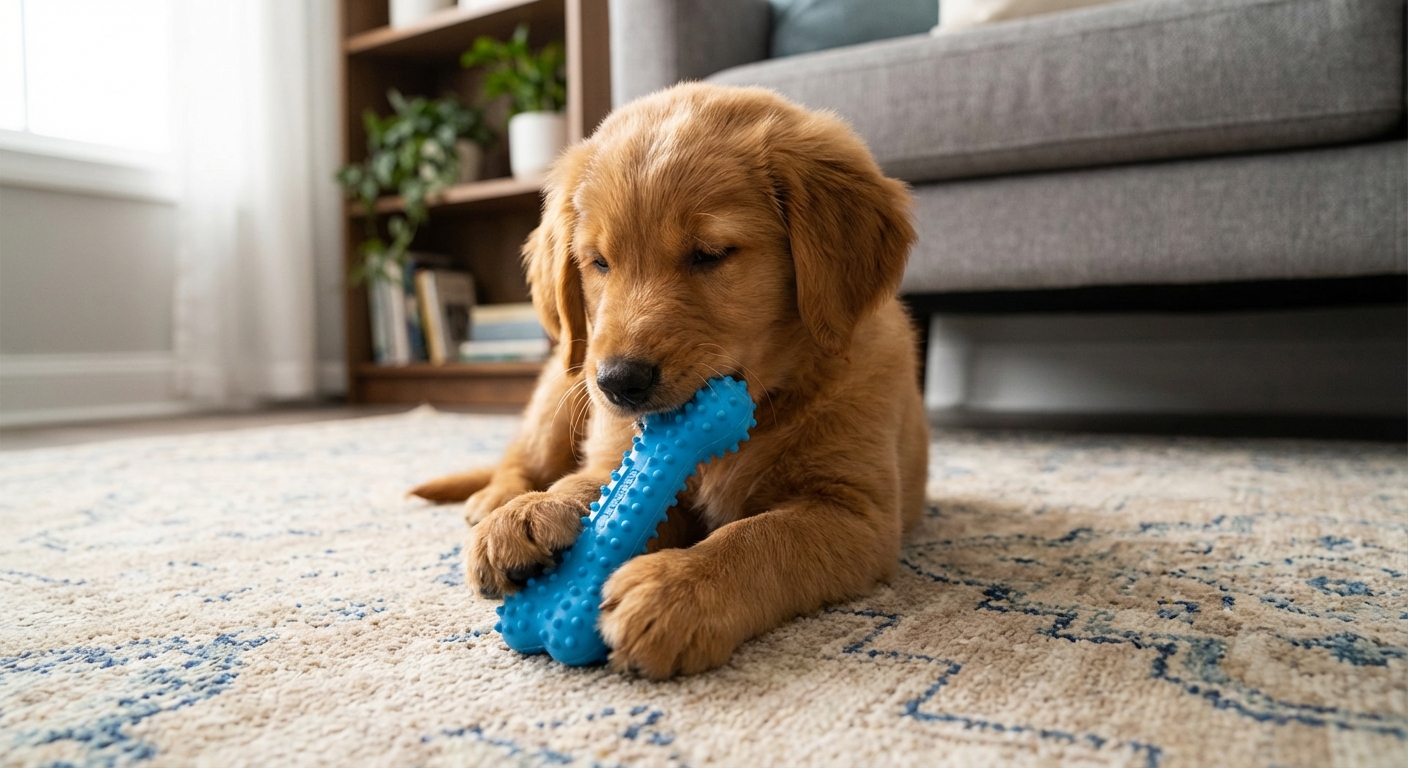
Puppy biting is usually normal. Learn why it happens and how to reduce it fast with redirects, reverse time-outs, calm breaks, naps, enrichment, and teething...
Article
•
Designer Mixes
How to Stop Puppy Biting

Shari Shidate
Designer Mixes contributor
Puppy biting is one of the most common reasons families feel overwhelmed in the first few months. And I want you to know something important right up front: most puppy biting is normal, fixable behavior. Puppies explore with their mouths, they are teething, they get overtired fast, and they have not learned human skin is sensitive.
The goal is not to “punish the bite.” The goal is to teach your puppy what to do instead, prevent rehearsals of rough biting, and support their developing brain with consistent routines.
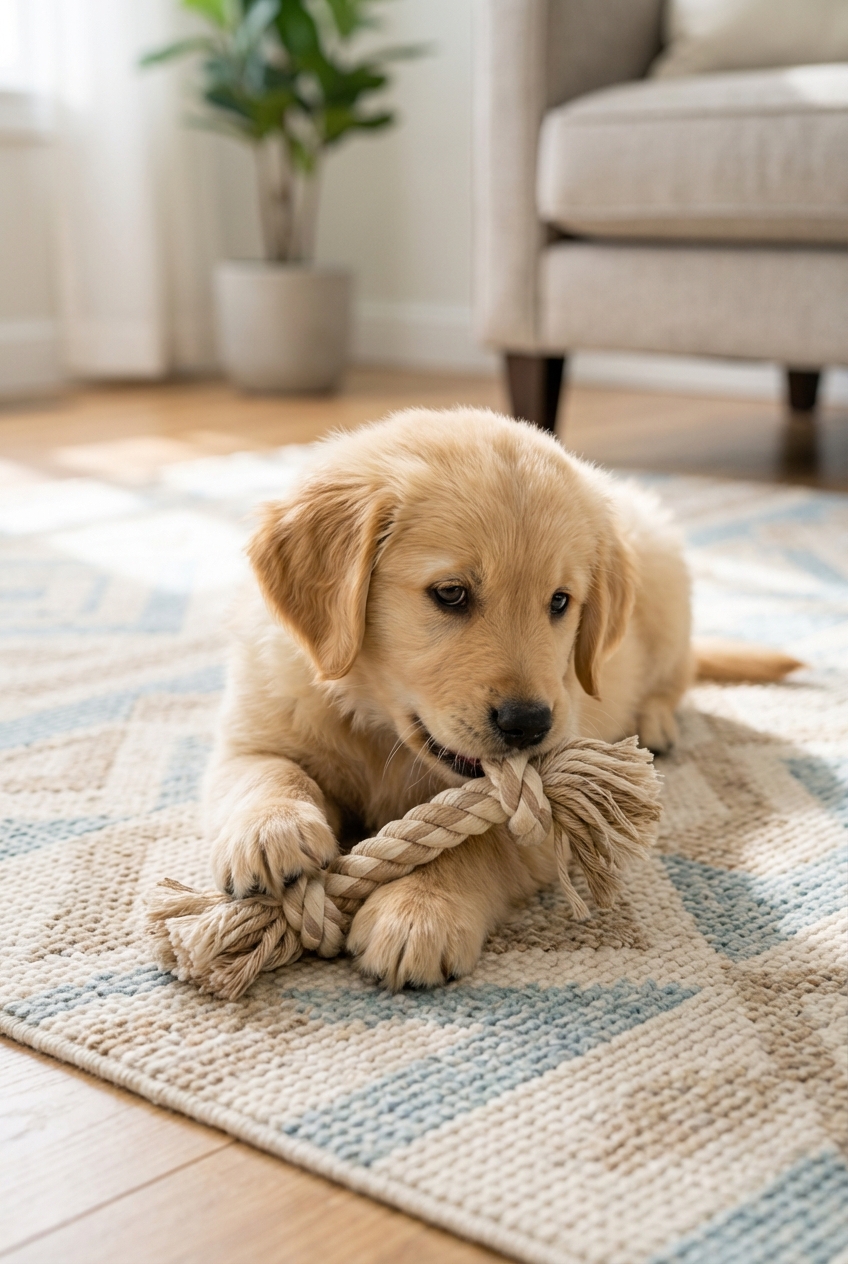
Why puppies bite
Understanding the “why” helps you pick the right method. Common causes include:
- Teething and oral exploration: Puppies learn texture and pressure through their mouths.
- Play behavior: Littermates may yelp, and play often pauses or changes when a bite is too hard. Humans can mimic that feedback by ending play briefly.
- Overstimulation: When puppies get wound up, they often lose impulse control.
- Overtiredness: A tired puppy can act like a cranky toddler. Biting is a common “meltdown” sign.
- Attention seeking: If biting makes you squeal, chase, wave hands, or engage, it can accidentally become rewarding.
Teething often intensifies around 12 to 16 weeks and improves as adult teeth come in, usually around 6 to 7 months (timing varies by puppy and breed). But training should start now, because habits form quickly.
Quick clarity: Playful mouthing is usually loose and wiggly. If you see stiff body language, freezing, “whale eye,” repeated retreating, or growling that seems defensive, pause and move to the “When to call your vet or a professional trainer” section.
Golden rules
1) Prevent practice
Every time your puppy successfully bites and continues playing, their brain learns: “Biting works.” Use management tools like baby gates, a playpen, and a lightweight leash indoors so you can interrupt calmly before it escalates.
2) Teach an alternative
We want your puppy thinking, “When I feel bitey, I grab a toy,” or “When I’m excited, I sit.” Training is fastest when the puppy has a clear replacement behavior.
3) Consistency beats intensity
A gentle response done the same way every time beats a loud correction. Especially with sensitive or anxious puppies, harsh responses can increase arousal or fear and make biting worse.
4) Reward calm
Most families reward the puppy when they are wild because they are interacting. Try catching calm moments and paying them with praise, treats, or a chew.
Kid and guest safety
Puppy teeth are sharp, and kids move in ways that often trigger chasing and mouthing. If you have children or frequent visitors, management is your best friend.
- Supervise closely: If you cannot actively supervise, use a gate, pen, or crate with a chew.
- Teach kids to “be a tree”: Stand still, arms folded, look up and away. An adult can calmly guide the puppy to a toy or behind a barrier.
- No squealing or running: Fast movement can turn biting into a game.
- Set up success: Short, calm interactions with a toy in the adult’s hand work better than face-level cuddling during the land shark phase.
Effective methods
Method 1: Redirect to a chew
This is your bread-and-butter skill. Keep toys within reach in every room.
- If your puppy starts getting mouthy during play, calmly offer a toy right at their mouth level.
- If the bite hurts or they clamp down, end play briefly (see Method 2), then redirect to a chew.
- The moment they bite the toy, praise calmly: “Good toy.”
- Then continue play with the toy, not your hands.
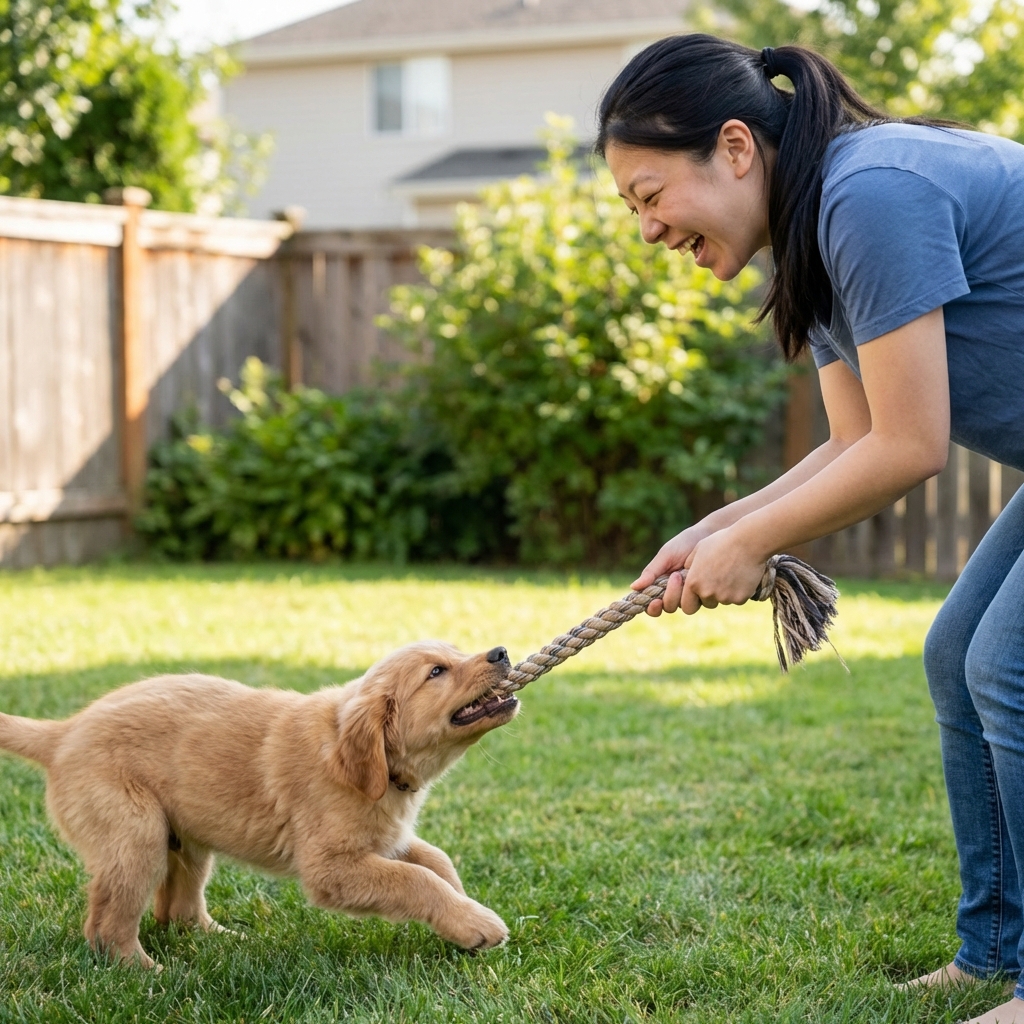
Pro tip: Use long toys (tug ropes, fleece tugs) to keep puppy teeth farther from fingers.
Method 2: Bite ends the fun (brief time-out)
This is not a scolding and not a physical correction. It is simply: biting makes attention stop for a moment.
What counts as a “hard” bite? Pressure that hurts, leaves a red mark, dents skin, or makes you reflexively pull away.
- As soon as your puppy bites hard, freeze and get quiet.
- Stand up and step behind a baby gate or out of reach for 10 to 20 seconds.
- Return and offer a toy or calm interaction.
If you cannot step away, calmly guide the puppy into a pen for 20 to 30 seconds, then release and redirect to a chew. Keep it short so they connect the dots.
If your puppy immediately re-bites after two or three repeats, treat that as useful information. They are likely over-aroused or overtired. Switch to a chew, sniffing game, or a nap break instead of repeating time-outs endlessly.
Method 3: Teach “Take it” and “Drop it”
These two cues reduce frantic grabbing and make play safer.
- Take it: Present toy, say “Take it,” reward when they grab appropriately.
- Drop it: Offer a treat near their nose, say “Drop it,” reward as they release, then give the toy back.
Giving the toy back is especially helpful for many puppies. It teaches that letting go does not always mean losing everything, which can help reduce the risk of resource guarding.
Method 4: Structured play
Rough play with hands often teaches puppies that skin is a toy. Choose games that build control.
- Tug with rules: Puppy only grabs the toy on “Take it.” Game pauses if teeth hit skin.
- Fetch (short sessions): Great for burning energy without close contact.
- Find it: Toss treats on the floor so the nose works and the mouth is busy appropriately.
Note on exercise: More exercise is not always the answer. For young puppies, short training, sniffing, and enrichment often reduce biting better than intense, high-speed play that creates an overtired, over-aroused puppy.
Method 5: Sit for attention
Many puppies bite because they want interaction. Teach them an easier way to get it.
- Approach your puppy. If they jump or mouth, pause and become boring.
- The moment they sit (even accidentally), say “Yes” and reward with attention or a treat.
- Repeat until sitting becomes their go-to behavior when you arrive.
Method 6: Build bite inhibition
Bite inhibition means your puppy learns to control jaw pressure. This is a safety skill. Even well-trained adult dogs may mouth in pain or surprise, so teaching softness matters.
- For soft mouthing that does not hurt, calmly redirect to a toy and continue gently.
- For hard bites that hurt, end play briefly with a time-out as described above.
Over time, your puppy learns that gentle gets play, hard ends it.
Method 7: More sleep and decompression
As a veterinary assistant, I see this constantly: the land shark phase gets dramatically worse when puppies are overtired.
Many young puppies do best with lots of sleep. 18 to 20 hours in a 24-hour period is common, though some need more or less. If your puppy gets bitey in the evening, that is often exhaustion, not stubbornness.
- Use a crate or pen for regular nap breaks.
- Try a simple rhythm: 45 to 60 minutes awake, then 1 to 2 hours nap (adjust to your puppy).
- Offer a safe chew to settle.
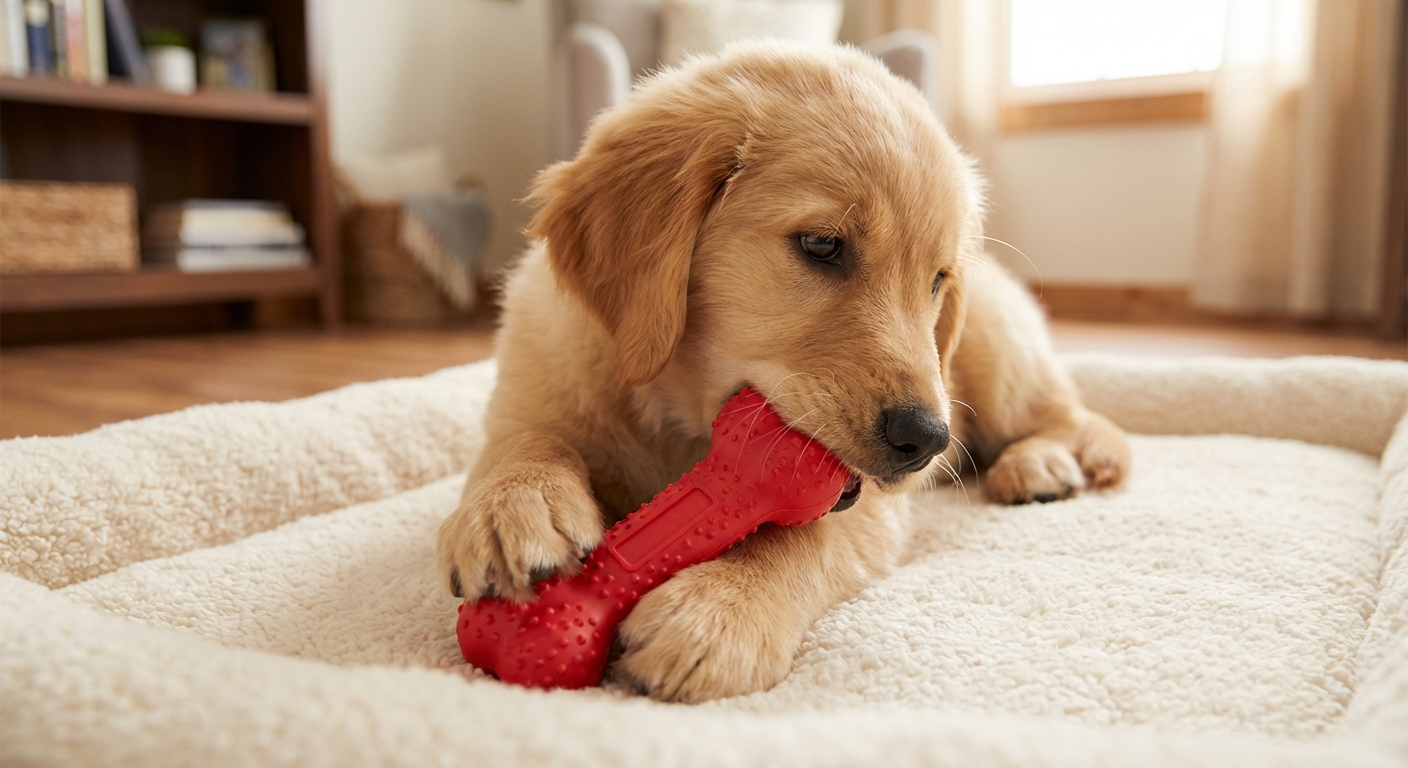
Method 8: Provide the right chews
Chewing is a legitimate need. Meeting it reduces biting and supports healthy development.
- Frozen options: Frozen wet washcloth twisted into a knot, frozen puppy-safe Kongs, or chilled teething rings made for puppies.
- Food chews: Vet-approved dental chews sized for puppies, or puppy-safe bully sticks with supervision and a holder.
- Durable rubber chews: Great for frequent gnawers.
Safety notes: Supervise chews, choose a size that cannot be swallowed, and remove any small end pieces that could become a choking hazard (especially with bully sticks). Avoid cooked bones. Watch for stomach upset with rich chews and ask your veterinarian what is appropriate for your puppy’s age and chew style. Also avoid chews that are hard enough to risk tooth fractures.
Method 9: Handling with treats
Puppies often bite during grooming, nail trims, collar grabs, or being picked up. Turn handling into a treat game.
- Touch collar, feed treat.
- Touch paw, feed treat.
- Briefly lift lip, feed treat.
- Brush one stroke, feed treat.
Short sessions, lots of wins. This is aligned with cooperative care best practices, and it pays off for life.
Method 10: Set up your space
Instead of physically pushing your puppy away, set up the room so success is easy.
- Keep a toy basket in the living room and bedroom.
- Use gates to block hallways that turn into chase games.
- Keep shoes, kids’ toys, and loose clothing picked up so your puppy is not constantly tempted.
What not to do
- Do not use physical punishment like smacking the muzzle or holding the mouth shut. It can increase fear, arousal, and distrust.
- Do not play hand games that encourage grabbing fingers.
- Do not chase your puppy when they bite or grab clothing. Chasing often makes it a fun game.
- Be careful with yelling “ouch” if it revs your puppy up. For some puppies it works, for others it escalates biting. Quiet and calm is usually better.
Age expectations
8 to 12 weeks
Expect frequent mouthing. Focus on redirecting, naps, and gentle time-outs. Keep sessions short and positive.
12 to 16 weeks
Teething ramps up for many puppies. Increase chew options, reinforce “drop it,” and maintain a consistent routine. Socialization classes can help teach bite control with other puppies in a supervised setting.
4 to 6 months
Adult teeth arrive and many puppies naturally bite less. If biting is still intense, evaluate sleep, exercise balance, training consistency, and whether the puppy is getting too rough during play.
Simple daily plan
If you are unsure where to start, here is a beginner-friendly routine you can repeat:
- Morning: Potty, breakfast in a puzzle feeder, 5 minutes of “sit” and “take it/drop it.”
- Mid-morning: Nap break with a safe chew.
- Afternoon: Short walk or backyard sniff time, then a calm toy game.
- Evening witching hour: Frozen Kong or chew, then early bedtime nap if biting ramps up.
Most puppy biting improves fastest when you combine training + management + rest instead of relying on one trick.
When to get help
Most puppy mouthing is normal. But get help sooner if you notice:
- Growling, guarding, stiff body language, or repeated retreating around food, toys, or when you approach
- Biting that breaks skin frequently, happens without warning, or feels fear-based
- Pain signs such as decreased appetite, pawing at the mouth, bad breath, or sudden behavior changes
- Little improvement after 2 to 3 weeks of consistent training
Ask your veterinarian to rule out medical issues (including painful teething problems) and consider a certified positive-reinforcement trainer for a personalized plan.
If you remember one thing: teach your puppy what to bite, reward calm, and protect their sleep. The kinder and more consistent you are, the faster this phase passes.