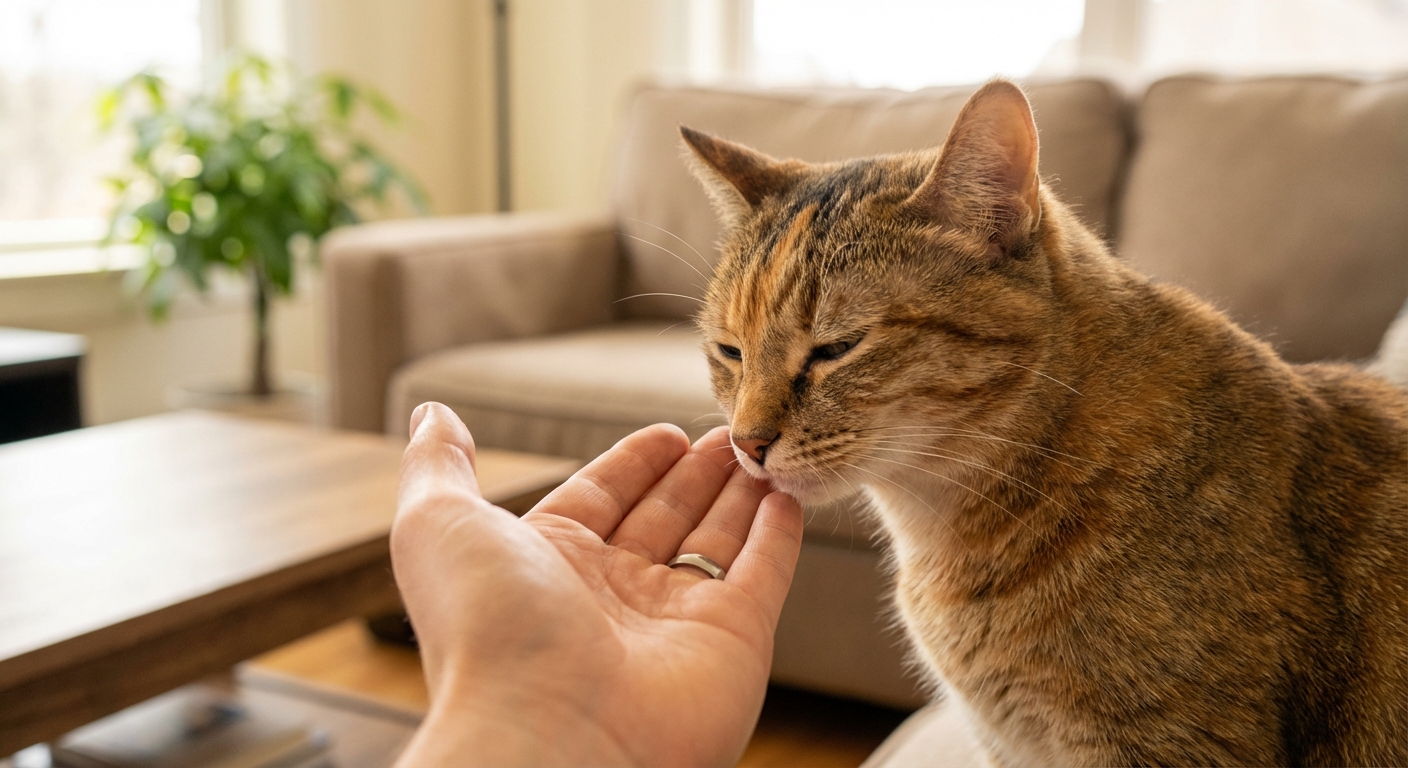
A veterinary-assistant guide to stopping cat biting: identify the cause, handle bites safely in the moment, prevent play and petting bites, rule out pain, an...
Article
•
Designer Mixes
How to Stop My Cat From Biting

Shari Shidate
Designer Mixes contributor
Cats rarely bite “out of nowhere.” In my work as a veterinary assistant here in Frisco, Texas, I have seen again and again that biting is your cat’s way of communicating: “I’m scared,” “I’m overstimulated,” “I’m in pain,” or “I need to play.” The good news is that once you figure out why your cat is biting, you can make a plan that is kind, practical, and very effective.
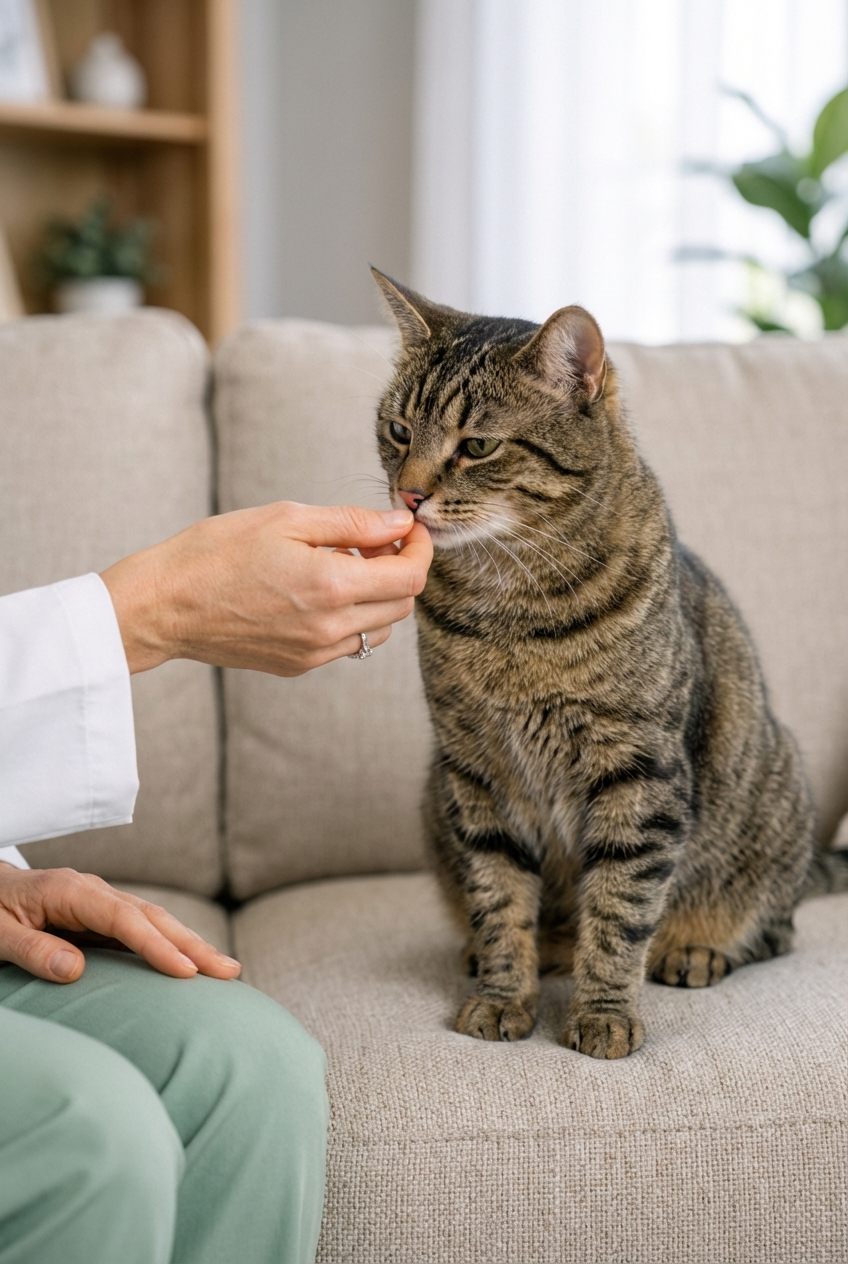
This handbook will help you (1) stay safe, (2) identify the type of bite, and (3) reduce the behavior using positive reinforcement training and simple home changes. For severe or escalating aggression, please involve your veterinarian and a qualified behavior professional.
Sources for further reading: AAFP and ISFM Feline Behavior Guidelines; Fear Free handling principles.
First, keep everyone safe
Before we work on behavior, set up your home to prevent bites. Every bite that “works” for your cat can strengthen the habit.
- Do not punish (yelling, swatting, scruffing, spray bottles). Punishment increases fear and can escalate biting.
- Use distance. If your cat is tense, give space. Step back, pause petting, or end the interaction.
- Have tools ready: wand toys, treats, a towel or blanket barrier, and a baby gate if needed.
- Kids and guests: teach “hands off unless the cat chooses.” Cats should always have an escape route.
Urgent note: If your cat is biting hard, drawing blood, or suddenly changed behavior, skip ahead to the vet section. Pain and illness are common triggers.
What kind of biting is it?
Different biting patterns have different solutions. Here are the most common types I see in clinics and homes.
1) Play biting (common in kittens and young cats)
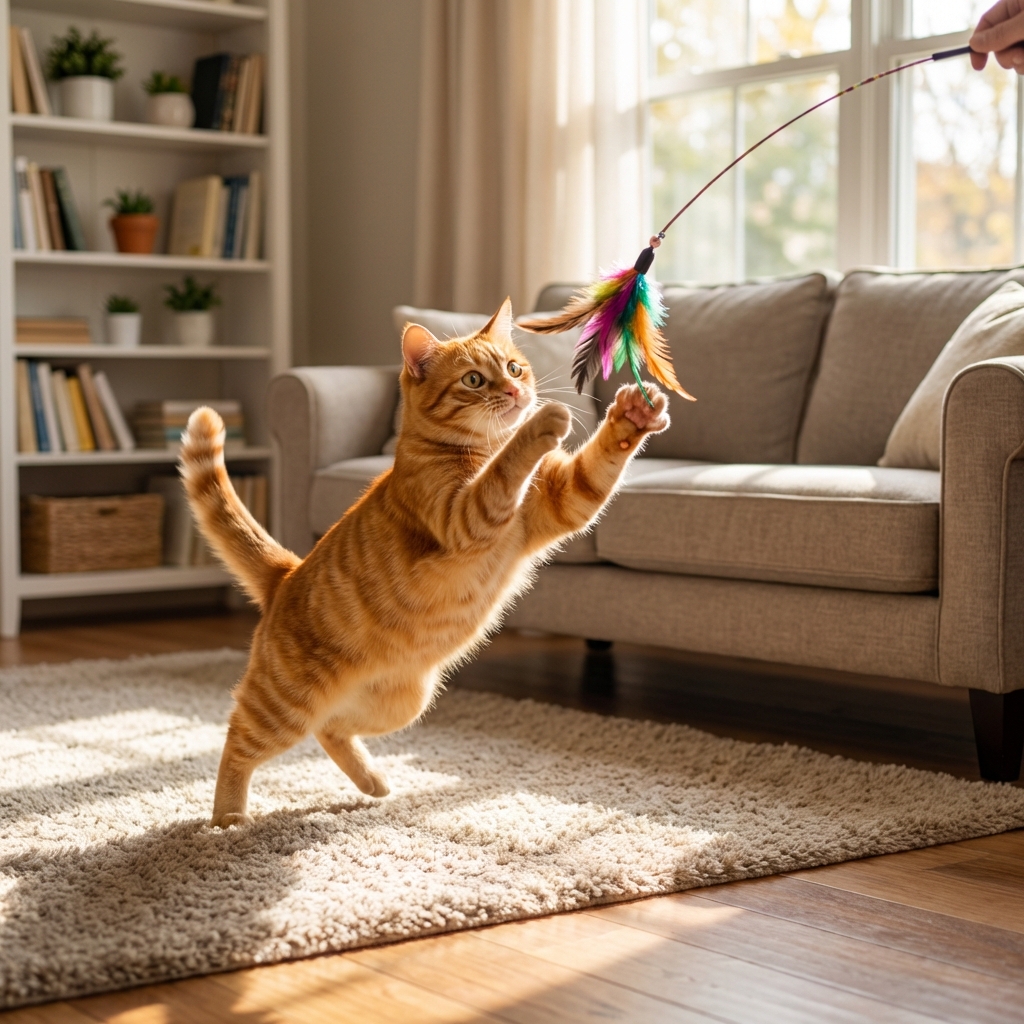
These bites usually happen during high energy moments: ankles attacked in the hallway, hands pounced on, rough wrestling. Your cat is practicing hunting skills.
- Clues: pupils big, body low, butt wiggle, chasing, grabbing with front paws.
- Core fix: redirect hunting to toys, not hands.
2) Petting-induced biting (overstimulation)
This is the classic “purr, purr, bite.” Many cats enjoy petting only in small doses. After a threshold, their nervous system flips from pleasant to “too much.”
- Clues: tail flicking, skin twitching, ears rotating sideways, sudden stillness, head turning toward your hand.
- Core fix: shorten petting sessions and stop before the bite.
3) Fear or defensive biting
Fear biting happens when a cat feels trapped or threatened. This can be triggered by strangers, loud sounds, being picked up, or another pet.
- Clues: crouching, flattened ears, growling, hiding, swatting, tense body, dilated pupils, wide “whale eye.”
- Core fix: reduce triggers, give safe hiding zones, and use slow desensitization.
4) Pain-related biting
If a cat hurts, biting can be a protective reflex. Dental pain, arthritis, abdominal discomfort, skin issues, and urinary tract problems can all make a cat “short tempered.”
- Clues: new or escalating aggression, sensitivity to touch, decreased grooming, litter box changes, appetite changes.
- Core fix: veterinary exam and treatment, plus gentle handling changes at home.
5) Redirected biting
Your cat gets aroused by something they cannot reach (another cat outside, a sudden noise) and then bites the nearest target, often a person.
- Clues: a clear trigger in the environment, suddenness, and a hard bite that may puncture skin.
- Core fix: block access to the trigger and avoid approaching until your cat fully calms down.
What to do in the moment
When a bite is about to happen or has just happened, your response matters. The goal is to end the “game” and lower arousal.
- If it is a light play bite, freeze. Pulling away fast can trigger chasing and harder biting. This is not for fear or defensive aggression.
- Go still, then disengage. Slowly remove your hand or stand up and step away.
- Do a calm 10 to 30 second reset. No talking, no eye contact, no petting. Let your cat’s nervous system come down.
- Redirect to an appropriate outlet: toss a toy away from you, or pick up a wand toy and keep it at distance.
- If your cat is latched on or escalating: prioritize safety. Stay as still as you can, use a towel or thick blanket as a barrier, and create separation without grabbing at your cat. If needed, get help.
If your cat breaks skin, wash immediately with soap and running water. Cat bites can cause deep infections because of the shape of their teeth. Call your doctor urgently if the bite is on the hand, or if there is swelling, redness, warmth, worsening pain, fever, drainage, or limited movement.
A 2-week starter plan
Consistency wins. Here is a simple, structured starter plan that can reduce biting in as little as two weeks, although fear, redirected aggression, pain, and multi-cat stress often take longer.
Step 1: Daily “hunt, catch, eat” play
Twice a day is ideal, even if it is only 5 to 10 minutes.
- Use wand toys, kicker toys, or a toy your cat can bite safely.
- Let your cat catch the toy at the end to avoid frustration.
- Offer a small meal or treats after play to complete the natural cycle.
Step 2: Reward “gentle”
Yes, cats can learn bite inhibition. Reward the behavior you want.
- Keep treats in a jar nearby.
- When your cat approaches calmly, reward.
- If teeth touch skin, immediately stop interaction for 10 to 30 seconds.
- When your cat settles, reward calm again.
Step 3: Remove hand-targeting
Hands are for feeding, grooming, and gentle petting. Not wrestling.
- Never wiggle fingers to tease your cat.
- Do not allow “cute” kitten nips. They grow into adult bites.
- Offer a toy instead of your hand every time.
Step 4: Make petting predictable
Many cats prefer shorter, respectful interactions.
- Pet in “safe zones” first: cheeks, chin, base of ears. Many cats dislike belly, feet, and tail touches.
- Try the 3-second rule: pet for 3 seconds, pause, and see if your cat asks for more.
- Stop at the first signs of overstimulation: tail flicks, skin twitch, ears to the side, sudden head turn, tense posture.
Step 5: Add enrichment
Biting often drops when a cat’s daily needs are met.
- Add a cat tree or window perch.
- Use puzzle feeders or scatter feeding.
- Rotate toys weekly to keep them “new.”
- Give scratch options: vertical and horizontal scratching posts.
How to stop ankle attacks
Ankle biting is usually play and attention combined. The movement triggers your cat’s chase instinct.
- Preempt with play: do an active play session before your busiest time of day.
- Carry a small toy: toss it down the hallway before you walk through.
- Reward calm hallway behavior: reward your cat for sitting or watching without pouncing.
- Do not run. Quick steps can intensify pursuit. Move smoothly and redirect.
When to see the vet
Please take sudden biting seriously, especially in adult or senior cats who were previously gentle. Pain is a major driver of aggression.
- Dental disease: tartar, gingivitis, broken teeth, resorptive lesions.
- Arthritis: common in older cats and often missed because cats hide pain.
- Skin issues: fleas, allergies, infection.
- Urinary discomfort: straining, frequent litter visits, or urinating outside the box. In male cats, a blockage can be life-threatening and needs emergency care.
- Neurologic or cognitive changes: disorientation, new irritability.
Ask your veterinarian about a pain evaluation, dental check, and whether bloodwork or urinalysis makes sense based on age and symptoms.
Get professional help
If bites are frequent, intense, or unpredictable, you do not have to troubleshoot alone.
- Start with your veterinarian to rule out pain and discuss a behavior plan.
- For redirected aggression, multi-cat conflict, or repeated deep bites, ask about referral to a board-certified veterinary behaviorist.
- Look for a qualified trainer or consultant who uses reward-based methods (for example, IAABC).
- If you need to give medicine or do handling that triggers bites, ask your vet about calmer handling strategies and whether pre-visit meds (like gabapentin) are appropriate for your cat.
Multi-cat homes
Cat-to-cat tension can spill over into human-directed biting. Even subtle stress matters.
- Provide multiple resources: at least one litter box per cat plus one extra, multiple food and water stations, multiple resting spots.
- Create vertical space so cats can pass without conflict.
- Separate during high tension times and reintroduce slowly if needed.
- Consider talking to your vet about pheromone diffusers and a behavior plan.
What not to do
These approaches can increase fear and biting, even if they seem to “work” short-term.
- Do not hit, flick, or swat your cat.
- Do not scruff or hold your cat down.
- Do not force cuddling or pick up a cat that is trying to leave.
- Do not blow in your cat’s face or use loud scolding.
- Do not use your hands as toys.
Your cat is not giving you a hard time. Your cat is having a hard time. When you respond with calm structure, biting often improves dramatically.
Quick troubleshooting
My cat bites only me
This is often because you are the primary play partner, feeder, or the person who handles your cat most. Follow the plan above and have another household member do some calm treat sessions too.
My cat bites when picked up
Many cats do not enjoy being carried. Switch to consent-based handling: lure into your lap, support the chest and hips, keep it brief, and reward. If this is new, schedule a vet check for pain.
My cat bites during brushing
Try shorter sessions, a softer brush, and treat pairing. Brush once or twice, treat, stop. Build up slowly.
Bottom line
Most cat biting can improve with three things: meeting your cat’s play and enrichment needs, respecting their “I’m done” signals, and ruling out pain. Start slowly, stay consistent, and celebrate small wins. Your relationship can become calm and trusting again, and you do not have to do it perfectly to see progress.
This article is educational and not a substitute for veterinary care. If a person is bitten, especially on the hand, seek medical advice promptly.