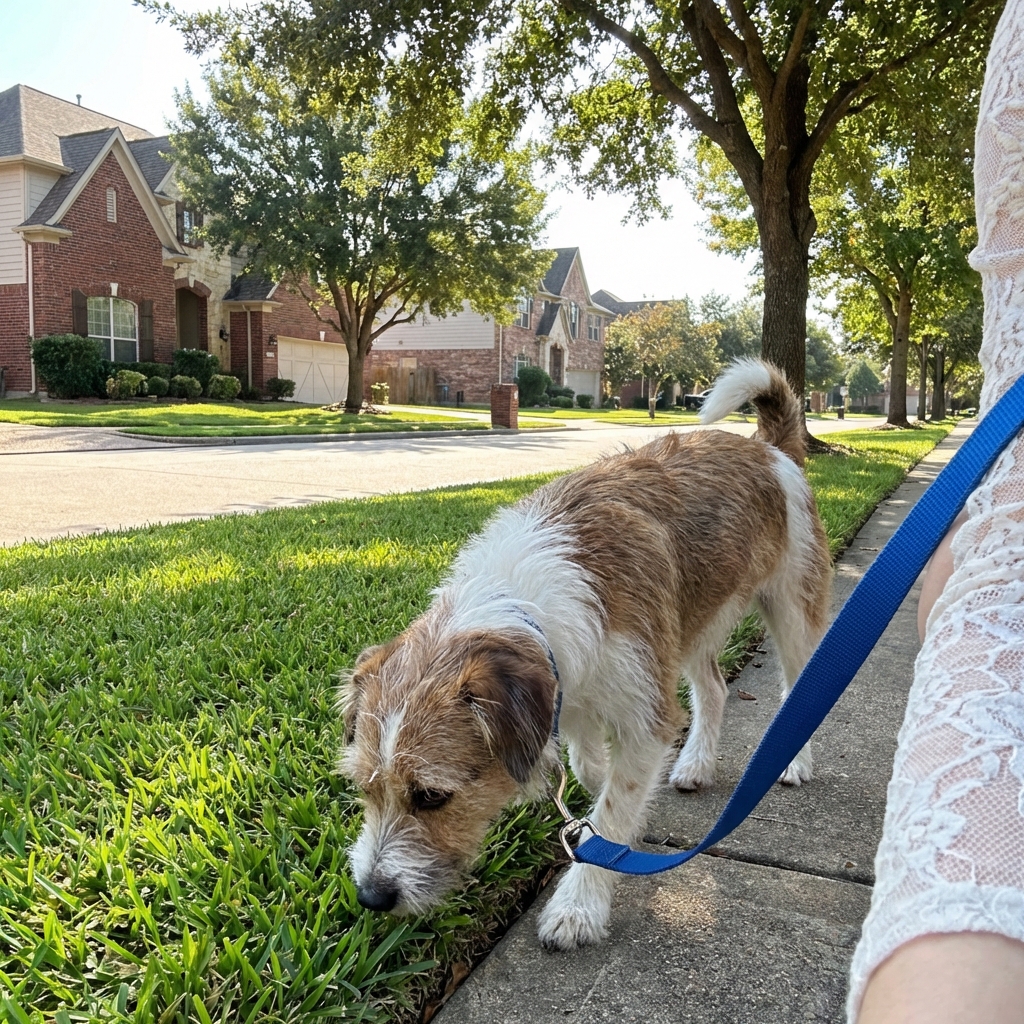
From pacing and whining to marking and escape attempts, learn why intact males react strongly to a female in heat—and how to prevent mating, fights, and in...
Article
•
Designer Mixes
How to Stop Male Dogs From Scenting Females

Shari Shidate
Designer Mixes contributor
If your male dog seems like he has one job in life when a female dog is nearby, to sniff, drool, whine, mark, and forget you exist, you are not imagining it. Male dogs can detect tiny odor cues linked to a female’s reproductive cycle, and that scent information can flip their brain into “must investigate” mode fast.
The good news is you can reduce the obsession. The realistic news is you may not eliminate it completely, especially if a female is in heat nearby. Your best results come from combining management, training, and, when appropriate, veterinary help.
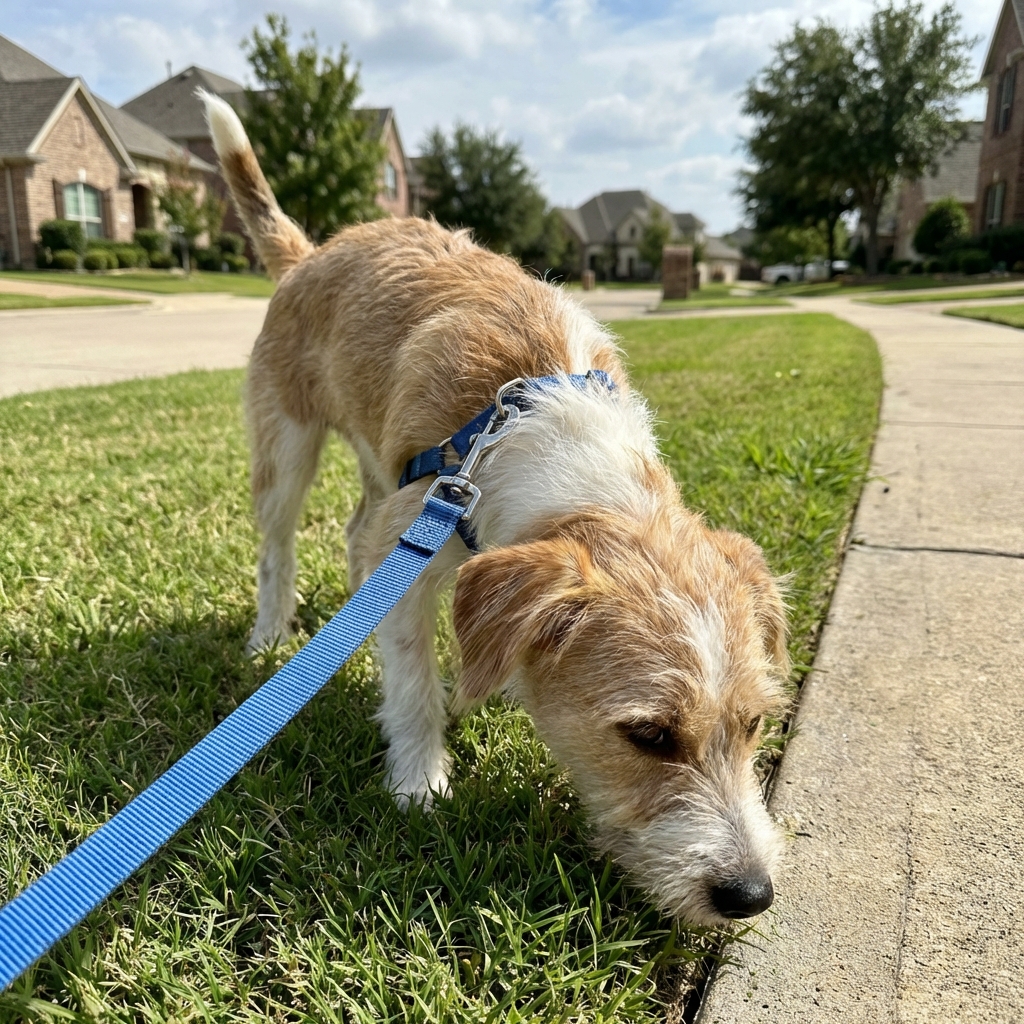
Why male dogs fixate on female scent
Dogs experience the world primarily through smell. When a female dog is in heat (estrus), she releases pheromone-related odor compounds in her urine and vaginal secretions. Intact males are typically the most reactive, but neutered males can still show interest because scent investigation is normal canine behavior.
Heat cycle basics
Most females are in heat for roughly 2 to 4 weeks (timing varies). Scent can also linger in the environment after a female has passed through, so your dog may react to “old news” on a walk even when you do not see another dog nearby.
Common signs your male is “scent locked”
- Pulling hard on leash to follow a trail
- Excessive sniffing and licking urine spots
- Chattering teeth or lip licking (flehmen-like response)
- Whining, pacing, decreased appetite
- Marking more frequently
- Escaping, door dashing, roaming attempts
If you are seeing escape behaviors, treat this as a safety issue first. The risk of roaming and getting lost increases when an in-heat female is nearby.
Start with safety and management
Management is not a failure. It is what keeps your dog safe while you build better habits.
Reduce access to the scent
- Change walk routes and timing. Go early morning, choose low-traffic areas, and avoid apartment dog-potty zones if possible.
- Keep leashes short near “hot spots.” That includes hydrants, mailboxes, corners, and any area where dogs commonly pee.
- Use a long line for decompression, not for scent-chasing. A 15 to 30 foot line in an open field gives freedom while preventing bolting. Avoid wrapping it around your hand, watch for tangles, and skip it around other dogs or tight spaces. Gloves can help with rope burn.
- Limit off-leash time. If a female in heat is anywhere in the neighborhood, off-leash play is a major risk, even for normally reliable dogs. No training is “proof” against bolting when arousal is high, so use secure fences and secure leashes.
Upgrade your walking gear
- Front-clip harness to reduce pulling power without pressure on the neck, when properly fitted. Look for a design that does not rub the armpits or restrict shoulder movement.
- Well-fitted collar plus harness (two points of contact) for escape-prone dogs.
- Basket muzzle only if your dog becomes frantic or redirects onto people or other dogs, and only with positive conditioning. A basket muzzle is a safety tool, not a training shortcut. It can help prevent bites and can also prevent licking or eating urine spots, but it will not stop your dog from sniffing or tracking scent. If you are seeing redirection or aggression, work with a qualified professional.
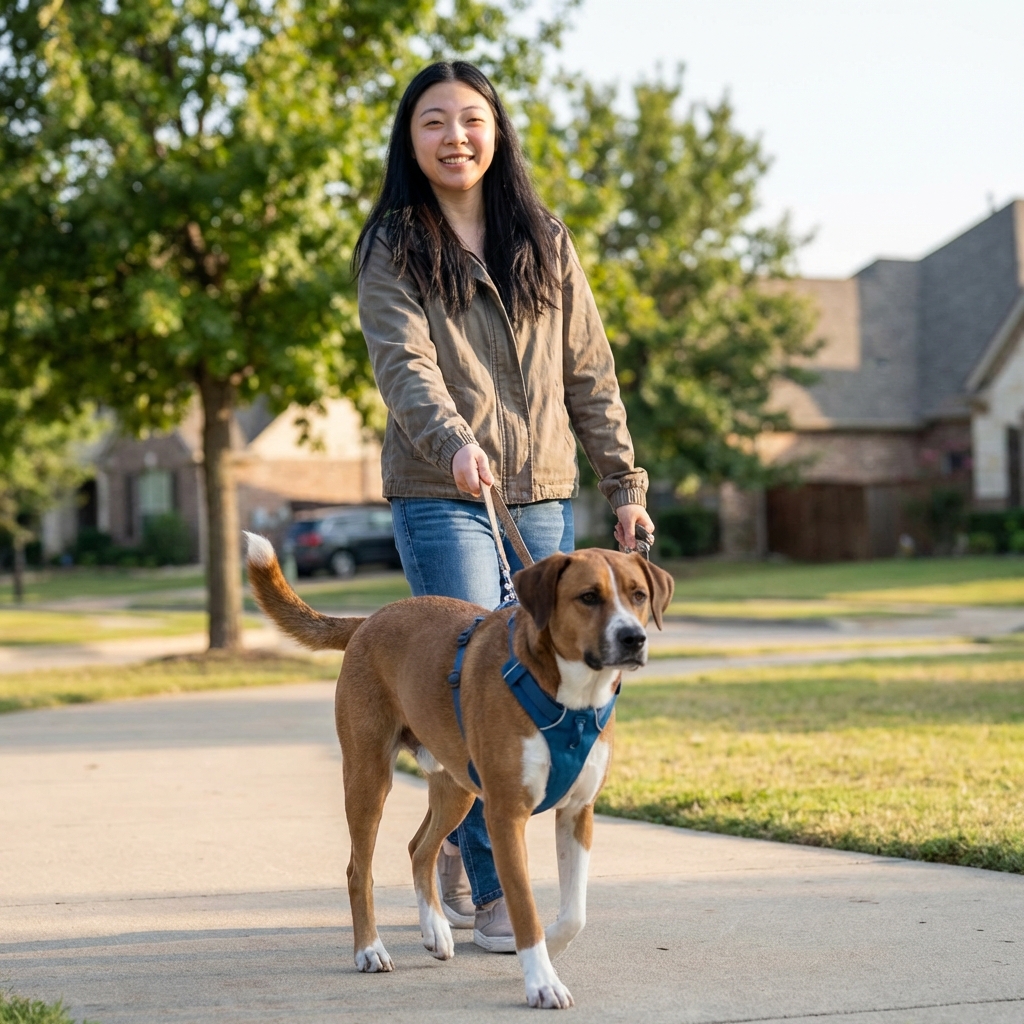
Training that helps outside
When a male dog hits a strong female scent, obedience cues often fall apart because the environment is too challenging. The fix is to practice skills in low-distraction settings, then gradually increase difficulty.
1) Teach a strong “Let’s go”
Many dogs get stuck sniffing. Instead of fighting the sniffing, teach a cheerful cue that means “move with me and get paid.”
- At home, say “Let’s go,” take 3 to 5 steps, then reward.
- Practice in the yard, then on quiet sidewalks.
- On scent-heavy walks, use the cue early, before he is fully locked in.
2) Use “Find it” as a reset
Tossing a few treats into grass can redirect the nose away from a female trail while still letting your dog do dog things.
- Say “Find it,” then scatter 5 to 10 tiny treats.
- As he searches, calmly increase distance from the area.
- Choose treats that are smelly and soft, like freeze-dried liver crumbs or salmon treats.
3) Build “Leave it” for urine spots
“Leave it” is most successful when it is trained as a game first, not as a scolding in the moment.
- Start with a treat in a closed fist. Reward when he backs off.
- Progress to treats on the floor covered by your foot.
- On walks, cue “Leave it,” then reward with something better as you pass the spot.
4) Offer structured sniffing
Sniffing is enriching and calming, but the goal is to keep it from turning into a hormone scavenger hunt.
- Use a cue like “Go sniff” and allow 10 to 20 seconds.
- Then cue “Let’s go,” and reward moving on.
- This teaches your dog that sniff time is available, but not endless.
Neutering: what it changes
Neutering can reduce sexually driven behaviors in many dogs, especially roaming, mounting, and intensity of interest. However, it does not erase learned habits or normal scent curiosity. Some neutered males still fixate on females in heat, just usually with less urgency.
Talk with your veterinarian about the best timing for your dog’s age, size, and health. In large breeds and some mixes, timing decisions may also consider orthopedic development.
When it is more than normal
Occasional fixation is normal. But if your dog cannot settle, is refusing food, vocalizing for hours, or trying to break out of windows and doors, you are dealing with a welfare issue, not just “bad behavior.”
Call your veterinarian if you notice
- Sudden behavior change that is extreme or escalating
- Not eating for more than 24 hours
- Constant panting, pacing, or inability to sleep
- Aggression or redirection when interrupted
Your vet may discuss short-term anti-anxiety support, pain screening, or referral to a qualified trainer or veterinary behaviorist. Stress can make impulse control worse, and sometimes medical support helps your training actually stick.
If you are hiring help, look for credentials such as IAABC, CCPDT, or a board-certified veterinary behaviorist (DACVB). Avoid anyone who promises a guaranteed “off switch” for hormone-driven behavior.
Home strategies during heat
If there is a female in heat in your home or next door, your male dog may seem distracted even indoors. These steps can help lower arousal and prevent accidents.
- Increase indoor enrichment. Food puzzles, lick mats, and frozen Kongs give the brain a job.
- Add calm exercise. More frequent, shorter walks and sniff time in low-dog areas.
- Use visual barriers. Close curtains and block fence-line views that trigger barking and pacing.
- Separate spaces when unsupervised. Especially if you have both sexes in the home.
- Clean marking spots thoroughly. Use an enzymatic cleaner designed for pet urine.
If you have both sexes at home
- Use strict separation. Separate rooms with closed doors.
- Add a second barrier. Use a baby gate, crate, or x-pen as backup. Two barriers are safer than one.
- Supervise transitions. Leash your male when moving through hallways or doors.
- Do not rely on fences. Dogs can mate through fences and barriers, and motivated dogs can climb or dig.

What not to do
When a dog is driven by scent, punishment tends to increase frustration and can create fallout like anxiety or redirected aggression.
- Do not use harsh leash corrections to yank him away from a scent trail.
- Do not rely on shock or prong tools as a “fix” for hormone-driven behavior.
- Do not assume he is being stubborn. His nervous system is responding to a powerful biological cue.
A simple 2-week plan
Days 1 to 3: reset and prevent rehearsal
- Change walk times and routes.
- Use a front-clip harness (properly fitted) and high-value treats.
- Practice “Let’s go” and “Find it” in the house and yard.
Days 4 to 10: build skills
- Practice “Leave it” daily for 3 to 5 minutes.
- On walks, reward check-ins and quick disengagement from sniffing.
- Keep sniffing structured with “Go sniff” then “Let’s go.”
Days 11 to 14: controlled exposure
- Walk near, not through, dog-heavy areas and focus on passing calmly.
- Use distance as your friend. If he cannot take treats, you are too close.
- Track progress: pulling intensity, responsiveness, and ability to settle at home.
Small improvements add up. Your goal is not a perfect dog. Your goal is a dog who can disengage and move on with you.
Frequently asked questions
Will my neutered male stop scenting females?
Many neutered males show less intensity, but most still investigate smells. Training and management remain important.
Why is my dog drooling or chattering his teeth after sniffing?
Dogs have a specialized scent-processing system that includes the vomeronasal organ, which helps interpret pheromone-related cues. Some dogs may drool, lip lick, or chatter their teeth as part of that processing.
Is it okay to let him sniff?
Yes, sniffing is healthy enrichment. The key is balance. If sniffing turns into frantic pulling, marking, or escape behavior, reduce exposure and add structured alternatives.
Bottom line
Stopping a male dog from scenting females entirely is not always realistic, but you can absolutely reduce obsession, improve focus, and keep everyone safe. Start with management to prevent rehearsal, add practical training cues, and bring your veterinarian into the conversation if stress or escape behaviors are escalating.
If you want a tailored plan, a certified trainer (IAABC or CCPDT) or a veterinary behaviorist (DACVB) can help you set up a routine that fits your dog and your neighborhood.