Start homemade dog food safely with this vet-informed starter plan. Learn what “vet approved” means, choose a balancer, follow a 14-day transition, and u...
Article
•
Designer Mixes
How to Stop Leash Pulling

Shari Shidate
Designer Mixes contributor
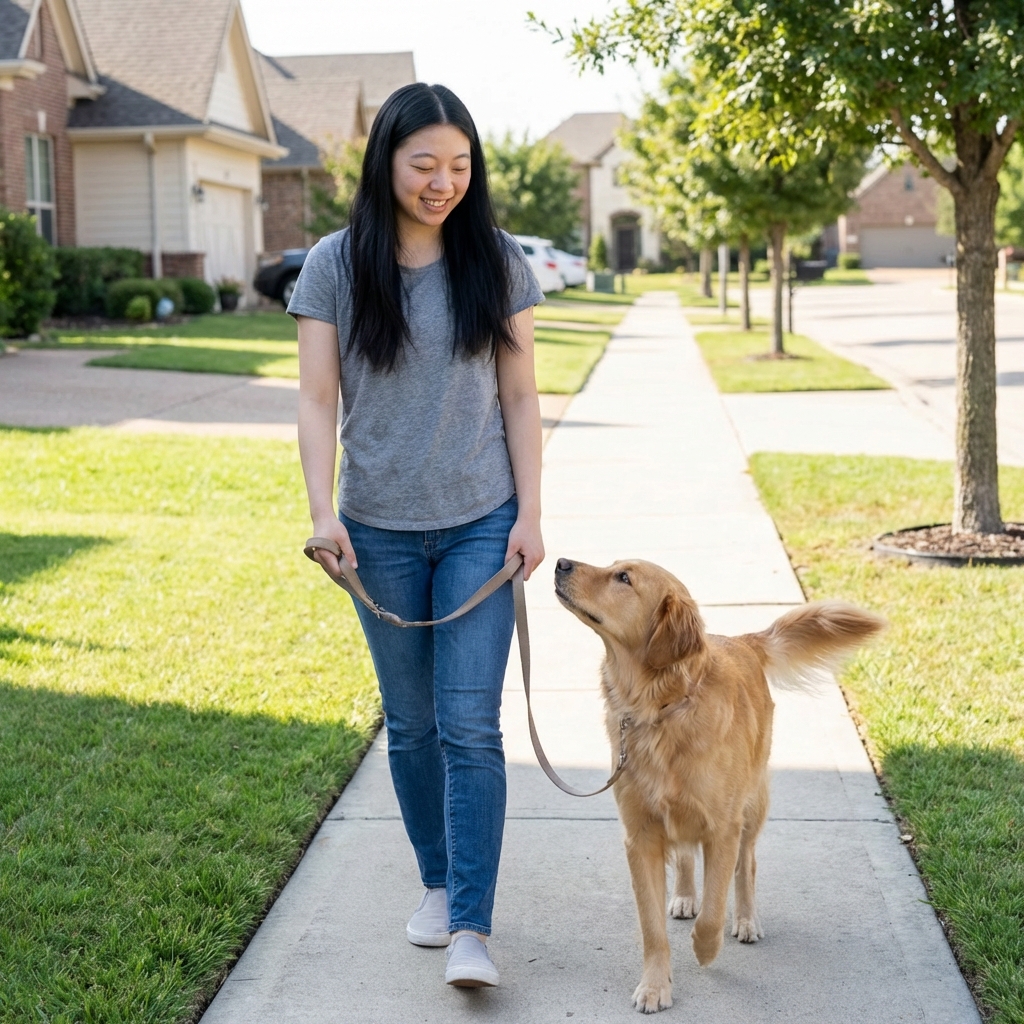
If your dog turns every walk into a tug-of-war, you are not alone. Leash pulling is one of the most common behavior concerns I encounter as a veterinary assistant. The good news is that most dogs are not being “stubborn” or “dominant.” They are simply doing what works: pulling gets them where they want to go faster.
This care guide will walk you through humane, evidence-based steps to teach loose-leash walking, choose the right gear, and troubleshoot the most common setbacks. You can start slowly, build good habits, and see real progress without yanking, choking, or using fear-based tools.
Why dogs pull on leash
Understanding the “why” makes training easier and more compassionate.
- Walking is naturally reinforcing. Forward motion is rewarding. Every time your dog pulls and still gets to move forward, pulling is reinforced.
- Dogs walk faster than we do. A normal dog walking pace can be quicker than a relaxed human stroll.
- Excitement and sensory overload. Smells, squirrels, other dogs, and new environments can spike arousal and reduce self-control.
- Practice makes persistent. If a dog has pulled for months or years, it is a strong habit, not a character flaw.
- Discomfort or pain can worsen it. Dogs may surge ahead to avoid pressure on a sore neck, back, or hips, or they may be restless because something is bothering them.
Vet assistant note: If pulling is sudden and new, or your dog seems painful when you touch their neck, shoulders, or back, check in with your veterinarian before you double down on training.
Quick safety check: gear
Best first-choice tools
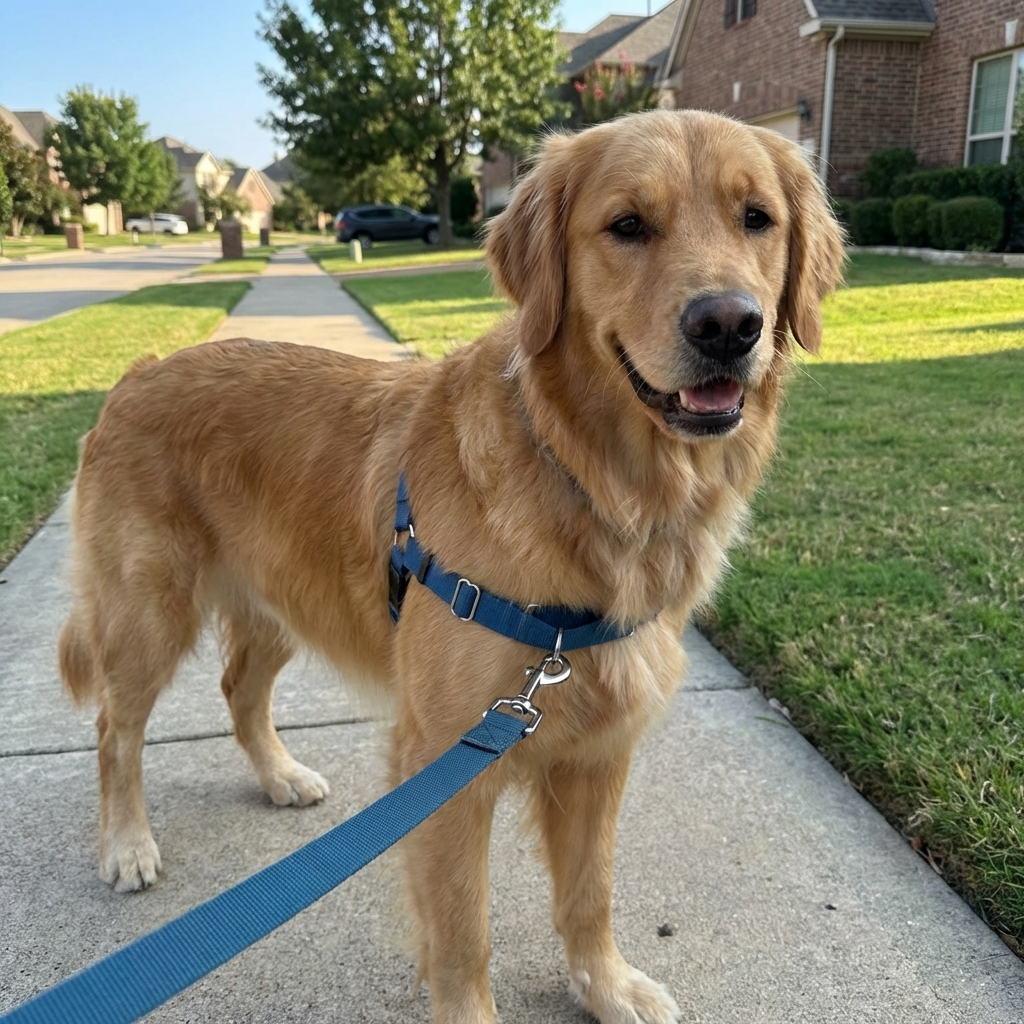
- Front-clip harness (Y-shaped if possible): helps reduce pulling leverage and protects the neck compared with collar pressure. Fit note: Choose a design that does not restrict shoulder movement, and check for rubbing behind the front legs.
- Back-clip harness: comfortable, but it may encourage some dogs to lean into pressure and pull harder.
- Standard 4 to 6 foot leash: predictable length improves timing and communication.
- Treat pouch and high-value treats: training is much faster when your dog gets paid well.
Use caution or avoid
- Prong collars and choke chains: can cause pain, fear, and injury, and may increase reactivity in some dogs.
- Shock or “e-collars” for pulling: risk of fallout like anxiety, avoidance, and worsening behavior.
- Retractable leashes: teach constant tension, reduce control, and can be unsafe around people, dogs, and traffic.
If you are unsure which harness fits your dog’s body type, ask your vet clinic or a qualified trainer to help you choose and adjust it. Fit matters.
Loose leash vs heel
Many people picture a tight, formal “heel,” where your dog stays glued to your leg the entire walk. Loose-leash walking is different. The goal is simple: your dog can sniff and explore, but the leash stays slack most of the time.
If you want to train a true heel later, that is a great bonus skill. For most families, loose-leash walking is the practical everyday win.
The foundation: teach what you want
Loose-leash walking is a skill, not a correction. Your dog needs clear information about where to be and why it is worth it.
Step 1: Pick a reward zone
Choose the side you want your dog to walk on. Most people pick the left, but either is fine. The reward zone is next to your leg where the leash stays loose.
Step 2: Charge your marker
Use a simple marker word like “Yes” or a clicker. The marker tells your dog: “That exact behavior earns a treat.”
- Say “Yes,” then immediately give a treat.
- Repeat 10 to 15 times over a couple minutes.
- Do this for a day or two until your dog perks up when they hear “Yes.”
Step 3: Practice inside first
Start where your dog can succeed. In your living room, take one step. If your dog stays near you and the leash is slack, mark “Yes” and treat.
- Work up to 2 steps, then 3, then 5.
- Keep sessions short: 3 to 5 minutes.
- End before your dog gets bored or frantic.
Step 4: Add a cue
When your dog is reliably moving with you indoors, add a cue like “Let’s go”. Say the cue, take a step, then mark and reward for a slack leash near your chosen side.
The best method: stop moving
Here is the simple rule that changes everything: Pulling should never be what makes the fun continue. A slack leash is what makes the walk keep moving.
Option A: Be a tree
- The moment you feel tension, stop.
- Hold the leash steady. Do not jerk or reel your dog in.
- Wait for slack. The instant slack happens, mark “Yes.”
- Take 1 to 3 steps forward and reward again before your dog has time to surge.
Option B: The 180 turn
- When the leash goes tight, say your cheerful cue like “This way.”
- Turn around and walk the other direction.
- When your dog catches up and the leash loosens, mark and reward in your reward zone.
This is not about “winning.” It is about clarity. Your dog learns that pulling stops progress or changes the direction, while staying close keeps the good stuff coming.
Reward timing that works
Most people reward too late. If you wait until your dog has already pulled for 10 steps, you are trying to fix the behavior after it has already been practiced.
A simple reward schedule
- New skill: reward every 1 to 3 steps for slack leash in your reward zone.
- Building stamina: reward every 5 to 10 steps.
- Real-world maintenance: reward randomly, but frequently enough that your dog stays hopeful.
Also use life rewards. If your dog wants to sniff a bush, ask for 2 seconds of slack leash, then say “Go sniff” and walk them to it as the reward.
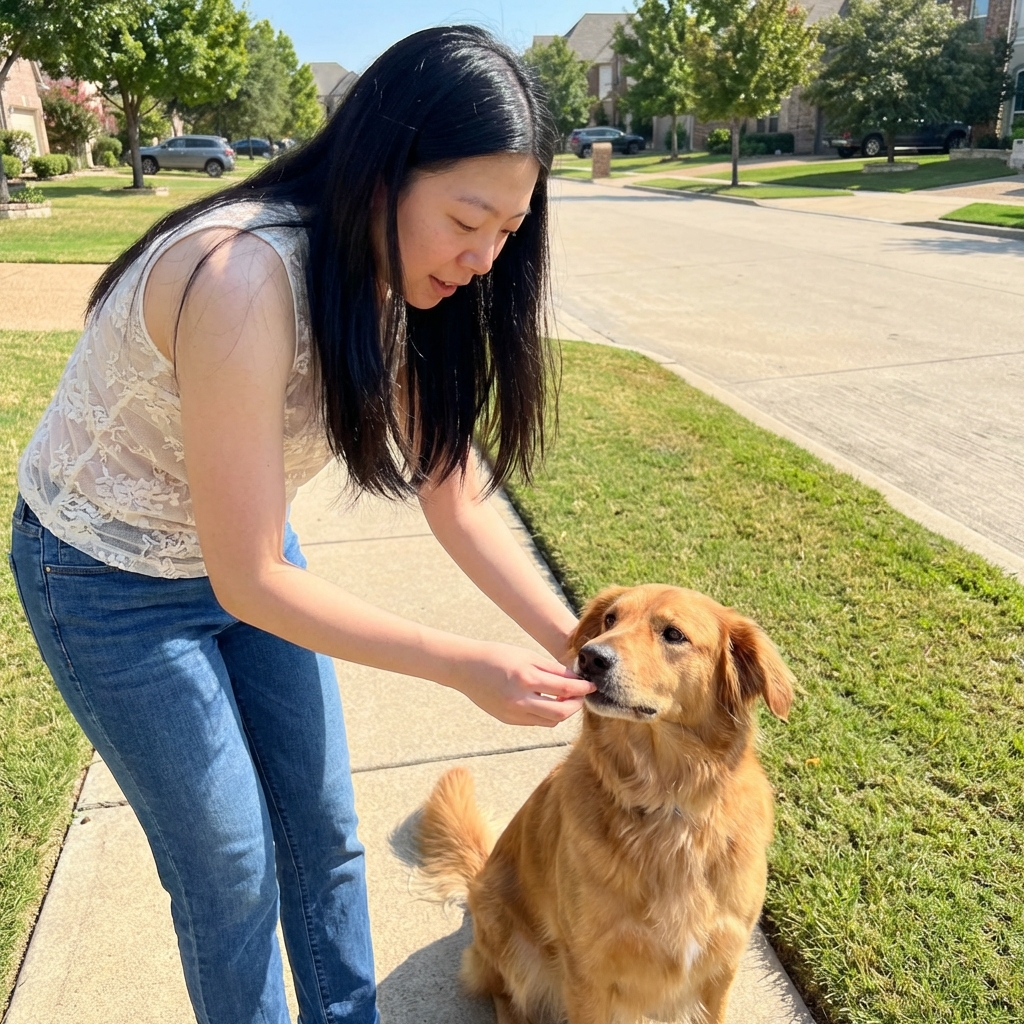
Teach a check-in
Loose-leash walking is much easier when your dog voluntarily looks back at you. That moment of attention is pure gold.
How to teach it
- Stand still. Wait quietly.
- When your dog looks at your face, mark “Yes” and treat.
- Repeat until your dog starts offering eye contact quickly.
- Practice in different rooms, then your yard, then quiet sidewalks.
If your dog is too distracted to check in outdoors, that is information, not failure. Increase distance from the distraction and try again.
Daily plan (10 minutes)
Consistency matters more than marathon sessions. Here is a realistic plan most families can follow.
Week 1: Build skills
- 2 to 3 short sessions indoors daily, 3 to 5 minutes each.
- Reward often. Keep it easy and upbeat.
- Start “check-ins” and “let’s go.”
Week 2: Easy outdoor practice
- Train in the driveway, quiet street, or a calm corner of a park.
- Use “be a tree” and 180 turns as needed.
- Reward every few steps at first.
Week 3 and beyond: Real life
- Gradually practice near mild distractions.
- Use distance as your best friend. More space equals more success.
- Keep one short “training walk” per day, even if it is brief.
What success looks like
A helpful benchmark: aim for 3 to 5 minutes where the leash is slack most of the time in your current training spot before you move closer to distractions or expect longer stretches. If slack leash falls apart, you did not fail. You just leveled up too fast.
Progress is rarely a straight line. Expect good days and messy days. Keep going.
Common problems and fixes
Pulling is worst at the start
This is extremely common. Try a decompression minute before training: let your dog sniff in a small area on a longer leash (still not retractable) and reward calm behavior. Then begin loose-leash practice.
Some dogs also walk better after their needs are met first. For example, a short sniffy loop, a few minutes of tug in the yard, or food puzzle play can take the edge off before you ask for polite walking.
Treats work inside, not outside
- Upgrade treats: chicken, turkey, cheese, freeze-dried liver, or a favorite wet food in a squeeze tube.
- Train before meals so your dog is a little hungry, if appropriate for your dog. Skip this for puppies on strict schedules or dogs with medical needs that require consistent feeding, and ask your vet if you are unsure.
- Increase distance from distractions until your dog can learn again.
Lunging at dogs or people
This can be frustration, fear, or reactivity. A front-clip harness can help with management, but you will likely need a behavior plan that includes desensitization and counterconditioning. If your dog is barking, lunging, or growling, consider working with a certified trainer who uses positive reinforcement (look for CPDT-KA, KPA, or IAABC credentials).
Small dog, big pulling
Small dogs deserve the same training and the same neck protection. A harness is usually safer than attaching a leash to a collar for pullers, especially in tiny breeds prone to tracheal irritation.
Pulling and coughing
Stop using any equipment that puts pressure on the throat. Coughing can have multiple causes, including tracheal irritation, airway disease, or heart disease. Please speak with your veterinarian, especially if coughing is frequent or worsening.
Handling and management
Training is learning. Management prevents pulling from being practiced while your dog builds skills.
- Pick easier routes and times. Quieter sidewalks and off-hours reduce surprises.
- Use distance. Cross the street, step into a driveway, or make a U-turn early.
- Use visual blocks. Parked cars, hedges, and corners can help your dog reset.
- Hold the leash safely. Avoid wrapping the leash around your hand. Consider two hands near distractions for better control.
- Be cautious with waist leashes. They can be helpful for some people, but only if you can safely control your dog and you are not at risk of being pulled off balance.
What not to do
- Do not leash-pop. It can increase stress and does not teach the desired behavior clearly.
- Do not punish growling or barking. It can suppress warning signals and make behavior less predictable.
- Do not expect your dog to “just know.” If the leash is tight most of the walk, the environment is too hard or the rewards are too low.
- Do not skip management. Management buys you time while your dog learns.
When to call a pro
Get help sooner rather than later if:
- Your dog has caused falls or injuries.
- Your dog lunges, snaps, or shows aggressive behavior on leash.
- Your dog seems panicky outdoors, freezes, or tries to escape the harness.
- You have tried consistent training for 3 to 4 weeks with minimal improvement.
A qualified trainer can watch your timing, your reinforcement strategy, and your dog’s stress signals, and make small adjustments that create big results.
Takeaway
Leash pulling is a habit that can be changed with clear rules, the right equipment, and rewards that truly matter to your dog. Start in a calm space, reward the position and leash slack you want, and make pulling stop the forward fun. With a little daily practice, most dogs learn that staying close is the fastest way to get to everything they love.
You do not need to overpower your dog to have peaceful walks. You just need a plan, patience, and a leash that stays loose more often than not.