Male cat spraying is usually fixable. Learn how to tell spraying vs. peeing, rule out urinary issues, improve litter boxes, reduce stress, clean with enzymes...
Article
•
Designer Mixes
How to Stop Cats Spraying Indoors

Shari Shidate
Designer Mixes contributor
Cats are wonderful little creatures, but indoor spraying can make even the most devoted cat parent feel overwhelmed. The good news is that spraying is usually a manageable problem once you understand why it is happening and you address both health and behavior.
As a veterinary assistant, I always recommend taking a calm, step-by-step approach. Spraying is communication, not spite. Your cat is telling you something important. And because cats do not connect punishment with something they did minutes earlier, yelling or chasing only adds fear and makes the message louder.
Spraying vs. peeing outside the box
First, it helps to confirm what you are seeing, because the solutions can differ. That said, there can be overlap. Some cats will mark on horizontal surfaces too, so look at posture and volume, not just location.
What spraying usually looks like
- Often on vertical surfaces like walls, doors, curtains, furniture legs, or backpacks
- Smaller amount of urine
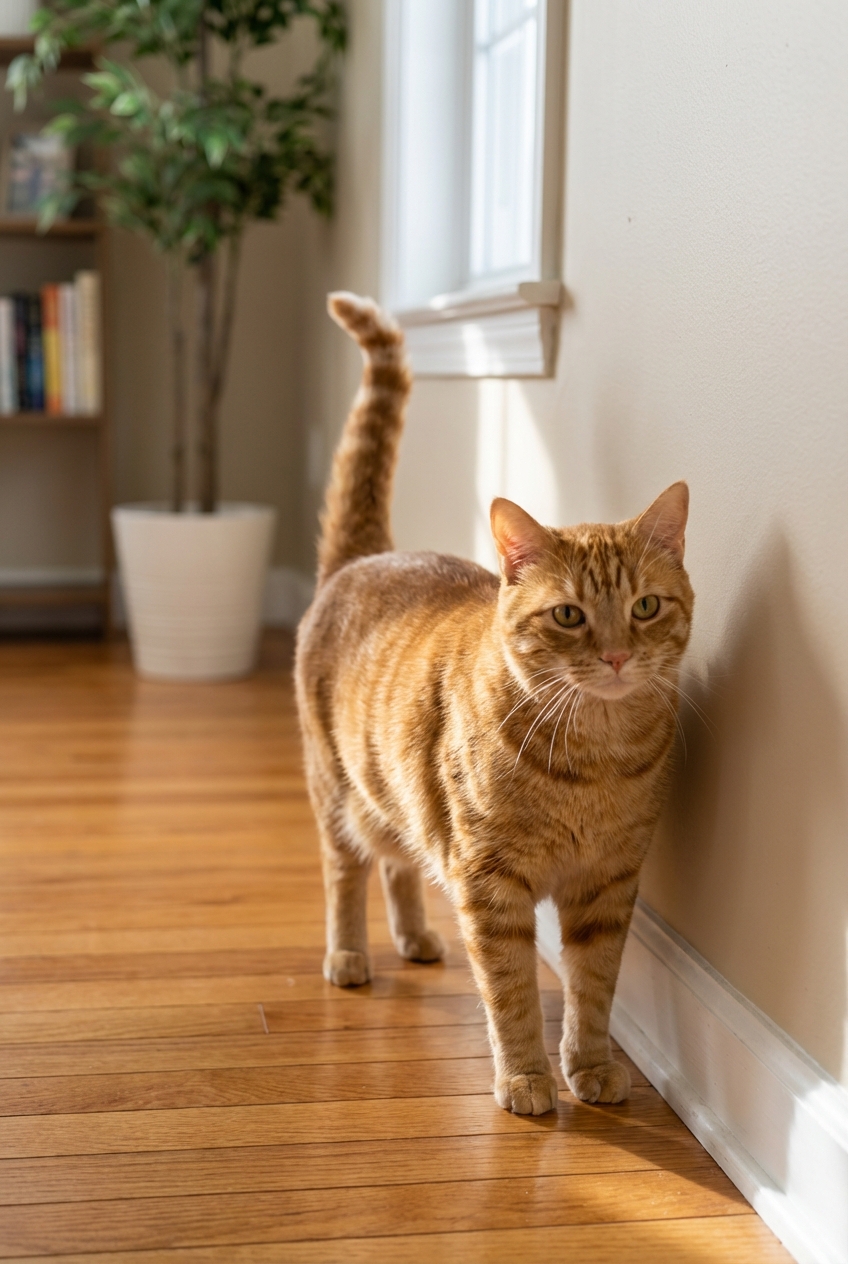
- Tail up, sometimes quivering
- Standing posture with urine directed backward
- May happen in multiple spots
What litter box avoidance often looks like
- Urine on horizontal surfaces like carpets, beds, laundry piles, or rugs
- Larger puddles
- Often tied to litter box setup, pain, mobility issues, or stress
- Squatting posture more like normal urination
Both can occur in the same cat, especially when stress and medical issues overlap.
First step: rule out medical causes
If your cat suddenly starts spraying or urinating outside the box, treat it like a medical red flag until proven otherwise. Pain, inflammation, and urgency can cause accidents and can also increase marking behavior. Even when it “looks behavioral,” it is still worth doing a proper veterinary exam.
Common medical issues that can look like spraying
- Feline idiopathic cystitis (stress-related bladder inflammation)
- Urinary crystals or stones
- Bacterial urinary tract infection (possible in any cat, and more likely in older cats or cats with underlying conditions)
- Arthritis that makes climbing into a box painful
- Kidney disease or diabetes causing increased urination
When it is an emergency
If your cat is straining to urinate, crying, going in and out of the box with little to no urine, vomiting, or acting lethargic, seek urgent veterinary care. Male cats can develop a life-threatening urinary blockage.
Ask your veterinarian about a urinalysis and, if needed, urine culture and imaging. Getting the health piece right makes every behavior step more effective.
Why cats spray indoors
Once medical issues are addressed, spraying is most commonly driven by one or more of the factors below.
Territorial stress
Cats mark to create a familiar scent message that helps them feel secure. Triggers include new pets, outdoor cats visible through windows, neighborhood changes, visitors, or moving homes.
Social conflict in multi-cat homes
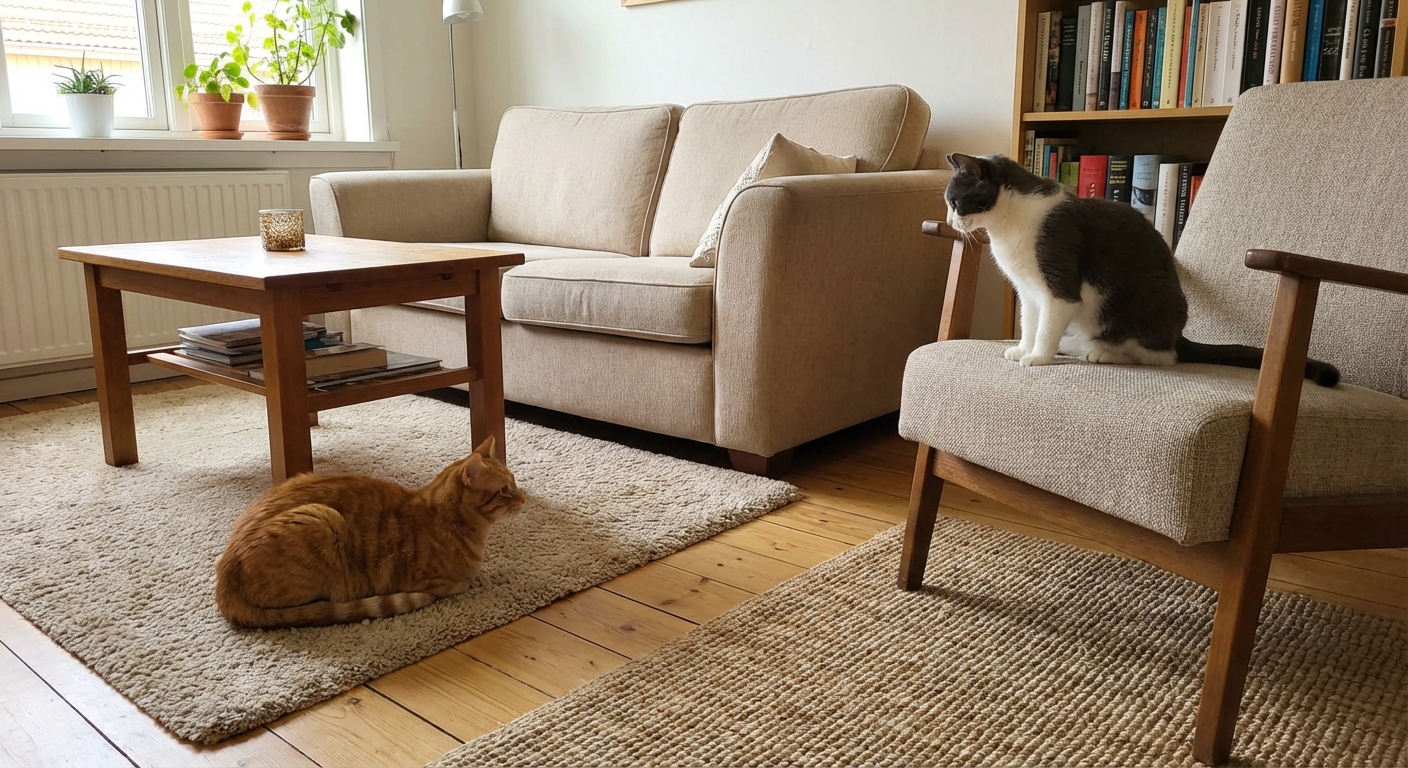
Even cats that seem to tolerate each other may have quiet tension. Blocking hallways, staring, chasing, or guarding litter boxes can lead to marking.
Sex hormones
Intact cats are much more likely to spray. Neutering or spaying early helps reduce the risk of spraying becoming a habit. Intact males are the classic sprayers, but intact females can spray too, and even some fixed cats spray when stress is high.
Changes in routine
New work schedules, a new baby, construction noise, or even rearranged furniture can be enough to trigger marking in sensitive cats.
How to stop spraying
Spraying rarely stops from just one tactic. Most homes need a combined approach that includes environment, cleaning, and stress reduction.
1) Spay or neuter if not already
This is the single biggest preventive step. Neutering reduces hormone-driven spraying in many cats, especially if done before the habit becomes long-standing. If your cat is already fixed and still spraying, keep going with the steps below.
2) Remove the smell the right way
Regular cleaners often leave behind urine compounds and scent cues that your cat can still detect. Use an enzymatic cleaner designed for pet urine.
- Blot first, do not rub.
- Soak the area per label instructions and allow full contact time.
- Keep pets away until fully dry.
- Avoid ammonia-based products. To a cat, they can smell similar to urine.
- Avoid steam cleaning or heat on urine areas. Heat can set odor and make it harder to remove.
If the sprayed surface is porous, replacement may be the only true reset.
3) Improve litter boxes
Even sprayers benefit from better litter box availability because it reduces overall stress and gives your cat more appropriate options.
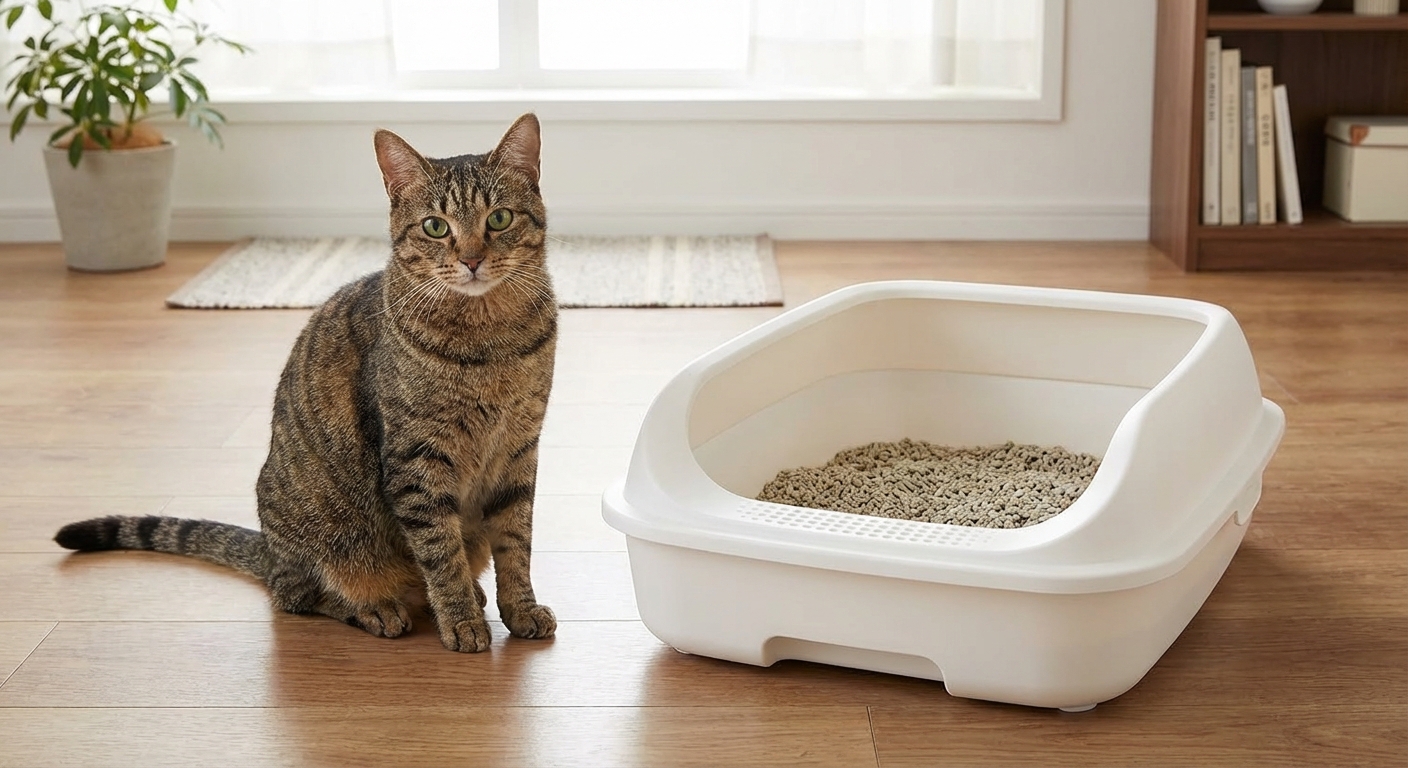
- Follow the common guideline: number of cats + 1 boxes.
- Place boxes in separate areas, not all lined up together.
- Choose large boxes. A helpful rule of thumb is at least 1.5 times your cat’s length (nose to base of tail).
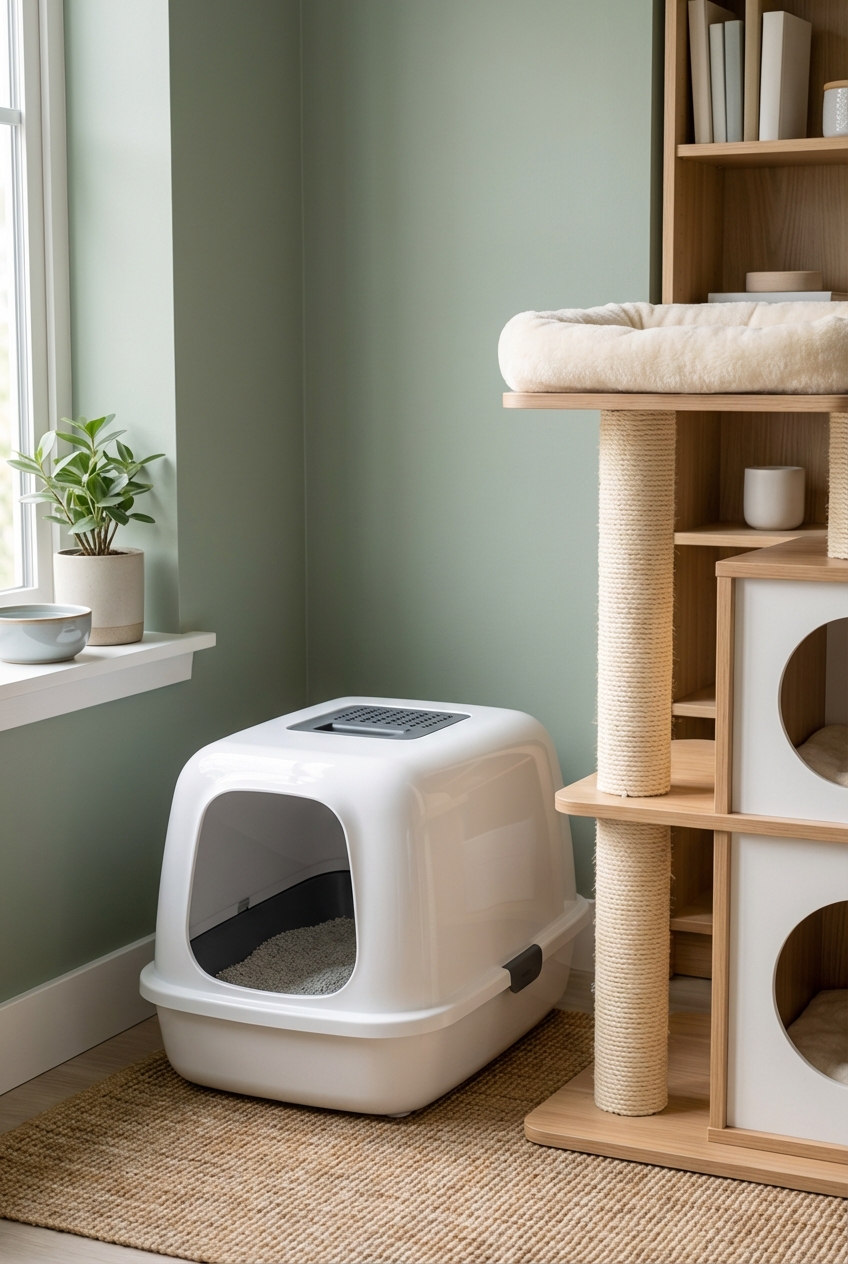
- Choose uncovered boxes when possible, unless your cat clearly prefers covered.
- Use unscented litter.
- Keep litter at a comfortable depth for most cats, often 2 to 3 inches.
- Scoop daily, and do a full dump and wash on a regular cadence (often weekly, depending on litter type and household).
If your cat is older or stiff, use a low-entry box.
4) Identify and block triggers
Look for patterns. Does spraying happen near a window, a door, or a specific hallway?
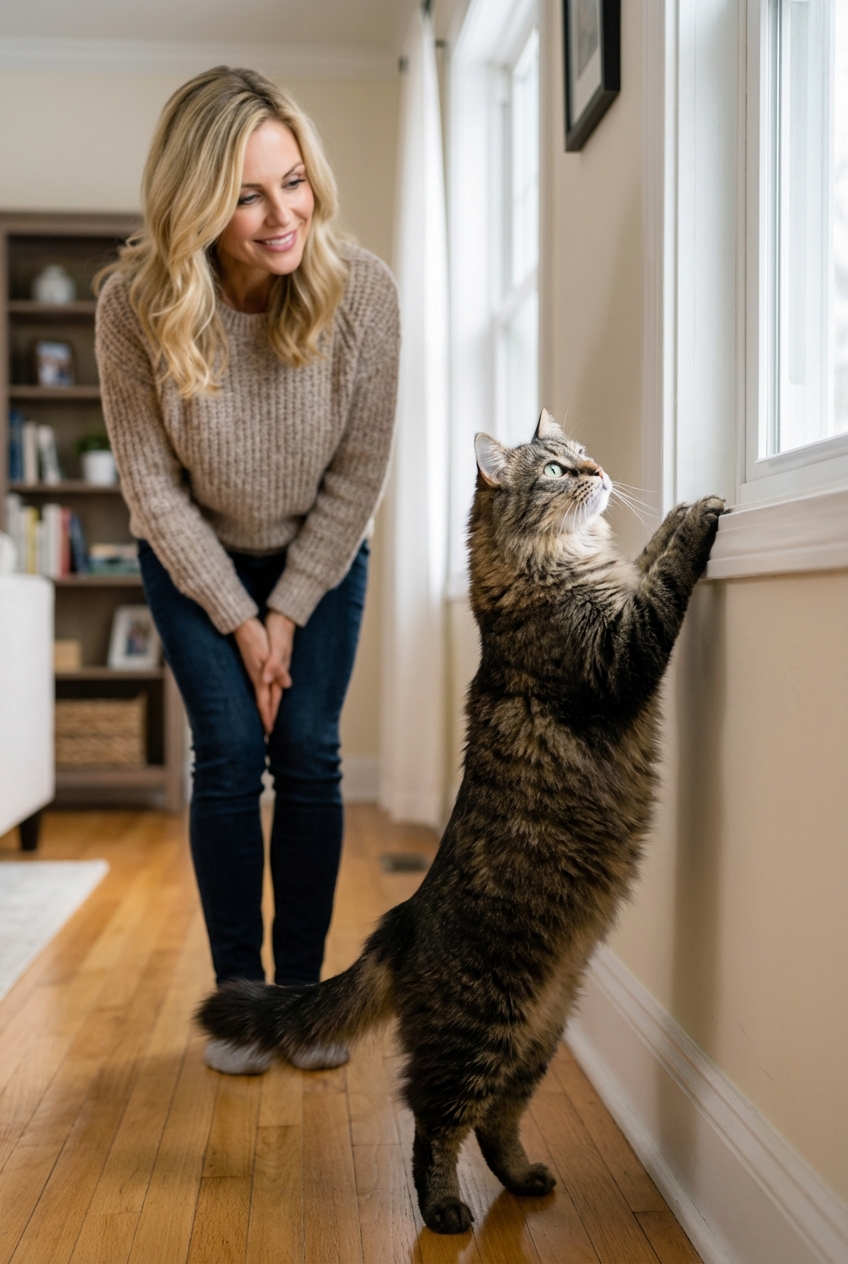
- If outdoor cats are the trigger, use frosted window film, close blinds at night, and consider motion-activated sprinklers outside.
- If guests trigger spraying, give your cat a quiet safe room with food, water, toys, and a litter box during visits.
- If certain areas are conflict zones between cats, add vertical space like cat trees and shelves so cats can pass without confrontation.
5) Reduce stress with enrichment and routines
Spraying often decreases when a cat feels safe and mentally satisfied.
- Two short interactive play sessions daily with a wand toy
- Food puzzles or scatter feeding to mimic hunting
- Vertical territory such as cat towers and window perches
- Consistent feeding times
6) Consider pheromone support
Many cat parents see improvement with synthetic feline facial pheromone diffusers or sprays, especially during transitions. They are not magic, but they can lower the overall stress level enough for behavior work to stick.
7) Use targeted deterrence and attractants
Once an area is fully cleaned:
- Make the sprayed spot less appealing using temporary barriers like a chair, storage bin, or closed door.
- Offer a positive alternative nearby, such as a new litter box, scratching post, or resting spot.
- Some cats respond well to placing food bowls near a previous spray site, since cats generally avoid eliminating where they eat.
8) In multi-cat homes, focus on resources
Many spraying cases in multi-cat homes improve when each cat has easy access to resources without being ambushed.
- More litter boxes in multiple zones
- Multiple water stations
- Multiple resting spots at different heights
- Separate feeding areas if any tension exists
What not to do
I know it is frustrating, but punishment nearly always makes spraying worse because it increases fear and insecurity. Your cat will not connect the punishment to the earlier spraying. They will only learn that you are scary near the sprayed area, which can raise stress and lead to more marking.
- Do not yell, chase, or rub your cat’s nose in it.
- Do not confine your cat to a small space without addressing the cause.
- Do not use heavily scented litter or cleaners to cover odors.
Instead, focus on safety, predictability, and making the right behavior easy.
Medication and behavior help
If you have tried the foundational steps for several weeks and spraying continues, talk to your veterinarian. For some cats, anti-anxiety medication can be a humane, effective tool, especially for stress-related urinary issues or intense territorial anxiety. Medication works best when paired with environmental and behavior changes, and it should be considered after a medical workup.
You can also ask for a referral to a board-certified veterinary behaviorist or a qualified cat behavior consultant. A personalized plan can save months of trial and error.
Quick checklist
- Schedule a veterinary exam and urinalysis.
- Spay or neuter if not already.
- Use an enzymatic cleaner correctly and avoid heat or steam.
- Add litter boxes: cats + 1, in separate locations.
- Upgrade boxes: big size, comfortable litter depth, scoop daily, wash regularly.
- Reduce triggers at windows and doors.
- Increase play, enrichment, and vertical space.
- Use pheromone support during transitions.
- For multi-cat homes, increase resources and reduce bottlenecks.
Most importantly, be patient with your cat and with yourself. Spraying is often improvable and usually manageable, and you do not have to guess your way through it. One calm step at a time really does add up.