Cat spraying is usually communication, not spite. Learn how to tell spraying vs accidents, rule out medical issues, improve litter boxes, reduce stress, and ...
Article
•
Designer Mixes
How to Stop Cat Spraying in the House

Shari Shidate
Designer Mixes contributor

If your cat is spraying in the house, I know how stressful and honestly heartbreaking it can feel. The good news is that spraying is usually a solvable problem once you identify the cause. Spraying is not your cat being “bad.” It is communication, and most often it is linked to stress, hormones, conflict with other pets, or a medical issue that needs attention.
As a veterinary assistant, I always start with two goals: protect the cat’s health and remove the triggers that keep the behavior going. Let’s walk through what spraying is, what causes it, and a step-by-step plan to stop it.
Spraying vs. Peeing Outside the Box
These can look similar, but they are different behaviors and the fix depends on which one is happening.
- Spraying is typically a small amount of urine on a vertical surface like a wall, the side of a couch, or a door frame. Cats often stand, lift their tail, and twitch the tail tip.
- Inappropriate urination is usually a larger puddle on a horizontal surface like carpet, a bed, or laundry. This often points to litter box issues or medical discomfort.
If you are not sure, set up a simple camera (even a phone on a tripod) near the area to catch the posture. It helps more than you would think.
First Step: Rule Out Medical Causes
Any sudden change in bathroom behavior deserves a vet visit. Pain and inflammation can make cats associate the litter box with discomfort, and that can spiral into house soiling.
Common medical contributors
- Urinary tract inflammation (including feline idiopathic cystitis), and less commonly a true infection
- Bladder stones or crystals
- Kidney disease or diabetes (increased urine volume)
- Arthritis or mobility issues that make the box hard to enter
Call your veterinarian promptly if you see straining, frequent trips with little urine, blood in urine, crying in the litter box, vomiting, or hiding.
Emergency note: If your cat is trying to urinate but little or nothing is coming out, especially in male cats, treat this as an emergency and go to an urgent or emergency vet right away. A urinary blockage can be life-threatening.

Why Cats Spray
Once medical issues are addressed, spraying usually falls into a few big buckets.
1) Hormones
Unneutered males are the classic sprayers, but females and neutered cats can spray too. Spaying and neutering is one of the most effective long-term solutions and often reduces spraying significantly. If your cat is newly neutered, improvement may take a few weeks as hormone levels drop, and some cats need additional environmental and behavior support.
2) Stress and anxiety
Cats are sensitive to changes we sometimes barely notice: new schedules, moving, construction noise, guests, a baby, or even a new scent on your clothes.
3) Territorial conflict
Multi-cat households are a common setup for spraying, especially if cats block resources, stare, chase, or ambush each other near hallways or litter boxes.
4) Outdoor triggers
Seeing stray cats outside a window, smelling them near doors, or hearing them at night can trigger indoor spraying.
Stop Spraying: Step by Step
Step 1: Clean correctly
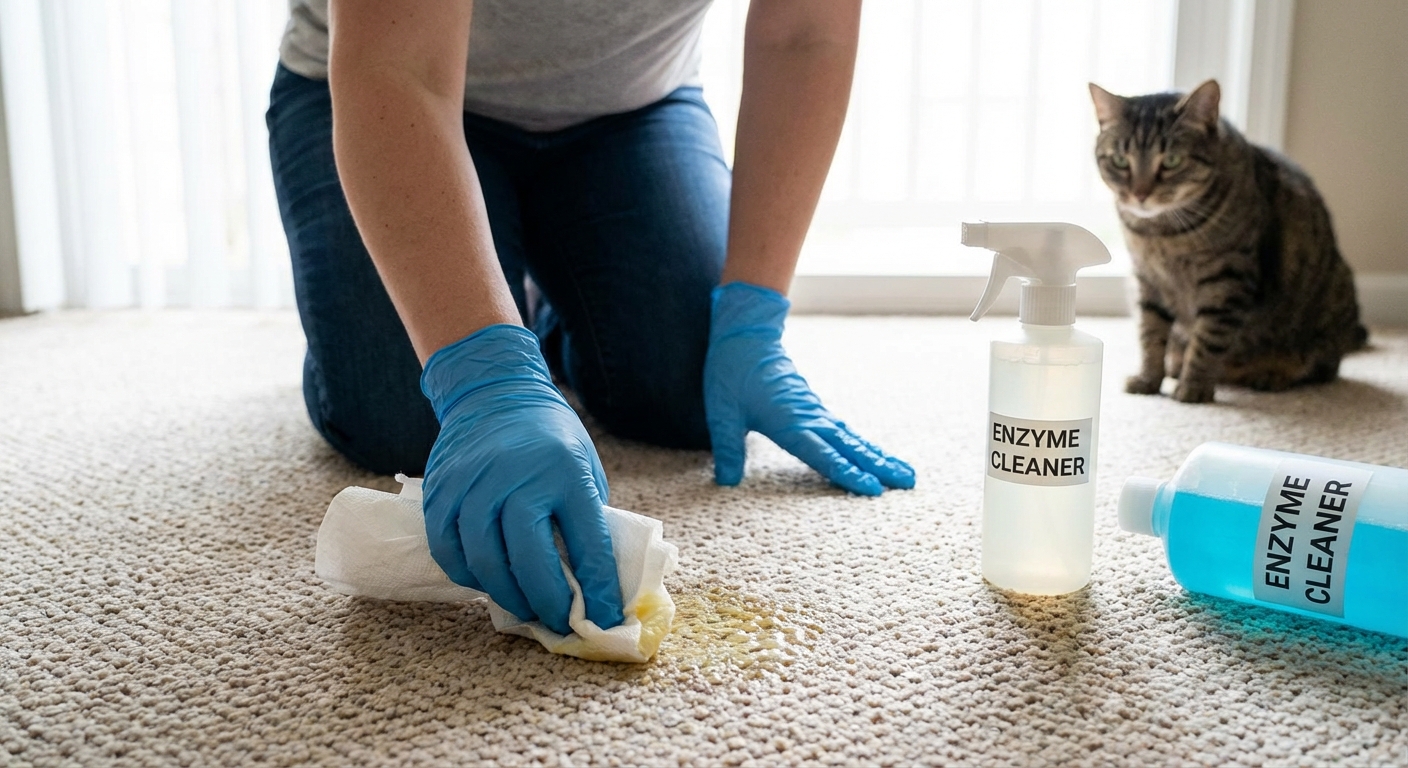
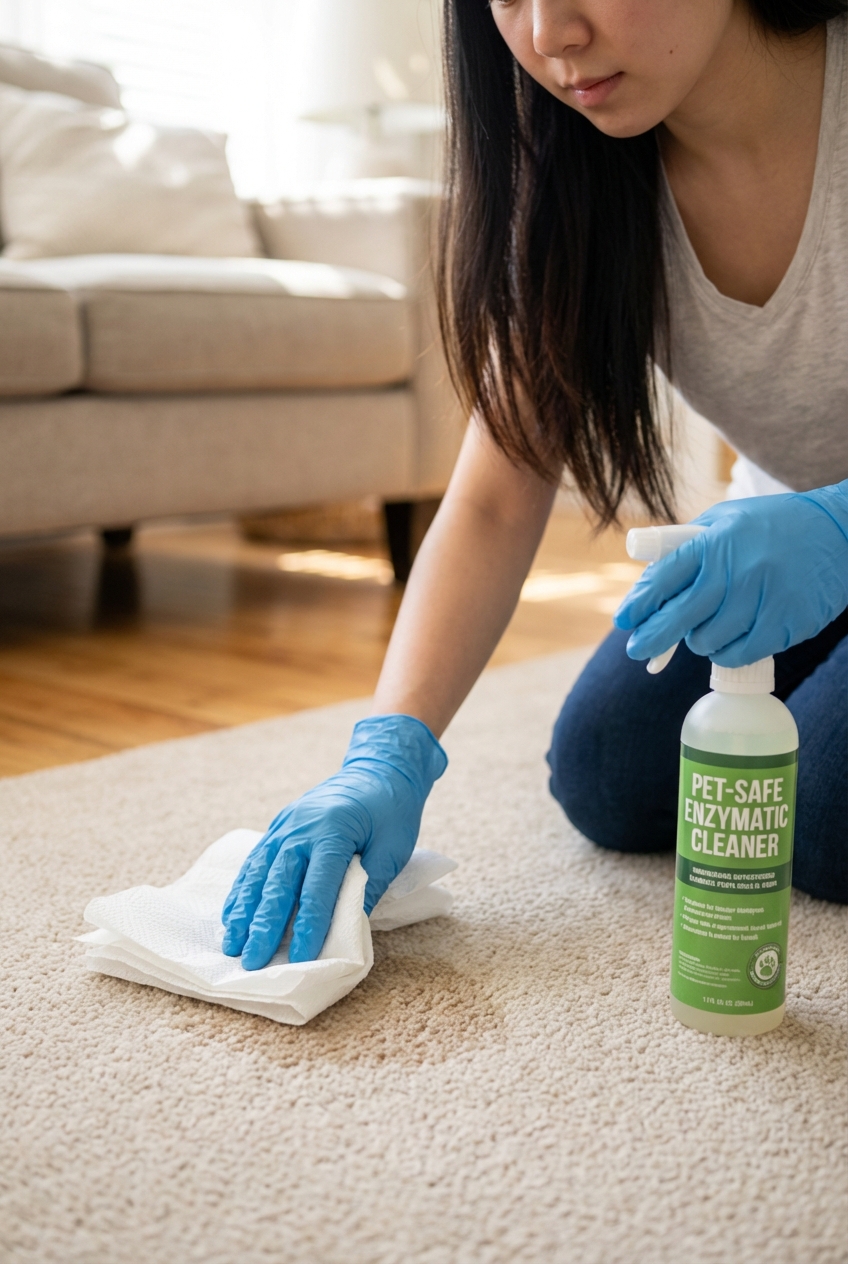
Regular household cleaners often leave behind odor molecules that cats can still detect. Use an enzymatic cleaner made for pet urine and follow the contact time instructions on the label.
- Blot first, do not rub.
- Soak through to the padding if it is carpet or upholstery.
- Let it air dry completely.
- Avoid ammonia-based cleaners. The smell can resemble urine to cats.
- Test cleaners on an inconspicuous spot first, especially on upholstery and rugs.
- Do not mix cleaning products (for example, bleach and ammonia), since this can create dangerous fumes.
Step 2: Make litter boxes irresistible
Even when spraying is the main issue, improving litter box setup lowers tension and helps your cat choose the right spot consistently.
- Number of boxes: one per cat, plus one extra.
- Placement: quiet, separate locations. Spread them out (and across levels if you have a multi-story home). Avoid putting boxes in dead ends where a cat can be cornered, and do not line boxes up like a “litter closet” in multi-cat homes.
- Size: big enough for your cat to turn around comfortably. Many cats prefer large open boxes.
- Litter: unscented clumping litter is a common favorite. If you need to switch, do it gradually.
- Cleaning: scoop daily, wash boxes regularly with mild soap and water.
Step 3: Reduce conflict in multi-cat homes
Think in terms of resources and safe pathways. Cats do better when they can eat, drink, rest, and use the litter box without being guarded or surprised.
- Feed cats separately if one is a bully at meals.
- Put food and water stations in multiple locations so one cat cannot control access.
- Add vertical space like cat trees and shelves so cats can avoid each other.
- Create multiple resting spots and hiding areas.
- Use short, positive play sessions daily to burn off tension and build confidence.
If you see chasing, blocking, or staring, a structured reintroduction can help. In tougher cases, a veterinary behaviorist can be highly valuable.
Step 4: Reduce outdoor triggers
If outside cats are a trigger, you can reduce visual and scent stimulation.
- Close blinds or use window film on lower panes.
- Motion-activated sprinklers can deter roaming cats in some yards.
- Clean outdoor areas near doors and windows with appropriate products to reduce lingering urine odors.
Step 5: Use calming tools
Some cats benefit from additional calming support while you work on the environment.
- Pheromone diffusers or sprays may help some cats feel more secure, although results can vary.
- Routine is powerful. Feed, play, and cuddle on a predictable schedule.
- Safe rooms are helpful during stressful events like parties or renovations.
If anxiety is severe or persistent, talk with your veterinarian. Behavior medication can be an appropriate, humane option as part of a full plan, not a stand-alone fix.
Step 6: Break the habit loop
While you are fixing root causes, limit access to favorite spray spots.
- Close doors or use baby gates when possible.
- Use temporary plastic sheeting or washable covers on problem areas.
- Place a litter box near the spray location short-term, then slowly move it to a better spot once the behavior improves.
How long to try
Give most environment changes about 2 to 4 weeks of consistent effort (cleaning, litter box setup, resource spread, and trigger reduction). If spraying is intense, if there is aggression between cats, or if you are not seeing improvement in that window, it is time to involve your veterinarian or a behavior professional sooner rather than later.
What Not to Do
When you are desperate, it is tempting to try anything. Some approaches backfire and increase anxiety, which can increase spraying.
- Do not punish or yell. Cats typically do not connect punishment with spraying. They connect it with you and the location.
- Do not rub your cat’s nose in it. This can damage trust and worsen anxiety.
- Do not suddenly change litter type or box location without a transition.
The fastest way to reduce spraying is to make your cat feel safe and to remove the reason they felt the need to leave a message in the first place.
When to Get Extra Help
If spraying continues after you have cleaned properly, improved litter box setup, and addressed medical causes, bring in professional support.
- Your primary veterinarian can check for relapse or subtle medical issues.
- A certified cat behavior consultant can help identify household triggers you may not see.
- A veterinary behaviorist is ideal for complex, multi-cat aggression or severe anxiety.
Quick Checklist
- Schedule a vet visit if behavior is new or worsening.
- Seek urgent care if your cat is straining with little or no urine, especially males.
- Confirm whether it is spraying (vertical) or peeing (puddle).
- Use an enzymatic cleaner and fully eliminate odor.
- Provide enough litter boxes in separate, quiet locations.
- Spread key resources (litter, food, water, resting spots) to reduce conflict.
- Reduce outside cat triggers near windows and doors.
- Consider pheromones and a consistent routine.
You do not have to fix this overnight. Progress often comes in small steps. If you stay consistent and address the root cause, many cats stop spraying and return to normal habits.