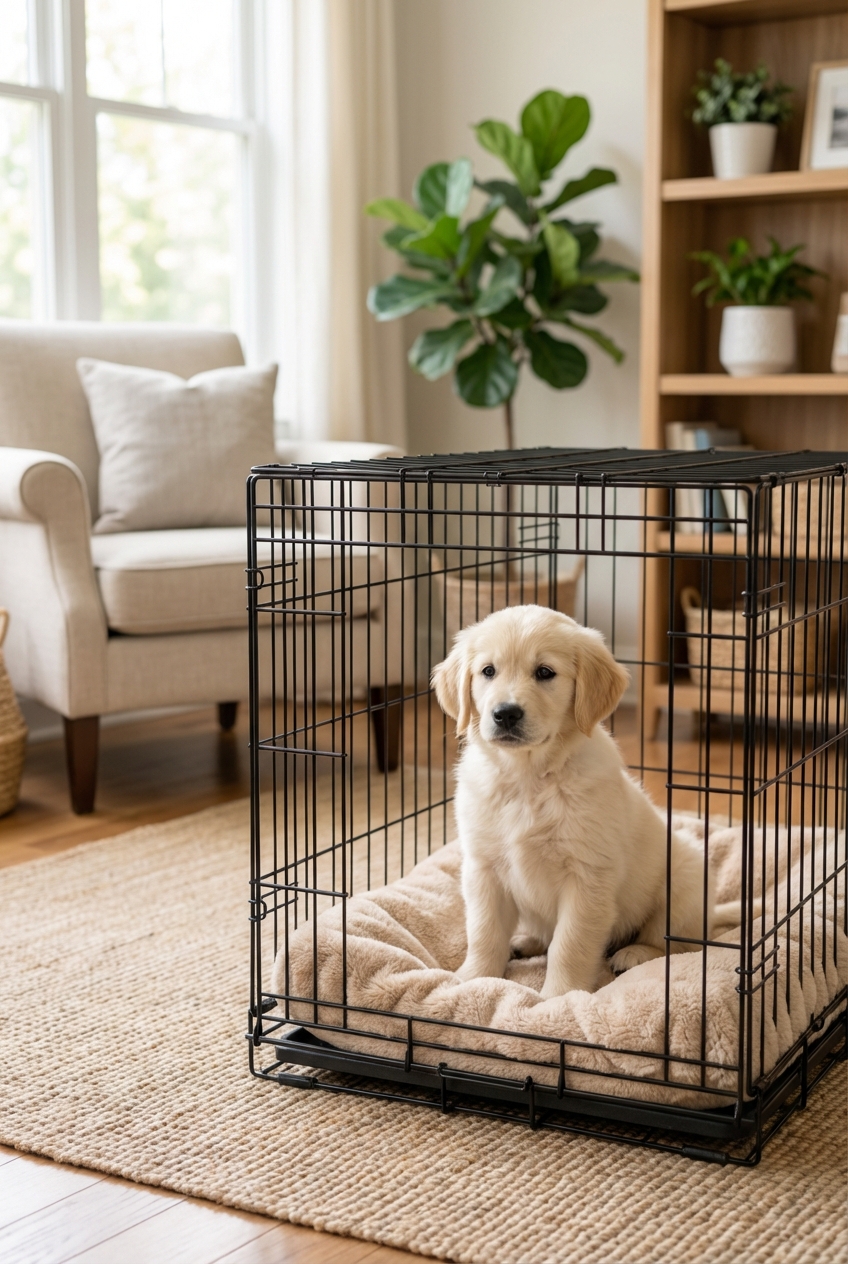
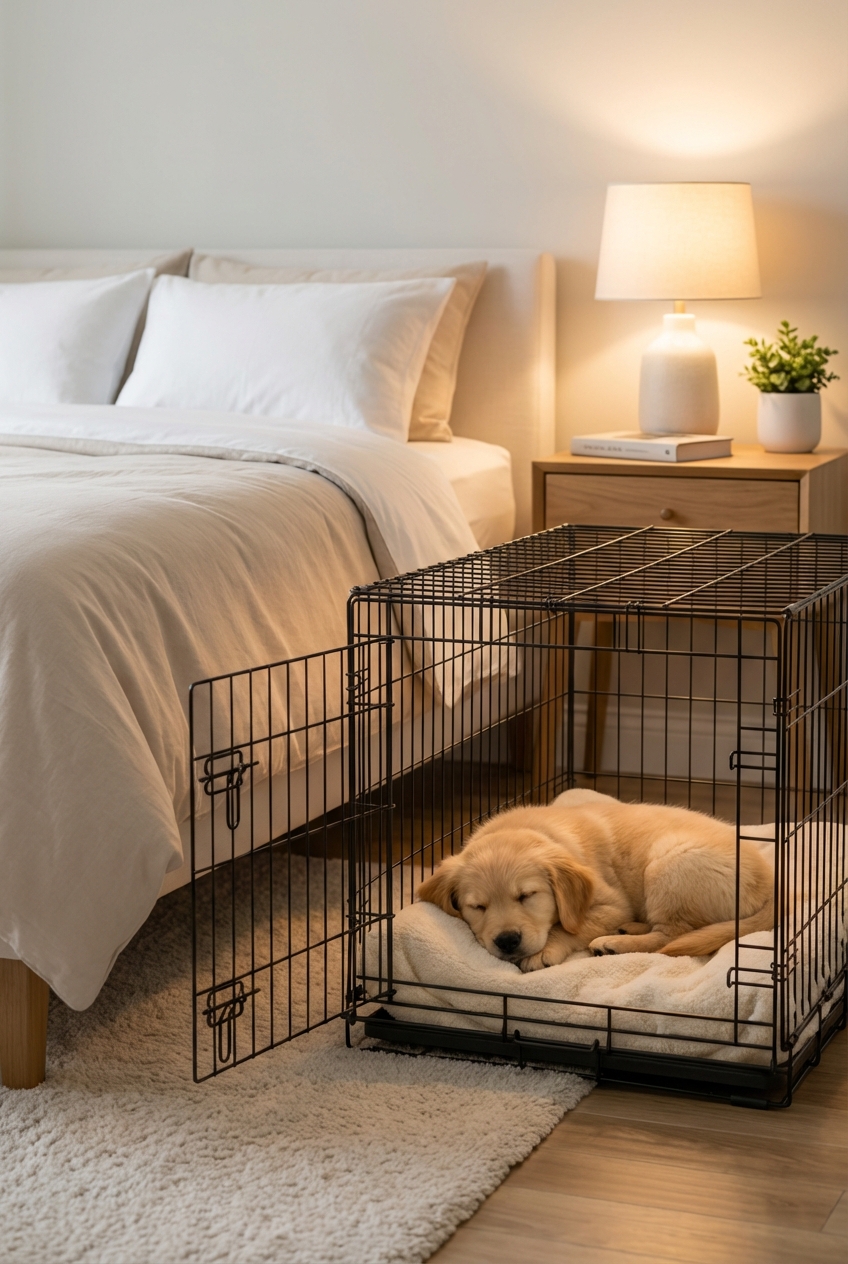
A step-by-step puppy crate training guide: choosing the right crate, building positive associations, first-week routines, nighttime potty breaks, and solutio...
Article
•
Designer Mixes
How To Stop a Puppy From Whining in the Crate

Shari Shidate
Designer Mixes contributor
Crate whining is one of the most common puppy questions I hear in the clinic and from friends here in Frisco. The good news is that most whining is not “bad behavior.” It is communication. Your puppy is telling you they are scared, uncomfortable, too amped up, or they truly need to go potty. When you match the right solution to the real reason, the noise usually improves quickly.
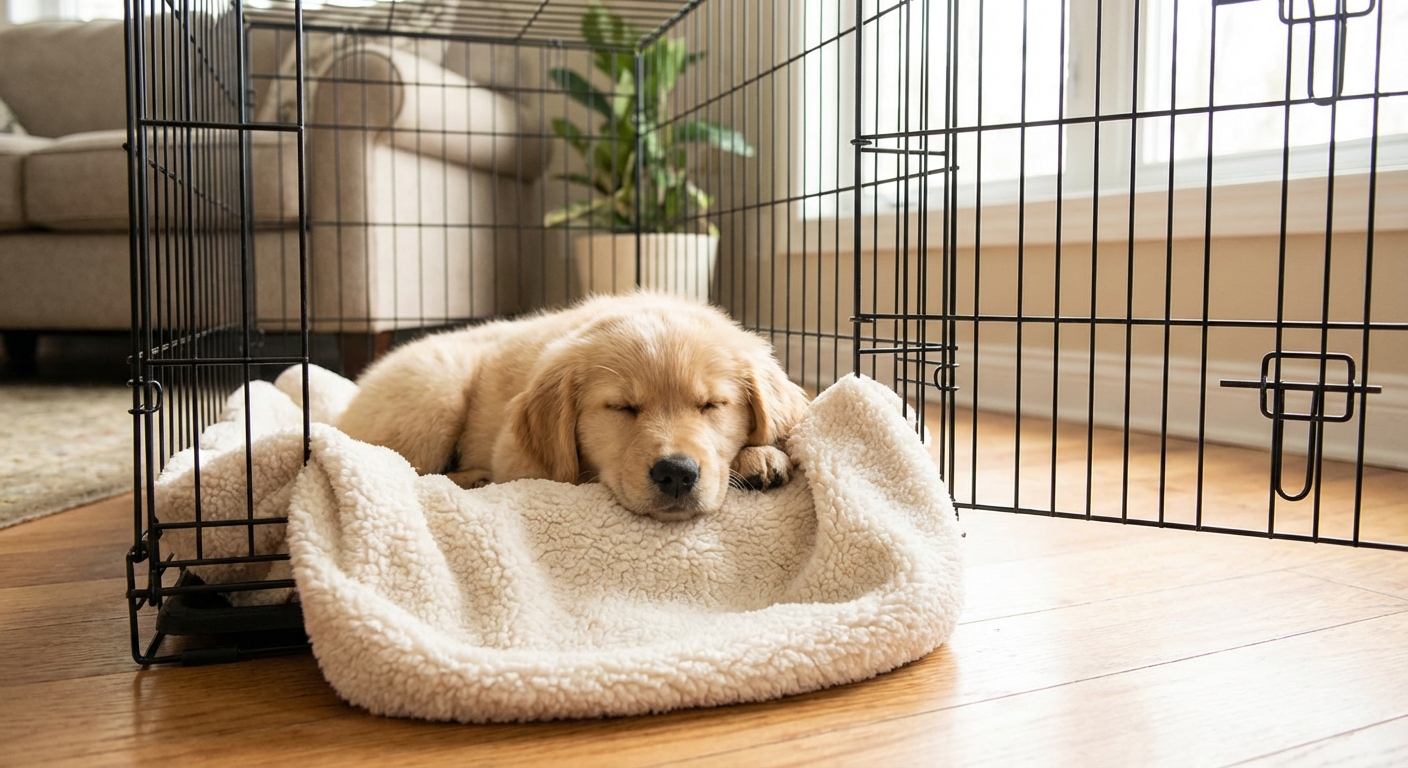
Why puppies whine in a crate
Puppies are wired to stay close to their people, so a crate can feel like separation, especially during the first few nights. Whining can also be reinforced accidentally when the puppy learns, “If I cry long enough, the door opens.” That does not mean you should ignore every sound. It means you need a plan.
- Separation stress: “I cannot see you, so I panic.”
- Potty needs: Puppies have tiny bladders, especially under 16 weeks.
- Overtired or overstimulated: A puppy can be exhausted and still struggle to settle.
- Too much crate time too soon: Long crating sessions before crate training is built up.
- Discomfort: Too hot, too cold, thirsty, hungry, or the crate is the wrong size.
- Medical issues: Diarrhea, urinary tract infection, parasites, pain, or nausea can all show up as restlessness and vocalizing.
First, make sure the basics are right
Crate size and setup
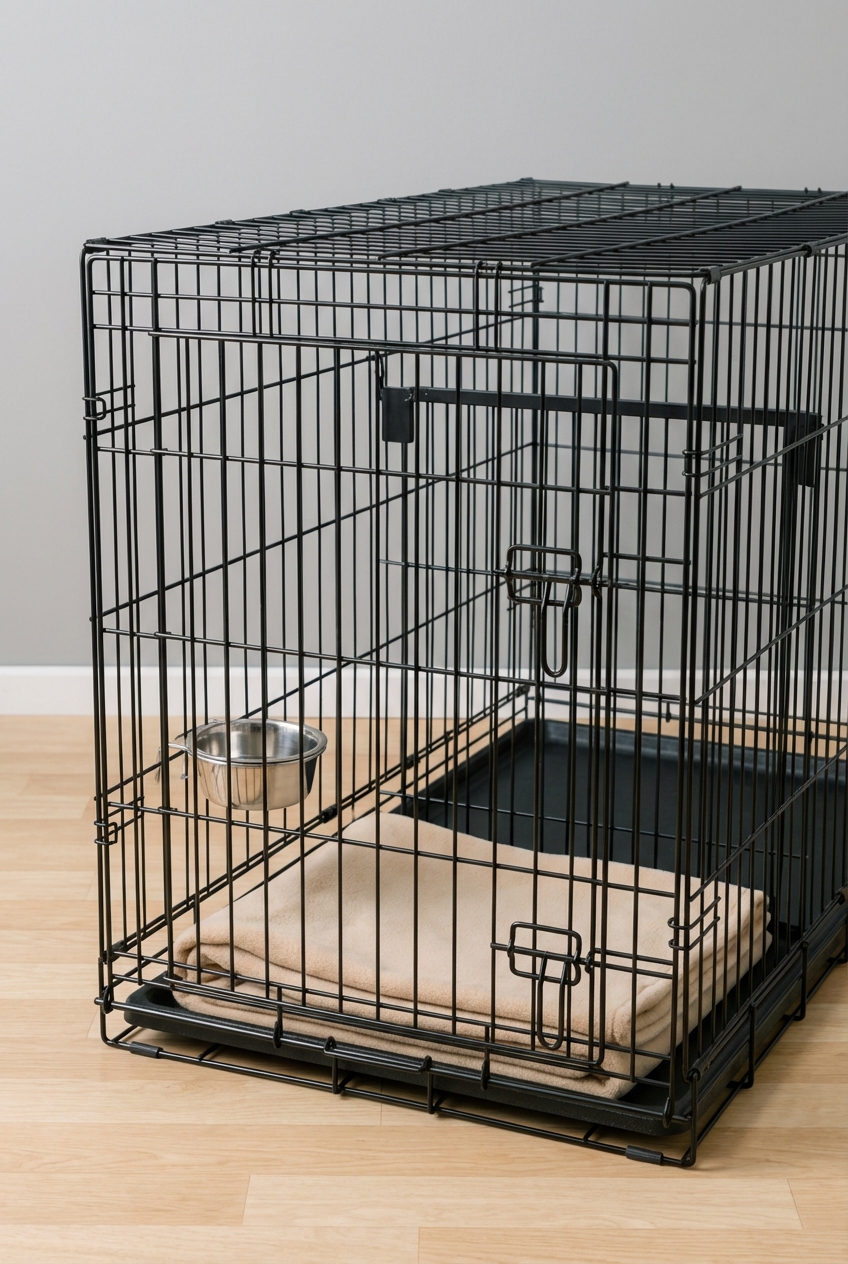
Your puppy should be able to stand up, turn around, and lie down comfortably. If the crate is too large, many puppies will potty in one corner and sleep in the other. If it is too small, they cannot settle.
- Use a divider panel for growing puppies.
- Add a safe, washable bed or folded blanket. If your puppy chews bedding, use a thin mat until chewing improves.
- Safety note: Remove your puppy’s collar (and any tags/harness) before crating to reduce the risk of getting caught on the crate.
- Place the crate in a calm area where your puppy can still feel included, especially during the day.
Potty schedule that fits puppy biology
A very common cause of crate whining is simply needing to eliminate. A rough daytime rule of thumb is that many puppies can hold their bladder about their age in months plus one hour, but it varies a lot by individual puppy, size, sleep vs. awake, and how much they have been drinking or playing. Young puppies often need more frequent breaks.
- Potty break right before crating.
- Potty break immediately after coming out.
- Extra potty breaks during house training regressions or growth spurts.
Meet needs before you ask for quiet
Think of calm crating as a skill. Skills build faster when your puppy has had:
- A short play session or gentle training session
- Sniff time outdoors
- A chance to drink and potty (adjust overnight water based on your puppy, your schedule, and your veterinarian’s guidance)
- A calm transition, not a sudden “crate and goodbye”
How to stop whining without creating more whining
Step 1: Make the crate a good place
Crate training works best when the crate predicts good things, not isolation. Start with the door open.
- Toss a treat in the crate. Let your puppy walk in and walk out.
- Feed meals in the crate for 3 to 7 days.
- Add a stuffed food toy or lick mat in the crate during calm moments.
- Practice short “in crate” sessions while you sit nearby.
Chew and food-toy safety note: Introduce new chews, lick mats, and stuffed toys when you can observe at first. If your puppy shreds it, pulls off pieces, or tries to swallow chunks, remove it and switch to a safer option.
Keep sessions short enough that your puppy succeeds. We want calm repetition, not a battle.
Step 2: Reward quiet, not noise
It is very normal to want to soothe a crying puppy. The trick is timing. If you talk to your puppy or open the door while they are actively whining, you can accidentally teach that whining works.
- Wait for a 1 to 3 second pause in the whining.
- Then calmly say “yes” or “good,” and offer a treat through the bars.
- Once your puppy is reliably quiet, you can reward with calm door openings, but keep treats-through-the-bars as your main “quiet” reward at first. It helps prevent that excited burst out of the crate.
- Gradually increase the time of quiet before the reward.
Step 3: Use a calm bedtime routine
Nighttime whining is often separation plus a brand-new routine, plus “I do not know this schedule yet.” A simple routine helps:
- Last potty break, then into the crate with a small treat.
- Lights low, voices low.
- Crate near your bed for the first week or two, especially for young puppies.
- Consider a fan or white noise to reduce “every sound is exciting.”
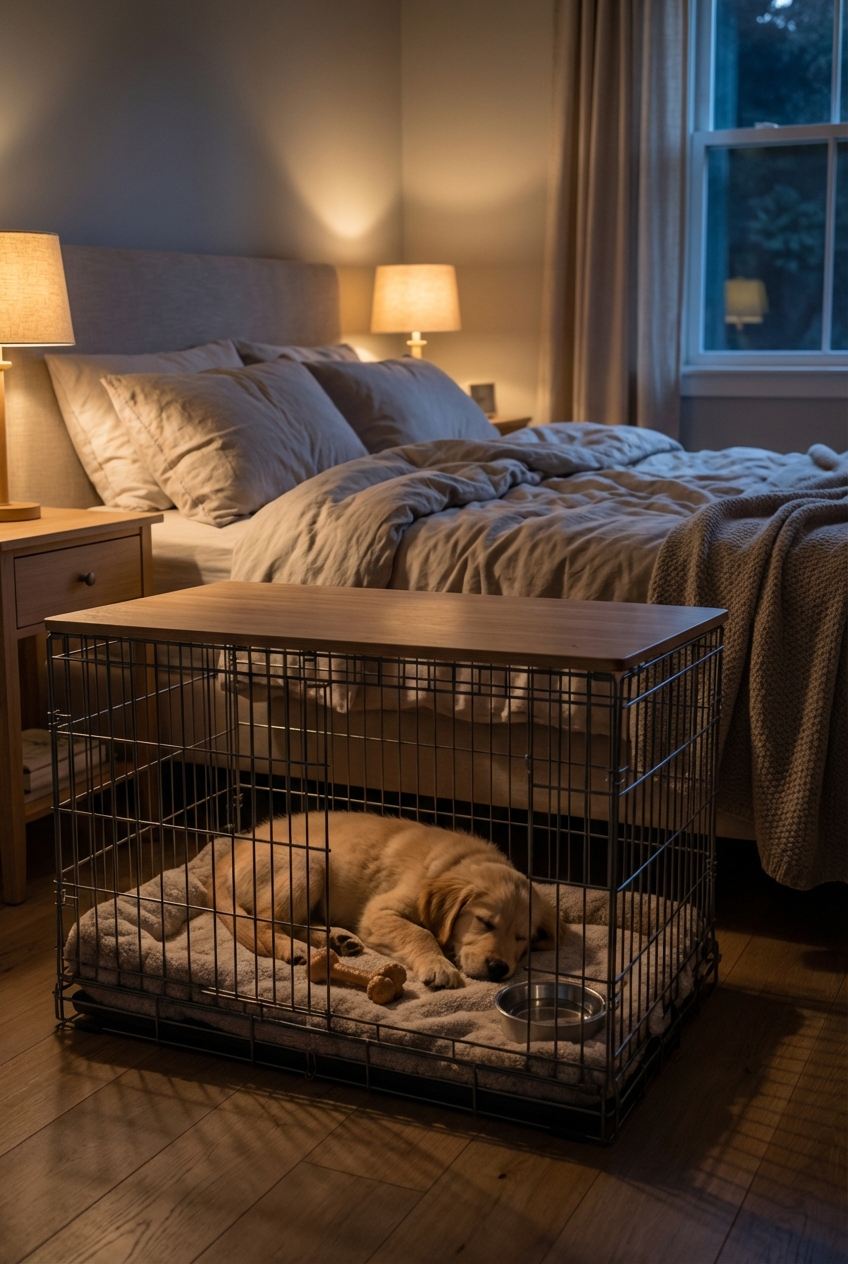
Step 4: Add a soothing aid (if needed)
Some puppies settle better with gentle sensory comfort. Choose options that are safe and simple.
- Cover part of the crate with a breathable blanket to reduce visual stimulation, leaving plenty of airflow.
- Safe chew like a puppy-appropriate rubber toy stuffed with a little kibble and dog-safe spread (see safety note above).
- Heartbeat toy for puppies who struggle with separation at night. Many families find these especially helpful during the first week or two.
- Warmth if your home runs cool, but avoid overheating. Puppies can get too warm fast.
Step 5: Build crate time slowly
If your puppy can do 5 calm minutes, that is your starting point. Slowly increase by small steps.
- 5 minutes calm, then a break.
- 8 to 10 minutes calm, then a break.
- 15 minutes calm, then a break.
- Mix in very short departures where you step out and return before whining starts.
What to do when whining starts
Use this quick decision tree to avoid guessing.
- Did they potty recently? If not, take a calm potty break. No play, no chatting, straight out and back.
- Are they in distress? Heavy panting, drooling, frantic pawing, or biting the crate can be panic. Do not “wait it out.” Go back a step in training and talk with your vet or a qualified trainer.
- Is it protest whining? If your puppy is safe and has pottied, wait for a brief pause, then reward quiet.
My rule of thumb: meet genuine needs quickly, but never let the whining be the thing that earns the big reward.
Common mistakes that keep it going
- Crating only when you leave: The crate becomes a predictor of separation.
- Letting the puppy out mid-whine: Even one success can teach “try harder next time.”
- Too much crate time: Puppies need breaks, training, play, and social time.
- Big attention for nighttime potty trips: Keep it boring so your puppy learns nights are for sleeping.
- Using the crate as punishment: This creates negative associations fast.
How long does it take?
Many puppies improve in 3 to 14 days when the crate is introduced correctly and potty needs are met. Some puppies take a few weeks (or longer), especially if they have practiced whining for a while or are experiencing true separation-related panic. Consistency is what makes the difference.
When to call your vet
As a veterinary assistant, I always want to say this clearly: if the behavior feels “off,” trust your gut.
- Sudden new whining and restlessness
- Diarrhea, vomiting, straining, or accidents that are unusual for your puppy
- Frequent urination, blood in urine, or crying when peeing
- Not eating, low energy, or signs of pain
- Panic behaviors in the crate, not just mild fussing
Your vet can rule out medical causes and help you choose safe calming supports if needed. For ongoing separation-related issues, a credentialed trainer (CPDT-KA or similar) or a veterinary behaviorist can help you build a complete plan.
A simple 7-day plan
If you like having a checklist, here is a gentle plan you can start today.
- Days 1 to 2: Meals in crate, door open games, 3 to 5 very short closed-door sessions while you sit next to the crate.
- Days 3 to 4: Add a stuffed food toy in the crate, practice stepping out of sight for 5 to 15 seconds, return and reward quiet.
- Days 5 to 6: Increase calm sessions to 10 to 20 minutes, mix in one calm nap in the crate if your puppy will settle.
- Day 7: Practice one longer session at your puppy’s comfort level, and keep rewarding quiet pauses.
Go slower if your puppy struggles. Calm confidence beats speed every time.
Bottom line
You can stop crate whining by doing two things consistently: meet real needs and teach the crate predicts comfort and calm rewards. Your puppy is not trying to be difficult. They are learning. With a steady routine and small training steps, most puppies settle into crating beautifully.