Puppy biting is normal—teach a gentle mouth with a simple plan: freeze, redirect to toys, reward calm play, and use brief time-outs. Includes teething, nap...
Article
•
Designer Mixes
How to Stop a Puppy From Biting

Shari Shidate
Designer Mixes contributor
Puppy biting can feel personal, but it is usually not “aggression.” In most households I’ve worked with as a veterinary assistant here in Frisco, Texas, it is a very normal mix of teething, excitement, and your puppy learning how to use their mouth in a human household.
The good news is that you can absolutely reduce biting quickly and kindly. The key is to teach your puppy what they can bite, what ends play, and how to calm their body when they get overstimulated.
That said, there are times when biting can be driven by fear, pain, or guarding behavior. I cover those red flags near the end so you know when to call your vet or bring in a qualified trainer.

Why puppies bite
Puppies explore with their mouths the way toddlers explore with their hands. Biting is also how they play with littermates. When they come home, they need you to teach them the rules.
Common reasons
- Teething discomfort: Puppies often start losing baby teeth around 12 to 16 weeks, and teething commonly continues until about 6 months (with plenty of individual variation).
- Overtired and overstimulated: The “land shark” moment often happens when a puppy needs a nap.
- Attention seeking: Even negative attention can be rewarding if it leads to squealing, chasing, or a wrestling match.
- Rough play habits: Hands become toys if hands have been used for play.
- Herding or chase instincts: Some mixes are more likely to nip at ankles, pant legs, and running kids.
Knowing why helps you pick the right solution. Teething needs chew support. Overtired puppies need rest. Attention seeking needs a better way to get your focus.
Set the goal
In puppy training, there are often two realistic stages:
- Stage 1: Teach bite inhibition. Your puppy learns to keep their mouth gentle and reduce pressure.
- Stage 2: Teach no teeth on human skin. Your puppy learns that skin is never a chew toy.
Some trainers focus on Stage 2 right away, and that can work. But if your puppy is young and mouthy, Stage 1 can prevent future problems, because a dog who learns a soft mouth is safer in every situation.
What to do in the moment
When a puppy bites, the most effective plan is calm, boring, and consistent. Pick a response you can do every single time.
1) Redirect to an appropriate chew
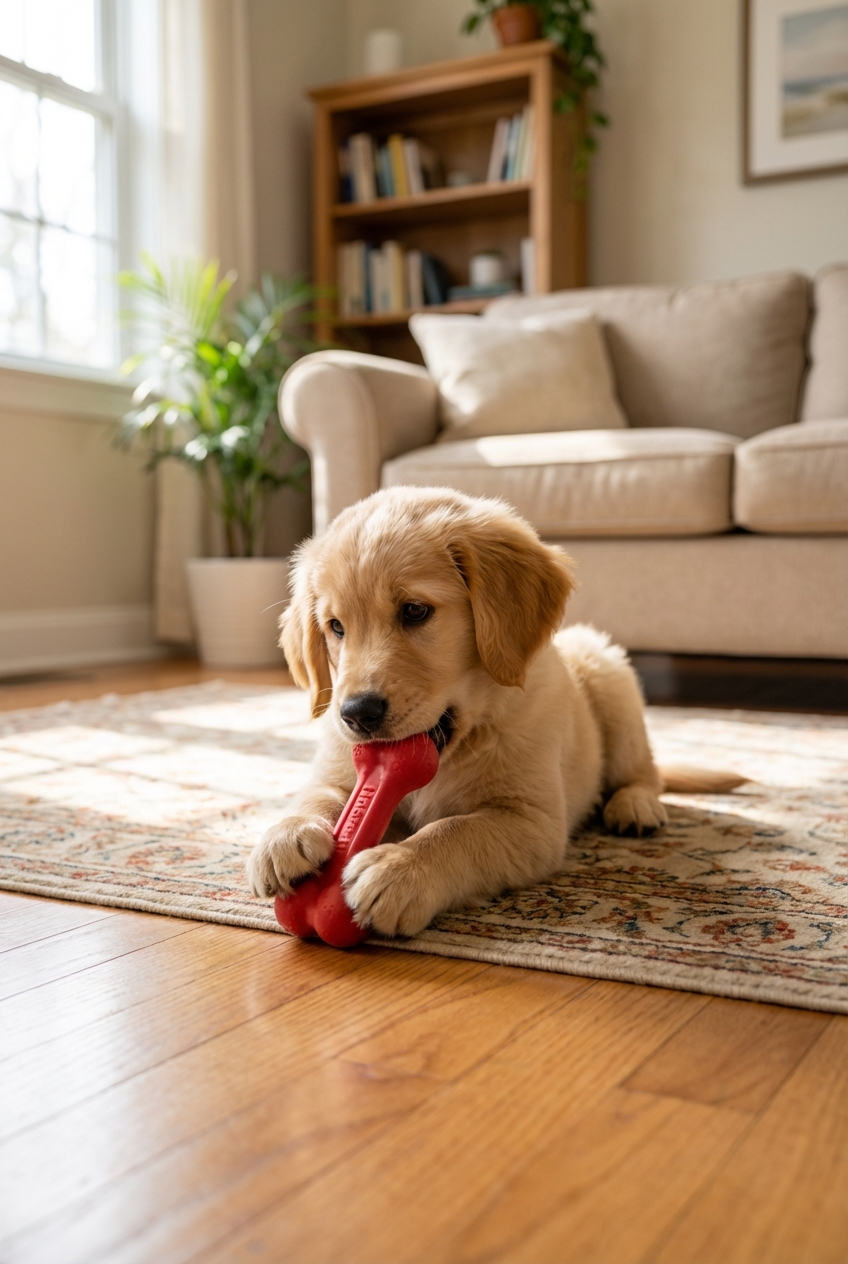
Keep a toy within reach in the rooms where you spend time. When teeth touch skin, calmly place a toy in front of their mouth and encourage chewing the toy instead.
- Best for: teething, playful mouthing, puppies who just need a job.
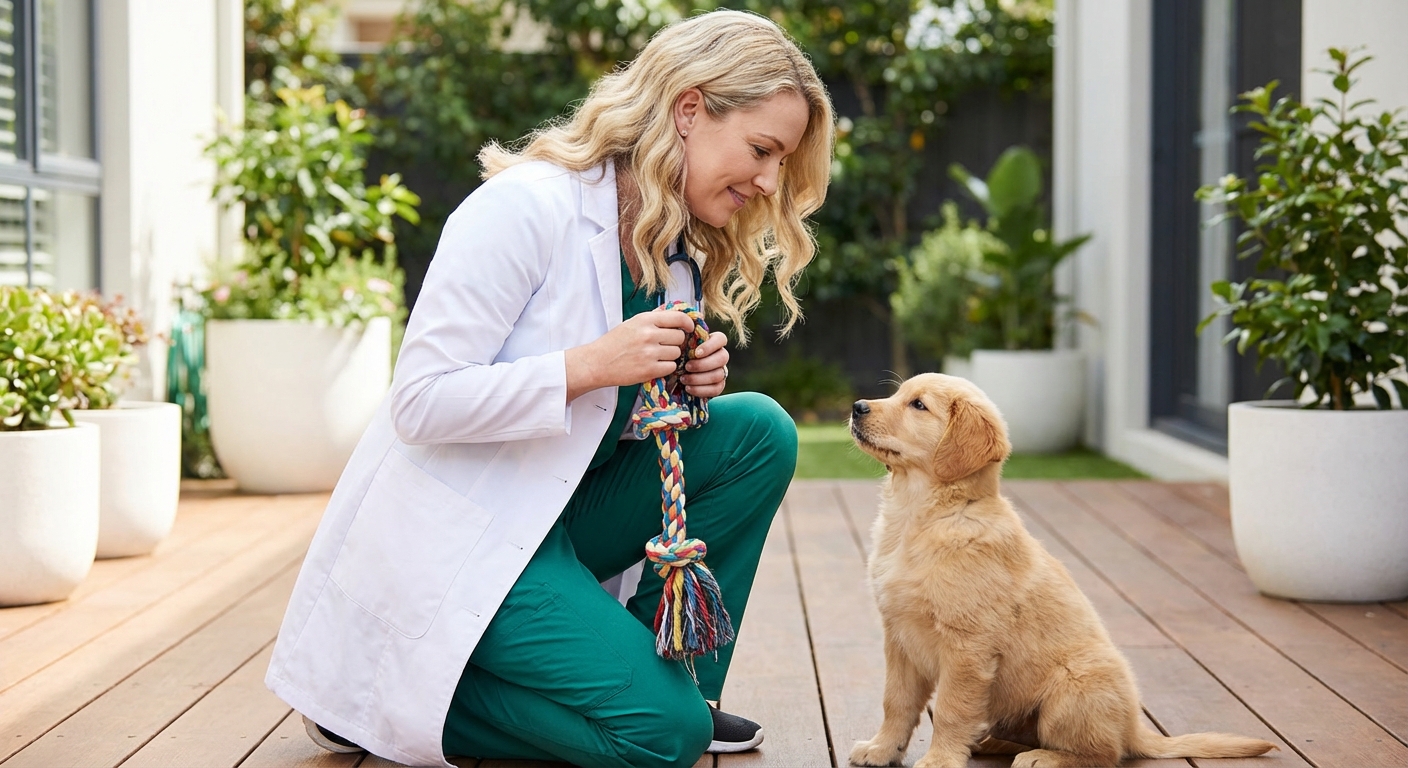
- Tip: if your puppy keeps diving for hands, try a longer toy like a tug rope to create distance.
Also, reward the choice you want. Any time you notice your puppy chewing their toy on their own, quietly praise and drop a treat nearby. You are “catching” the right behavior.
2) End the fun with a brief reverse time-out
A reverse time-out means you leave or remove attention for a moment. If your puppy keeps biting after a redirect, remove what they want most: access to you.
- Stand up.
- Fold arms or hold hands high.
- Turn away and be still for 10 to 20 seconds.
- When your puppy calms, re-engage and offer a toy.
This works because puppies learn: “Biting makes my person go away.” It is not scary, it is just clear.
3) Use a calm break if needed
If your puppy is in full zoomie mode and cannot settle, a brief calm break can help them reset.
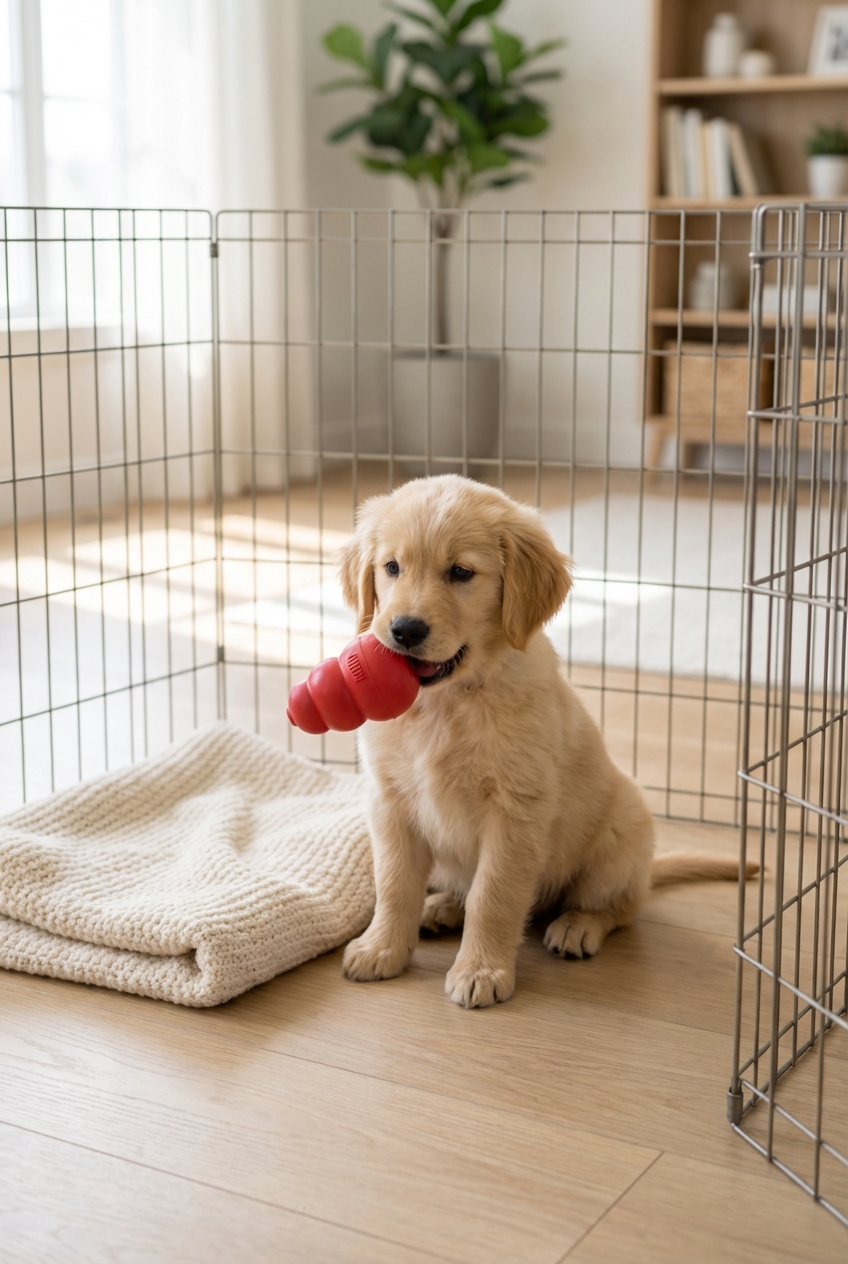
- Place puppy in a puppy-safe area: playpen, gated area, or crate with a chew.
- Keep it brief: about 30 to 60 seconds, and up to 1 to 2 minutes if needed. Then try again.
- Release only when they are calm (even a moment of quiet helps), so you do not accidentally reward barking or frantic behavior.
Think of this as a nap cue, not a punishment. If you are crate training, keep the crate a positive place. Use it for calm breaks only if your puppy is already comfortable there, or use a pen or gate instead.
What not to do
- Do not hit, hold the mouth shut, or “alpha roll.” These can increase fear and defensive behavior.
- Do not chase your puppy. It turns biting into a game.
- Be careful with yelping. Some puppies get more excited and bite harder. If it ramps them up, skip it.
Prevent biting with arousal management
A lot of biting is not a training failure. It is an energy management problem.
Make naps non-negotiable
Many young puppies need a lot of sleep, often up to 18 to 20 hours per day. An overtired puppy can look like a “bad puppy.” If your puppy gets mouthy in the evening, add an earlier nap.
Many families do well with a simple rhythm: 1 hour awake, 2 hours resting, repeated through the day.
Feed part of meals as enrichment
Instead of a full bowl, use food to create calm chewing and sniffing.
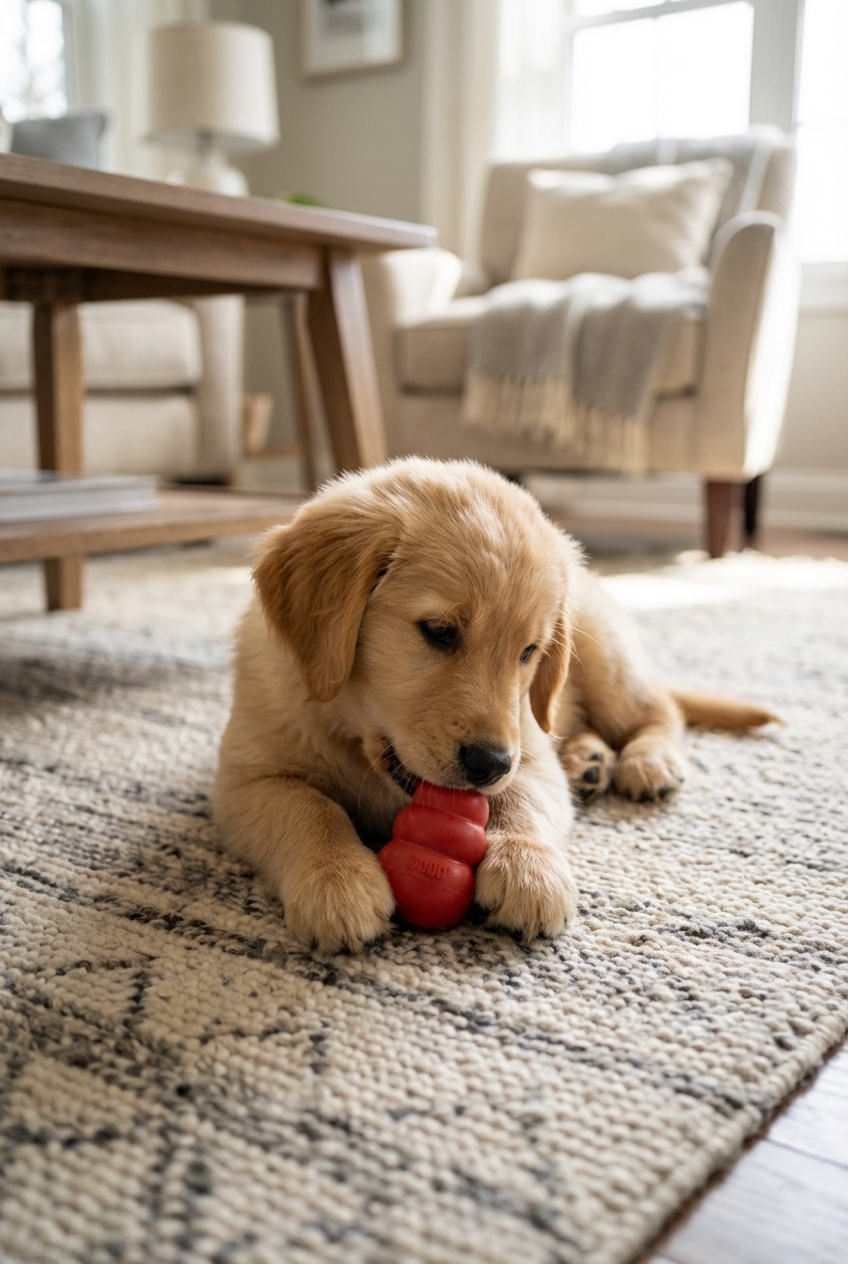
- Stuffed rubber toy with kibble and a little canned puppy food
- Snuffle mat
- Scatter feeding in grass
Sniffing and licking are naturally calming behaviors.
Limit high-energy hand play
Wrestling with hands teaches your puppy that skin is part of the game. Choose tug toys, balls, or flirt poles instead, and build in pauses to prevent overexcitement.
Set up your home for success
Management is not “cheating.” It is how you get through the teething months with fewer bites.
- Toy stations: keep a couple of toys in every room where the puppy hangs out.
- Baby gates and pens: use them to separate puppy from running kids, visitors, or hectic areas.
- Indoor leash or drag line: for supervised time, a light leash can help you guide your puppy away from ankles without grabbing their collar or starting a chase game.
Teach replacement skills
Stopping biting is easier when you teach your puppy what you want them to do.
Touch (nose to hand)
This gives your puppy a safe way to interact with hands without using teeth.
- Present your open palm a few inches away.
- When your puppy bumps it with their nose, mark with “Yes” and reward.
- Gradually practice with more excitement, then around guests.
Leave it
Start with a treat in a closed fist. Reward when your puppy stops mouthing and backs off. This skill helps with grabbing pant legs, socks, and kid hands.
Drop it
Many bites happen during tug when a puppy re-grips too close to fingers. Teach a reliable “Drop it” by trading for a treat, then restart the game. The restart is a powerful reward.
Teething support
If your puppy is between 3 and 6 months, assume teething is contributing and provide daily chew options.
Good chew choices (general guidance)
- Rubber chews: durable, flexible, soothing on gums
- Chilled rubber toys: a refrigerated rubber toy can ease gum soreness
- Edible but safe chews: choose size-appropriate products and supervise
A common clinic rule of thumb is: if you cannot make an indent with your thumbnail, it may be too hard and could risk tooth fractures, especially for strong chewers. Another practical check is: if you would not want to tap it against your kneecap, it is probably too hard.
Always supervise chews and pick the right size. For many dogs, very hard options like weight-bearing bones and antlers can be higher risk for broken teeth. When in doubt, ask your veterinarian for product guidance that matches your puppy’s chewing style.
Stop ankle nipping
Ankle biting is common in active breeds and herding mixes, and it gets worse when people run, squeal, or flail.
What to do
- Become a tree: stop moving the moment your puppy targets ankles.
- Redirect to a toy: keep a tug toy by the door for arrival excitement.
- Reinforce calm walking: reward your puppy for walking next to you with a loose leash and a relaxed mouth.
- Practice with kids carefully: have kids stand still, toss treats on the ground, and avoid fast running during training phases.
If this is intense or escalating, a certified trainer can help you build impulse control safely.
Puppies and kids
Puppy teeth are sharp, and kids move like squeaky toys. For safety and sanity:
- No unsupervised puppy and child time. Use gates, pens, and closed doors to give everyone space.
- Teach kids “be a tree.” If the puppy nips, kids should freeze, fold arms, and look away. An adult can redirect the puppy to a toy.
- Give your puppy a calm zone. A pen or crate setup helps prevent the puppy from practicing biting during chaotic moments.
How long does it take?
Most families see improvement within 1 to 2 weeks of consistent responses, and bigger changes by the end of teething. The timeline depends on:
- Age and teething stage
- Sleep and routine
- Consistency across the household
- Breed traits and energy needs
Progress is rarely perfectly straight. Expect a few “relapse” days during growth spurts, schedule changes, or exciting events.
When it is more than normal
Reach out to your veterinarian and consider a qualified trainer if you see:
- Growling, freezing, or hard staring paired with biting
- Bites that break skin frequently
- Guarding behavior around food, toys, or resting spots
- Sudden biting that seems linked to pain (ear infections, GI discomfort, injury)
Pain and medical issues can change behavior fast, so it is always worth checking.
A simple daily plan
If you want a straightforward routine, here is a gentle structure that works for many puppy homes:
- Morning: potty, short play, 5 minutes of training, then rest
- Midday: enrichment feeding, chew time, nap
- Afternoon: leash walk or backyard sniffing, brief training, nap
- Evening: calmer play, stuffed chew, early bedtime
Keep toys in every hot spot room, and agree as a family on one bite response. Consistency is what teaches the lesson.
My favorite mindset shift: you are not “stopping biting” as much as you are teaching your puppy how to live politely with humans. It takes repetition, sleep, and the right chews, and it gets better.