Cat spraying is usually communication, not spite. Learn how to tell spraying vs accidents, rule out medical issues, improve litter boxes, reduce stress, and ...
Article
•
Designer Mixes
How to Stop a Neutered Cat From Spraying

Shari Shidate
Designer Mixes contributor
It can feel confusing and even discouraging when a neutered cat starts spraying. Many people assume spraying is only a “not fixed” problem, but in real life, spraying is often a stress and communication problem. Hormones can still play a role in some cases, which is why a vet visit matters. The good news is that with a step-by-step plan, most cats improve significantly, and many stop completely.
As a veterinary assistant, I always start with two priorities: rule out medical causes and reduce the triggers that make your cat feel the need to mark. I can’t diagnose your cat online, but I can help you organize the most effective next steps to discuss with your veterinarian. Let’s walk through what works.
Spraying vs. peeing outside the box
First, make sure we are talking about the same behavior, because the solution depends on it.
- Spraying is usually a small amount of urine on a vertical surface (wall, couch side, curtains). Your cat often stands, tail up, and may quiver the tail. Female cats can spray too, so do not rule it out based on sex.
- House-soiling (urinating outside the box) is typically a larger puddle on a horizontal surface (floor, bed, laundry).
Both are fixable, but they have different likely causes. Spraying is often about territory and stress. Large puddles more often point to litter box setup issues or medical problems.
Step 1: Book a vet visit
Even when it looks “behavioral,” medical issues can lower your cat’s ability to cope and increase marking behavior. A basic exam and urinalysis can be a game-changer. If this is a sudden new behavior, especially in an older cat, prioritize the medical workup first.
Common medical contributors
- Feline lower urinary tract disease (FLUTD) and bladder inflammation
- Urinary tract infection (true bacterial UTIs are less common in young adult cats, and more common in seniors or cats with conditions like kidney disease or diabetes)
- Arthritis (cats may avoid stepping into a high-sided box)
- Kidney disease or diabetes (more urine, more urgency)
- Pain from other conditions that increases stress
If your cat is straining, vocalizing in the box, licking the genital area, or producing tiny amounts of urine frequently, treat it as urgent and contact your veterinarian promptly or an emergency clinic. Male cats can develop a life-threatening blockage.
Step 2: Confirm neuter details
Most neutered cats do not spray long-term, but there are exceptions. If your cat was neutered later in life, spraying can become a learned behavior. It can still improve, but you need a consistent plan.
In rare cases, a cat may have retained testicular tissue. This is more likely with an undescended testicle (cryptorchid), incomplete removal, or other uncommon reproductive conditions. If your vet suspects this, hormone testing and imaging can help.
Step 3: Reset the litter boxes
Even with true spraying, improving litter box comfort reduces overall stress and helps break the cycle.
The “number of boxes” rule
- Provide one litter box per cat, plus one extra.
- Spread boxes out. Two boxes side-by-side count as “one location” to many cats.
Make the box easy to say yes to
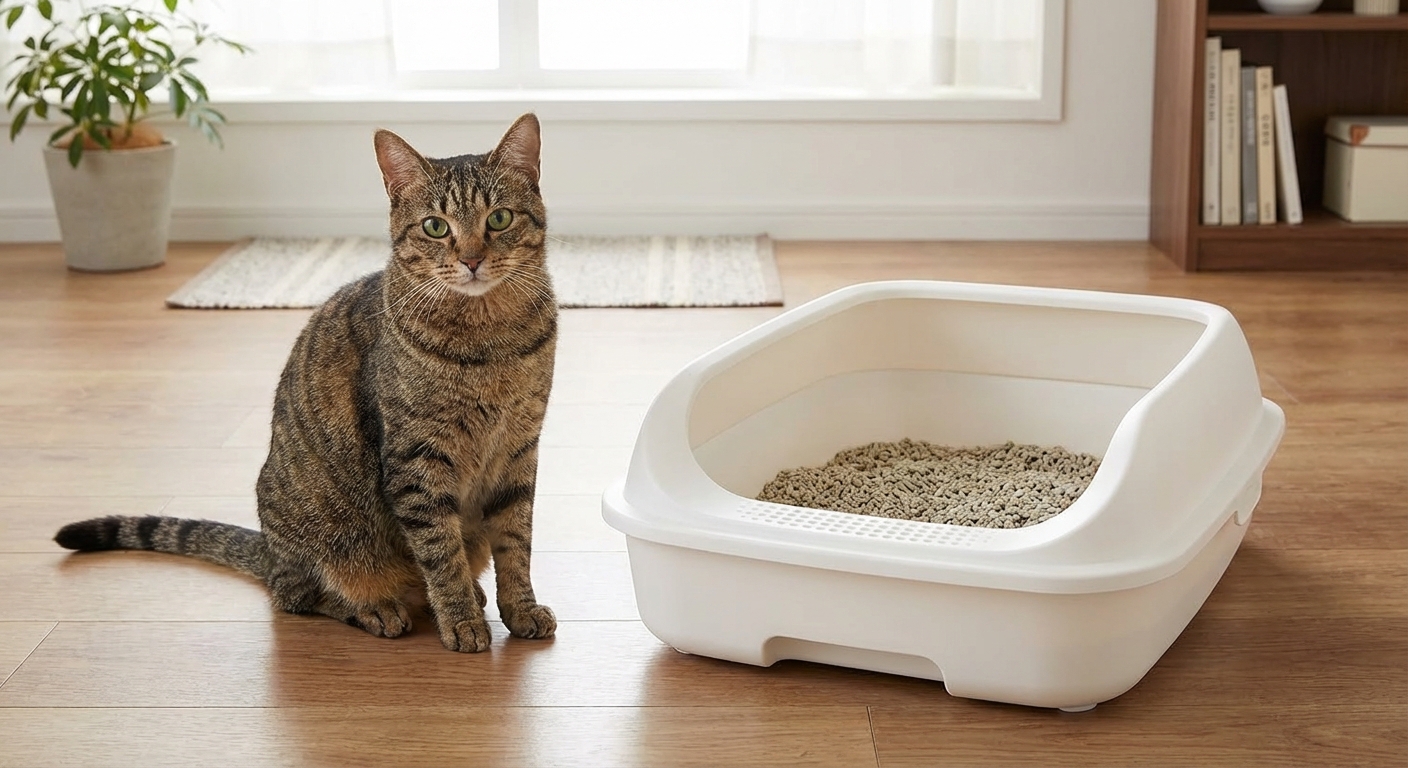
- Size matters: use a large box (storage totes work well) so your cat can comfortably turn around.
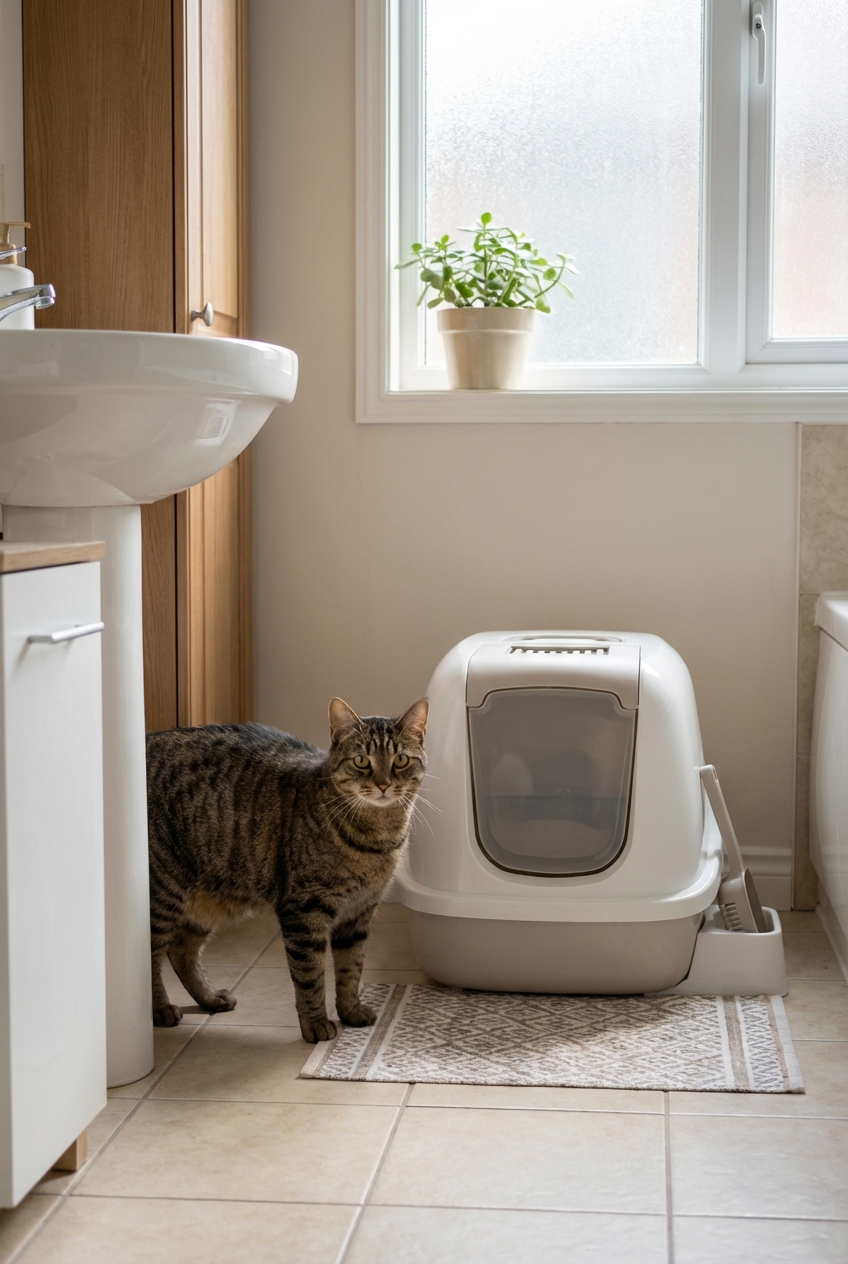
- Open top is often best: covered boxes can trap odor and make cats feel cornered.
- Low entry for seniors or cats with joint pain.
- Unscented litter is usually preferred. Many cats dislike strong perfumes.
- Scoop daily and fully change as needed. A clean box is a powerful behavior tool.
Placement matters
- Choose quiet, low-traffic areas away from noisy appliances.
- Avoid tight dead-end spots where a cat can feel trapped. Many cats prefer a setup with more than one “exit path.”
- In multi-cat homes, make sure no single cat can “guard” the only route to the box.
Step 4: Find the trigger
Once the litter box setup is solid, the next step is figuring out what is making your cat feel the need to mark. Spraying is a message. Your cat is saying, “I don’t feel secure,” or “This area is mine,” or “Something changed.” The most common triggers I see in homes are:
- New cat in the home, even if they are separated
- Neighborhood cats visible through windows or on patios
- New baby, partner, roommate, or frequent guests
- Moving, remodeling, new furniture, new smells
- Schedule changes like travel or longer work hours
- Inter-cat tension that looks subtle to humans (staring, blocking hallways)
Your job: write down when and where it happens. Patterns often jump out. For example, spraying on a window frame frequently points to outdoor cat stress.
Step 5: Clean the right way
Cats have powerful noses. If even a faint urine scent remains, the area can become a repeat target.
Use an enzymatic cleaner
- Choose a true enzymatic pet urine cleaner designed for cats.
- Follow the label directions, including soak time. Quick wipes rarely work.
- Avoid ammonia-based cleaners. Ammonia can smell “urine-like” to cats.
- Avoid steam cleaners or heat on urine spots. Heat can set odor into some materials.
- If you suspect old spots, a blacklight can help you find hidden urine that needs treatment.
If the area is on fabric, test the product on a hidden spot first.
Step 6: Block hotspots
Management is not cheating. It is part of the fix.
- Close doors to problem rooms temporarily.
- Use window film or keep blinds closed if outdoor cats are a trigger.
- Add a litter box near the sprayed area for a few weeks, then slowly move it to your preferred spot.
- Place food bowls, a water fountain, or a cozy bed in the previously sprayed zone. Many cats avoid soiling near resources.
Step 7: Lower stress daily
Spraying is often the end result of bottled-up stress. You can lower that stress by giving your cat healthy outlets and predictable routines.
Daily essentials that help
- Two short play sessions per day (5 to 10 minutes) with a wand toy, ending with a small meal or treat.
- Vertical territory like cat trees, shelves, or a window perch.
- Safe hiding spots such as a covered bed or a box in a quiet room.
- Separate resources in multi-cat homes: multiple food stations, water, scratching posts, and litter boxes.
Think of it like this: the more secure your cat feels, the less they need to “prove” ownership with scent.
Step 8: Use pheromones
Synthetic feline pheromones can help many cats feel safer, especially during change. They work best when paired with the steps above.
- Use a diffuser in the room where your cat spends the most time or where spraying happens.
- Give it at least 2 to 4 weeks to evaluate.
- In some homes, multiple diffusers are needed for full coverage.
Step 9: Training that helps
You cannot punish spraying out of a cat. Yelling, rubbing their nose in it, or “showing them” the spot increases stress and can increase spraying.
Do this instead
- Reinforce calm behavior near problem areas. When your cat passes the hotspot without spraying, quietly reward with a treat.
- Create positive routines at the times spraying usually occurs, like a play session at dusk.
- Interrupt without fear if you catch the pre-spray posture: make a small sound, say your cat’s name, or gently toss a soft treat away from the spot. Then redirect to a positive activity (treat scatter, play, a puzzle feeder). Keep a litter box easy to access, but do not expect that your cat will choose it in that moment.
If your cat is already spraying mid-action, do not chase. Just clean thoroughly and adjust the environment.
Step 10: Multi-cat homes
Many spraying cases are really “relationship” cases. Two cats can live together and still be socially stressed.
Signs of hidden tension
- Blocking doorways or staircases
- Staring, stalking, or silent “stand-offs”
- One cat always leaving when the other enters
- One cat guarding the litter box area
What helps
- Add more resource stations in different rooms.
- Increase vertical space so cats can pass without confrontation.
- If there is active fighting, consider a structured reintroduction with separation and gradual scent swapping.
When meds help
For some cats, anxiety is the engine behind spraying. If you have done the steps above and improvement is minimal after several weeks, talk with your veterinarian. Anti-anxiety medication or pain control (when pain is part of the picture) can be temporary or longer-term, but it often gives your cat a calmer baseline so training and environmental changes can finally stick.
Never give human medications to cats unless a veterinarian prescribes them. Dosing mistakes can be dangerous.
How long will it take?
Timelines vary widely, but many households see improvement within about 2 to 4 weeks once triggers are addressed and cleaning is done correctly. More complex cases, especially multi-cat tension, may take 8 to 12 weeks or longer of consistent work.
Progress is usually not perfectly linear. You want fewer incidents, smaller amounts, and longer time gaps between episodes.
Quick checklist
- Vet exam and urinalysis completed
- Correct number of litter boxes, placed in multiple locations
- Large, open boxes with unscented litter
- Quiet box placement with easy access and no “trapped” corners
- Enzymatic cleaning on all prior spray sites (no steam or heat)
- Triggers identified and reduced (especially outdoor cats)
- More play, more vertical space, more safe hiding areas
- Pheromone diffuser used for 2 to 4 weeks
- No punishment, only calm interruption and rewards
When to get help
If your cat is still spraying after you have followed these steps, or if you are seeing aggression, fear, or persistent conflict between cats, it is time to bring in extra support. Ask your veterinarian for a referral to a board-certified veterinary behaviorist or a qualified cat behavior consultant who uses fear-free methods.
You are not failing. Spraying is one of the most common stress behaviors I see, and it often improves with the right plan and a little patience.