Stop kitten biting without punishment. Learn why kittens bite, how to freeze and disengage, redirect to toys, prevent ankle attacks, and build a daily play r...
Article
•
Designer Mixes
How to Stop a Kitten From Biting

Shari Shidate
Designer Mixes contributor
Kittens bite. It is normal and common, and it does not mean you have an “aggressive” cat. From a veterinary assistant perspective, most kitten biting is a mix of play, teething, and learning boundaries. The goal is not to punish biting. The goal is to teach gentle behavior while still letting your kitten be a kitten.
In this overview, I will walk you through why biting happens, what to do in the moment, and how to set up daily habits that naturally reduce biting over time. (This is general education. If you are worried about pain, fear, or sudden behavior change, check in with your veterinarian.)
Why kittens bite
Understanding the “why” helps you pick the right solution. Kittens bite for a few predictable reasons, and more than one can be true at the same time.
Play and hunting practice
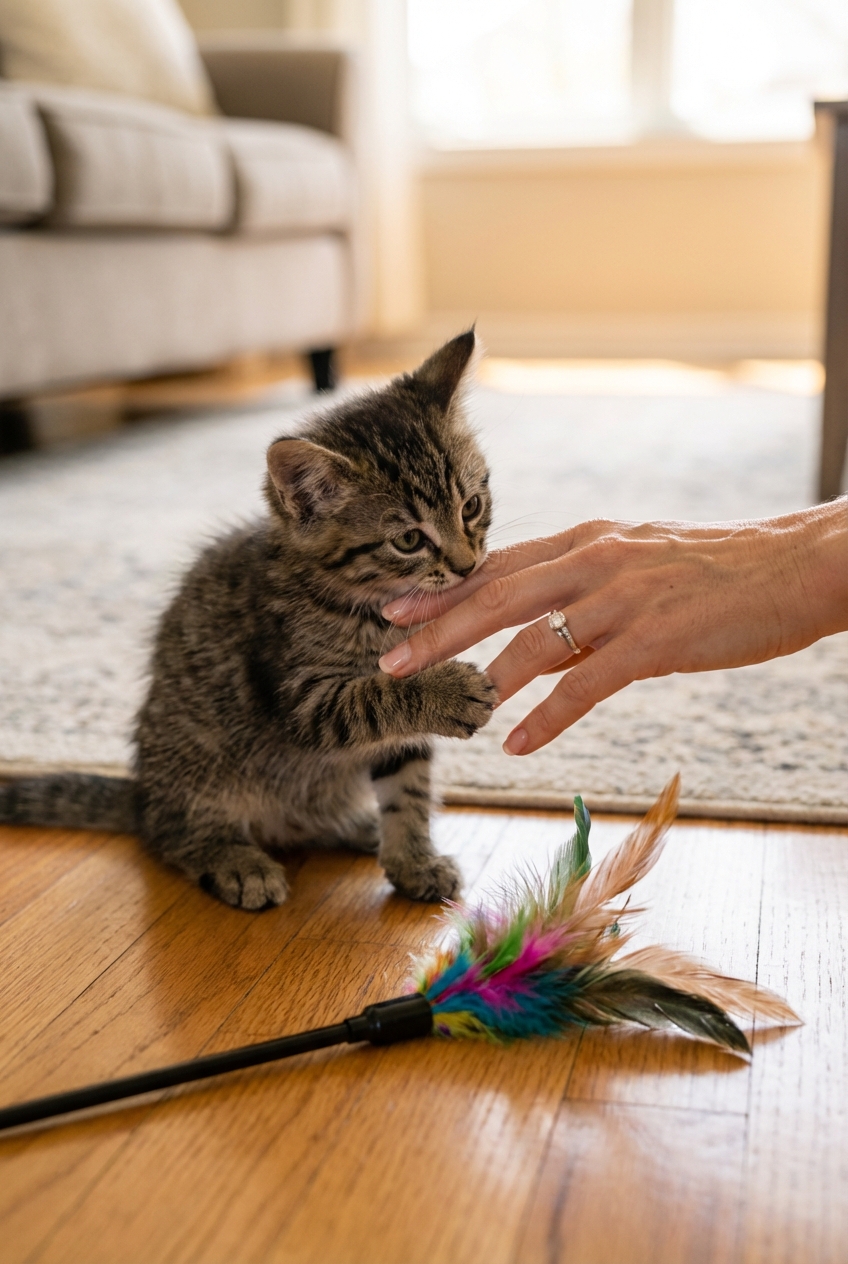
Kittens are born to stalk, pounce, grab, and bite. Your moving hands and feet can look like prey. If biting works, meaning you react dramatically or keep playing with your hands, the behavior gets reinforced.
Teething and mouth exploration
Kittens explore the world with their mouths. Chewing can feel soothing, especially as adult teeth come in. Most kittens get their adult teeth between roughly 3 to 6 (sometimes 7) months of age, with individual variation.
Overstimulation during petting
Some kittens go from “this is nice” to “too much!” quickly. You might see tail twitching, skin rippling, ears turning sideways, or a sudden freeze. A bite in this situation is often a communication signal, not a mean act.
Missed bite inhibition
Kittens usually learn bite control from littermates. When one bites too hard, the other squeals and stops playing. That instant feedback teaches “soft mouth.” Solo kittens, or kittens separated early, may need you to teach this more intentionally. This is sometimes called “single-kitten syndrome,” but it is not a formal diagnosis and it does not mean your kitten is destined to be a biter.
Stress, fear, or pain
If biting seems sudden, intense, or paired with hiding and fear, consider stressors (new home, loud noises, unfamiliar pets). Also consider discomfort. Dental pain, tummy upset, or an injury can shorten a kitten’s patience. If the biting is new and out of character, a vet visit is a smart step.
What to do when biting happens
Once you know why biting happens, your next step is a calm, consistent response in the moment. Big reactions can turn it into a game.
1) Stop movement
If your kitten bites your hand, stop moving your hand. If they ambush feet or ankles, plant your feet and go still. Movement triggers the chase response.
Safety note: If your kitten has a hard clamp or you are worried they will bite down deeper, do not “wait it out.” Instead, gently disengage by placing a pillow, blanket, or towel between you and the kitten, or redirect immediately with a toy.
2) Use a simple cue (optional)
You can use a simple word like “Ouch” or “Too bad” in a neutral tone. You are not trying to scare your kitten, just to mark the behavior. If any verbal cue revs your kitten up, skip it and move straight to ending the interaction or redirecting.
3) Redirect to a toy
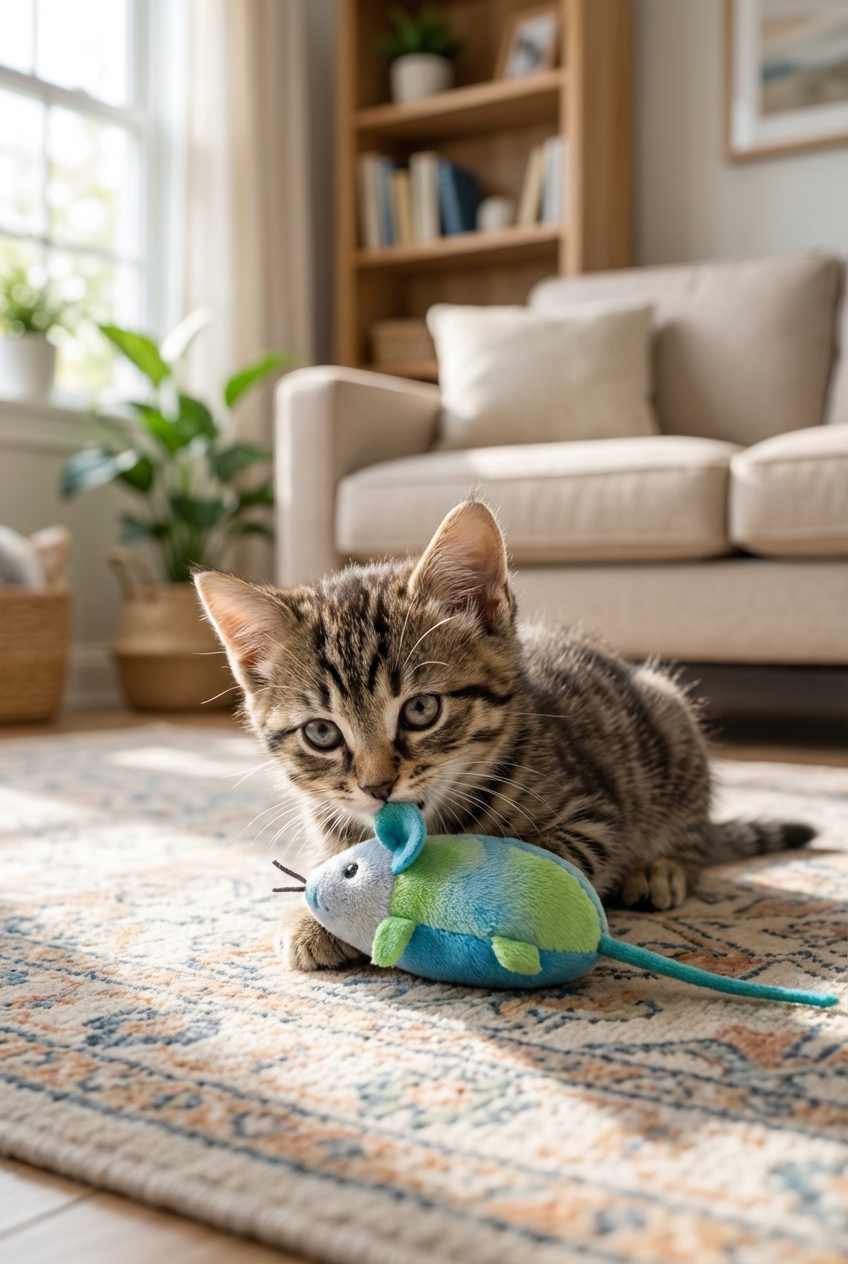
Immediately offer something your kitten is allowed to bite: a kicker toy, plush mouse, or wand toy. The message is “bite this, not me.”
4) End play if biting continues
If your kitten goes right back to biting, calmly stand up and walk away for 30 to 60 seconds. This is a mini time-out for the interaction, not a punishment for the kitten. It teaches: biting makes fun stop.
5) Avoid common mistakes
- Do not hit, flick, or scruff. These can increase fear and worsen biting.
- Do not wrestle with hands. This teaches that skin is a toy.
- Do not push your hand into the mouth. Some advice says this “stops biting,” but it often escalates arousal and can create stronger biting.
Build a routine that works
Most biting improves dramatically when you meet your kitten’s needs for hunting play, enrichment, and predictable rest. Think of it like channeling energy into the right outlets.
Daily play
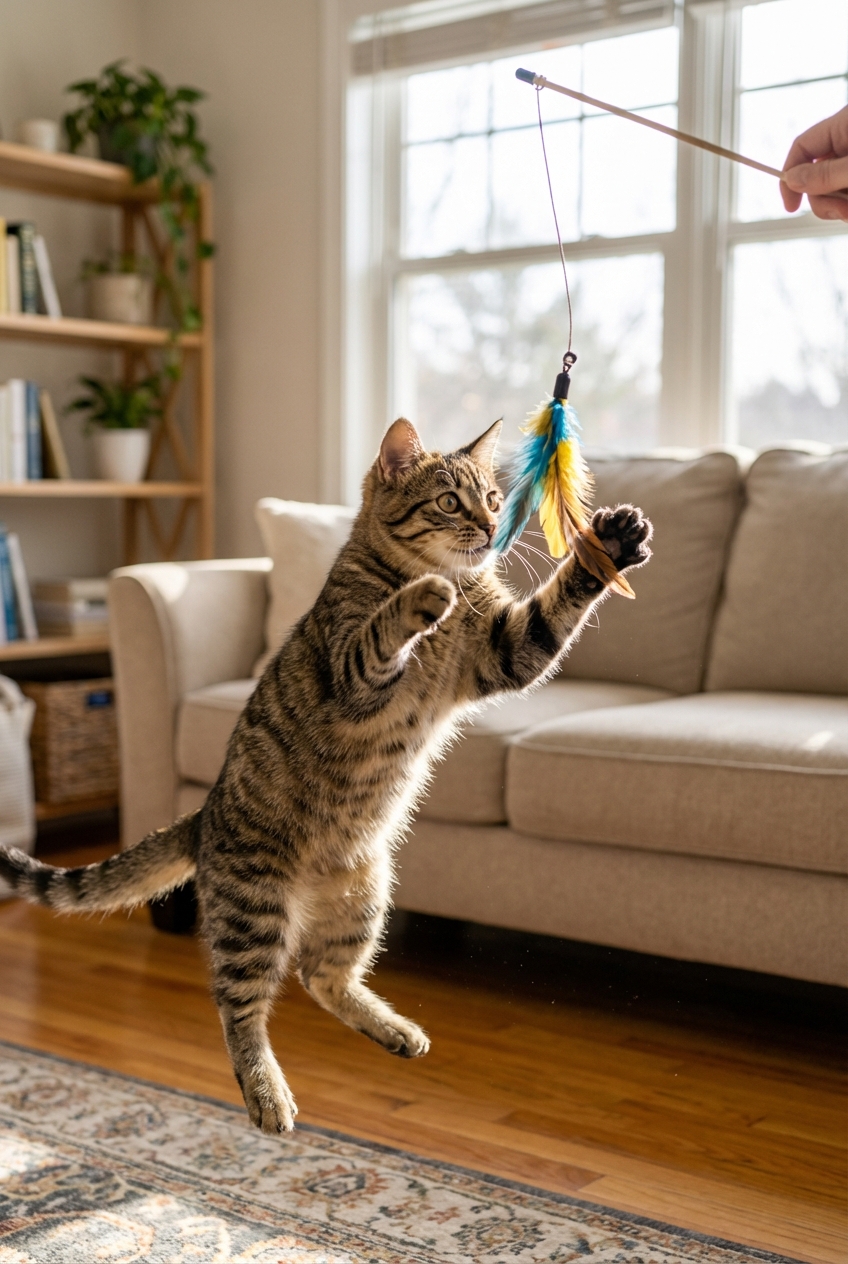
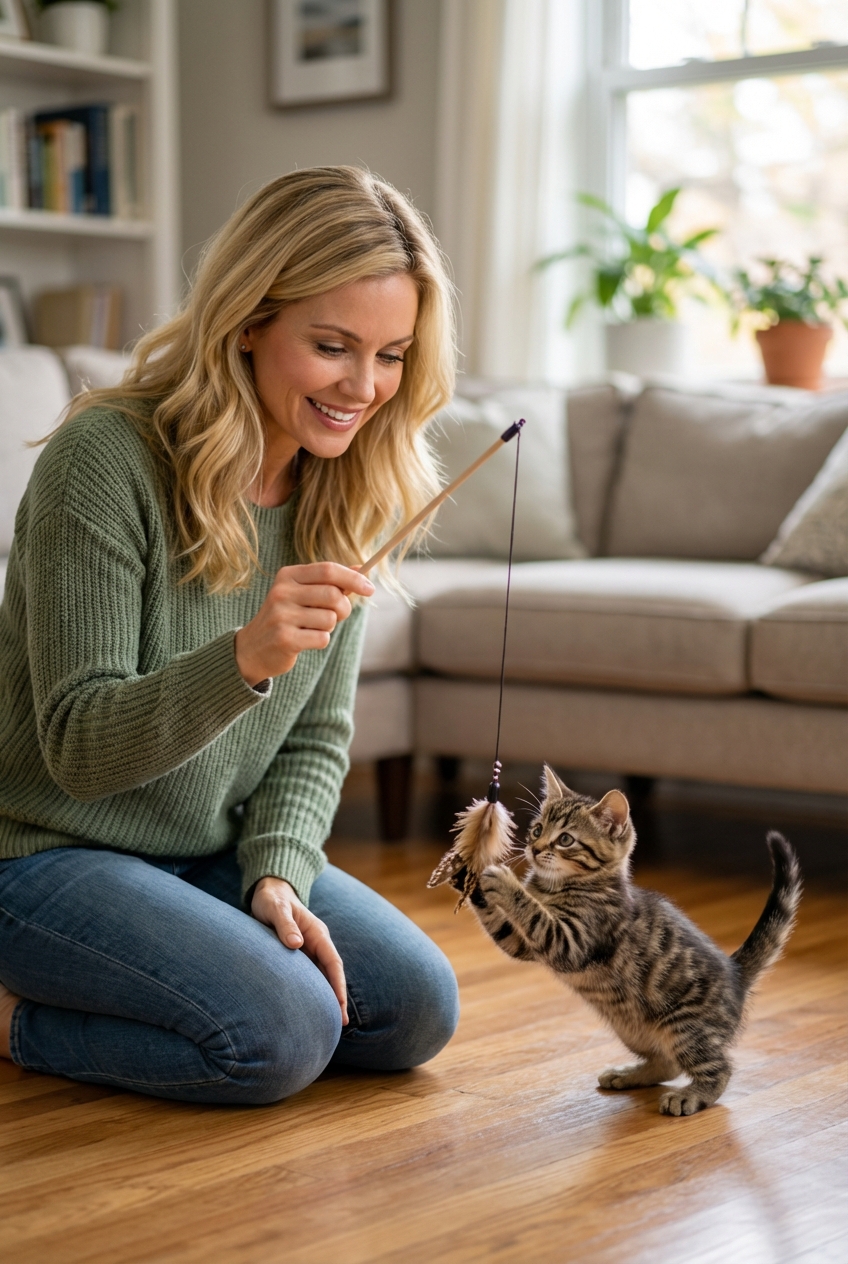
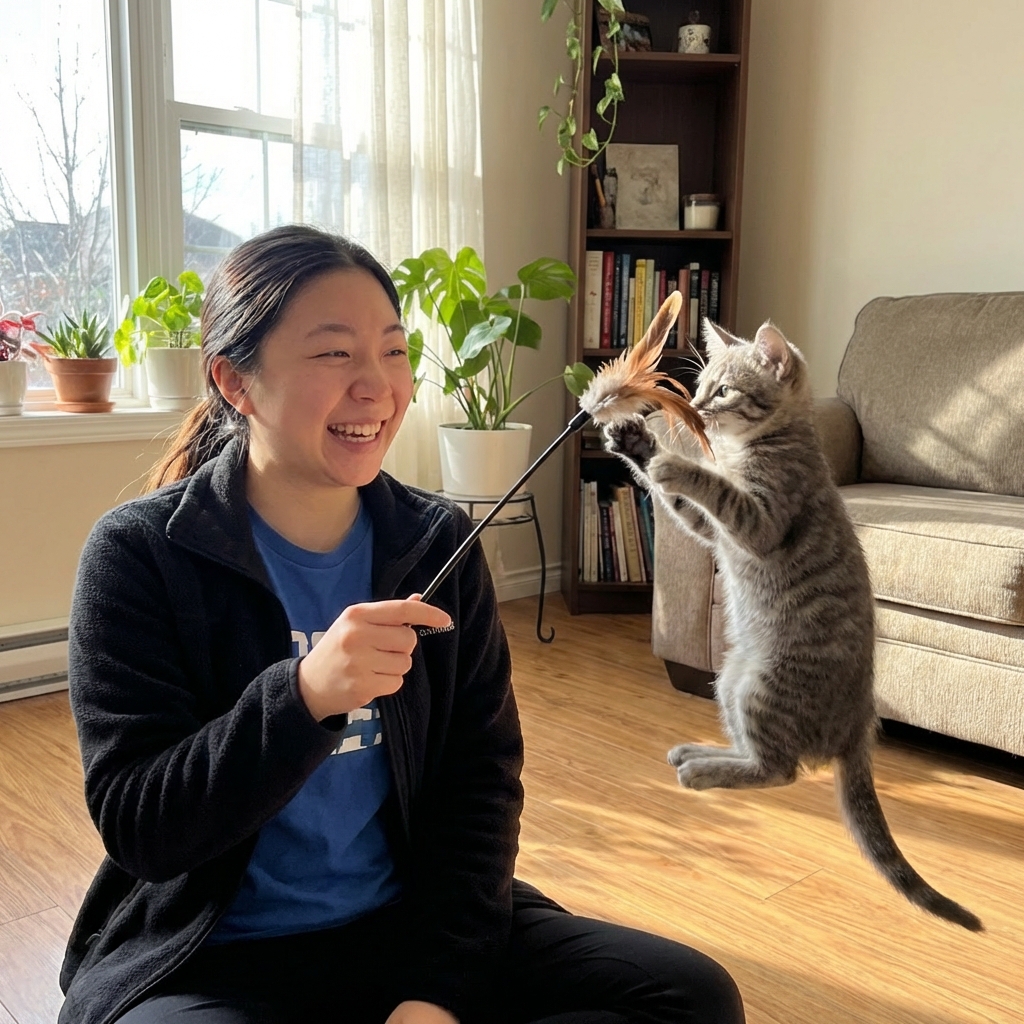
Aim for 2 to 4 play sessions per day, 10 to 15 minutes each. Use wand toys, chase toys, or toys that mimic prey. Let your kitten stalk and “win” sometimes.
Try this simple pattern:
- Hunt (slow movement, hide the toy briefly)
- Chase (speed up)
- Pounce and grab (let them catch it)
- Finish with a small meal or treat (this helps satisfy the hunting cycle)
Safe chew options
For teething kittens, offer safe chew outlets:
- Soft kicker toys
- Durable plush toys
- Cat-specific chew toys made of softer, kitten-appropriate materials (supervise and discard if damaged)
- A washcloth dampened with water and briefly chilled (supervise and remove if it frays)
Avoid giving items that resemble hands, like old gloves or socks. That can blur the line between “toy” and “human.”
Reward gentle behavior
When your kitten approaches your hand without biting, reward that choice. A tiny treat, a calm “good,” or gentle chin rubs can reinforce soft behavior. You are building a habit: calm interactions earn good things.
Prevent petting bites
If your kitten bites during petting, adjust how you pet:
- Keep petting sessions short at first, just a few seconds
- Focus on head, cheeks, and under the chin (many cats prefer these)
- Pause before your kitten gets twitchy or wiggly
- Watch for early signs like tail flicking, ears turning, or skin rippling
Stopping before the bite is one of the fastest ways to reduce petting-related biting.
Lower triggers at home
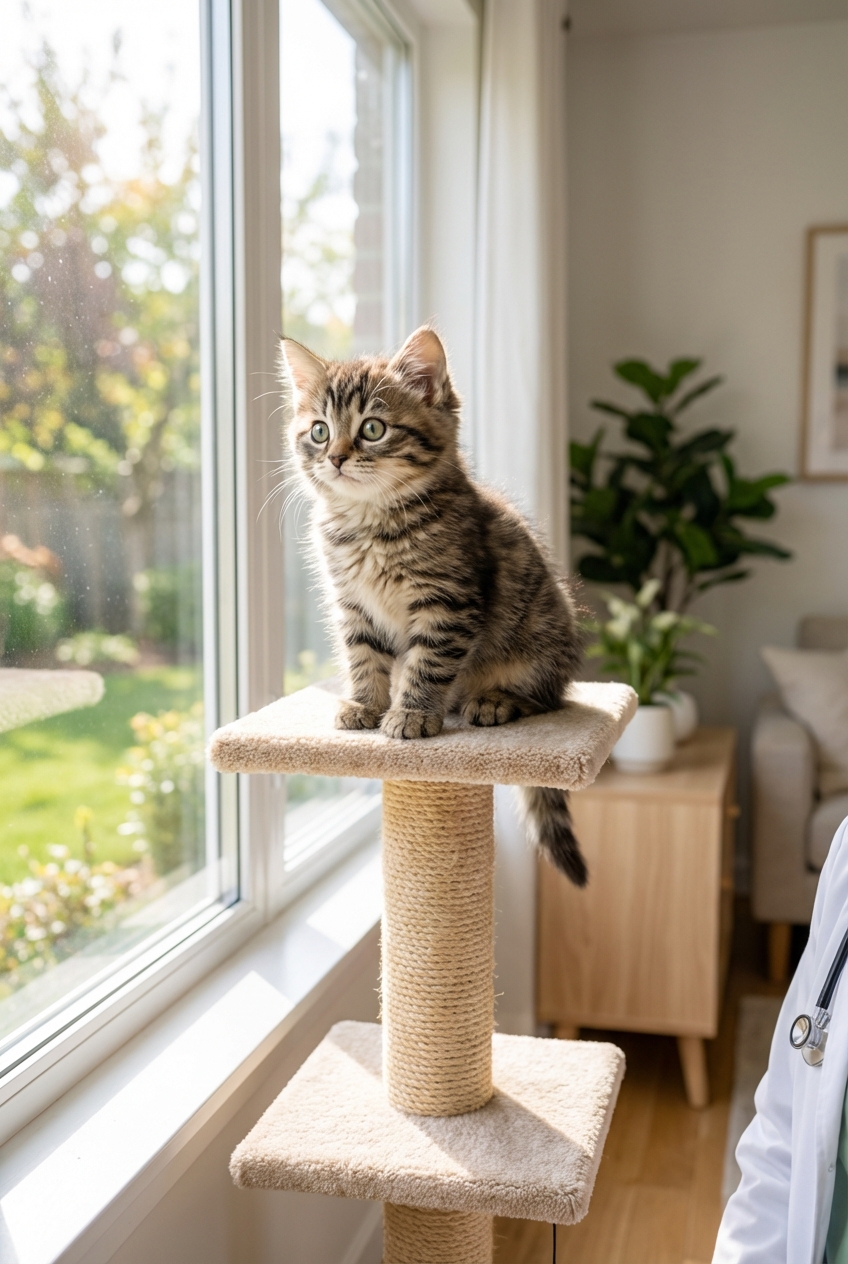
Enrichment reduces “attack the ankles” moments:
- Cat trees and perches near windows
- Scratchers (vertical and horizontal)
- Puzzle feeders or treat balls
- Rotate toys so they stay interesting
Stop ankle attacks
Ankle ambushing is classic kitten behavior, especially in the evening when energy spikes. You can reduce it without turning your home into a battleground.
- Preempt with play. Schedule an energetic play session before your kitten’s usual “zoomies” time.
- Carry a toss toy. Keep a small soft toy in your pocket and toss it away from your feet if your kitten starts stalking.
- Do not run. Running makes you more exciting prey. Walk calmly and redirect.
- Use a wand toy to lead. If your kitten loves chasing feet, guide that chase to a toy instead.
Biting during handling
If biting happens when you pick your kitten up, brush, or trim nails, you are likely moving too fast. The solution is a gentle desensitization plan with rewards.
Make it treat-based
Keep sessions ultra-short (seconds, not minutes) and end on a win:
- Touch paw for 1 second, treat, release
- Touch paw for 2 seconds, treat, release
- Briefly press a nail (no trimming), treat, release
- Clip 1 nail, treat, stop for the day
This slow approach feels tedious, but it pays off. You are teaching your kitten that handling predicts something good, not something scary.
Kids and household safety
Kittens and kids can be a great match, but they need supervision and clear rules. Most “aggressive” kitten moments are actually overexcited play or a kitten who needs a break.
- Teach kids to use wand toys or toss toys, not hands
- Do not allow chasing, grabbing, or cornering
- Provide kitten-only decompression spaces (a cat tree, a quiet room, or a gated area)
- Supervise all play until both child and kitten have consistent, gentle habits
Laser pointers and frustration
Some kittens love laser pointers, but they can get frustrated because there is nothing to catch. If you use one, finish by guiding the dot onto a physical toy your kitten can grab, then follow with a treat or small meal.
Do they need a second kitten?
Not everyone can add another pet, but it is worth knowing that many kittens do well with a compatible kitten buddy. Paired kittens often burn energy together and practice play skills, including bite inhibition. If you are considering it, talk with your vet or shelter about temperament matching and a slow introduction plan.
How fast will this improve?
With consistent responses and better outlets, many families see improvement within 1 to 2 weeks, with bigger changes over 4 to 8 weeks. Teething, adolescence, and growth spurts can cause temporary backslides. That is normal. Stay consistent.
When biting is a red flag
Most kitten biting is normal. Still, some situations deserve veterinary or behavior help.
Call your vet if you notice
- Sudden increase in biting with no clear trigger
- Crying, limping, bad breath, drooling, or pawing at the mouth
- Loss of appetite or hiding more than usual
- Swelling, wounds, or signs of pain
Consider a behavior professional if
- Biting is intense and frequent despite consistent training
- Your kitten seems fearful or defensive often
- There are conflicts with other pets that worsen arousal
Early help matters. Kittens learn quickly, and small adjustments now can prevent long-term habits.
Safety and hygiene for bites
Even tiny teeth can break skin. Cat bites, including small punctures, have a higher risk of infection than many people expect. If you are bitten hard enough to break skin, take it seriously.
- Wash the area right away with soap and running water
- Apply an antiseptic and keep it clean
- Watch for redness, swelling, heat, pus, or increasing pain
- Contact a healthcare provider promptly for bites to the hand, deep punctures, or signs of infection
- Seek care sooner if you are immunocompromised, the wound is a puncture, or you are unsure about your tetanus status
For your kitten, make sure vaccinations are on schedule and discuss parasite prevention with your veterinarian.
Quick checklist
- Hands are never toys
- Stop movement when bitten, then redirect
- If biting repeats, end play for 30 to 60 seconds
- Do 2 to 4 daily play sessions with wand or chase toys
- Offer safe chew and kicker toys for teething
- Keep petting short and watch body language
- Add scratchers, climbing, and puzzle feeding for enrichment
Gentle kittens are not born, they are taught. Consistent, calm boundaries plus the right play outlets can turn a bitey kitten into a confident, well-mannered companion.