Cut your dog’s nails too short and it’s bleeding? Follow calm, step-by-step first aid: firm pressure, styptic powder (or cornstarch), aftercare tips, and...
Article
•
Designer Mixes
How to Stop a Dog Quick From Bleeding

Shari Shidate
Designer Mixes contributor
As a veterinary assistant, I can tell you this happens to almost everyone at some point: you’re trimming nails, your dog wiggles, and suddenly you’ve nicked the quick. It can look dramatic, but most minor quick nicks are very manageable at home if you stay calm and use the right steps. That said, some situations (severe nail tears, very fearful dogs, or dogs with bleeding issues) really do need professional help, and that is completely okay.
This guide walks you through what the “quick” is, how to stop the bleeding fast, what to avoid, and when it is time to call your vet.
What the quick is
The quick is the living center of the nail that contains blood vessels and nerves. When it gets cut, it hurts and it bleeds.
A few helpful details:
- Light nails: the quick is often visible as a pink area inside the nail.
- Dark nails: the quick is harder to see, so small, gradual trims are safer.
- Long nails: the quick can grow longer over time. That means dogs with overgrown nails are more likely to have a quick nick during trimming.
First: stay calm
Dogs read our energy quickly. If you panic, they often struggle more, and that extra movement can disrupt clotting and keep the nail bleeding.
- Move to a well-lit area.
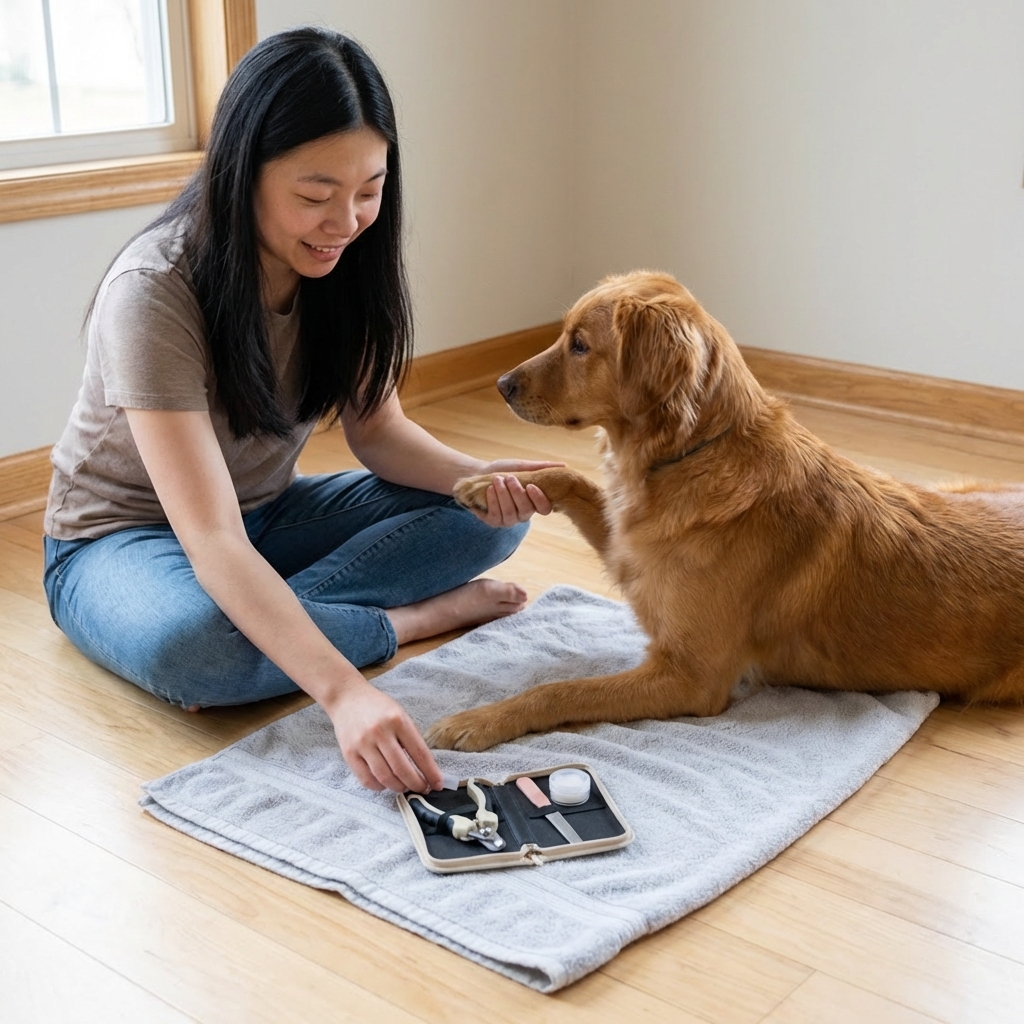
- Have your dog sit or lie down on a towel or washable surface.
- If your dog is anxious, ask a helper to offer a small lick treat while you work.
- If your dog is very fearful or reactive, it is okay to stop and have a groomer or your vet handle the trim safely.
Stop the bleeding
Step 1: Use direct pressure
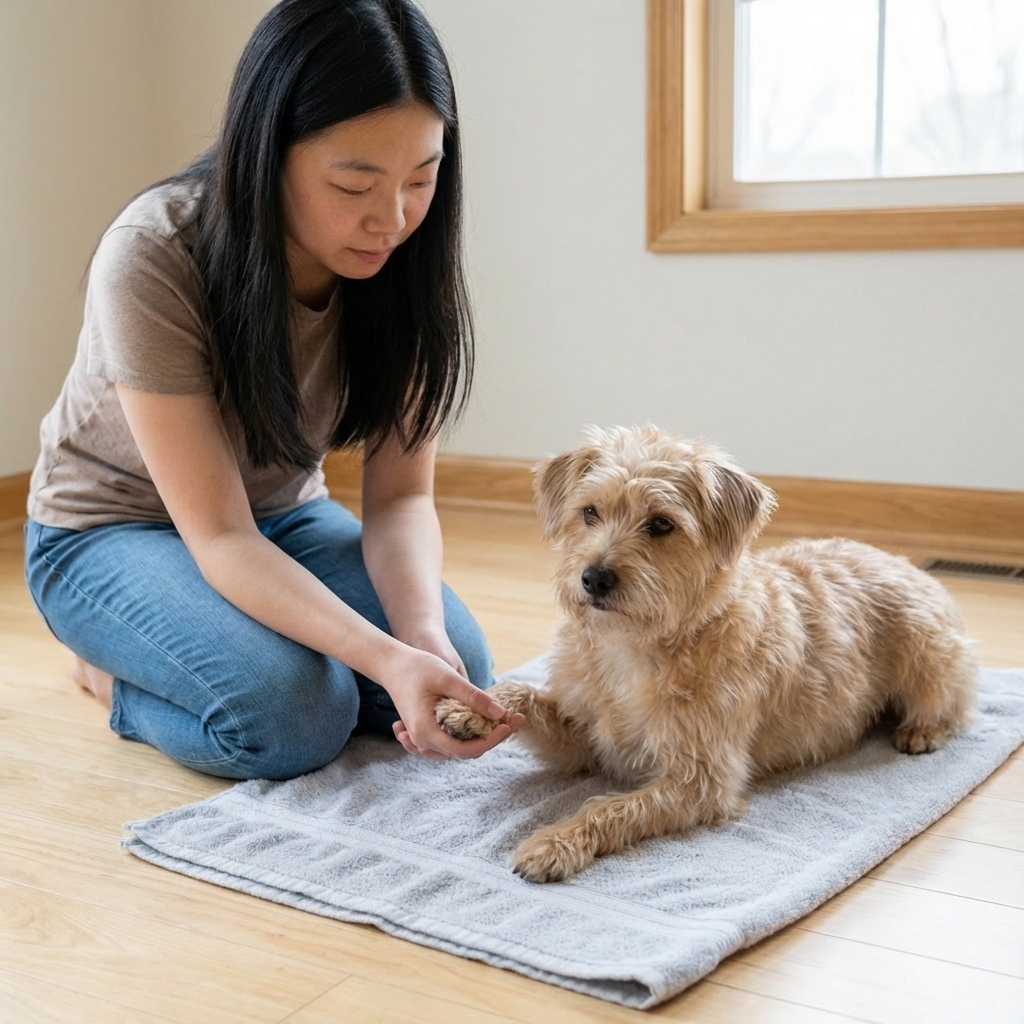
Use clean gauze or a paper towel and apply firm, steady pressure to the nail tip for 2 to 5 minutes without constantly checking. Checking too often breaks up the clot.
Step 2: Use a styptic product
If you have it, a styptic product is usually the quickest fix.
- Styptic powder (common in pet nail kits) is usually the easiest and most reliable.
- Styptic pencil can work too, but pet-specific products are preferred when possible.
How to apply styptic powder:
- Blot excess blood quickly.
- Dip the bleeding nail tip into the powder or pack a pinch of powder onto the nail tip.
- Hold firm pressure for about 30 to 60 seconds.
What to expect: your dog may react because styptic products can sting briefly. That sting is usually short-lived.
Step 3: If you do not have styptic powder
In a pinch, you can try:
- Cornstarch (pack it on like styptic powder)
- Flour (works similarly, often a bit messier)
These backups are less reliable than styptic powder and can be messier. If you use them, apply a small amount to the nail tip, then hold firm pressure for 60 seconds. Reapply with fresh cornstarch or flour and repeat in 60 second intervals if needed.
Tip: If you have a nail trim kit at home, I strongly recommend adding styptic powder. It is inexpensive, stores well, and reduces stress for everyone.
What not to do
- Do not use hydrogen peroxide on the nail to “clean it.” It can irritate tissues and may slow healing.
- Do not use rubbing alcohol on the wound. It stings and is not necessary for a simple quick nick.
- Do not use super glue or household adhesives on the nail unless your veterinarian specifically instructs you to. It can trap debris and irritate the tissue.
- Do not bandage too tightly. If you wrap the paw, make it snug but not constricting. Toes should stay warm and normal colored. Remove the wrap within 30 to 60 minutes, and do not leave a wrap on unsupervised.
- Do not keep trimming nails that day. End the session once a quick is nicked. You want your dog to calm down and let a solid clot form.
How long will it bleed?
With direct pressure and a styptic product, most quick nicks stop bleeding within a few minutes.
Bleeding may restart if your dog runs around on hard floors or licks the nail aggressively. After it stops:
- Keep activity calm for 30 to 60 minutes.
- Prevent licking if needed (an e-collar can be helpful for persistent lickers).
- Keep your dog off light carpet, bedding, and couches until you are confident the clot is stable (blood stains happen fast).
- Check the nail a few times over the next couple of hours for re-bleeding.
When to call your vet
Please contact your veterinarian or an emergency clinic if:
- Bleeding does not stop after 10 to 15 minutes of proper pressure plus a styptic product.
- The nail is cracked, split, or partially torn (these can keep bleeding and are painful).
- Your dog seems unusually weak, pale-gummed, or very distressed.
- Your dog is on medications that can affect bleeding or clotting (for example, aspirin, clopidogrel, anticoagulants, or other medications your vet has warned you about). If you are unsure, call and ask.
- Your dog has a history of easy bruising or prolonged bleeding, which can indicate a clotting disorder.
Also call your vet if you notice possible infection or ongoing pain later: swelling, heat, discharge, persistent licking, or limping that continues into the next day.
Preventing quick nicks
Tiny trims
Especially for dark nails, take off small slivers at a time. Look at the cut surface of the nail:
- As you get closer to the quick, you may see a darker, softer center.
- Stop before you reach that center.
Try a grinder
A nail grinder can let you remove small amounts more gradually. Many dogs tolerate it well with slow desensitization and treats.
Trim more often
For dogs with long nails, frequent small trims can encourage the quick to move back over time. Many pets do well with trims every 1 to 2 weeks, depending on their nails and lifestyle.
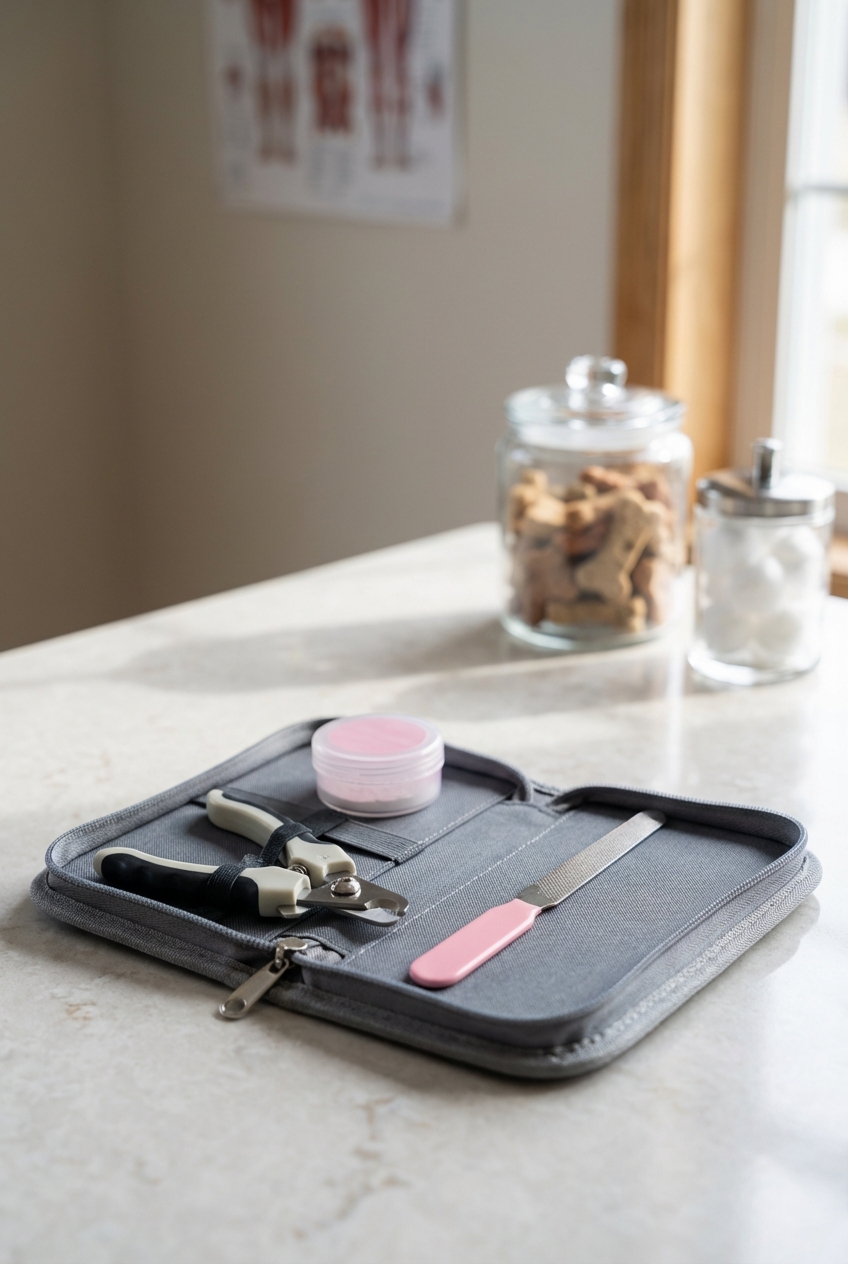
Quick home checklist
- Clean towel or gauze
- Styptic powder (or cornstarch as backup)
- Good lighting
- High-value treats for distraction
- Optional: e-collar if licking is intense
If you keep these basics on hand, a quick nick turns from a scary moment into a simple, solvable problem.