Turn tug-of-war walks into calm strolls. Learn why dogs pull, the best harness and leash setup, plus step-by-step loose-leash training, rewards, and troubles...
Article
•
Designer Mixes
How to Stop a Dog From Pulling on the Leash

Shari Shidate
Designer Mixes contributor
If your dog pulls on leash, you are not alone. As a veterinary assistant here in Frisco, Texas, I see it every week: sweet dogs that turn into tiny freight trains the moment the leash clips on. The good news is that leash pulling is often a training and equipment issue, not a “bad dog” issue. Sometimes it also has a medical or stress component, which is why I mention health checks early and again below.
Below you’ll find evidence-informed facts, practical steps, and a simple plan you can start today to help your dog walk more calmly and safely.
Why dogs pull
Pulling is a self-rewarding behavior. When your dog pulls and you keep moving forward, the environment rewards the pulling with what your dog wants: forward motion, scents, people, squirrels, and new places.
Common reasons
- They are excited or under-exercised: A dog with a full tank of energy often struggles with impulse control.
- They are anxious or overstimulated: Pulling can be a stress response, especially in busy neighborhoods.
- The gear makes it easier: Some setups (like many back-clip harnesses) can give a dog more leverage to lean into the leash.
- They were accidentally trained to pull: Most of us have, at some point, let our dog drag us to the “good stuff.” That teaches the pattern quickly.
- Something hurts: Pain or discomfort (paws, joints, neck, ears, or a rubbing harness) can change the way a dog moves and reacts on walks.
Training works best when you remove the reward for pulling and make loose-leash walking the fastest way to get where your dog wants to go.
Safety and the right gear
Before we talk training, set yourself up for success. Equipment will not “fix” pulling by itself, but the right setup can make training easier and safer for both of you.
My go-to picks
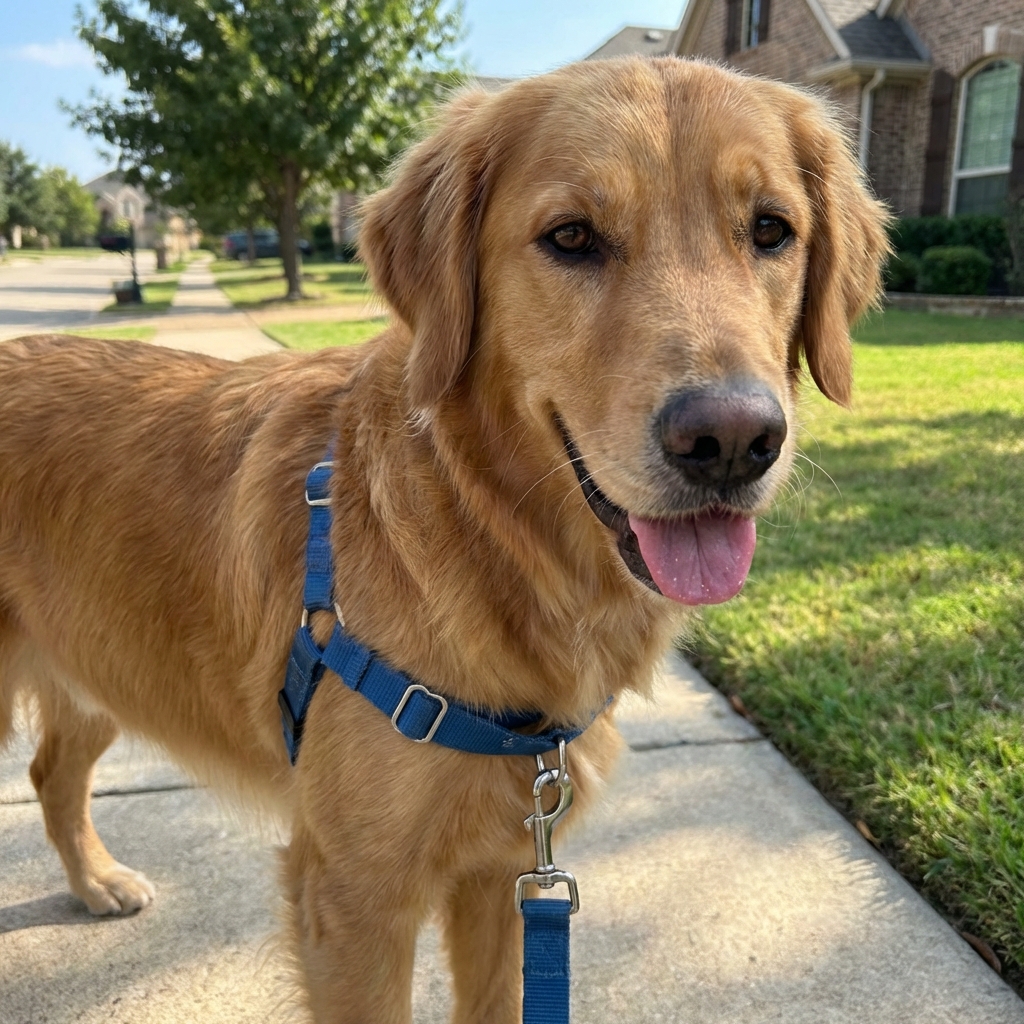
- Front-clip harness: May reduce pulling for many dogs by redirecting their chest and momentum when they surge forward. Results depend on fit, design, and practice. If you notice rubbing, restricted shoulder movement, or an odd gait, reassess fit or try a different style.
- Head halter: Can be very effective for strong pullers, but it must be introduced slowly and used correctly. The main risk is sudden lateral torque (a “whiplash” effect) if a dog lunges. Keep the leash slack as much as possible, avoid leash pops, and consider a safety backup connection to a harness or collar.
- Standard 4 to 6 foot leash: A fixed-length leash gives clearer feedback than a retractable leash for most training sessions.
- Long line (for sniff walks): Not for busy sidewalks, but a 10 to 20 foot long line can be great for safe decompression and sniffing in open areas while you keep training separate and structured.
Fit matters: A harness should be snug enough that you can fit two fingers under straps, not so loose that it shifts or rubs. Check the armpit area for chafing.
Avoid these for routine training: Retractable leashes and aversive tools used without professional guidance can increase risk of injury or fear-based reactions. By “aversive,” I mean tools or techniques designed to add discomfort to reduce behavior, like prong collars, e-collars, or leash pops. If you are considering any of these, I strongly recommend consulting a qualified trainer and your veterinarian first.
What “loose leash” means
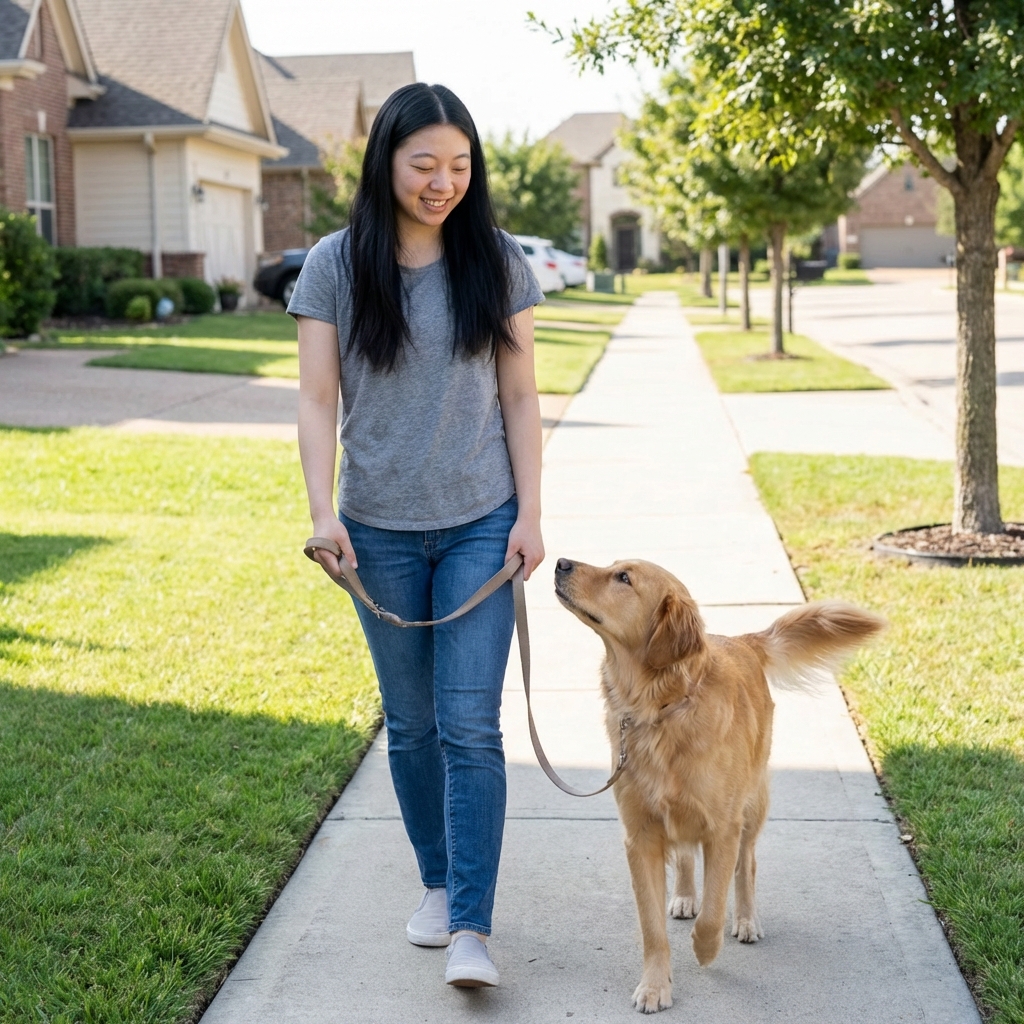
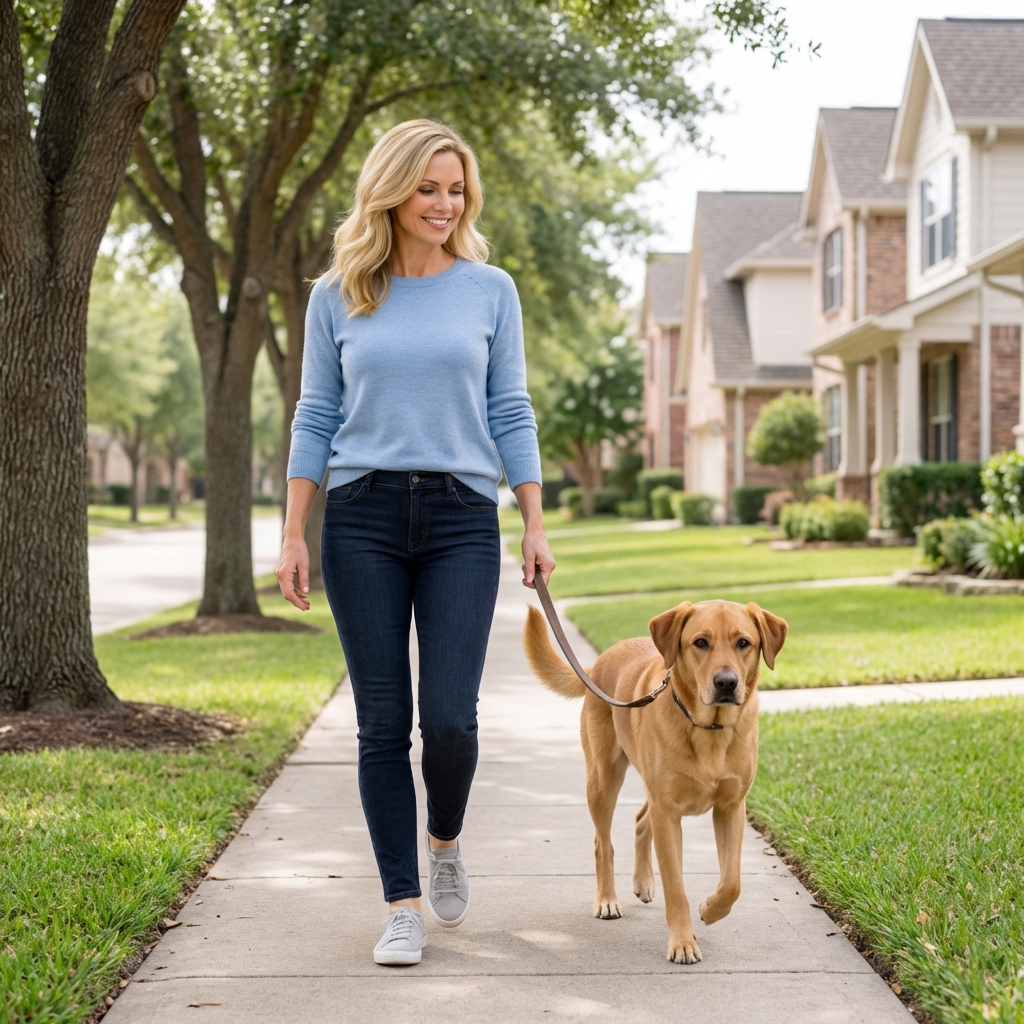
Loose-leash walking means the leash stays slack most of the time, with your dog generally near you. It does not require a rigid heel, and your dog can still sniff and enjoy the walk. Think of it as polite walking with freedom.
Your success zone
Decide where you want your dog: at your side or slightly in front, as long as the leash stays loose. Consistency matters more than perfection.
Pick a real reward
For many dogs, kibble is not exciting enough outdoors. Try pea-sized pieces of chicken, turkey, or a soft training treat. You can also use a life reward like “go sniff” as payment for good walking.
If your dog will not take treats outside: That usually means the environment is too intense or the reward is too low value. Try higher-value food, more distance from distractions, a quieter location, or use life rewards (sniffing, greeting, moving forward) as your paycheck.
A simple plan
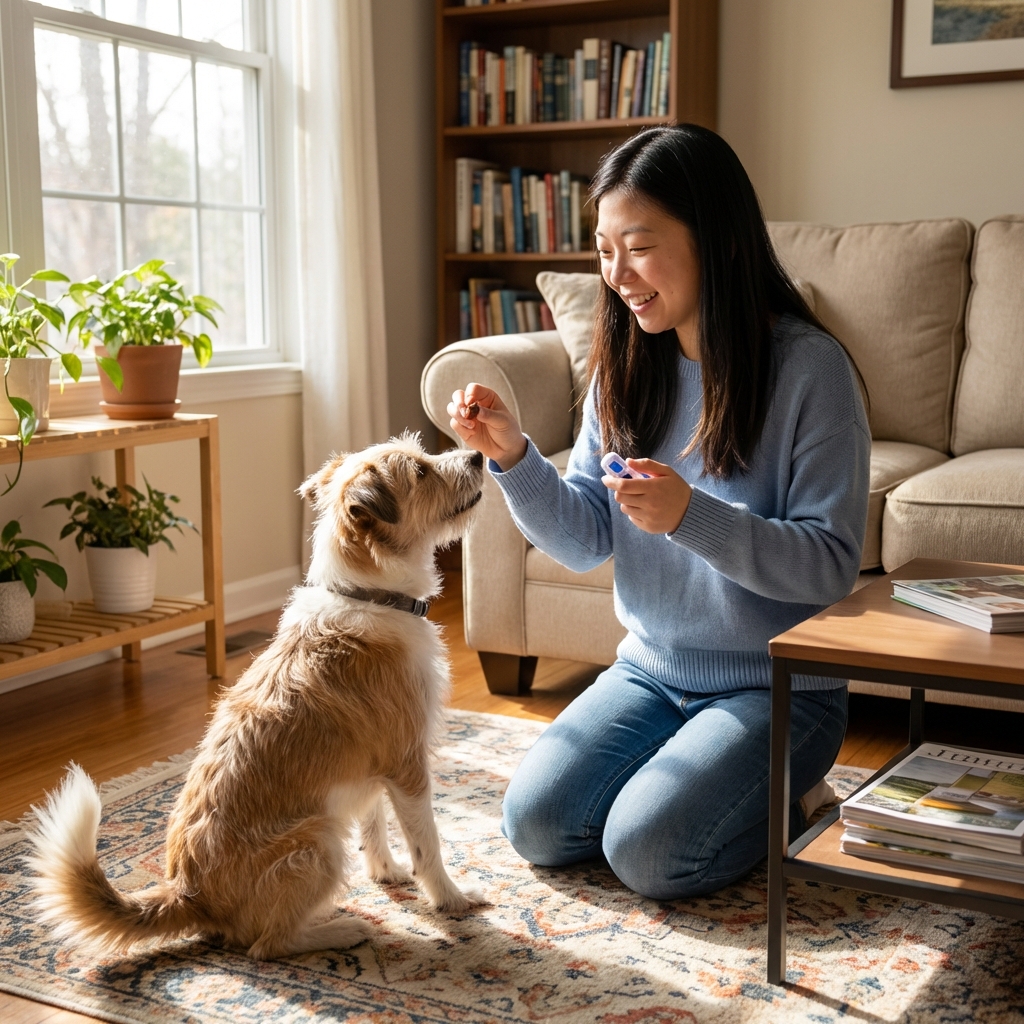
Step 1: Train in a quiet spot
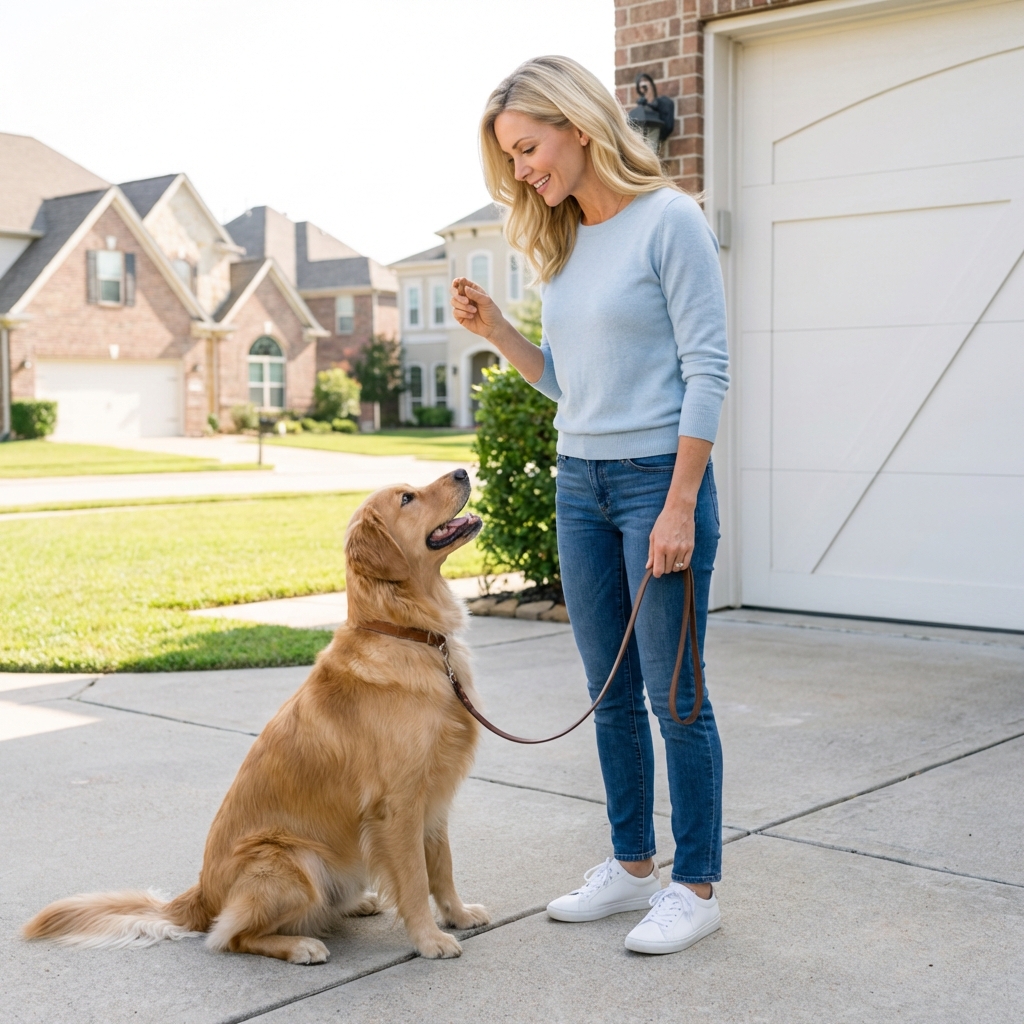
Start in your living room, backyard, or driveway. If your dog cannot succeed there, the neighborhood walk will be frustrating for both of you.
- Stand still with your dog on leash.
- When your dog looks at you or steps into your success zone, say a marker word like “yes” (a consistent word that tells your dog a reward is coming) and give a treat.
- Take 1 to 3 steps. If the leash stays loose, mark and treat.
- Repeat for 2 to 5 minutes.
Step 2: Stop when the leash goes tight
The moment the leash tightens, stop moving. Quietly wait. The second your dog releases tension by stepping back, turning toward you, or even just loosening the leash, mark and reward, then continue walking.
If you get stuck in a stalemate: After a few seconds of waiting, calmly pivot and walk 3 to 5 steps the other direction, then reward when your dog catches up in your success zone. You can also use a treat at your knee to help them reset, but try not to lure constantly. We want your dog choosing the loose leash, not just following food.
This works because it removes the reward (forward movement) when pulling happens and restores it when the leash is loose.
Step 3: Add sniff breaks on purpose
Sniffing is enriching and often calming for many dogs, but some dogs get more amped up. Pay attention to your dog’s body language and adjust.
- Ask for a loose leash for 5 to 10 steps.
- Say “go sniff” and walk to a safe patch of grass as the reward.
- After 10 to 20 seconds, call your dog back to your success zone and repeat.
Step 4: Add distractions gradually
Once your dog can walk with a loose leash in your driveway, move to the quietest street, then busier areas later. If your dog starts pulling again, you moved too fast. Go back to an easier environment and rebuild.
Smart management
Training is faster when your dog is not rehearsing the pulling habit every day. A few management tweaks can protect your progress.
- Choose easier routes and times: Walk when the neighborhood is quieter if your dog struggles with distractions.
- Keep walks short and winnable: Do a 5 to 10 minute training loop instead of a long walk where pulling takes over.
- Use food scatter strategically: If your dog is getting revved up, toss a few treats into grass and let them sniff it out, then reset back to loose-leash practice.
What the evidence supports
Rewards protect the relationship
Reward-based training builds reliable behavior with minimal risk of increasing fear or stress when implemented appropriately. In clinic settings, dogs trained with positive methods often handle handling, exams, and grooming with less anxiety because they have learned that cooperation pays.
Short sessions work
Most dogs learn leash manners faster with several short sessions per week. Five minutes of focused practice can do more than a long walk filled with pulling rehearsals.
Pain changes behavior
If your dog suddenly starts pulling more, lagging behind, or reacting to touch, it is worth checking for orthopedic pain, paw issues, ear infections, or poorly fitted gear. I have seen subtle soreness show up as “bad walking” more times than I can count.
Helpful references
- American Veterinary Society of Animal Behavior (AVSAB): Position statements on humane training and behavior guidance
- Studies and reviews comparing reward-based training and aversive methods often find higher risk of stress and behavior fallout with aversives
Troubleshooting
“My dog pulls most at the start”
- Do 1 to 2 minutes of treat-based practice in your driveway before heading out.
- Try a quick decompression sniff in the yard first.
- Make sure the first 30 seconds are not a sprint to the exciting corner.
“My dog pulls toward dogs or people”
- Create distance. Training works best under threshold, meaning your dog can still think and take treats.
- Reward your dog for noticing the trigger and looking back at you.
- Consider working with a certified trainer if your dog is lunging, barking, or panicking.
“My dog is strong and I’m worried”
- Use a front-clip harness or head halter with proper conditioning and a safety backup connection.
- Keep sessions short and controlled.
- If you have back, shoulder, or balance issues, ask your vet or trainer about additional safety options.
“Nothing works outside”
This usually means the environment is too distracting for your dog’s current skill level or your rewards are not valuable enough. Go back to quieter spaces, upgrade treats, and build up slowly.
Timeline
Many dogs show improvement in 1 to 2 weeks with consistent practice, but lasting habits often take 4 to 8 weeks, especially for adolescent dogs or those with months or years of pulling history. Progress is not perfectly linear. Celebrate the small wins.
My best advice: Do not wait for “the perfect walk” to reward your dog. Reward the moments you like, even if they only last two seconds at first. Those two seconds turn into ten, then thirty, then a whole block.
When to get help
Get professional help if you notice:
- Sudden behavior change, limping, or sensitivity to harness or collar pressure
- Lunging, snapping, or intense fear on walks
- Choking, gagging, or breathing issues during walks
- You feel physically unsafe handling your dog
Look for trainers who use humane, reward-based methods and who can coach you in real-world environments.