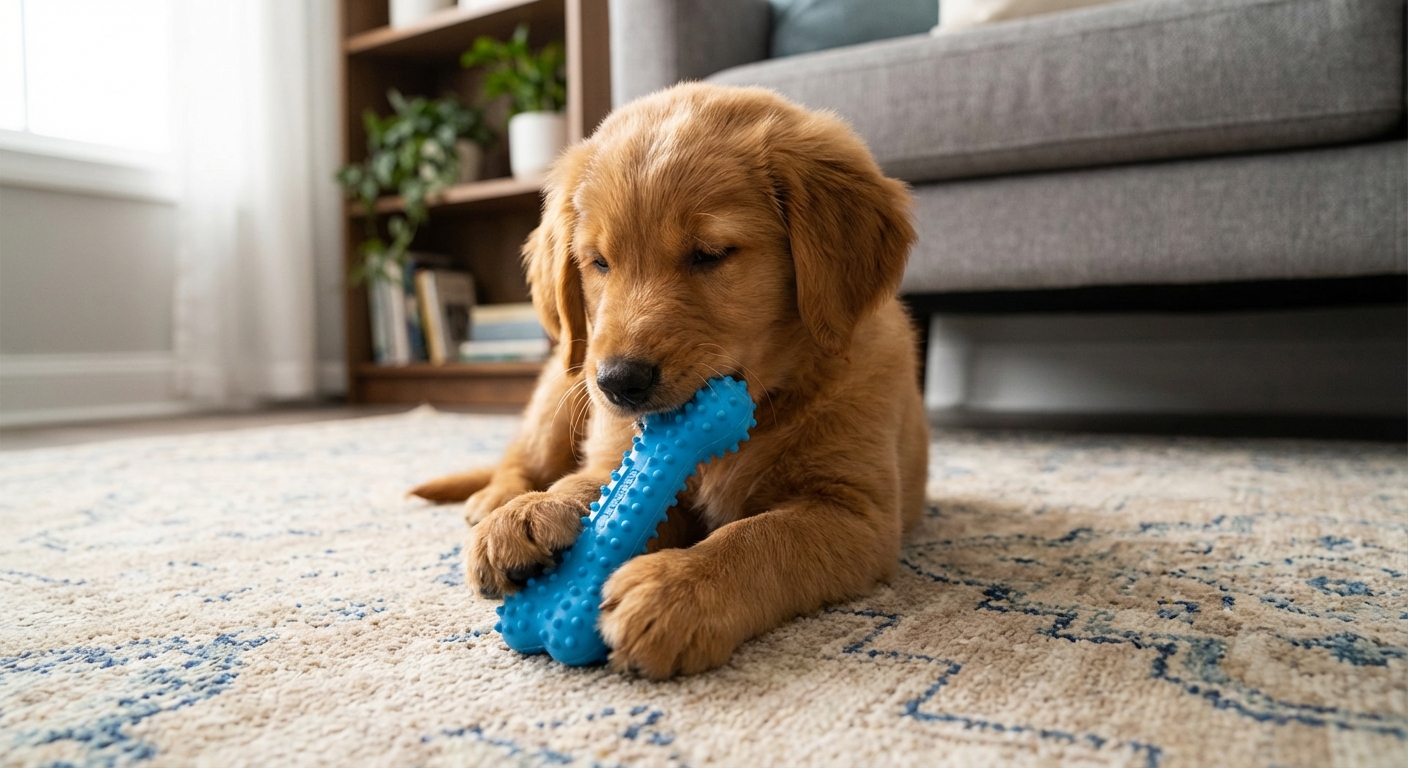
Puppy biting is usually normal. Learn why it happens and how to reduce it fast with redirects, reverse time-outs, calm breaks, naps, enrichment, and teething...
Article
•
Designer Mixes
How to Stop a Dog From Mouthing

Shari Shidate
Designer Mixes contributor
Mouthing is one of the most common reasons people tell me, “My dog is sweet, but those teeth are everywhere.” The good news is that most mouthing is normal, teachable behavior, especially in puppies and adolescent dogs. With a few veterinarian-recommended, behavior science-based strategies, you can teach your dog that human skin is never a chew toy, while still meeting their needs for play, comfort, and stress relief.
Quick note: If mouthing is persistent, escalating, or you are worried about safety, check in with your veterinarian and a qualified trainer early. It is always easier to help a habit that is still small.
What mouthing is (and what it is not)
Mouthing is when a dog uses their mouth to explore, hold, or play with you without the intent to injure. Dogs do this the way toddlers use hands. Puppies mouth because they are learning bite pressure, teething, and social rules.
Biting is different. Biting often involves fear, guarding, pain, or a desire to create distance. It may include punctures, bruising, repeated snapping, stiff posture, or escalating intensity.
Quick self-check
- Likely mouthing: loose body, bouncy movement, play face, stops when redirected.
- Potential problem bite: hard stare, freezing, growling, guarding, lunging, punctures, or bites that happen when the dog is handled or approached near food or toys.
If you are seeing signs of fear or aggression, skip the DIY approach and talk with your veterinarian and a qualified trainer or veterinary behaviorist. Safety first, always.
Extra safety note: Any bite to the face, any bite involving a child, or repeated bites that break skin should be treated as urgent and needs professional help.
Why dogs mouth
Stopping mouthing is easier when you address the “why” behind it. Here are the big ones I see in clinics and foster homes:
- Teething: Most puppies begin teething around 3 to 4 months, with adult teeth coming in by about 6 months (timing can vary by individual and breed). Sore gums drive chewing and grabbing.
- Overstimulation: Many dogs mouth most when they are tired, overexcited, or not sure what to do with all that energy.
- Reinforced behavior: If mouthing makes you squeal, push, chase, or keep playing, your dog may think, “This works.”
- Lack of appropriate outlets: Dogs need legal chewing and structured play, not just “don’t do that.”
- Pain or discomfort: Dental pain, arthritis, ear infections, or skin irritation can lower tolerance and make a dog more mouthy or reactive.
First rule: no hands as toys
This sounds obvious, but it is the #1 habit that keeps mouthing alive. Avoid wrestling with hands, tapping the dog’s face, or letting kids wave fingers near the mouth. If your dog gets mouthy during petting, keep sessions short and pause before they ramp up.
Kid safety note: Teach children to be “tree” if a dog mouths: stand still, arms crossed, eyes looking away, quiet body. Then the child should call an adult. An adult can calmly redirect the dog to a toy and create space.
The veterinarian-recommended plan
1) Replace skin with a toy, every time
Keep a few toys in every room where you spend time. When teeth touch skin:
- Stay calm and still.
- Offer a toy right at the dog’s mouth.
- Praise when they take the toy, and engage for a few seconds of gentle play.
This is not “rewarding bad behavior.” It is teaching the correct target: toys, not people.
2) Use a brief pause when they ignore the toy
If your dog continues to mouth after you offer a toy, remove attention for 10 to 20 seconds. Think of it as a calm reset, not a punishment.
- Stand up and turn away.
- Step behind a baby gate.
- Calmly move the dog to a safe, puppy-proofed pen or gated area for a brief break.
Crate note: If your crate is your dog’s happy rest space, avoid using it for time-outs. Keep the crate for calm, positive downtime and use a gate or pen for quick pauses.
Then return and try again. Many dogs learn quickly when “teeth on skin makes fun stop” and “teeth on toy makes fun continue,” but consistency over time is what makes it stick.
3) Teach “gentle” and reward soft mouths
Many dogs need clear feedback on pressure. When your dog takes a treat, say “gentle.” If they grab hard, close your hand and wait one second. When they lick or take softly, open your hand and reward.
This exercise builds impulse control without scolding.
4) Add impulse control skills
These cues help a lot because they give your dog something to do instead of grabbing you:
- Sit for greetings
- Touch (nose to hand) to redirect excitement
- Leave it for hands, sleeves, and pant legs
- Drop it to end grabby play safely
- Place or mat for calm settling
Hand target note: For very mouthy adolescents, keep your hand low and still, and reward fast. If your dog cannot do it without grabbing, switch to targeting an object (like a target stick, lid, or a sticky note on the wall) so you can redirect without putting your hands near the mouth.
5) Increase the right enrichment
A mouthy dog is often an under-fulfilled dog. Aim for a mix of physical exercise and brain work:
- Food puzzles and stuffed rubber toys
- Snuffle mats and scatter feeding
- Short training sessions (3 to 5 minutes)
- Decompression walks (lots of sniffing, low pressure)
If you have a herding breed or a high-arousal teenager dog, add structured outlets like tug with clear rules (start and stop cues, “drop it”) or a flirt pole session that includes impulse control. Keep exercise age-appropriate, especially for young puppies. More is not always better.
6) Build in rest
Puppies and adolescents get bitey when their brains are fried. Create a simple rest routine with a crate or quiet room and a safe chew. If your dog gets wild and mouthy every evening, that is often a bedtime and regulation problem, not just a training problem.
Teething help
If your puppy is teething, comfort matters. Try these options that many veterinarians are comfortable with:
- Chilled chew toys (cool, not frozen-solid if your puppy is a hard chewer)
- Frozen stuffed rubber toy with a thin layer of plain yogurt or canned pumpkin
- Wet washcloth twisted into a rope and chilled in the fridge (supervise closely)
Supervision note: Monitor all chews, especially frozen or stuffed toys, and pick up anything that starts to break, shred, or could be swallowed.
Avoid anything that can crack teeth. A common rule of thumb: if you cannot indent it with a fingernail, it may be too hard for many dogs. Also be cautious with very hard items like antlers, cooked bones, hooves, and hard nylon-style chews, which can increase fracture risk for some dogs.
Management while you train
Training takes time. Management prevents your dog from rehearsing the behavior while you build new habits:
- Use gates and pens to separate when everyone is wound up.
- Try an indoor drag line (a lightweight leash with the handle removed) so you can guide your dog away without grabbing a collar.
- Set yourself up for success with long sleeves and sturdy pants during the training phase, especially with teen dogs who nip at clothing.
- Have toys within reach in every main room so you can redirect fast.
Common mistakes
- Yelling or physical corrections: This can increase arousal or create fear, and it often worsens biting.
- Aversive “dominance” moves: Alpha rolls, muzzle-grabbing, holding the mouth shut, and scruff shakes can increase fear and make biting more likely.
- Playing “keep away” with hands: Fast movement triggers chasing and nipping.
- Inconsistent rules: If mouthing is allowed sometimes, your dog will keep trying.
- Using bitter sprays on skin: Not reliable, and it does not teach what to do instead.
When to call your veterinarian
Please contact your veterinarian promptly if you notice any of the following:
- Mouthing is sudden or new in an adult dog
- Your dog seems painful when chewing, yawning, or being touched
- Bad breath, drooling, pawing at the mouth, bleeding gums, or a visible broken tooth
- Growling, stiffening, guarding, or bites with punctures
- Biting that happens during handling, harnessing, nail trims, or when approached while resting
Pain and medical issues can absolutely change behavior, and it is not something you want to guess at.
A simple 7-day reset
Days 1 to 2: Set up
- Place toys in every main room.
- Add a baby gate or pen for quick resets.
- Choose 1 to 2 chews your dog loves.
Days 3 to 5: Practice
- Teeth touch skin: freeze, toy goes to mouth, praise.
- If ignored: 10 to 20 second pause behind a gate or in a pen, then reset.
- Do two short “gentle” sessions daily with treats.
Days 6 to 7: Add skills
- Ask for sit and touch (or an object target) before play.
- End play while it is still going well, not when it falls apart.
- Increase enrichment, especially sniffing and food puzzles.
Some families notice early improvement within 1 to 2 weeks. Lasting change usually takes several weeks of consistent practice, especially for high-energy adolescents.
Bottom line
Mouthing is normal, but it does not have to be part of your daily life. When you calmly remove attention for teeth on skin, provide plenty of legal chewing options, and teach simple impulse control cues, most dogs improve significantly over time. Go slowly, stay consistent, and do not hesitate to loop in your veterinarian if you suspect pain or if the behavior feels intense or unsafe.