Indoor marking isn’t spite—it’s communication. Learn how to tell marking from accidents, rule out medical causes, clean properly, manage freedom, and r...
Article
•
Designer Mixes
How to Stop a Dog From Marking in the House

Shari Shidate
Designer Mixes contributor
As a veterinary assistant here in Frisco, Texas, I hear this one all the time: “My dog is potty trained, so why are they suddenly peeing on the corner of the couch or the new rug?” If you are dealing with indoor marking, you are not alone and you are not failing as a pet parent. Marking is a specific, normal canine behavior (often a form of communication and comfort), but it can absolutely become a frustrating house habit.
The good news is that many dogs improve when you combine training with evidence-based management steps, plus the right medical and behavioral checks. Timelines vary. Some dogs show progress in days, and others need several weeks or longer depending on anxiety, environment, and how long the habit has been rehearsed.
Quick note: This article is educational and not a diagnosis. Sudden or worsening urination changes should always be discussed with your veterinarian.
Marking vs. accidents
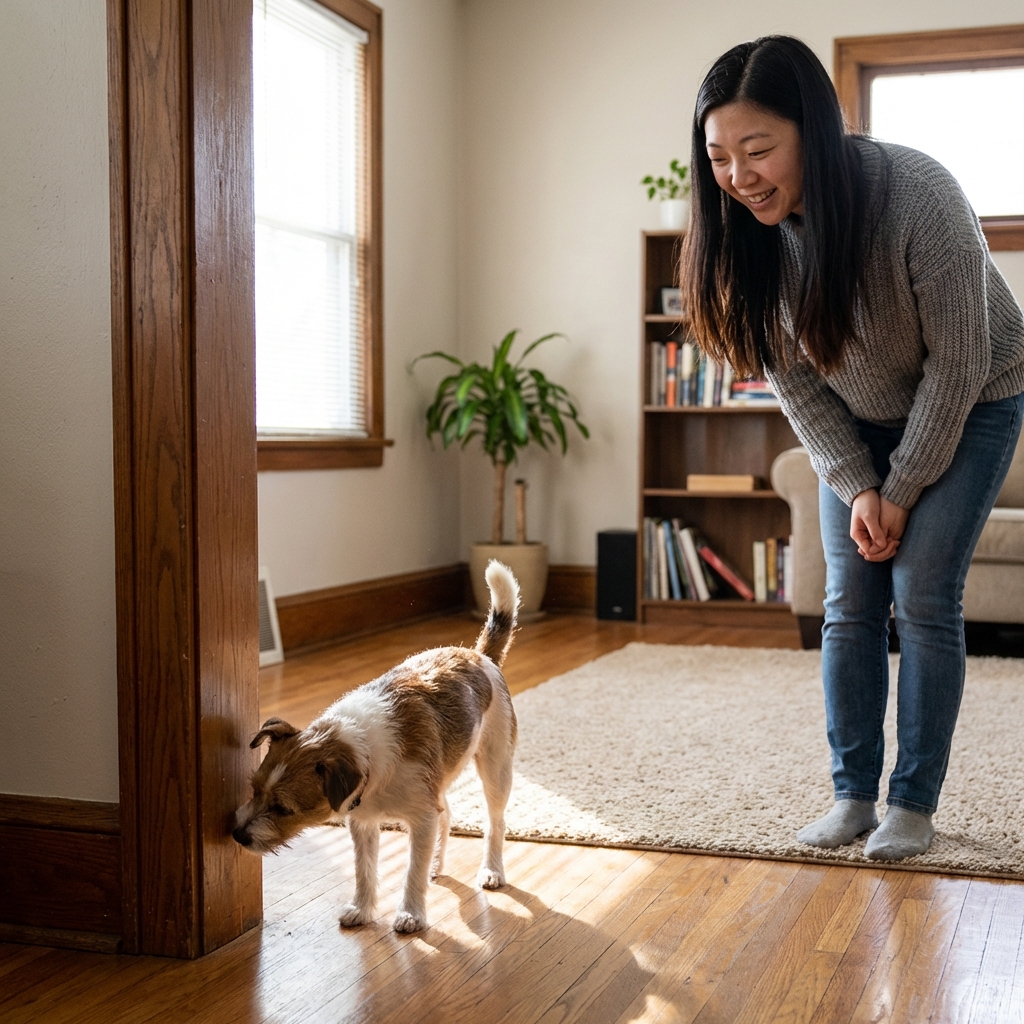
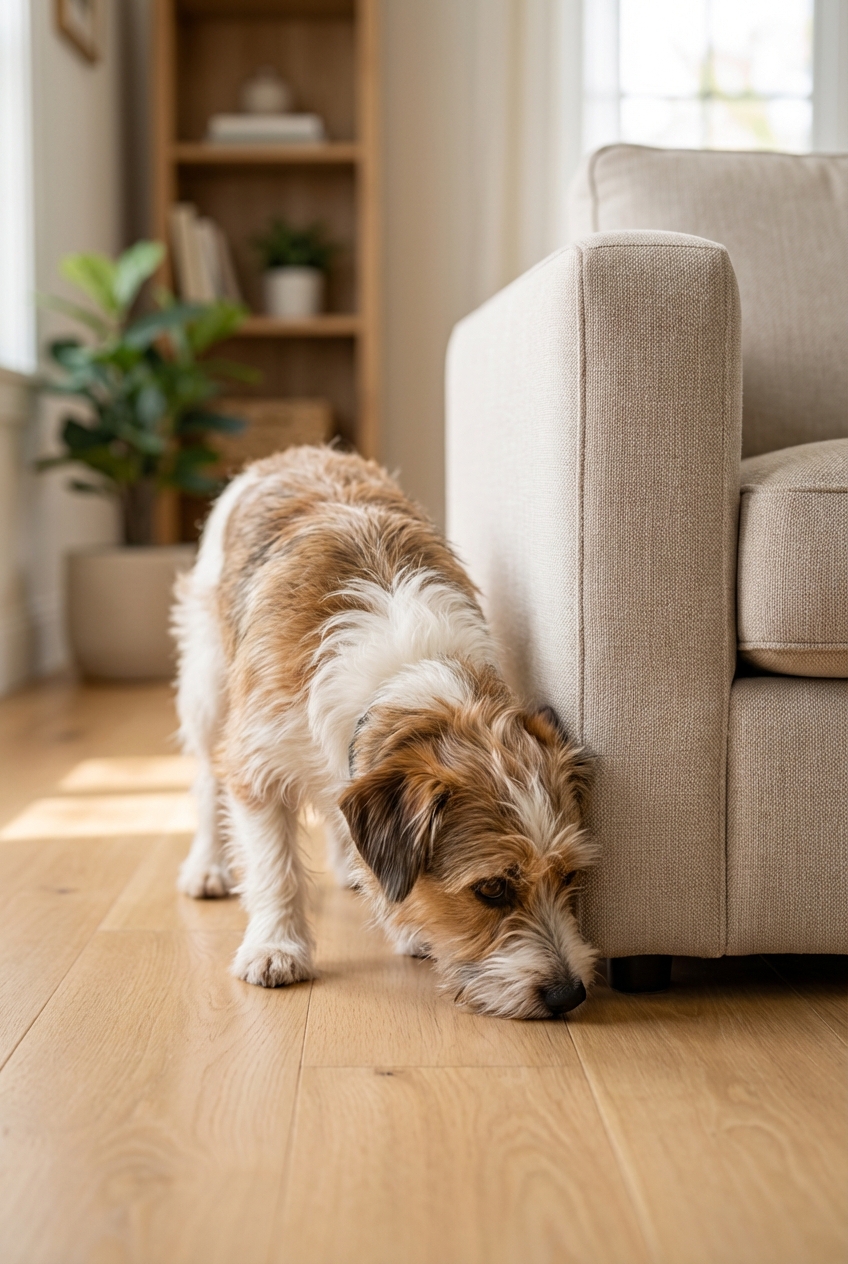
Marking is usually small amounts of urine placed intentionally on vertical surfaces (table legs, walls, laundry baskets, sofa corners). It is often preceded by sniffing and may happen even when a dog can hold their bladder for hours. Both male and female dogs can mark.
An accident from incomplete house training or a medical issue is more often a larger puddle on a horizontal surface and may come with urgency, frequent squatting, leaking during sleep, or inability to hold urine.
Common patterns
- Triggers: new pets, visitors, neighborhood dogs, moving homes, new furniture, schedule changes.
- Hot spots: doorways, windows, beds, bags, laundry piles, and anything that smells “new.”
- Timing: right after excitement, stress, greeting, or when left alone.
First step: rule out health issues
If marking is new, increasing, or happening alongside other changes, start with a vet visit. Medical discomfort can make urination messy, urgent, or unpredictable, and it can look like marking at home.
Ask your veterinarian about
- Urinary tract infection (UTI) and bladder inflammation
- Urinary crystals or stones
- Kidney disease (especially in older dogs)
- Diabetes (often includes increased thirst and urination)
- Incontinence (more common in some spayed females and seniors)
- Pain or mobility issues that make getting outside harder
- Hormonal cycles: intact females in heat can have behavior and urinary changes, so check in with your vet if timing lines up.
A simple urinalysis can be a game changer. If a medical issue is present, no amount of training will fully fix the problem until your dog feels better.
Spay and neuter
Hormones can play a role, especially in male dogs, but it is not the whole story. Neutering can reduce urine marking in many male dogs, particularly when the behavior is hormonally driven and not yet a long-established habit. That said, some dogs continue to mark due to learning, stress, or environmental triggers.
If your dog is intact and marking indoors, talk with your veterinarian about whether spay or neuter is appropriate for your dog’s age, breed mix, and health history.
Stop the cycle: fast management
Marking is self-rewarding because the smell provides feedback to your dog. The fastest progress happens when you prevent rehearsals while you retrain.
1) Supervision or confinement
- Crate when you cannot watch your dog.
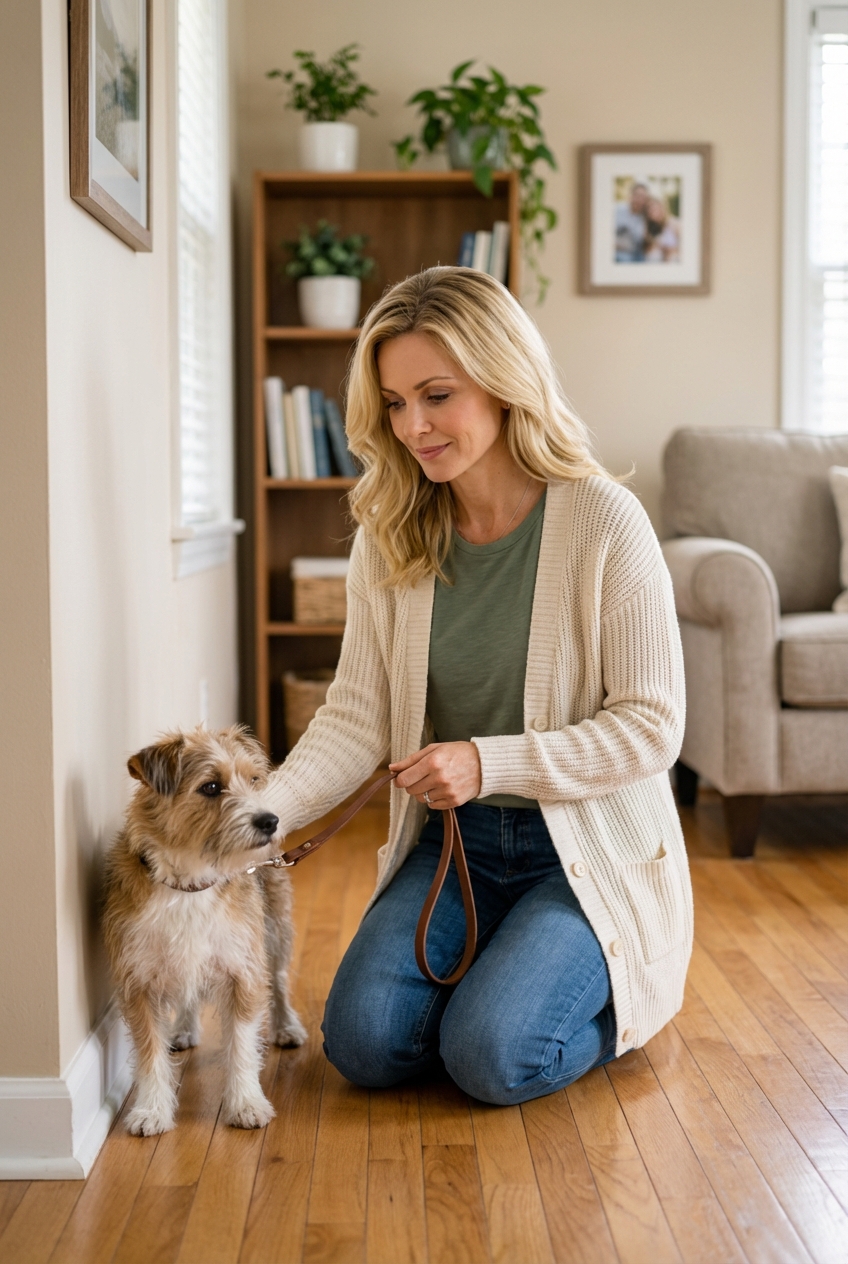
- Leash indoors (tether to you) during high-risk times like greetings and post-meal roaming.
- Baby gates to block favorite marking rooms.
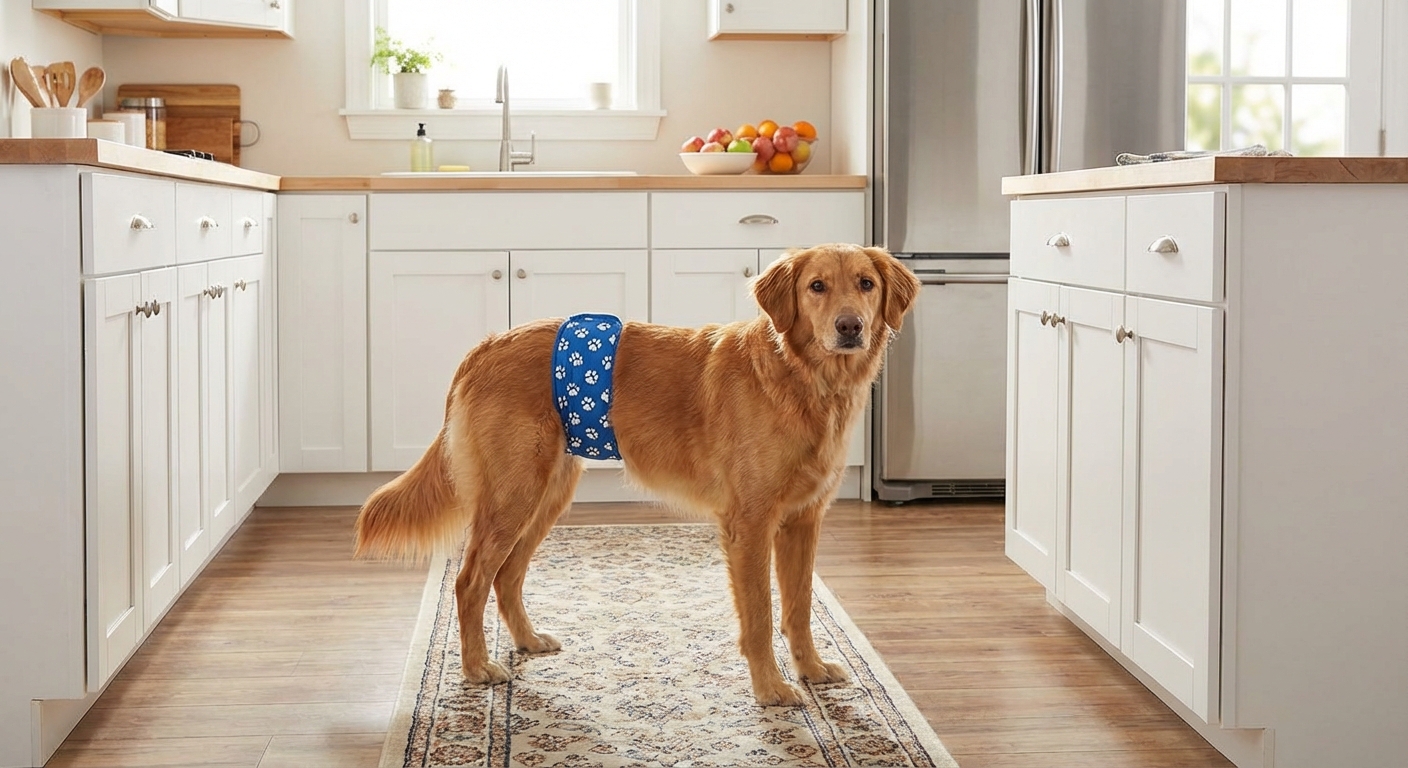
2) Belly bands or dog diapers (short-term tool)
For some dogs, a belly band can prevent damage while training is in progress. It is not a cure, and it should never replace potty breaks. Change it promptly when wet and check the skin often to prevent irritation or infection. If you cannot monitor and change it regularly, skip this tool.
3) Block access to “message boards”
- Move laundry baskets, backpacks, and pet beds off the floor.
- Close doors to problem rooms.
- Cover tempting corners temporarily with furniture or storage bins.
Clean correctly
If a spot still smells like urine to your dog, it is an invitation. Many household cleaners do not break down the urine odor compounds and uric acid residues as effectively as enzymatic products.
Use an enzymatic cleaner
- Choose a product labeled enzyme or bio-enzymatic for pet urine.
- Saturate the area deeply (urine soaks into padding and subfloor).
- Allow full dwell time per label instructions, then let it air-dry.
Important: Avoid using ammonia-based cleaners on urine spots. Ammonia can smell “urine-like” and may increase repeat marking.

Retraining plan: start seeing change in a few weeks
When a dog marks indoors, I like a simple goal: make outside the only place that pays off. Consistency matters more than complexity. Some dogs improve quickly, but plan on 2 to 4 weeks of tight management, and longer for anxious dogs or long-term markers.
Step 1: increase outdoor potty breaks
- Take your dog out first thing in the morning, after meals, after play, after naps, and before bed.
- For active markers, add 1 or 2 extra breaks during the day for a few weeks.
Step 2: keep them on a leash outside
This helps you confirm they actually urinate, and it reduces distracted “sniff tours.” Quietly stand in one spot for 1 to 3 minutes. If nothing happens, go back inside for a short reset (1 to 2 minutes), then try again. Repeat until they go, then reward.
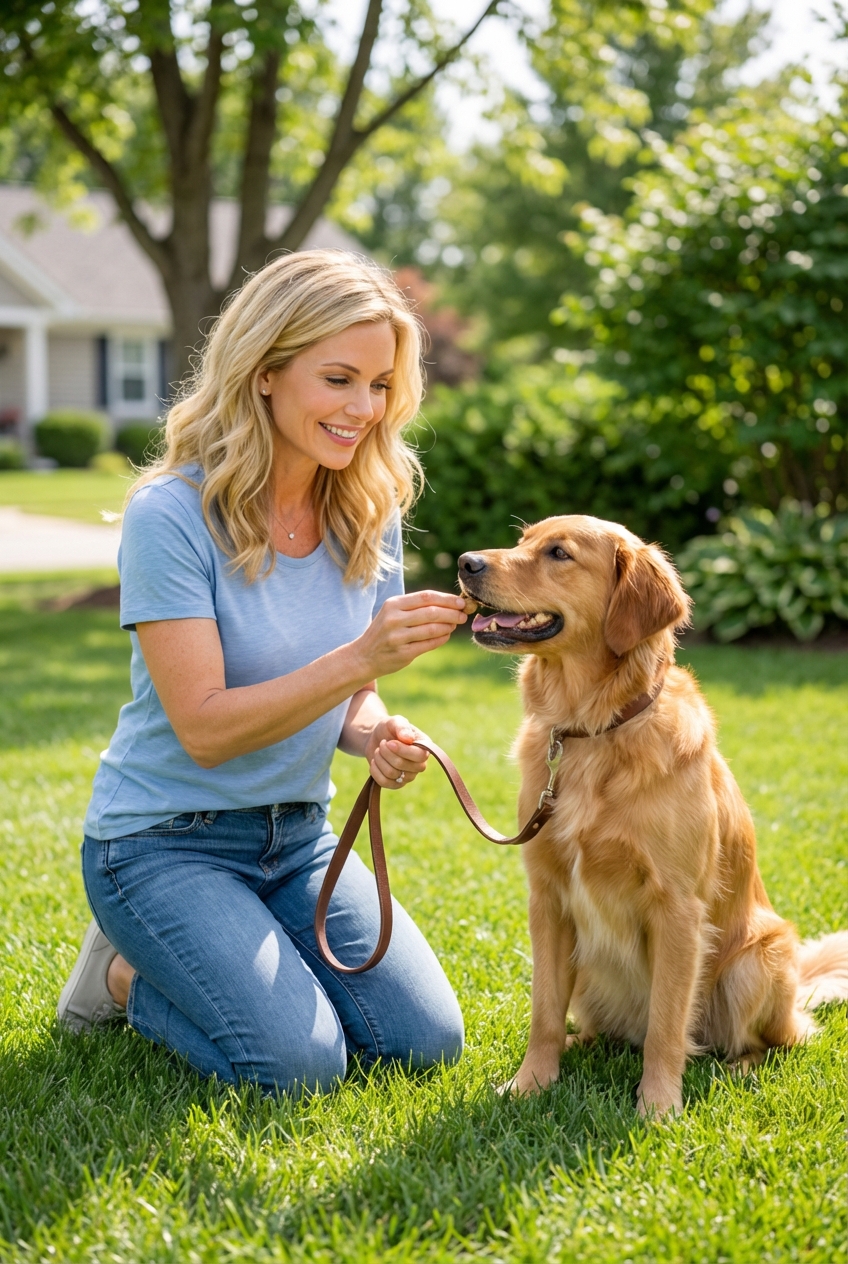
Step 3: reward immediately
The reward must happen within 1 to 2 seconds of peeing outside.
- Use a tiny, high-value treat.
- Add calm praise.
- Then give freedom: a short sniff walk is a powerful reward for many dogs.
Step 4: interrupt indoors without punishment
If you catch your dog mid-mark, do not yell. Calmly interrupt with a neutral sound, then take them outside right away. If they finish outside, reward.
Scolding often increases anxiety, and anxiety is a common marking trigger.
Triggers that drive marking
Many well-trained dogs mark due to emotional or environmental triggers. Addressing the trigger reduces the urge.
Common triggers and fixes
- New pet or roommate: use gates, structured introductions, and separate feeding areas.
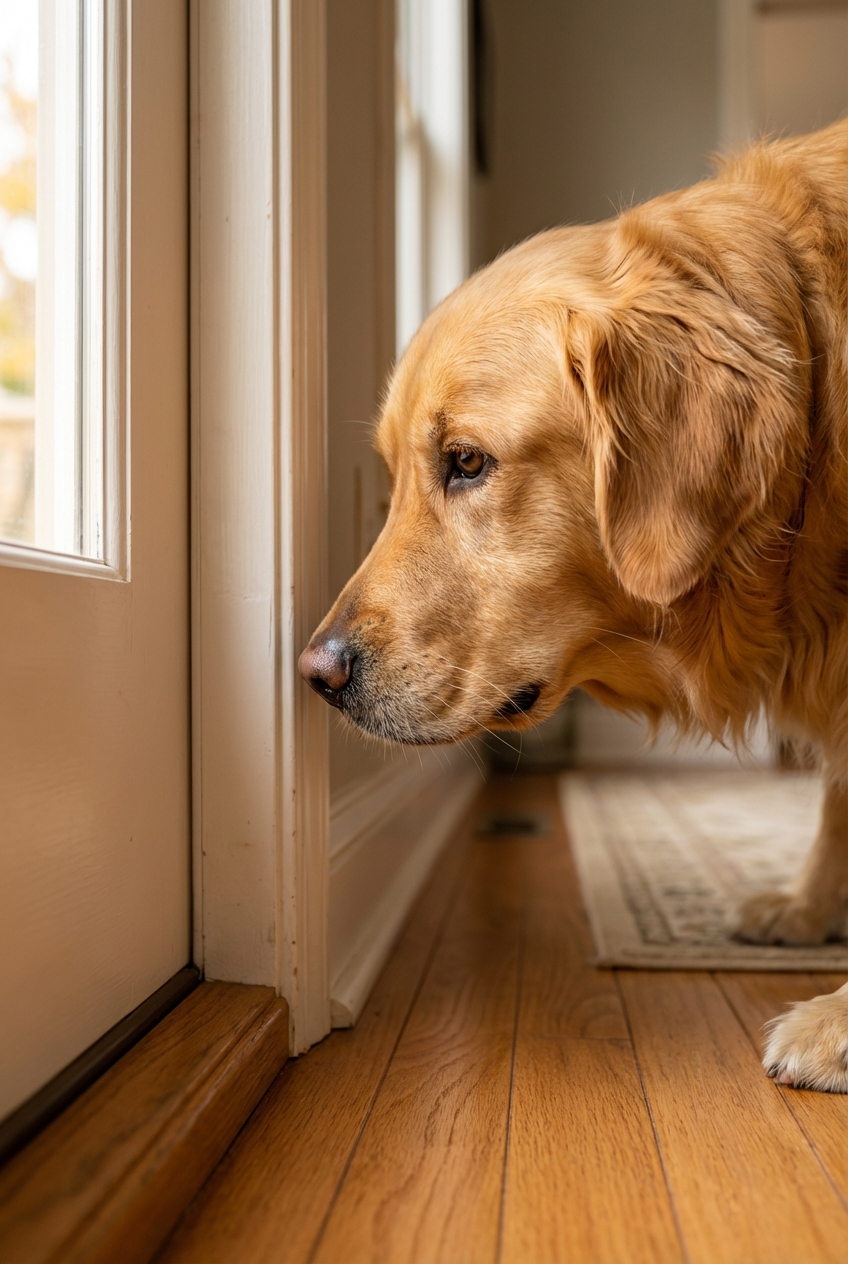
- Neighborhood dog scent near doors or windows: block visual access, use frosted window film, and take your dog out on a schedule instead of letting them patrol.
- Visitors: leash your dog during greetings, send them to a mat, and reward calm behavior.
- Separation stress: practice short departures, provide enrichment, and consider a trainer for a dedicated plan.
Optional supports
- Pheromone diffusers: products like Adaptil may help some dogs feel more settled, especially during transitions.
- Enrichment: food puzzles, sniff walks, and training sessions can lower stress and reduce “patrolling” behavior in the home.
If you suspect anxiety is a major driver, a positive reinforcement trainer or a veterinary behaviorist can help you build a plan that fits your dog’s temperament.
What not to do
- Do not rub your dog’s nose in it. It does not teach the right behavior and can increase fear.
- Do not punish after the fact. Dogs do not connect delayed punishment to a past behavior.
- Do not rely on “dominance” techniques. Marking is not your dog trying to be the boss.
- Do not free-roam too soon. Extra freedom before the habit changes often resets progress.
Special situations
Multi-dog homes
Marking can spread. One dog marks, another responds. Use management for all dogs, clean thoroughly, and take them out separately for a short period so you can reward each dog’s outdoor urination.
Rescue dogs and recent adoptions
Stress and new scents can trigger marking during the first few weeks. Stick to a predictable schedule, limit roaming, and build confidence with gentle training and enrichment.
Senior dogs
In older dogs, accidents can be medical or mobility-related. Add more frequent breaks, use non-slip runners, and talk to your vet about pain control and incontinence support if needed.
When to get extra help
Reach out to your veterinarian, a certified positive reinforcement trainer, or a veterinary behaviorist if:
- Marking is frequent and intense despite management for 2 to 4 weeks
- The problem is a sudden onset in an adult dog
- Your dog shows fear, guarding, or aggression around triggers
- You suspect separation anxiety
- There is blood in urine, straining, crying, or sudden frequent urination
- You notice red flags like increased drinking, accidents plus weight loss, or lethargy
Most house-marking cases improve when you combine three things: medical clarity, excellent cleaning, and a calm prevention plus reward plan.
Quick checklist
- Schedule a vet check if this is new, sudden, or escalating.
- Use an enzymatic cleaner on every indoor spot.
- Restrict roaming with gates, leash, or crate for at least a few weeks.
- Increase potty breaks and reward outdoor urination immediately.
- Identify triggers like visitors, window watching, or new pets and manage them.
If you stick with these steps consistently, many dogs stop marking indoors faster than you expect. Progress is not always perfectly linear, but every prevented mark is a win that helps build a cleaner, calmer routine for everyone in the home.