Humping isn’t usually dominance. Learn the real causes—excitement, stress, habit, or discomfort—and use a simple plan: manage triggers, stop practice, ...
Article
•
Designer Mixes
How to Stop a Dog From Humping

Shari Shidate
Designer Mixes contributor
Humping can feel awkward, especially when it happens in front of guests or kids. But as a veterinary assistant here in Frisco, Texas, I can tell you this with confidence: humping is common, it often improves with the right plan, and it does not automatically mean your dog is trying to be “dominant.”
Dogs hump for several reasons, including excitement, stress, boredom, learned habit, over-arousal in social situations, and yes, sometimes hormones or medical discomfort. The key is to look at the context, then respond with calm, consistent training and a little management.
Quick note: This article is for general education and is not a substitute for veterinary advice. I cannot diagnose your dog online.
Why dogs hump
Humping is a normal canine behavior, but it can become a problem when it is frequent, intense, or directed at people and other pets. Common causes include:
- Overexcitement: Greeting guests, kids running, doorbell chaos, or play that gets too amped up.
- Stress or anxiety: New environments, loud noises, changes at home, or busy dog parks.
- Social skills gap: Some dogs do not know how to pause during play, so humping becomes a go-to behavior.
- Attention-seeking: If humping reliably gets a big reaction, it can accidentally be reinforced.
- Boredom and pent-up energy: Under-exercised dogs may create their own “activities.”
- Hormones: Intact dogs may hump more, but spayed and neutered dogs can hump too.
- Medical issues: Skin irritation, allergies, urinary tract issues, pain, or discomfort around the rear end can contribute.
Also normal to know: Puppies and female dogs can hump too. It is often a developmental or over-arousal behavior, not a sexual one.
Family note: If your dog humps when kids squeal, chase, or wrestle, it often signals over-arousal. It is a cue to slow the environment down and give your dog a clear job to do.
First step: rule out health problems
If humping starts suddenly, increases quickly, or comes with licking, scooting, urinary accidents, urine odor, a strong fishy odor, or changes in appetite or mood, schedule a vet visit. Conditions we commonly see connected to humping or pelvic thrusting include:
- Allergies and itchy skin
- UTIs or urinary irritation
- Anal gland discomfort
- Orthopedic pain (hips, back, knees)
- Vaginitis or skin irritation around the vulva (females)
- Prostate enlargement or prostatitis (intact males)
- Neurologic or spinal pain
- Hormone-related behaviors in intact pets
Go sooner if you notice yelping when touched, rear-end sensitivity, blood in urine, persistent straining to pee, sudden weakness in the back end, or a dog that seems painful or unusually withdrawn.
It is always easier to train a behavior when your dog is comfortable and not dealing with hidden irritation or pain.
What to do in the moment
Your goal is to interrupt without scaring your dog, then redirect to a behavior you can reward.
1) Stay calm and neutral
Avoid yelling, laughing, or pushing your dog off dramatically. Big reactions can accidentally reinforce the behavior.
2) Use a simple interrupter
Try a cheerful cue like “This way” or “Come” and move a few steps.
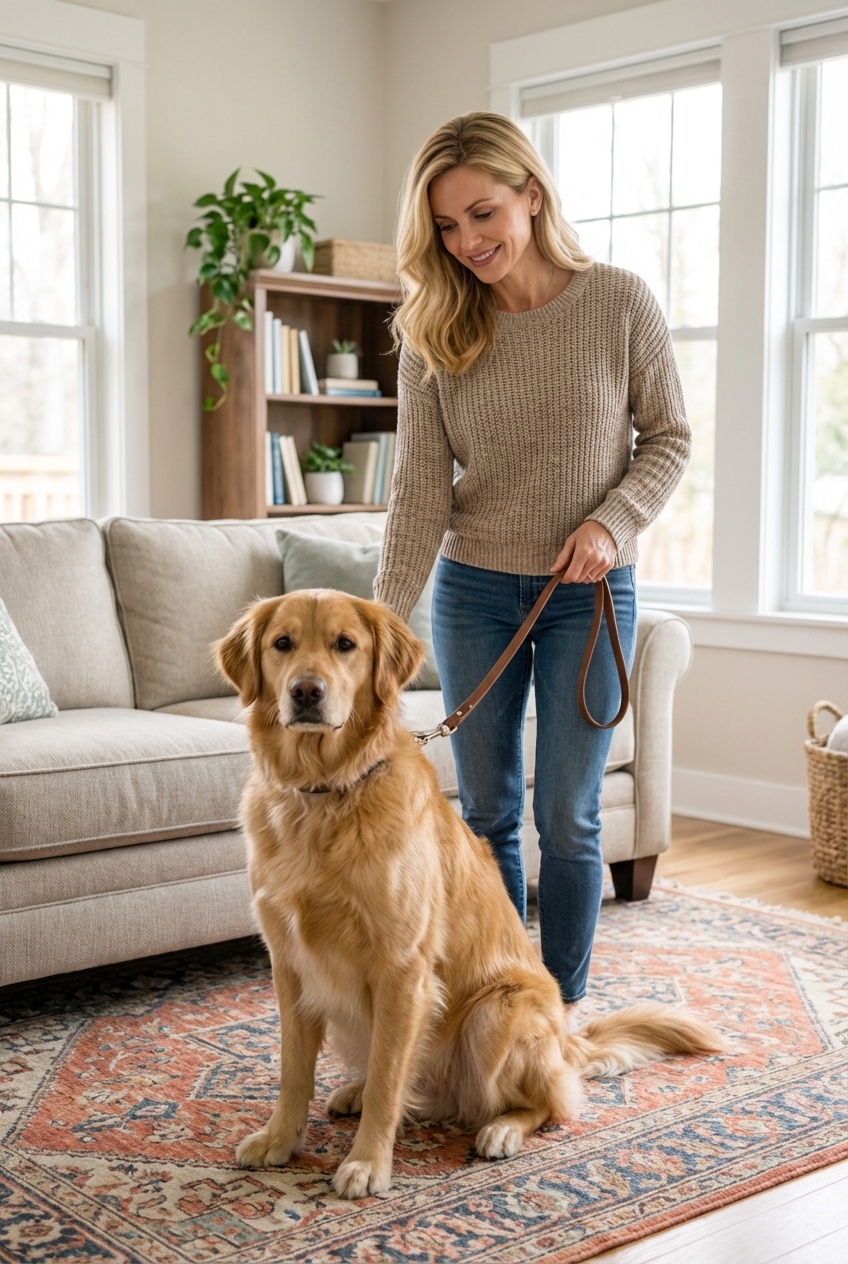
If needed, gently guide your dog away by the harness or a drag line (a lightweight leash your dog wears only under direct supervision). Remove it when your dog is unattended to prevent snagging.
3) Redirect to a clear alternative
- Sit or Down for a treat
- Go to mat and reward calmness
- Find it (scatter a few treats on the floor to sniff)
- Give a toy and ask for a quick game with rules (sit before throw)
4) Give a cool-down if needed
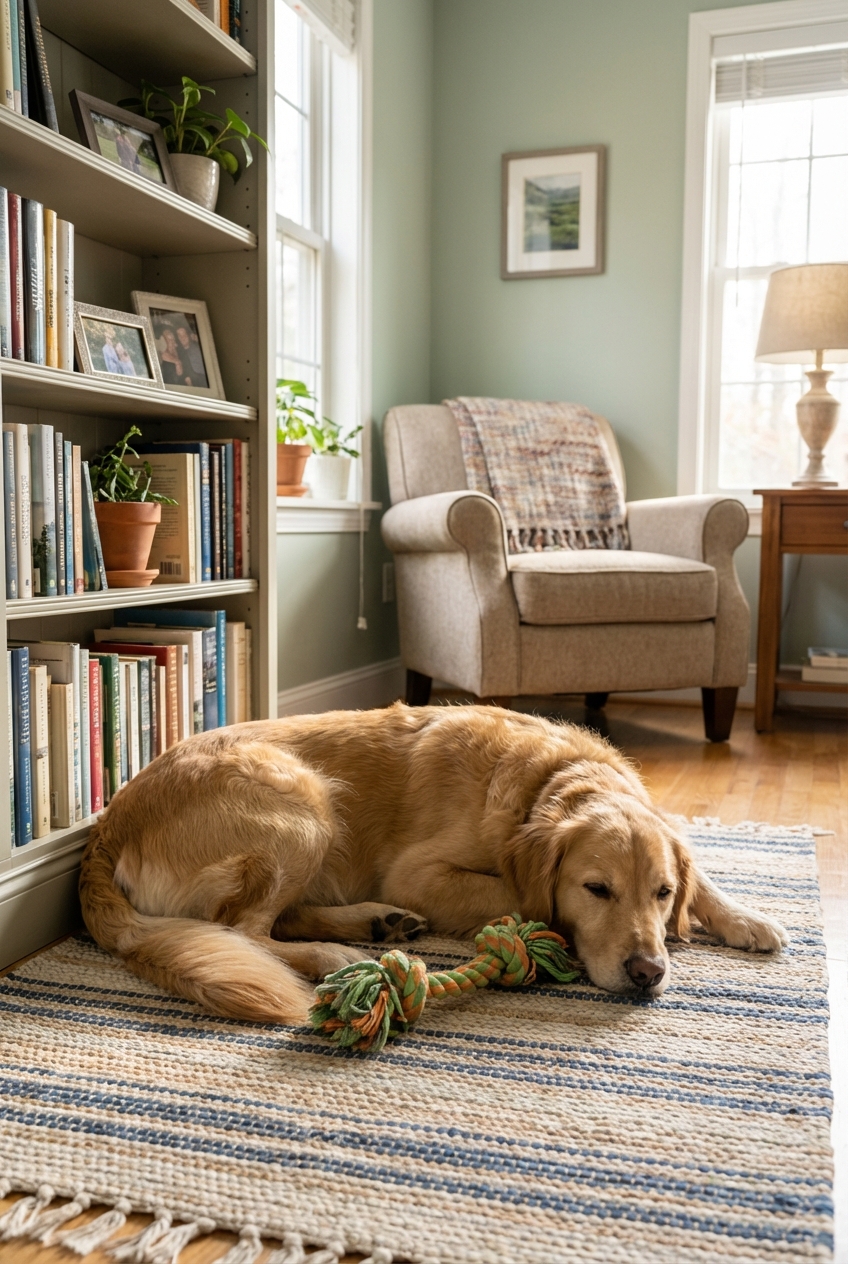
If humping happens during play, end the interaction for 30 to 60 seconds. Calmly separate with a baby gate or have your dog settle on a mat with a chew. Then try again at a lower intensity.
Training for long-term improvement
Stopping humping is usually less about punishment and more about teaching emotional control. Reward-based training approaches are supported by modern veterinary behavior consensus and are safer for most families than punishment-based methods.
Teach “Place”
This gives your dog a default behavior during high-energy moments like guests arriving.
- Start by rewarding any step onto the mat.
- Build duration slowly, rewarding calm body language.
- Practice with small distractions, then work up to doorbell and visitors.
Reinforce calm greetings
Many humping episodes happen at hello. Practice “sit for greetings” with friends and family. If your dog pops up, the greeter pauses and turns away. Calm behavior makes attention happen.
Meet daily needs
A tired dog is not always a well-behaved dog, but a dog with unmet needs is much more likely to hump.
- Exercise: Daily walks plus short bursts of play.
- Enrichment: Sniff walks, food puzzles, frozen Kongs, lick mats.
- Training: Two to three mini-sessions per day, 3 to 5 minutes each.
Reduce triggers while you train
Management is not failure. It is what keeps the habit from getting stronger.
- Use baby gates during chaotic times.
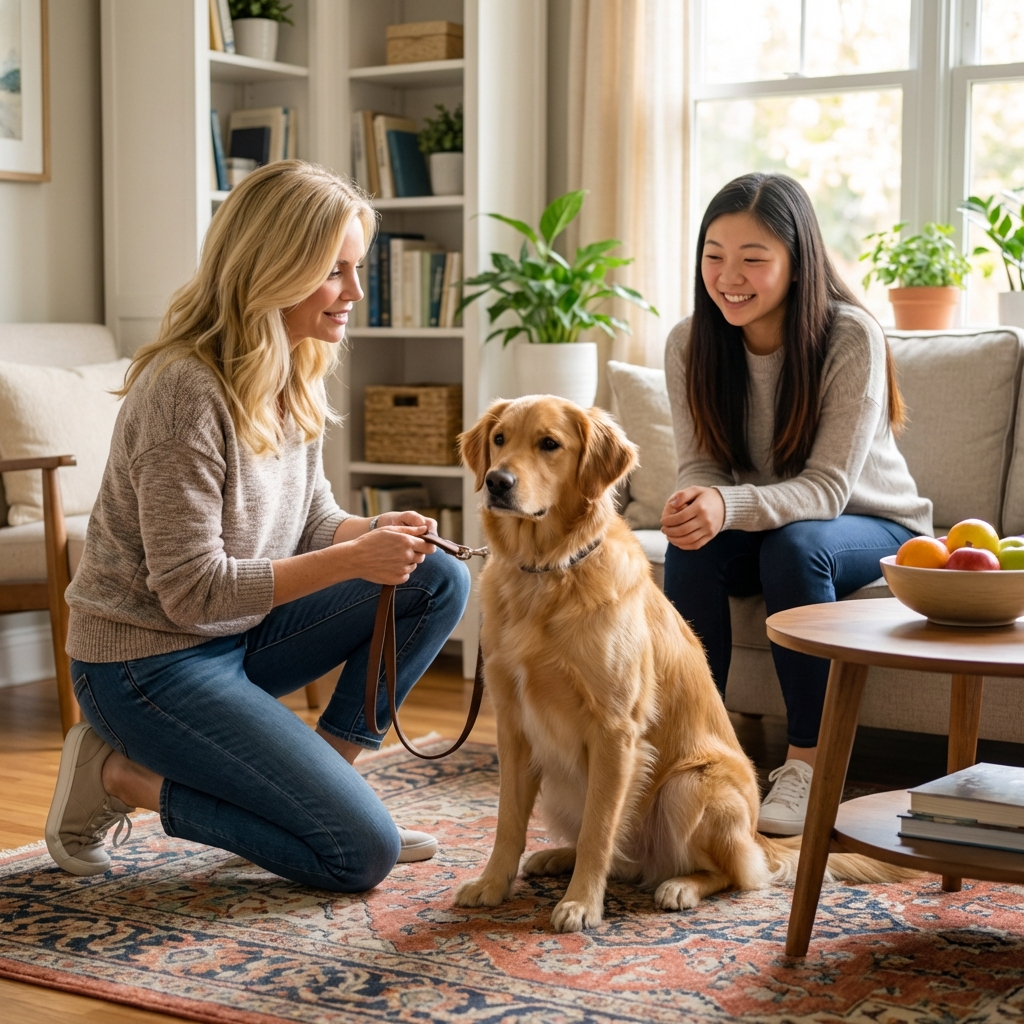
- Leash your dog when company arrives.
- Supervise play closely and interrupt early.
Reward what you want
Watch for moments when your dog is calm near kids, guests, or other dogs and reward it. Calmness is a skill that grows with practice.
Humping people: family plan
If your dog humps an adult, it is uncomfortable. If your dog humps a child, it is also a safety issue. It can lead to knocks, scratches, fear, and it rehearses an over-aroused habit that gets stronger over time.
- Adults handle the dog. Kids should not push, grab, or yell at the dog.
- Teach kids to freeze and call. Stand still like a tree, fold arms, and call an adult.
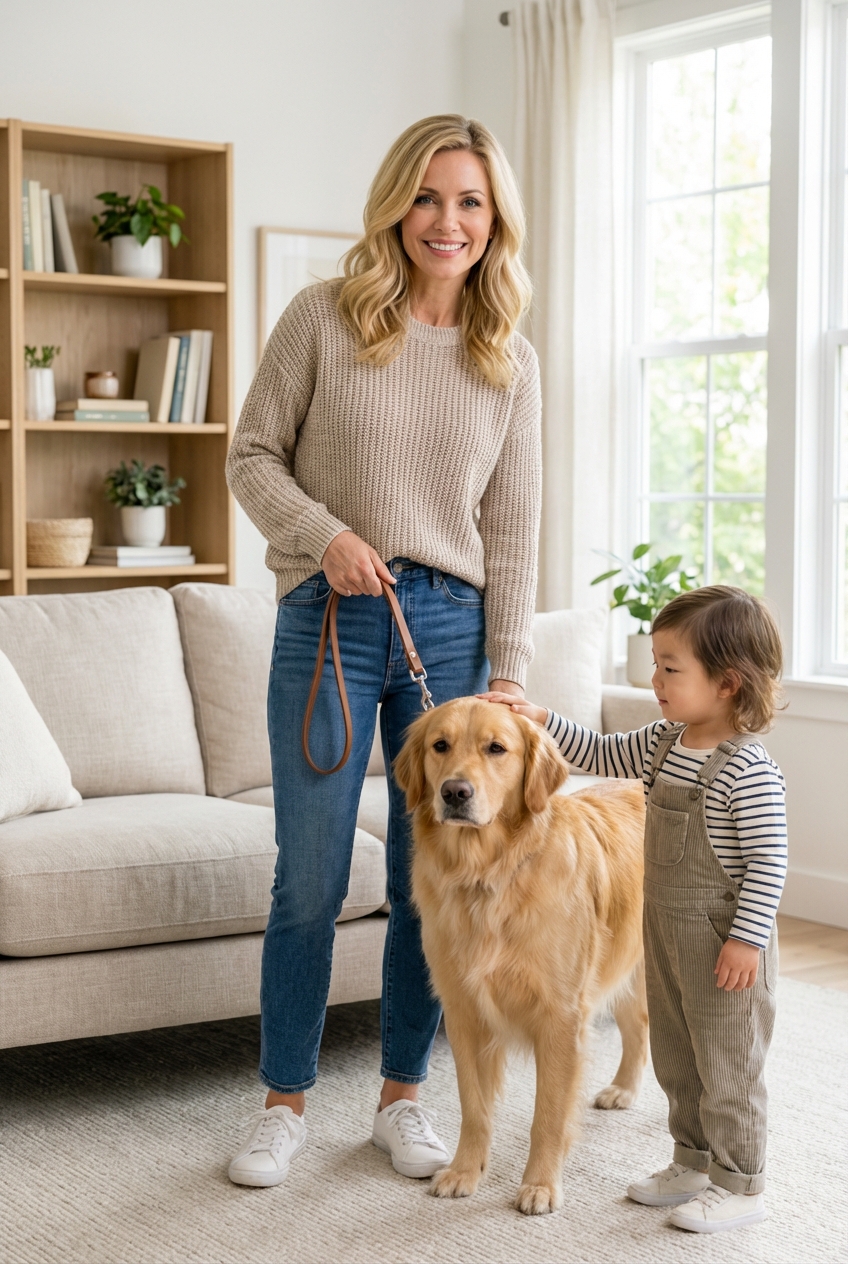
- Use barriers early. If your dog gets overexcited around kids, use a gate, leash, or crate with a chew during high-energy play.
- Practice calm routines. Ask your dog to sit for treats, do a short “find it” game, or relax on a mat while kids play.
Humping other dogs
A little mounting can happen in normal play, but it should be brief and easily interrupted. Step in when you see:
- One dog repeatedly mounting despite the other trying to leave
- Stiff posture, pinned ears, or growling
- The mounted dog hiding behind people or furniture
- Play escalating into snapping
Best practice: Call your dog away, ask for a sit, reward, then give a short break. If your dog immediately runs back to mount again, end the interaction and try a calmer setting later.
Will spay or neuter help?
Sometimes it helps, especially if hormones are a strong driver. But humping is often rooted in excitement, stress, or habit, so surgery is not a guaranteed fix by itself.
If your dog is intact and humping is frequent, talk with your veterinarian about timing and expected behavior changes. In many homes, the best results come from a combination of appropriate medical care, training, and management.
What not to do
These approaches can backfire by increasing stress or accidentally reinforcing the behavior:
- Do not punish harshly. Yelling, hitting, or alpha-roll methods can increase anxiety and worsen behavior.
- Do not laugh or make it a game. Attention can be rewarding, even if it is negative.
- Do not let kids handle it alone. Keep interactions safe and structured.
When to call a pro
Reach out to your veterinarian and consider a certified trainer or veterinary behaviorist if:
- The behavior is escalating or hard to interrupt
- There is growling, snapping, or guarding during humping
- Your dog seems anxious, compulsive, or unable to settle
- There are possible medical signs (itching, scooting, urinary changes)
Look for a trainer who uses reward-based methods and can coach the whole family on consistent routines.
Quick home checklist
- Schedule a vet check if humping is new, intense, or paired with physical symptoms.
- Go sooner if there is pain, blood in urine, persistent straining, or sudden rear-end sensitivity.
- Interrupt calmly and redirect to “sit,” “place,” or “find it.”
- Use gates and a supervised drag line to prevent rehearsal.
- Increase enrichment and teach calm greetings.
- Coach kids to freeze and call an adult.
Bottom line: humping is often a sign your dog needs help regulating excitement or stress. With calm interruption, consistent training, and a little management, most families see real improvement.