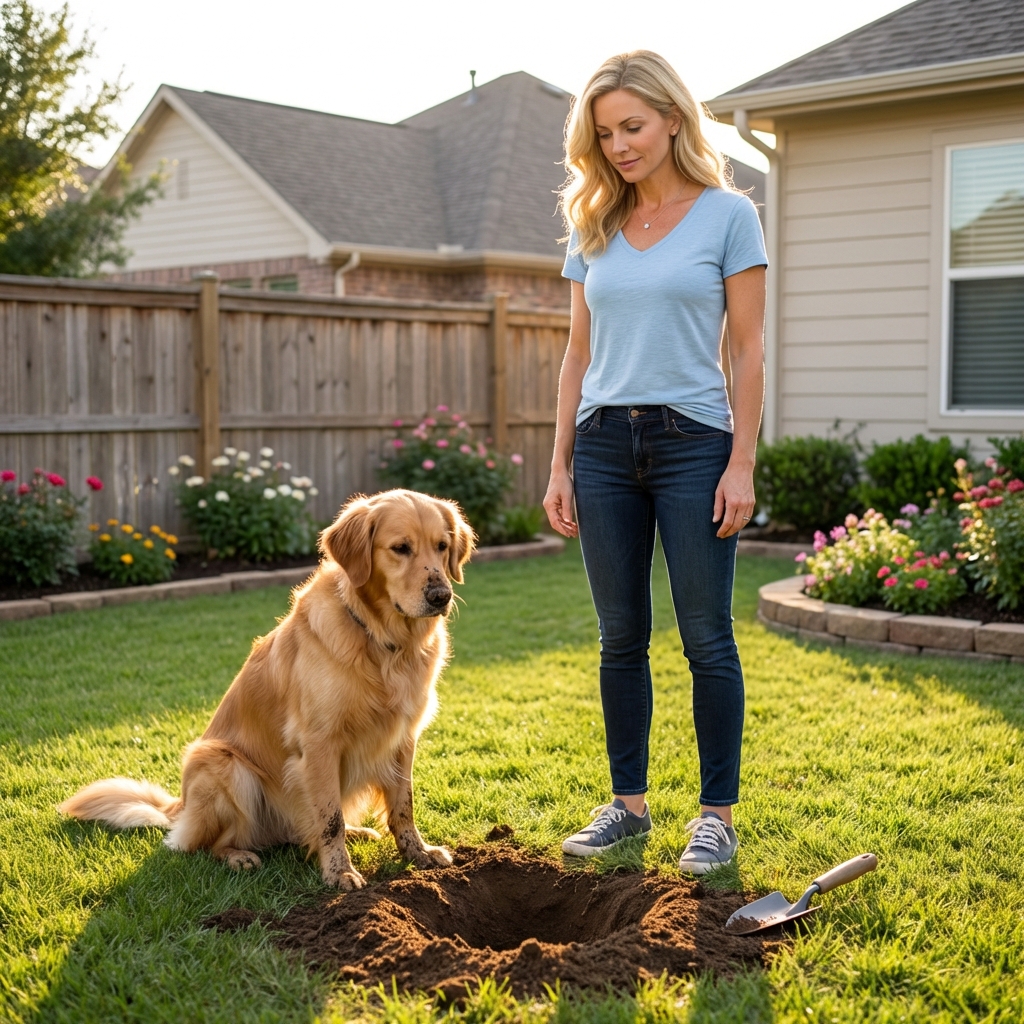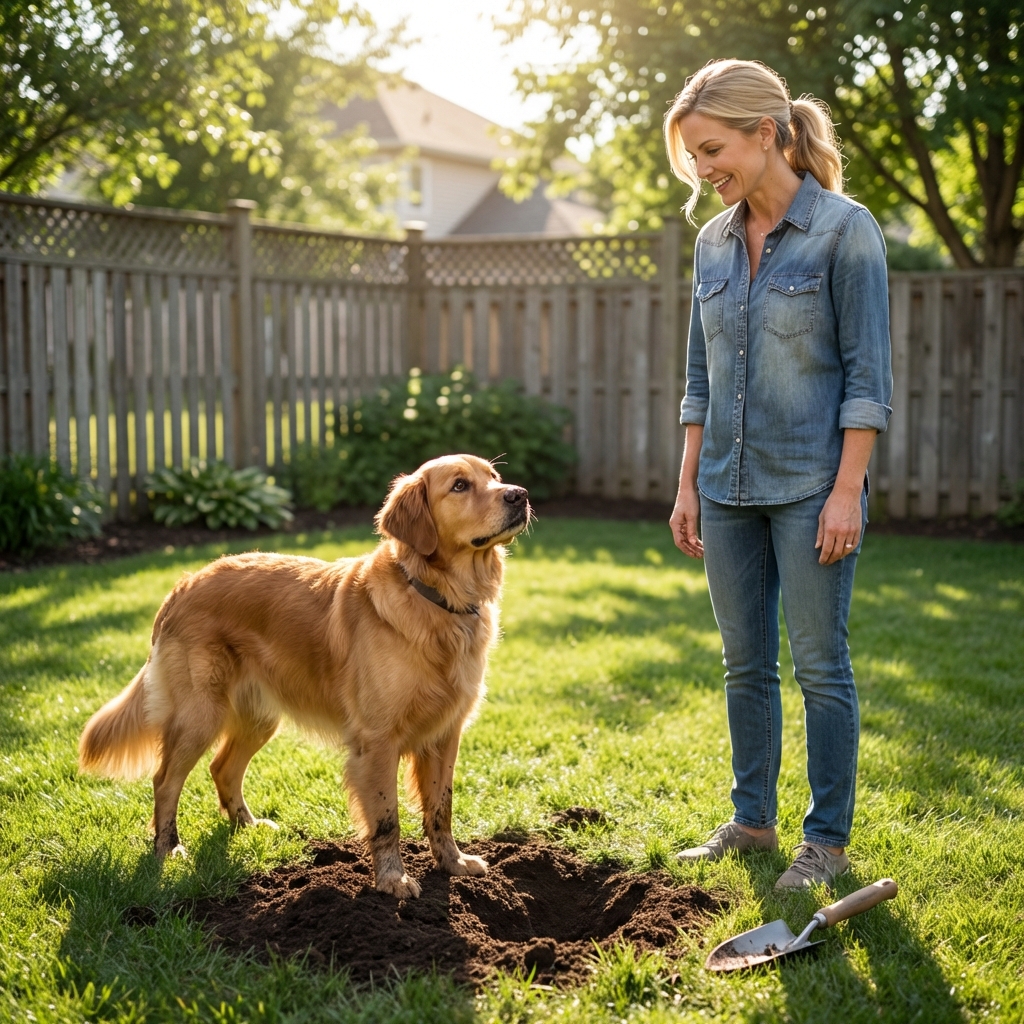
Stop yard and fence-line digging without harsh corrections. Learn the real reasons dogs dig, plus management, a dig pit, redirect cues, enrichment, and a sim...
Article
•
Designer Mixes
How to Stop a Dog From Digging

Shari Shidate
Designer Mixes contributor
Digging is one of those dog behaviors that can feel personal when it shows up in your yard, but it is usually about a need, not “badness.” Dogs may dig to cool off, burn energy, chase a scent, hide treasures, escape, or because the backyard has turned into their all-day entertainment.
As a veterinary assistant here in Frisco, Texas, I see this pattern a lot. When we respond with punishment, digging often shifts to when no one is watching, or it shows up in a new spot. When we meet the underlying need and set the environment up for success, the yard (and your sanity) tends to recover much faster.
Quick note: medical causes are less common, but they do happen. I cover what to watch for in the health section below.
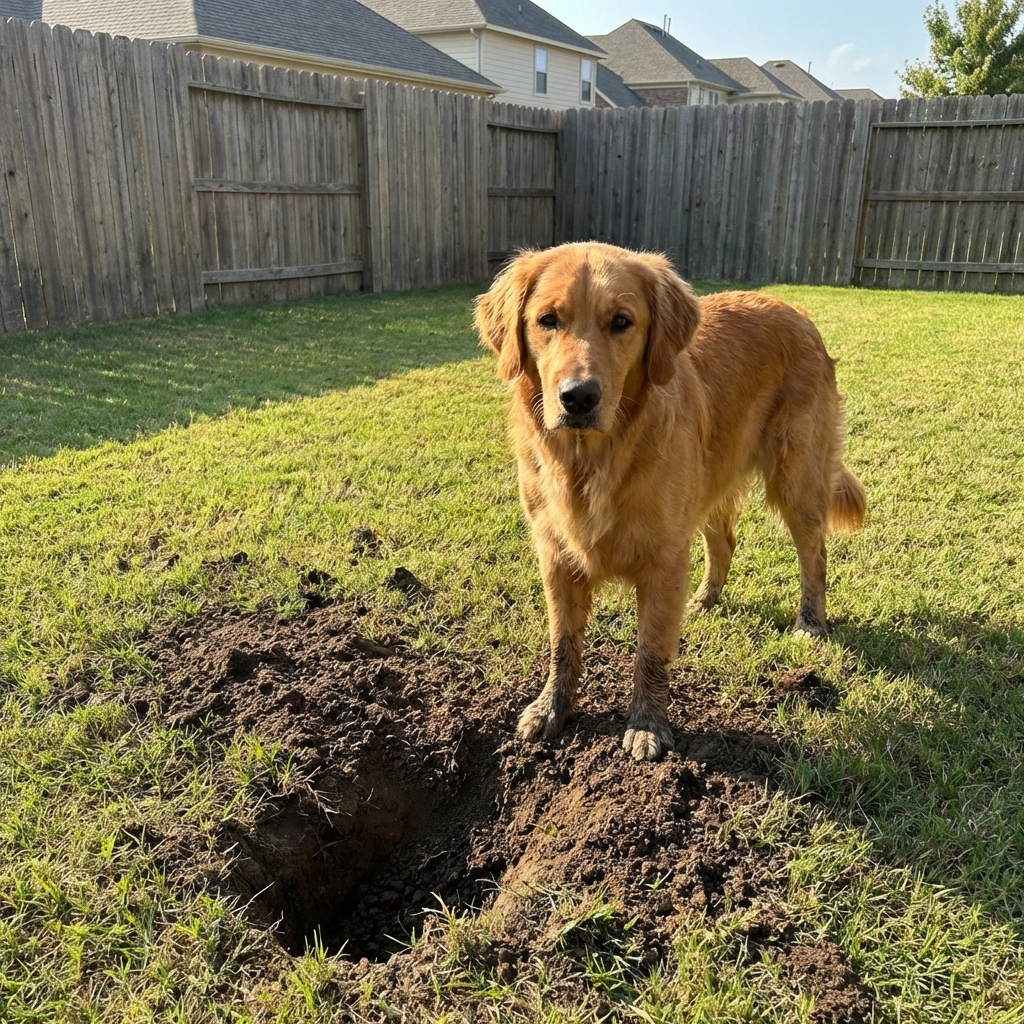
Why dogs dig
The “why” matters because the solution for a bored dog is different than the solution for a dog trying to cool down or escape. Many dogs have more than one reason.
- Boredom and extra energy: Digging becomes a self-rewarding game, especially in young dogs and high-energy mixes.
- Comfort seeking: In Texas heat, dogs dig to reach cooler soil. In cold weather, some dig to create a sheltered spot.
- Prey drive and scent hunting: Moles, insects, lizards, rodents, and the smell of compost or fertilizer can trigger serious excavation in suburban yards.
- Escape behavior: Dogs dig along fence lines to get out, get to something, or get away from something.
- Anxiety and stress: Separation distress, noise phobias, and too much time alone can show up as repetitive digging.
- Instinct and fun: Some breeds and mixes are simply wired for digging. Terriers and many working dogs come to mind.
Family-friendly tip: Before you fix the yard, observe the pattern. Is it always the same spot? Same time of day? Along the fence? Only when the kids leave for school? That little detective work saves you weeks of trial and error.
Safety and health first
Digging can be normal, but sudden, frantic, or intense digging deserves a closer look.
- Check paws and nails: Cracked pads, foxtails, burrs, or a broken nail can make a dog paw at the ground.
- Look for overheating: Panting, seeking shade, and digging “cool pits” in summer can mean your dog needs more heat relief.
- Consider parasites or skin irritation: If digging is paired with itching, licking feet, or restlessness, talk with your vet.
- Ask about anxiety: Digging plus drooling, pacing, or destruction indoors can point to stress rather than misbehavior.
Yard safety note: Holes are not just annoying. They can cause sprained ankles for people, torn nails for dogs, and in some dogs, a habit of eating dirt, rocks, roots, or bugs. If kids play in the yard, it is worth treating digging as a home safety issue, not just a training issue.
If your dog is trying to escape, treat it as urgent. Escape attempts can lead to traffic injuries, lost dogs, and neighbor conflicts.
Meet the need and redirect
1) Add daily enrichment
Many digging problems shrink dramatically when a dog’s brain and body are getting the right outlets.
- Sniff walks: Aim for at least one walk where your dog can sniff at their pace. Sniffing is real mental work.
- Food puzzles: Feed meals in a snuffle mat, puzzle feeder, or scatter kibble in the grass for a mini “forage.”
- Short training sessions: Five minutes of “sit, down, touch, stay” with treats can be more tiring than you expect for many dogs, especially if you keep it upbeat and focused.
- Fetch with rules: Add a “drop” and “wait” so it becomes brain plus body.
Kid-friendly job: Have children help fill a snuffle mat or toss a handful of kibble across the lawn for a supervised “find it” game.
2) Create a dig zone
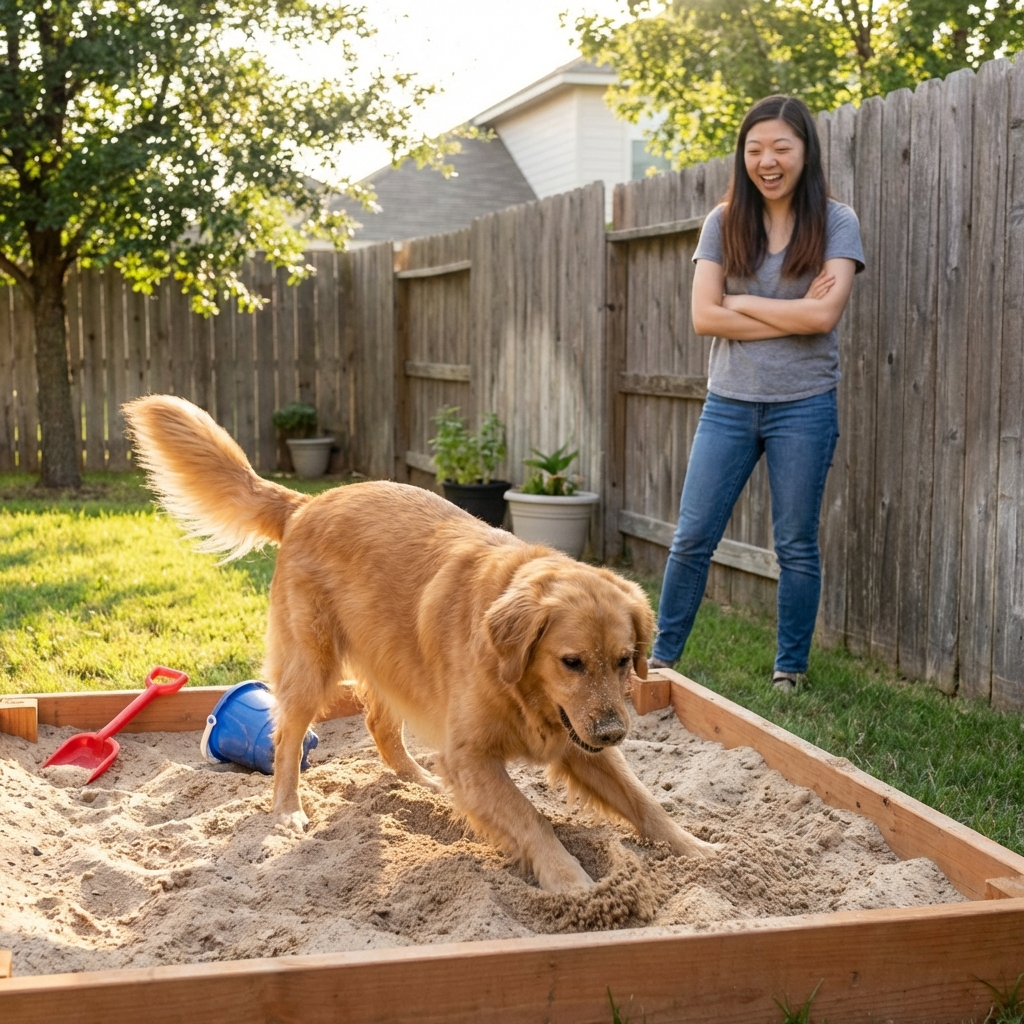
If your dog loves digging, fighting it 100 percent often backfires. Instead, give them a legal place to dig.
- Pick the spot: A shaded corner or a child’s sandbox works well. Keep it away from the fence line if your dog has escape plans.
- Make it rewarding: You can bury a few items shallowly at first, then gradually deeper.
- Teach the cue: Walk your dog to the area and say “dig here,” then praise calmly when they use it.
- Keep it interesting: Rotate what you hide so the spot stays more exciting than your flower beds.
Safety note: Only bury items that are safe for your dog. Avoid anything that splinters or shreds easily, and skip small toys for dogs who swallow objects. If you use treats, keep them small, supervise, and remove leftovers so you do not attract pests or wildlife. In multi-dog homes, supervise closely to prevent guarding.
3) Manage high-risk spots
Management is not a failure. It is how families get relief while training takes hold.
- Block access for now: Use garden fencing, playpen panels, or planters to protect favorite dig sites.
- Supervise yard time: If your dog digs when alone, shorten unsupervised outdoor time until the new habit sticks. Dogs left alone outside for long stretches are more likely to dig from boredom or separation-related stress.
- Improve comfort: Add shade, a cooling mat, and fresh water if heat is part of the problem.
- Build a positive routine: Go out together, play for 5 to 10 minutes, then settle with a chew.
Stop fence digging
Fence-line digging is usually about access: your dog wants out, wants in, or wants to chase something on the other side. This is where training and home improvement should happen together.
- Reinforce the base: Add an L-footer of hardware cloth or wire mesh (buried or pinned with landscaping staples).
- Use rocks carefully: Large rocks along the inside edge can help, but choose heavy, stable rocks that cannot roll and create a trip hazard. Strong dogs can sometimes shift lighter rocks.
- Create a buffer: Keep a 2 to 3 foot “no access” strip along the fence using planters or a low barrier.
- Remove attractants: Clean up fallen bird seed, secure trash, and address rodent activity if present.
- Practice recall: Reward your dog for coming when called away from the fence with high-value treats.
Important: Avoid punishment near the fence. If a dog is anxious or determined to escape, punishment can increase stress and make the behavior more intense.
What to avoid
- Skip harsh punishment: Yelling or physical corrections can increase anxiety and make digging sneakier.
- Avoid cayenne pepper and chemical deterrents: These can irritate eyes, nose, and paws, especially for curious kids and pets.
- Do not leave dogs outside for long stretches: For many dogs, “more yard time” creates more digging, not less.
- Filling holes can be conditional: If your dog rushes back to re-dig while you fill holes, do repairs when they are inside. If they do not care, filling holes right away is fine and safer for your family.
A 7-day plan
Once you have a good guess at the “why,” this simple, family-friendly reset helps you cover the basics without turning your week upside down.
Days 1 to 2: Observe and manage
- Leash or supervise yard time.
- Block the worst digging spot.
- Add shade and water where your dog spends time.
Days 3 to 4: Add enrichment
- One sniff walk daily.
- One meal from a puzzle feeder or snuffle mat.
- Two short training sessions (5 minutes each).
Days 5 to 7: Build the dig zone
- Set up the designated digging area.
- Teach “dig here” and reward calm digging.
- Redirect from off-limits spots without drama.
Most families notice meaningful improvement within 1 to 3 weeks when the plan matches the cause. If you have a chronic digger, progress may be gradual but very doable.
Quick troubleshooting
- If your dog will not use the dig zone: Make it easier and more rewarding. Start with buried items just under the surface, walk them to the spot on leash, and praise the moment they scratch there. If the “wrong” spot is still accessible, block it until the new habit forms.
- If digging happens at night or after rain: Wet soil is easier to move, and nighttime can bring more wildlife activity. Bring your dog in at night, increase daytime enrichment, and check the yard for critters that may be traveling along fence lines.
- If you have more than one dog: Digging can spread as a group activity or turn competitive. Increase supervision and give each dog their own enrichment and chew time.
When to call a pro
Support is a smart move, especially if the digging is intense or tied to fear.
- Call your veterinarian if digging is sudden, frantic, paired with panting, pacing, appetite changes, itching, or sore paws.
- Work with a credentialed trainer if escape attempts continue, if your dog cannot settle, or if digging happens mainly when you leave. Look for certifications like CPDT-KA or members of IAABC, and choose a professional who prioritizes reward-based methods over aversive tools.
The goal is not to “win” against digging. The goal is to give your dog better ways to meet the same needs.