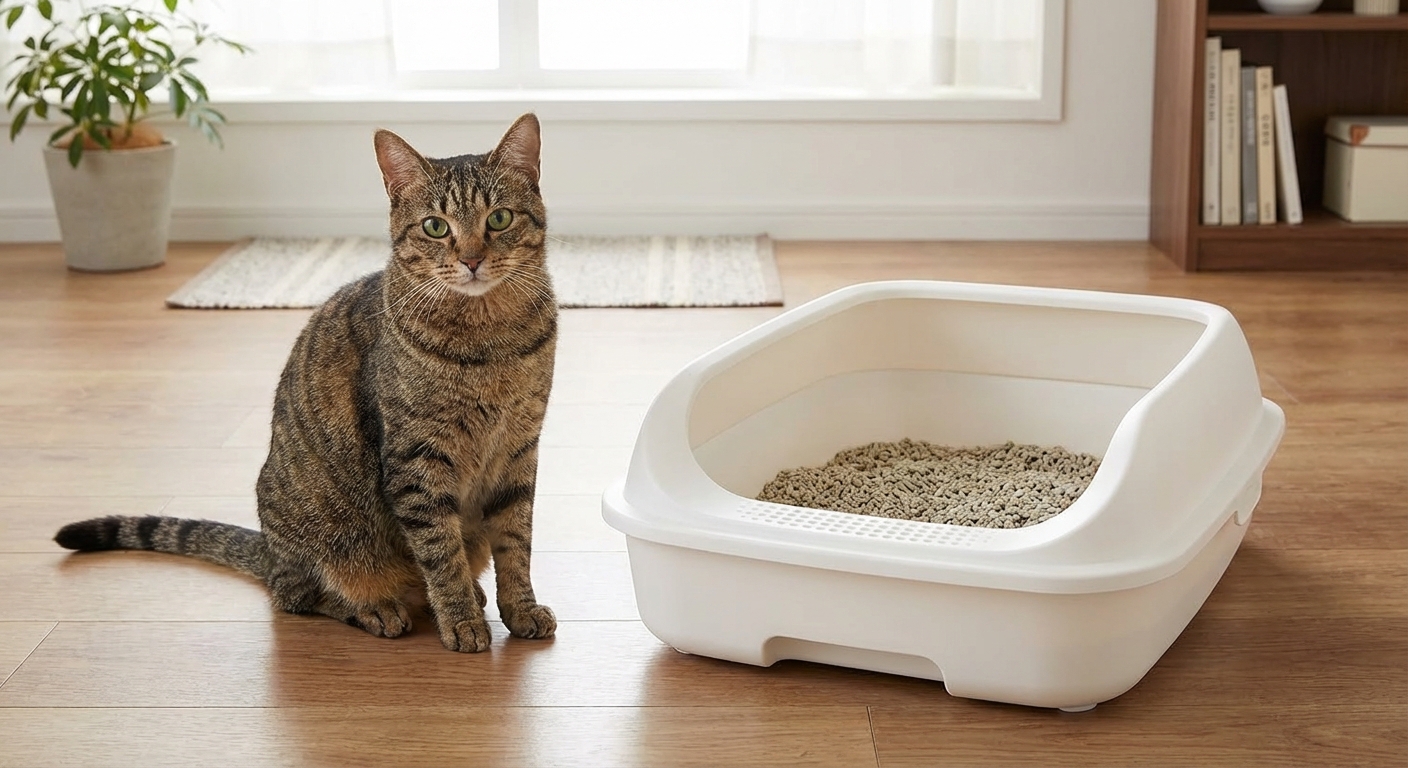
Cat spraying is usually stress, hormones, conflict, or a medical issue—not “bad behavior.” Learn how to tell spraying vs peeing, clean correctly, fix l...
Article
•
Designer Mixes
How to Stop a Cat From Spraying Indoors

Shari Shidate
Designer Mixes contributor
Cat spraying inside can feel confusing and honestly pretty discouraging. As a veterinary assistant, I want you to know two things right away: spraying is usually communication (not spite), and in most homes it is fixable with the right mix of medical checks, environment changes, and litter box strategy. This article is educational and not a substitute for veterinary care.
Spraying is a form of urine marking. Cats typically spray on vertical surfaces like walls, furniture, doors, or curtains, and you may notice a strong odor and smaller amounts of urine than a normal pee in the litter box.

First: Is it spraying or an accident?
These clues help you tell the difference:
- Spraying: small amount, often on a vertical surface, tail may quiver, cat usually stands and backs up to the target.
- Inappropriate urination: larger puddle, usually on horizontal surfaces like beds, rugs, laundry piles, or couches.
Why it matters: the most effective solutions depend on the cause. Pain, urinary disease, and stress can trigger both, but the behavior plan is a little different.
Rule out medical causes (do not skip this)
If your cat has started spraying suddenly, is going more frequently, straining, crying, licking their genital area, or peeing outside the box, schedule a vet visit. Urinary issues can be urgent, especially in male cats.
Common medical triggers your vet may check for
- Feline lower urinary tract disease (FLUTD) including inflammation (idiopathic cystitis), crystals, or stones
- Urinary tract infection (less common in younger cats, more common in seniors or cats with other conditions)
- Pain from arthritis or injury, making the litter box uncomfortable to access
- Conditions common in older cats such as kidney disease, diabetes, and hyperthyroidism that can increase urine volume or urgency
What to expect: your vet may recommend a urinalysis, possibly a urine culture, and sometimes imaging if stones are a concern. Treating the underlying medical issue often reduces marking dramatically.
Spay or neuter (high impact for intact cats)
If your cat is not spayed or neutered, this is often the most effective single step for hormonally driven spraying, especially in intact males. Intact females can also mark, and being in heat can increase restless or marking behaviors in some cats.
Even after surgery, some cats continue to spray if the behavior has been practiced for a long time or if there is stress in the environment. Neutering still improves the odds and makes your other steps more likely to work.
Fix the litter box setup
Even when the issue is spraying, a great litter box setup reduces stress and prevents additional accidents. Think of litter boxes as bathroom access and emotional safety combined. Many spraying cases are worsened by a setup that is hard to reach, too dirty, too few, or placed in a stressful location.
Quick litter box checklist
- Number of boxes: one per cat, plus one extra (example: 2 cats = 3 boxes)
- Placement: quiet, easy to reach, and spread out. Do not line them all up together in one spot if you can avoid it.
- Size: big enough for the cat to turn around comfortably. Many cats prefer large, open boxes.
- Litter: unscented clumping litter is often best tolerated. Avoid frequent brand switching.
- Cleanliness: scoop at least once daily, wash boxes regularly (mild soap, no harsh fragrance)
- Accessibility: low entry boxes for seniors or cats with pain
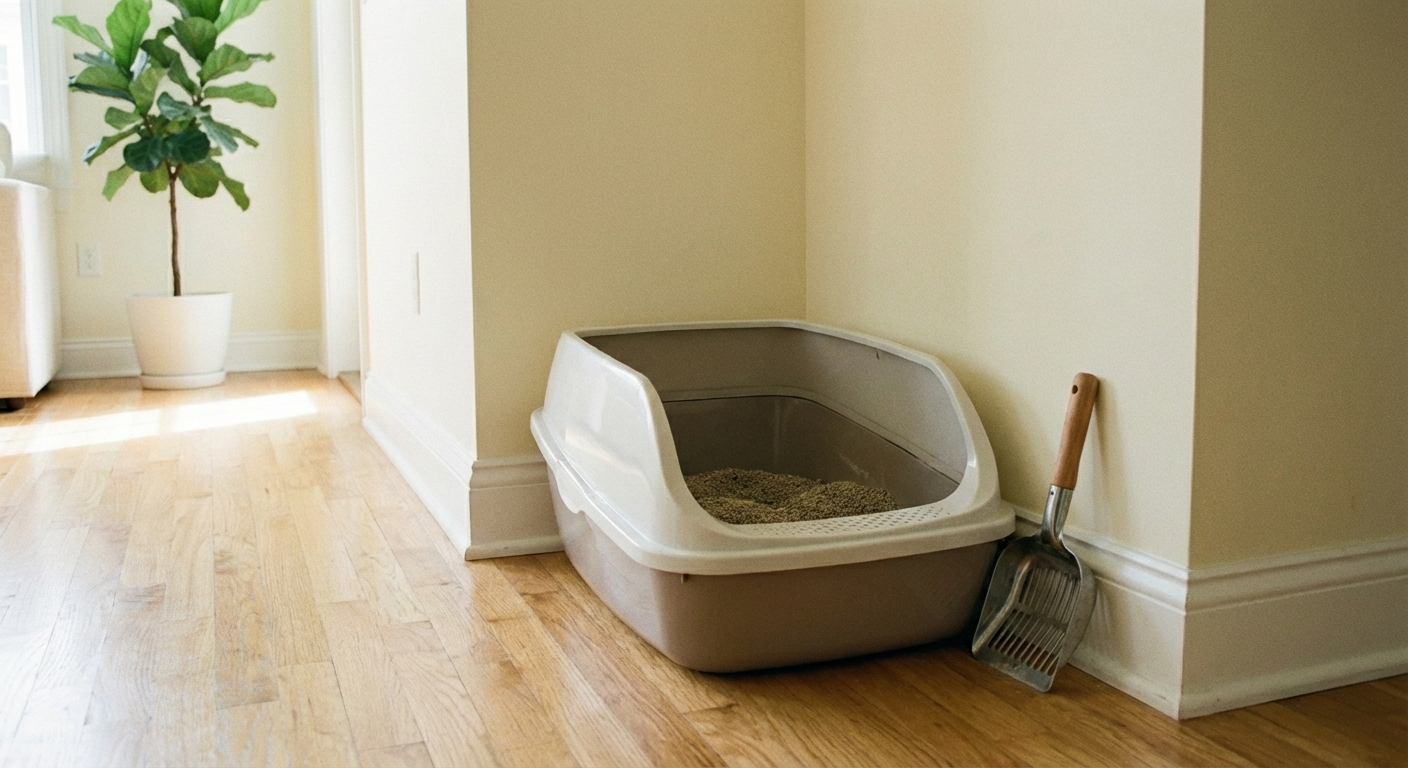
If you are using covered boxes: some cats feel trapped and avoid them, especially in multi-cat homes. If spraying is happening, it is worth trying at least one uncovered box as an experiment.
Find the trigger: stress or territory
Spraying is often a stress signal. Your cat is trying to make the environment feel predictable and safe by adding their scent. Common triggers include:
- New cat in the home or conflict between resident cats
- Outdoor cats visible through windows (a huge, common cause)
- New baby, partner, roommates, or visitors
- Moving or new furniture, remodeling, strong cleaners, or new smells
- Schedule changes including travel, long work hours, or less playtime
Simple ways to lower stress fast
- Create safe zones: one quiet room or area with food, water, litter, bed, and scratching post
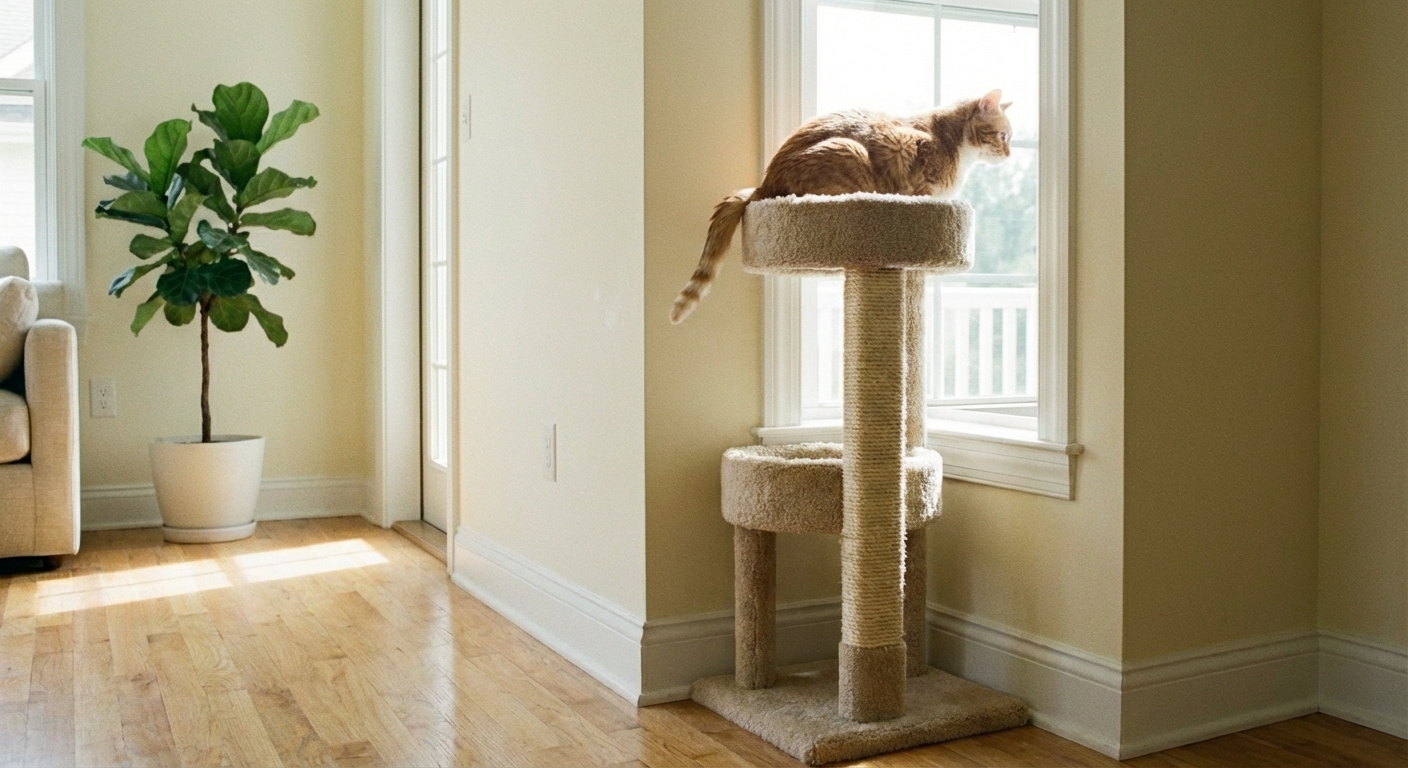
- Add vertical space: cat trees, shelves, or window perches so cats can get above stress
- Daily interactive play: 10 to 15 minutes with a wand toy, then a small meal or treat
- Predictable routine: consistent feeding and play times
- Reduce outdoor triggers: close blinds at peak times, apply frosted window film on lower panes, block access to hot spot windows
Temporary management while you troubleshoot
If spraying is active right now, you can reduce damage and help your cat succeed while you work on the root cause:
- Limit access to hot spots: close doors or use a pet gate to block areas your cat targets.
- Add a box nearby: place a litter box close to the sprayed area temporarily, then gradually move it once things improve.
- Protect surfaces: use washable covers, shower curtains, plastic chair mats, or other wipeable barriers on targeted areas.
- Increase positive use of the area: add a scratcher, bed, or food station if it is safe and practical.
Important: avoid punishment. Yelling, spraying water, or rubbing a cat’s nose in it can increase stress and make spraying worse.
Clean sprayed areas correctly
Cats have sensitive noses. If even a faint urine odor remains, the spot becomes a tempting message board.
Best practice cleaning steps
- Blot first (do not rub) to remove as much as possible.
- Use an enzymatic cleaner made specifically for pet urine and follow the label contact time.
- Avoid ammonia-based products because they can smell urine-like to cats.
- Wash soft items with an enzyme additive when possible, and repeat if needed.
Cleaning mistakes to avoid
- Do not use heat to “set” stains: steam cleaners, hot water extraction, and high heat drying can lock in odor.
- Do not rely on vinegar and baking soda alone: they may reduce smell for humans but often do not fully remove the odor for cats.
Pro tip: once it is truly clean, you can make the area less appealing by placing a food bowl, a scratcher, or a bed there. Many cats are less likely to spray where they eat and rest.
Multi-cat tension matters
Not all cat conflict looks like fighting. Sometimes it is blocking doorways, staring, chasing, stealing resting spots, or one cat always winning access to resources. That chronic stress can lead to marking.
What helps in multi-cat homes
- Resource spreading: multiple feeding stations, multiple water bowls, and multiple litter boxes in different locations
- More resting options: beds in separate areas, vertical spots, hiding spaces
- Slow reintroductions: if cats have started fighting or one seems afraid, separate and reintroduce gradually
- Scheduled play: burn off tension and redirect hunting energy
If you suspect tension, a certified feline behavior professional can be incredibly helpful, especially when spraying has become a habit.
Pheromones and calming support
For some cats, synthetic feline facial pheromones may help reduce marking by helping the home feel more familiar and safe. Consider them a support tool, not a cure on their own.
- Plug-in diffusers: helpful for main living areas and spray zones
- Sprays: useful for carriers, bedding, or specific spots
If your cat is highly anxious, talk with your veterinarian. In some cases, prescription anti-anxiety medication, pain control, or a urinary-support diet is appropriate and can make behavior work actually stick.
When to call your vet right away
Please seek urgent care if you notice:
- Straining to urinate, crying in the litter box, or only producing drops
- Blood in the urine
- Repeated trips to the box with little output
- Lethargy, vomiting, hiding, or loss of appetite
Male cats in particular can develop a urinary blockage, which is a medical emergency.
If you only do 3 things
- Book a vet visit to rule out urinary disease or pain, especially if this is new.
- Improve your litter box setup (enough boxes, good placement, clean daily, unscented litter).
- Remove triggers and odor by blocking outdoor cat views, adding safe spaces and vertical space, and cleaning with an enzymatic urine cleaner.
Timeline and encouragement
Once medical issues are addressed and the environment is adjusted, many homes see improvement within 1 to 4 weeks. Some cats improve sooner, and others need 6 to 12 weeks or more, especially if spraying has been happening for months or there is ongoing multi-cat conflict.
You are not failing your cat. Spraying is information. When you listen to what your cat is telling you and respond with the right care steps, the behavior often fades.