Stop cat biting with vet-informed, force-free steps: identify the cause, end attention after bites, reward gentle behavior, add daily hunt-style play, and pr...
Article
•
Designer Mixes
How to Stop a Cat From Biting

Shari Shidate
Designer Mixes contributor
Why cats bite (and why it is usually not “mean”)
As a veterinary assistant here in Frisco, Texas, I hear this all the time: “My cat is sweet, but she bites out of nowhere.” The truth is, most cat biting has a reason. Cats often communicate with their bodies first, but the signs can be subtle or fast. If we miss the early signals, an interaction can escalate to a bite.
Your goal is not to “win” against your cat. Your goal is to identify the trigger, meet the underlying need, and teach safer ways to interact. When you do that, biting often improves faster than people expect.
- Play biting (especially in kittens and young cats): excitement, hunting practice, or boredom.
- Overstimulation biting: petting feels good until it suddenly does not.
- Fear or defensive biting: the cat feels trapped or threatened.
- Pain-related biting: a medical issue makes touch uncomfortable.
- Redirected aggression: a stressful trigger (like another cat outside) spills onto the nearest person.
First step: rule out pain
If biting is new, worsening, or happening when you touch a specific area, schedule a veterinary visit. Cats are masters at hiding pain, and biting can be a protective response.
Common medical contributors include dental disease, arthritis, and skin irritation. Other issues like urinary discomfort or hyperthyroidism (especially in older cats) may contribute to irritability and reactivity. Even something simple like a matted patch of fur can make petting painful.
Red flag: If your cat bites when picked up, when the belly or back is touched, or suddenly cannot tolerate normal handling, treat it like a medical clue, not a behavior “attitude.”
Match the bite to the cause
Play biting
Play biting often shows up as pouncing on ankles, grabbing hands, or “bunny kicking.” It is common in high-energy cats and in cats who do not get enough appropriate hunting-style play.
Overstimulation bites
This looks like: your cat is purring, then suddenly turns and bites while being petted. Many cats have a shorter petting tolerance than we expect, especially along the lower back and belly.
Fear-based biting
Fear bites happen when the cat feels cornered. The body language is usually there if you know what to look for: crouching, ears back, wide pupils, tail tucked, or thrashing.
Redirected aggression
Your cat may see a neighborhood cat through the window, then whirl and bite you when you walk by. The bite is not about you. It is about the surge of arousal with nowhere safe to go.
Early signs to watch for
Many cats do give warnings, but they can be easy to miss. If you catch these early, you can stop before teeth happen:
- Tail: twitching, thumping, or sudden swishing
- Skin: rippling along the back
- Body: sudden stillness, tension, or a quick head turn toward your hand
- Ears: rotating sideways or pinning back
- Eyes: wide pupils, “hard” stare
What to do in the moment
Do this
- Freeze for 1 to 2 seconds for mild play nips only. Fast movement can trigger more grabbing.
- Gently disengage by going still and slowly removing your hand or standing up.
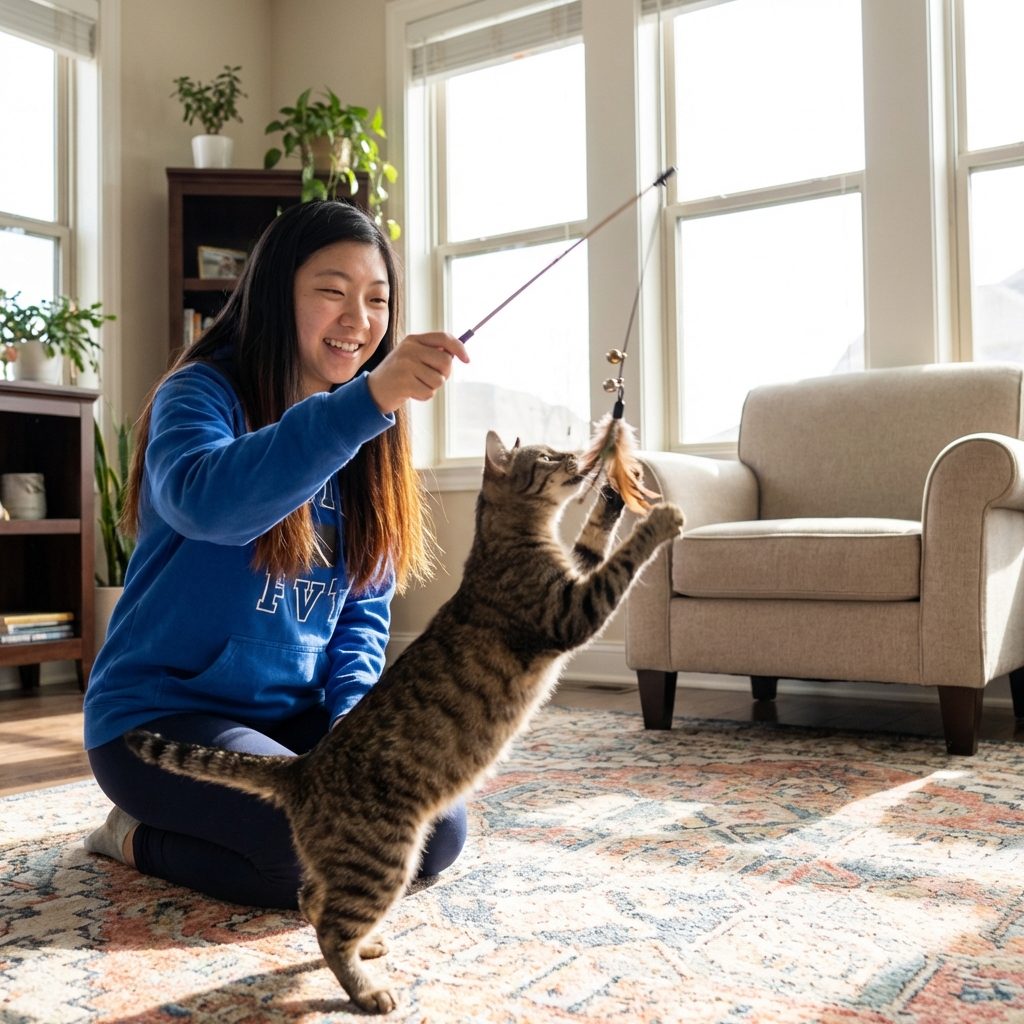
- Redirect to a toy if the cat is in play mode. Toss a kicker toy away from you or grab a wand toy.
- Separate and calm if the cat is over-aroused. Step behind a door or use a baby gate for a brief reset.
- Prioritize safety if the bite is intense or your cat is latched on. Do not try to “win” the moment. Create distance, protect your face and hands, and end the interaction.
Avoid this
- Do not yell, hit, or scruff. Punishment increases fear and can make biting worse.
- Do not “play with hands”, even with kittens. It teaches that skin is a target.
- Do not chase an upset cat. Give space and let the nervous system settle.
- Do not push the cat away with your hands during a tense moment. It often escalates the bite and teaches the cat that hands are part of the conflict.
If skin is broken: clean it
Cat bites can get infected quickly, especially punctures and bites to the hand. Wash the area with soap and running water right away. Seek medical care urgently if you have a deep puncture, increasing redness, swelling, warmth, pain, drainage, fever, or limited movement, or if you are immunocompromised. When in doubt, get it checked.
Teach better habits: a simple plan
1) Meet the daily hunting need
Many play biters improve when you add structured play. Aim for two short sessions per day (about 5 to 10 minutes) as a starting point, and increase based on your cat’s age and energy. Use wand toys, chase toys, or anything that lets your cat stalk, chase, pounce, and “catch.” Many behavior pros also recommend finishing with a small meal or treat to complete the hunt sequence.
- Keep toys moving like prey: short darts, pauses, hiding behind furniture.
- Rotate toys every few days so they stay interesting.
- If your cat attacks ankles, schedule play right before the usual “attack time.”
2) Make “hands are boring” a rule
If teeth touch skin during play, end the interaction calmly. Stand up, step away, and pause for 30 to 60 seconds. Then offer a toy. This teaches a clear pattern: biting makes the fun stop, but toys make the fun continue.
3) Reward gentle behavior
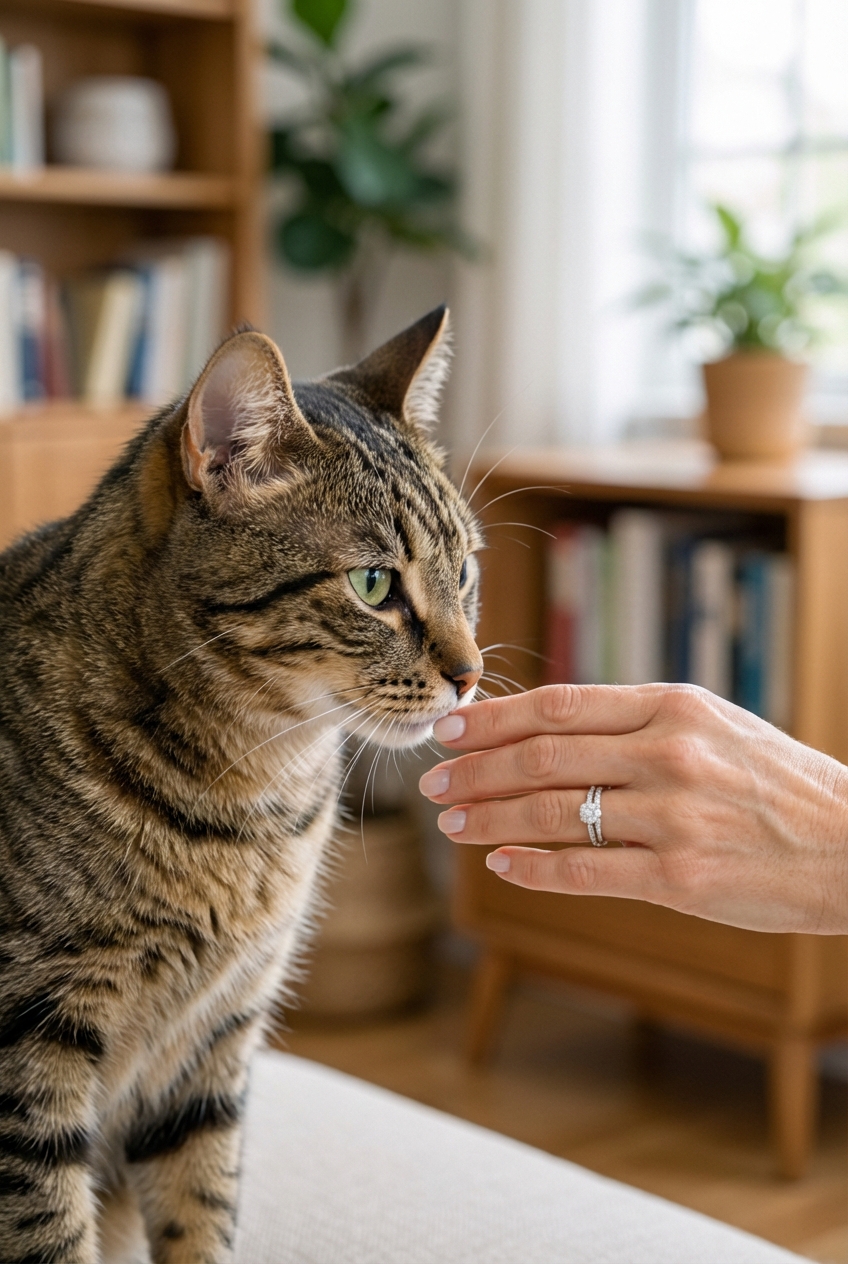
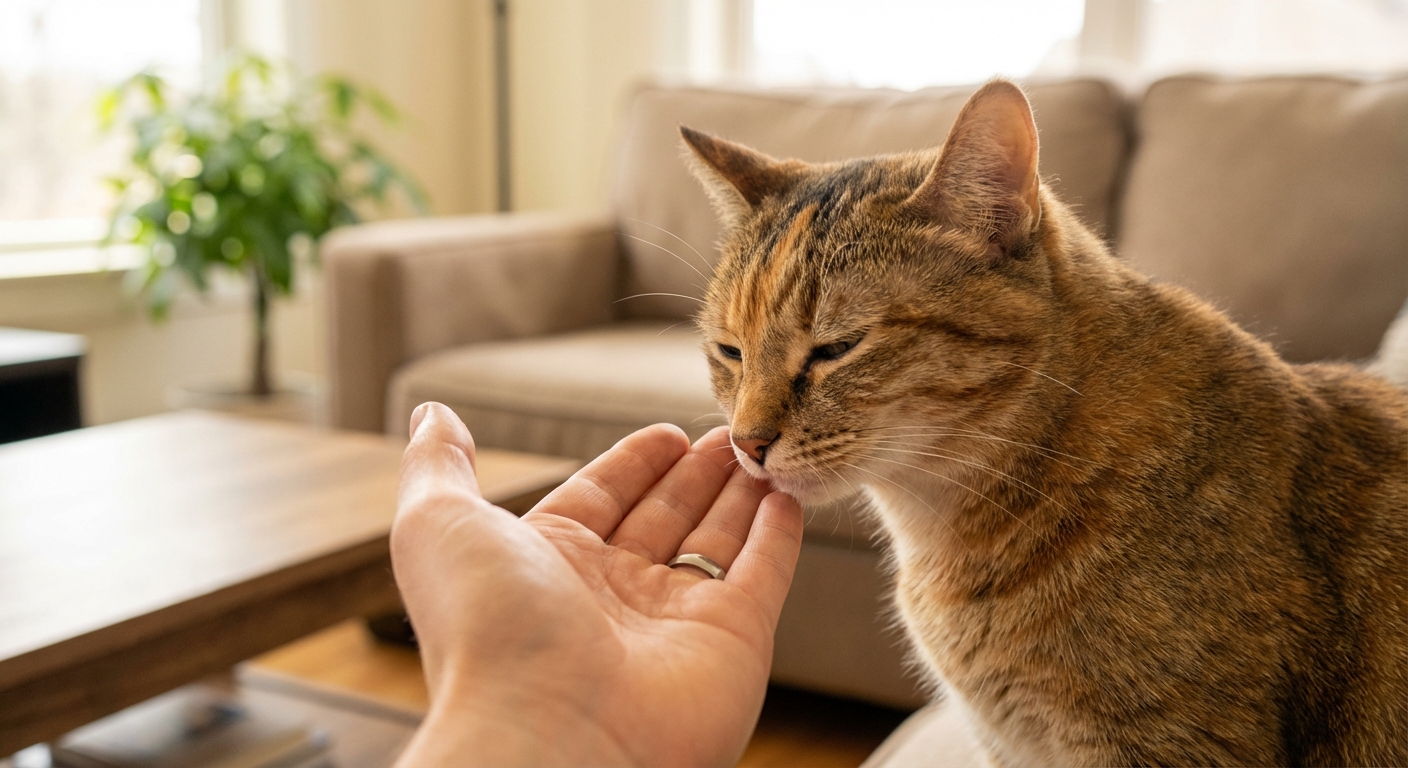
Look for moments your cat is calm: sitting near you, sniffing your hand, choosing a toy. Mark that with a treat, a soft “good,” or a quick play burst. Positive reinforcement works beautifully with cats, especially when rewards are small and consistent.
4) Use consent-based petting
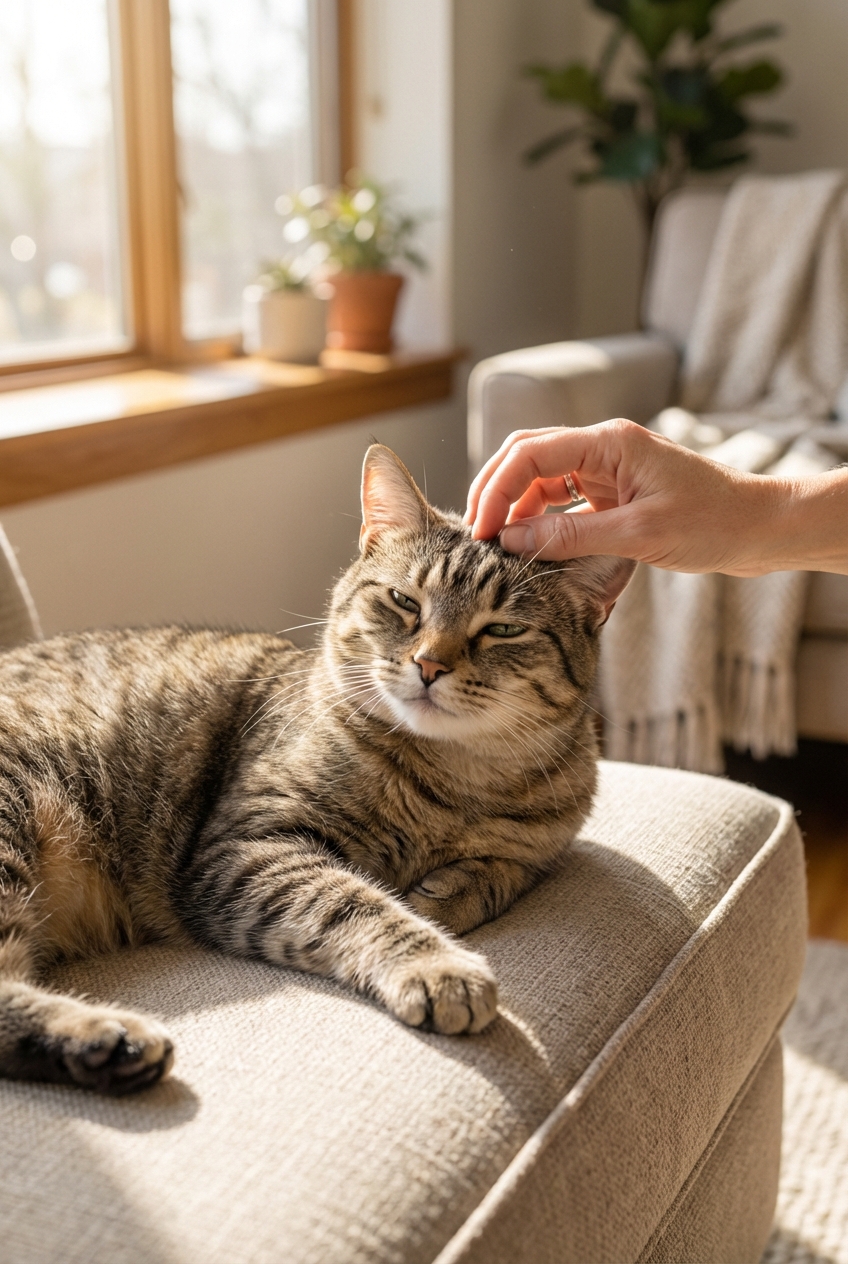
For petting bites, switch to short strokes, then pause. Let your cat choose more. Many cats do best with petting around the cheeks, chin, and base of the ears rather than the belly or lower back.
- Pet for 2 to 3 seconds, then stop and wait.
- If your cat leans in, head-butts, or stays relaxed, continue.
- If your cat stiffens, tail flicks, skin ripples, or ears rotate back, stop.
Make your home bite-resistant
Behavior is easier when the environment helps. A few small upgrades can reduce frustration and stress, which reduces biting.
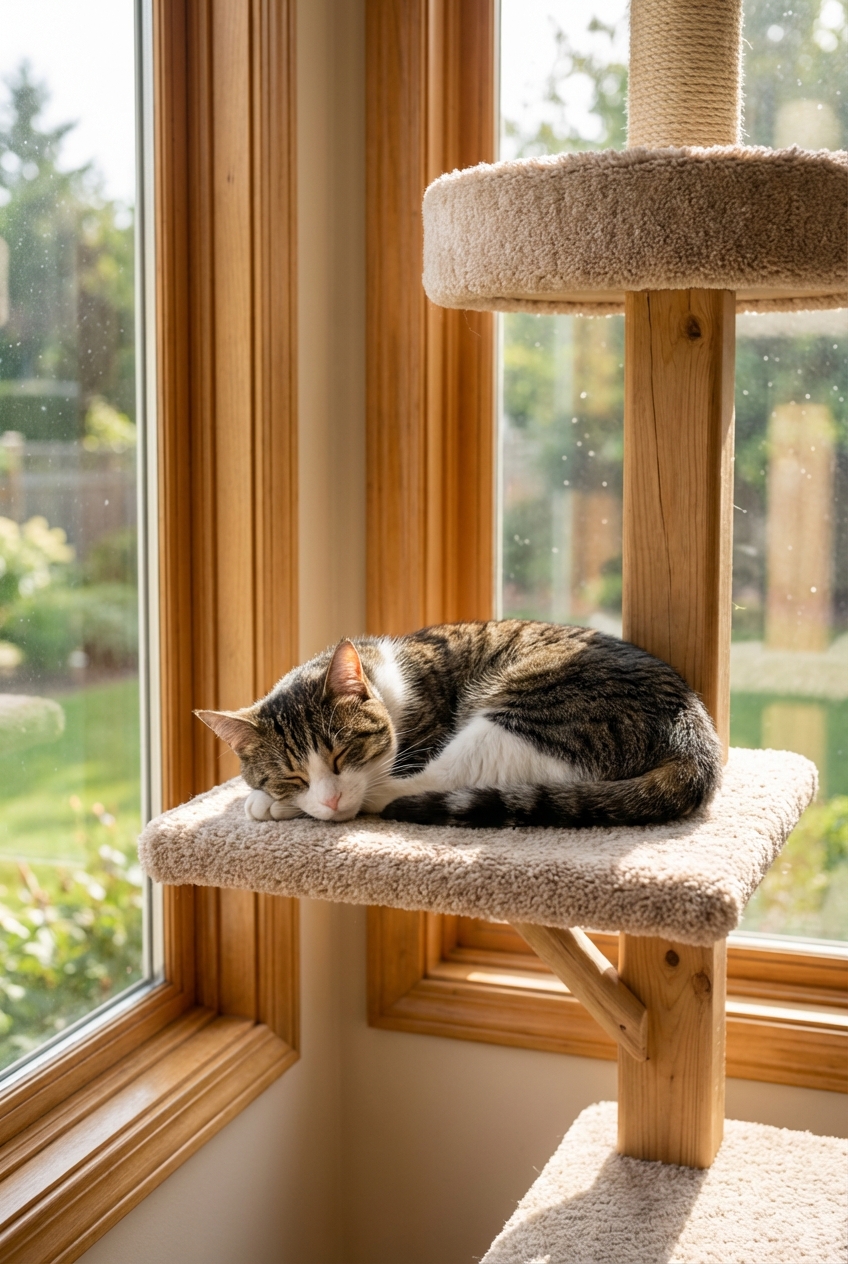
- Vertical space: cat trees, shelves, or window perches give cats a safe “off switch.”
- Scratch stations: place scratchers near sleeping areas and high-traffic rooms.
- Predictable routines: meals, play, and quiet time at similar times each day.
- Safe retreat zones: a quiet room or covered bed where nobody bothers the cat.
Kids and guests
If your cat bites people who do not “speak cat” yet, management helps. Supervise children, and coach guests to avoid grabbing, hugging, belly rubbing, or cornering. Ask them to offer a wand toy or toss a treat instead of reaching straight for the cat.
Special cases: intense biting
Redirected aggression
If your cat is reacting to outdoor cats, block the view temporarily (frosted window film or closing blinds) and add indoor enrichment. Do not attempt to pet or pick up your cat during an episode. Give space until fully calm.
Fear and handling bites
For cats that bite during nail trims, brushing, or being picked up, use gradual desensitization. Start with tiny steps paired with treats. Example: show the nail clippers, treat. Touch paw for one second, treat. Over days, work up to one nail, treat, then stop.
When to bring in a pro
Seek help from your veterinarian, a certified cat behavior consultant, or a board-certified veterinary behaviorist if you see repeated deep bites, household tension between pets, sudden behavior changes, or biting that seems to happen “without warning.” In many cases, the warnings were just very subtle, and a pro can help you spot patterns and build a plan.
Quick checklist: 7-day reset
- Day 1: schedule a vet check if biting is new, worsening, or touch-sensitive.
- Day 2: remove hand-play, add two wand-toy sessions.
- Day 3: set up a kicker toy and a scratching spot in the main room.
- Day 4: switch to consent-based petting (short, pause, let the cat choose).
- Day 5: reward calm behavior 5 times today (tiny treats, quick and simple).
- Day 6: identify the top trigger (time, location, touch zone, noise, window cats).
- Day 7: adjust the environment to reduce that trigger and keep the play routine.
Consistency is the secret. Most cats improve when we stop accidental “training” of biting and start meeting their needs in a clear, predictable way.