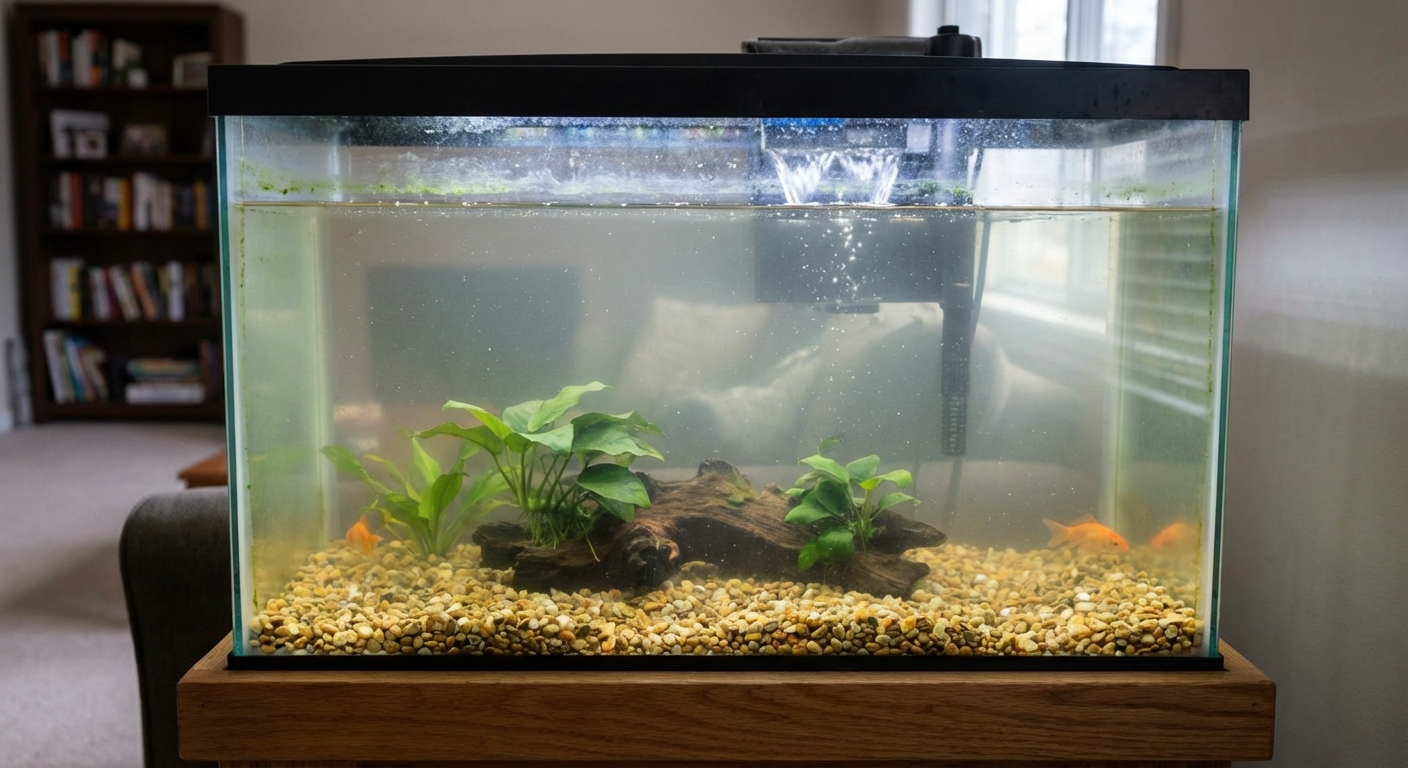
Understand aquarium cycling and the nitrogen cycle: how beneficial bacteria convert ammonia to nitrite to nitrate, how long it takes, and how to cycle fishle...
Article
•
Designer Mixes
How to Start a Fish Aquarium

Shari Shidate
Designer Mixes contributor
Starting a fish aquarium is one of those hobbies that looks intimidating until you learn the basics. Then it becomes a calm, satisfying routine: clean water, steady temperature, gentle feeding, and a little patience. If you set up your tank with the fish’s biology in mind, you will avoid the most common heartbreak for beginners: fish loss caused by “new tank syndrome” (a spike in ammonia and nitrite in an uncycled tank).
In this guide, I’ll walk you through proven, beginner-safe steps to set up your first aquarium, plus practical tips that make maintenance feel simple instead of stressful.
Pick the right tank size
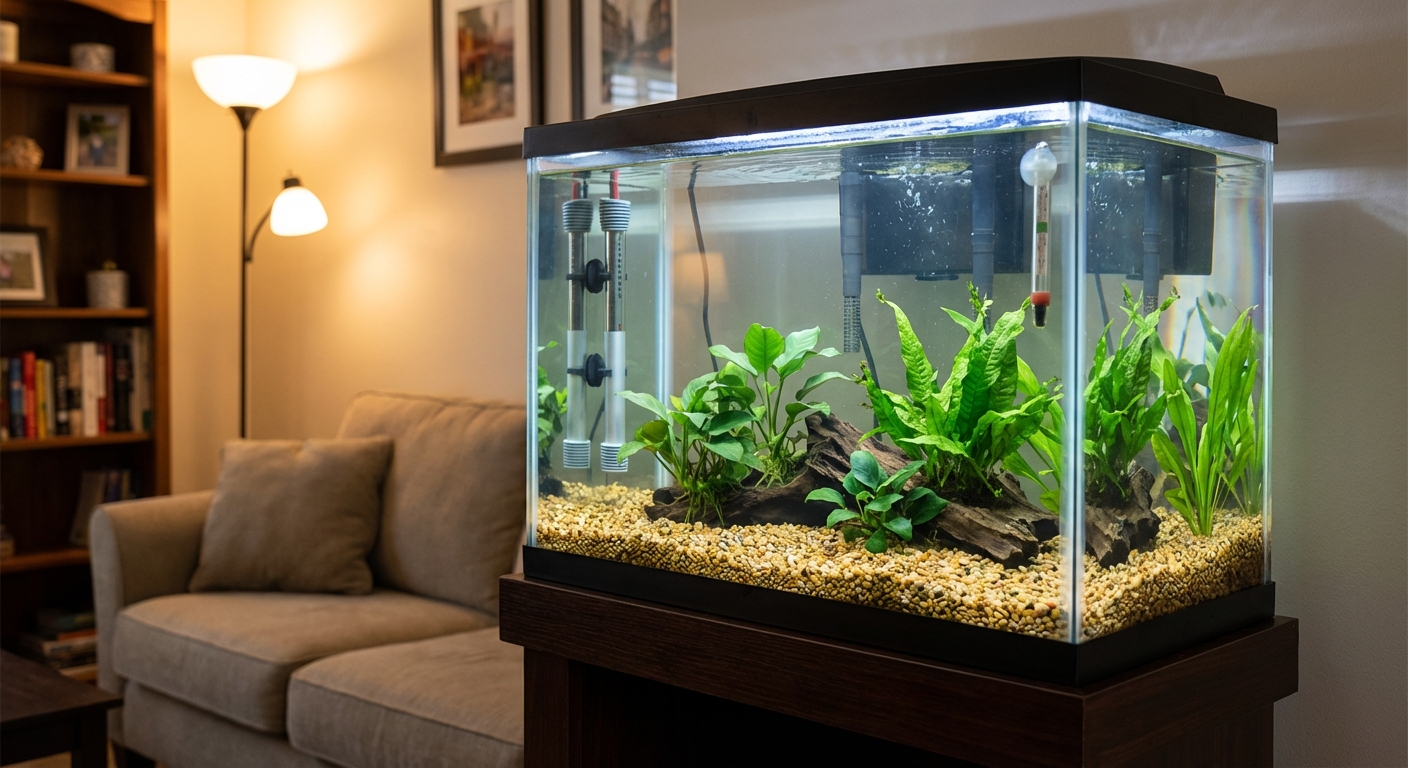
If you only remember one thing, make it this: bigger is easier. A larger volume of water changes more slowly, which means it is more forgiving when you overfeed a little or miss a water change by a day.
- Best beginner size: 20 gallon long (freshwater). Stable, affordable, and easy to stock.
- Good small option: 10 gallon, but you must be more consistent with maintenance.
- Avoid for your first tank: bowls and nano tanks under 5 gallons. They fluctuate fast in temperature and water quality.
Placement tip: Put the tank on a level, sturdy stand away from direct sunlight, vents, and busy doorways. Sunlight often triggers algae blooms and temperature swings.
Understand the nitrogen cycle
Fish constantly release waste, and leftover food breaks down too. In a healthy aquarium, beneficial bacteria convert toxic waste into less harmful forms. This process is called the nitrogen cycle, and it is the foundation of fishkeeping.
- Ammonia (NH3/NH4+) from fish waste is highly toxic.
- Beneficial bacteria convert ammonia into nitrite (NO2-), also toxic.
- More bacteria convert nitrite into nitrate (NO3-), which is much safer and removed with water changes and plant growth.
Most beginner problems happen because the tank has not grown enough bacteria yet, so ammonia and nitrite rise quickly. That is why “cycling” your tank matters more than buying fancy décor.
Healthy tanks are not “clean” because you scrub everything. They are healthy because they are biologically balanced.
Gear you actually need
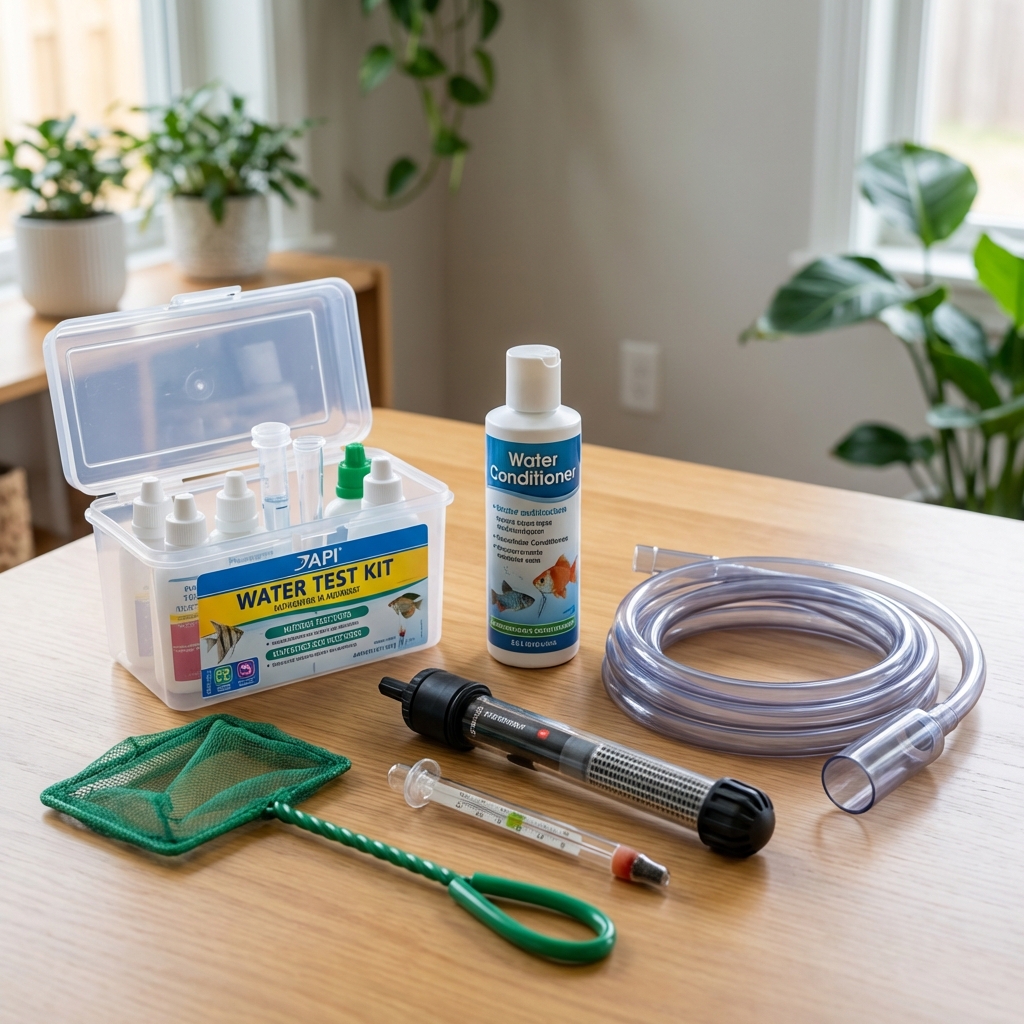
You can keep it simple. Here is a beginner-friendly setup that works for most freshwater community tanks.
Essentials
- Aquarium + lid (fish jump more than you think).
- Filter sized for your tank. A hang-on-back or sponge filter is perfect for beginners.
- Heater (for most tropical fish). Choose an adjustable model.
- Thermometer to confirm heater accuracy.
- Light if you have live plants. If not, basic lighting is fine.
- Water conditioner (dechlorinator). Tap water needs treatment before it touches fish.
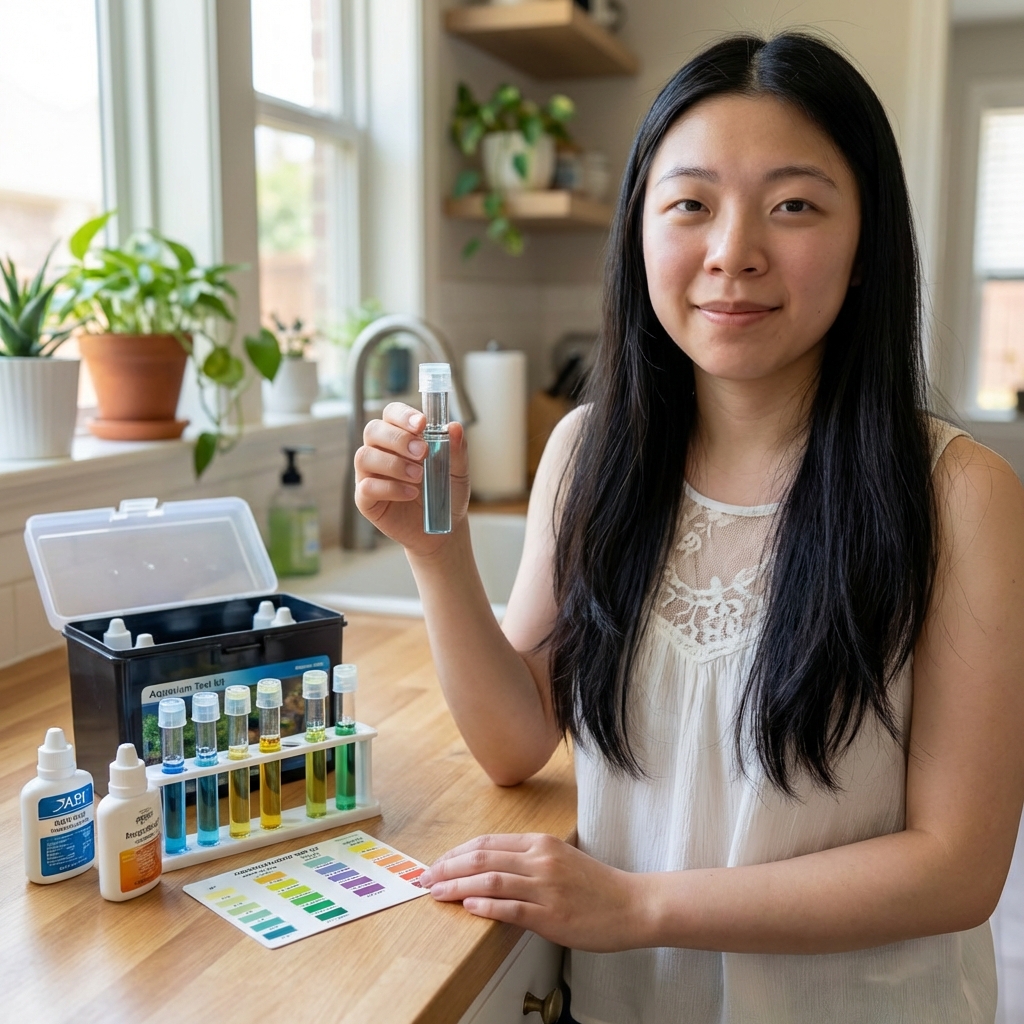
- Test kit for ammonia, nitrite, nitrate, and pH. Liquid kits are typically more accurate than strips.
- Gravel vacuum and a dedicated bucket used only for the aquarium.
Helpful upgrades
- Sponge pre-filter on the intake to protect small fish and trap debris.
- Timer for lights to prevent algae and keep a consistent schedule.
- Air pump + air stone if your fish or filter setup benefits from more surface agitation.
Skip for now
- “pH up/down” chemicals. Chasing numbers often causes more stress than a stable, slightly imperfect pH.
- Anything that “sterilizes” your tank as a routine habit. Avoid deep-cleaning filter media under tap water, bleaching décor, or replacing all filter media at once.
- Disposable filter cartridge routines that push frequent full replacements. If you do use cartridges, preserve bacteria by keeping established media in the filter whenever possible.
Setup step by step
1) Rinse the tank and supplies
Use plain water only. No soap, no detergents. Even tiny residues can harm fish.
2) Add substrate and décor
Rinse gravel or sand until the water runs mostly clear. Place rocks and driftwood securely so nothing can shift and trap a fish.
If you want plants, beginner-proof options include:
- Anubias
- Java fern
- Amazon sword
- Cryptocoryne
- Floating plants like frogbit (great for nitrate control)
3) Fill with water and treat it
Fill slowly to avoid disturbing the substrate. Add dechlorinator for the full tank volume. If you have well water, consider testing it for hardness and pH consistency.
4) Start equipment
Turn on the filter and heater. Let the tank run and stabilize for 24 hours. Confirm temperature with a thermometer and adjust the heater if needed.
5) Cycle the tank (fishless is best)
Fishless cycling means you grow beneficial bacteria before adding fish, using an ammonia source and a test kit to guide you. It takes patience up front, but it is kinder and far more successful.
A simple fishless cycling approach:
- Add a source of ammonia (commonly pure household ammonia without additives, or fish food that decomposes).
- Aim for a testable dose, typically 1 to 2 ppm ammonia for many community freshwater tanks. This prevents “passing” the cycle with an amount too small to matter.
- Test every 1 to 2 days for ammonia and nitrite.
- As bacteria establish, ammonia drops and nitrite spikes, then nitrite drops and nitrate rises.
- The cycle is considered mature when the tank can process a 1 to 2 ppm ammonia dose down to 0 ammonia and 0 nitrite within about 24 hours, and you have measurable nitrate.
Most new tanks take 3 to 6 weeks to cycle. It can be faster with seeded media, and it can take 6 to 10+ weeks in cooler tanks, with low ammonia dosing, or with inconsistent testing.
Shortcut that helps: If you can get a small piece of established filter media (from a healthy, disease-free aquarium), it can dramatically speed up cycling.
Right before you add fish: Confirm ammonia is 0 and nitrite is 0. If nitrates are high, do a large water change (often 50 percent or more) to bring them down, then re-test.
Choose beginner-friendly fish
Beginner-friendly fish are hardy, peaceful, and tolerate small mistakes better. The key is to match fish to your tank size and avoid overstocking. Always research adult size and compatibility, not just what they look like in the store.
Great freshwater starters
- Livebearers: platies, guppies. (Note: they reproduce quickly.)
- Mollies: can do well, but they often prefer harder, more alkaline water and may struggle in soft, acidic setups. If you do not know your water hardness yet, start with guppies or platies.
- Schooling fish: ember tetras, harlequin rasboras (keep them in groups of 6 or more). Neon tetras are popular, but they tend to do best in mature, stable tanks.
- Bottom dwellers: corydoras (groups of 6 or more), bristlenose pleco (needs adequate tank size and driftwood).
- Single centerpiece fish: betta (best alone, and still needs a heated, filtered tank with enough space, not a small unheated bowl).
Fish to avoid at first
- Goldfish in small tanks. They need large volumes and strong filtration because they produce a lot of waste.
- Oscars and other large cichlids. Big, messy, and can be aggressive.
- Delicate species that require very stable parameters (many wild-caught fish, some sensitive shrimp setups).
Simple 20-gallon stocking ideas
- Option 1: 10 to 12 harlequin rasboras + 6 corydoras + (optional) 1 bristlenose pleco if filtration is strong and you keep up with water changes.
- Option 2: 12 to 16 ember tetras + 6 corydoras + a small group of hardy snails (if desired).
Stocking tip: Add fish slowly, not all at once. Your bacteria population grows in response to waste. Gradual additions help keep ammonia and nitrite at zero.
Acclimation and week one
When you bring fish home, the goal is to reduce stress. Stress weakens immune systems and makes fish more vulnerable to disease.
How to acclimate
- Float the sealed bag for 15 to 20 minutes to equalize temperature.
- Open the bag and add a small amount of tank water every 5 minutes for 20 to 30 minutes.
- Net the fish into the tank and discard bag water.
Keep the lights dim for the first day and avoid tapping the glass. If you do not see your fish eat on day one, that can be normal. Many fish need time to settle.
Water parameters to watch
Testing is not about perfection. It is about catching problems early, before fish show symptoms.
- Ammonia: 0 ppm
- Nitrite: 0 ppm
- Nitrate: aim under 20 ppm; try to keep it under 40 ppm for most community tanks (planted tanks often run lower, unplanted tanks may creep higher without regular water changes)
- Temperature: commonly 74 to 78°F for many tropical fish (species dependent)
- pH and hardness: stability is often more important than hitting an exact number
If ammonia or nitrite show up after fish are added, do an immediate partial water change and reduce feeding. That is your emergency brake.
Feeding
Overfeeding is one of the fastest ways to ruin water quality. Fish do not need a “full bowl” feeling like we do.
- Feed small amounts once or twice a day.
- Only offer what they can eat in about 30 to 60 seconds (varies by species).
- Remove uneaten food if it is collecting on the bottom.
Evidence-based reminder: Many fish can safely go a day without food. If you are unsure, underfeed rather than overfeed.
Maintenance made simple
A simple schedule is the difference between a tank that becomes a joy and one that becomes a chore.
Weekly
- Test ammonia, nitrite, nitrate.
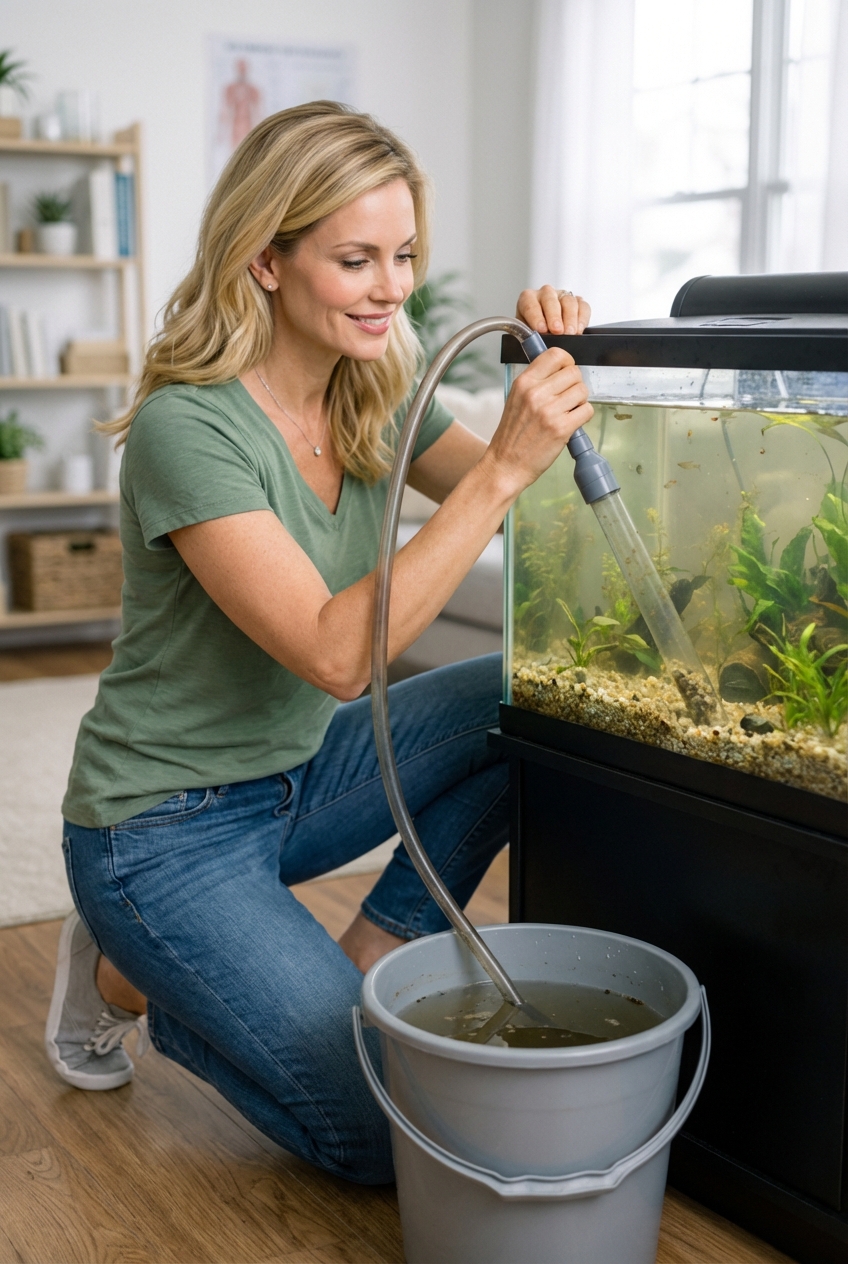
- Do a 20 to 30% water change (more if nitrates are climbing).
- Vacuum the substrate lightly to remove waste pockets.
- Wipe algae from the glass as needed.
Monthly
- Rinse filter media gently in removed tank water (never under hot tap water) to preserve beneficial bacteria.
- Check heater, thermometer, and filter flow.
Water change basics: Dechlorinate new water, try to match temperature, and avoid sudden big swings that can shock fish.
Do not replace all filter media at once. That is where much of your beneficial bacteria live.
Common beginner mistakes
- Adding fish on day one: Cycle first whenever possible.
- Cleaning too aggressively: A spotless tank is not always a healthy tank. Preserve bacteria.
- Overstocking: More fish equals more waste. Add gradually.
- Skipping quarantine: New fish can carry parasites or infections. A simple quarantine setup can prevent huge losses.
- Unstable temperature: Small tanks and cheap heaters swing more. Use a thermometer and verify settings.
Quarantine basics
You do not need a fancy second aquarium to quarantine. You need a controlled, easy-to-clean space.
- A simple bare-bottom tank or storage tub
- Sponge filter (ideally pre-seeded in your main tank ahead of time)
- Adjustable heater and thermometer
- Hiding place (PVC pipe or a small inert decoration)
A typical quarantine period is 2 to 4 weeks. Observe appetite, behavior, and any spots or frayed fins before the fish ever enters your main tank.
Troubleshooting
Cloudy water in a new tank
Often a bacterial bloom during cycling.
- If you are fishless cycling: avoid routine water changes that dilute ammonia too much. Only change water if ammonia or nitrite get excessively high, or if you made a mistake and overdosed ammonia.
- If fish are already in the tank: test ammonia and nitrite and do partial water changes as needed to keep them at 0, and feed lightly.
Green water or algae explosion
Reduce light duration (6 to 8 hours is plenty), avoid direct sunlight, and check feeding. Fast-growing plants can help outcompete algae.
Fish gasping at the surface
Check ammonia and nitrite immediately. Increase surface agitation, add an air stone if needed, and do a partial water change.
White spots (possible ich)
Confirm the diagnosis and treat promptly. Heat alone is not always enough, and it can stress some species. Use an appropriate medication based on what you keep (some fish and invertebrates are sensitive to certain treatments), and increase aeration because many treatments and higher temperatures reduce available oxygen.
Start calm and steady
When you start an aquarium, you are not just buying fish. You are building a tiny, living ecosystem. Go slow, test your water, and let biology do the heavy lifting.
If you want the easiest path, choose a 20 gallon tank, cycle it fishless, stock gradually with hardy community fish, and keep a simple weekly water change routine. Your fish will reward you with brighter color, better appetite, and the kind of peaceful movement that makes an aquarium so relaxing to watch.