Understand dog anal glands, common warning signs, and when DIY is unsafe. Get a vet-guided, step-by-step external expressing method, supplies list, aftercare...
Article
•
Designer Mixes
How to Squeeze Dog Anal Glands

Shari Shidate
Designer Mixes contributor
Anal gland issues are one of those topics that can feel awkward to talk about, but they are very common in dogs. As a veterinary assistant, I have seen many pups go from miserable to comfortable quickly once the problem is addressed safely. This guide will help you understand what anal glands are, when (and when not) to express them at home, and how to do it in the safest, least stressful way for you and your dog.
Quick note: This article is for dogs only. It is educational and not a substitute for a veterinary exam or diagnosis.
What anal glands are
Dogs have two small scent glands (anal sacs) located just inside the anus, roughly at the 4 o’clock and 8 o’clock positions. They often release a small amount of fluid during bowel movements, especially when the stool is firm enough to put gentle pressure on the sacs.
When they do not empty well, the sacs can become overfull, irritated, or infected. In some cases, a sac can form an abscess and rupture through the skin. That is painful and requires veterinary care.
Signs your dog may need help
Not every dog needs routine anal gland expression. Many dogs never have a problem. It is usually worth considering expression only when you see symptoms.
Common signs
- Scooting (dragging the rear on the floor)
- Excessive licking or chewing at the rear
- Fishy odor that seems to come from the back end
- Sudden discomfort sitting down or jumping
- Swelling near the anus
Before you start, double-check
Scooting can also be caused by allergies, fleas, skin infection, worms, diarrhea, or irritated skin around the anus. Take a quick look for obvious redness, swelling, sores, diarrhea, or flea dirt. If this is your dog’s first episode (or you are not sure), it is completely okay to call your vet and ask what they recommend.
When not to do this at home
Home expression is not appropriate in every situation. Please skip DIY and see your veterinarian (or a trained groomer, depending on your dog) if you notice any of the following:
- Blood or obvious pus
- Open sores, scabs, or a draining hole near the anus
- Significant swelling, heat, or redness around the anus
- Your dog yelps, snaps, or cannot tolerate handling
- Fever, lethargy, poor appetite, or your dog seems generally unwell
- Repeated issues happening every few weeks or worsening over time
- Abnormal-looking discharge (bloody, pus-like, green, or very thick) especially if paired with pain, swelling, or a worsening odor
These signs can point to infection, abscess, or other medical issues that may require medication, flushing, pain control, or further diagnostics.
What you need
Anal gland fluid can spray, and the smell is intense. Setting up well makes the whole process safer and faster.
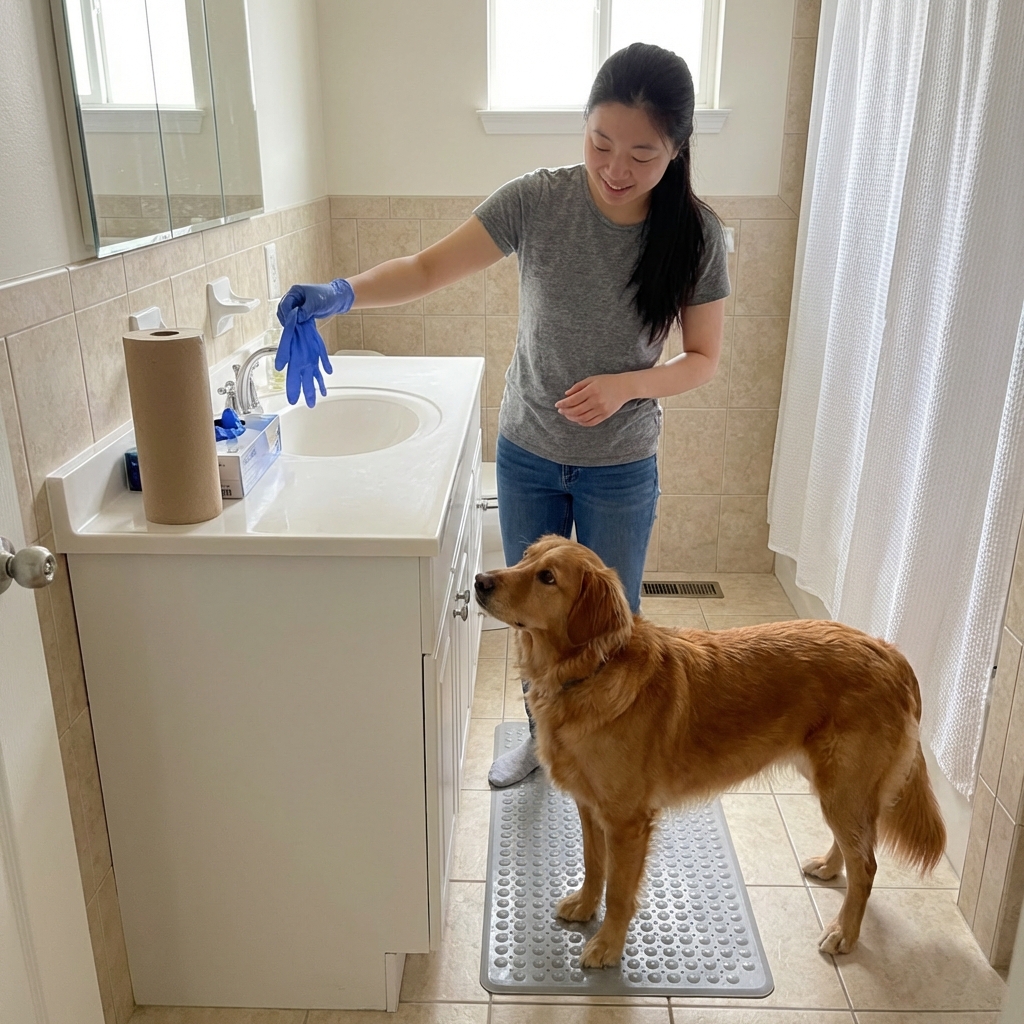
- Disposable gloves (nitrile or latex)
- Paper towels
- Unscented baby wipes or a damp washcloth
- A small trash bag
- Optional: safety glasses and a face mask if you are squeamish
- A helper to gently hold your dog steady
- High-value treats to keep things positive
Best location: a bathtub, shower, or outdoors where cleanup is easy. Many people prefer the bathtub because it contains any mess.
External expression at home
Veterinary professionals may perform internal expression in some cases. For most pet parents, the most appropriate at-home option (when a vet has said home care is reasonable) is external expression. It is less invasive than internal expression and lowers the risk of trauma.
Important: Do not attempt internal expression unless you have been trained in person by a veterinary professional. If your dog is very stressed, very painful, or you feel unsure, stopping is the right choice.
Stop right away if
- Your dog yelps, tries to bite, or seems painful
- You see blood or pus
- You cannot express anything after a couple of very gentle attempts
- Swelling, redness, or stress is increasing
Step-by-step
- Keep your dog calm. Use a helper if possible. Speak softly, reward often, and keep sessions short.
- Put on gloves. Have paper towels ready.
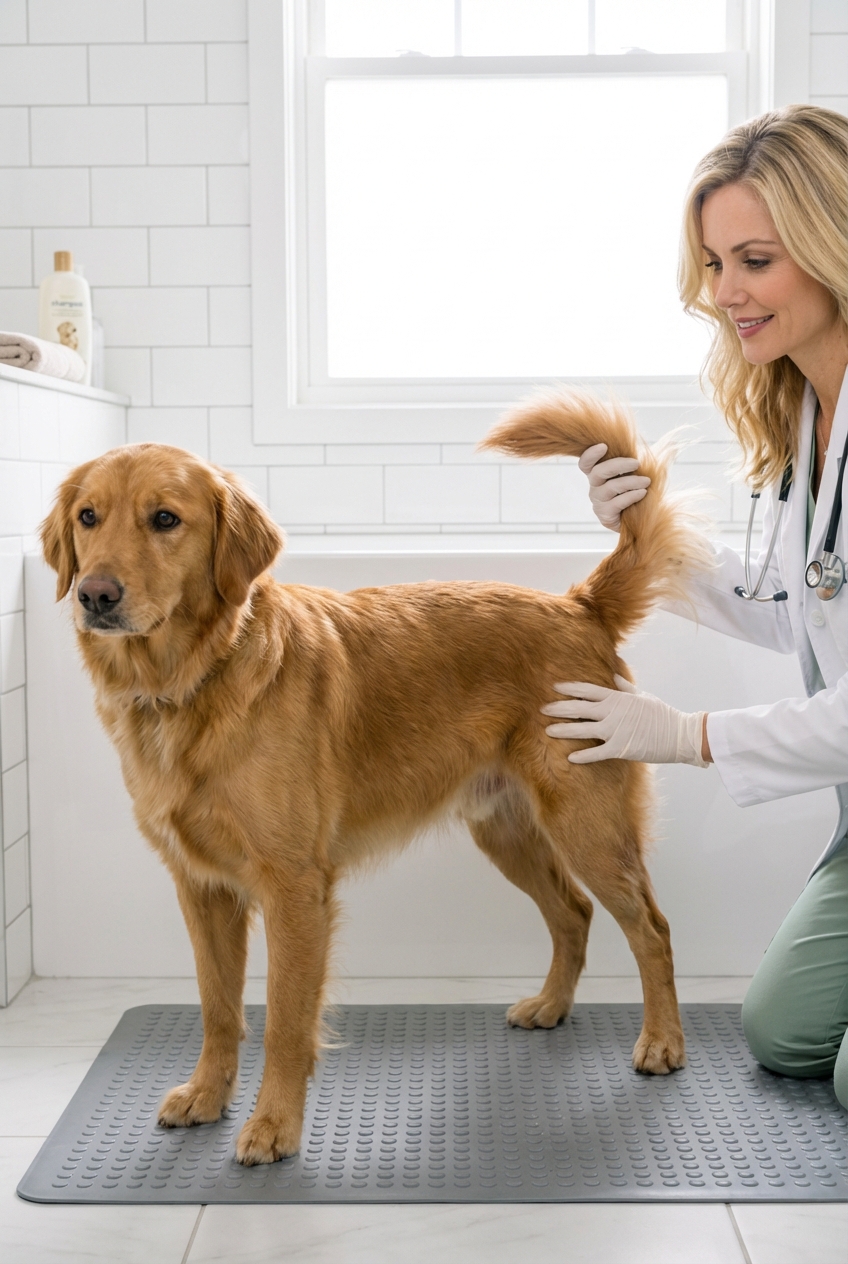
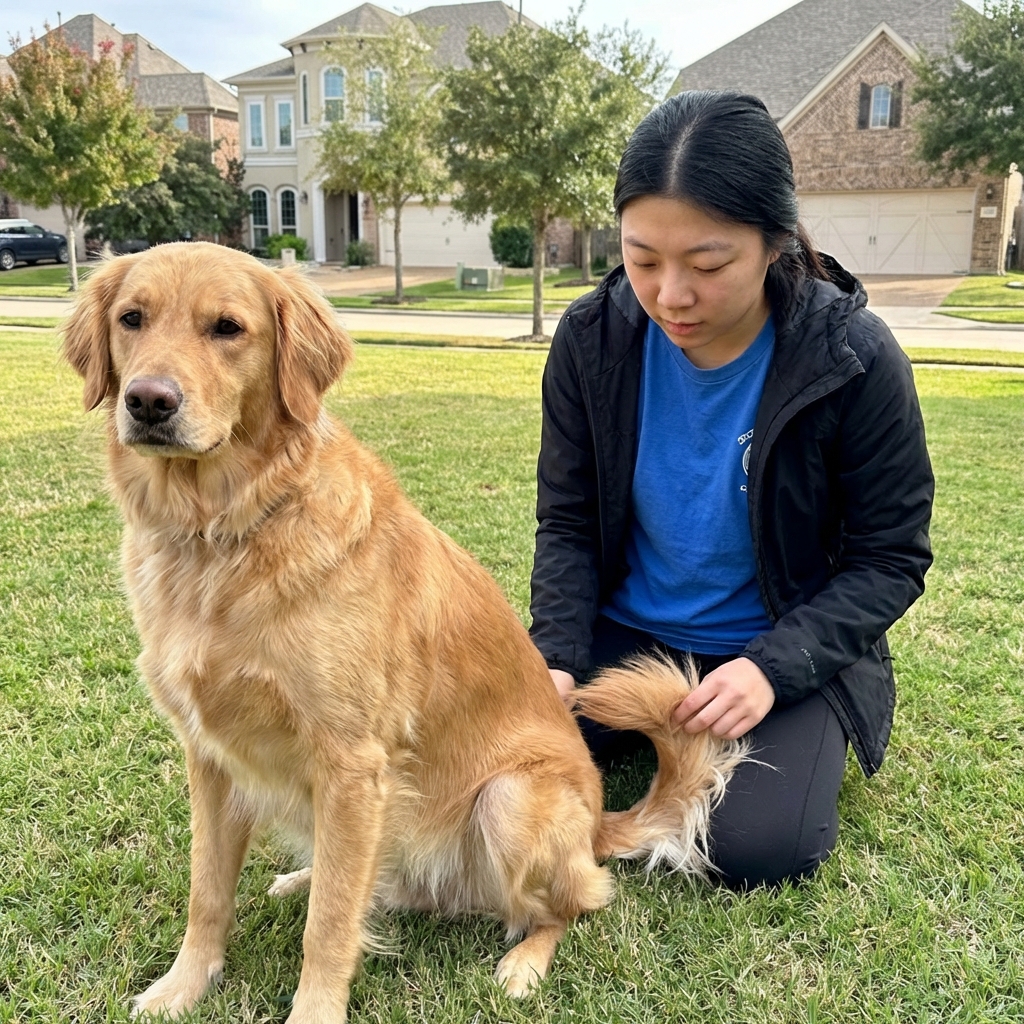
- Lift the tail gently. Raise it up and slightly forward. Do not force it.
- Find the glands. Imagine a clock. You are feeling for small, firm, pea-sized to grape-sized areas at about 4 o’clock and 8 o’clock around the anus.
- Place a folded paper towel over the anus. This helps catch fluid and reduces spray.
- Apply gentle inward and upward pressure. Using your thumb and forefinger, press from the outside inward (toward the center) and slightly upward, as if you are helping the sacs empty into the anus.
- Use very light pressure. Think steady and gentle, not squeezing hard. If nothing happens after a few tries, stop.
- Wipe and reward. Clean the area, praise your dog, and offer a treat.
The fluid can be thin or thick and may be yellow, tan, brown, or gray. The smell is often described as fishy. If the discharge looks abnormal (especially if there is pain, swelling, or a worsening smell), stop and call your vet.
If you feel unsure, you are not failing your dog. Many dogs do best when anal glands are expressed by a veterinary team because they can assess for infection, pain, and other causes.
How often is needed?
For most dogs, the answer is rarely or never. Anal glands are designed to empty naturally. Many veterinarians caution that expressing too often may irritate tissue and can contribute to ongoing problems in some dogs.
- If your dog has occasional symptoms, talk with your vet about whether expression is needed and how often.
- If your dog needs expression every month or more, ask your vet about underlying causes like chronic soft stools, allergies, small-breed anatomy, or chronic inflammation.
Prevention tips
Many anal gland issues come down to stool quality and inflammation. You cannot prevent every case, but these steps often help.
Support healthy stool
- Ask your vet about fiber. Some dogs benefit from added fiber (for example, plain canned pumpkin or a veterinary fiber supplement). The goal is well-formed stool that can help naturally empty the sacs.
- Address chronic diarrhea quickly. Loose stool often does not put enough pressure on the sacs.
- Maintain a healthy weight. Overweight dogs may have more trouble emptying naturally.
Manage allergies and irritation
Environmental and food allergies can cause rear-end licking, inflammation, and recurring anal sac issues. If your dog has chronic ear infections, itchy paws, or recurrent skin problems, bring that history to your vet because it is often connected.
Aftercare
After expressing, your dog should look and act more comfortable within minutes to hours. Keep an eye out for problems over the next 24 to 48 hours.
Call your vet if you notice
- Continued scooting or licking after expression
- Swelling, redness, or new tenderness
- Foul discharge, blood, or pus
- Your dog seems painful, hides, or will not sit normally
If this is your dog’s first episode, it is also smart to schedule a veterinary visit. A quick exam can rule out infection, parasites, masses, or skin problems that can mimic anal gland discomfort.
Quick FAQ
Can groomers do anal glands?
Many groomers offer external anal gland expression. Policies and training vary. If your dog has pain, abnormal discharge, or frequent problems, a veterinary clinic is the safer choice.
Is the smell normal?
Yes, anal sac fluid often has a strong fishy odor. A very foul smell plus pain, swelling, blood, or pus is not normal and needs medical attention.
Will expressing fix the issue permanently?
It can relieve symptoms, but it does not address the underlying cause. Recurrent issues often involve stool quality, allergies, anatomy, or chronic inflammation.