Vet-informed guide to a short-term bland diet for dogs: chicken and rice 1:2 ratio, daily cup ranges by weight, how many meals to split into, and red flags t...
Article
•
Designer Mixes
How to Settle a Dog’s Stomach

Shari Shidate
Designer Mixes contributor
When your dog’s stomach is upset, it can feel urgent and a little scary. As a veterinary assistant in Frisco, Texas, I have seen plenty of mild tummy troubles that resolve with simple care that many veterinarians commonly recommend. I have also seen cases where “just an upset stomach” was actually something more serious.
The goal is to help your dog feel better safely, while watching closely for red flags. Below is a step-by-step approach you can use at home, plus clear guidance on when it is time to call your veterinarian.
First: Check for emergency signs
Before you try any home care, do a quick safety check. Contact your veterinarian or an emergency clinic right away if you notice any of the following:
- Repeated vomiting, or repeated retching with little coming up (especially if the belly looks tight or swollen)
- Distended abdomen, pacing, drooling, restlessness (possible bloat, which is a true emergency)
- Blood in vomit or stool, or black, tarry stool
- Severe lethargy, weakness, collapse, pale gums, or trouble breathing
- Vomiting or diarrhea in a puppy, senior dog, or any dog with diabetes, kidney disease, or other chronic illness
- Suspected toxin exposure (xylitol, grapes or raisins, chocolate, medications, THC, rat bait, antifreeze)
- Possible foreign body ingestion (toys, socks, bones, corn cobs, string, etc.)
- Diarrhea that is very frequent, watery, or leading to dehydration
- Signs of dehydration: tacky gums, sunken eyes, skin that “tents,” not peeing normally
If none of these apply and your dog is bright, alert, and only mildly nauseated, home care may be reasonable for a short window. If your dog cannot keep water down, dehydration can happen quickly, so do not wait too long to call.
Common causes
Most mild cases come down to one of these:
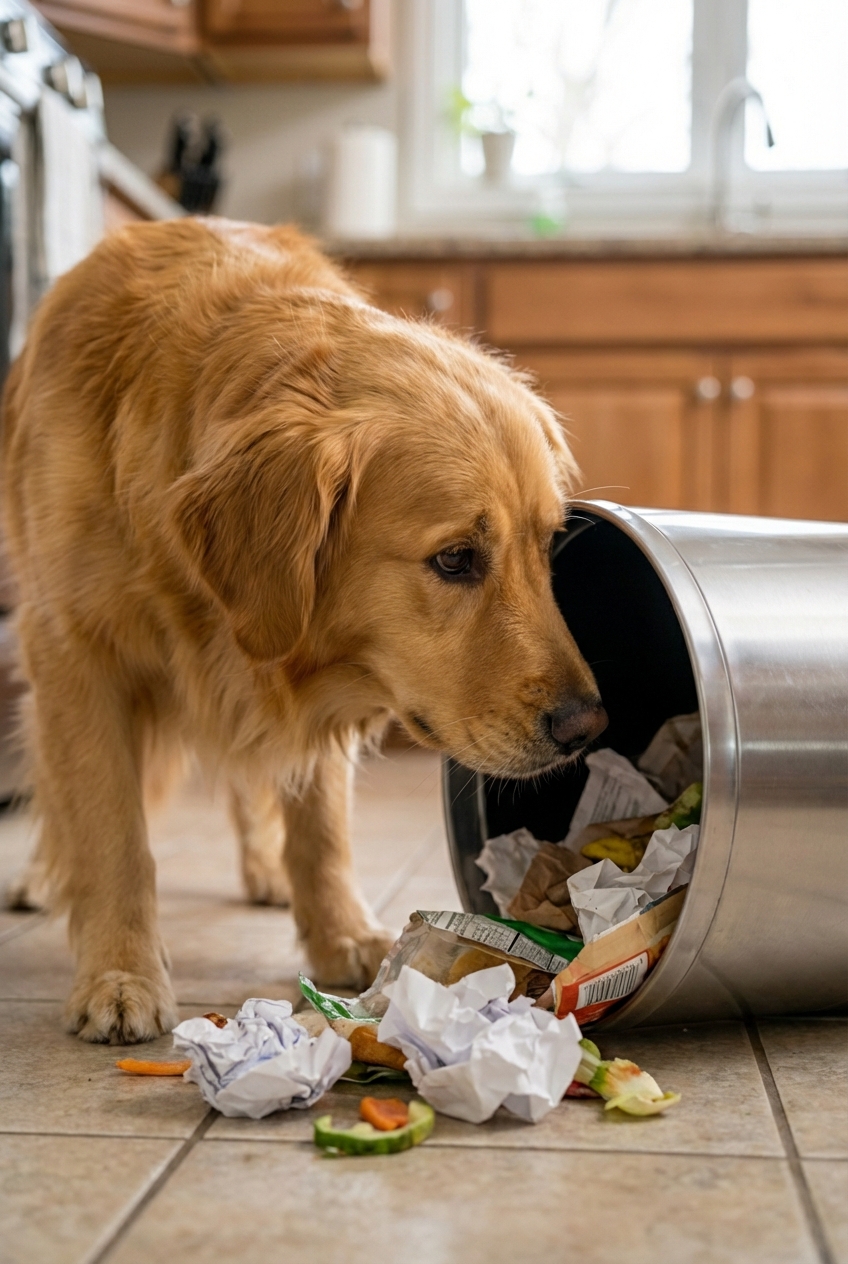
- Dietary indiscretion: trash, rich treats, fatty table foods, new chew items
- Diet change: switching foods too quickly
- Stress: travel, boarding, visitors, schedule changes
- Parasites or infection: especially if diarrhea is persistent
- Food sensitivity: recurring soft stool, gas, or intermittent vomiting
If stomach upset keeps returning, that is your signal to stop guessing and schedule an exam. Chronic vomiting or diarrhea is not “normal,” even if it happens only once every couple of weeks. Persistent diarrhea often warrants a fecal test to check for parasites and other common causes.
Steps that often help
1) Start with hydration
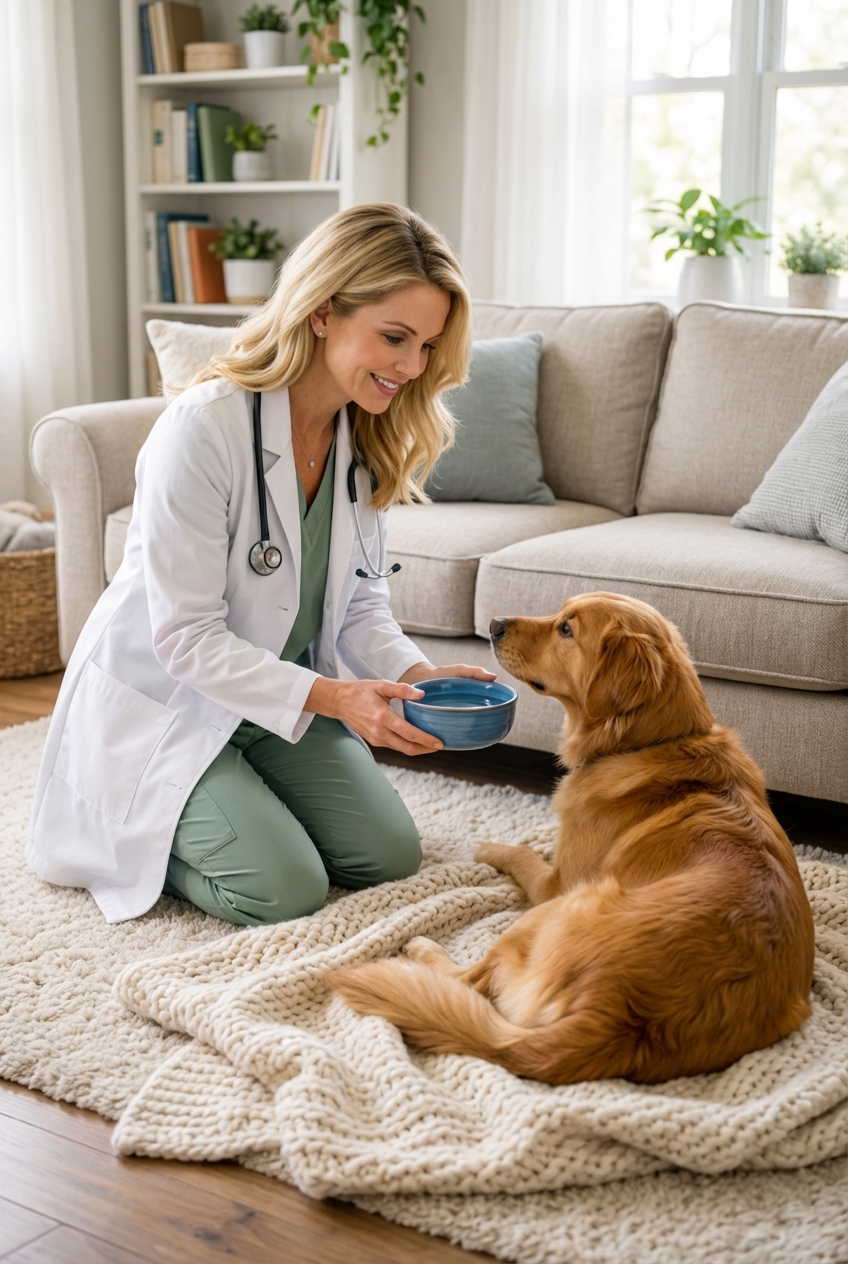
Hydration is the priority. If your dog is vomiting, offer small amounts of water frequently instead of a full bowl at once.
- Starting point: 1 to 2 teaspoons for small dogs, or 1 tablespoon for medium to large dogs, every 10 to 15 minutes as tolerated.
- If your dog keeps that down for a few hours, slowly increase the volume.
- Ice chips can be easier for some dogs to tolerate.
Do not force water. If your dog cannot keep even small sips down, call your vet.
2) Consider a brief food break
Some veterinarians recommend a short rest for the stomach for otherwise healthy adult dogs with mild vomiting. In many cases, this is 6 to 12 hours without food, while still offering small sips of water. That said, fasting advice can vary, and some dogs do better with earlier small bland meals. When in doubt, follow your veterinarian’s guidance for your specific dog.
- Do not fast puppies, toy breeds prone to low blood sugar, pregnant dogs, or dogs with diabetes unless your veterinarian specifically instructs you.
3) Restart with a bland diet
Once vomiting has stopped and your dog is interested in eating, a bland diet can be soothing. Choose one of these simple options:
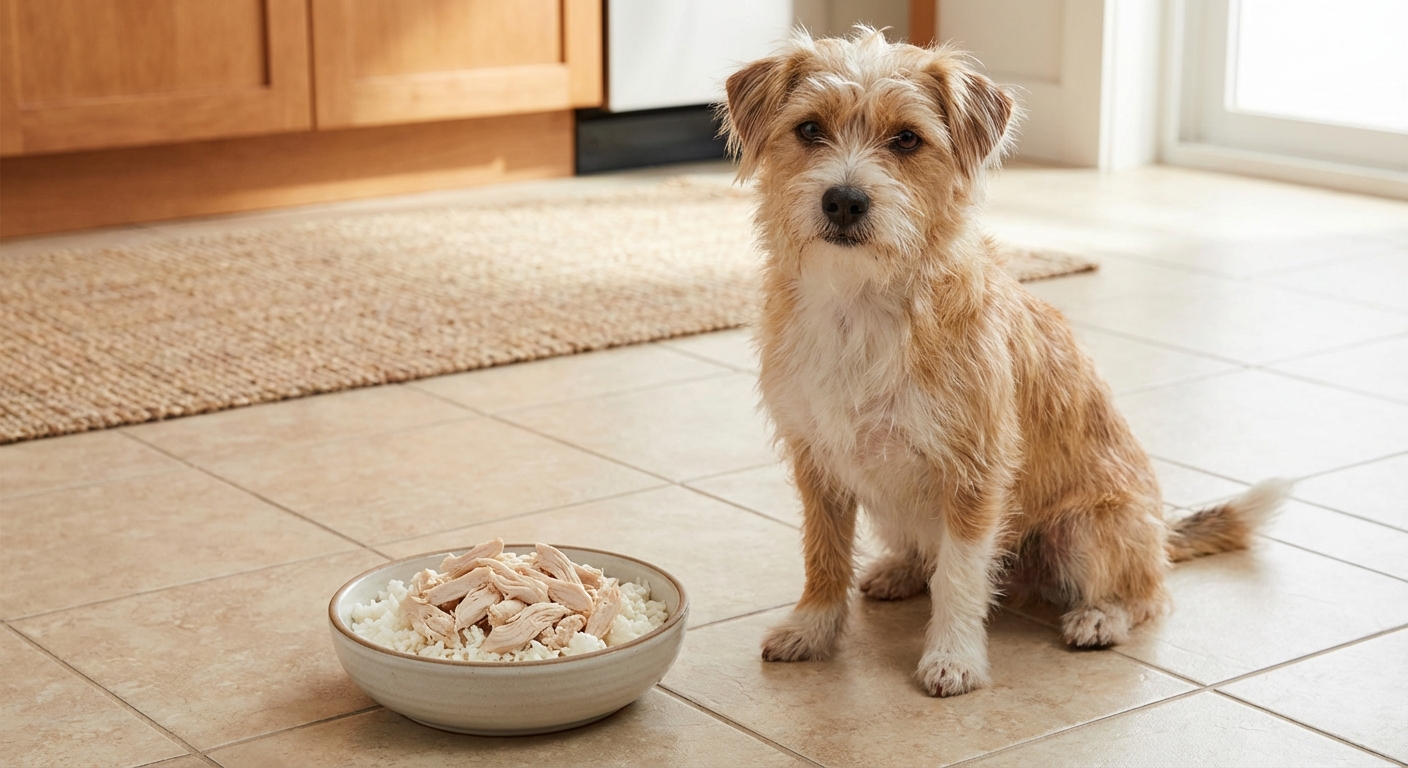
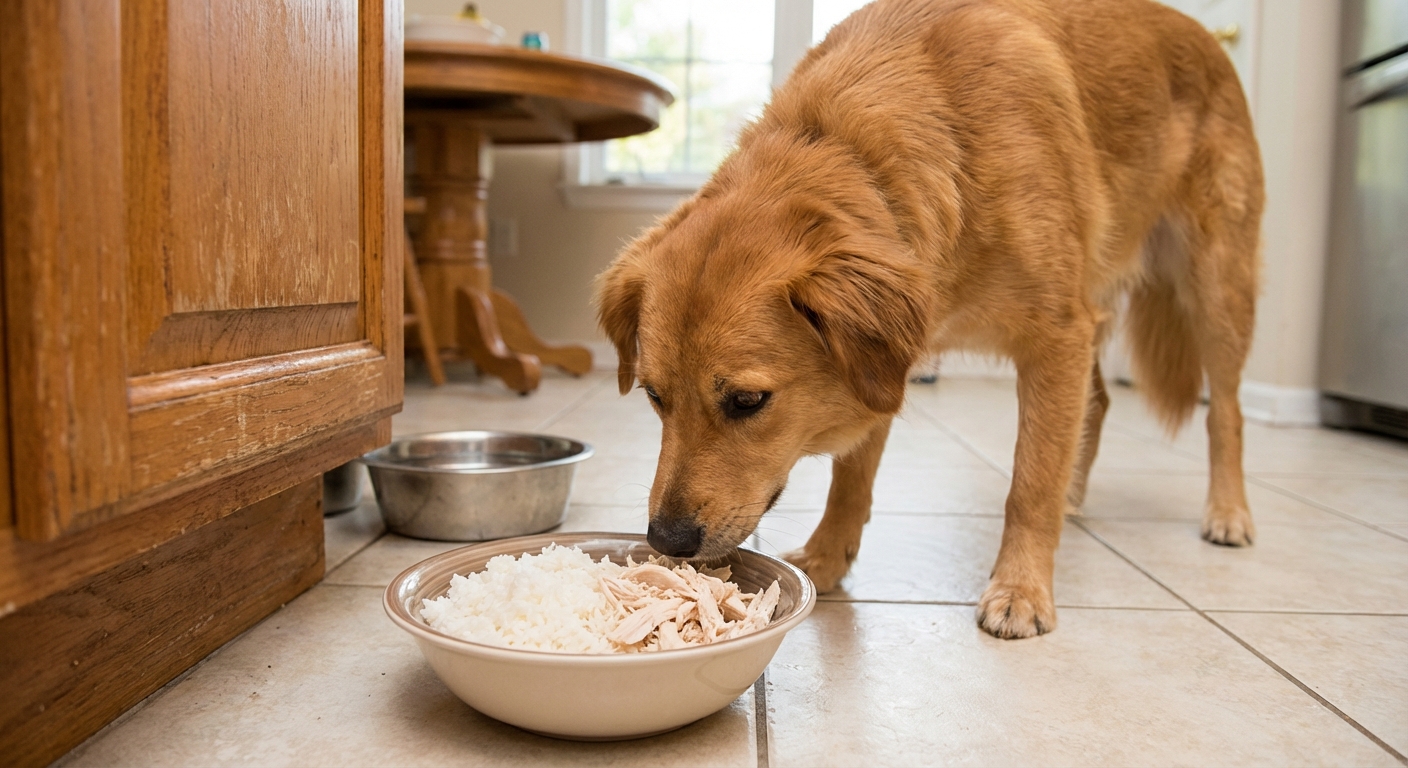
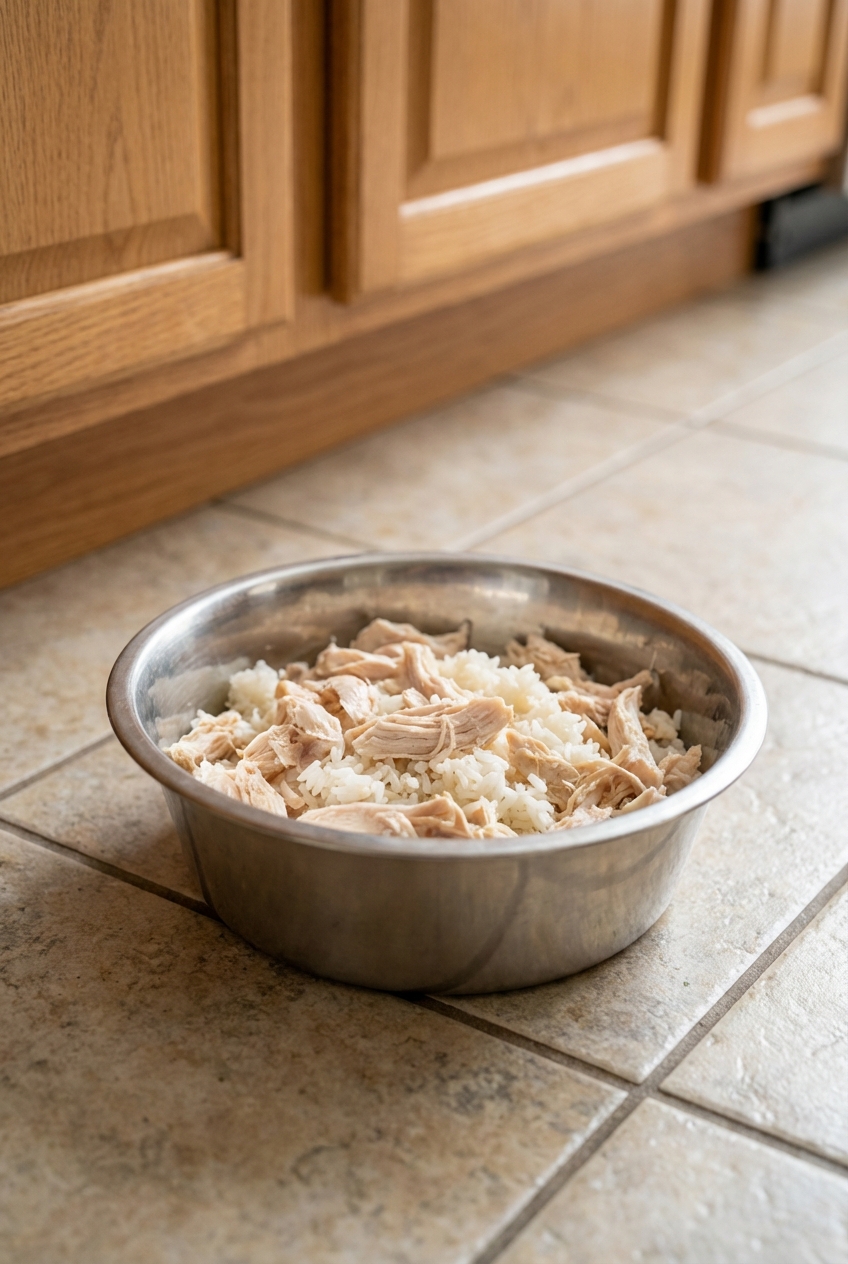
- Boiled skinless chicken breast with plain white rice
- Boiled lean ground turkey with plain white rice
- Veterinary gastrointestinal diet (highly digestible)
Start smaller than usual to avoid overloading the stomach. A practical guide is 25 to 50 percent of your dog’s normal meal size per feeding, then increase gradually if things stay calm.
Feed small meals about 4 to 6 times a day for 24 to 48 hours. If your dog improves, transition back to their regular diet over 3 to 5 days.
Avoid: fatty foods, dairy, spicy foods, greasy “people food,” and heavy treats during recovery. Also hold off on new chews, bones, and long-lasting treats until stools and appetite are back to normal.
4) Add gentle fiber for mild diarrhea
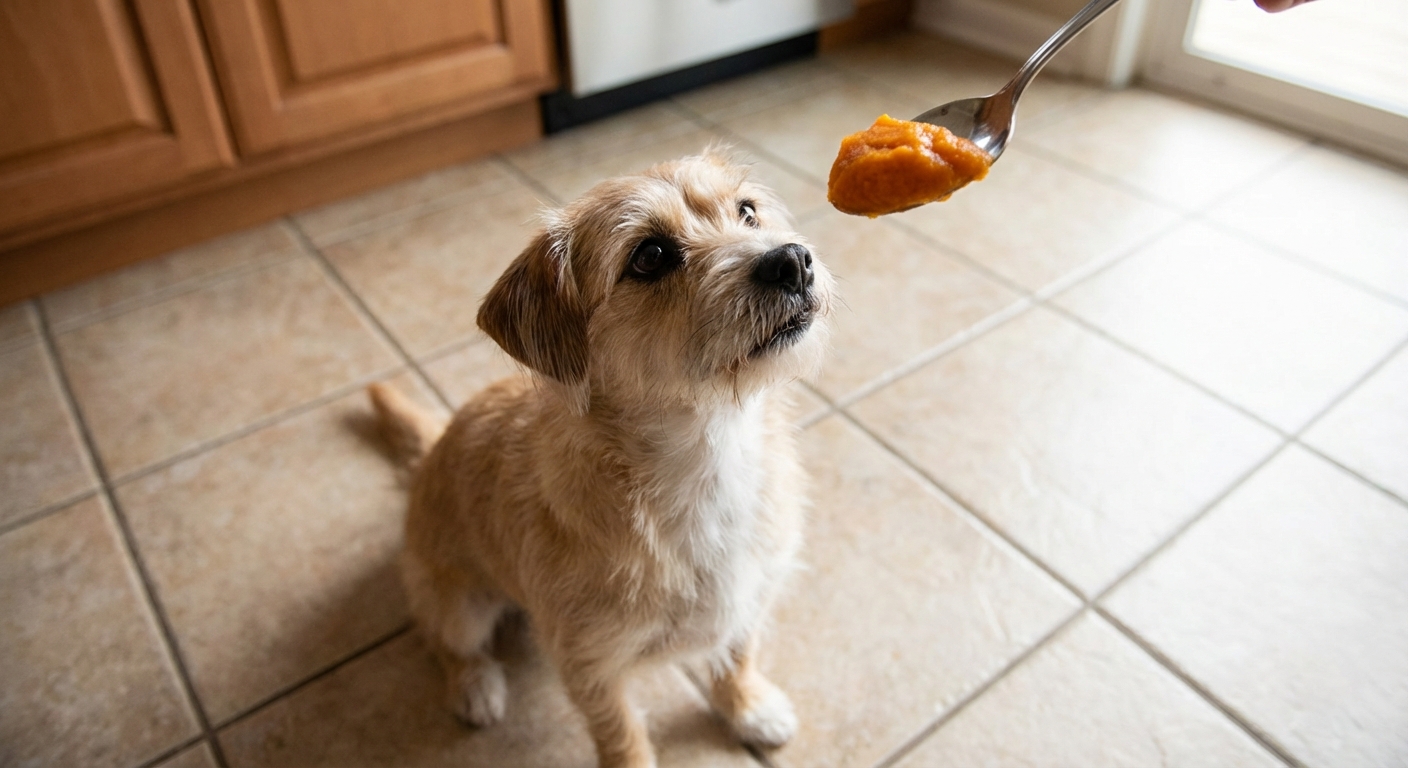
If your dog has mild diarrhea without frequent vomiting, your vet may suggest a small amount of plain canned pumpkin (not pumpkin pie filling). Pumpkin may help some dogs because it contains soluble fiber, but fiber content can vary by brand and too much can worsen diarrhea.
- Typical starting amounts: 1 teaspoon for small dogs, 1 tablespoon for medium dogs, 1 to 2 tablespoons for large dogs.
This is not a fix for parasites, pancreatitis, foreign bodies, or infection, but it can help mild, uncomplicated cases.
5) Consider a dog-specific probiotic
Some studies suggest that certain veterinary probiotics can shorten the duration of acute diarrhea and support gut recovery, especially after stress or diet changes. Strain and product quality matter, so choose a probiotic made for dogs and use it as directed.
If your dog is on antibiotics, probiotics are often used alongside them, but spacing them a few hours apart is commonly recommended. Ask your vet what timing is best for your dog’s medication plan.
6) Skip human stomach meds unless your vet says yes
This is one of the biggest safety points. Many human medications can be dangerous for dogs, or the dose can be tricky.
- Do not give bismuth subsalicylate products unless directed by your veterinarian. They can also darken stools, which can make it harder to monitor for true black, tarry stool (melena).
- Never give NSAIDs like ibuprofen or naproxen. These can cause ulcers and kidney injury.
If your dog truly needs anti-nausea medication, your veterinarian can prescribe options that are safer and more effective for dogs.
When to expect improvement
For mild stomach upset, you should typically see improvement within 12 to 24 hours once the stomach settles and you start bland meals.
Call your veterinarian if:
- Vomiting continues past 12 to 24 hours
- Diarrhea continues past 24 to 48 hours
- Your dog’s energy drops, appetite disappears, or abdominal pain shows up
- Symptoms keep coming back (even if they resolve each time)
A simple plan
If your dog is stable and you have no red flags, here is a gentle plan many veterinarians use:
- Step 1: Offer small sips of water frequently.
- Step 2: Optional brief food break for healthy adult dogs, or ask your vet if early bland meals are better for your situation.
- Step 3: Bland diet in small, frequent meals for 24 to 48 hours (start at 25 to 50 percent of normal meal size).
- Step 4: Add a dog-specific probiotic if diarrhea is present or if stress triggered symptoms.
- Step 5: Transition slowly back to normal food over several days.
And if you are ever unsure, call your veterinarian. A quick phone check-in can prevent a small issue from becoming a big one.
Prevention tips
- Transition foods slowly: 7 to 10 days is ideal for most dogs.
- Limit rich treats: especially fatty meats, bacon grease, and heavy dairy.
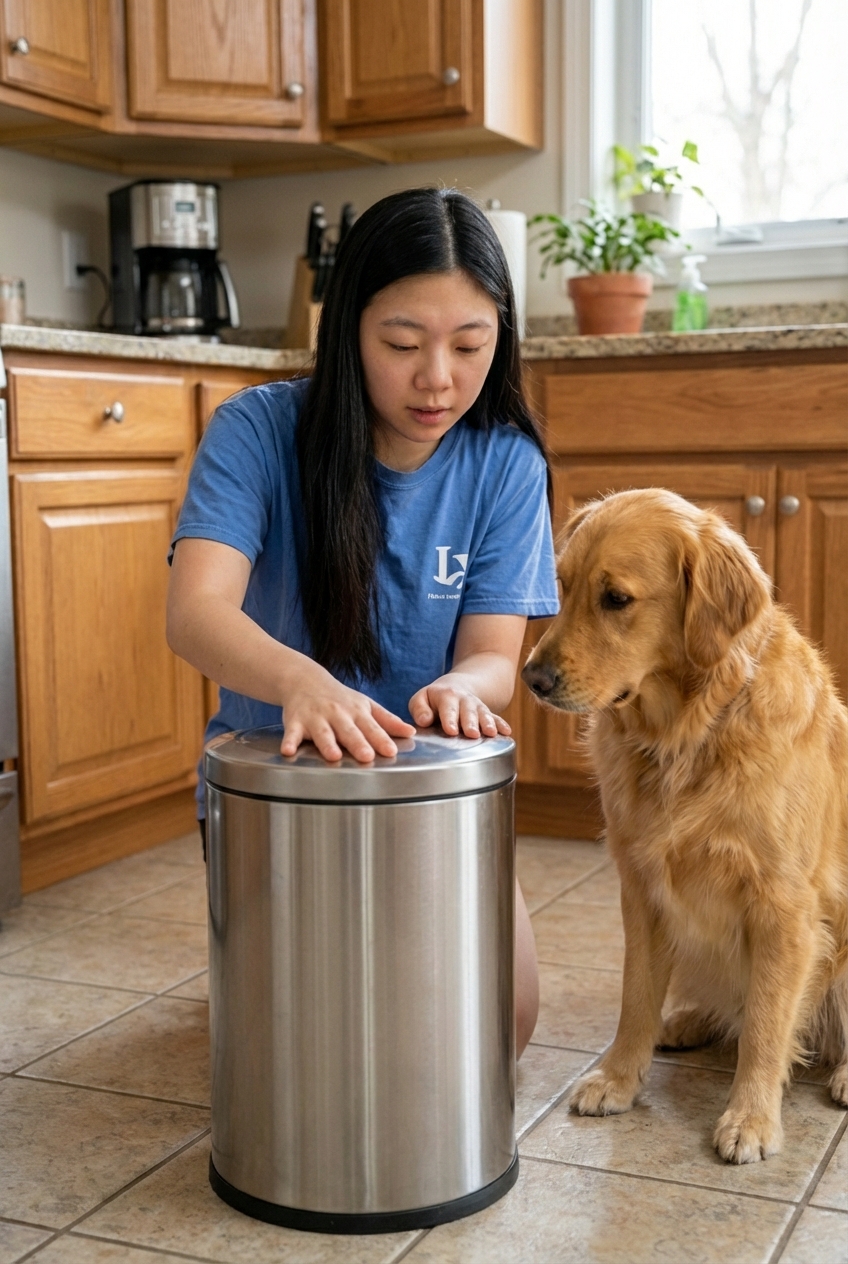
- Trash control: use a lidded can and keep tempting items off counters.
- Parasite prevention: stay current on fecal checks and vet-recommended preventives.
- Know your dog’s triggers: stress and sudden routine changes can be real gut triggers.
Trust your instincts
You know your dog’s normal. If something feels off, if your dog looks painful, or if symptoms escalate quickly, it is always appropriate to call your veterinarian. Getting advice early is one of the kindest things you can do.
Good stomach care is simple: protect hydration, keep food gentle, and do not wait too long when symptoms persist.