A gentle guide to dog home euthanasia: signs it may be time, what happens during the visit, how to plan the space, questions to ask your vet, aftercare choic...
Article
•
Designer Mixes
How to Say Goodbye to a Dog Without Regret

Shari Shidate
Designer Mixes contributor
Saying goodbye to a dog is one of the hardest, most love-filled decisions you will ever make. In my work as a veterinary assistant here in Frisco, Texas, I have seen something again and again: the most painful regret usually comes from not feeling prepared, not understanding what your dog is experiencing, or feeling alone in the decision.
This article is here to help you make choices you can live with. Not perfect choices. Just loving, informed ones.
Note: This is general guidance, not medical advice. Your veterinarian knows your dog’s situation best and can help you decide what is kind and realistic.
Start with one truth
Dogs do not measure life in years. They measure life in comfort, safety, closeness, and whether their needs are met. A “good goodbye” is not about extending time at any cost. It is about protecting your dog from suffering you cannot relieve.
When we choose a gentle passing for a suffering pet, we are not giving up. We are giving a final gift: relief.
How to know it may be time
Many families wait for a dramatic moment, but end-of-life decline often comes in small, accumulating changes. A widely used approach is to track quality of life consistently and to decide before you are in a crisis. Many families and hospice teams use tools like the HHHHHMM quality-of-life scale (often associated with Dr. Alice Villalobos) as a starting point for these conversations.
Common signs your dog is struggling
- Pain that breaks through medication (restlessness, panting at rest, trembling, guarding, whining)
- Breathing changes (increased effort, coughing, open-mouth breathing at rest)
- Repeated vomiting or diarrhea, dehydration, or refusal of food for more than a day
- Mobility loss (frequent falling, inability to get up, slipping even with help)
- Incontinence with distress or skin sores from lying down too long
- Confusion or anxiety (staring, getting stuck in corners, pacing, nighttime agitation)
- More bad days than good days over the last two weeks
A simple quality-of-life check
Give each category a score from 0 to 10 and repeat daily for a week.
Score it like this: 0 is very poor, 10 is excellent or ideal.
- Comfort (pain control)
- Hunger (eating enough)
- Hydration (drinking, not dehydrated)
- Hygiene (can stay clean and dry)
- Happiness (still enjoys affection, family, favorite spots)
- Mobility (can get up, walk, change positions)
- More good days than bad
If totals steadily decline, or you are consistently seeing low scores in comfort, breathing, or mobility, that is your dog telling you their body is asking for help.
If you want a concrete next step, bring your scores to your veterinarian. Even a few days of notes can make the conversation clearer, and help you plan instead of react.

Reduce regret: three talks
Regret often comes from unanswered questions. These three conversations can bring clarity and peace.
1) Ask your vet about comfort
Ask for a clear explanation of what your dog is likely feeling and what the next weeks may look like.
- “What symptoms should I watch for that mean suffering is increasing?”
- “What can we realistically control with medication, and what will we not be able to control?”
- “If this were your dog, what would you consider?”
- “What does a peaceful euthanasia look like step-by-step at your clinic?”
2) Talk with your family about the line
Choose your “line in the sand” before an emergency. This prevents panic-based decisions at 2 a.m.
- Inability to breathe comfortably at rest
- Uncontrolled pain
- Not eating for 48 hours despite support
- Repeated collapse or inability to stand
- Persistent distress or confusion that cannot be soothed
3) Ask yourself what love looks like now
It is normal to feel torn. But guilt is not always a sign you did something wrong. Often, it is just proof you love deeply.
A question I gently offer clients: “Am I keeping my dog here for them, or for me?” There is no shame in wanting more time. We just want your dog’s comfort to lead the decision.
Planning: home or clinic?
Both can be peaceful. The best choice is the one that reduces stress for your dog and feels emotionally manageable for you.
Home euthanasia
- Often calmer for dogs who fear the clinic or struggle to walk
- Allows your dog to be in a favorite spot with familiar smells
- Can feel more private for families
- Sometimes allows other pets to be nearby, if that feels right and safe
Clinic euthanasia
- Can be better if your dog needs oxygen support or urgent symptom control
- Often less expensive than in-home services
- Staff can guide you through every step
If you are unsure, ask your vet what they recommend based on your dog’s medical needs and stress level.

What euthanasia is like
Protocols vary by clinic and by patient, but many follow a similar, humane sequence. Knowing the basics can reduce fear and second-guessing.
Common steps
- Comfort first: Soft blankets, dim lights, and time to settle. Many clinics will let you take as long as you need.
- Sedation: Many veterinarians give a sedative first. Your dog becomes very relaxed and sleepy, usually within minutes.
- The final medication: A medication is administered (often through an IV). It causes rapid unconsciousness, then breathing stops, and the heart stops.
- Confirmation: The veterinarian listens for the heart to confirm passing, and will let you know when it is complete.
Normal things that can happen
These are not signs of pain, but they can be surprising if no one warned you.
- A deep breath or a few reflex breaths after passing
- Eyes may remain open
- Small muscle twitches
- Release of urine or stool is common
If you are worried about anything you see, ask in the moment. A good veterinary team will explain gently and clearly.
Create a good goodbye
You do not need a perfect plan. You just need a plan that matches your dog.
Before the appointment
- Choose a calm day if possible, not one filled with errands and rushing.
- Pick a comfort spot: Their bed, a blanket that smells like home, or your lap.
- Bring the practical things: A towel or blanket for the car, wipes, and any favorite bedding or toy.
- Offer favorite foods if your vet says it is safe. For many dogs, a “yes day” meal is a beautiful gift.
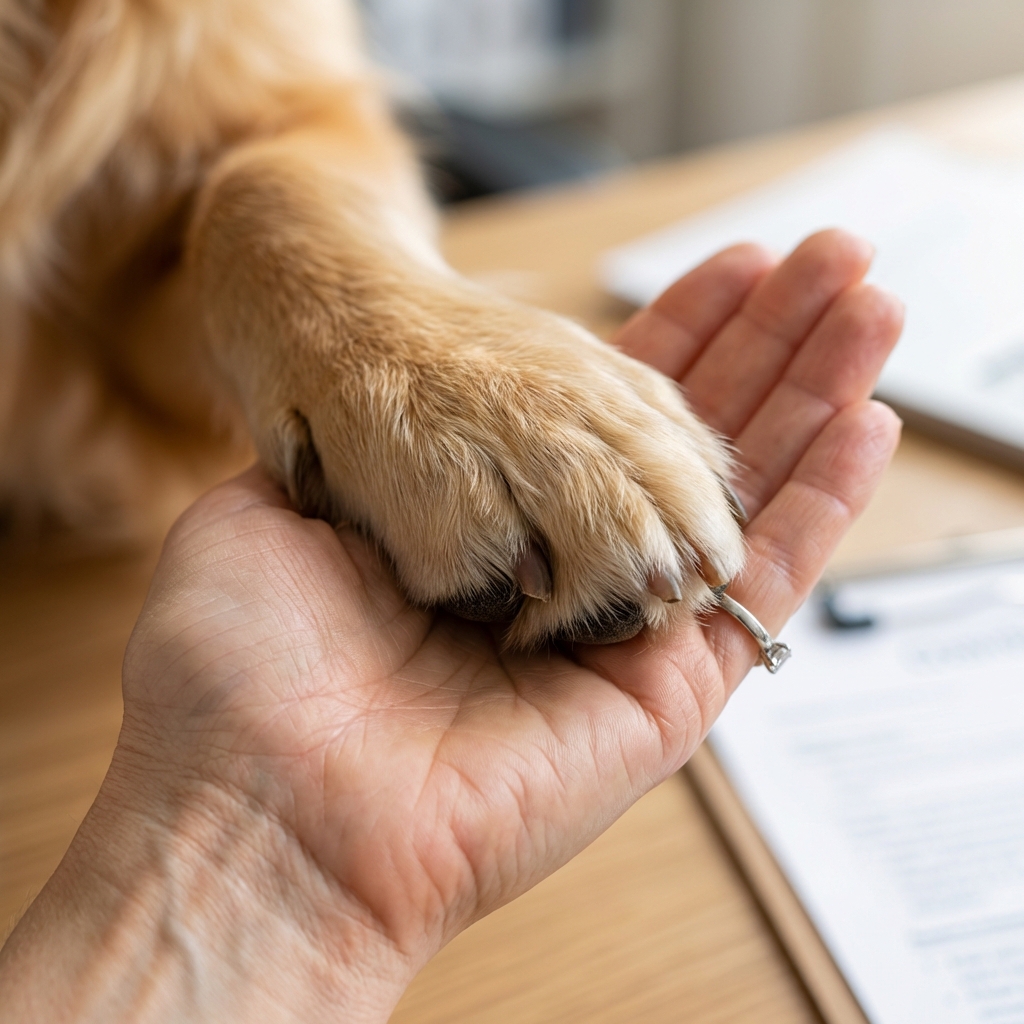
- Take a few photos of ordinary moments: a paw in your hand, their face resting, their collar tag. Ordinary is what you will miss most.
During the appointment
- Speak to your dog in your normal voice. They know you, and your voice is home.
- Touch where they like being touched. Many dogs love chest rubs or a hand resting behind the ears.
- If you do not want to watch the final step, that is okay. Love is not measured by your ability to be brave in one specific way.
Afterward
- Give yourself a buffer before you drive. Sit, breathe, drink water.
- Decide ahead of time about aftercare (private cremation, communal cremation, home burial where legal). Decision fatigue is real.
- Ask what happens next if you are at a clinic. They can explain, step-by-step, how your dog will be cared for after you leave.
- Ask for keepsakes if offered, like a paw print or a fur clipping, if that feels comforting.
Hospice and comfort care
Sometimes the next right step is not “more treatment,” but better comfort. Veterinary hospice or palliative care can help you focus on pain control, breathing ease, appetite support, hydration plans, mobility tools (like harnesses and rugs for traction), and making day-to-day life gentler.
If your dog has a terminal diagnosis or you are seeing a slow decline, ask your veterinarian if a hospice-style plan makes sense, even if it is just a focused comfort plan and not a formal service.
Common regrets
“I waited too long.”
This is one of the most common things I hear. If your dog has a terminal diagnosis, consider scheduling a quality-of-life recheck with your vet and discussing a timeframe and triggers. A planned goodbye can prevent a traumatic emergency.
“I did it too soon.”
This fear is also very common. If you made the decision based on persistent suffering, poor prognosis, and guidance from your vet, you did not “quit.” You protected your dog. As many hospice professionals say, “a week too early is often kinder than a day too late.”
“I wasn’t in the room.”
If you could not be present, your dog was still cared for. Veterinary teams do not treat those moments lightly. If you want, call the clinic afterward and ask how your dog did. Hearing “they were peaceful” can help your heart catch up.
“My dog seemed better that morning.”
Dogs often rally briefly. Adrenaline, rest, medication, and your attention can create a temporary lift. A good moment does not erase a serious decline. Try to judge the pattern, not the best hour.
Helping kids say goodbye
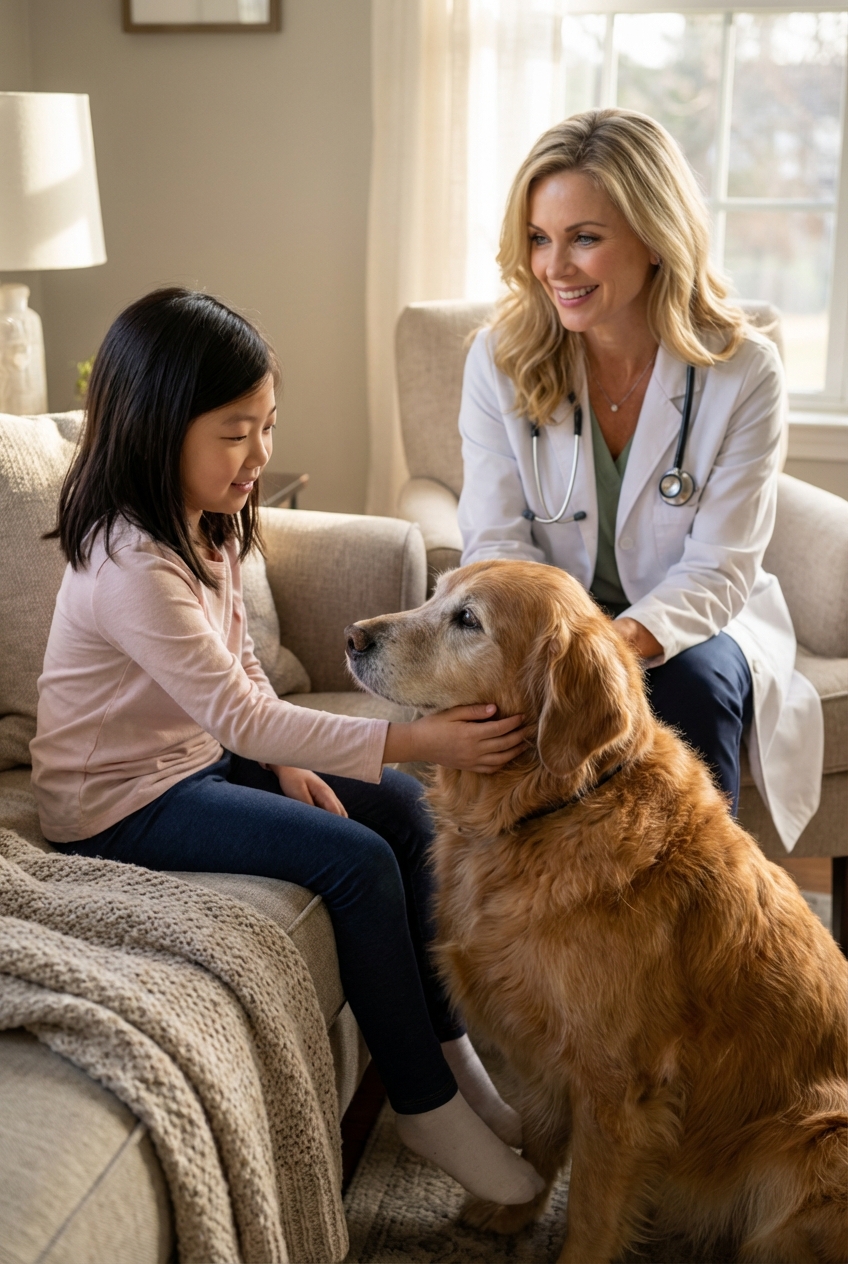
Children can handle hard truths when we give them simple, steady language.
What to say
- “Her body is very sick, and the medicine cannot fix it.”
- “The vet is going to help her die peacefully so she does not hurt anymore.”
- “She won’t feel scared or pain when it happens.”
What to avoid
- “Put to sleep” can be confusing for some children and may create worries about sleep.
- “We are leaving him at the vet” can sound like abandonment.
Ways kids can help
- Draw a picture to place with your dog’s blanket
- Help choose a favorite treat or toy
- Create a small memory box
Grief is love
If you are reading this before the goodbye, please hear me: the sadness afterward does not mean you made the wrong choice. It means your bond was real.
If you are reading this after the goodbye, and you are replaying everything, try this grounding exercise: write down three ways you protected your dog in their final months. Better pain control. More comfort. Fewer scary car rides. Choosing peace over panic. Those things matter.
When to reach out
- You cannot sleep for days and feel panicky
- You are not eating or functioning at work for more than two weeks
- You feel isolated and ashamed of your grief
Pet loss support groups, counselors, and many veterinary hospitals can refer you to local resources. You do not have to carry this alone.
If you want a starting point, you can also ask your veterinarian about pet loss hotlines and local grief resources. Many areas have free options.
A final permission slip
You are allowed to choose mercy. You are allowed to cry. You are allowed to miss them fiercely.
And you are allowed to remember this: your dog did not need a perfect ending. They needed you, and they had you. That is a life well loved.