Trim your cat’s nails at home with calm, vet-approved techniques. Learn nail anatomy, the best clippers, how far to cut, low-stress handling, and what to d...
Article
•
Designer Mixes
How to Restrain a Cat for Nail Clipping

Shari Shidate
Designer Mixes contributor
Clipping a cat’s nails can feel like a tiny wrestling match, especially if you are new to it. The good news is that most “difficult” nail trims are not about a bad cat. They are about stress, slippery handling, or moving too fast. As a veterinary assistant, I can tell you this: the safest restraint is the one that keeps your cat calm, supported, and able to breathe comfortably while keeping your hands out of the bite zone.
This guide walks you through evidence-based, low-stress ways to restrain a cat for nail clipping, plus the facts every owner should know before they try.

Before you restrain: the safety facts that change everything
1) Restraint should reduce fear, not “win” the moment
In clinic, we aim for minimal restraint first, then increase support only if needed. When restraint turns into a struggle, cats can panic, overheat, scratch, or bite. It also teaches them that nail trims are scary, making the next attempt harder.
2) Cats feel unstable fast
Many cats fight because they feel like they might fall. Supporting their body (especially the chest and hind end) often reduces squirming more than gripping tighter.
3) The “quick” is the reason cats hate trims
If a cat has ever been quicked, they remember. You can rebuild trust, but it takes smaller sessions and better lighting. Trim only the sharp tip when you are unsure.
4) Declawing is not a nail-trim alternative
Declawing is an amputation of the last bone of each toe and is associated with pain and behavior issues in many cats. Nail trimming, scratching posts, nail caps, and behavior support are safer options for most households.
Set up your environment (this prevents 80% of restraint problems)
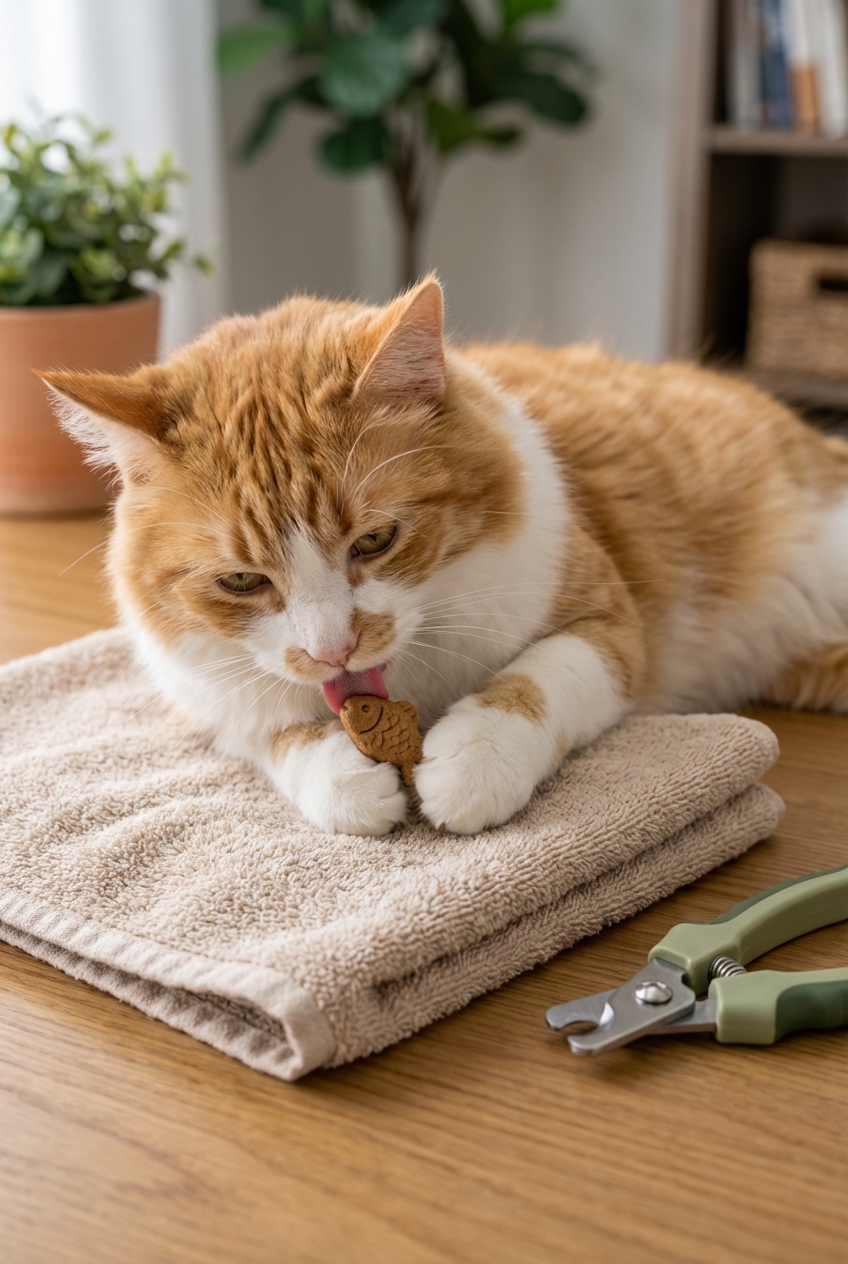
- Choose a non-slip surface: a yoga mat, bath towel, or rubber-backed rug on your lap or table.
- Use quiet and small: a bathroom or bedroom with the door closed is ideal so your cat cannot bolt under furniture.
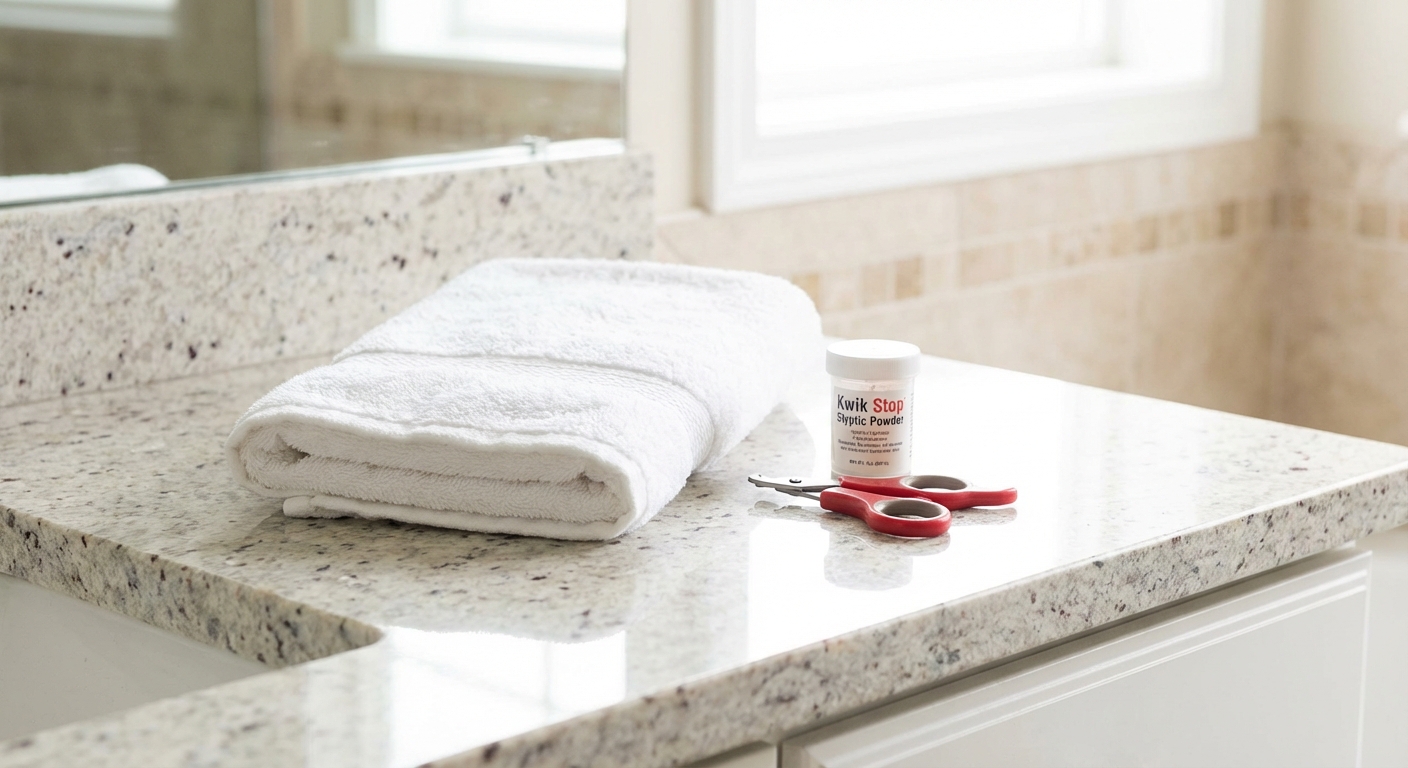
- Prep everything first: clippers, treats, styptic powder or cornstarch, and good lighting. You should not be rummaging while holding a cat.
- Time it right: after a meal or play session when your cat is naturally calmer.
Tools that make restraint easier
Choose the right nail trimmer
- Small scissor-style cat clippers offer control for tiny nails.
- Human nail clippers can work for some cats, but they often crush thicker nails. If you use them, clip only the very tip.
- Grinders are an option for tolerant cats, but the sound and vibration can be stressful. Introduce slowly.
Have a “just in case” bleeding plan
Even careful owners occasionally hit the quick. Keep styptic powder on hand, or use cornstarch in a pinch. Apply pressure for 30 to 60 seconds. If bleeding does not stop promptly, call your veterinarian.
Low-stress restraint methods (start with the least restrictive)
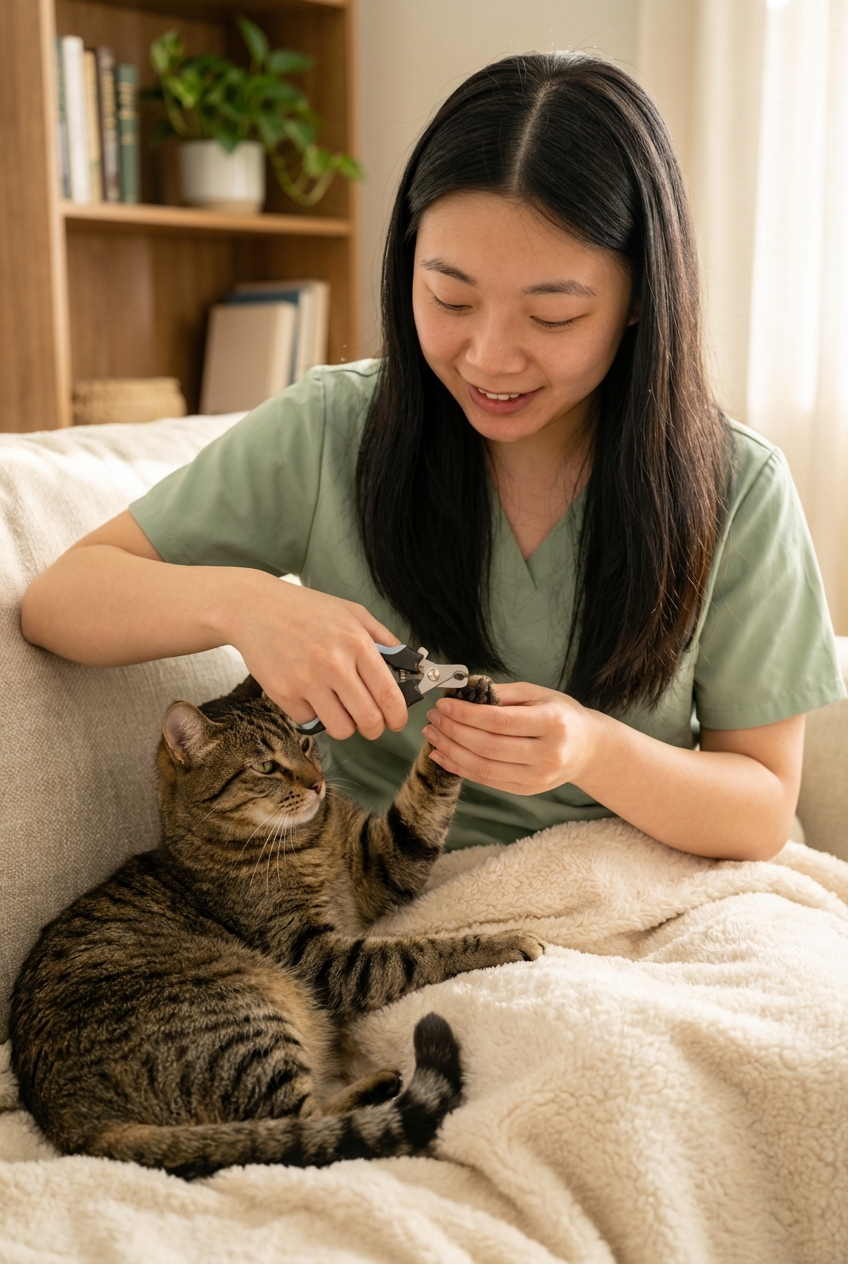
Method 1: The lap hold (best for many friendly cats)
Who it’s for: cats that already enjoy being held or sitting with you.
- Sit with your cat facing away from you, resting against your abdomen.
- Wrap your forearm gently around the chest like a seatbelt.
- Use that same hand to hold the paw. With your other hand, clip.
- Do 1 to 3 nails, treat, and stop. Yes, stopping early is a win.

Method 2: The “table tuck” (more stability, less squirming)
Who it’s for: cats that squirm on laps but tolerate handling.
- Place a folded towel on a sturdy table or counter.
- Position your cat standing or sitting with their body close to yours.
- Keep one hand on the shoulders and chest to prevent backing up.
- Lift only one paw at a time, keeping the cat’s feet under them as much as possible.
Tip: many cats stay calmer when they can keep three feet grounded.
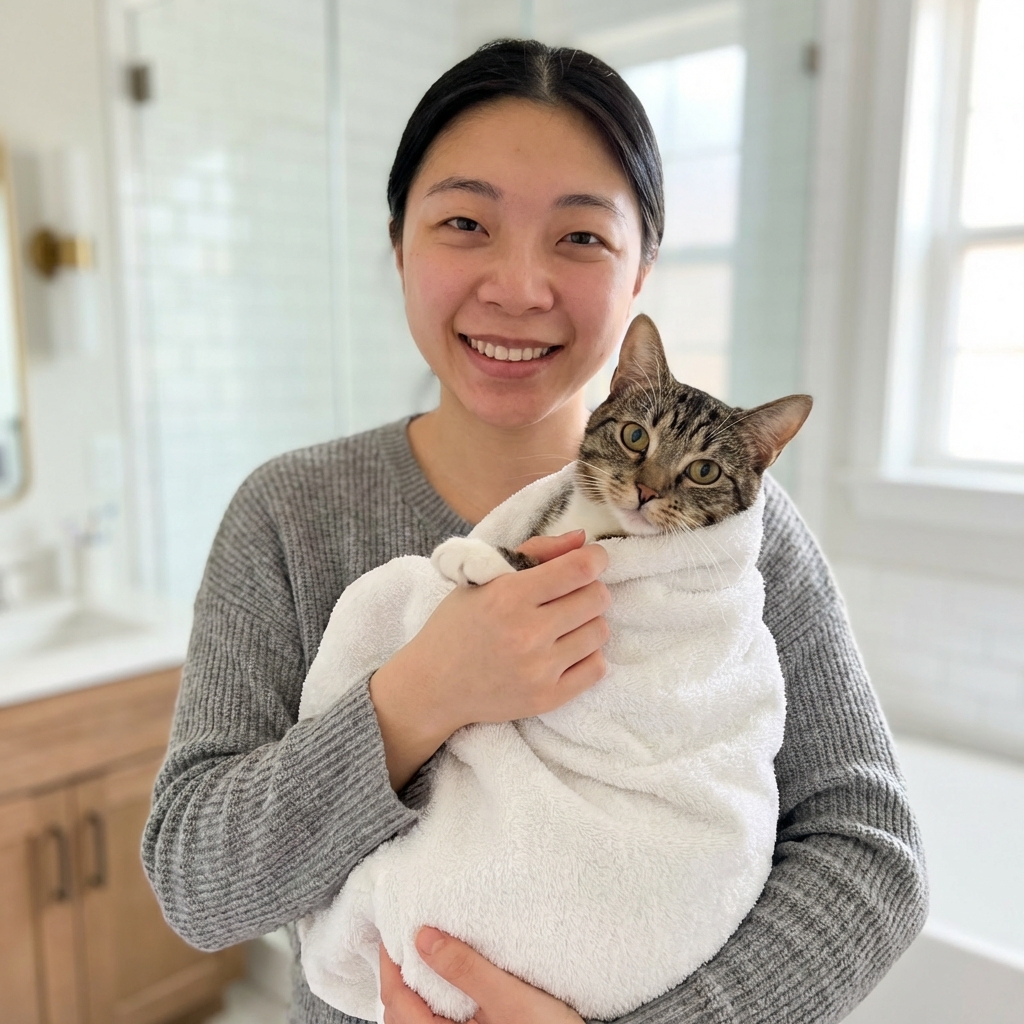
Method 3: The towel wrap “purrito” (excellent for anxious or wiggly cats)
Who it’s for: cats that scratch, flail, or cannot settle for the trim.
This is a common veterinary technique because it protects everyone while avoiding painful pressure on the cat.
- Lay a large towel flat.
- Place your cat in the center with their head near the top edge.
- Bring one side snugly over the body and tuck it under.
- Bring the other side over, creating a secure wrap with the head out.
- Pull out one paw at a time like a little sleeve, clip a couple nails, then tuck it back in.
Method 4: Two-person restraint (safer for spicy cats)
Who it’s for: cats that bite, cats with past trauma, or any owner who feels unsure.
- Holder: supports the cat’s body against their chest, keeps the head turned away from hands, and offers steady calm pressure.
- Trimmer: focuses only on paws and clipping.
- Agree on a stop signal. If the cat escalates, pause and reset.
Important: never put your face close to a stressed cat. Cat bites can be serious and often need medical attention.
How to hold the paw and clip correctly
Extend the nail gently
Hold the paw, then press lightly on the pad and the top of the toe to extend the claw. Avoid pulling toes sideways, which can feel uncomfortable.
Know what you are looking at
- Clear or light nails: you can often see the pink quick. Clip a few millimeters away from it.
- Dark nails: clip only the sharp tip. Take tiny “slices.” Stop if you see a dark dot or the center looks moist. That is getting close.
Cut angle
Clip the tip at a slight angle, following the natural curve of the nail. You are not trying to make it “short,” you are trying to make it not sharp.
What not to do (common mistakes I see)
- Do not scruff as a default. Scruffing can increase fear and may cause struggling. It is not recommended as a routine handling method for nail trims.
- Do not pin your cat down. Full-body force often escalates panic and increases bite risk.
- Do not chase your cat around the house. That turns the entire home into “nail trim danger.” Instead, lure calmly into a small room with treats.
- Do not clip when you are frustrated. Cats read tension fast. If you are stressed, pause and try later.
How often to trim cat nails
Many indoor cats do well with trims every 2 to 4 weeks. Seniors may need more frequent trims because nails can thicken and overgrow. If your cat’s nails are catching on blankets or you hear clicking on hard floors, it is probably time.
Make it easier next time: a simple training plan
Practice without clipping
- Touch a paw for 1 second, treat, and stop.
- Next session, extend one nail, treat, and stop.
- Introduce the clippers by showing them, treat, and put them away.
Use micro-sessions
You do not have to trim all nails at once. One paw a day is still progress. The bottom line is that calm repetition builds tolerance.
If your cat only lets you clip two nails today, that is not failure. That is data, and it is a foundation you can build on.
When to call your vet or groomer instead
- Your cat hisses, lunges, or tries to bite when touched.
- Your cat has arthritis, a limb injury, or painful paws.
- Nails are curling into the pads, bleeding, or causing limping.
- You have been bitten before. Please take bites seriously and let a professional help.
Many clinics offer quick “tech nail trims.” It can be a great reset while you work on training at home.
Quick checklist
- Pick a quiet room and use a non-slip towel.
- Choose the least restraint that keeps your cat calm and supported.
- Clip only the sharp tip, especially on dark nails.
- Stop early, treat generously, and try again later.
- Get help if your cat escalates or you feel unsafe.