Vet-assistant guidance on removing ticks from cats safely: what tools to use, how to pull the tick cleanly, what not to do, aftercare warning signs, and prev...
Article
•
Designer Mixes
How to Remove Ticks From a Cat

Shari Shidate
Designer Mixes contributor
As a veterinary assistant here in Frisco, Texas, I can tell you this with love: ticks are common, and they are sneaky. The good news is that removing a tick from your cat is usually very doable at home if you have the right tools, a calm plan, and you know what to watch for afterward.
This guide walks you through safe tick removal step by step, plus when it is smarter to call your vet.
First, a quick tick reality check
Ticks feed by attaching to the skin and taking a blood meal. Some ticks can transmit diseases, and even when they do not, their bite can cause local irritation or infection.
Important: Cats are more sensitive than dogs to certain chemicals. So while the internet might suggest all sorts of home remedies, many of them are risky for cats.
- Do not use essential oils on cats (tea tree, peppermint, eucalyptus, etc.).
- Do not use nail polish, petroleum jelly, alcohol, or heat to “make the tick back out.” These methods can stress your cat and may increase the chance that the tick releases more saliva or contents into the bite.
- Do not yank the tick off with your fingers. It is hard to get a clean removal and easy to squeeze the tick.
- Do not use dog-only tick products on cats. In particular, permethrin (found in some dog spot-ons and some dog tick collars) can be toxic to cats.
What you need (simple tick removal kit)
Gather your supplies before you start. Having everything within reach helps you stay calm, and your cat will pick up on that.
- Fine-tipped tweezers or a tick removal tool made for pets
- Disposable gloves (optional but helpful)
- Rubbing alcohol for the jar, not for the cat’s skin
- A small jar or sealed container
- Cat-safe antiseptic for skin (ask your vet if you are unsure)
- A towel (for a gentle “cat burrito” if needed)
- Treats for a positive finish

Before you pull: make sure it is a tick
Many owners tell me, “I think it is a tick,” and that is fair. Ticks can look like a small dark bump, especially before they swell.
- Tick clue: If you part the fur, you may see a small round body attached to the skin with tiny legs near the front.
- Not a tick: Skin tags and scabs are part of the skin and do not have legs. Scabs often feel dry or flaky and will not lift cleanly from the skin.
If you are not sure, or the spot is near the eye or inside the ear, it is okay to stop and call your vet.
How to remove a tick from your cat
1) Choose a calm spot and steady your cat
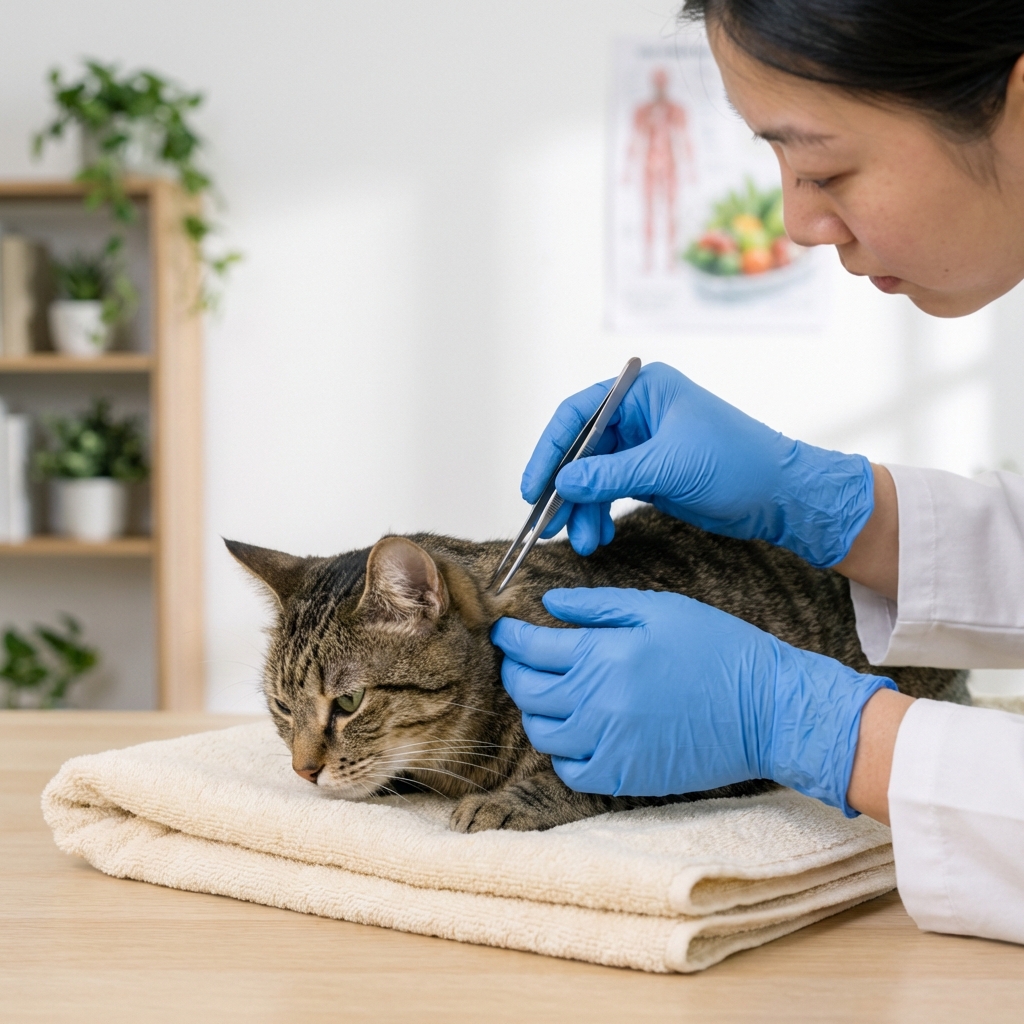
Pick a well-lit area. If your cat is wiggly, wrap them in a towel with just the tick area exposed. Talk softly and keep movements slow.
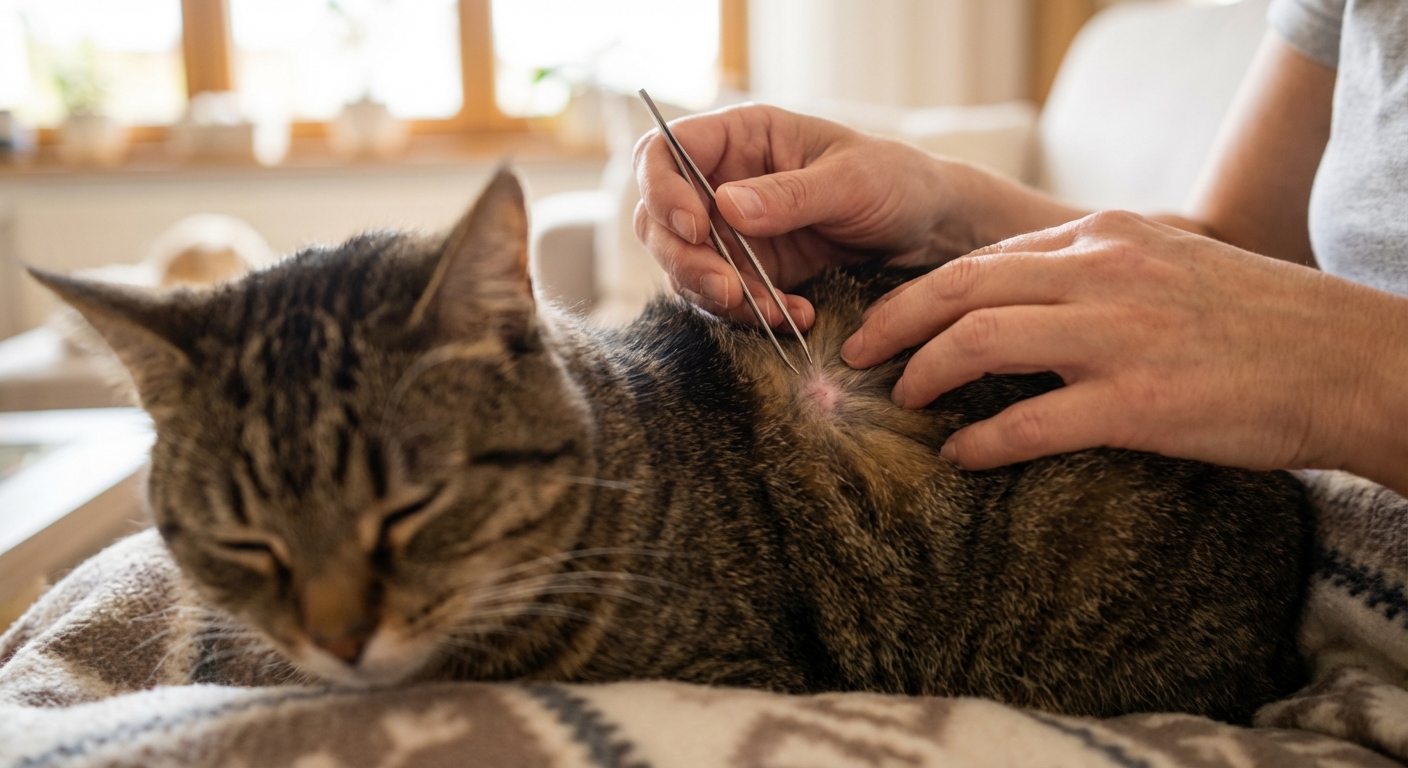
2) Part the fur and find the attachment point
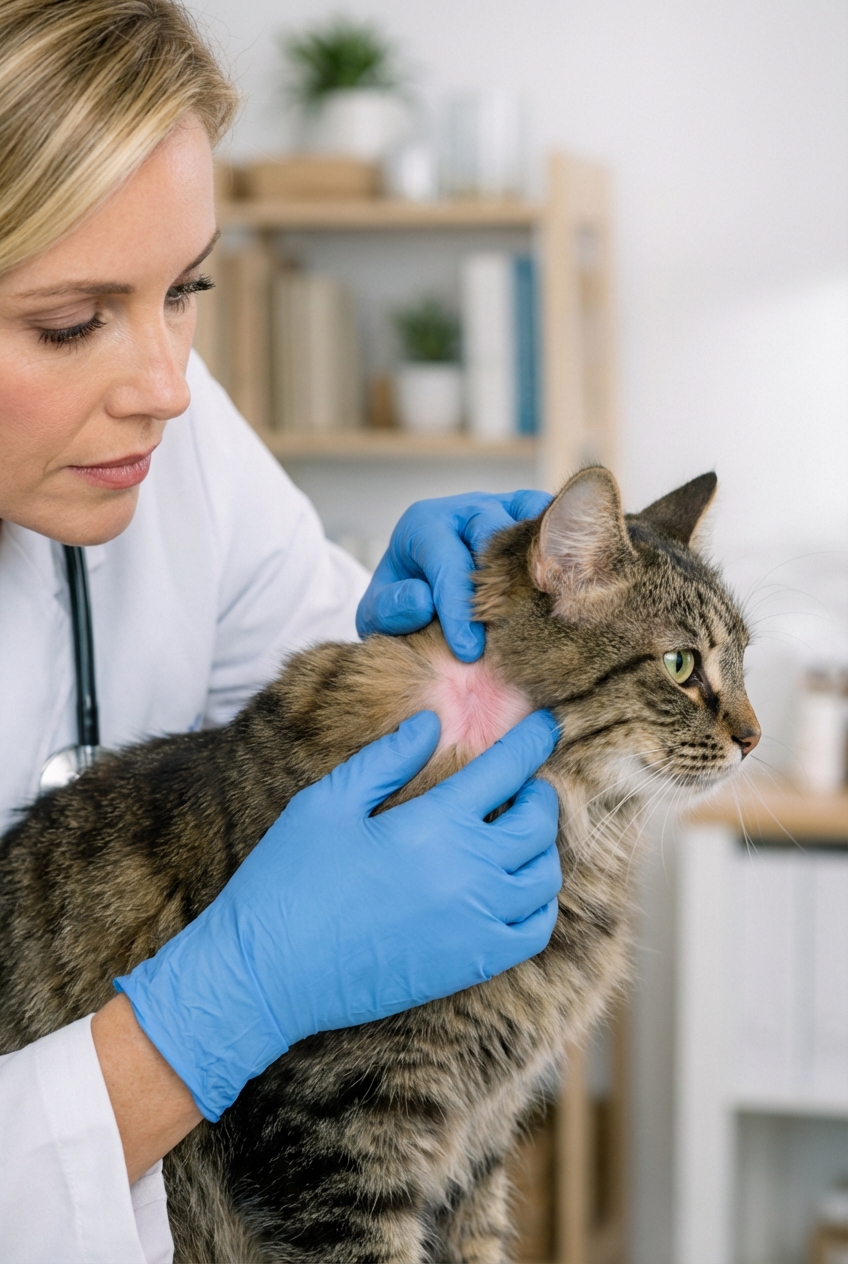
You want to see where the tick is attached to the skin. Ticks are often found around the head, neck, ears, armpits, and between toes.
3) Grab the tick close to the skin
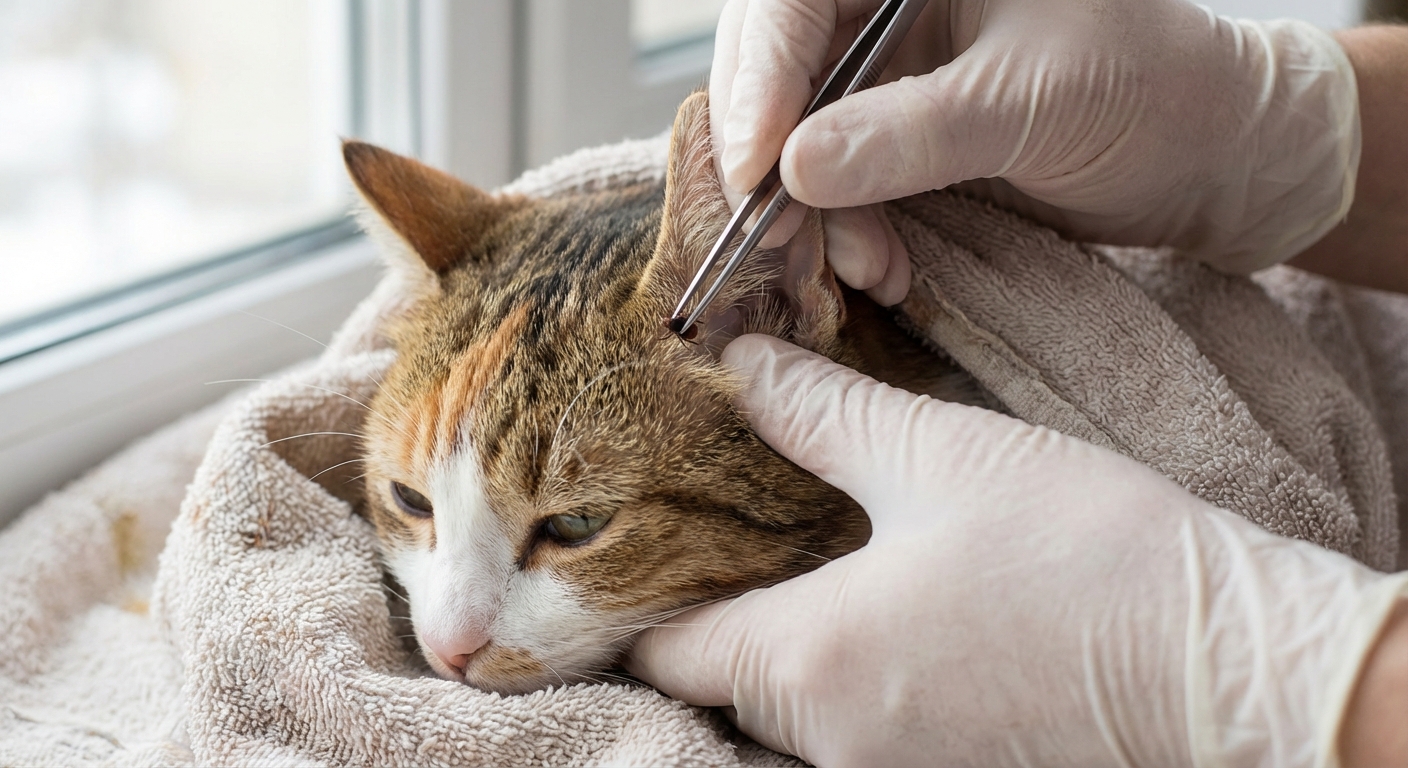
Using fine-tipped tweezers, grasp the tick as close to your cat’s skin as possible. Aim for the tick’s mouthparts at the skin line, not the swollen body.
4) Pull straight out with steady pressure
Pull upward in a slow, steady motion. Avoid jerking and avoid crushing the tick.
Quick tool note: Some tick removal tools are designed to use a gentle lift and rotation. If you are using a tool instead of tweezers, follow that tool’s instructions. The goal stays the same: steady traction, no squeezing.
5) Save the tick (or dispose of it safely)
Place the tick into a sealed container. You can add a small amount of rubbing alcohol to kill it. Keeping the tick can be helpful if your vet wants to identify the species later.
If you do not plan to save it, seal it in tape or a container and throw it away. Avoid crushing it with bare fingers.
6) Clean the bite area
If the skin looks a little irritated, gently clean the area with a cat-safe antiseptic. Mild redness right after removal can be normal.
7) Do a full-body tick check
If you found one tick, check for more. Run your hands over your cat (against the direction of the fur) and look closely around the face, under the collar area, armpits, groin, and between toes.
8) Wash your hands and reward your cat
Even if you wore gloves, wash up well. Then offer a treat and a calm moment so your cat does not decide “tick checks” are scary forever.
What if the head breaks off?
This is one of the most common worries I hear, and I get it. Sometimes, what people call the “head” is actually tick mouthparts left in the skin.
- If you can easily see a small piece at the skin surface, you can try gently removing it with clean tweezers.
- If it is not easy to grasp, do not dig. Digging can cause more trauma and infection.
Often, the body will push tiny fragments out like a splinter. But if you see swelling, oozing, increasing redness, or your cat is painful at the site, call your veterinarian.
Aftercare: what to watch for
Most cats do perfectly fine after a tick is removed, especially if it was found quickly. Still, I recommend keeping an eye out for any changes over the next few weeks.
Call your vet promptly if you notice:
- Loss of appetite, vomiting, or unusual lethargy
- Limping or stiffness
- Suspected fever (warm ears are not a reliable sign, and confirming fever usually requires a thermometer and guidance from your vet)
- New lumps or swelling under the jaw, neck, or in front of the shoulders
- Facial swelling or hives (possible allergic reaction)
- A bite site that becomes very red, swollen, painful, or drains pus
Tip: If you saved the tick, bring it with you to the appointment in a sealed container.
Also, tick-borne illness is diagnosed less often in cats than dogs, but it can still happen. If your cat seems “off” after a tick bite, trust your gut and call.
When you should not DIY it
Home removal is often fine, but there are times it is safer to let a professional handle it.
- The tick is deep in the ear canal, near the eye, or on the eyelid
- Your cat is fractious, fearful, or likely to bite
- You see multiple ticks, or your cat has heavy infestation
- The skin is already very inflamed or infected
- You are immunocompromised and want to avoid direct exposure
If any of these apply, call your vet clinic. Most teams would rather help you early than treat a preventable complication later.
How to prevent ticks on cats
Removing one tick is a win. Preventing the next one is even better.
Use vet-recommended prevention
Ask your veterinarian which product fits your cat’s age, weight, lifestyle, and health history. This is especially important because some dog tick products are toxic to cats (including permethrin in certain dog spot-ons and some dog collars).
Do weekly tick checks
Run your fingertips against the direction of the fur and feel for small bumps. Pay attention to the neck, under the collar area, around ears, and between toes.
Make your yard less tick-friendly
- Keep grass trimmed and remove leaf litter
- Create a barrier between wooded areas and play areas (mulch or gravel)
- Discourage wildlife that can carry ticks

Quick FAQs
How fast do I need to remove a tick?
As soon as you find it. Faster removal generally lowers the chance of disease transmission for some tick-borne pathogens.
Can my indoor cat get ticks?
Yes. Ticks can hitch a ride indoors on people, dogs, or even on clothing after yard work or hiking.
Should I put alcohol on the tick while it is attached?
No. You want a clean mechanical removal. Alcohol is fine in the container afterward.
If you can stay calm, use the right tool, and pull with steady pressure, you are already doing the safest thing for your cat.
If you are unsure about what you are seeing, cannot remove the tick cleanly, or your cat is acting unwell afterward, call your vet for guidance.