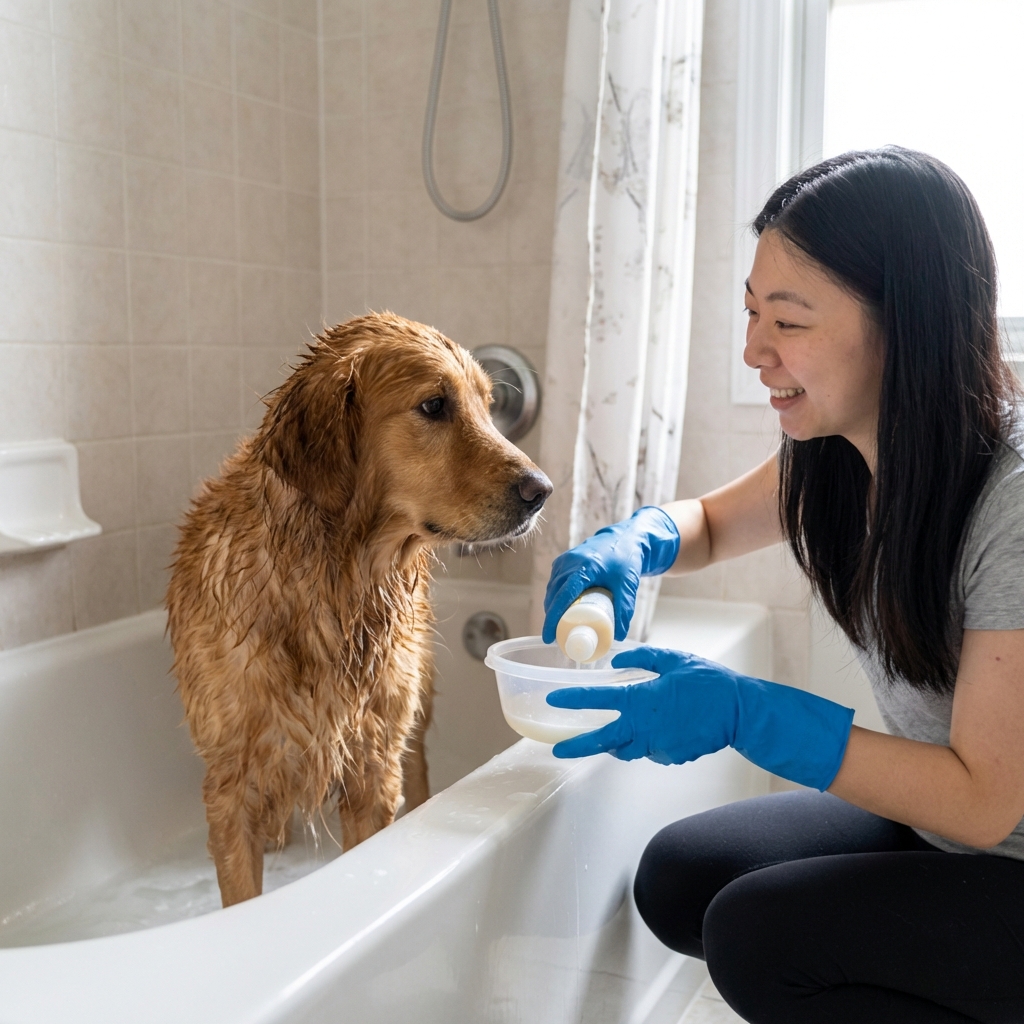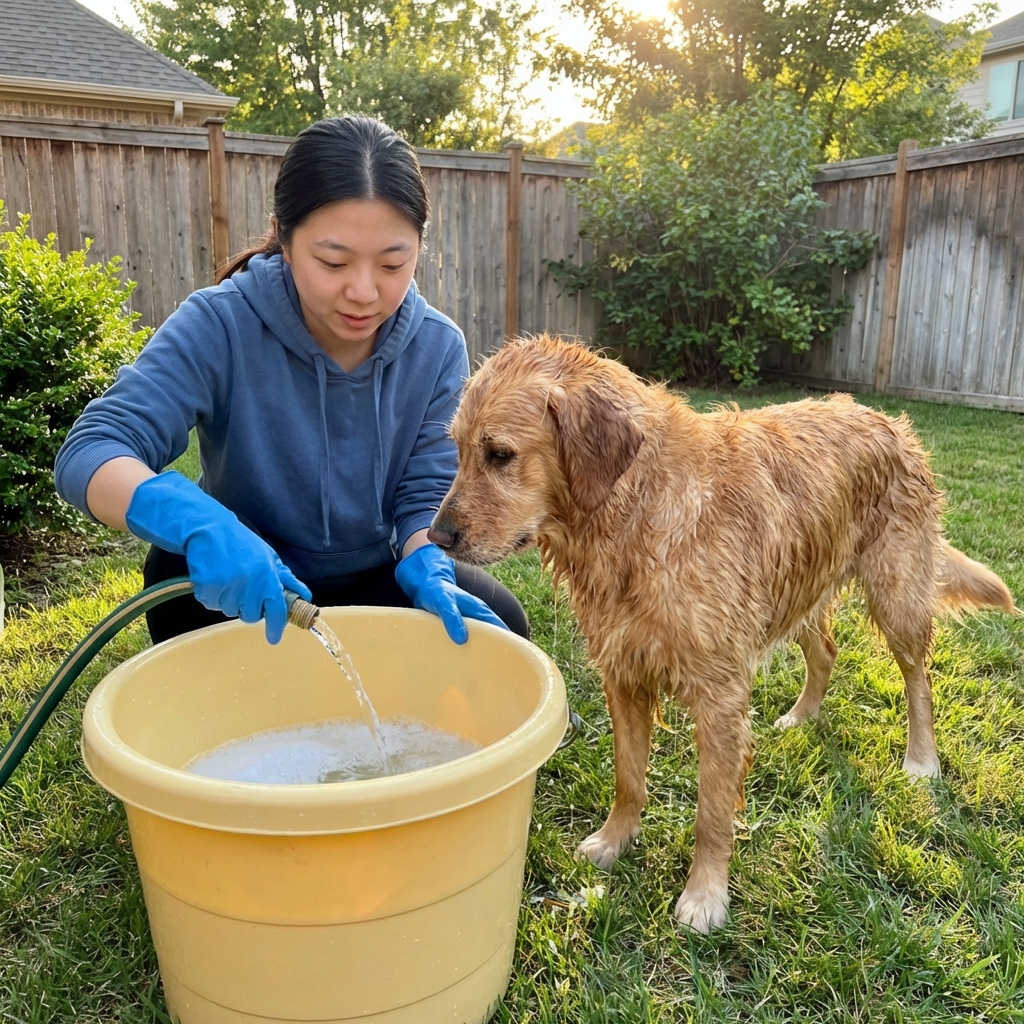
Get skunk smell off your dog safely with the peroxide, baking soda, and dish soap method. Includes step-by-step washing tips, face/eye care, vet red flags, a...
Article
•
Designer Mixes
How to Remove Skunk Smell From a Dog

Shari Shidate
Designer Mixes contributor
As a veterinary assistant here in Frisco, Texas, I can tell you this: skunk spray is one of those smells that seems impossible until you use the right chemistry. The goal is not to “cover” the odor. It is to break down the skunk’s sulfur compounds that cling to fur, skin oils, and even collars.
If your dog just got sprayed, take a deep breath, grab a few supplies, and follow the steps below. Most dogs can be safely de-skunked at home, but there are a few situations where you should call your vet right away.
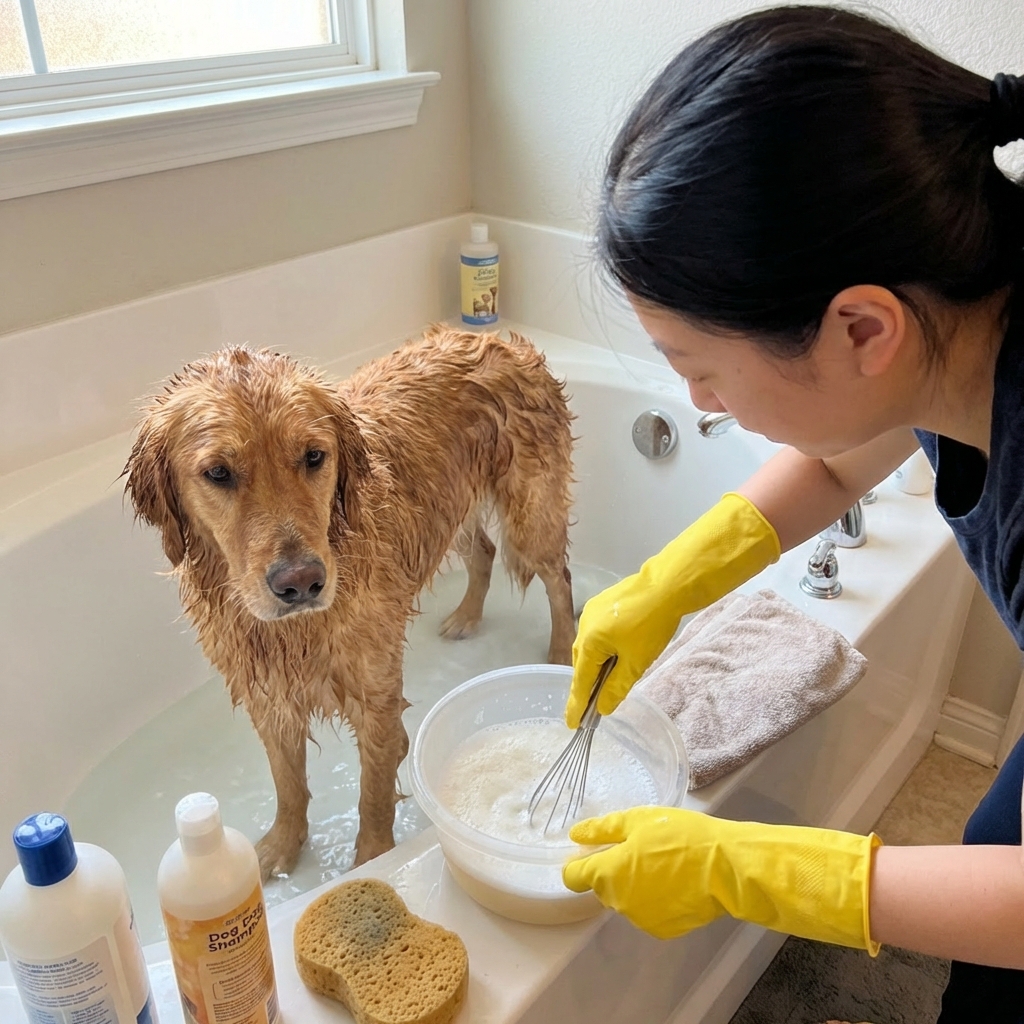
First steps
Do this immediately
- Keep your dog outside if possible. That smell transfers fast to carpets, sofas, and bedding.
- Protect your eyes and hands. Put on gloves and, if you have them, protective glasses. Skunk spray stings.
- Do not let your dog rub their face on grass, furniture, or you. It spreads the oils.
- Check the eyes and mouth. If your dog is squinting hard, pawing at their eyes, drooling, or seems distressed, move to the “When to call the vet” section below.
Try to keep the coat dry at first
Skunk spray is oily. If you can, apply the odor-neutralizing mix to a mostly dry coat first so it can grab the oils before they spread. If your dog is truly drenched or you have visible spray pooling on the coat, a quick, light rinse can help remove some surface gunk, then proceed with the neutralizing mix.
Ventilation helps. If you are bathing indoors, open windows, run the bathroom fan, and keep air moving. The fumes and odor together can be intense for both of you.
Why it lingers
Skunk spray contains sulfur-based compounds called thiols. They bind to oils on your dog’s skin and hair. Regular shampoo can make your dog cleaner, but it often does not neutralize the odor molecules, so the smell can come back when the coat gets wet days later.
The most effective home approach is an oxidizing solution that converts those thiols into less smelly compounds.
Best home remedy
This is the most widely recommended home recipe because it targets the chemistry of the smell.
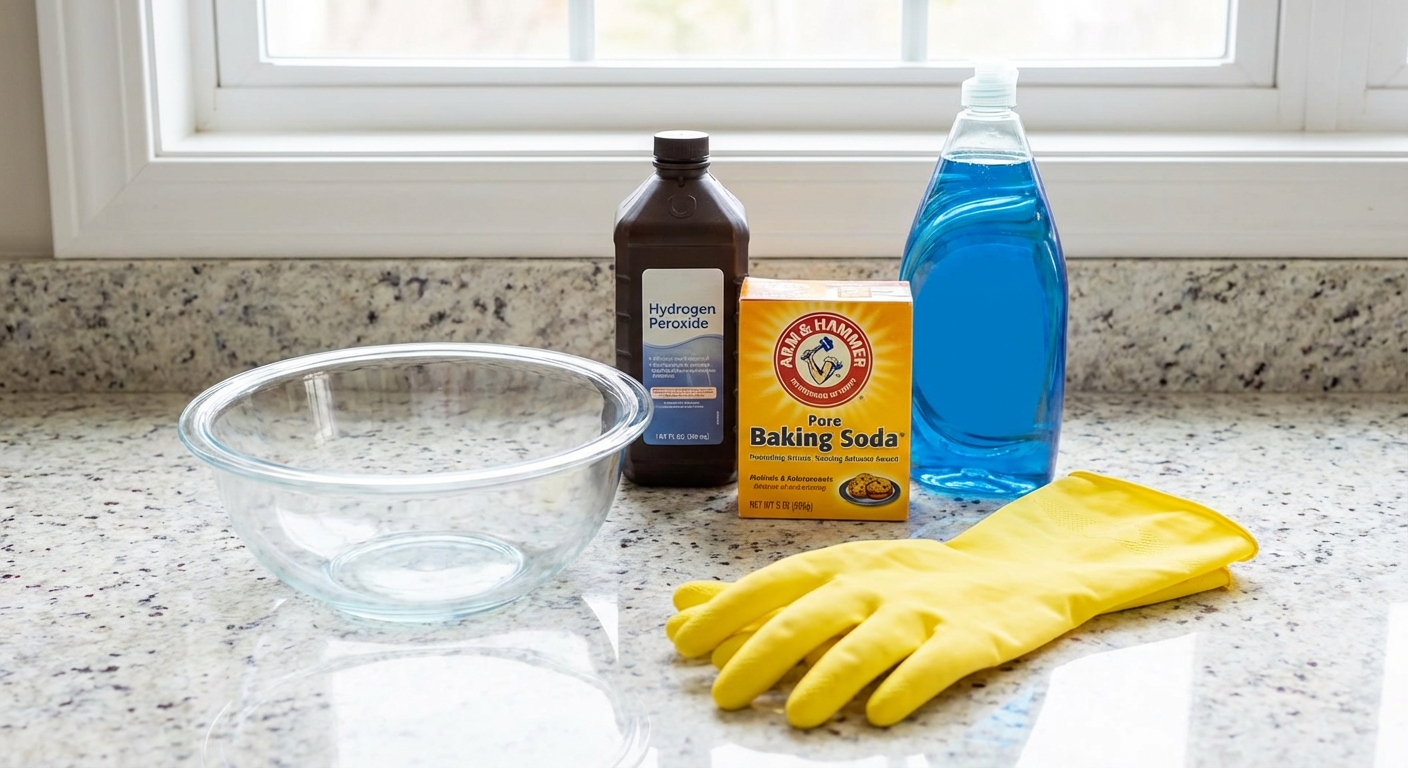
Odor neutralizing mix
- 1 quart (4 cups) of 3% hydrogen peroxide
- 1/4 cup baking soda
- 1 teaspoon liquid dish soap (a grease-cutting kind)
Mix in an open container (like a bowl). Do not cap it in a bottle. The reaction releases oxygen and can build pressure.
How to use it
- Blot or brush first. If your dog is dripping with spray, blot excess with paper towels. If the coat is thick, a quick brush helps lift surface oils.
- Apply to a dry or mostly dry coat. Work the solution into the fur thoroughly, especially the neck, chest, shoulders, and any areas that got hit most.
- Avoid eyes, nose, and mouth. Use a damp washcloth around the face instead of pouring solution there.
- Do not use on open wounds or raw skin. If your dog has cuts, hot spots, or irritated broken skin, skip those areas and call your vet for safer guidance.
- Let sit for 5 minutes (up to 10 if the coat is thick and your dog tolerates it).
- Rinse very well. Rinse until the water runs clear and the slickness from the dish soap is gone.
- Shampoo and rinse again. A gentle pet shampoo is fine. Conditioners can sometimes trap odor, so use lightly.
- Towel-dry and keep them warm. Small dogs and puppies can chill quickly after bathing, especially in winter. Use towels, a warm room, and keep drafts away.
How often can you repeat it?
For many dogs, one round works. For heavy sprays or double-coated breeds, you may need a second treatment the same day. Peroxide can be drying, so do not repeat multiple times over several days without veterinary guidance. Stop if you notice significant redness, itching, or irritation.
Important cautions
- Do not use on cats without veterinary guidance. Cats groom and can ingest residues easily.
- Do not store the mixed solution. Make fresh each time.
- Use care on dark coats. Peroxide can mildly lighten fur in some dogs, especially with repeated use.
- If your dog has chronic skin disease or is having a flare, check in with your vet before doing repeated at-home treatments.
- Recent flea and tick treatments: bathing can reduce the effectiveness of some topical products. If you applied a topical recently, call your vet or check the product label for bathing guidance.
Other options
Tomato juice
Tomato juice mainly masks odor temporarily and can leave a tomato smell behind. It is messy and usually disappointing for true skunk spray.
Vinegar
Vinegar can help with some odors, but it is typically less effective than the peroxide and baking soda method for skunk thiols. It can also irritate already sensitive skin.
Commercial skunk shampoos
Some are excellent, especially formulas that specifically state they neutralize skunk odor rather than “deodorize.” If you prefer a ready-made solution, look for products designed for skunk spray and follow directions closely.
Face and eyes
The face is where I want you to slow down. Dogs often take the hit directly to the muzzle, and that is the area most likely to sting and inflame.
Safer approach
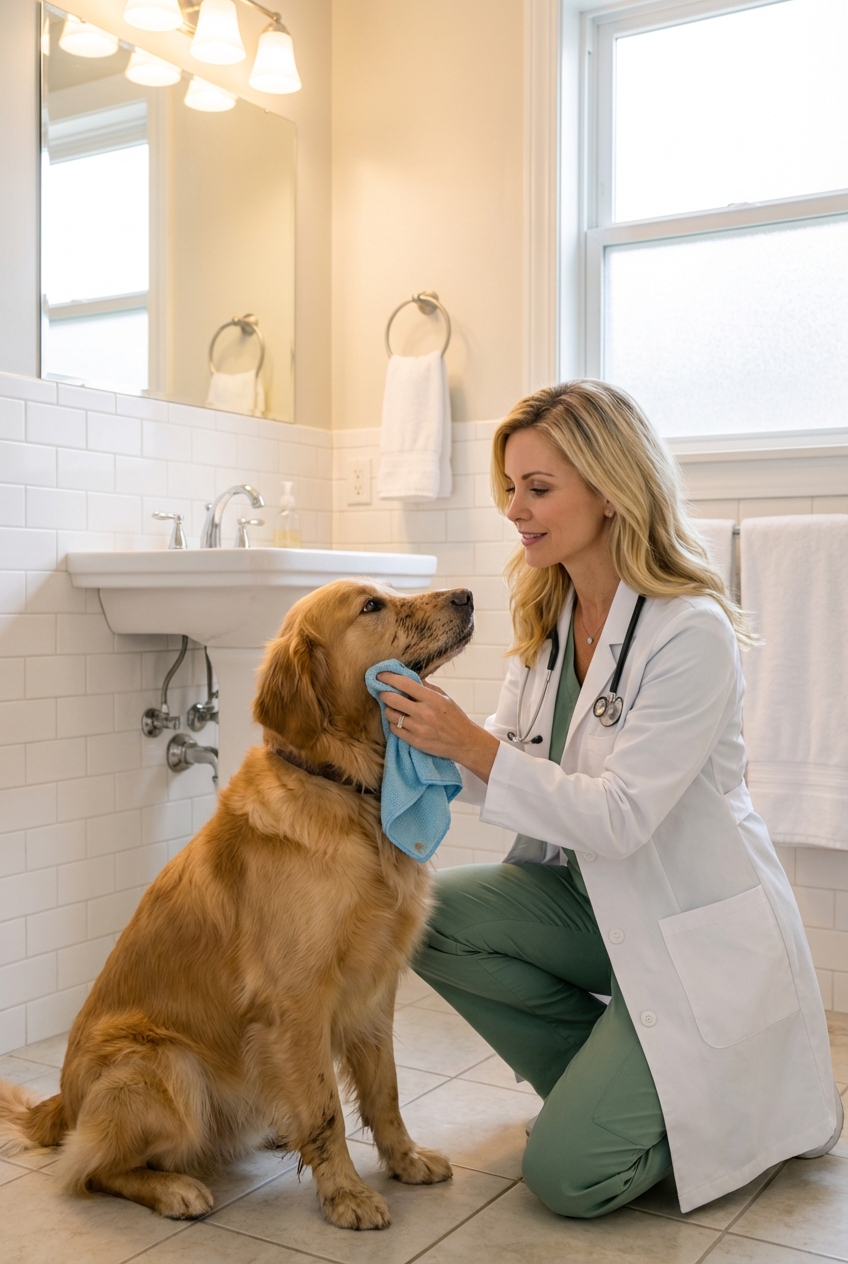
- Use a damp washcloth with a tiny drop of dish soap to wipe the muzzle and cheeks.
- For the fur around the eyes, use plain water only on a soft cloth.
- If your dog is squinting or the eyes look red, flush with sterile saline eyewash if you have it.
If the eyes remain irritated after flushing, or you see thick discharge, that is a veterinary visit.
When to call the vet
Most skunk incidents are just unpleasant, but skunk spray can cause real medical issues, especially if it gets into the eyes or is inhaled.
- Eye pain: persistent squinting, holding the eye shut, pawing at the eye, redness that is worsening, or cloudiness.
- Breathing trouble: heavy coughing, wheezing, struggling to breathe, or extreme lethargy.
- Vomiting or drooling after likely ingestion.
- Pale gums, weakness, or dark urine in the following 24 to 72 hours.
- Puppies, seniors, or dogs with chronic illness who seem “off” after exposure.
Rarely, dogs have been reported to develop hemolytic anemia after skunk exposure. It is uncommon, but it is a reason to call your veterinarian promptly if you notice pale gums, unusual weakness, fast breathing, or dark urine.
If you are ever unsure, it is completely reasonable to call your veterinarian or an emergency clinic for guidance.
Home and gear
Collars and leashes
- Soak washable items in warm water with a grease-cutting dish soap for 30 to 60 minutes, then wash.
- If odor remains, you can do a brief soak in a very dilute peroxide solution (test a small area first for fading).
- Sometimes the most cost-effective choice is to replace porous nylon collars after a heavy spray.
Dog bed and blankets
- Wash with your usual detergent plus baking soda.
- Air-dry outside if possible.
- If the odor persists, rewash. If you can, avoid high heat until the smell is mostly gone since heat can make some odors harder to remove in certain fabrics.
Hard surfaces
Wipe floors, crates, and kennels with a mild dish soap solution. Ventilation matters. Open windows, run fans, and swap HVAC filters if the smell got inside.
Prevent next time
Skunks are most active at dawn and dusk. They are not looking for a fight, but curious dogs move fast and get sprayed fast.
- Leash up during early morning and evening potty breaks.
- Use a flashlight in the yard, especially near shrubs and fences.
- Remove attractants: secure trash, bring pet food inside, clean up fallen fruit, and limit access to compost.
- Block den areas under decks or sheds with proper fencing or lattice once you are sure no wildlife is inside.
Quick checklist
- Keep dog outside if possible and start with a dry or mostly dry coat.
- Use the peroxide, baking soda, and dish soap mix fresh.
- Work carefully around the face and eyes.
- Rinse thoroughly, then shampoo.
- Call your vet if eyes or breathing are affected, or if your dog seems unwell afterward.
You do not have to be perfect to make progress. If you remove most of the oils and neutralize the smell once, you are already way ahead of the skunk stink spiral.