Clear fleas without panic: treat every pet the same day, vacuum and launder consistently, use IGR home treatments safely if needed, and follow a realistic ti...
Article
•
Designer Mixes
How To Remove Fleas From Home

Shari Shidate
Designer Mixes contributor
Fleas are tiny, stubborn, and honestly a little rude. Once they get into your home, they do not just “live on the pet.” Adult fleas feed and mate on your dog or cat, and the eggs they lay in the coat then fall off into the places your pet rests, sleeps, and plays. That is why the best flea plan treats the pet and the home.
As a veterinary assistant here in Frisco, Texas, I have seen the same pattern over and over: families treat the pet once, see fewer fleas for a week, and then the problem comes roaring back. That is not failure. That is flea biology.
Know the flea life cycle
Understanding flea behavior is the shortcut to getting rid of them.
- Adults live and feed on pets and can also jump onto people.
- Eggs are laid on your pet and then fall off into carpets, bedding, cracks in flooring, and furniture.
- Larvae avoid light and burrow deeper into carpet or debris.
- Pupae are protected inside a cocoon and can “wait” until vibrations, heat, or carbon dioxide signal a host nearby. This stage is why you can clean and still see fleas pop up later.
Most of the flea population in a home is typically not on the pet. It is in the environment as eggs, larvae, and pupae. Your goal is to interrupt that cycle until it collapses.
Signs fleas are in your house
- Your pet is scratching, chewing at the base of the tail, or has irritated skin.
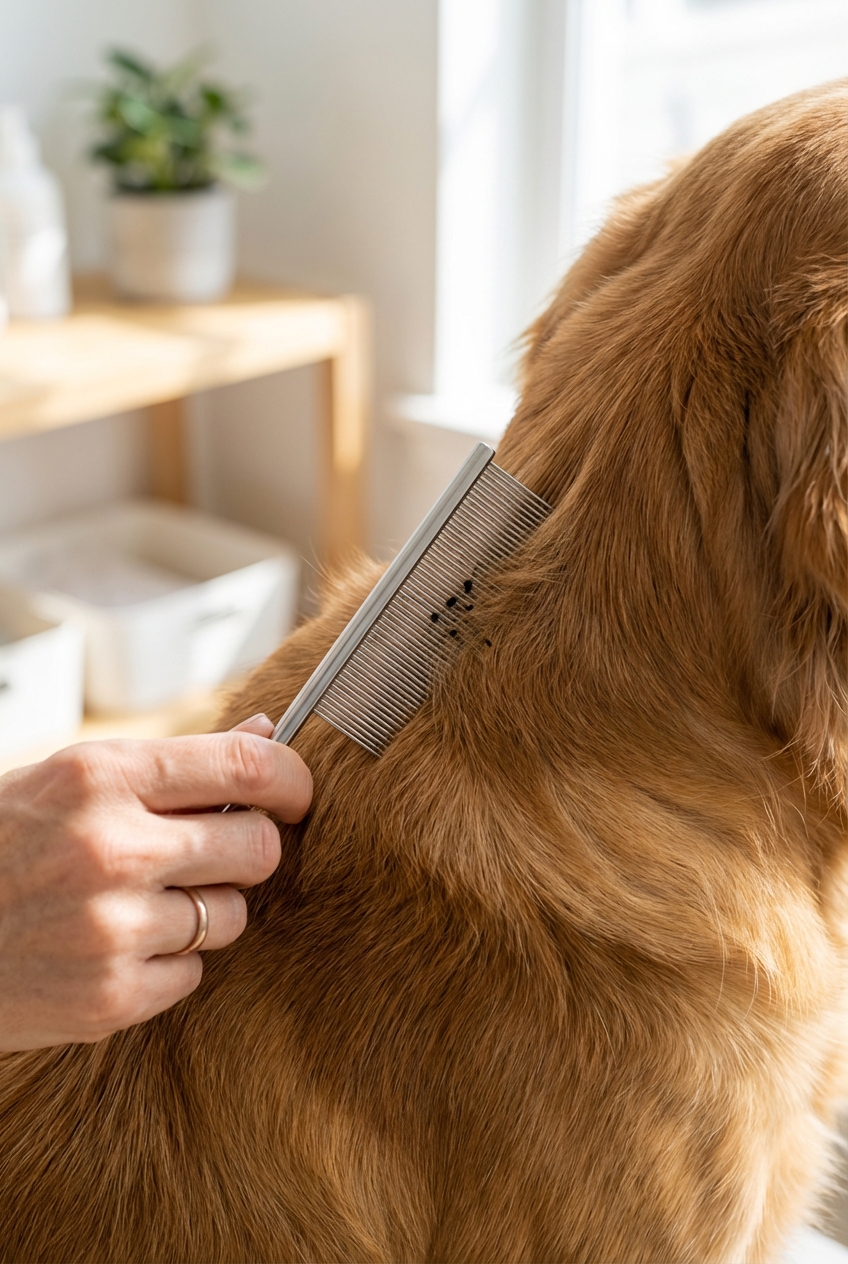
- You see “flea dirt” (black pepper-like specks) in the coat or on bedding.
- You notice small itchy bites on ankles or lower legs, especially after being on carpet.
- You spot a flea when parting fur around the rump, belly, or neck.
Quick check: put some of those black specks on a damp white paper towel. If it turns reddish-brown, that is digested blood, which strongly suggests flea dirt.
A plan that actually works
Flea control is mostly about consistency. You are going to use a few simple behaviors, repeated on a schedule, to outlast the flea life cycle.
Step 1: Treat every pet the same day
If one pet is untreated, fleas will use them as the “safe house.” Even indoor cats can keep an infestation going.
- Use a veterinarian-recommended flea preventive. The best choice depends on species, weight, age, and health history.
- Avoid using dog-only products on cats. Some ingredients that are safe for dogs can be dangerous for cats.
- Mark your calendar for the next dose. Missing doses is one of the most common reasons fleas come back.
Safety note: If you use any spray, powder, or topical product on or around pets, read the label and when in doubt check with your veterinarian first, especially if you have cats, kittens, puppies, seniors, or pets with health conditions.
Step 2: Wash fabrics for real
Fleas and eggs love warm, protected areas: pet beds, throws, crate blankets, and the couch cushion your dog claims as their own.
- Wash pet bedding, human bedding your pets sleep on, and washable throws in hot water, then dry on high heat if the fabric allows.
- Do this at least weekly during an active problem, and again after you think the fleas are gone.
- If an item cannot be washed, place it in a hot dryer for 20 to 30 minutes if safe for the material.
Step 3: Vacuum to wake up cocoons
Vacuuming does two important things: it removes eggs and larvae, and it encourages adult fleas to emerge from cocoons so they can be killed by your overall plan.
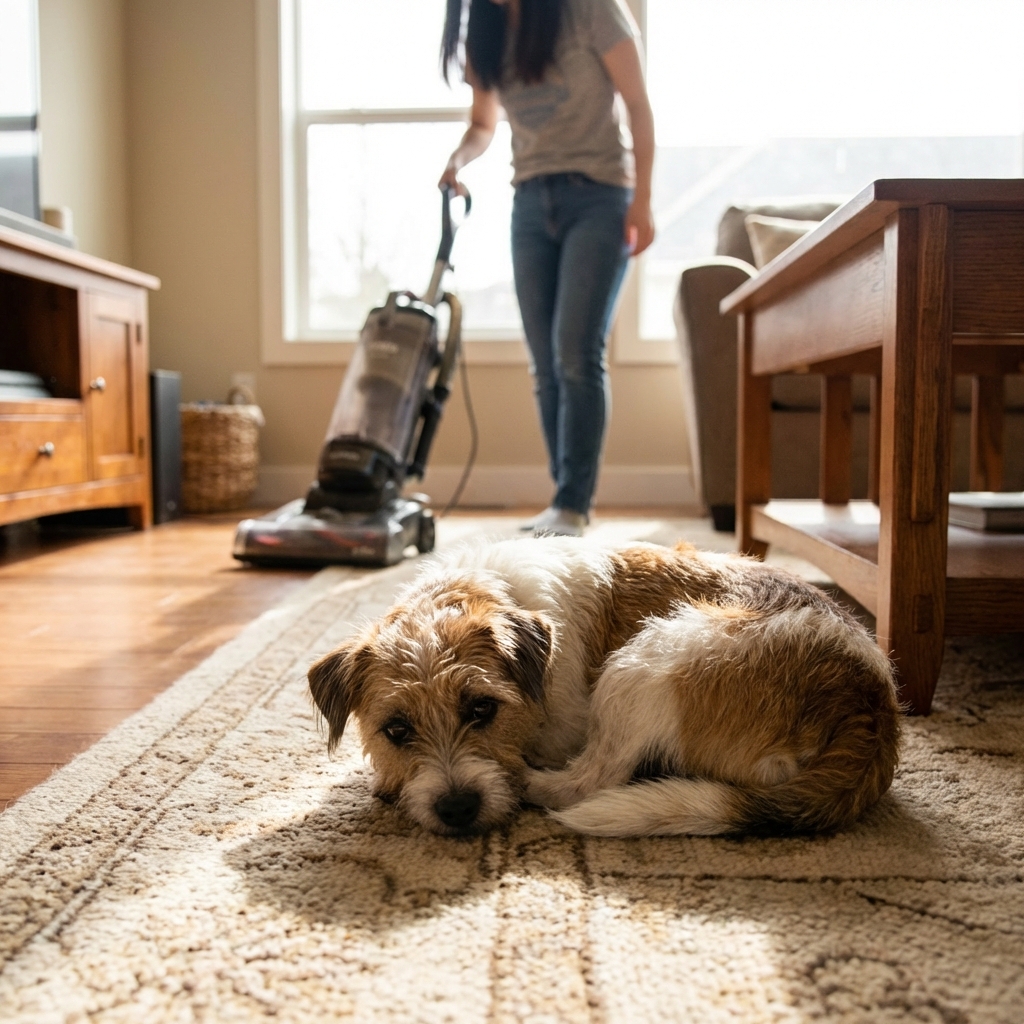
- Vacuum carpets, rugs, baseboards, and under furniture daily for 7 to 14 days if you can, then 2 to 3 times per week until you are clear.
- Do not skip upholstery. Vacuum couches, chairs, pet carriers, and the corners where your pets nap.
- Focus on where your pet rests and where people sit.
- Immediately empty the vacuum canister into a sealed bag and take it outside. If you use a bagged vacuum, remove the bag and dispose of it outdoors.
Tip: if your vacuum has a beater brush, use it on carpets. For hard floors, turn the brush off if possible to avoid scattering debris.
Step 4: Steam and detail the hot spots
Fleas concentrate in predictable spots. Your job is to make those zones unfriendly.
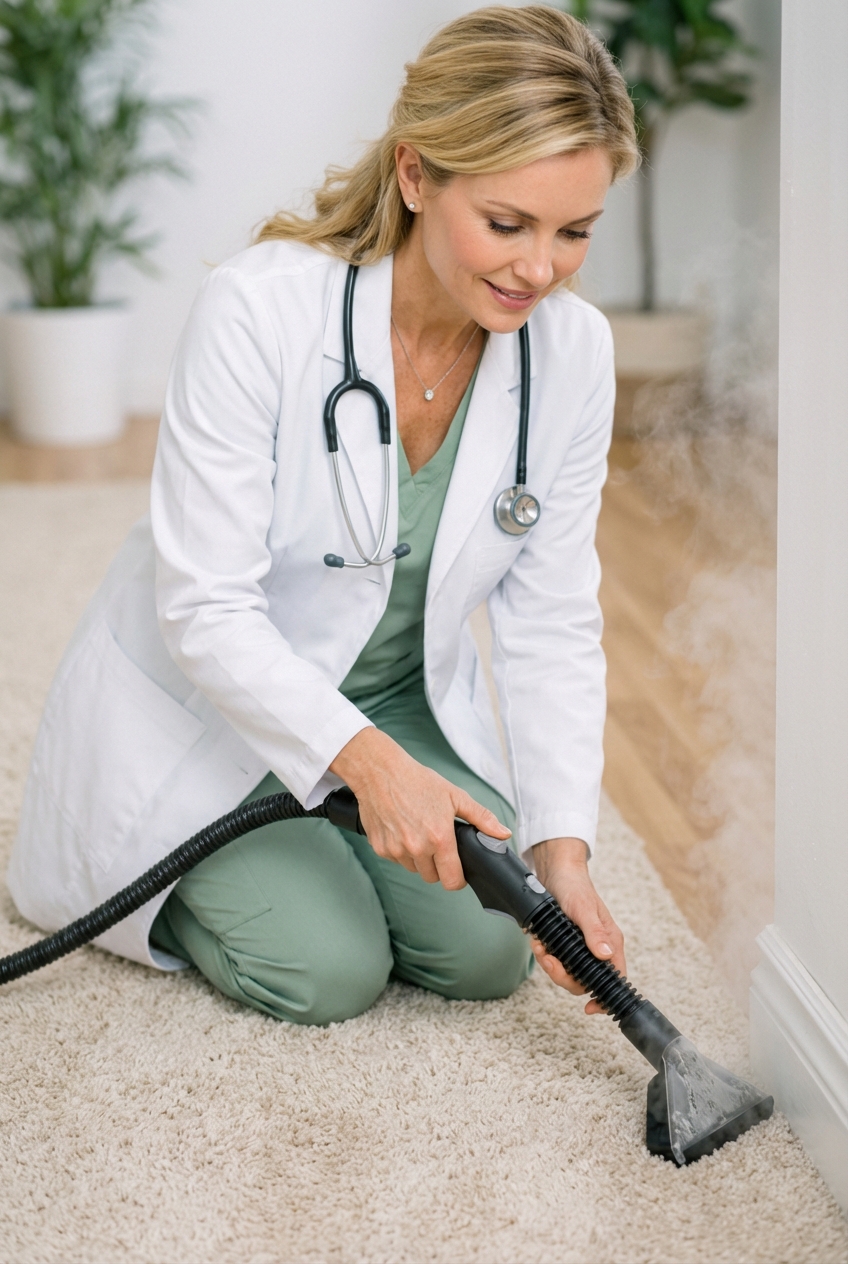
- Steam clean carpets and upholstery if available. Heat can help kill flea stages it directly contacts, but it is not a standalone solution.
- Pay special attention to pet beds, the edges of rugs, and the cracks where flooring meets baseboards.
- Use a crevice tool along baseboards and under couch cushions.
Step 5: Consider an IGR for the home
If fleas are established, an IGR can be a game changer because it prevents eggs and larvae from developing into biting adults. Many home flea sprays include an IGR ingredient such as methoprene or pyriproxyfen.
- Follow the label exactly, including drying times and pet re-entry instructions.
- Target carpets, rugs, and upholstery, not food prep surfaces.
- Many vet-recommended preventives kill adult fleas and help stop reproduction, but pairing pet protection with an IGR often speeds up home control.
If you have cats, fish tanks, birds, or other sensitive pets, read labels carefully and when in doubt ask your veterinarian for product guidance.
Cat caution: Never use dog-only flea products on cats unless your veterinarian specifically confirms it is cat-safe. Also keep cats from grooming or closely cuddling treated dogs until the product is fully dry.
Step 6: Do not forget the yard
In Texas, fleas can thrive outside for long stretches of the year. Shady, moist areas are prime flea real estate.
- Pick up pet waste and debris, and keep grass trimmed.
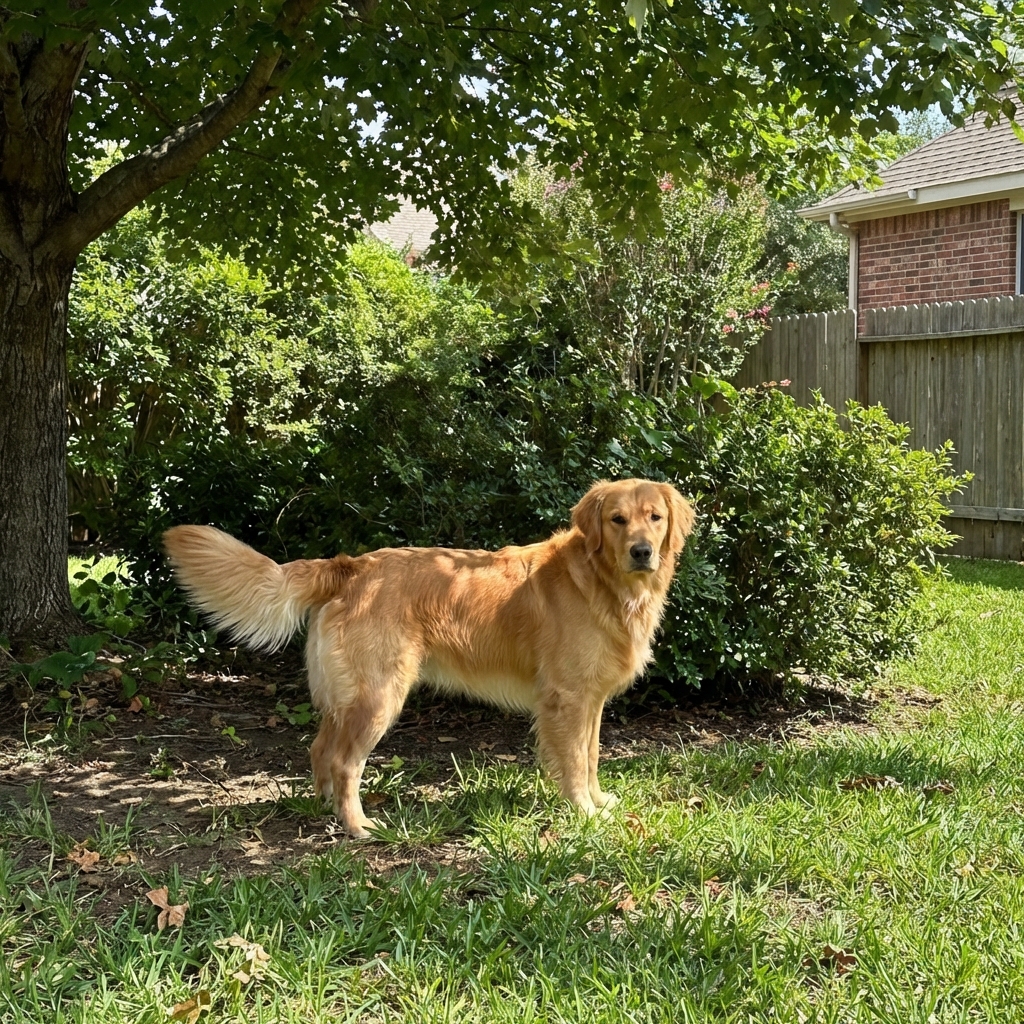
- Focus on shaded areas where pets rest: under decks, along fences, beneath shrubs.
- Limit wildlife access if possible. Fleas hitchhike on feral cats, opossums, raccoons, and other visitors.
- Outdoor treatments vary in effectiveness. Habitat cleanup plus consistent pet prevention is usually the biggest win. If you use a yard product, follow the label and local guidance.
Step 7: Expect a second wave
Because pupae can be protected, it is normal to see fleas after you start cleaning and treating. That does not mean the plan is failing. It often means you are triggering dormant fleas to emerge.
Many homes improve a lot in about 3 to 8 weeks with consistent effort, depending on severity, home conditions, and product choice. Keep treating pets on schedule and keep vacuuming.
Real-world tip: If your pet rides in the car a lot, vacuum seats, floor mats, and the cargo area too. And if your pet goes to daycare, boarding, grooming, or dog parks, ask what flea prevention policies they follow to reduce reinfestation.
Common mistakes
- Treating only the house and not the pet. Fleas feed on animals. If the pet is not protected, fleas keep reproducing.
- Using “natural” products that do not break the life cycle. Some can help with comfort, but they often are not enough for an active infestation.
- Stopping too soon. You feel relief, then pupae emerge, and you are back at square one.
- Mixing too many pesticides at once. More is not always better. It can be unsafe and still ineffective if the basics are skipped.
- Not treating all pets. One untreated cat can undo everything.
When to call the vet or a pro
Call your veterinarian if:
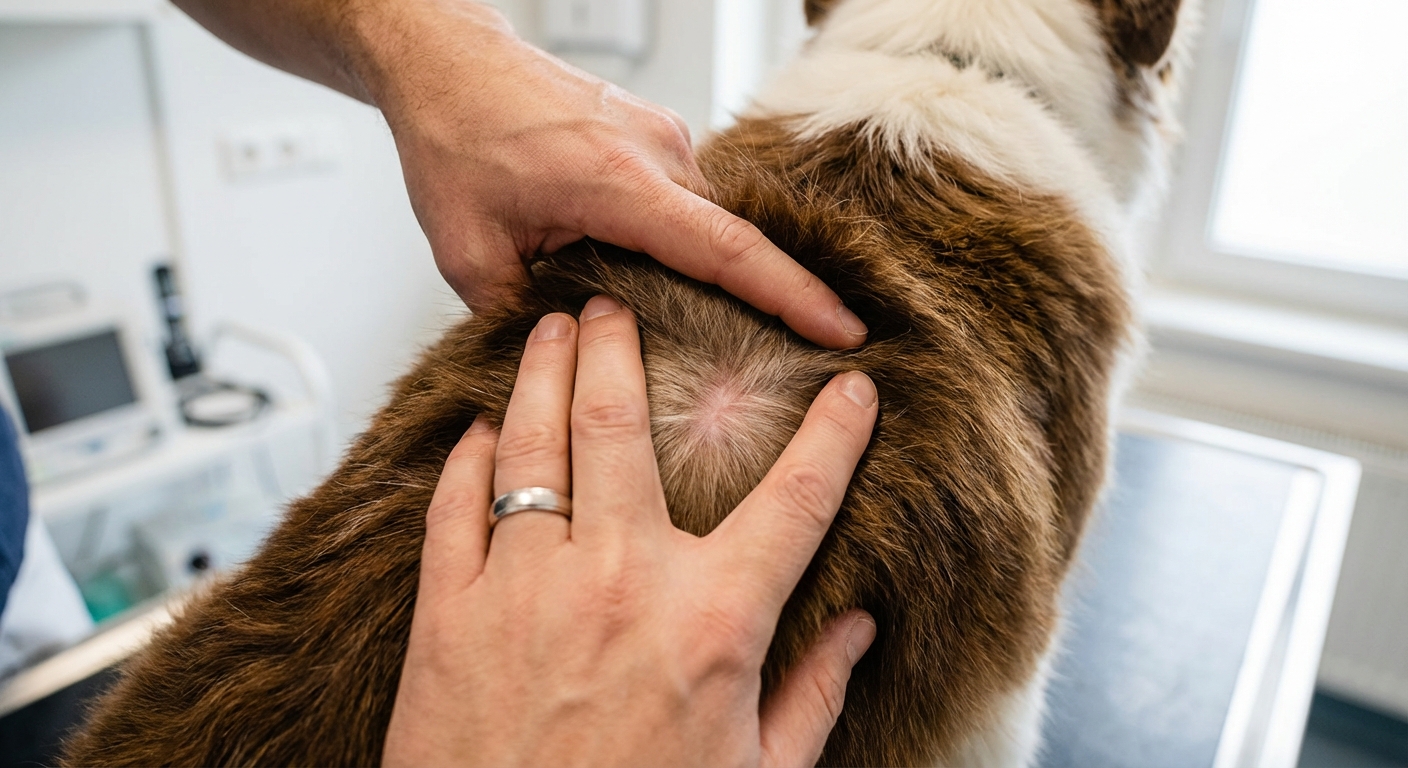
- Your pet has hair loss, scabs, hot spots, or signs of infection.
- You suspect flea allergy dermatitis (some pets react intensely to even one bite, and you may not see many fleas).
- Your pet is a puppy or kitten, senior, pregnant, nursing, or has chronic illness and you are unsure what is safe.
- You are seeing tapeworm segments, which can be linked to fleas.
Call a licensed pest control professional if:
- You have tried consistent pet prevention and cleaning for 6 to 8 weeks and fleas persist.
- You have a large home with heavy carpet and multiple pets and cannot keep up with vacuuming and laundering.
- There are structural issues that create persistent harborages (old flooring gaps, heavy fabric upholstery throughout, etc.).
Even if you hire help, keep pets on vet-recommended prevention. That is your long-term protection.
A simple 14-day reset
If you like clear steps, this is a solid starting point.
Day 1
- Treat all pets with a veterinarian-recommended flea preventive.
- Wash bedding and throws in hot water, dry on high heat if safe.
- Vacuum thoroughly (including upholstery) and dispose of vacuum contents outdoors.
Days 2 to 7
- Vacuum daily, especially pet zones, upholstery, and pet carriers.
- Wash pet bedding mid-week if possible.
Days 8 to 14
- Vacuum every other day.
- Wash bedding again at the end of week two.
After that, continue weekly vacuuming and keep prevention consistent. Most flea problems return because prevention stops when the itching stops. In flea-heavy areas like Texas, year-round prevention is often the easiest path.
FAQ
Will vacuuming alone get rid of fleas?
Vacuuming helps a lot, but it rarely solves a home infestation by itself. You still need to treat the pet because that is the food source that keeps fleas reproducing.
Do I need to bomb my house?
Usually, no. Flea bombs often miss the areas fleas actually hide, like under furniture and deep in carpet edges. A targeted approach with vacuuming, laundering, and an IGR product when needed tends to work better.
Why do I still see fleas after I started treatment?
Pupae can be protected in cocoons and adults can emerge later. Keep the plan going. Consistency is what wins.
Bottom line
You can absolutely remove fleas from your home, but it is not a one-and-done situation. Think of it like resetting a messy room. You do the big clean, then you keep up the habits so it stays under control.
Protect the pet, clean with a schedule, and give yourself a few weeks of consistent effort. Most families see real relief, and then the home gets easier and easier to maintain.