Step-by-step tick removal for dogs using tweezers or a tick tool, plus what to avoid, how to clean the bite, when to call your vet, and prevention tips.
Article
•
Designer Mixes
How to Remove a Tick From a Dog

Shari Shidate
Designer Mixes contributor
As a veterinary assistant here in Frisco, Texas, I see ticks year-round (yes, even in cooler months), and I know how unsettling it feels to find one on your dog. The good news is that safe tick removal is absolutely something most pet parents can do at home, as long as you use the right tool and take it step by step.
This guide walks you through exactly what to do, what to avoid, and when it is time to call your vet.
Before you start: quick safety checklist
Ticks can transmit infections, but panic leads to mistakes. Take a breath, gather supplies, and set yourself up for a clean removal.
What you will need
- Fine-tipped tweezers or a tick removal tool
- Disposable gloves (helpful, not required)
- Rubbing alcohol or a pet-safe chlorhexidine product (skin-safe, label directions)
- Small container with lid or a sealed bag (to save the tick)
- Flashlight and a comb (especially for fluffy mixes)
- Treats to keep your dog calm and still
Where to do it
Pick a well-lit spot. If your dog is wiggly, have a helper gently hold them, offer peanut butter on a lick mat, or work during a calm time of day.
Step-by-step: how to remove the tick
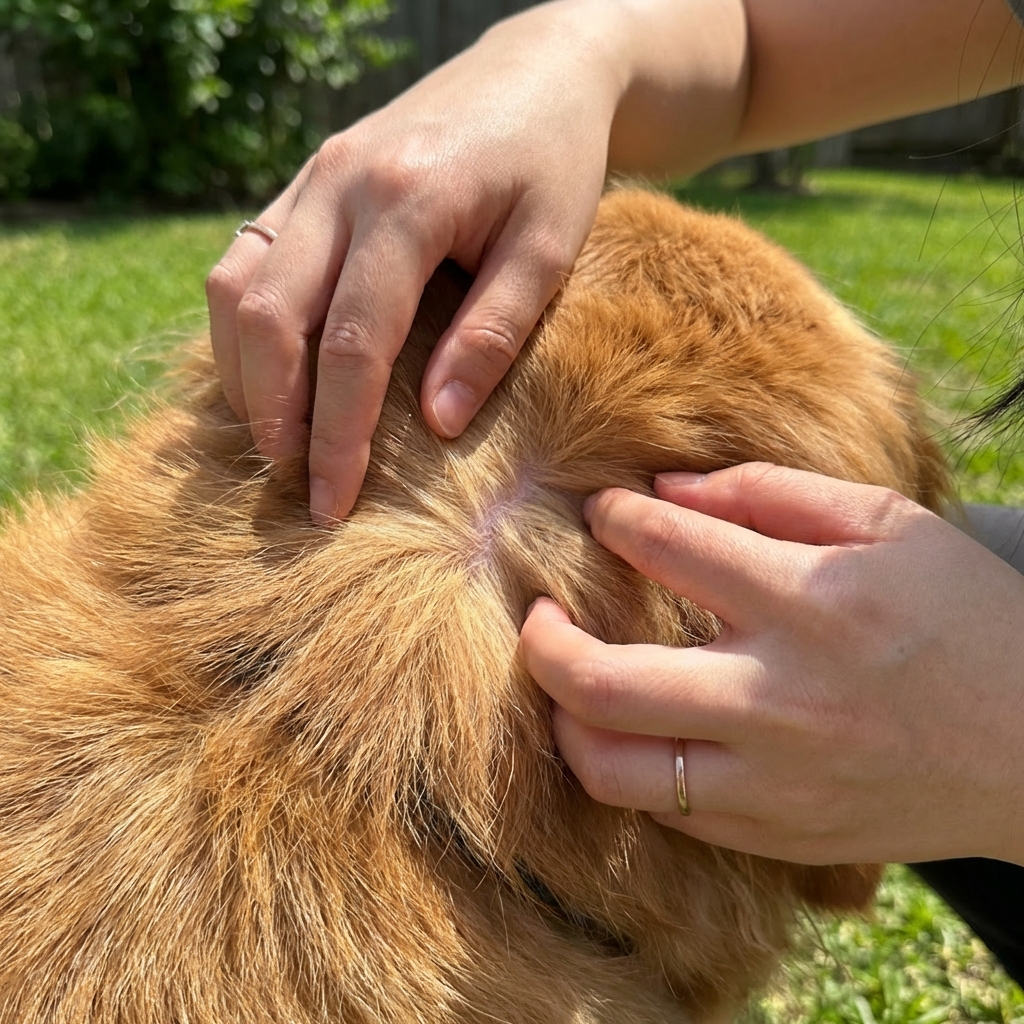
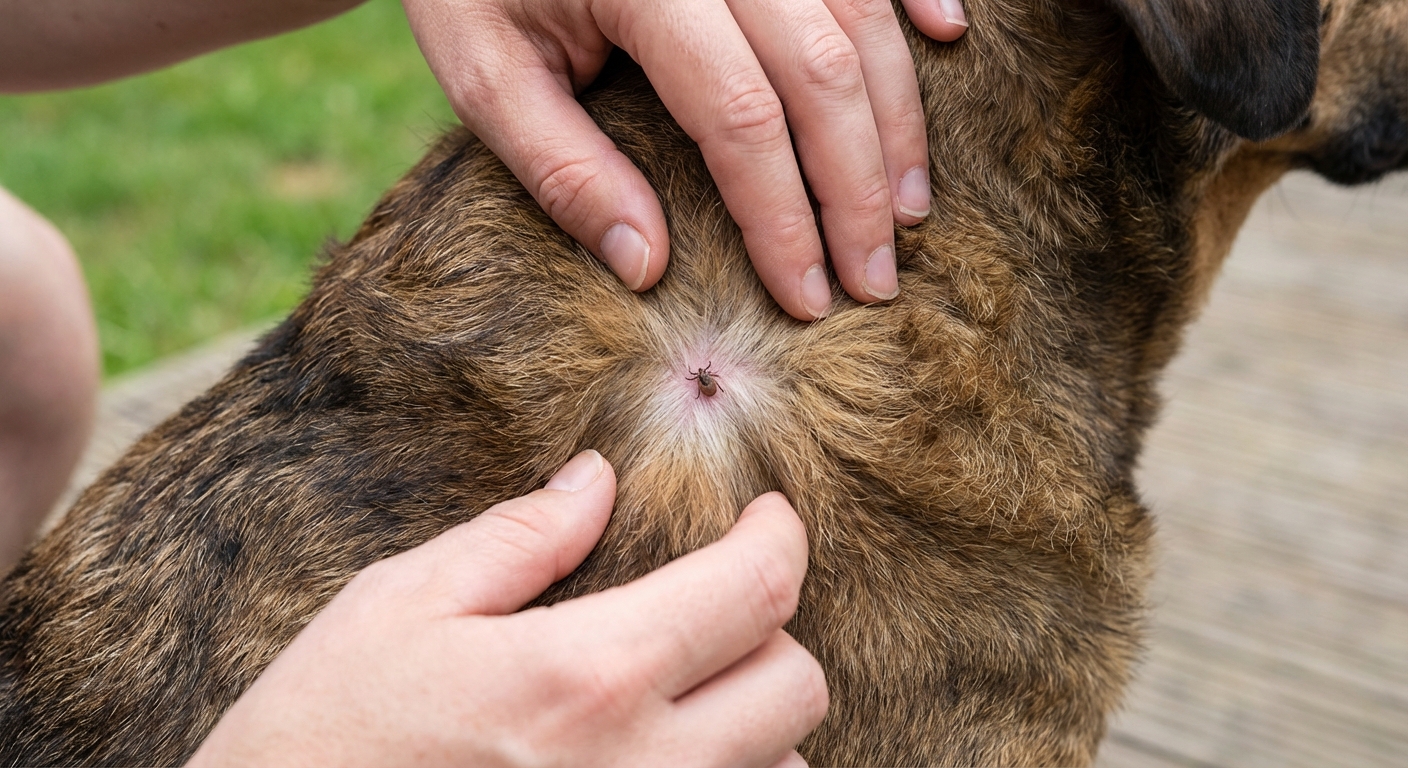
Step 1: Part the fur and find the attachment point
Use your fingers or a comb to separate the fur until you can see where the tick’s mouthparts meet the skin. This matters because you want to grasp the tick as close to the skin as possible.
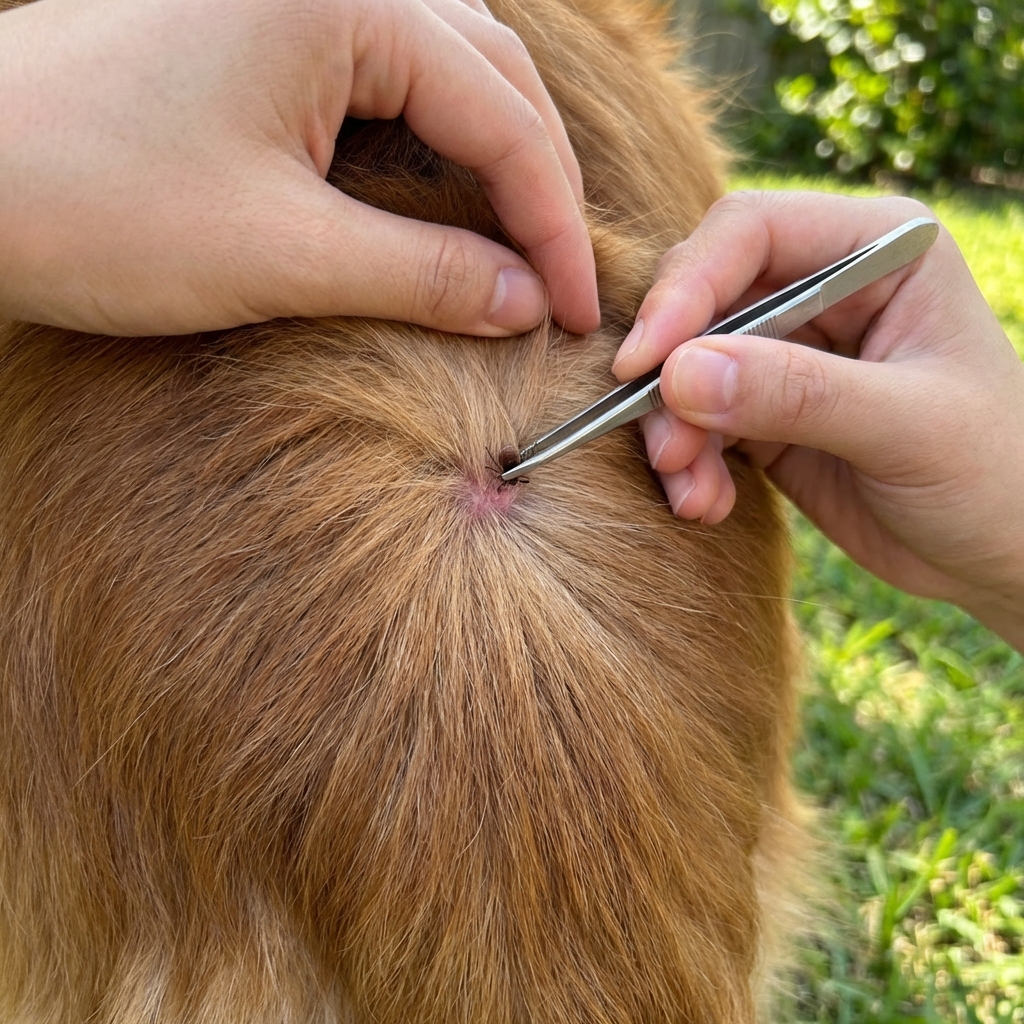
Step 2: Grip the tick close to the skin
With tweezers, grab the tick right at the skin line. Avoid squeezing the swollen body if you can, especially if the tick looks engorged.
Step 3: Pull straight out with steady pressure
Pull upward slowly and steadily in one smooth motion. No yanking, jerking, or forceful twisting.
If you are using a tick hook or removal tool, follow the product directions. Some tools are designed to use a gentle rotation motion. Tweezers are not.
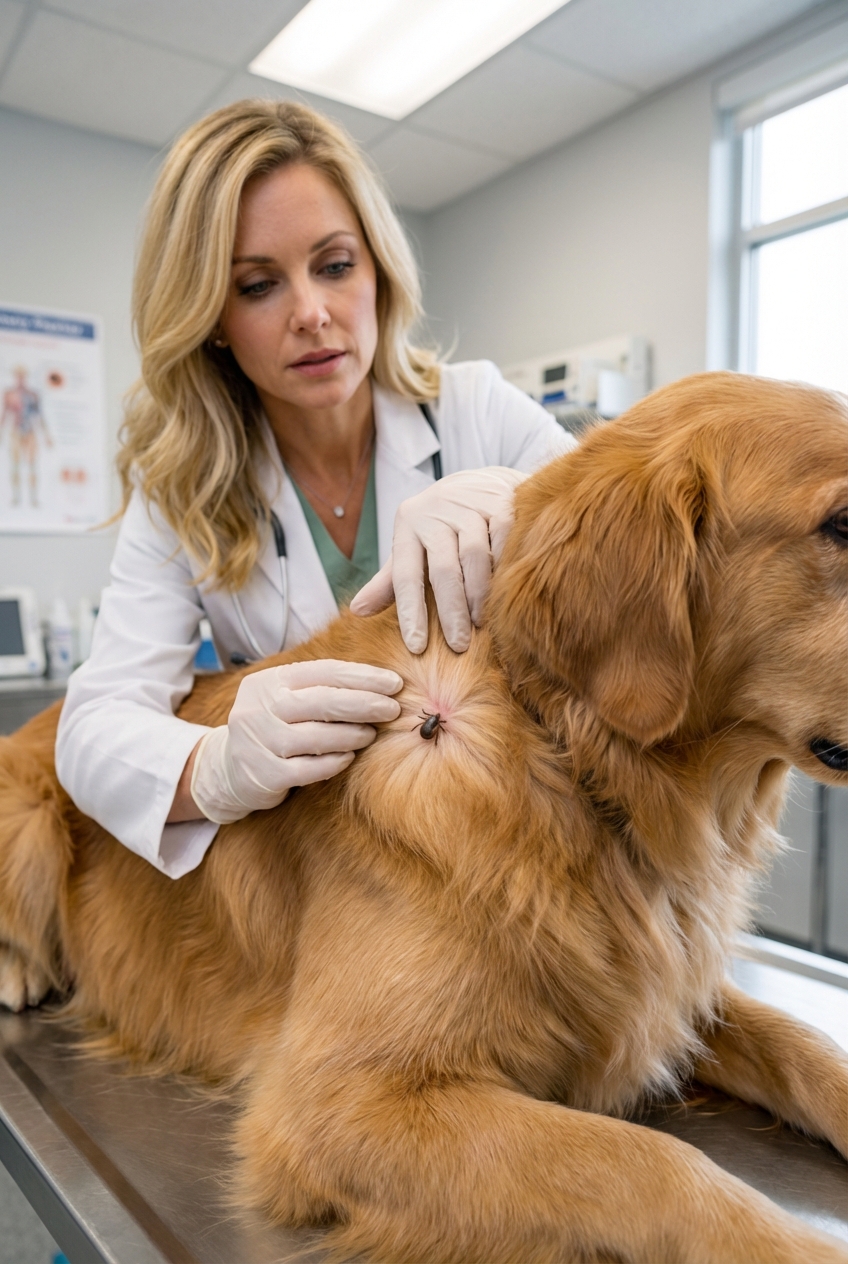
Step 4: Check the tick and the bite site
Look at the tick. Ideally, it should look intact, with the mouthparts removed along with the tick. Then look at your dog’s skin for any obvious remaining parts.
If you suspect mouthparts are stuck, do not dig aggressively. That can cause more tissue trauma and infection. Call your vet for guidance, especially if the area becomes red, swollen, painful, or oozing.
Step 5: Clean the area and wash your hands
Clean the bite site with rubbing alcohol or a pet-safe chlorhexidine product, then wash your hands thoroughly. You can also clean the tweezers or tool.
Step 6: Save the tick (seriously, it helps)
Place the tick in a sealed container or bag and write down the date and where on your dog you found it.
- If you have rubbing alcohol, you can add a tiny bit to the container.
- If you do not have alcohol, you can tape the tick to an index card or place it in a sealed bag and store it in the freezer.
- If testing is needed later, your vet may have a preference for alcohol versus dry storage, so ask if you are unsure.
If your dog gets sick later, your veterinarian may want that tick and your notes.
What not to do
I know these tips get passed around online, but they can make things worse.
- Do not burn the tick with a match or lighter.
- Do not smother it with petroleum jelly, nail polish, essential oils, or dish soap “until it backs out.”
- Do not crush the tick with your fingers.
- Do not apply chemicals to a tick that is attached to your dog’s skin.
- Do not twist hard, yank, or jerk the tick out.
These methods can irritate or damage the tick and may increase the risk of germs getting into the bite site. Mechanical removal with tweezers or the correct tick tool is the safest approach.
Aftercare: what to watch for
Most dogs do just fine after a tick is removed. Still, tick-borne illnesses can take days to weeks to show up. Monitor your dog closely and call your veterinarian if you notice:
- Lethargy or unusual tiredness
- Fever (if you can, use a pet thermometer; otherwise watch for shivering, acting “off,” or not wanting to eat)
- Loss of appetite
- Lameness, stiff walking, or joint pain
- Swollen lymph nodes
- Vomiting or diarrhea
- Bruising, nosebleeds, or tiny red spots on the gums (urgent)
- Sudden wobbliness or weakness (urgent, could be tick paralysis in rare cases)
Also keep an eye on the bite site. A small scab is common. Expanding redness, swelling, heat, pus, or significant pain deserves a vet check.
If your dog seems sick after a tick bite, do not “wait it out.” Early testing and treatment can make a big difference.
One more practical note: if your dog had tick exposure, it is smart to do a quick tick check on people in the household too.
When to call your vet right away
- Your dog is in significant pain, snapping, or you cannot safely restrain them
- The tick is attached near the eye, inside the ear canal, or in another delicate area
- You tried removal and the area is now bleeding a lot or looks badly irritated
- Your dog is a puppy, senior, pregnant, immunocompromised, or has chronic illness
- You see illness signs like fever, weakness, pale gums, trouble walking, or sudden wobbliness
How to check for ticks on thick coats
Dogs with thicker coats can hide ticks easily. I recommend a quick “tick check” after walks, hikes, or time in tall grass.
Focus on these hotspots
- Around the ears and under the collar
- Under the chin
- Armpits and groin area
- Between the toes
- Along the tail base
- Skin folds (if your dog has them)
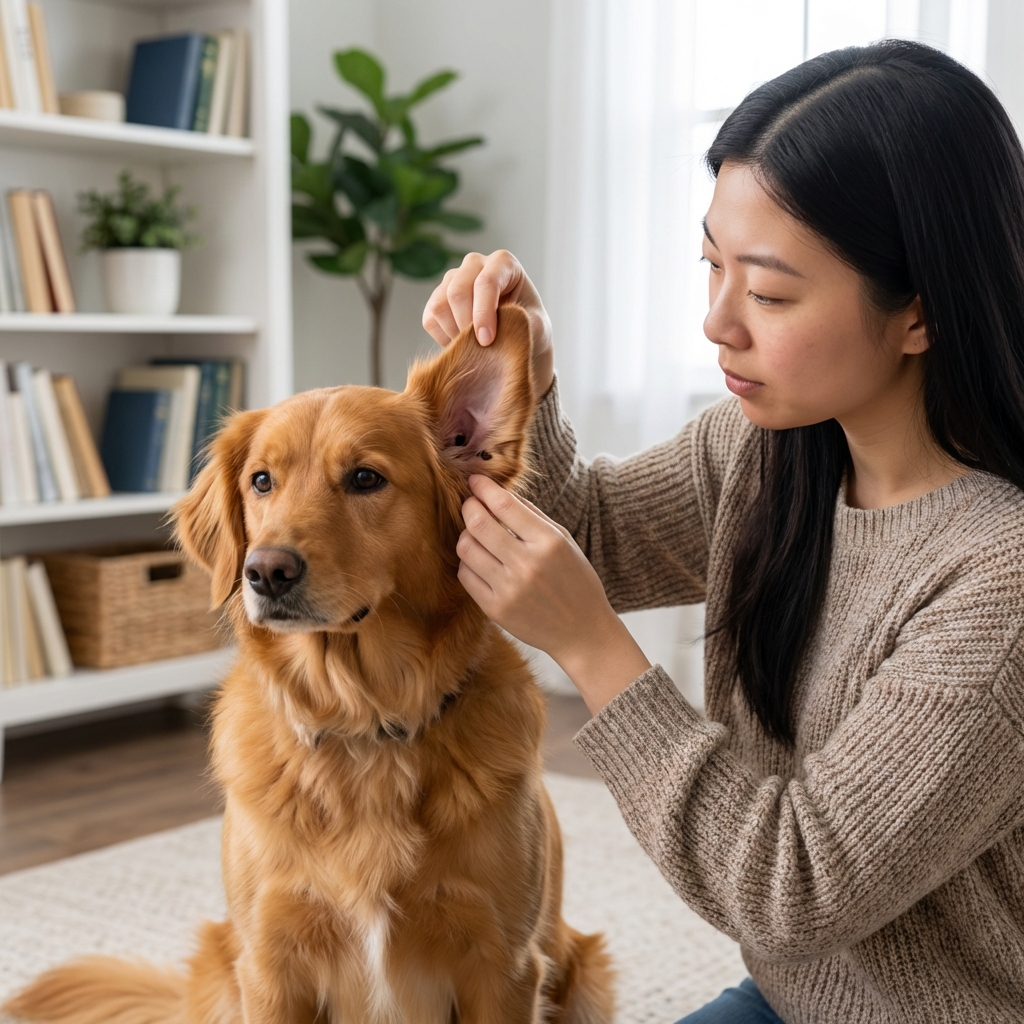
Using a flea comb after outdoor time can help you find ticks early and remove them sooner, before they have been attached long.
Preventing ticks going forward
Removal is important, but prevention is the real win. Talk with your veterinarian about the best tick prevention for your dog’s age, lifestyle, and health history. Options may include oral preventives, topical products, and tick collars.
- Use vet-recommended prevention consistently, especially in warm months
- Keep grass trimmed and remove leaf litter where ticks hide
- Do tick checks after outdoor time
- Ask about vaccines where appropriate (for example, Lyme in some regions)
If you have a multi-pet home, double check that any tick product you use is safe for all pets in the household. Some dog-only products can be dangerous for cats.
If you have questions about what you pulled off your dog or what symptoms to look for, your veterinary team would much rather you call early than worry at home.