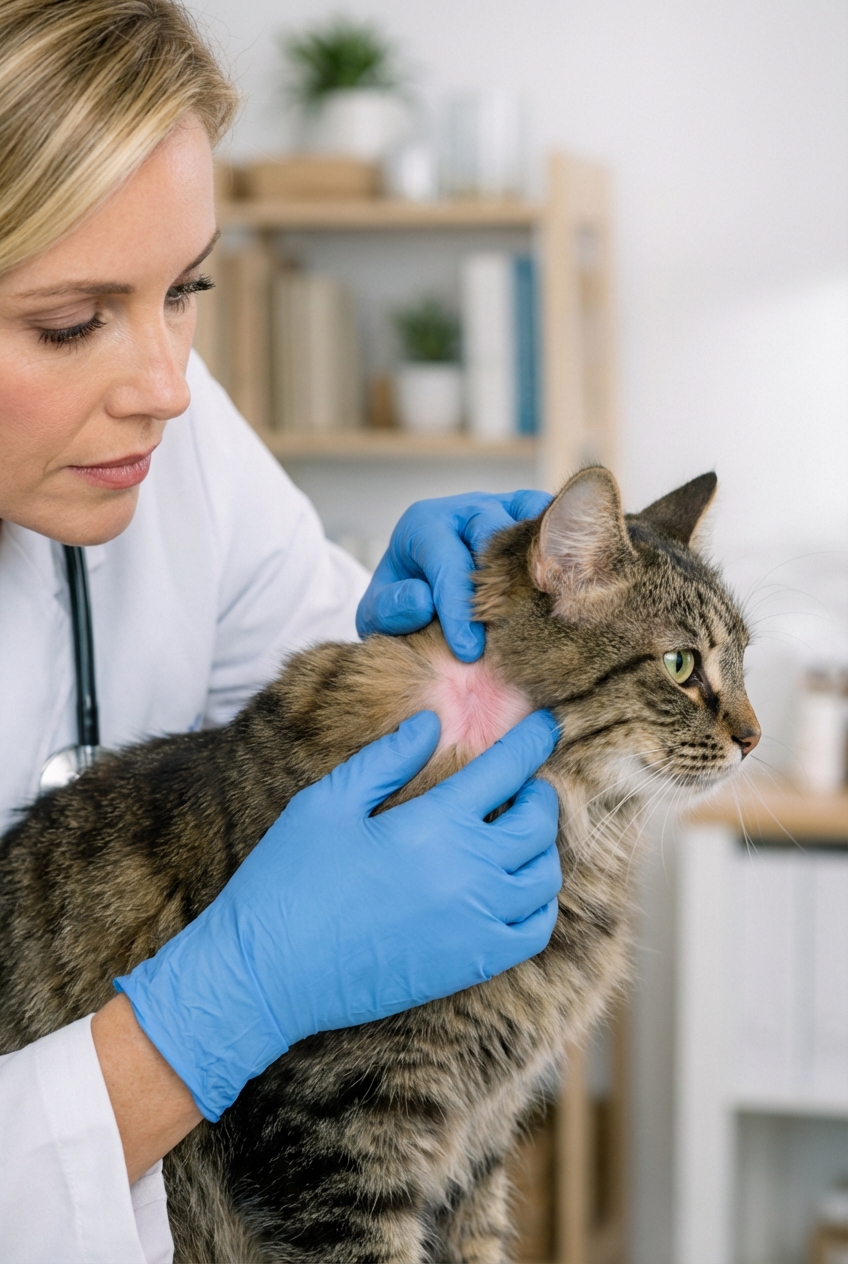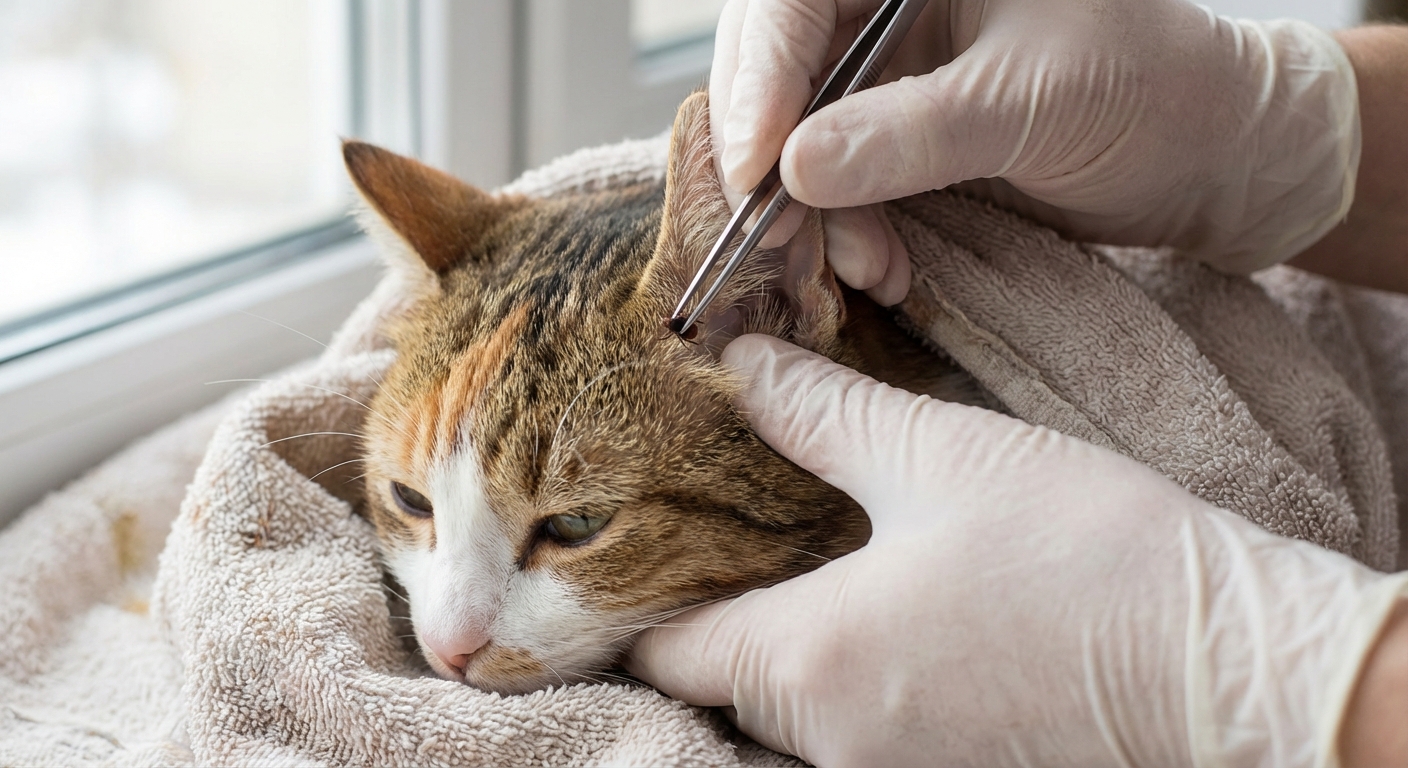
Vet-assistant guidance on removing ticks from cats safely: what tools to use, how to pull the tick cleanly, what not to do, aftercare warning signs, and prev...
Article
•
Designer Mixes
How to Remove a Tick From a Cat

Shari Shidate
Designer Mixes contributor
If you find a tick on your cat, take a deep breath. Ticks are common in Texas and across the U.S., and many can be removed safely at home if you have the right tools and a calm plan. As a veterinary assistant, I always tell pet parents the same thing: remove the tick promptly, remove it correctly, and then monitor your cat for a couple of weeks.
This guide walks you through exactly what to do, what not to do, and when it is time to call your veterinarian. It is general information, not a substitute for veterinary care if your cat is ill or you are unsure what you are seeing.
First: What to know
Ticks attach by inserting mouthparts into the skin and feeding on blood. The longer a tick is attached, the higher the risk of disease transmission. Cats are less commonly diagnosed with tick-borne disease than dogs, but they are not immune, and risks vary by region and tick species.
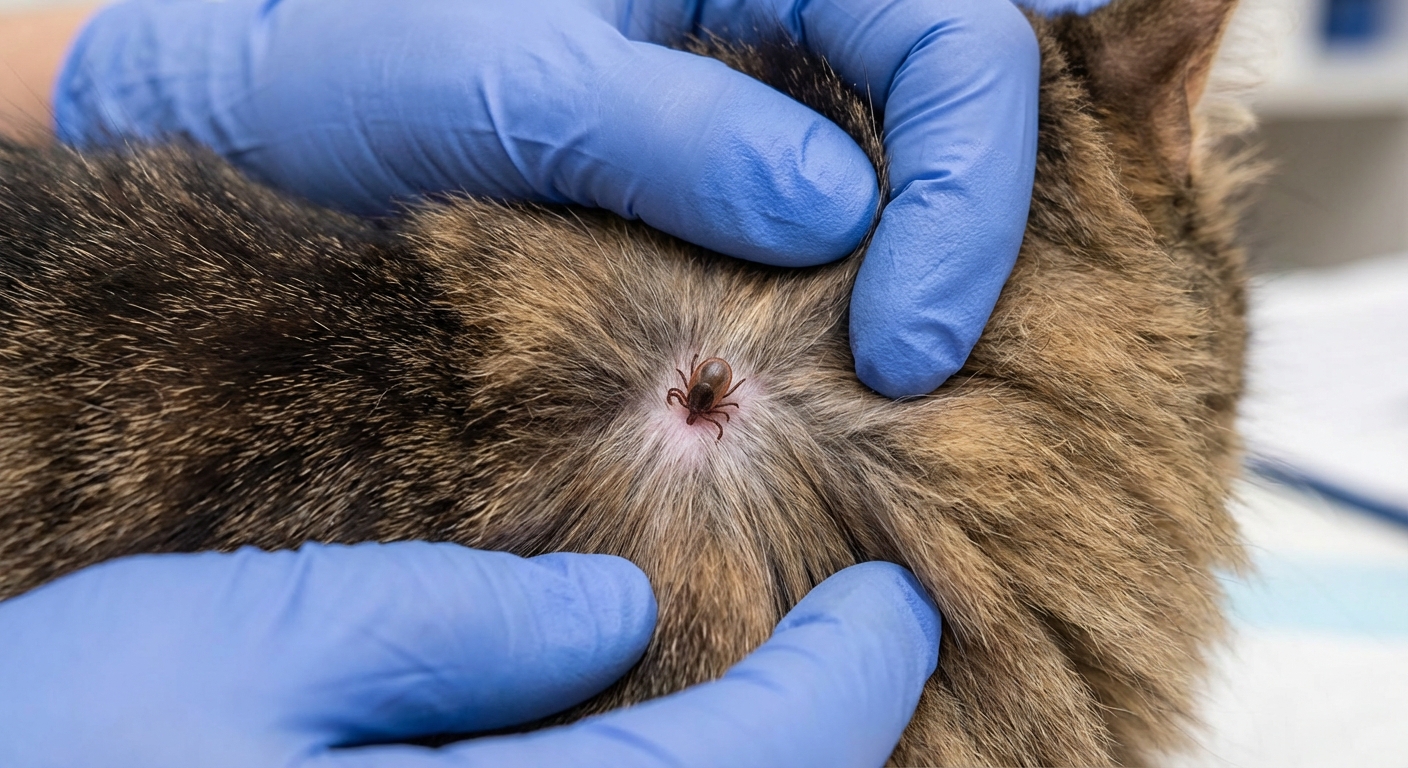
Is it definitely a tick? A tick is usually a small, oval parasite attached firmly to the skin. When engorged (after feeding), it can look like a smooth gray or tan “bean” stuck to your cat. Skin tags tend to be part of the skin and do not have legs. If you are not sure, do not pull. Take a clear photo and send it to your vet.
Where ticks like to hide
- Around the head and neck
- Under the collar
- Inside and behind the ears
- Between toes
- In the armpits and groin area
- Under the tail
If your cat goes outdoors, or if you have dogs that go outdoors, tick checks are a smart habit during warm months and anytime wildlife is active.
What you need
Having everything ready makes the process faster and reduces the chance the tick breaks apart.
- Fine-tipped tweezers or a tick removal tool
- Disposable gloves (recommended)
- Pet-safe antiseptic (such as chlorhexidine, if you have it) or supplies recommended by your veterinarian
- Small container with a tight lid (or a zip bag) to save the tick
- Flashlight (helpful with dark fur)
- Treats and a towel (for gentle restraint)
Tip from the clinic: If your cat is wiggly, wrap them in a towel like a “kitty burrito” with just the tick area exposed. Calm, steady hands matter more than speed. If your cat is fractious or stressed to the point of scratching or biting, it is safer to let your veterinary team handle it.

How to remove a tick
1) Keep your cat still
Choose a well-lit area. Gently part the hair so you can see where the tick is attached. You want a clear view of where the tick meets the skin.
2) Grip close to the skin
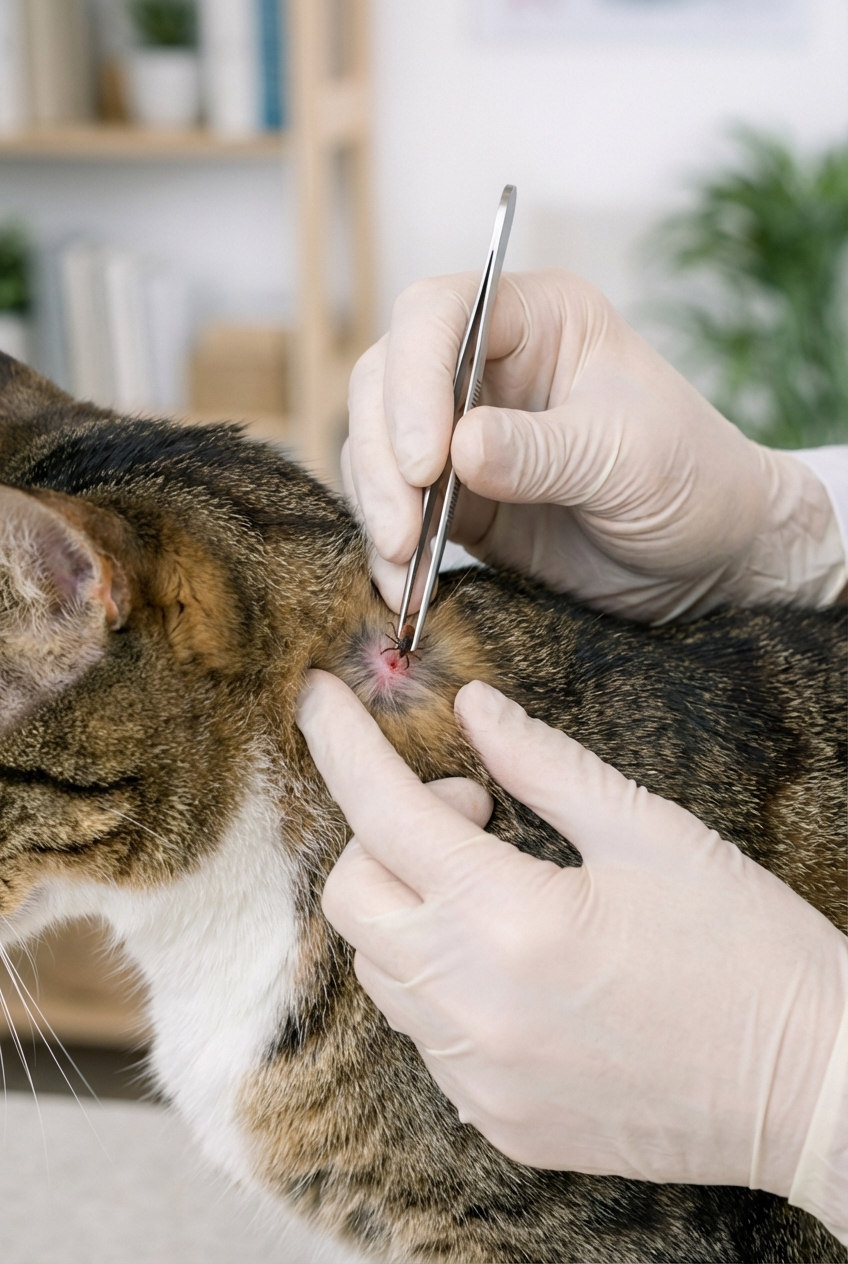
With fine-tipped tweezers, grasp the tick as close to your cat’s skin as possible, right at the mouthparts area. Avoid grabbing the swollen body.
3) Pull up with steady pressure
Pull straight up, slowly and firmly. Do not jerk or crush the tick.
About twisting: With tweezers, straight, steady traction is the go-to method. Some tick removal tools use a specific twist or lever motion. If you are using a tool, follow the package directions closely.
4) Check the bite site
Look at the tick you removed. Ideally, it comes out whole. If you see a tiny dark speck still in the skin, it may be a small piece of mouthpart. If it does not lift out easily with tweezers, do not dig at the skin. Call your vet for guidance.
5) Clean the area
Clean the bite site with a pet-safe antiseptic (your vet may recommend chlorhexidine or dilute povidone-iodine). Rubbing alcohol can be irritating for some cats and is not ideal if your cat is likely to lick the area. If your cat keeps licking or chewing, ask your vet if an e-collar is a good idea.
6) Save or dispose of the tick
If saving: Place the tick in a sealed container or zip bag. You can add a tiny bit of rubbing alcohol to preserve it. If your cat becomes ill later, your vet may want to identify the tick.
If disposing: Seal it in tape, a container, or a bag and throw it away. Do not crush it with your fingers.
7) Wash your hands and reward your cat
Even if you wore gloves, wash hands well. Then give your cat a treat, a snack, or a calm cuddle. Ending on a positive note makes future checks easier.
What not to do
Some old-school advice can irritate the tick, make removal harder, and delay the one thing that helps most: prompt mechanical removal.
- Do not use petroleum jelly, nail polish, essential oils, or other home remedies to try to “smother” the tick.
- Do not burn the tick with a match or lighter.
- Do not squeeze or crush the tick’s body while it is attached.
- Do not soak the tick while it is attached (for example with alcohol). Focus on removing it with tweezers or a proper tool.
Aftercare
It is common to see mild redness at the bite site for a day or two. A small scab can also form.
Try to prevent licking and scratching, and check the spot daily for increasing redness, swelling, pain, or drainage.
Watch for these signs for 2 to 3 weeks
- Lethargy or hiding more than usual
- Reduced appetite
- Acting “off,” feeling unusually warm, or seeming feverish (a true fever is confirmed with a temperature check at a clinic)
- Lameness or stiffness
- Swollen lymph nodes (under the jaw, in front of shoulders)
- Vomiting or diarrhea
- Facial swelling or hives (possible allergic reaction)
If any of these show up, call your veterinarian and mention the tick exposure and the date you removed it.
Call the vet right away
Get veterinary help promptly if:
- You cannot remove the tick completely
- The tick is attached near the eye, inside the ear canal, or on the genitals
- Your cat has multiple ticks or you are finding ticks repeatedly
- The bite site becomes increasingly red, swollen, painful, or starts draining
- Your cat seems weak, unsteady, or has trouble breathing
- Your cat is a kitten, immunocompromised, or has chronic illness
Prevent ticks on cats
Tick prevention is much easier than tick removal. The best plan depends on your cat’s lifestyle, your region, and whether there are dogs in the home.
Use vet-approved products for cats
Important: Never use a dog tick product on a cat. Some dog products contain permethrin, which can be toxic and even life-threatening to cats.
Ask your veterinarian which feline-safe product fits your cat best. Also note that not all flea preventives cover ticks, so check the label and your vet’s guidance. Options for tick coverage in cats can be more limited than in dogs, which is another reason to get a vet recommendation.
Do regular tick checks
Especially after outdoor time or if your cat likes to lounge on porches, near tall grass, or around shrubs. If you find one tick, it is smart to check your other pets, too.
Make your yard less tick-friendly
- Keep grass trimmed and remove leaf litter
- Create a barrier between wooded areas and play spaces
- Discourage wildlife visitors (raccoons, opossums, deer)

Quick FAQ
Should I get the tick tested?
In some areas and situations, your veterinarian may recommend tick identification or testing, especially if your cat develops symptoms. Policies vary by clinic and region, so it is worth asking.
What if the tick’s head is stuck?
It is usually mouthparts, not the whole “head.” If it is tiny and your cat is comfortable, it may work its way out like a splinter. If the area is inflamed, painful, or you are unsure, call your vet. Avoid digging, which can cause infection.
Can indoor cats get ticks?
Yes. Ticks can hitch a ride on dogs, people, or even on clothing after yard work or hiking.
The bottom line
Removing a tick from your cat is very doable with the right technique: grip close to the skin, pull straight up with steady pressure, clean the site with a pet-safe antiseptic, and monitor your cat afterward. Then, focus on prevention so you are not repeating the experience next weekend.
If you want help choosing a safe tick preventive for your cat, your veterinarian is your best partner. When it comes to parasites, consistency is what protects your cat’s health long-term.