A step-by-step guide to house training an adult dog: rule out medical causes, reset the setup, build a schedule, add a potty cue, supervise, and clean accide...
Article
•
Designer Mixes
How to Potty Train an Adult Dog

Shari Shidate
Designer Mixes contributor
Potty training an adult dog can feel intimidating, especially if you have adopted a rescue with an unknown history. But here is the encouraging truth: adult dogs can absolutely learn new bathroom habits. In fact, many adults learn quickly because they often have better bladder control than puppies. Like any training, how fast it clicks depends on the individual dog, their past routines, and how consistent the household plan is.
As a veterinary assistant in Frisco, Texas, I have seen this work again and again. The secret is not punishment or perfection. It is a simple, consistent plan that makes the right choice easy for your dog.
This article offers general training guidance and is not a substitute for veterinary care. If you are worried your dog is sick or in pain, call your veterinarian.
Before You Start: Rule Out Medical Causes
If an adult dog is having accidents, it is not always a training issue. Pain, urinary problems, and digestive disease can make even a well-trained dog unable to hold it. Before you assume it is behavior, watch for these red flags and call your veterinarian if you notice them:
- Frequent urination or very small amounts at a time
- Straining, crying, or visible discomfort when urinating or defecating
- Blood in urine or stool
- Sudden increase in thirst
- Diarrhea, soft stool, or urgent bowel movements
- Accidents that start suddenly in a previously house-trained dog
Common medical causes include urinary tract infections, bladder stones, parasites, dietary intolerance, arthritis (difficulty getting outside), diabetes, kidney disease, Cushing’s disease, and cognitive changes in seniors. Treating the underlying condition often makes training dramatically easier.
How Adult House Training Works
House training is really two skills:
- Where to go: outside, on a specific surface, in a specific spot
- How to communicate: how your dog tells you they need to go out
When accidents happen, it usually means one of these is missing: supervision, a predictable schedule, or a clear reward for going in the right place.
What gets rewarded gets repeated. Your goal is to make eliminating outside feel like a win every single time.
Set Up Your Home for Success
1) Pick a potty spot
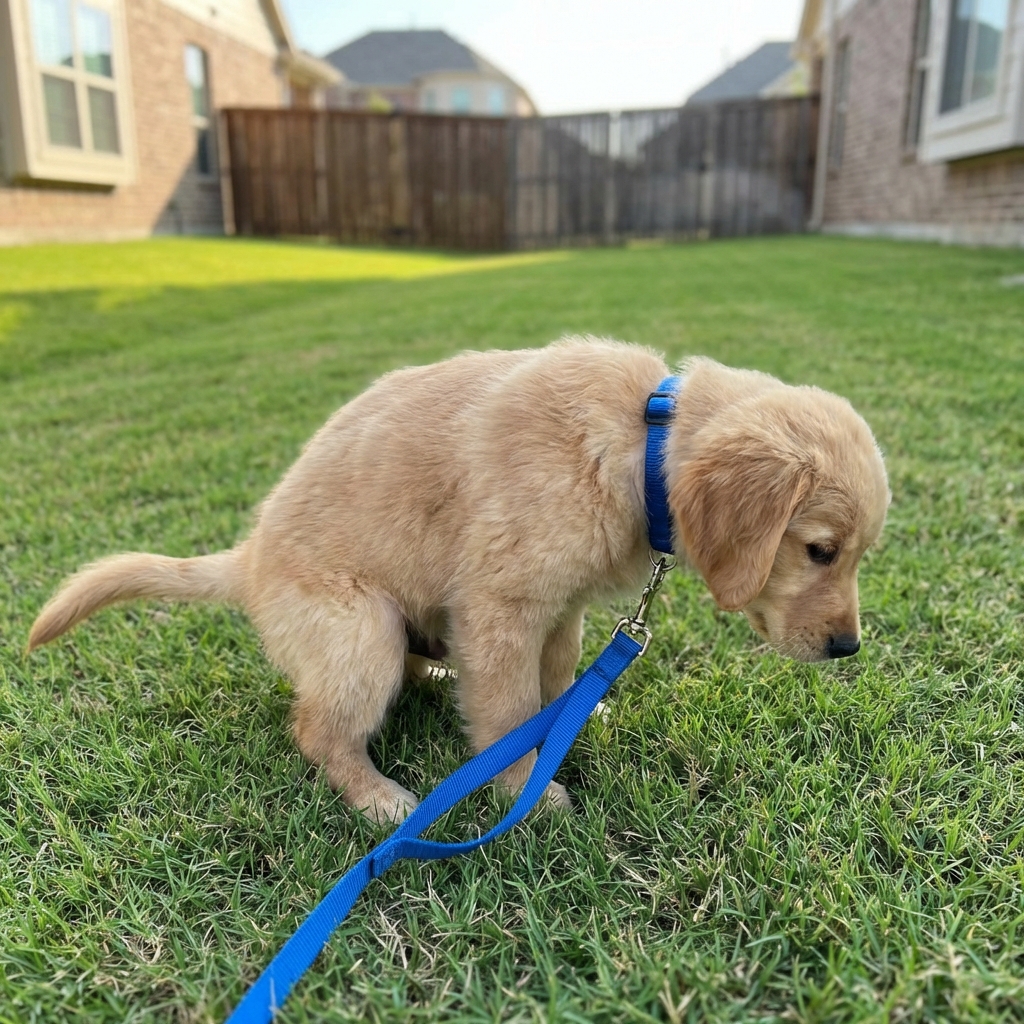
Choose one outdoor area and take your dog there on leash at first. The scent helps trigger the behavior and builds a routine.
2) Tighten supervision for 2 to 3 weeks
Until your dog is reliable, assume they will have an accident if they have freedom. That is not pessimism, it is prevention.
- Leash tethering: clip the leash to you indoors so you notice early signals
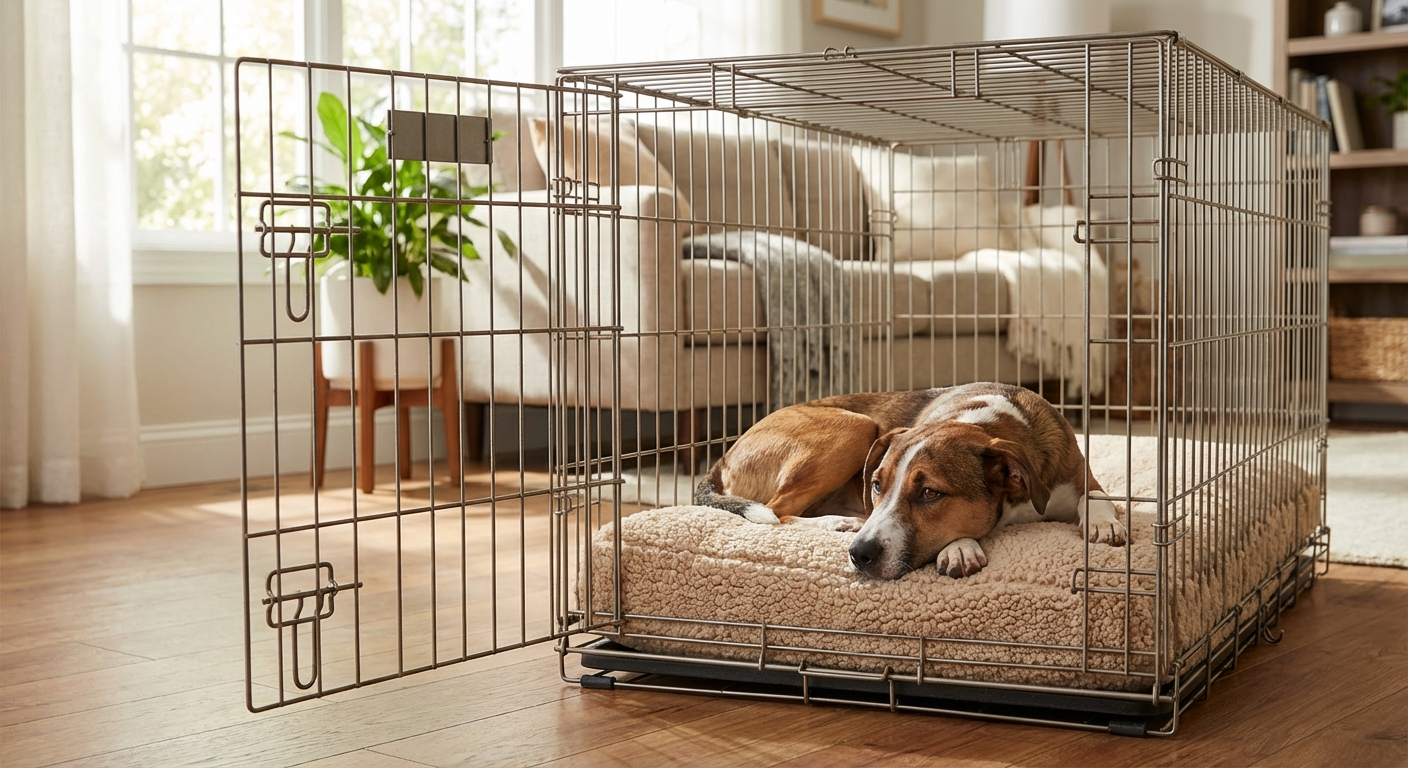
- Crate or pen: use for short periods when you cannot watch closely
- Baby gates: limit access to carpeted areas or distant rooms
Crates work best when they are the right size (enough room to stand, turn, and lie down comfortably). A crate should never be used for punishment. Keep crate time reasonable and humane, and do not ask your dog to hold it longer than they comfortably can. When in doubt, add more potty breaks.
3) Use an enzyme cleaner
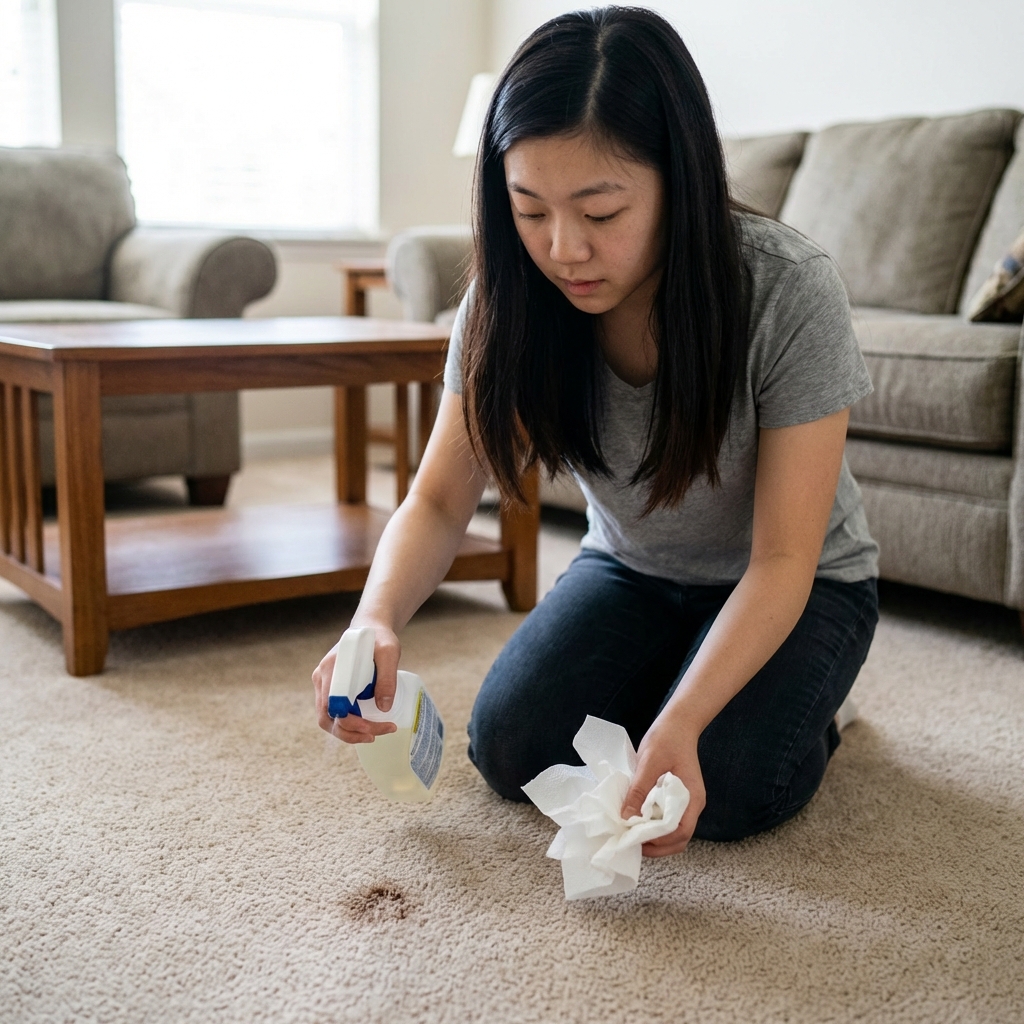
Regular cleaners often leave behind scent that tells your dog, “This is a bathroom.” Use an enzymatic pet stain cleaner on every accident, even if you think you got it all. Blot first, then apply the product as directed (many require soaking the area and time to work). Avoid ammonia-based cleaners, which can smell similar to urine to dogs.
The Schedule That Works
Adult dogs thrive with predictability. For the first couple of weeks, use a schedule that prevents accidents rather than reacting to them.
Take your dog out:
- First thing in the morning
- After every meal (within 10 to 20 minutes)
- After naps
- After play sessions or excitement
- Before bedtime
- Every 2 to 4 hours in between, depending on the dog
If your dog is having accidents, shorten the time between breaks. It is better to do more short trips outside now than to clean up accidents and slow the learning process.
Use a potty cue
Choose a simple phrase like “Go potty” or “Do your business.” Say it once, calmly, as your dog starts to sniff. When they go, praise and reward.
Reward right away
Timing matters. Give a small, high-value treat immediately after they finish, ideally within a second or two. (A high-value treat is something your dog rarely gets and truly loves, like tiny soft training treats or a small piece of cooked chicken.) Then add a minute or two of freedom outside (sniffing and walking) so eliminating outside does not feel like the end of fun.
What to Do on Potty Trips
Keep the first minutes boring and focused.
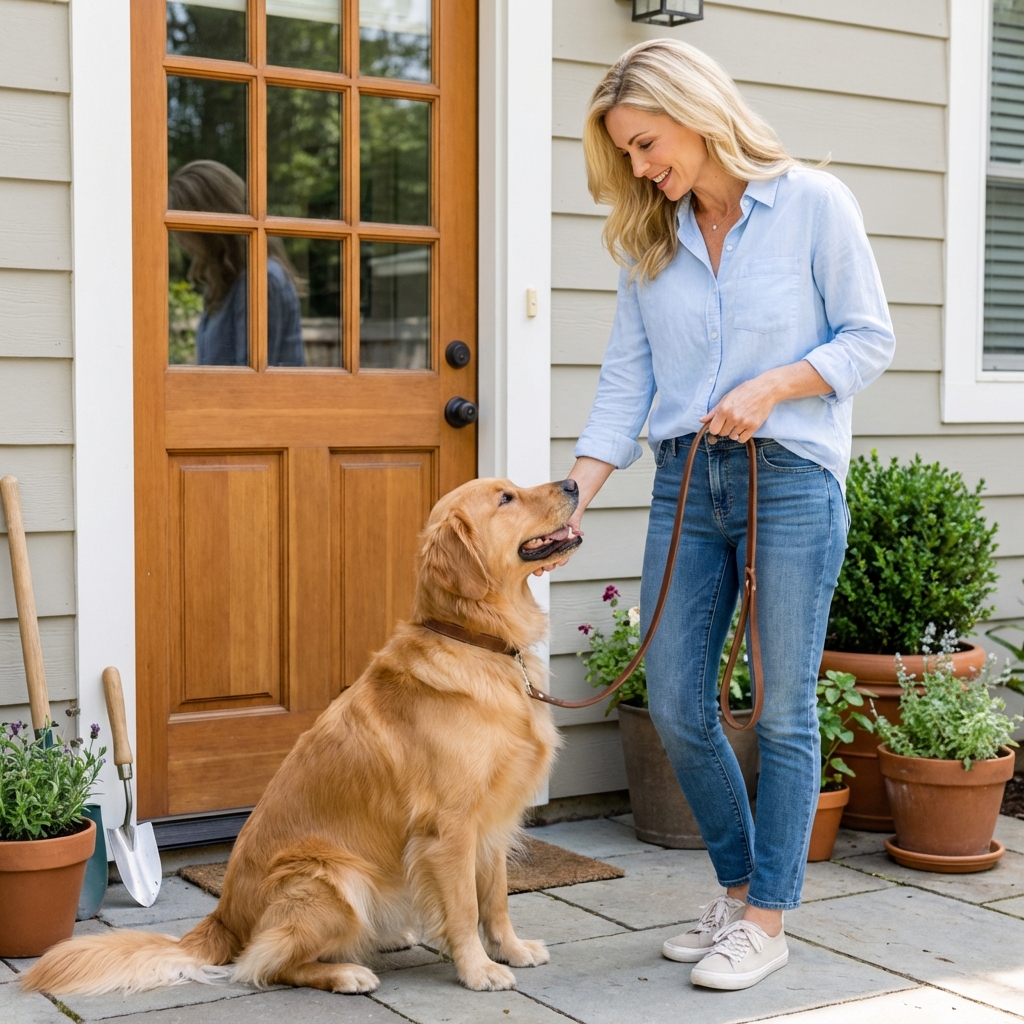
- Go out on leash
- Stand in the potty area and stay quiet
- Give a few minutes to try (many dogs do well with about 5 minutes, but adjust as needed)
If your dog goes, reward and praise. If your dog does not go, return indoors and supervise closely, then try again soon. Many households find 15 to 30 minutes works well, but you can shorten that window if your dog is clearly trying to go or has been having frequent accidents.
This approach prevents the common pattern where a dog plays outside, comes in, and then eliminates on the rug.
Signs Your Dog Needs Out
Some dogs make it obvious. Others are very subtle. Watch for:
- Suddenly leaving the room
- Intense sniffing of floors or circling
- Pacing, whining, or looking at you repeatedly
- Heading toward a door or shadowing you
- Restlessness during crate time
If you see these signals, treat them like an emergency and head out right away.
Accidents: What to Do
If you catch your dog in the act
- Interrupt gently with a calm “Outside”
- Take them out immediately to the potty spot
- If they finish outside, reward
If you find it after the fact
Just clean it thoroughly with an enzyme cleaner. Your dog cannot connect later punishment to a past accident, and scolding often creates hiding behaviors, like eliminating behind furniture.
Instead, use accidents as information:
- Was the schedule too loose?
- Was your dog unsupervised?
- Did you miss a signal?
- Did you change food, treats, or routine?
Special Situations
Rescue dogs
Stress can cause temporary digestive upset and frequent urination. Keep your schedule tight, keep your tone calm, and reward generously. Consistency builds confidence.
Dogs used to potty pads
Some adult dogs have been taught to go indoors. You can transition by:
- Moving the pad closer to the door over several days
- Then placing it outside in your chosen potty area
- Gradually reducing pad size until it is gone
Apartment living
Use leash trips and predictable timing. If elevator time makes it hard to get outside quickly, consider a temporary indoor grass patch near the door while training, especially for small dogs or seniors.
Senior dogs
Older dogs may need more frequent breaks due to reduced bladder control or mobility issues. Arthritis can make stairs painful, so talk with your vet about pain management and choose an easy-to-reach potty area.
Marking vs. house-training
Not all indoor peeing is a full bladder accident. Some dogs, especially in multi-dog homes or during big changes, may urine mark. Marking is often smaller amounts, sometimes on vertical surfaces (walls, furniture), and it may happen even when a dog can hold their bladder for normal outings.
Management still matters (supervision, enzyme cleaning, and frequent trips outside), but marking may also benefit from a conversation with your veterinarian about medical causes, spay and neuter questions, and behavior support. In some cases, tools like belly bands can help prevent damage while you work on the behavior, but they should be used thoughtfully and changed often to keep skin healthy.
Feeding and Predictability
Bathroom habits are easier to train when meals are consistent.
- Feed on a schedule rather than free-feeding, if possible
- Keep water available unless your veterinarian instructs otherwise (do not restrict water as a training method)
- Limit late-night heavy treats if nighttime accidents are happening
Many dogs need to poop shortly after meals and in the morning. A short walk after eating can stimulate normal bowel movements and reduce indoor accidents.
How Long Does It Take?
Many adult dogs show major improvement in 1 to 2 weeks with consistent management. True reliability often takes 4 to 8 weeks, depending on:
- Past learning history
- Stress level
- Medical factors
- How consistent the household routine is
A good definition of reliable is this: your dog has gone several weeks with no accidents while having gradually increased freedom in the home.
If you are stuck after two weeks of solid effort, it is worth checking in with your veterinarian and considering a certified trainer who uses positive reinforcement.
Keeping the Habit (Fading Treats)
In the beginning, reward every successful potty outside. Once your dog is consistently choosing the right spot, you can slowly fade treats while keeping praise and the outdoor “bonus time.” Many dogs do best when treats become occasional and unpredictable rather than disappearing overnight.
Quick Checklist
- Vet check if red flags are present
- Set a predictable potty schedule
- Supervise closely or confine safely
- Take out on leash to one spot
- Use a cue phrase
- Reward immediately after success
- Clean accidents with enzyme cleaner
- Adjust schedule before blaming the dog
With patience and a plan, adult house training becomes less about fixing your dog and more about building trust and communication. You have got this, and your dog can learn it.