House-train your puppy with a proven routine: best potty schedule, crate and confinement tips, reward timing, accident cleanup, door signals or bells, and a ...
Article
•
Designer Mixes
How to Potty Train a Puppy Fast

Shari Shidate
Designer Mixes contributor
Potty training feels like it should come with a manual, and honestly, it kind of does. The fastest path isn't a “secret trick.” It's a simple system: predictable schedule, close supervision, rewards that matter to your puppy, and a calm cleanup plan for accidents.
As a veterinary assistant here in Frisco, Texas, I also want you to know this: many “stubborn” potty training problems are really either a routine problem (timing and access) or a medical problem (like a urinary tract infection, parasites, or digestive upset). We'll cover both so you can move forward with confidence.
Set your puppy up for quick wins
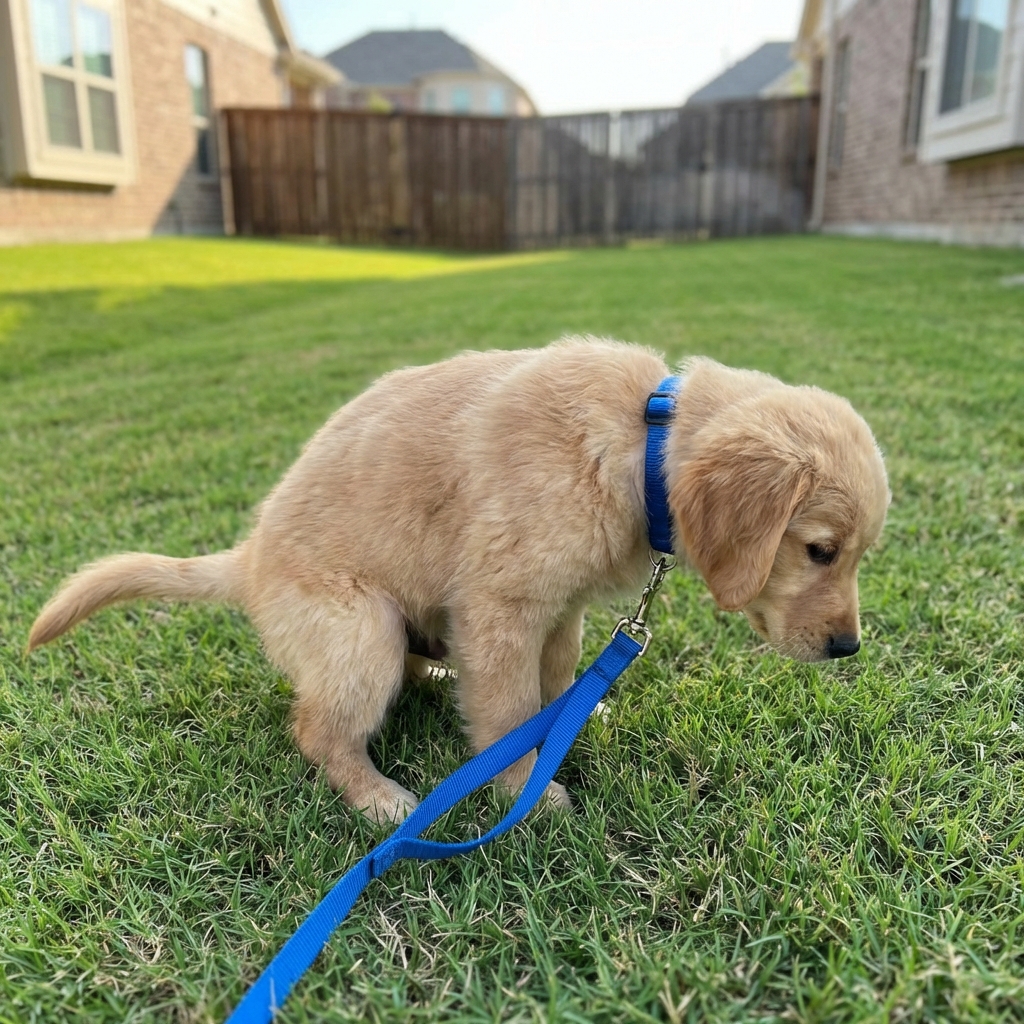
1) Pick one potty spot
Go to the same outdoor area every time. The scent helps your puppy connect the dots faster. Stand still, keep the leash short, and give them 3–5 minutes to finish (a bit longer if your puppy is easily distracted).
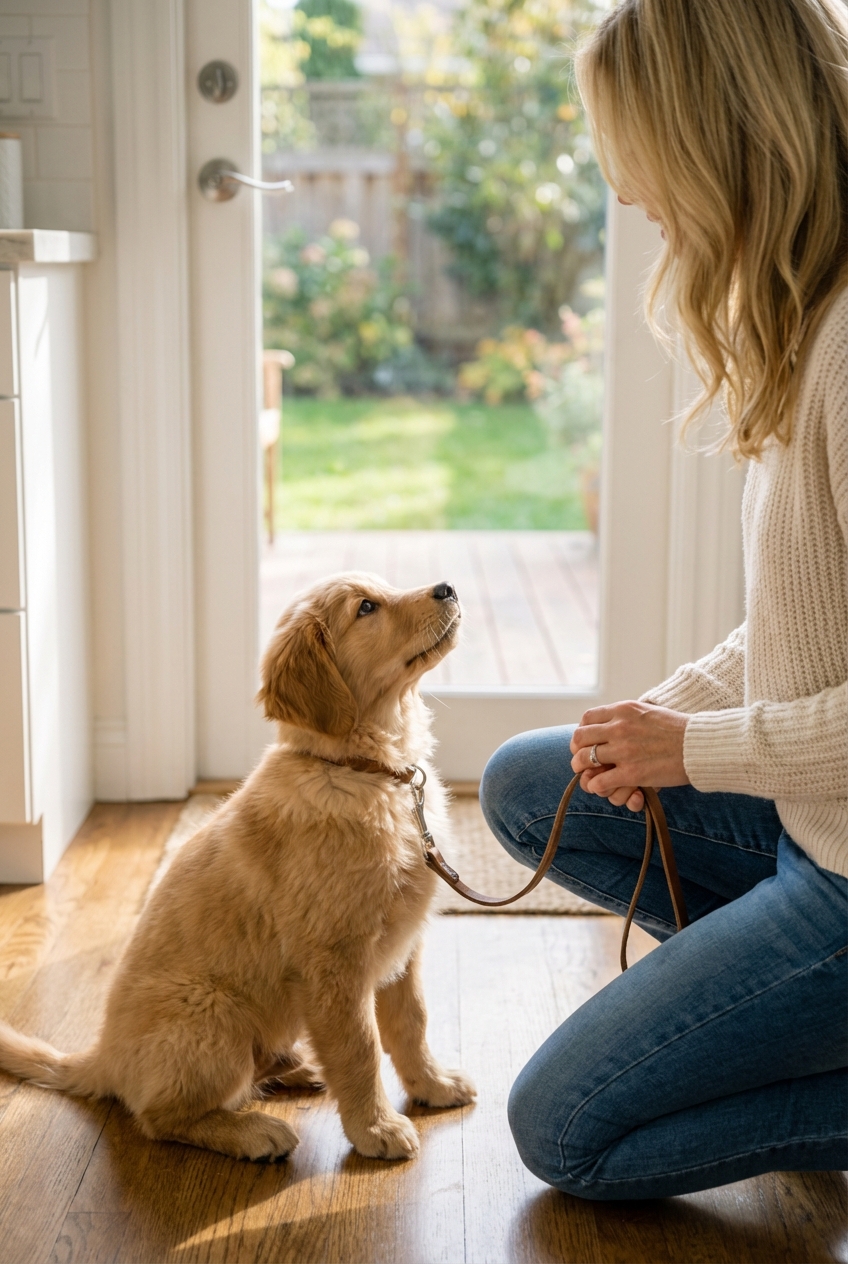
2) Use a simple cue
Choose one phrase like “Go potty.” At first, say it as they start to go so the word pairs with the action. Once they're reliably going in the right spot, you can say the cue when they begin to sniff or circle to help it become more predictive. Don't repeat it over and over. You want the cue to mean something, not become background noise.
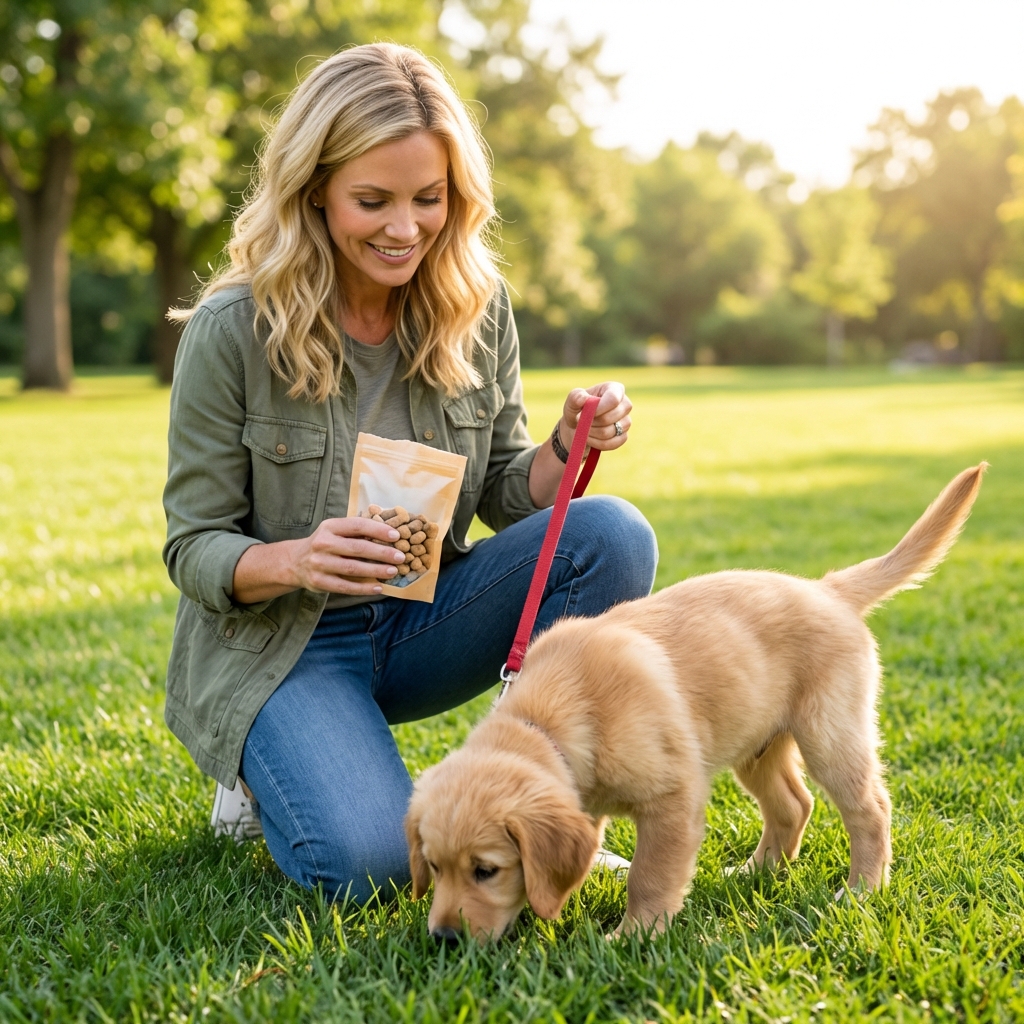
3) Reward like it's your puppy’s paycheck
Reward within 1–2 seconds of finishing. That timing is what makes learning stick. Use tiny, high value treats and calm praise. Save the treat for outdoors so it stays special.
4) Supervision is everything
When your puppy is awake and not actively supervised, accidents are likely. Fast potty training comes from limiting freedom until the habit is strong.
- Leash tethering: Clip the leash to you indoors for a few days so you can catch early signs.
- Playpen or crate: Use safe confinement when you can't watch closely.
- Baby gates: Keep your puppy in the room with you.
A schedule that works for most puppies
Puppies don't generalize well. When the day is predictable, potty training tends to go faster. Use this schedule as your default, then adjust based on your puppy’s age, size, and patterns.
Take your puppy out:
- Immediately after waking up
- After eating or drinking (often within 5–20 minutes)
- After playtime or excitement
- After training sessions
- After coming out of the crate
- Before bedtime
- At least every 1–2 hours for young puppies when awake
If your puppy doesn't go
Keep it boring. Wait a couple of minutes, then bring them back inside and put them in the crate or pen for 10–15 minutes. Try again right after. This one step prevents a lot of “came in and immediately had an accident” situations.
Rule of thumb for bladder holding
Many puppies can hold their bladder for about their age in months plus one hour during the day. Think of this as a rough upper limit, not a promise. Lots of puppies need more frequent trips when they're awake, active, or drinking more.
Nighttime is often easier because puppies sleep. Still, set a realistic alarm if your puppy is very young or having frequent nighttime accidents.
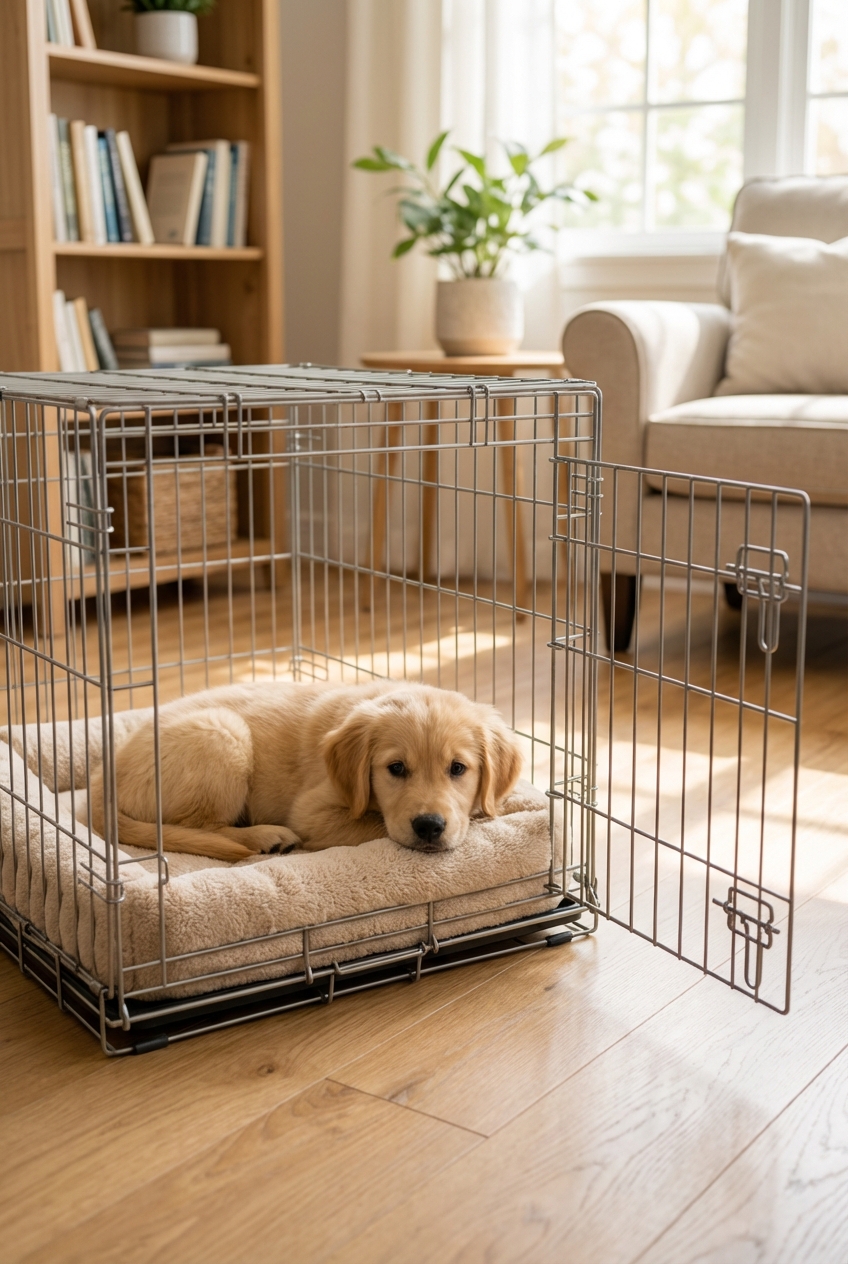
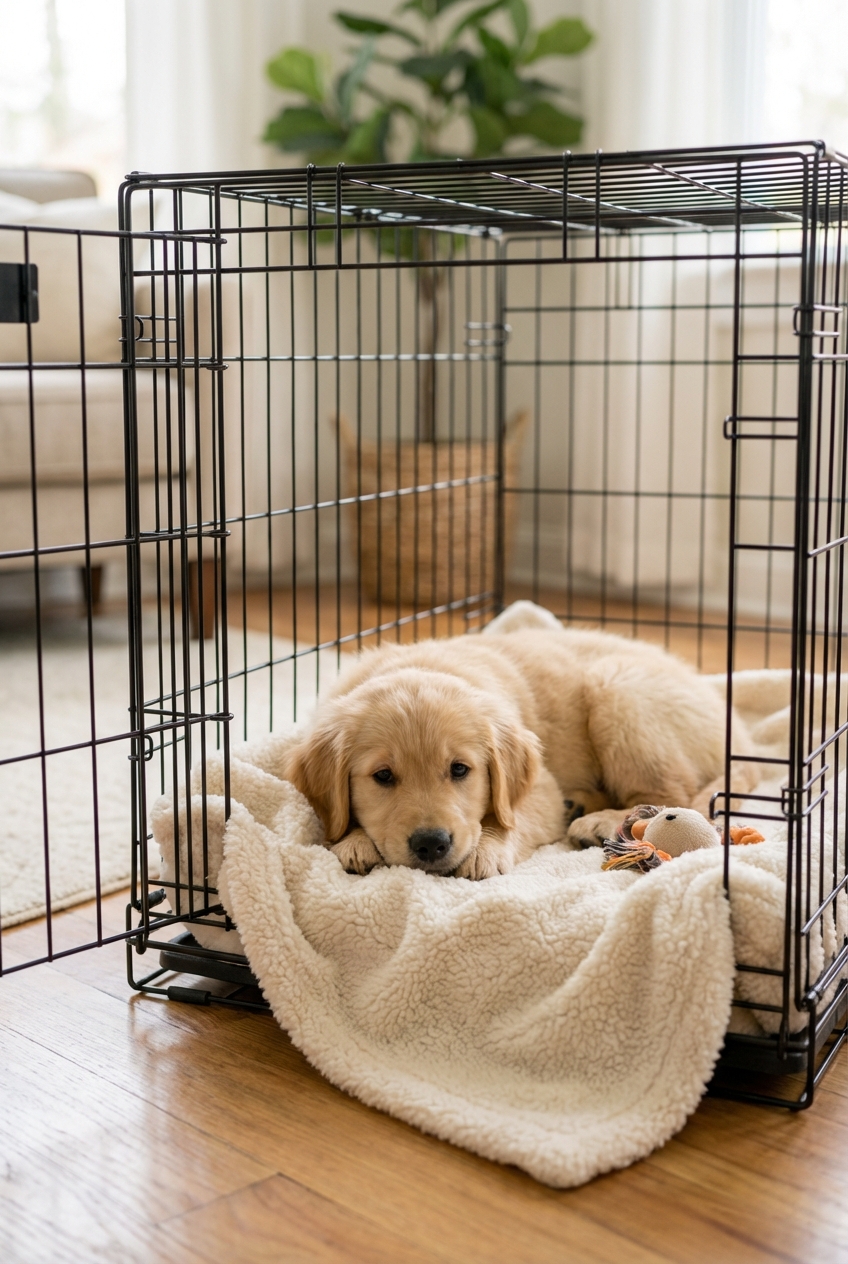
Crate training for potty training
A crate isn't a punishment. It's a management tool that uses a puppy’s natural instinct to keep their sleeping area clean.
Crate basics
- Size: Big enough to stand, turn around, and lie down. Not so big they can potty in one corner and sleep in another.
- Comfort: Add a safe pad if your puppy doesn't chew it. If they shred bedding, go simple until chewing improves.
- Routine: Potty break first, then crate time. Potty break immediately after coming out.
If your puppy cries in the crate
First, confirm they've recently pottied. Then give them a chance to settle. If crying escalates, take them out calmly for a quick potty attempt with no play. If they go, reward and return to the crate. If they don't go, back to the crate. This prevents “crying = fun time” while still meeting their needs.
Handle accidents without losing progress
Accidents are information, not a reason to scold. Punishment can make puppies hide and potty behind furniture, which makes training take longer.
What to do in the moment
- If you catch them starting, calmly say “Outside,” pick them up or leash them, and go straight to the potty spot.
- If they finish outside, reward. If they already finished inside, just clean thoroughly and move on.
Clean like a pro
Use an enzymatic cleaner made for pet urine and follow the label instructions (including dwell time). Regular cleaners can leave behind scent markers your puppy can still detect, which invites repeat accidents.
Why accidents are still happening
Timing is off
If accidents happen at similar times, that's your new potty break time. Set an alarm and beat the accident by 10–15 minutes.
Too much freedom too soon
If your puppy is roaming the house, it's commonly too early. Go back to tethering, gates, and a smaller area for a few days.
They don't understand “outside only” yet
Many puppies will potty outside and still potty inside if they have to go again. That's not stubbornness. That's learning in progress. Keep rewards outdoors and keep supervision tight indoors.
Poop can be trickier
Some puppies are more predictable with poop than pee, and some are the opposite. Many will need to poop shortly after meals, after a big play session, or first thing in the morning. Watch for sudden pacing, intense sniffing, or a quick squat, then move fast and head to the potty spot.
Medical causes to rule out
Contact your veterinarian promptly if you notice:
- Straining to urinate, frequent small pees, or sudden accidents that are new for your puppy
- Blood in urine or stool
- Diarrhea lasting more than 24 hours, or sooner in small puppies, or anytime it's paired with vomiting, lethargy, weakness, or refusal to drink
- Excessive thirst or increased urination
- Accidents in a previously trained puppy
- Foul-smelling urine, genital licking, or obvious discomfort when urinating
Urinary tract infections, intestinal parasites, diet-related stomach upset, and even stress or big routine changes can all look like “bad potty training.” Getting the health piece right saves you a lot of frustration.
Apartment and indoor potty options
If you live in an apartment or have limited outdoor access, you can still potty train successfully. The key is consistency and being intentional about your long-term goal.
Using puppy pads
- Place pads in one spot only.
- Walk your puppy to the pad on leash at first, just like you would outside.
- Reward immediately after they finish.
If you plan to transition to outdoor potty later, start moving the pad closer to the door every few days, then outside to a balcony or patio area if possible.
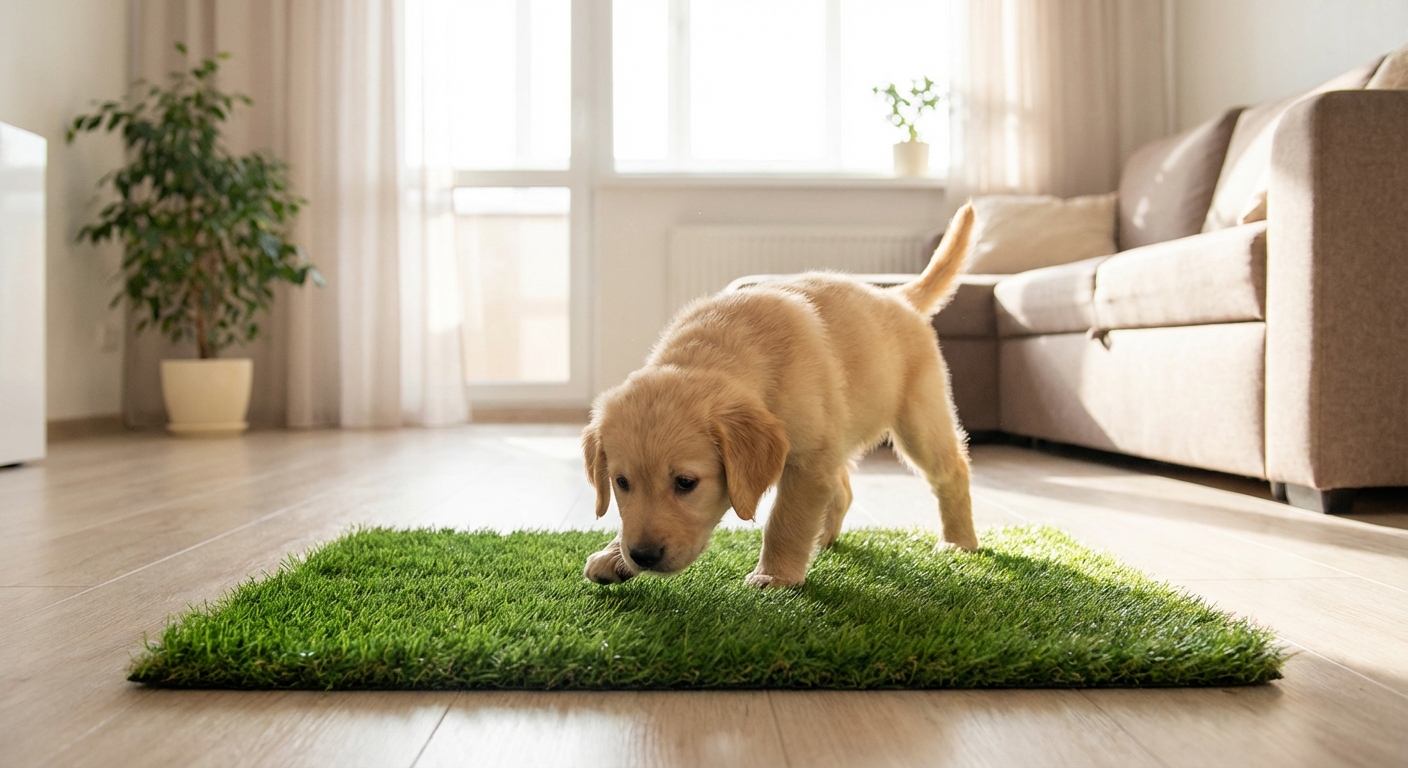
Grass patches
Many puppies learn faster with a real grass patch because the texture and scent are closer to outdoors. Keep it clean and place it in a consistent location.
A simple 7-day plan
If you want a clear plan, follow this for one week. Most families see major improvement when they commit to it.
Days 1–2: Reset
- Supervise 100% when awake
- Potty break every 60–90 minutes when awake
- Reward every outdoor potty
- Crate or pen when you can't watch
Days 3–5: Build the habit
- Keep the same potty spot and cue
- Start noticing your puppy’s signals (sniffing, circling, wandering away)
- Gradually stretch breaks by 10–15 minutes if they're staying clean
Days 6–7: Add a little freedom
- Give 5–10 minutes of supervised freedom after a successful potty
- If accidents return, reduce freedom again and tighten the schedule
When potty training is “done”
Most puppies aren't truly reliable in the whole house for a while. A good goal is 2–4 weeks with no accidents in a specific area before expanding access. Think of it like earning privileges.
Also, don't panic if you see a brief setback during teething, growth spurts, or adolescence. It's common, and it usually means you need a short reset on supervision and schedule.
Be patient with the process and firm with the routine. Your puppy isn't giving you a hard time, they're having a hard time learning a brand-new skill.
If you want, I can help you tailor a schedule based on your puppy’s age, breed mix, feeding times, and your workday. A few small tweaks often make potty training dramatically faster.