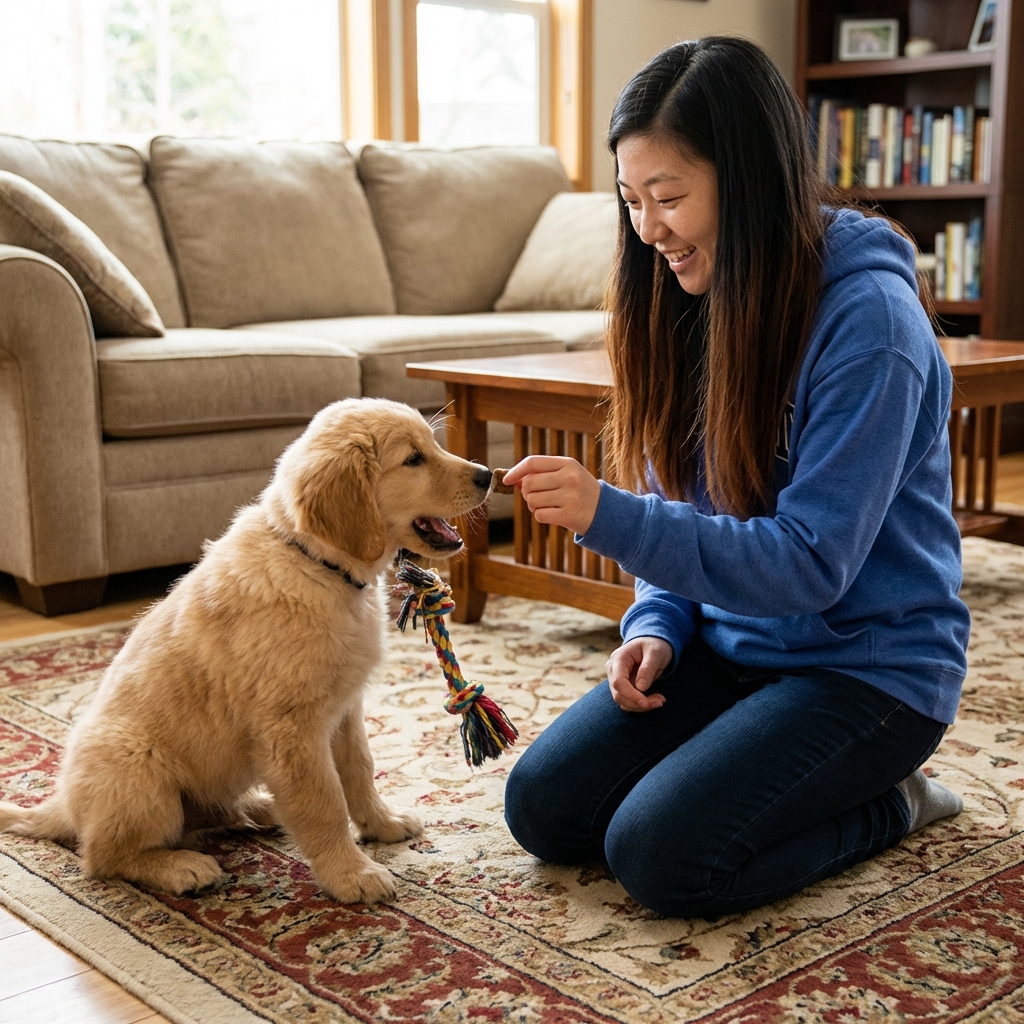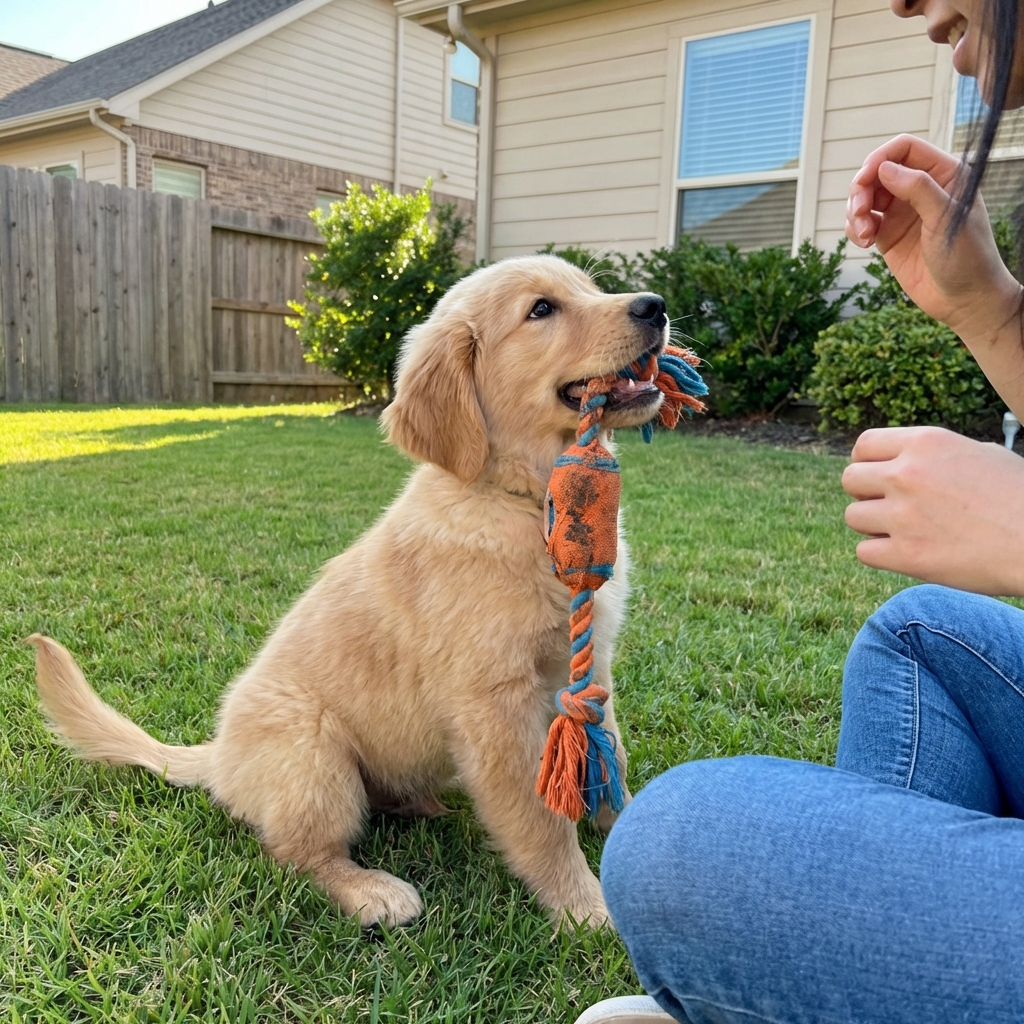
Puppy biting is usually normal. Learn why it happens and how to reduce it fast with redirects, reverse time-outs, calm breaks, naps, enrichment, and teething...
Article
•
Designer Mixes
How To Play With A Puppy

Shari Shidate
Designer Mixes contributor
Puppies learn with their whole bodies. Play is how they practice bite control, build confidence, and figure out how to live politely with humans. The best play sessions are short, safe, and structured so your puppy has fun without getting overstimulated.
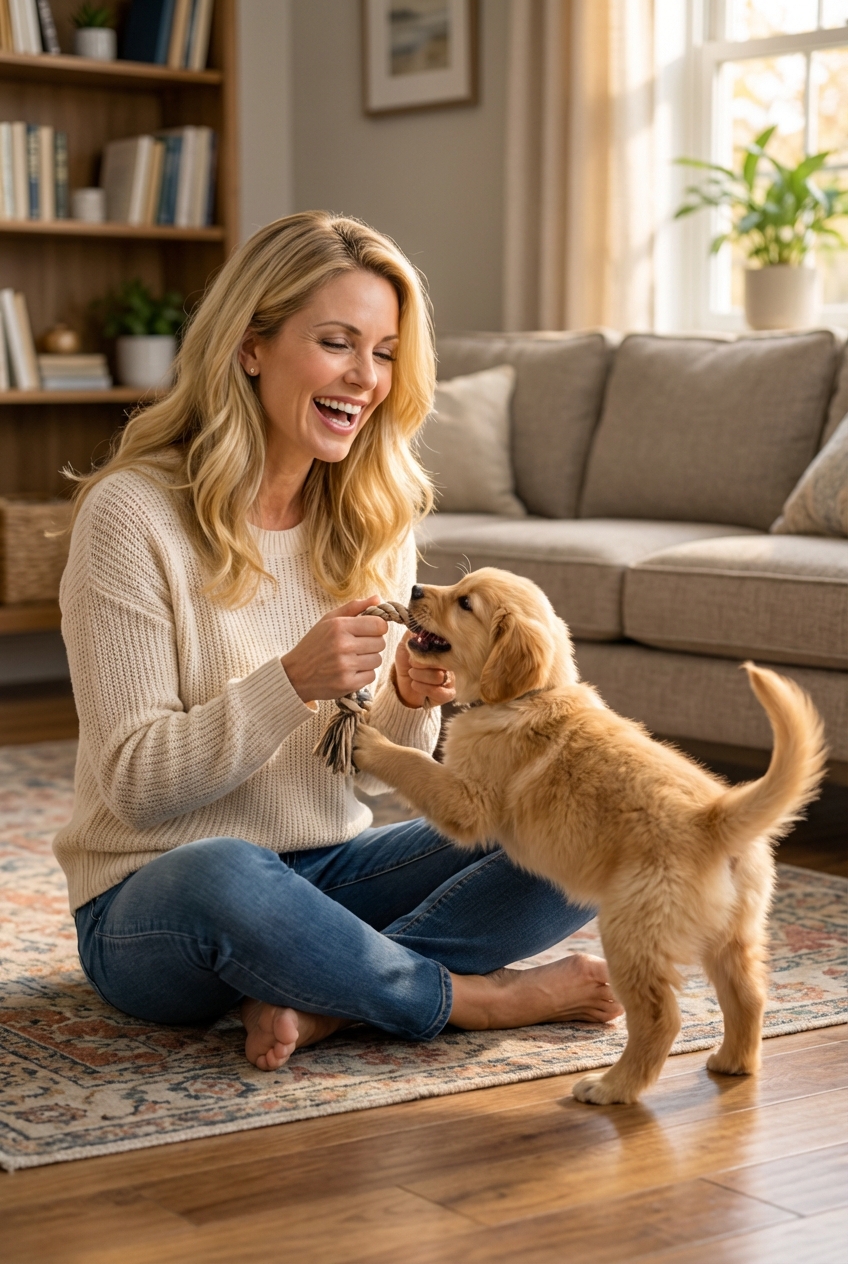
As a veterinary assistant, I also love play because it is sneaky health care. It supports healthy weight, joint development, brain growth, and it helps prevent problem behaviors that often come from boredom. Every puppy is a little different, so adjust the games and the session length for your puppy’s age, breed, and energy.
What your puppy needs from play
- Gentle movement: short bursts of activity with plenty of breaks.
- Brain work: sniffing, searching, and learning games are tiring in a good way.
- Safe chewing: puppies naturally mouth and chew, especially during teething.
- Social learning: polite interactions with you, your family, and carefully chosen dogs.
A helpful rule: play should leave your puppy relaxed and satisfied, not frantic and nippy.
Quick pre-play safety check
Choose the right space
- Use a non-slip floor or place a rug down to help reduce slips and awkward strain on growing joints.
- Pick up strings, socks, kids’ toys, and anything small enough to swallow.
- Keep play away from stairs and high furniture to reduce fall risk.
Use puppy-safe gear
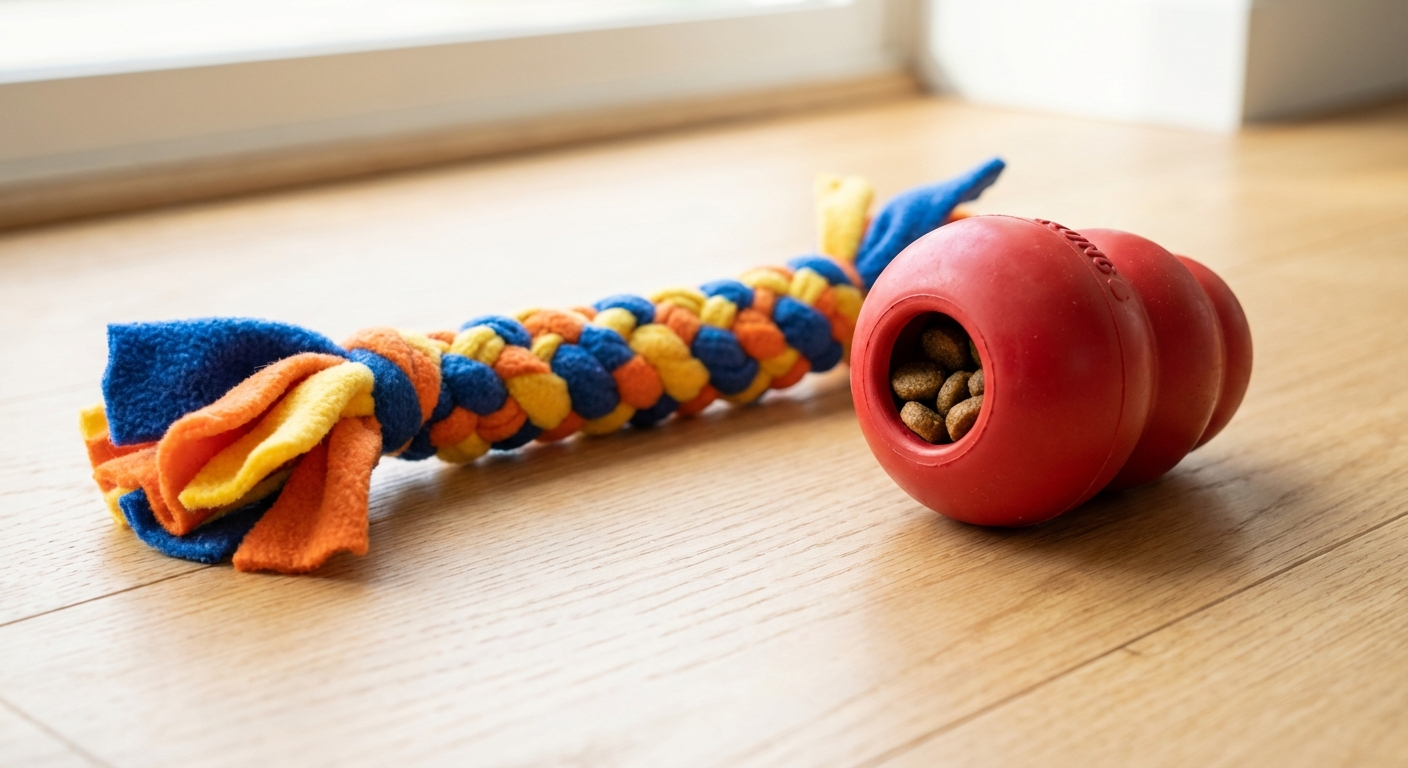
- Tug toy: soft fleece or rubber, long enough to keep teeth off hands.
- Ball or fetch toy: large enough not to lodge in the throat.
- Food puzzle: slow feeder, snuffle mat, or a stuffed rubber toy.
Quick chew safety reminder: supervise chews, skip cooked bones, and choose toys that match your puppy’s size and chewing style.
The 10-minute play formula
If you want a simple routine, this one works for most puppies. You can do it once or repeat it a few times a day. Very young puppies may do best with even shorter sessions.
Minutes 1 to 2: sniff and warm up
Toss a few pieces of kibble or treats in the grass or on a snuffle mat. Sniffing can help lower stress and bring arousal down so your puppy can focus.
Minutes 3 to 6: interactive play (tug or chase)
Use a toy, not your hands. Keep movements smooth and low to the ground. For tug, let your puppy “win” sometimes and restart the game to keep it fun.
Minutes 7 to 9: mini training game
Ask for 3 to 5 easy cues such as sit, touch, or down and pay with tiny treats. This teaches your puppy that calm behavior makes good things happen.
Minute 10: cool down and chew
End with a chew or a stuffed rubber toy so your puppy transitions from high energy to settle mode.
Best games to play with a puppy
1) Tug, done the healthy way
Tug is excellent for bonding and confidence. It is also a great alternative to roughhousing with hands.
- Use a cue like “take it” to start.
- Keep the toy level with the puppy’s chest, not up in the air.
- Teach “drop it” by trading for a treat, then restart the game.
- Stop immediately if teeth touch skin. Freeze, say “oops,” and offer a toy instead. Resume when your puppy is calm.
2) Find-it (a brain game that tires them out)
Hide treats behind a chair leg, under a cup, or in a snuffle mat. Start easy and build difficulty.
3) Fetch, but keep it gentle
Many puppies love chasing, but lots of repetitive, high-impact fetching is not ideal for developing joints, especially on hard or slippery surfaces or with sharp turns and jumping. Do a few tosses, then pause for a sniff break. If you have a large breed puppy or a puppy with orthopedic concerns, ask your vet what is best for your dog.
4) Follow-me and name game
Say your puppy’s name once. When they look at you, mark it with “yes” and reward. Then take a few steps and reward for following. This builds attention that helps in real life.
5) Puppy playdates (carefully selected)
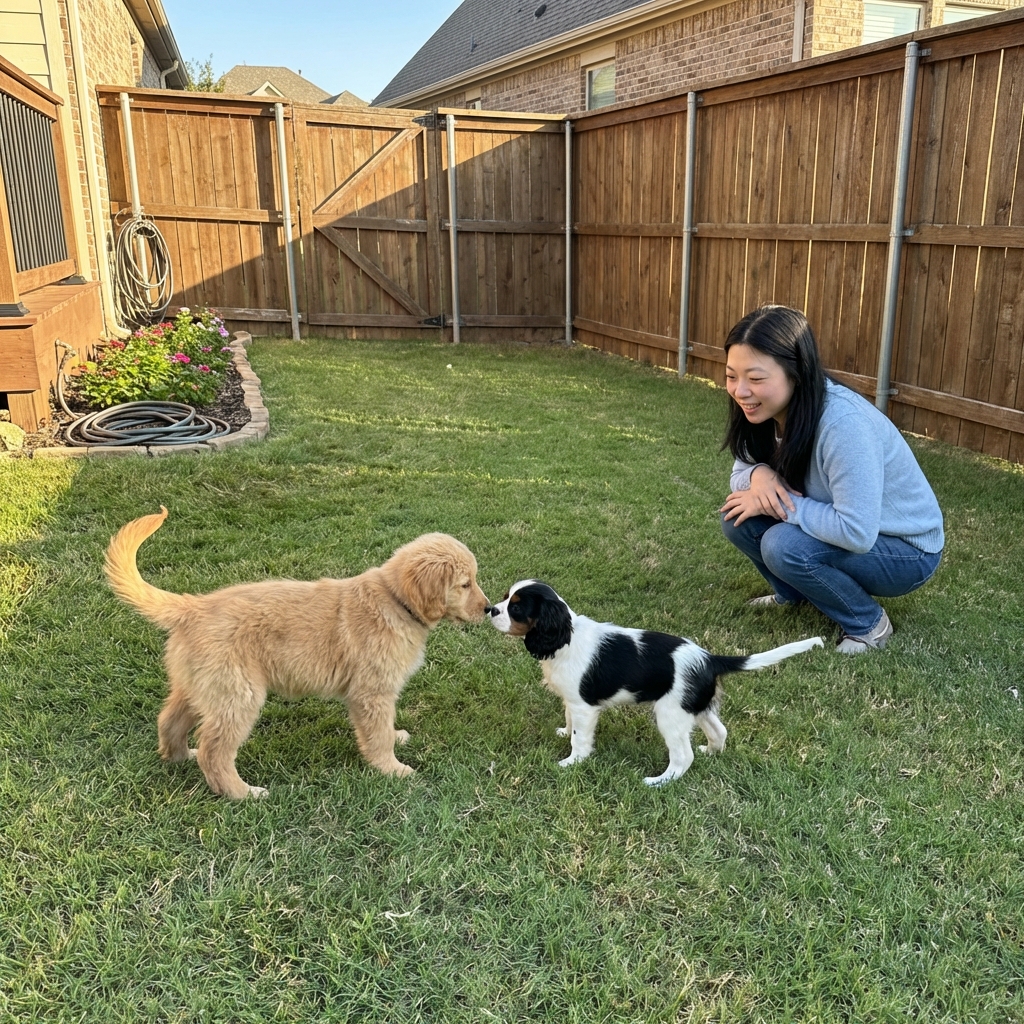
Choose friendly, vaccinated dogs who tolerate puppies well. Ideally, they should also be healthy and on current parasite prevention. Keep sessions short and supervised. Puppies should take breaks every few minutes to prevent overwhelm. A well-run puppy class can also be a great, safer option for structured social time.
How to prevent biting during play
Mouthing is normal, especially during teething. Your goal is to teach your puppy where teeth belong.
- Keep a toy within reach: if your puppy gets mouthy, redirect to the toy.
- Use short time-outs: 10 to 20 seconds of boring pause can reset the brain.
- Reward gentle: quietly praise and treat when your puppy plays without grabbing hands or clothes.
- Watch arousal: if your puppy is getting wild, end play with a chew and a calm space.
If biting escalates suddenly, check for common triggers like overtiredness, hunger, or needing a potty break.
Signs your puppy needs a break
- Zoomies that turn into nipping or barking
- Ignoring cues they normally know
- Hard biting, grabbing clothing, or repeated jumping
- Whale eye, tucked tail, or trying to hide
When you see these signs, switch to a calm activity: sniffing for treats, a lick mat, or a nap in the crate or playpen.
Puppy play do’s and don’ts
Do
- Play on soft footing and keep sessions short.
- Use toys to keep hands safe.
- Mix physical play with sniffing and training.
- End while your puppy is still having fun, not when they melt down.
Don’t
- Forced running, long-distance jogging, or repeated stair games with a young puppy.
- Rough wrestling that encourages biting.
- Laser pointers. They may create frustration, and some dogs can develop compulsive searching behaviors.
- Dog park chaos for puppies who are not ready. It can backfire socially.
When to ask your vet
Play should look joyful and comfortable. Talk with your veterinarian if you notice limping, repeated yelping, reluctance to move, coughing during play, or any sudden change in energy. If your puppy is not fully vaccinated yet, ask your vet what kinds of social play are safe in your area.
Healthy puppy play is a balance: a little movement, a little learning, and a calm finish. That combo builds a confident dog you can live with for years.