Help your indoor cat thrive in a small apartment with smart enrichment: vertical routes, window perches, puzzle feeders, prey-style play, scratch zones, quie...
Article
•
Designer Mixes
How to Make an Indoor Cat Happier Daily

Shari Shidate
Designer Mixes contributor
Indoor cats can live long, safe lives, but “safe” does not automatically mean “satisfied.” As a veterinary assistant in Frisco, Texas, I see the same pattern again and again: when we meet a cat’s daily needs for play, hunting, comfort, and choice, behavior problems often calm down and the whole household feels more peaceful.
The good news is you do not need a huge home or expensive gear. Small, consistent changes create a big quality of life boost for your cat.
Start with the basics: health, comfort, and routine
If your cat seems grumpy, clingy, or suddenly destructive, rule out medical issues first. Pain, dental disease, arthritis, nausea, and urinary discomfort can all look like “bad behavior.” If anything is new or worsening, it is worth a veterinary visit.
In clinic, we regularly see cats labeled “moody” who are actually dealing with sore teeth, stiff joints, or a brewing urinary issue. Getting the health piece addressed first makes every enrichment step work better.
Daily comfort checklist
- Quiet resting spots: Provide at least two cozy sleep options in different rooms so your cat can choose.
- Routine: Cats thrive on predictable feeding and play times.
- Easy access: Older cats do better with low entry litter boxes, ramps to favorite furniture, and non-slip rugs.
Evidence-based note: Feline welfare guidelines (including AAFP resources and indoor cat enrichment programs such as the Ohio State Indoor Pet Initiative) commonly emphasize that predictability and choice can reduce stress and support wellbeing, especially for indoor-only cats.
Vertical space and hiding spots
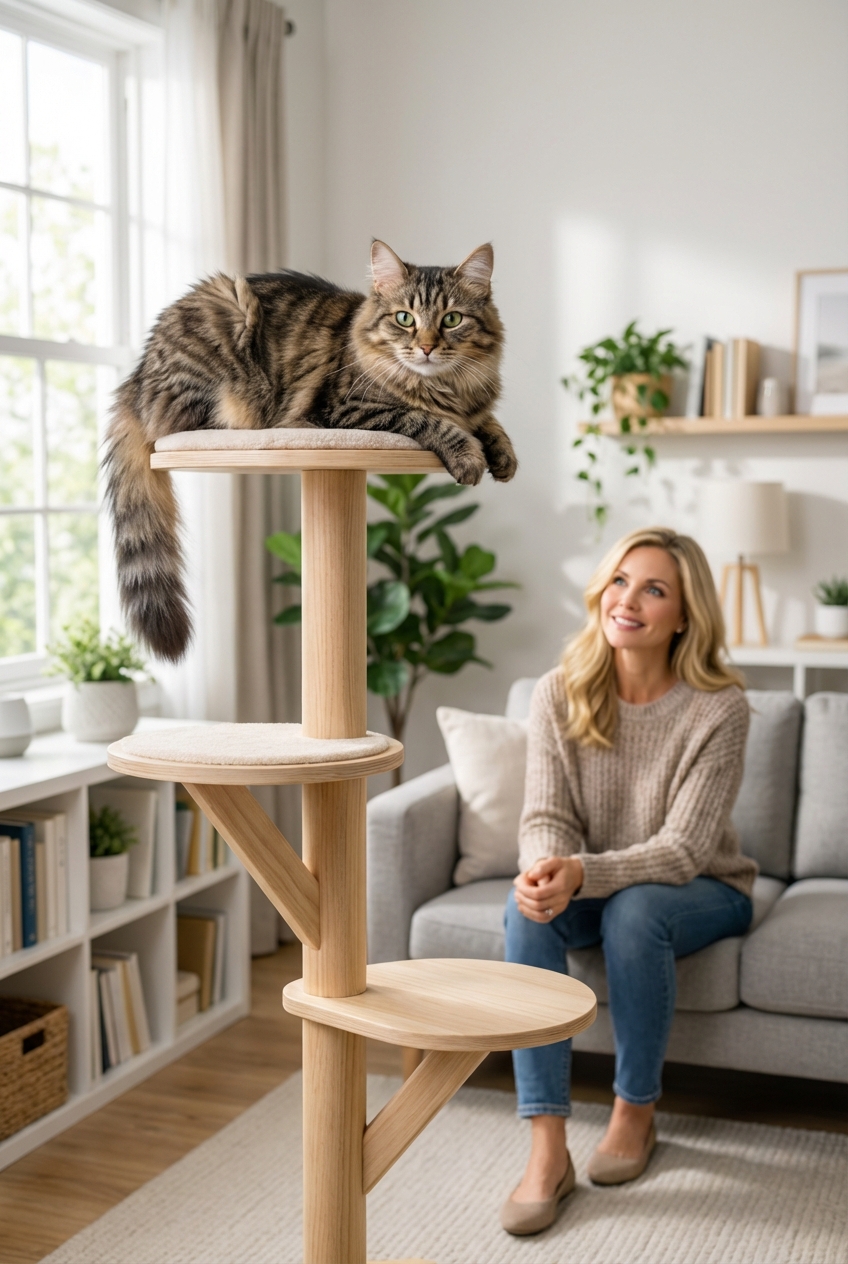
Cats feel safer when they can get up high, observe, and retreat. If we only furnish the floor, we remove a huge part of their natural toolkit for confidence.
Simple upgrades that matter
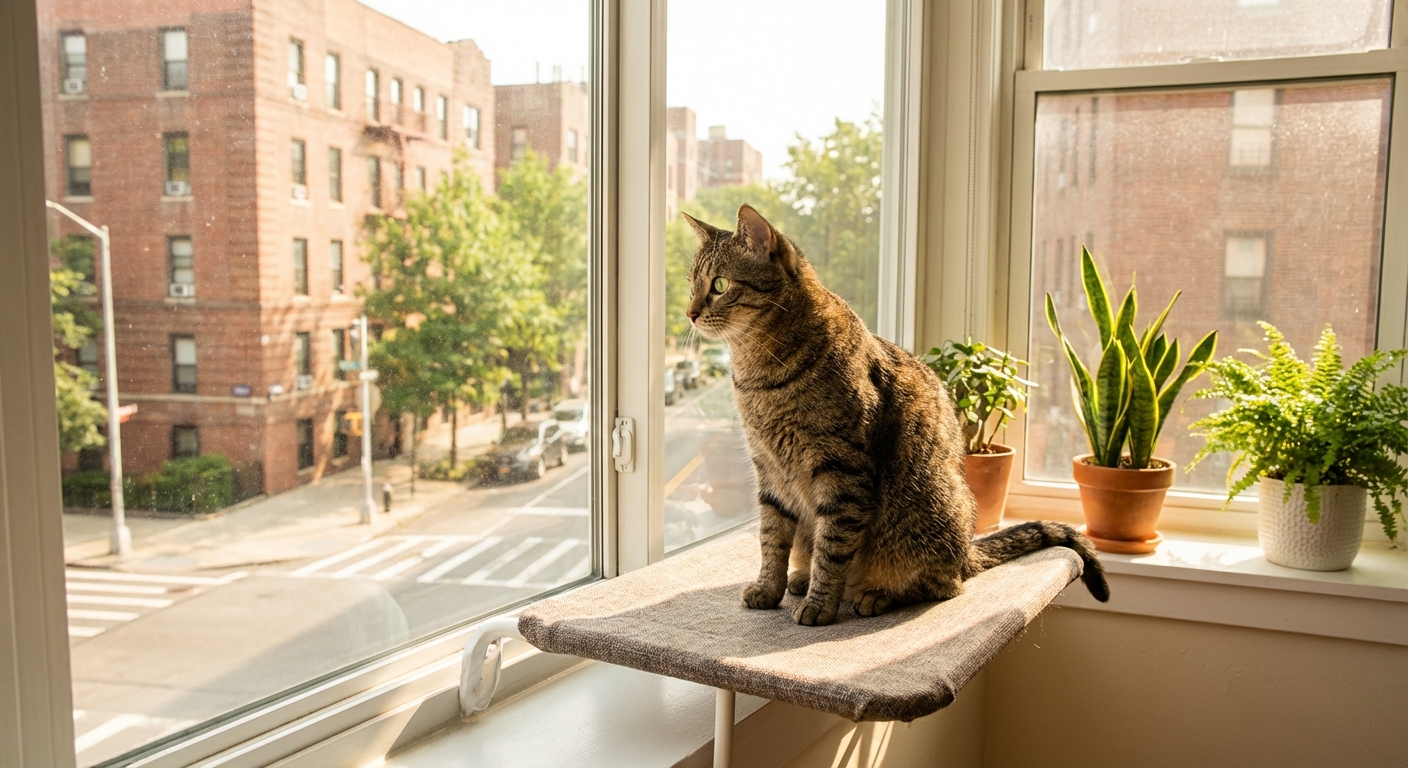
- Vertical space: A sturdy cat tree, a window perch, or wall shelves can become a daily happiness anchor.
- Hiding spots: Covered beds, open boxes, or a carrier left out with soft bedding helps cats decompress.
- Safe room: If you have kids, dogs, or frequent visitors, make one calm space that always belongs to the cat.
Play like a predator
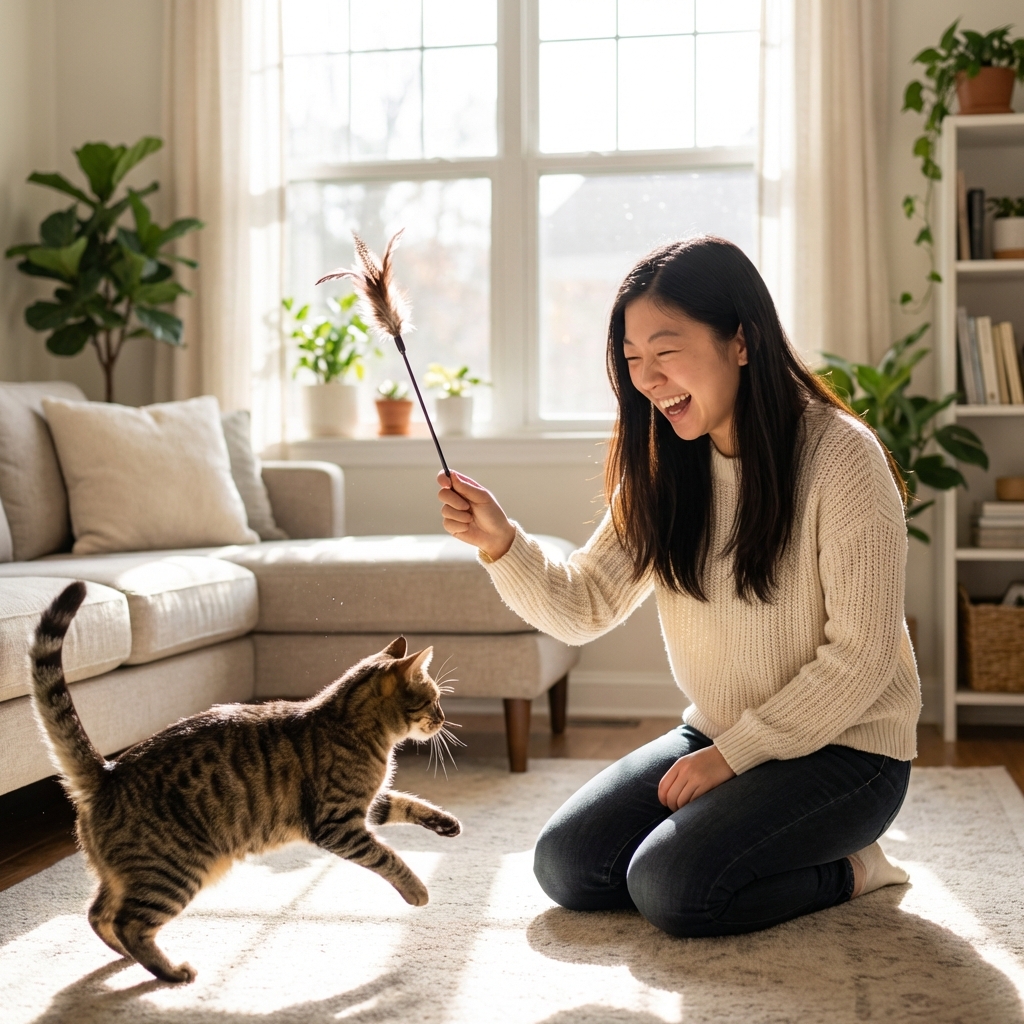
If you only do one thing for your cat, do this. Indoor cats need an outlet for the hunt sequence: stalk, chase, pounce, and capture. Without it, we often see boredom, nighttime zoomies, and attention-seeking behaviors.
A daily play routine that works
- Frequency: 2 to 3 sessions per day.
- Length: 5 to 10 minutes per session for most cats.
- Tools: Wand toys, feather lures, or a ribbon toy used only with close supervision.
- Finish the cycle: End with a small meal or treat to mimic “catch and eat.”
Tip: Put toys away between sessions. Novelty keeps them exciting.
Safety note: Strings, ribbons, yarn, and similar toys can be dangerous if swallowed (they can cause a linear foreign body). If your cat likes string-type toys, only use them while you are actively playing, then store them out of reach.
Make it fit your cat: Kittens may want more frequent bursts. Seniors and cats with arthritis may prefer shorter, gentler play. Two good minutes is still a win.
Meals that enrich
In nature, cats work for their calories. A bowl that appears twice a day is convenient, but it can leave an indoor cat under-stimulated. Food enrichment channels that natural foraging drive and can reduce begging and mischief.
Easy food enrichment ideas
- Puzzle feeders: Start with beginner-level puzzles and increase difficulty slowly.
- Scatter feeding: Toss kibble in a small area or along a hallway runner so your cat “hunts” it.
- Multiple small meals: Timed feeders can help, especially for early morning wake-ups.
Water matters too: Many cats drink more when water is fresh, wide, and easy to access. Consider a fountain, plus at least one additional water bowl in a separate location from food and the litter box.
Nutrition note: If you change feeding style or diet, do it gradually and watch stool quality, appetite, and body condition. If your cat has diabetes, kidney disease, or urinary issues, check with your veterinarian before making changes.
Scratching setup
Scratching is not misbehavior. It is how cats stretch, mark, and maintain their claws. When scratching options are missing or in the wrong spot, furniture becomes the next best choice.
Make scratching easy to say “yes” to
- Offer variety: At least one tall vertical post (sturdy enough to lean into) and one horizontal scratcher.
- Placement: Put a scratcher near sleeping areas (many cats scratch right after waking) and near the spots your cat already targets.
- Upgrade stability: Wobbly posts get ignored. Heavy bases matter.
- Make it rewarding: Sprinkle a little catnip (if your cat responds to it) or pair scratching with praise and a treat.
Litter box setup
Litter box stress is one of the most common causes of household tension. Many indoor cats are not “being picky.” They are communicating discomfort, stress, or a setup that does not meet their needs.
A practical litter box formula
- Number: One box per cat, plus one extra (a common rule of thumb that works well in many homes).
- Placement: Quiet, accessible areas, and avoid stacking all boxes in one spot if possible.
- Size: Big enough for your cat to turn around comfortably. Many cats do best with boxes about 1.5 times their body length (not counting the tail).
- Cleanliness: Scoop at least daily (twice daily is even better), wash the box regularly, and replace litter as needed.
- Preference: Many cats do best with unscented litter.
Urgent warning: Straining, frequent trips, blood in urine, crying in the box, or peeing outside the box can be a medical problem and should be seen promptly. Urinary obstruction is especially urgent in male cats, but any cat with urinary signs deserves fast veterinary attention.
Bring the outdoors in safely
Indoor life can feel small. You can expand your cat’s world with safe sensory enrichment that does not involve roaming outside.
Safe ways to add stimulation
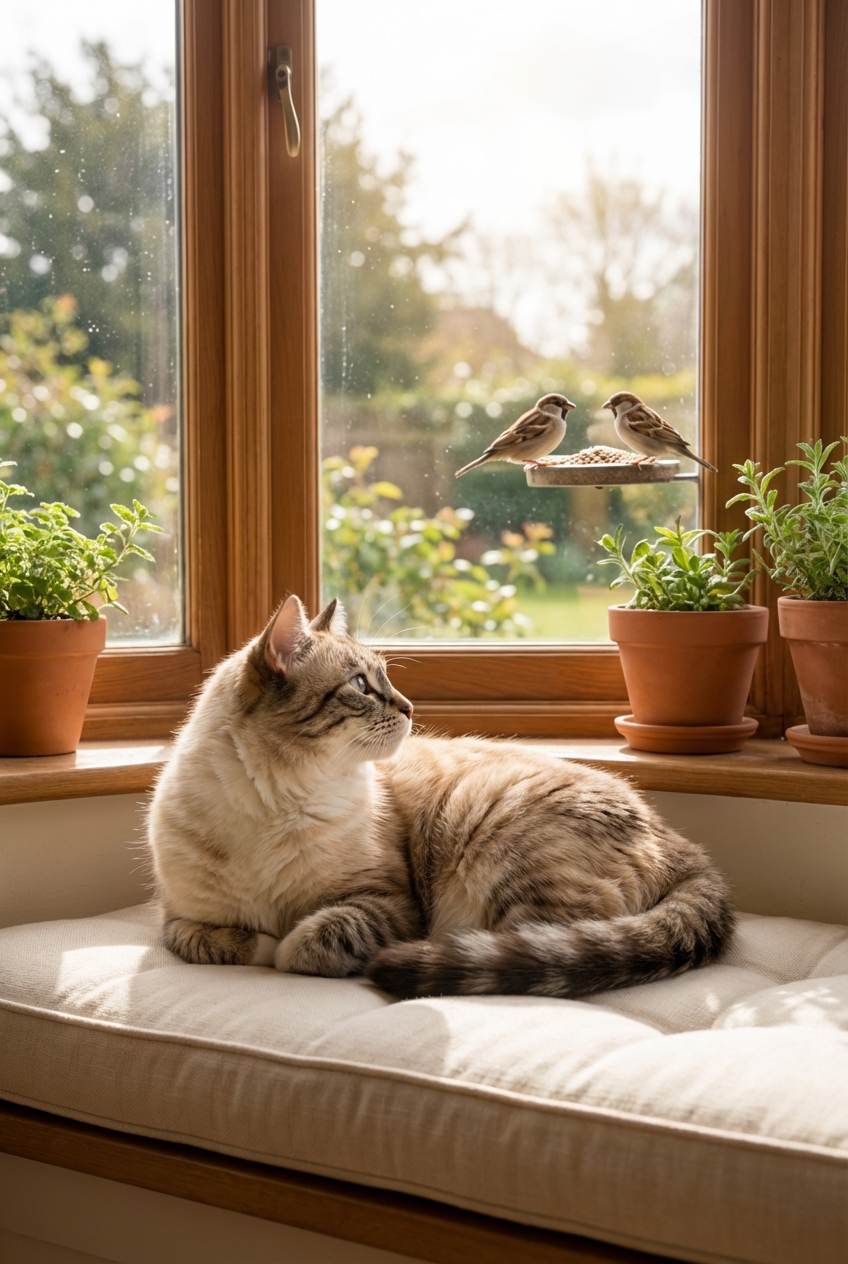
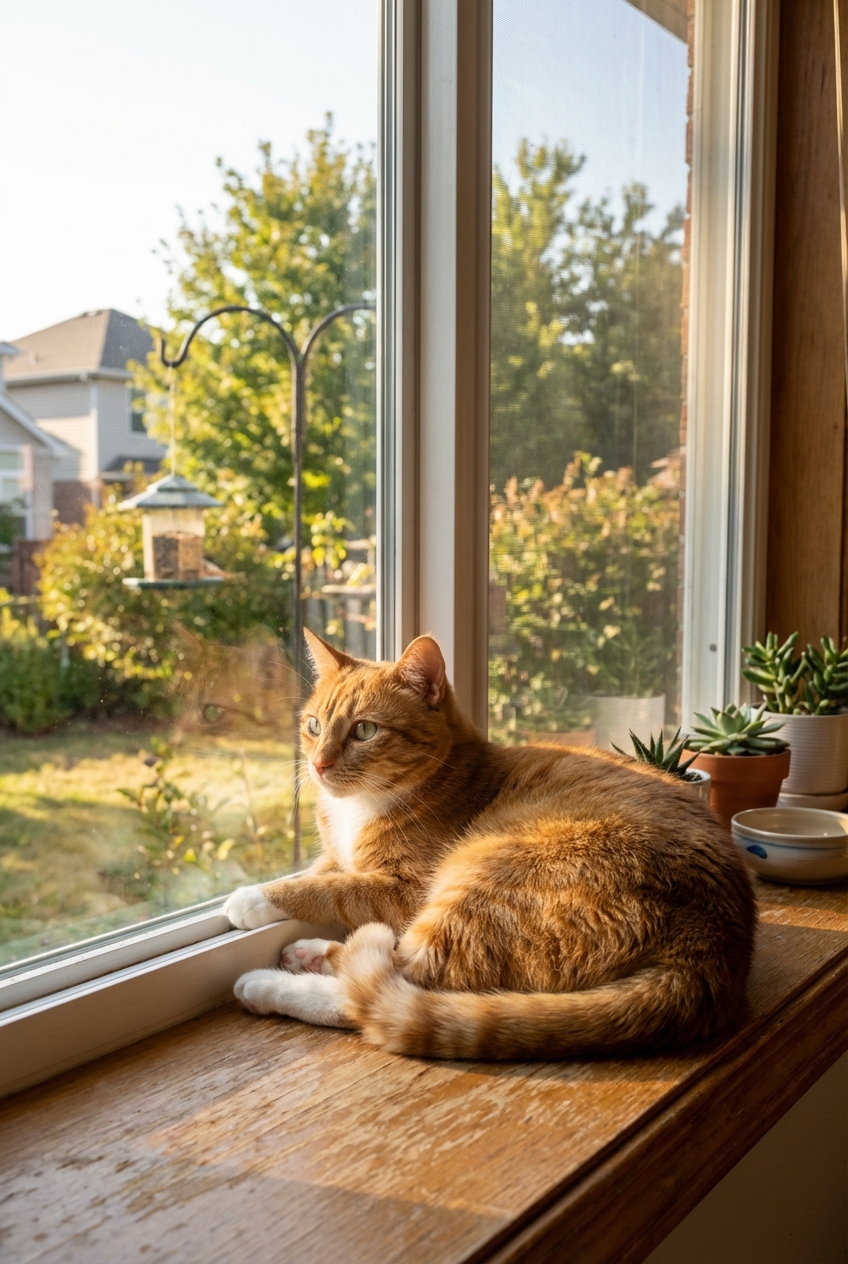
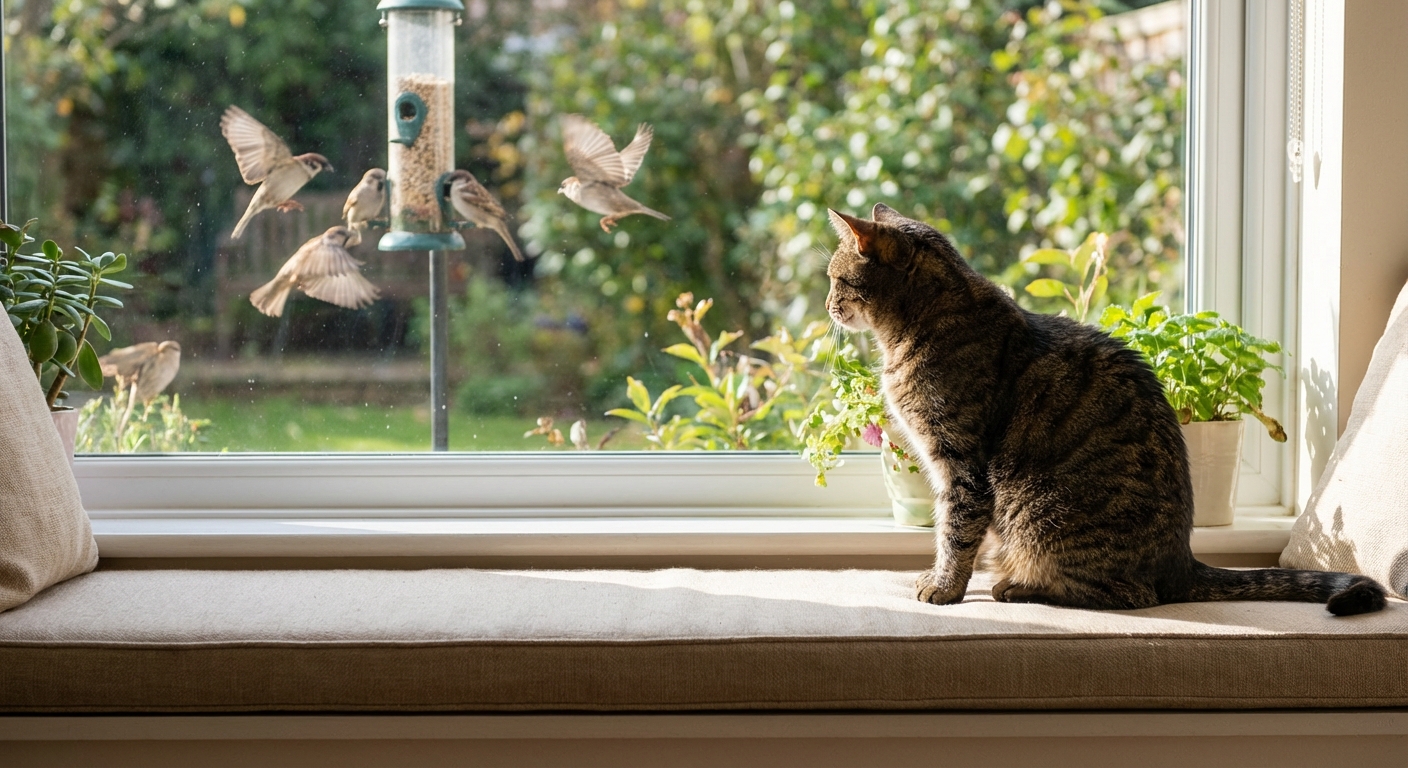
- Window “cat TV”: A perch near a window can provide hours of enrichment. Make sure window screens are secure and in good repair.
- Bird feeders outside: Place the feeder where your cat can watch but cannot reach it. For bird safety, avoid placing feeders very close to windows, and consider window decals or other bird-strike prevention if you notice collisions in your area.
- Cat-safe plants: Consider cat grass. Avoid toxic houseplants and confirm safety before buying. Lilies are especially dangerous for cats.
- Leash training or a catio: For some cats, controlled outdoor time is life-changing.
Calm handling and grooming
Many cats love short, positive touch sessions. Others need more space. The key is consent and consistency.
Make grooming a positive habit
- Keep it short: 30 to 90 seconds at first.
- Reward: Follow with a treat or play.
- Watch body language: Tail flicking, skin twitching, or ears flattening means “I’m done.”
If your cat avoids handling, work in tiny steps. You can absolutely build trust over time.
Multi-cat harmony
If you have more than one cat, happiness depends on reducing competition for resources. Many cats coexist, but they still want personal space and their own “stuff.”
One of the most common things I hear at work is, “They used to get along, and now they don’t.” Often, the fix is not complicated. It is more space, more options, and fewer bottlenecks.
Reduce tension fast
- Spread resources out: Separate feeding stations, multiple water options, and multiple resting zones.
- More vertical territory: Add at least one additional high perch or tree.
- One-on-one time: Daily play with each cat prevents attention competition.
A simple daily plan
If you are busy, try this realistic rhythm. Consistency matters more than perfection.
- Morning: 5 to 10 minutes play, then breakfast using a puzzle feeder.
- Midday: Refresh water, open blinds, rotate one toy or add a box.
- Evening: 5 to 10 minutes play, then dinner, then a calm cuddle or grooming session if your cat enjoys it.
- Before bed: One final short play session for cats who wake you at night.
The bottom line: a happier indoor cat usually has more choice, more play, and more meaningful “jobs” to do each day.
Go slow if needed: For anxious or easily overstimulated cats, introduce one change at a time (a new perch, a new feeder, a new play routine) and give it several days before adding the next.
When to ask for help
Please reach out to your veterinarian if you notice sudden aggression, litter box changes, appetite changes, vomiting, weight loss, or hiding more than usual. If medical issues are ruled out, a qualified feline behavior professional can help you build a plan tailored to your home.
Quick safety reminders: Keep toxic plants, essential oils, and human medications locked away. Inspect toys regularly for loose strings or pieces, and secure windows and balconies so curious cats cannot slip out.