Puppy whining in the crate is common—and fixable. Learn the real causes, a quick checklist, in-the-moment steps, and a gentle routine to build calm crate t...
Article
•
Designer Mixes
How to Make a Puppy Stop Whining

Shari Shidate
Designer Mixes contributor
Puppy whining can tug at your heart and test your patience. The good news is that most whining is normal communication, not “bad behavior.” Puppies whine when they need something, feel unsure, or have not yet learned how to settle. With a few consistent routines and gentle training, you can teach your puppy that calm, quiet moments are safe and rewarding.
As a veterinary assistant here in Frisco, Texas, I see this a lot: families worry something is wrong, when it is often just a puppy adjusting to a brand-new world. Let’s walk through what whining means, how to respond, and when it is time to call your vet.
Quick note: This article is for education and is not a substitute for veterinary advice. If your puppy seems unwell or in pain, contact your veterinarian.
Why puppies whine
Whining is a normal puppy behavior. It is how they say, “I need help,” or “I’m not sure about this.” The key is to figure out which message your puppy is sending so you can respond in a way that teaches relaxed habits.
Whining is usually softer and more repetitive than barking. Barking is often louder and more alerting. Howling is longer and sustained. The response plan is similar: meet needs first, then reward quiet, settled behavior.
Common causes
- Needs: potty, thirst, hunger, too hot or too cold.
- Separation stress: being away from you, especially at night or in a crate.
- Overtiredness: many puppies get whiny when they actually need a nap.
- Fear or uncertainty: new sounds, new people, new rooms, car rides.
- Pain or illness: GI upset, injury, urinary issues, or other medical problems.
- Learned behavior: whining worked before, so your puppy tries it again.
If you can identify the trigger, you can choose the right strategy instead of guessing.
First, rule out basic needs
Before you work on training, do a quick “needs check.” This prevents you from accidentally ignoring a legitimate problem and makes your training fair.
The 60-second checklist
- Potty: When was the last potty break? Many young puppies need to go very often while awake, commonly every 1 to 2 hours. Some need even more frequent trips depending on age, size, and routine. A helpful rule of thumb is about their age in months plus one hour, but individual puppies vary.
- Comfort: Is the crate or room too warm? Is bedding dry?
- Water: Make sure fresh water is available during the day. At night, follow your veterinarian’s guidance for your puppy’s age and potty plan.
- Hunger: Puppies need frequent meals. Sudden schedule changes can increase whining.
- Body check: Limping, yelping when picked up, repeated licking of one area, or a bloated belly are red flags.
If needs are met and your puppy is still whining, that is when training and routine make the biggest difference.
How to respond without reinforcing whining
This is the part most loving families struggle with, because we want to comfort them. Comfort is fine, but we do not want to teach: “Whine and you get attention instantly.” Instead, teach: “Quiet and relaxed gets you what you want.”
Use the “quiet moment” rule
If your puppy is whining for attention, wait for a tiny pause, even one second of silence, then calmly reward it.
- Mark the silence: say “yes” or “good.”
- Reward: gentle petting, calm praise, or a small treat.
- Repeat: you are building the habit of settling.
Start small. Puppies are new at self-control, so you are shaping calm behavior in baby steps.
Keep your energy low
When you rush over, talk excitedly, or scoop your puppy up every time they whine, you can accidentally escalate the emotion. Instead:
- Move slowly.
- Speak softly.
- Keep greetings boring until your puppy is settled.

Avoid punishment
Yelling, leash jerks, or “alpha” tactics often increase anxiety and can make whining worse. Evidence-based training focuses on teaching the behavior you want, not scaring a puppy into being silent.
Crate and bedtime whining
Nighttime is the most common whining challenge. Puppies are social, and sleeping alone is brand-new to them. Your goal is to pair the crate with safety and predictability.
Also, very young puppies may truly need one to two overnight potty breaks. Meeting a real potty need is not “reinforcing whining.” It is good care. The key is keeping the trip boring so it does not turn into playtime.
Set up the crate for success
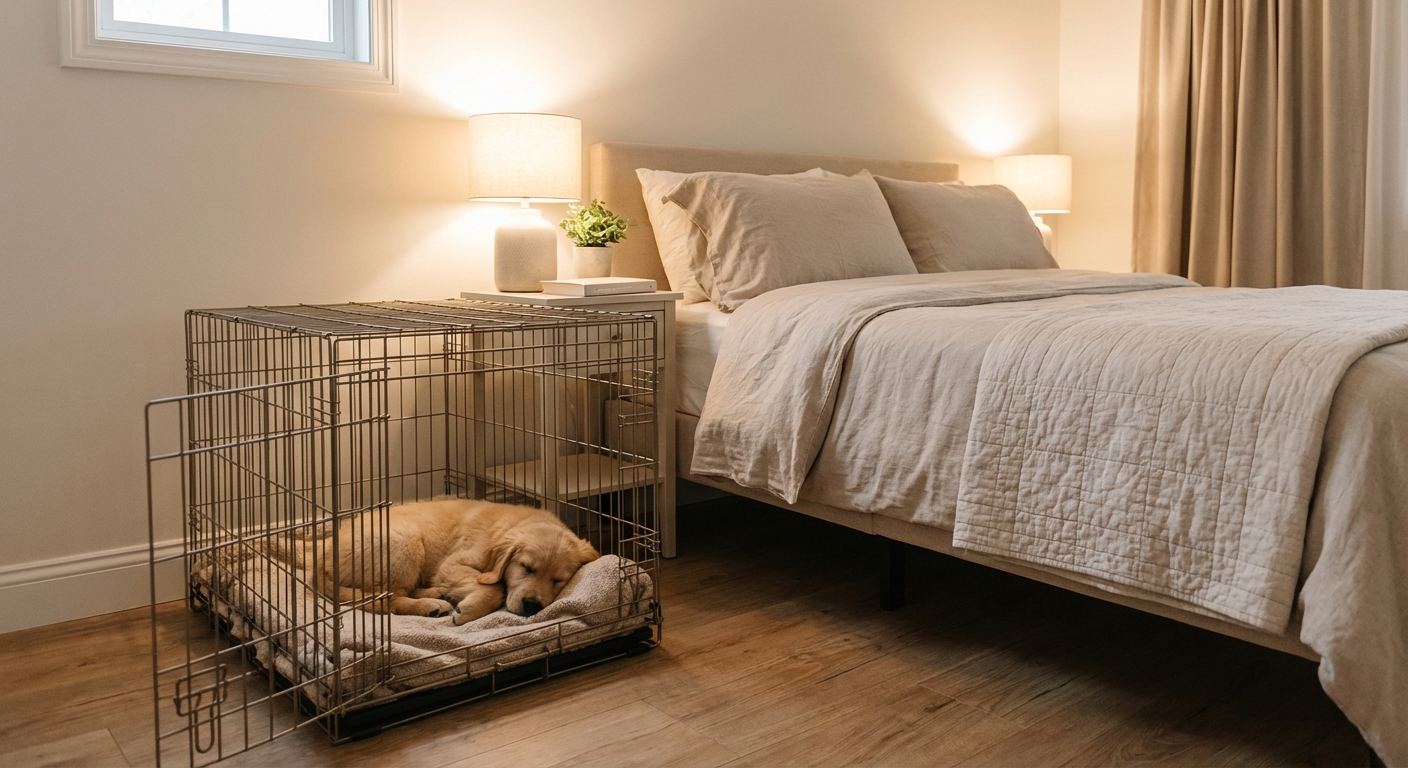
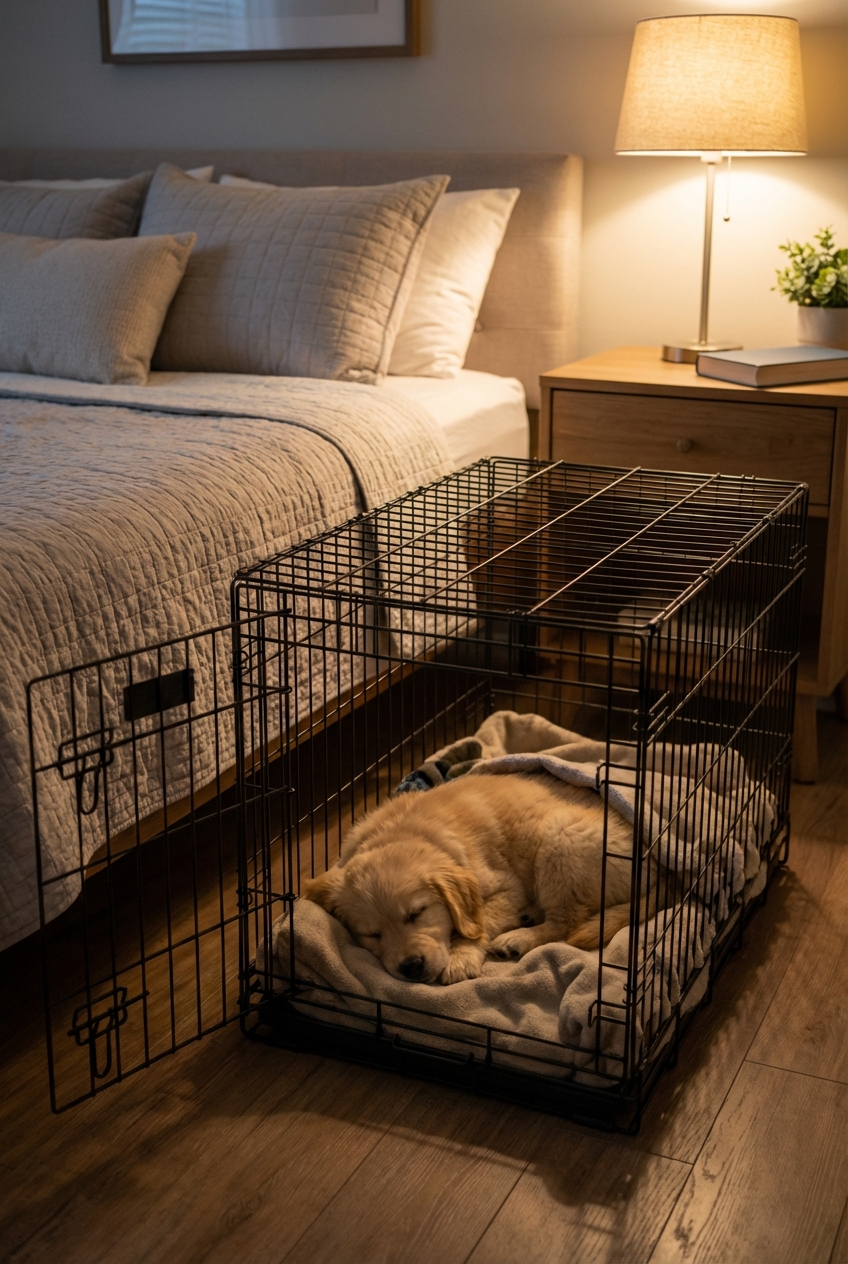
- Location: for the first week or two, place the crate near your bed. Many puppies settle faster when they can hear you breathing.
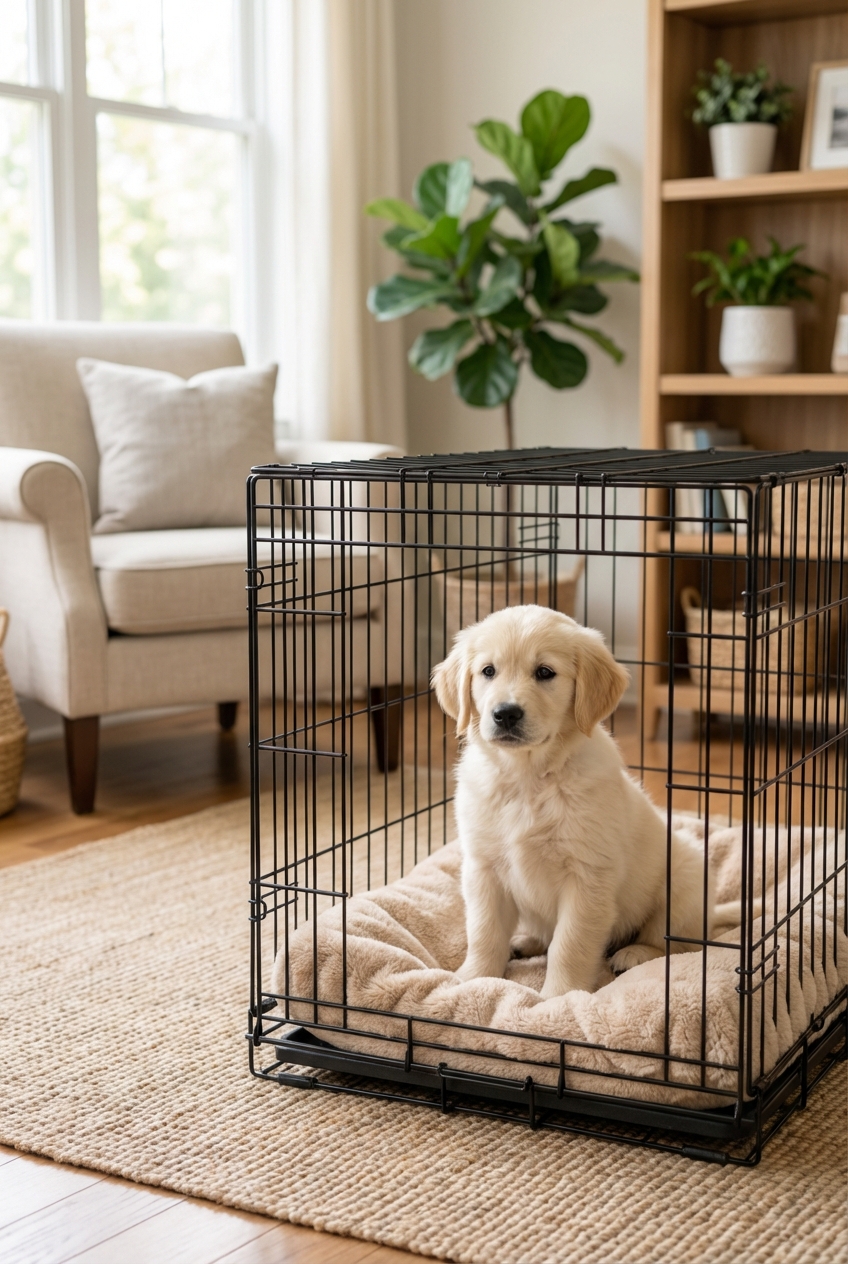
- Comfort: a safe chew, a soft blanket, and a snug crate size (room to stand and turn around, but not overly spacious).
- Routine: last potty break, into the crate, lights down, minimal talking.
Crate safety basics
- No collars or harnesses in the crate: they can snag and create a safety risk.
- Chew choices matter: use puppy-appropriate, vet-approved chews and supervise until you know your puppy’s chewing style.
- Bedding check: if your puppy tears up bedding or eats fabric, use a safer setup (like a crate mat designed for chewers) until they are more reliable.
Practice daytime crate sessions
Crate training works best when it is not only at night.
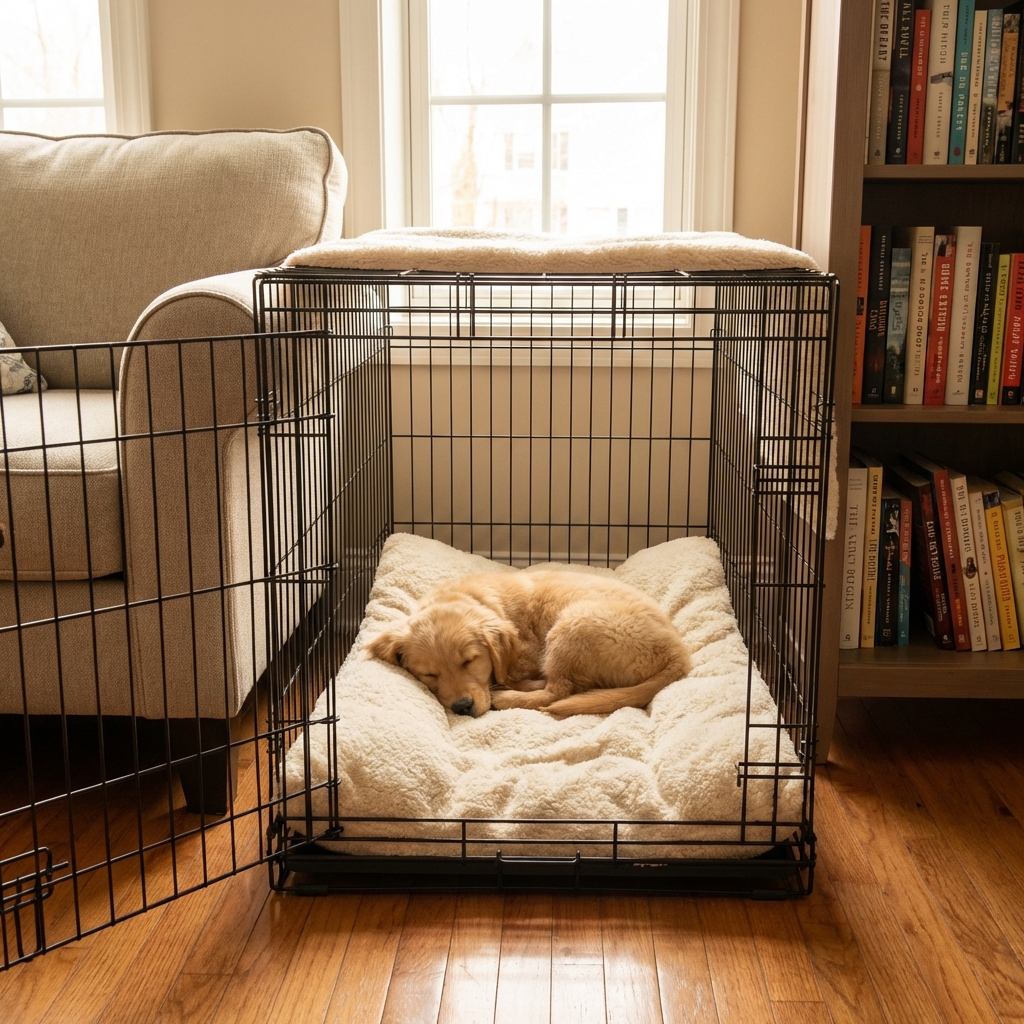
- Toss a treat in, let your puppy walk in and out.
- Feed a meal in the crate with the door open.
- Close the door for 10 to 30 seconds while your puppy chews something yummy, then open while they are still relaxed. If whining starts, wait for a brief pause before opening the door.
- Gradually increase the time.
This teaches your puppy that the crate predicts good things, not isolation.
What to do if your puppy whines at night
- Pause and listen: give 30 to 60 seconds. Many puppies resettle.
- If it escalates: take them out for a boring potty break (no play, no bright lights).
- Back in the crate: calm, consistent, and quiet.
If you suspect it is attention whining, wait for a brief quiet moment before opening the crate door. That one detail matters.
Teach self-soothing
Whining often improves when puppies learn what to do with their bodies and brains. Two tools help a lot: structured rest and appropriate chewing.
Schedule naps
Many puppies need a lot of sleep, often around 18 to 20 hours in a 24-hour period depending on age and temperament. An overtired puppy can look “hyper” and sound whiny.
- After play or training, guide your puppy to a calm rest space.
- Dim the room, offer a chew, and let them settle.
Use calming enrichment
- Food puzzles: kibble in a puzzle toy.
- Licking: a lick mat with a thin layer of puppy-safe food.
- Chewing: vet-approved chews appropriate for your puppy’s age and size.
These activities help lower arousal and give your puppy a job besides whining.

Daytime whining
If it is attention whining
- Reward quiet: catch your puppy being calm and praise it.
- Teach a cue: “sit” or “down” gives them a clear behavior to earn attention.
- Short, frequent training: 2 to 5 minutes at a time is perfect for puppies.
If it is boredom
Increase healthy outlets:
- More sniff walks (even 10 minutes helps).
- Two to three short play sessions daily.
- Basic training games like name response, touch, and leash skills.
If it is fear or uncertainty
Do not force your puppy to “face it.” Instead, use gentle exposure:
- Increase distance from the scary thing.
- Pair it with treats and calm praise.
- Keep sessions short and end on a success.
When it may be separation anxiety
Some puppies whine because they are learning to be alone. Others panic. If you see signs of panic, do not try to “wait it out.” Get help early from your veterinarian and a qualified trainer or behavior professional.
Panic signs to watch for
- Drooling or heavy panting when left alone
- Destructive escape attempts (especially around doors or the crate)
- Self-injury (bloody nails, broken teeth, rubbed nose)
- Soiling that happens mainly when alone
The earlier you address true separation anxiety, the better the outcome tends to be.
When whining may be medical
As a vet assistant, I always want families to know this: sudden, intense, or unusual whining can be a sign of discomfort. Call your veterinarian promptly if you notice any of the following:
- Whining that starts suddenly with no clear reason.
- Not eating, vomiting, diarrhea, or repeated gagging.
- Straining to urinate, frequent small urinations, or accidents in a previously house-trained (or improving) puppy.
- Limping, yelping when touched, or reluctance to jump or climb.
- Bloated or swollen belly, restlessness, or signs of pain.
- Extreme lethargy, pale gums, or difficulty breathing.
Emergency note: A suddenly distended abdomen with retching, drooling, or collapse can be an emergency, especially in large or deep-chested breeds. Seek emergency veterinary care right away.
If your puppy is very young, not fully vaccinated, or acting “off,” it is always safer to check in with your clinic. Early care can prevent big problems.
Quick troubleshooting
“My puppy whines the second I leave the room.”
Practice very short separations. Step away for 1 to 3 seconds, return before whining starts, then gradually build time. Pair departures with a special chew.
“My puppy whines in the crate even after potty.”
Try moving the crate closer to you, add daytime crate games, and make sure your puppy is not overtired. Reward quiet moments, even tiny ones.
“My puppy whines during training.”
Training may be too long or too hard. Shorten sessions, use higher-value rewards, and end while your puppy is still successful and relaxed.
What to expect
For many families, the first 1 to 2 weeks are the hardest. As your puppy learns the routine and builds trust, whining usually decreases. With steady practice, you will often see noticeable improvement within a few days, then continued progress over the next several weeks.
The bottom line
Whining is your puppy’s way of communicating. Your job is to meet legitimate needs, then teach calm behavior through routine and gentle, consistent reinforcement. Start small, be patient, and remember: most puppies improve dramatically as they feel secure and learn what to expect.
If you are ever unsure whether whining is behavioral or medical, call your veterinarian. You are not bothering them. You are advocating for your puppy.