Teach your rabbit reliable litter habits with the right box, safe litter, and hay placement. Follow a step-by-step plan, fix common issues, and know when to ...
Article
•
Designer Mixes
How to Litter Train a Rabbit

Shari Shidate
Designer Mixes contributor
Litter training a rabbit is one of those wins that makes daily life easier for you and more comfortable for your bunny. The best part is that rabbits are naturally clean animals. Most already prefer to use one or two “bathroom spots,” so our job is simply to make that choice easy and rewarding.
Good news: you do not need harsh corrections or complicated tools. With the right litter box setup, a smart location, and a little patience, most rabbits learn quickly.
Start with rabbit-safe supplies
Before training begins, set up a bathroom spot that feels natural to a rabbit. Comfort and safety matter here, because the wrong litter or box can cause avoidance, messy habits, or even health issues.
Choose the right litter box
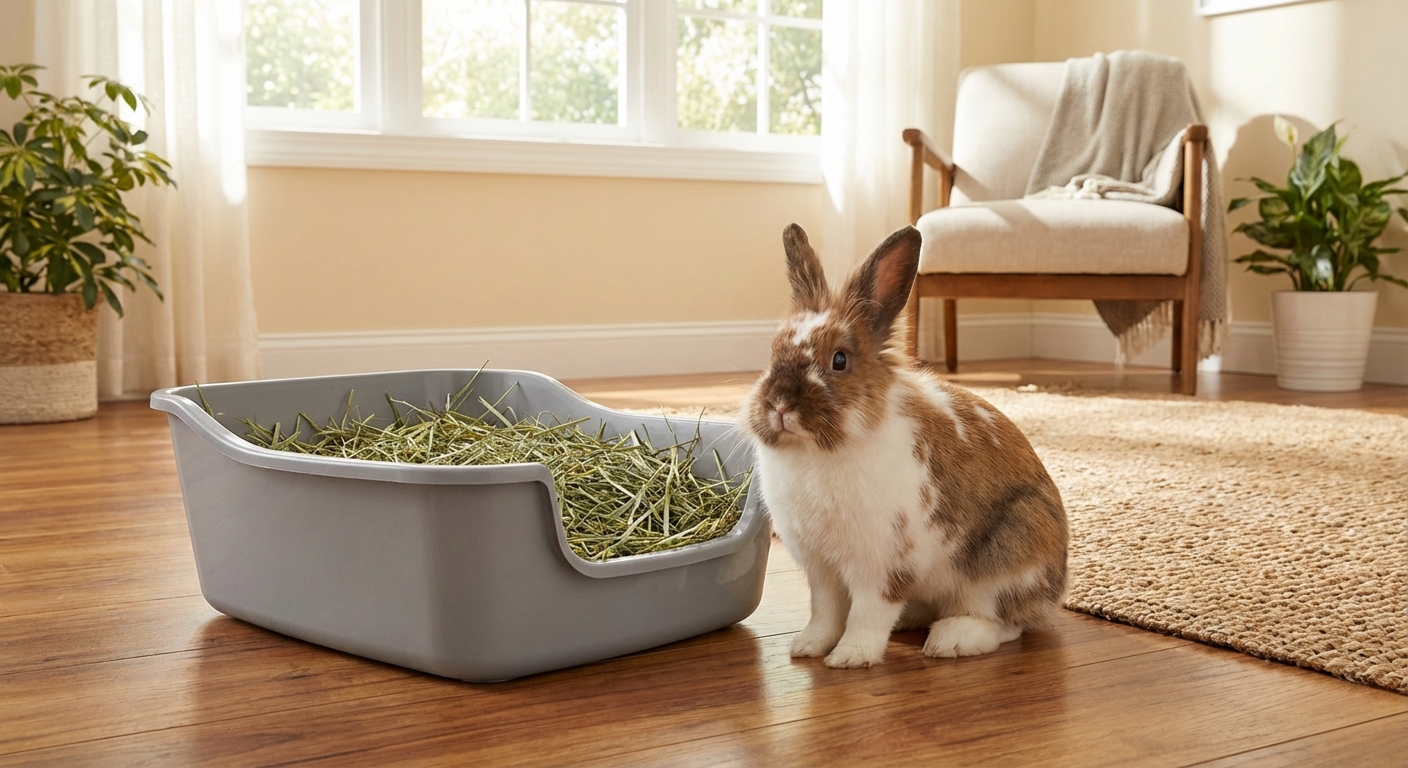
- Size: Big enough for your rabbit to comfortably sit and turn around. Many people use a medium cat litter pan.
- Entry: Low-entry boxes help seniors, small breeds, or rabbits with mobility issues.
- Stability: A box that slides around can make a rabbit feel insecure and less likely to use it.
Use rabbit-safe litter only
Rabbits often nibble things in their environment, and their respiratory systems are sensitive. Stick with low-dust, unscented, absorbent options.
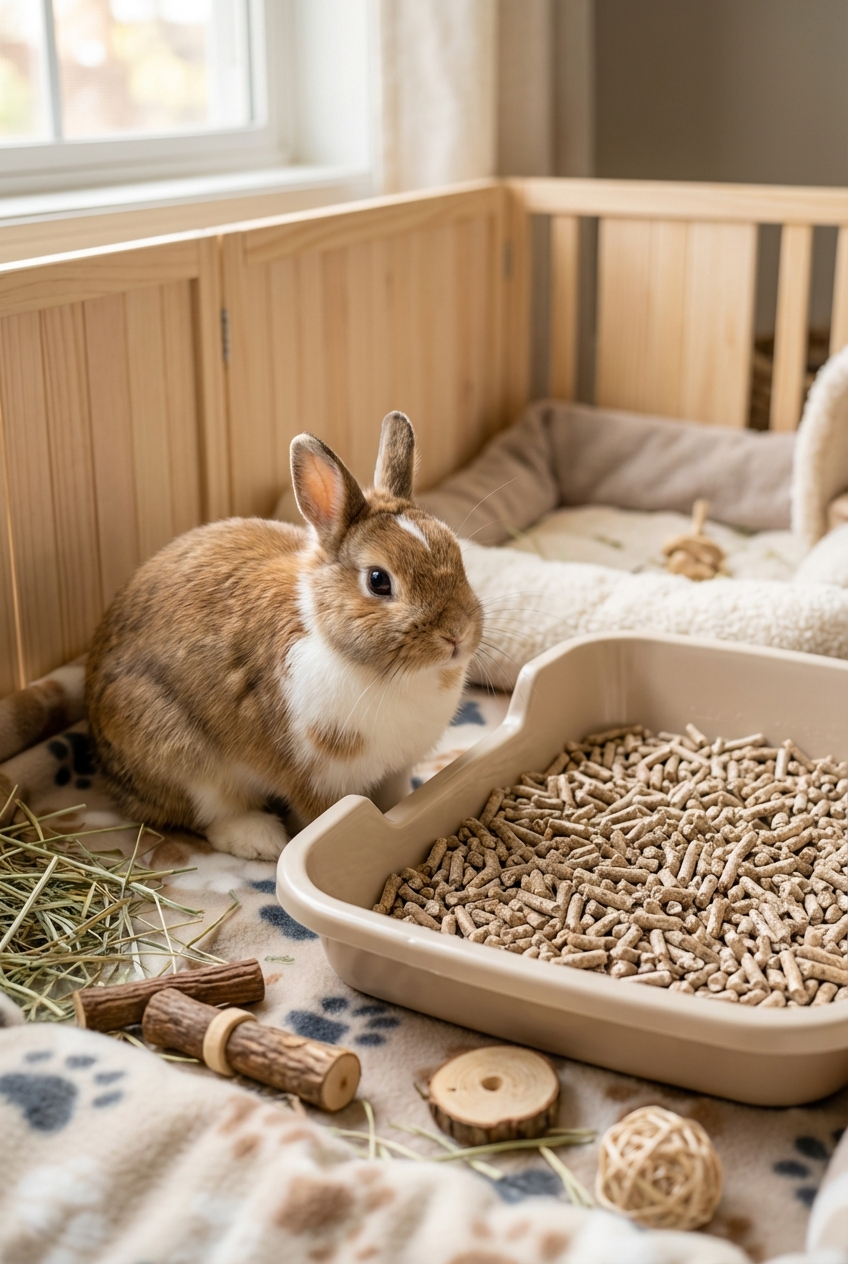
- Best choices: paper-based pellets, compressed paper litter, or aspen shavings (aspen only, not pine or cedar).
- Avoid: clumping clay litter, scented litters, crystal litters, and litters with deodorizing chemicals. These can be dangerous if ingested and irritating if inhaled.
Hay is your secret training tool
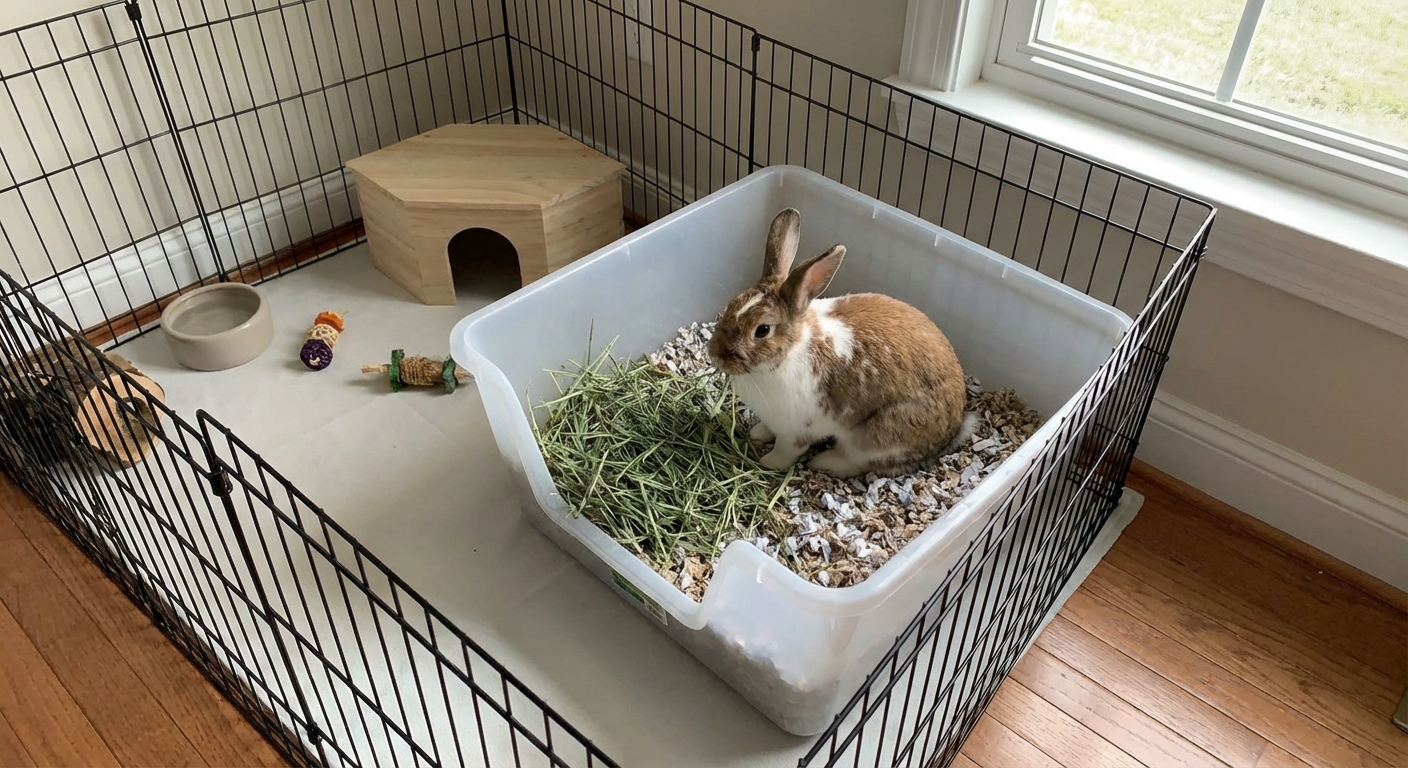
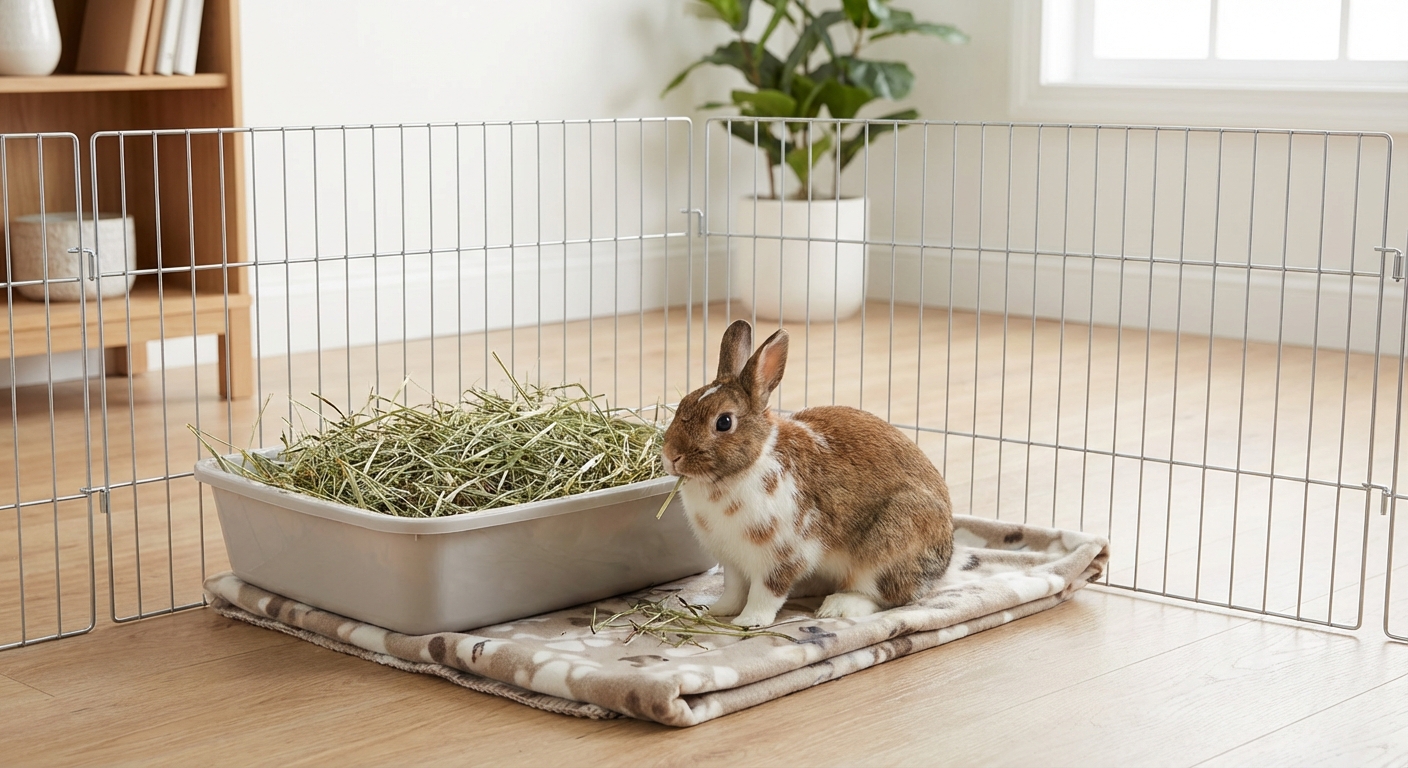
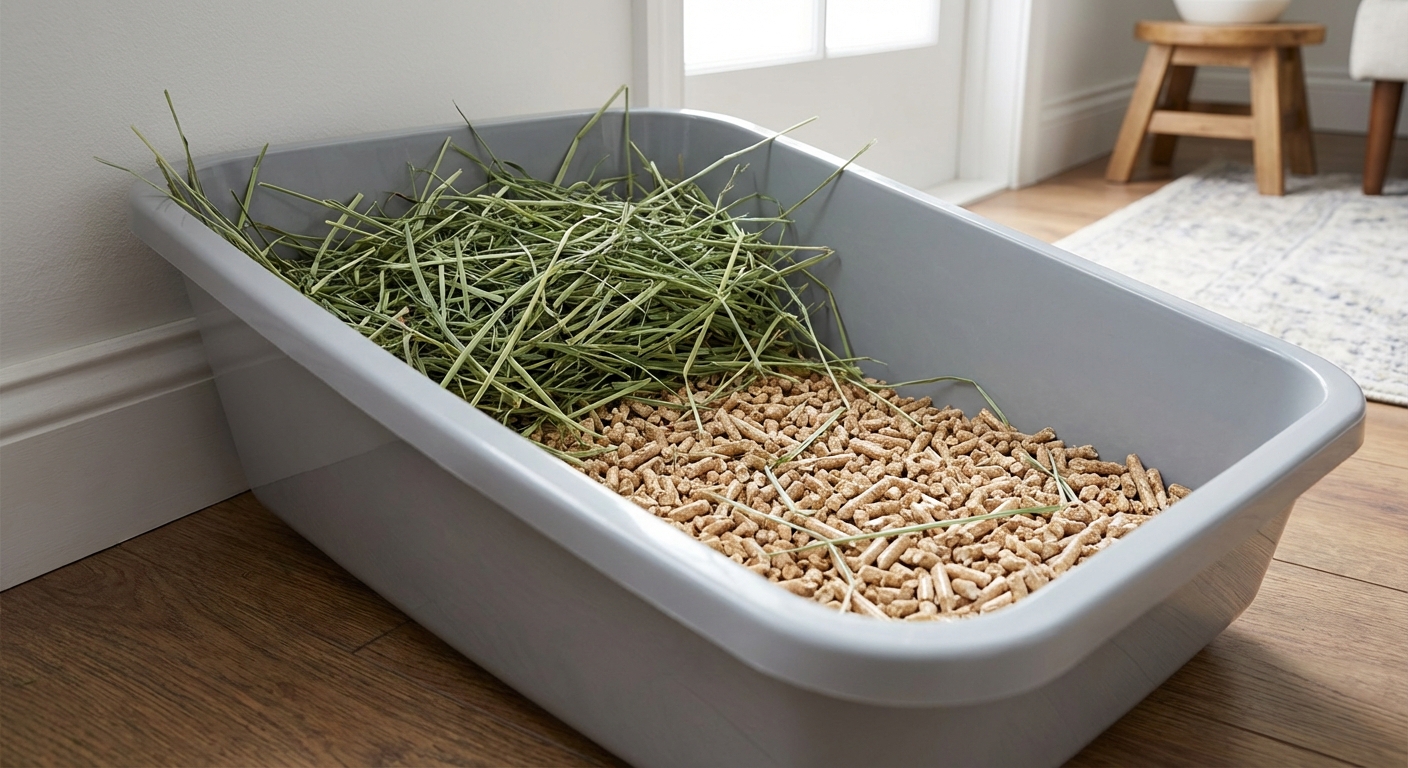
Most rabbits like to eat and poop at the same time. Placing hay in or directly next to the litter box encourages them to hop in voluntarily, often many times a day.
Set up the box where your rabbit already goes
Training goes faster when you work with your rabbit’s instincts instead of fighting them.
Find the preferred bathroom corner
For a day or two, observe where your rabbit naturally urinates. Common spots include the corner of an exercise pen, a quiet corner behind furniture, or along a wall.
- Place the litter box in that spot.
- If your rabbit is free-roam, start with more than one box to prevent accidents while habits form.
Make the “wrong spot” less appealing
If your rabbit keeps choosing a specific corner that is not ideal, you can gently discourage it without punishment.
- Block access temporarily with a pen panel or storage cube grid.
- Place a food bowl, water bowl, or a cozy hideout in that area. Many rabbits will not potty where they eat or sleep.
Step-by-step: How to litter train (the trusted method)
1) Put a small amount of soiled material into the box
If your rabbit has an accident, use a paper towel to blot up urine and place the towel in the litter box. Move a few droppings into the box too. This is not gross, it is communication. It tells your rabbit, “Bathroom goes here.”
2) Catch and redirect, gently
If you see your rabbit backing into a corner to pee, calmly scoop them up and place them in the box. No scolding. Just redirect and let them hop out when they are done.
3) Reward the moment they choose the box
Rabbits learn through repetition and positive outcomes. When you notice them using the box, offer a tiny treat or a favorite herb, and use a calm, happy voice.
- Good rewards: a small piece of cilantro, parsley, or a tiny sliver of banana.
- Keep treats small to protect digestion.
4) Clean accidents the right way
Use a vinegar and water solution (about 1:1) to remove urine odor. If the smell remains, rabbits may return to that same spot.
Important: never use ammonia-based cleaners. They can mimic the smell of urine and make the problem worse.

Spaying and neutering can be a game changer
If your rabbit is not fixed, hormones can make litter habits inconsistent. Unaltered rabbits may mark territory with urine or scatter droppings to communicate.
- Neutering males often reduces spraying and improves reliability.
- Spaying females can reduce territorial marking and also offers major health protection, including a significant reduction in uterine cancer risk.
If you are unsure about timing or recovery, talk with a rabbit-savvy veterinarian. In my experience working in animal care, the difference in behavior and household harmony after spay or neuter is often remarkable.
Common litter training problems (and what to do)
“My rabbit pees in the box but poops everywhere.”
This is extremely common, especially at first. Some rabbits leave a few “trail” droppings as they move around.
- Keep sweeping droppings back into the litter box for 1 to 2 weeks.
- Make sure the box is large enough and easy to access.
- Add a second box in the area where droppings collect most often.
“My rabbit sits in the box but won’t use it.”
Sometimes the box is comfortable, but something about the litter or location is off.
- Try a different litter type (paper pellets are a great starting point).
- Move the box to the corner your rabbit prefers.
- Make sure the box is not in a loud, high-traffic area.
“My rabbit is suddenly having accidents after being trained.”
When litter habits change quickly, think health first. Rabbits hide discomfort, and peeing outside the box can be a red flag.
- Possible causes: urinary tract infection, bladder sludge, pain from arthritis, dental pain (stress), or GI upset.
- Action: schedule a visit with a rabbit-experienced vet, especially if you see straining, blood in urine, reduced appetite, or lethargy.
If your rabbit is drinking more than usual, urinating very frequently, or seems uncomfortable when peeing, do not wait it out. Early care can prevent bigger problems.
“My rabbit is peeing on the bed or couch.”
Soft surfaces often smell like you, and they can become a tempting place to mark. Start with management while you retrain.
- Block access temporarily or use a washable waterproof cover.
- Keep a litter box nearby if your rabbit is free-roam in that room.
- Use enzyme cleaner designed for pet urine on fabric, then air dry fully.
How long does litter training take?
Many rabbits improve within a few days, but reliable habits can take 2 to 4 weeks. Younger rabbits and unfixed rabbits may take longer. Consistency matters more than speed.
- Days 1 to 3: set up boxes, place hay, start moving droppings into the box.
- Week 1: reward box use, reduce roaming area if accidents happen.
- Weeks 2 to 4: expand space gradually and add boxes where needed.
Cleaning and odor control that keeps your rabbit using the box
A clean box encourages consistent use, but you do not want to remove all scent cues too often during training.
Simple routine
- Daily: remove wet litter clumps or saturated areas, refresh hay.
- Every 2 to 4 days: dump and replace litter completely depending on box size and your rabbit’s output.
- Weekly: wash the box with mild soap and warm water, then rinse well. Vinegar can help with urine scale buildup.
Tip: Keep one or two old droppings in the box after cleaning during the early training stage. It helps reinforce the habit.
Quick checklist for success
- Use a large, stable, low-entry box.
- Choose rabbit-safe, unscented, low-dust litter.
- Add hay in or right next to the box.
- Place the box in your rabbit’s preferred bathroom corner.
- Reward correct use and clean accidents with vinegar or enzyme cleaner.
- Consider spay or neuter for reliable long-term habits.
- If accidents start suddenly, think health and call a rabbit-savvy vet.
Litter training is one of the kindest things you can do for your home and your rabbit. You are not forcing a behavior, you are guiding a natural instinct. And once it clicks, you will wonder how you ever lived without it.