Litter train your rabbit fast with a rabbit-safe box and litter, hay placement, gentle redirects, and rewards. Includes cleaning tips, troubleshooting, and s...
Article
•
Designer Mixes
How to Litter Box Train a Bunny

Shari Shidate
Designer Mixes contributor
Litter box training a bunny is one of those wins that makes life easier for everyone. The good news is that rabbits are generally tidy animals, and many will choose one or two favorite bathroom corners. Some rabbits are less consistent at first, especially if they are unfixed, going through adolescence, newly adopted, or stressed. With the right setup and a steady routine, most can learn good litter habits.
As a veterinary assistant, I always like to start with one simple goal: set your bunny up to succeed with the right supplies, a calm routine, and a little patience.
Before you start
Make sure your bunny is healthy
If your rabbit is peeing frequently, straining, having accidents suddenly, or leaving very thick, chalky urine, it is worth checking in with an exotics veterinarian. Rabbits can develop urinary sludge, bladder stones, arthritis that makes it hard to climb in, or pain that changes their habits.
Spaying or neutering helps
Unfixed rabbits are more likely to mark territory with urine and droppings. Spaying and neutering often improves litter box reliability and also supports long-term health. For female rabbits, the risk of uterine disease, including uterine cancer, increases with age if they are not spayed. If you want statistics for your specific breed and age, your rabbit-savvy vet can walk you through what they see most often.
What you need
Pick the right litter box
- Low entry for easy access, especially for small breeds or senior rabbits.
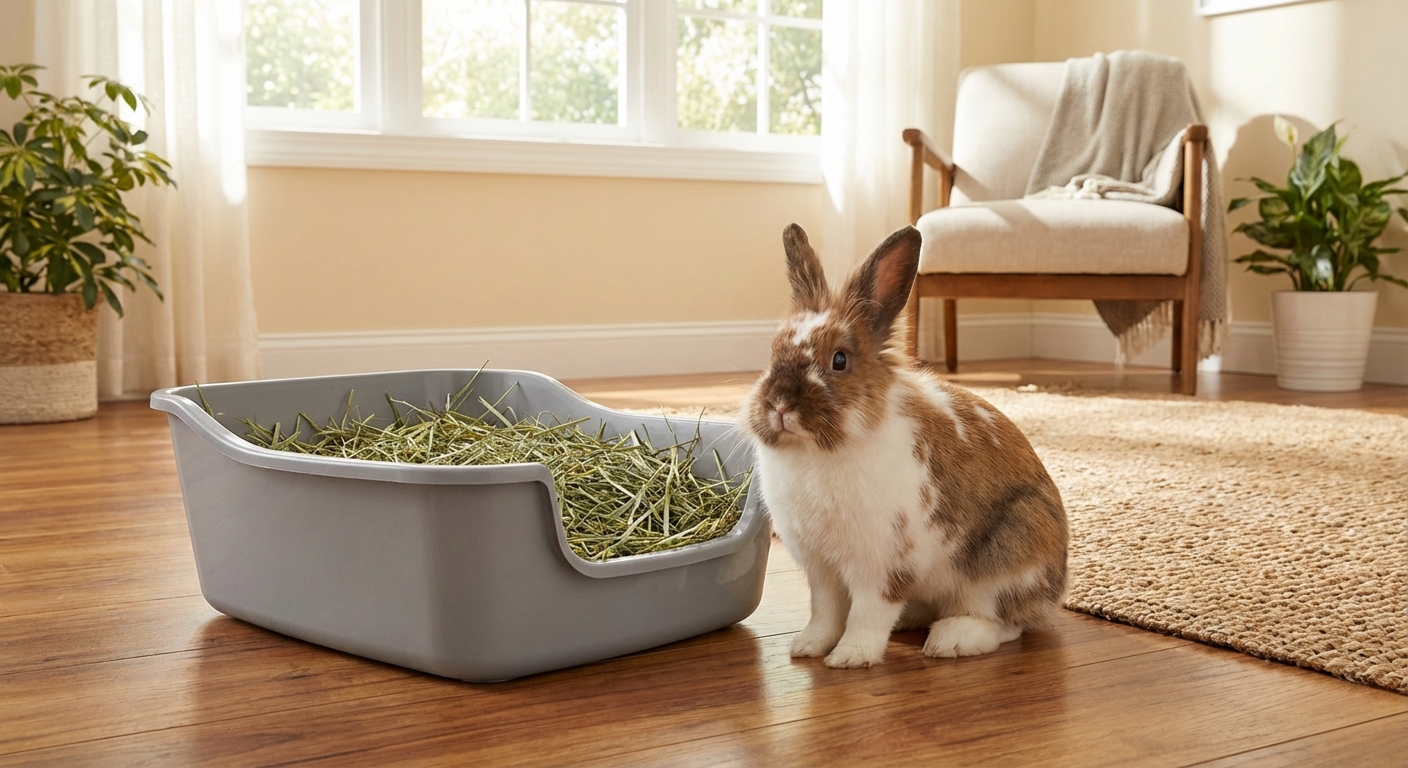
- Big enough to sit and turn around. Many bunnies prefer a cat litter box size.
- High back if your rabbit tends to spray.
Use rabbit-safe litter
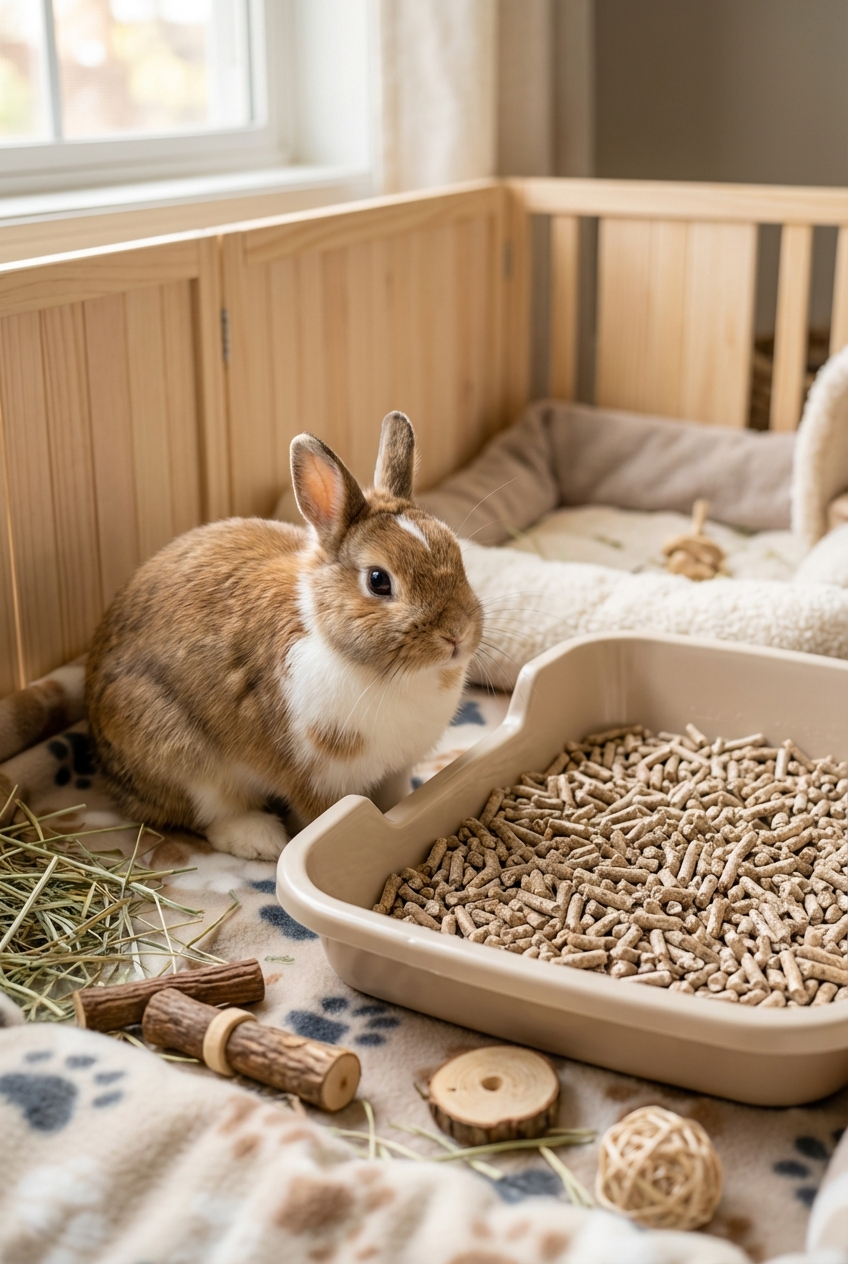
Choose an absorbent, low-dust litter that is a safer option if a curious bunny nibbles a small amount by mistake:
- Paper-based pellet litter
- Aspen shavings
- Compressed wood pellets labeled safe and low-dust
Avoid clumping clay litter, crystal litter, and anything heavily scented. These can irritate the respiratory system and can be dangerous if eaten. Also avoid aromatic softwood shavings (pine or cedar), especially non kiln-dried varieties.
Hay makes it easier
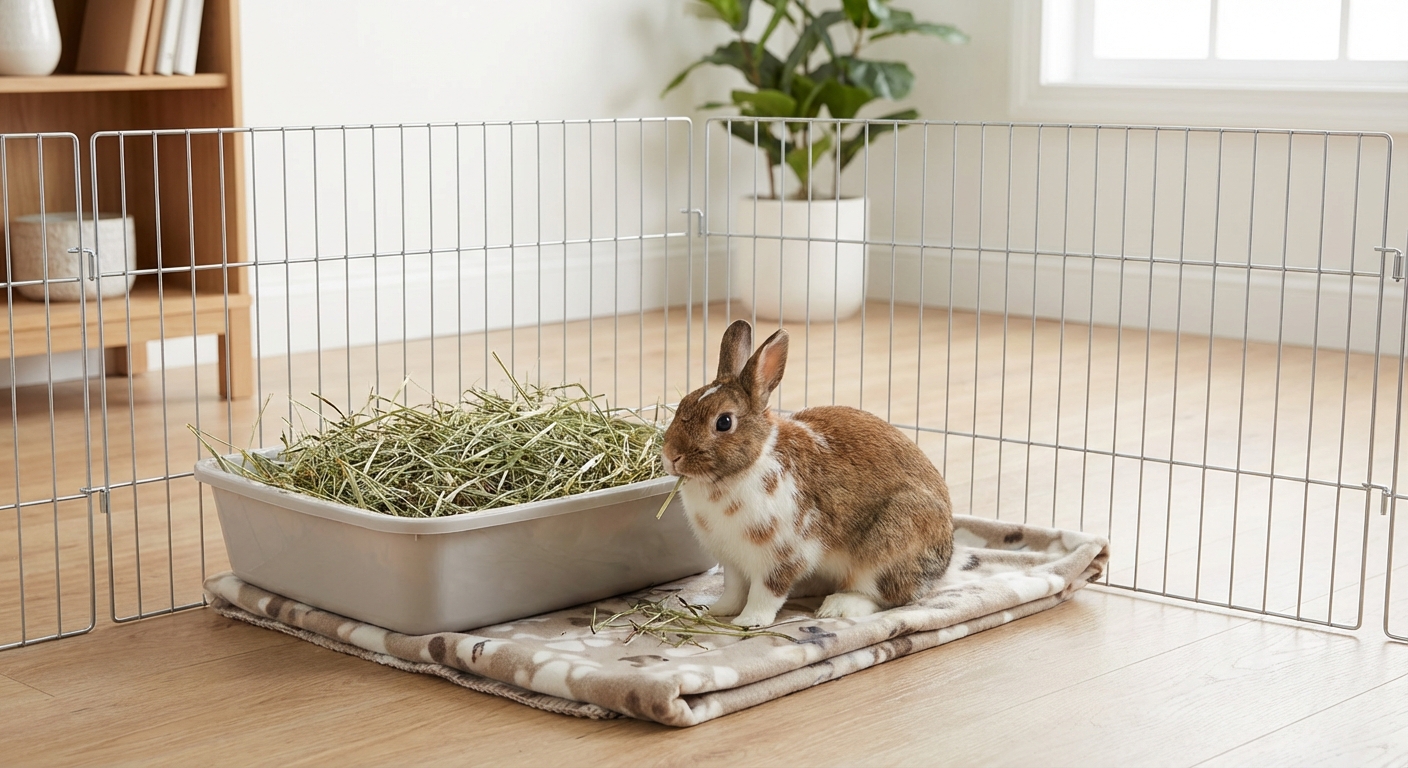
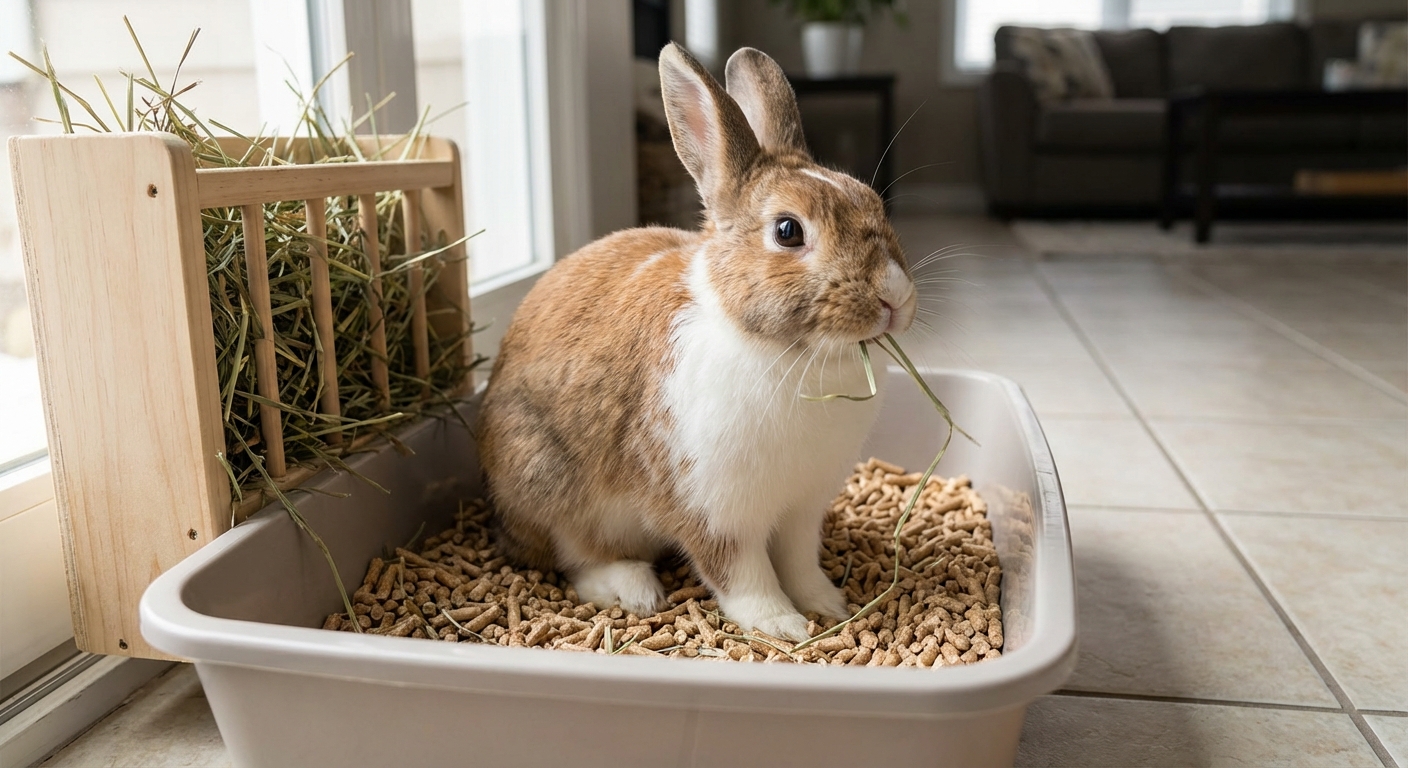
Rabbits often like to eat and poop at the same time. Place a generous pile of fresh hay in a hay rack right next to the box, ideally positioned so your bunny can reach it while sitting in the box. Some rabbits prefer hay in one end of the box, and that is fine too.
Step-by-step
1) Start small
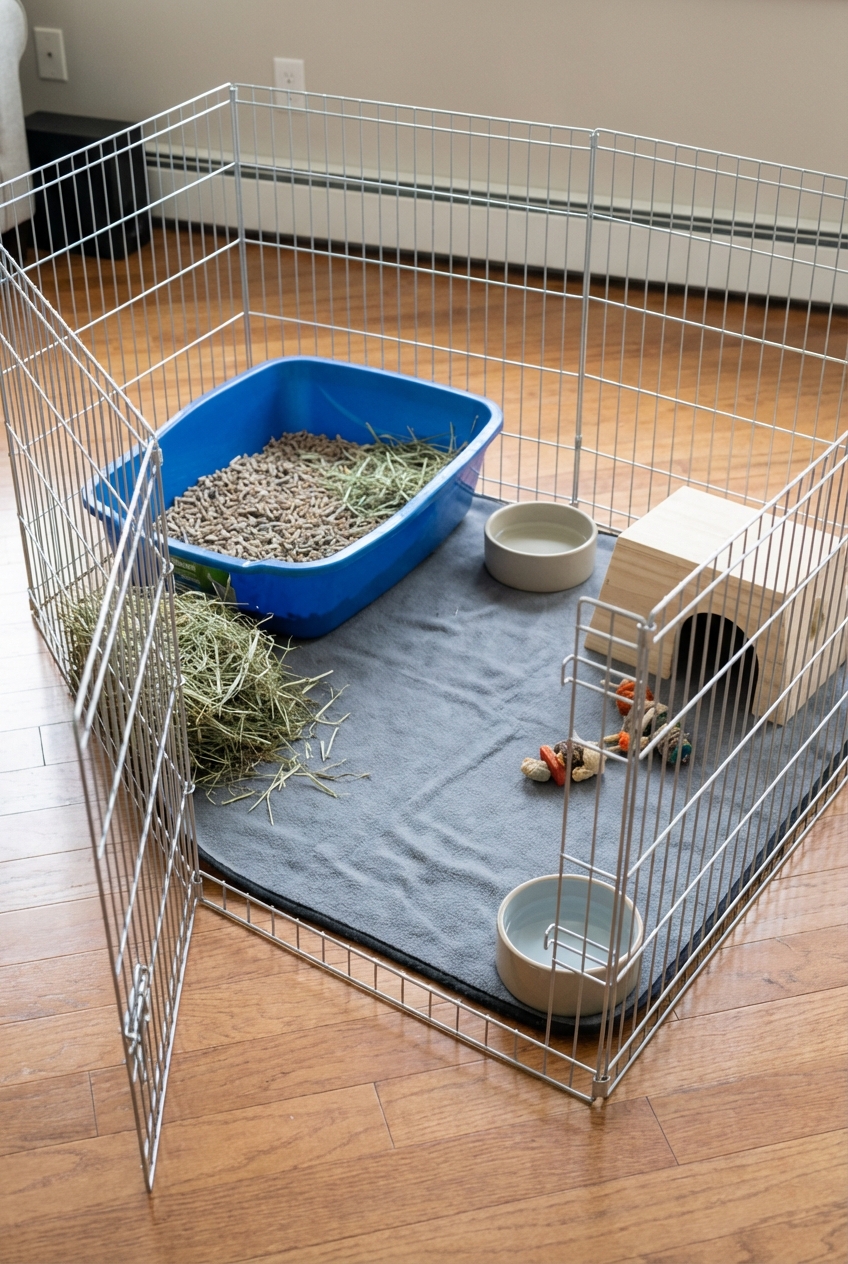
For the first week, limit your rabbit to an exercise pen or a small bunny-proofed room. A smaller area makes it easy for your bunny to find the box and build the habit.
2) Put the box where they already go
If your rabbit has already chosen a bathroom corner, place the box right there. If you are not sure, watch where the droppings collect and start in that spot.
3) Set up the box
- Add 1 to 2 inches of rabbit-safe litter.
- Place hay where your bunny can reach it while sitting in the box.
- Optionally add a thin layer of fresh hay on top of the litter if your bunny prefers it.
Some people like to line the bottom with newspaper or a puppy pad for easier cleanup. If you do, only use it if your rabbit will not chew it. Ingesting pads or plastic backing can cause serious GI problems.
4) Move accidents into the box
This is gentle and effective:
- Pick up droppings and place them in the litter box.
- Blot urine with a paper towel and place the towel in the box.
- Clean the accident spot with a 1:1 white vinegar and water solution to remove odor.
Your bunny learns, "This is the bathroom spot."
5) Reward the right behavior
When you see your bunny use the box, offer calm praise and a tiny treat, like a single pellet, a small piece of herb, or a bite of leafy green. Keep it low-key so your bunny does not get startled mid-use.
6) Expand freedom slowly
Once your bunny is using the box consistently in the smaller space for several days, expand the area gradually. If accidents happen when you expand, shrink the space again for a few days and rebuild.
Common problems
“My bunny pees next to the box”
- Try a bigger box. Many rabbits miss because the box is too small.
- Lower the entry if your rabbit struggles to step in.
- Move the box an inch or two to match their preferred corner exactly.
- Add a second box if your rabbit uses two different corners.
“My rabbit sleeps in the litter box”
This can be normal, especially if the box is comfortable and smells familiar. If it becomes messy, use a larger box and keep hay in one end so there is a clear "potty side" and a "lounging side." Make sure your bunny has a cozy bed area too.
“They dig in the litter and fling it everywhere”
- Switch to heavier paper pellets or low-dust wood pellets.
- Use a box with higher sides.
- Give approved digging outlets like a cardboard box filled with shredded paper (no glossy ink).
“They poop outside the box, but pee inside”
Many rabbits drop a few territory poops, especially during bonding, changes in routine, or puberty. Keep moving stray droppings into the box and stay consistent. If your bunny is not spayed or neutered, consider talking with your exotics vet.
“I have two rabbits. Do I need more boxes?”
Often, yes. A helpful starting point is one litter box per rabbit, plus one extra, especially in larger spaces or multi-level setups. You can always reduce once you see which boxes they actually use.
Cleaning and safety
How often to clean
- Daily: Remove wet spots and refresh hay.
- Every few days, as needed: Replace litter fully. Frequency depends on box size, rabbit size, and litter type (and more often for multiple rabbits).
- Weekly: Wash the box with mild soap and water, or use vinegar for mineral buildup, then rinse well and dry.
Keep your bunny’s airways happy
Rabbits have sensitive respiratory systems. Choose low-dust litter and avoid aerosols, strong fragrances, and harsh cleaners near the enclosure.
Never punish accidents
Skip scolding, and never rub a rabbit’s nose in accidents. It does not teach the right habit, and it can make your bunny fearful. Calm cleanup and consistency work better.
Tips for families
If kids help with bunny care, keep the routine simple and predictable:
- One person checks the litter box at the same time each day.
- Hands are washed after cleaning and after handling litter.
- Supervise playtime until litter habits are solid.
If you remember one thing, let it be this: consistency beats perfection. Rabbits learn best with calm repetition, not punishment.
When to call the vet
Reach out to a rabbit-savvy veterinarian if you notice:
- Straining, signs of pain, or urine scald
- Sudden litter box refusal after weeks or months of success
- Very little urine output or very frequent small urinations
- Soft stool or diarrhea (true diarrhea in rabbits is an emergency)
- Decreased appetite, fewer droppings, or no droppings
Also note: normal rabbit urine can range from pale yellow to orange or even red-tinged because of plant pigments. It can look alarming. If you are not sure whether you are seeing pigment or blood, it is safest to call your vet.
Litter box issues sometimes look behavioral, but they can be an early clue that something physical is going on.
Final notes
You do not need to get it perfect on day one. Start with a small space, a comfy box, rabbit-safe litter, and plenty of hay. Many rabbits improve within 1 to 3 weeks, though full reliability can take longer, especially during big changes or adolescence.
Your bunny is not being “bad” when accidents happen. They are learning. And with a patient routine, you will both get there.