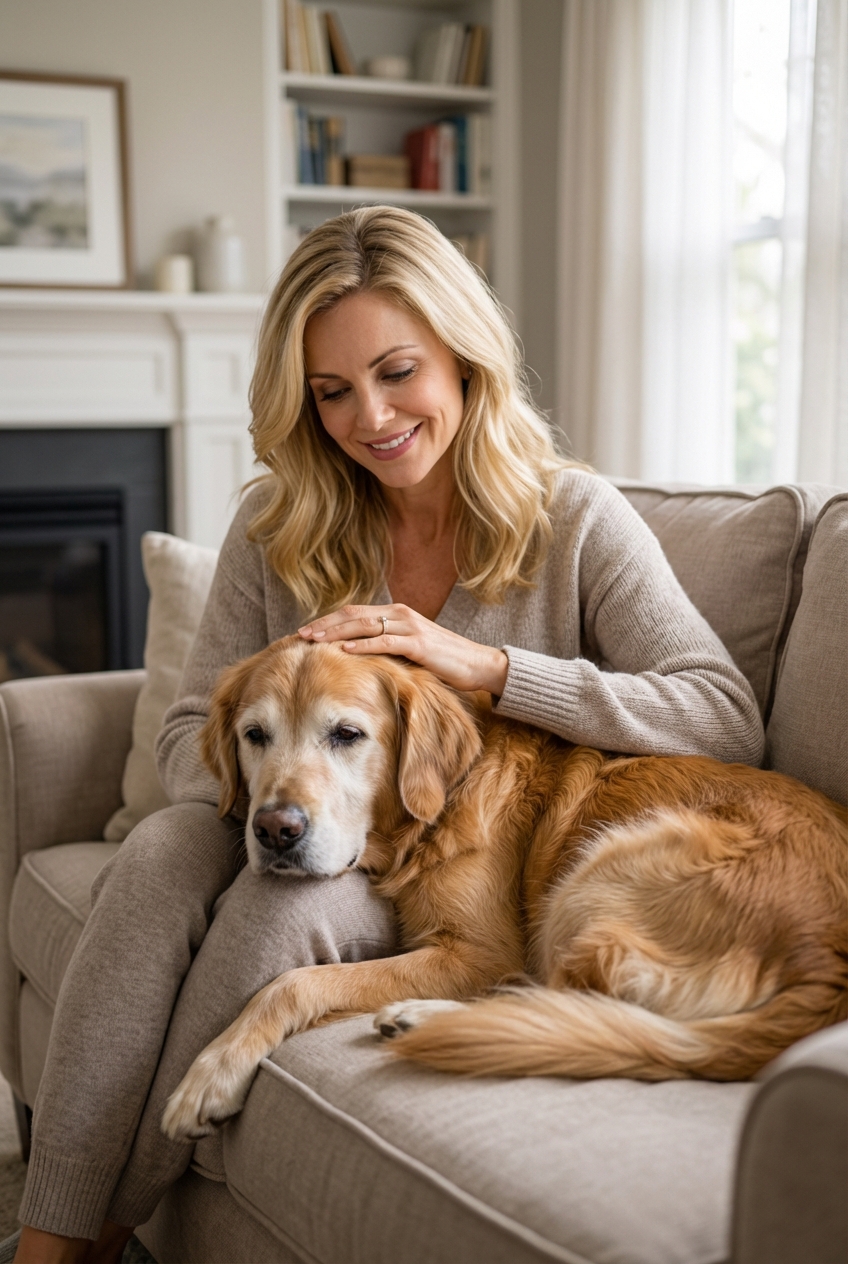
A practical guide to at-home dog hospice care: pain and nausea control, easier breathing, mobility and hygiene help, comfort-station setup, and when to call ...
Article
•
Designer Mixes
How to Know Your Dog Is in Pain at End of Life

Shari Shidate
Designer Mixes contributor
One of the hardest parts of loving a dog is realizing they cannot tell us, in words, when something hurts. At end of life, pain can be subtle, and it often shows up as changes in movement, breathing, sleep, appetite, and personality. The goal is not to “guess perfectly.” It is to notice patterns early, get veterinary guidance, and keep your dog comfortable and safe.
As a veterinary assistant, I have seen how much relief families feel when they finally have a clear way to observe what is happening. Below is a compassionate, evidence-informed checklist you can use at home, plus the moments when it is time to call your vet urgently.
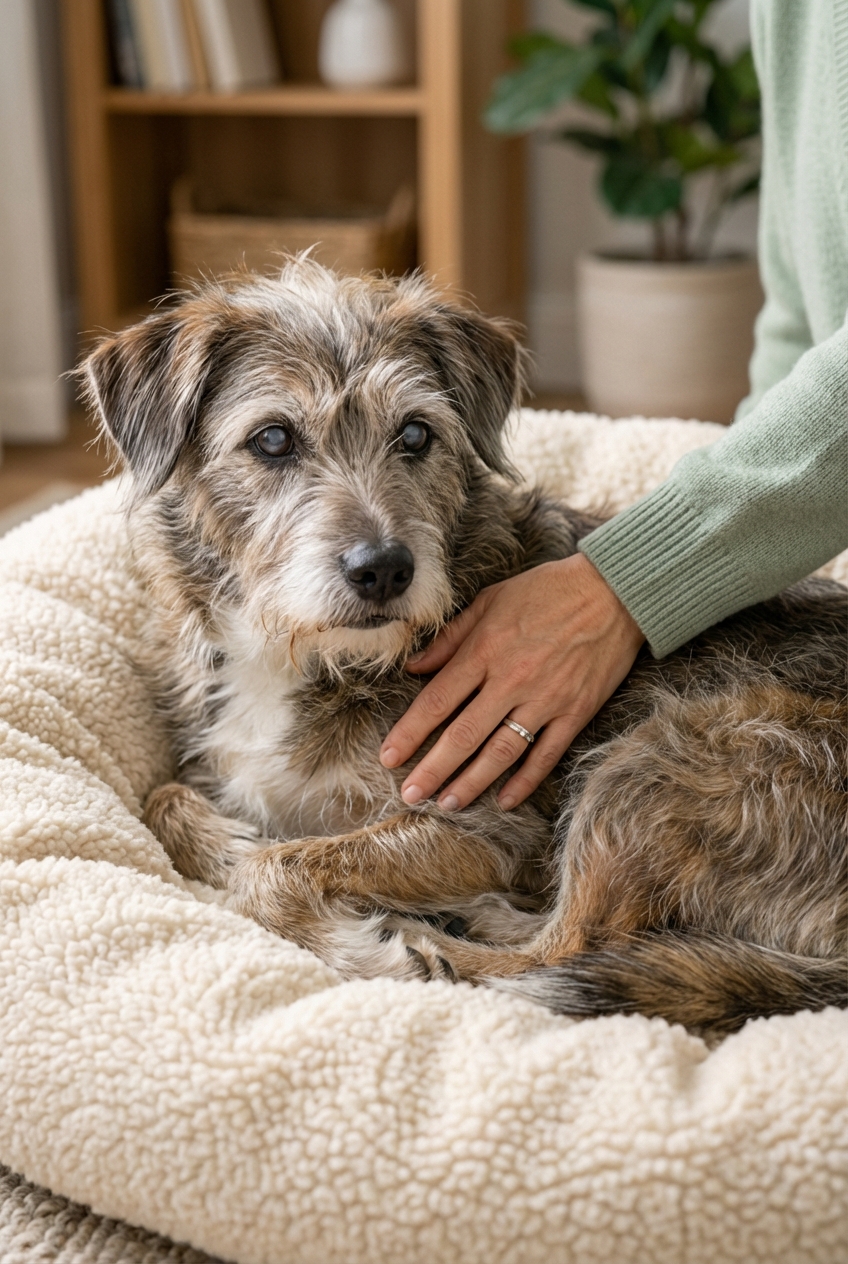
What pain can look like
Many dogs do not show obvious pain signals right away. Some stay quiet until discomfort is significant, and others show pain in ways that look like “slowing down” or “being grumpy.” At end of life, pain may come from arthritis, cancer, organ disease, dental disease, or secondary problems like nausea, pressure sores, or infections.
Pain generally shows up in three broad ways:
- Movement changes (stiffness, limping, reluctance to stand)
- Behavior changes (withdrawal, clinginess, irritability)
- Body changes (panting, body tension, trembling)
Common signs of pain
1) Breathing, panting, and rest
Pain, anxiety, nausea, and some medications can all alter breathing. Heat and humidity can, too. Watch for:
- Panting at rest when the room is cool and your dog is not excited
- Shallow, faster breaths or breathing that looks effortful
- Inability to get comfortable, frequent repositioning, pacing, or restless sleep
- Sleeping much more than usual, especially if they seem “checked out” when awake
If you can safely count breaths while your dog is asleep, many healthy dogs rest around 15 to 30 breaths per minute. What matters most is your dog’s trend and what your veterinarian considers normal for your dog. If your dog’s resting rate is consistently higher than usual, or breathing looks strained, contact your veterinarian.
If your dog is panting heavily, seems panicked, has blue or very pale gums, or cannot settle even in a cool room, call an emergency clinic. Breathing changes can also signal heart or lung issues, fluid buildup, anemia, medication effects, or severe pain.
2) Mobility and posture
Mobility changes are often some of the clearest to notice at home. Look for:
- Stiffness, especially after lying down
- Hesitation to stand, jump, climb stairs, or go for walks
- “Prayer position” (front legs down, rear up), which can be a sign of abdominal discomfort if it is frequent or persistent
- Hunched back, tucked belly, or a guarded posture
- Lameness or shifting weight off a limb
- Knuckling (paw turning under) or dragging feet, which may indicate neurologic issues, weakness, or pain
End-of-life pain is often compounded by weakness. A dog may not cry, but they will “vote with their feet” by avoiding movement that hurts.
3) Appetite, drinking, and nausea
Loss of appetite can happen for many reasons at end of life, but pain and nausea are big ones. Watch for:
- Eating less or walking away after a few bites
- Taking food gently and then dropping it, which can suggest dental pain, nausea, oral injury, jaw discomfort, or other mouth problems
- Lip licking, drooling, swallowing repeatedly, or gagging
- Vomiting or frequent burping
- Sudden picky behavior in a dog who normally loves food
Many dogs feel significantly better when pain and nausea are treated together. If appetite changes are new, dramatic, or paired with lethargy, vomiting, or weight loss, let your vet know promptly.
4) Face, eyes, and body tension
These can be subtle, but once you see them, you cannot unsee them:
- Squinted eyes or a “worried” look
- Ears pinned back more than usual
- Tight mouth, pulled-back lips, or a tense jaw
- Trembling or flinching when touched
- Tense abdomen or guarding a specific area
Note: trembling and panting can also show up with anxiety, cognitive decline, nausea, or medication side effects. Your observations still matter because they help your veterinarian sort out what is driving the change.

Behavior changes
Withdrawal or hiding
A dog who starts spending time in closets, corners, behind furniture, or in another room may be trying to cope with discomfort or overwhelm.
Clinginess
Some dogs do the opposite and become unusually attached. They may follow you closely, want constant contact, or seem anxious when you leave the room.
Grumpiness or snapping
Pain can lower tolerance. A normally sweet dog may growl when lifted, when another pet approaches, or when touched in a painful area.
Licking or less grooming
Dogs can fixate on a painful spot by licking it repeatedly, especially with joint pain, skin irritation, or nerve discomfort. On the other hand, a dog may stop grooming altogether if moving hurts.
Night pacing or confusion
Restlessness at night can be pain, nausea, anxiety, or canine cognitive dysfunction. If your dog seems disoriented, stares at walls, gets “stuck,” or sleeps all day and paces at night, share those details with your vet. There may be comfort options for both pain and cognition.
Bathroom changes
Bathroom habits are one of the clearest quality of life indicators. Watch for:
- Straining to urinate or defecate
- Accidents in the house from weakness, confusion, or inability to get up in time
- Vocalizing during elimination
- Constipation, which can be worsened by dehydration, decreased mobility, and some pain medications (including opioids)
- Diarrhea, which can signal stress, medication effects, or disease progression
If your dog cannot urinate, has a swollen abdomen, or is repeatedly trying to pee with little output, that is an emergency.
Gentle pain checks
You do not need to “test” your dog aggressively. Instead, do a calm, consistent check-in once or twice a day.
Daily observation
- Watch them stand up: smooth, hesitant, or struggling?
- Take a short walk: are they willing, and do they move evenly?
- Offer a favorite food: do they show interest?
- Look at breathing at rest: calm and regular, or panting and tense?
- Note sleep: are they able to settle and stay asleep?
Hands-on check
Only if your dog is comfortable, and only as gently as they allow:
- Run your hand along the back and hips, watching for flinching.
- Lightly feel legs and paws for swelling or heat.
- Check the mouth only if your dog allows it. Dental pain is very common in seniors.
If your dog pulls away, stiffens, growls, or tries to mouth your hand, stop. That response is valuable information to share with your vet.
Quality of life red flags
End-of-life care is about comfort and dignity. These signs often mean your dog’s pain or distress is not well controlled:
- They cannot rest for long without panting, pacing, or repositioning
- They cannot get up to eat, drink, or eliminate without significant help
- They stop engaging with you, family, or favorite activities almost entirely
- They cry out, tremble, or appear panicked
- Bad days outnumber good days for a while, which is a practical rule of thumb many hospice teams use
If you want a structured way to track comfort, ask your vet about a quality of life tool such as the HHHHHMM scale (Hurt, Hunger, Hydration, Hygiene, Happiness, Mobility, More good days than bad).
If you are thinking, “I do not want them to feel like this,” that is not failure. That is love and awareness.
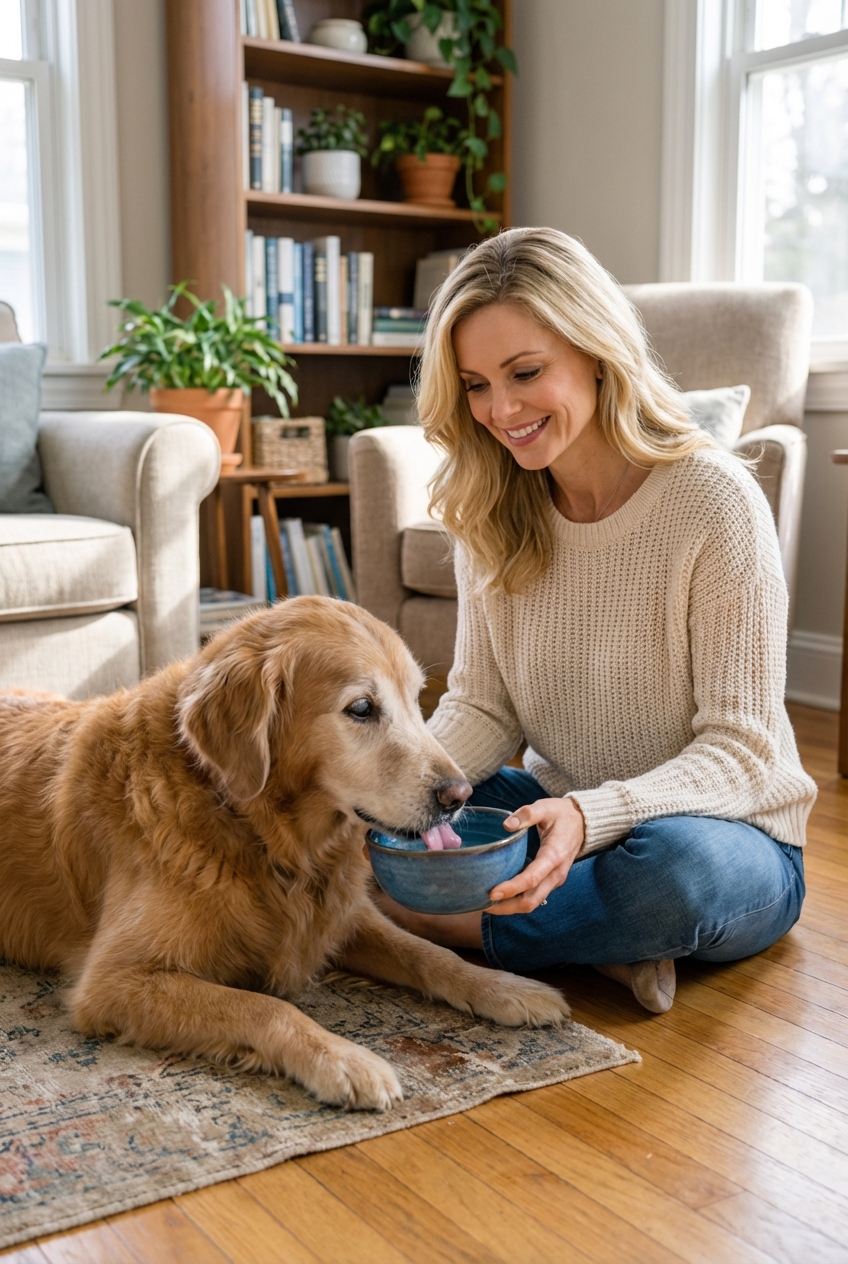
What to ask your vet
You do not have to navigate this alone. Your vet can often improve comfort quickly with a tailored plan.
Pain and comfort options
- Anti-inflammatory medications for arthritis and inflammation (only with veterinary guidance)
- Opioid-like pain relievers for moderate to severe pain
- Neuropathic pain medications (for nerve pain)
- Anti-nausea medications and appetite support
- Constipation prevention if medications slow the gut
- Hospice or palliative care support, including in-home options in many areas
Helpful questions
- “What type of pain do you suspect, and how will this medication help?”
- “What side effects should I watch for, and what is urgent?”
- “If this plan is not enough, what is our next step?”
- “Can you help me assess quality of life and timing?”
Comfort steps at home
These simple changes can make a big difference while you work with your veterinarian.
- Soft, supportive bedding, preferably orthopedic, and keep it on one level of the house.
- Non-slip footing with rugs or yoga mats to prevent painful slips.
- Assisted mobility using a sling or harness for weak hind legs.
- Easy access to water and food, and elevate bowls if neck or back pain is present.
- Gentle heat for stiff joints, only warm, never hot, and never unattended.
- Quiet routine with predictable potty breaks and short, slow sniff-walks if they enjoy them.
Medication safety notes
- Do not give human pain medications like ibuprofen, naproxen, or acetaminophen unless your veterinarian specifically instructs you.
- Do not adjust doses, add leftover meds, or combine medications without asking your vet first.
- Do not combine NSAIDs and steroids unless your vet explicitly directs it. The combination can increase the risk of serious stomach and intestinal injury.
- Call your vet promptly if you see vomiting, loss of appetite, black or tarry stool, blood in stool, severe diarrhea, or extreme lethargy after starting a medication.
When to get urgent help
Please contact a veterinarian or emergency clinic right away if you see:
- Labored breathing, blue or pale gums, or collapse
- Repeated vomiting, inability to keep water down, or suspected bloat
- Inability to urinate, or crying while trying to urinate
- Sudden paralysis, severe weakness, or uncontrolled seizures
- Uncontrolled bleeding or a rapidly enlarging abdomen
- Signs of extreme pain that do not ease with prescribed medication
If you are unsure, it is always okay to call. You are not “overreacting” when your dog’s comfort is on the line.
A gentle next step
If your dog is nearing end of life, consider keeping a simple daily note: appetite, mobility, breathing at rest, bathroom habits, and one “joy moment” like a tail wag, a sniff in the yard, or a cuddle. This small habit helps you see trends clearly and supports better decisions with your veterinarian.
You are doing something profoundly loving by paying attention. Comfort, dignity, and relief are possible, and you do not have to figure it out alone.